
In This Article
Picture this: you’re two miles deep into a backcountry trail when you twist your ankle. Your phone’s dead, darkness is falling, and shouting for help only drains your energy. This is when that tiny piece of gear clipped to your pack becomes your lifeline.
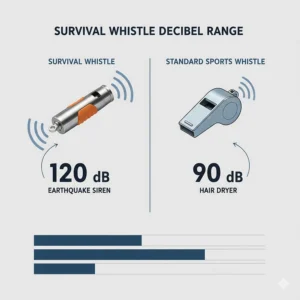
A quality best survival whistle isn’t just another piece of gear—it’s your voice when yours fails. While your natural voice can carry maybe 100 yards on a good day, a proper emergency whistle camping essential can be heard over a mile away, even in harsh conditions. According to FEMA’s emergency preparedness guidelines, every emergency kit should include a whistle as a critical signaling device. These simple tools require no batteries, work in any weather, and can save your life when electronic devices fail.
The science behind survival whistles is fascinating. The loudest survival whistle models use specially designed chambers that focus sound waves into ear-piercing frequencies between 2800-3400 Hz—the exact range that cuts through wind, water, and ambient noise. With decibel ratings ranging from 100dB to a staggering 142dB, modern whistles can literally be heard for miles. For context, a normal conversation registers around 60dB, while a rock concert hits 110dB.
Whether you’re preparing for wilderness adventures, urban emergencies, or building your family’s disaster preparedness kit, choosing the right signal whistle hiking gear matters. Let me walk you through everything you need to know, from pealess whistle design innovations to proper lanyard attachment techniques.
Quick Comparison Table
| Whistle Model | Decibel Rating | Weight | Price Range | Best For |
|---|---|---|---|---|
| HyperWhistle Original | 142 dB | 0.77 oz | $16-22 | Maximum loudness |
| SOL Slim Rescue Howler | 110+ dB | <0.5 oz | $8-12 | Ultralight backpacking |
| Fox 40 Sonik Blast CMG | 120 dB | 0.35 oz | $8-12 | Urban emergencies |
| Storm All-Weather Safety | 130 dB | 1.2 oz | $12-16 | Water activities |
| LuxoGear Emergency | 120 dB | 0.4 oz | $10-14 | Budget-conscious buyers |
| TISUR Titanium | 120 dB | 0.2 oz | $15-20 | EDC minimalists |
| HEIMDALL Survival | 120 dB | 0.3 oz | $8-12 | Family emergency kits |
💬 Just one click – help others make better buying decisions too! 😊
Top 7 Best Survival Whistle Options: Expert Analysis
1. HyperWhistle Original – The Undisputed Volume Champion
If being heard is your top priority, the HyperWhistle Original redefines what’s possible in emergency signaling. This engineering marvel doesn’t just blow past the competition—it maxes out decibel meters at 142dB, making it approximately eight times louder than standard whistles.
The secret lies in its patented tri-frequency design. While conventional whistles rely on a single chamber, HyperWhistle combines three highly-rated whistles into one unit, creating a sound that carries up to two miles in ideal conditions. Even underwater, it maintains functionality—a feature that earned it a spot on U.S. aircraft carriers for crew signaling.
At 0.77 ounces (22 grams), it’s slightly heavier than minimalist options, but that weight comes from durability. The high-impact polymer construction survives drops, extreme temperatures, and years of abuse. The whistle is naturally buoyant and comes in high-visibility orange or tactical black. One quirky inclusion: it ships with foam earplugs, because yes, it really is that loud.
Specifications:
- Decibel rating whistle: 142dB (maxes out most meters)
- Frequency: 2800 Hz
- Material: High-impact polymer
- Dimensions: 3.2 x 1.5 x 0.8 inches
✅ Unmatched volume—heard for 2+ miles
✅ Works underwater and in all weather
✅ Includes protective earplugs
❌ Bulkier than ultralight alternatives
❌ Premium pricing at $18-22
Customer feedback consistently praises its “ear-splitting effectiveness” and durability, though some note it’s overkill for casual day hikes where subtlety matters.
2. SOL Slim Rescue Howler – The Ultralight Powerhouse
The SOL Slim Rescue Howler proves that effective emergency signaling doesn’t require bulk. Weighing less than half an ounce, this whistle disappears into any kit while delivering 110+ decibels of attention-grabbing sound.
SOL (Survive Outdoors Longer) designed this whistle with the “two is one, one is none” philosophy in mind—it comes as a two-pack, letting you stash one in your pack, another in your car, and still have a backup. The flat, slim profile fits easily into tight spaces without creating uncomfortable pressure points against your body.
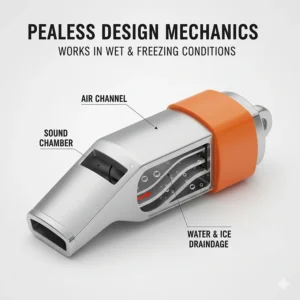
Despite its minimalist design, the pealess whistle design ensures reliable performance. There are no small parts to freeze, corrode, or clog with debris. The bright orange color provides visibility, and the crush-resistant construction means it won’t fail when you need it most. It’s also buoyant and works submerged, making it ideal for kayakers and paddlers.
Specifications:
- Decibel rating: 110+ dB
- Weight: <0.5 oz per whistle
- Included: 2-pack
- Color: High-visibility orange
✅ Exceptionally lightweight for gram-counters
✅ Two-pack offers redundancy
✅ Budget-friendly at $8-12 for two
❌ Lower volume than premium models
❌ Slim design can be harder to grip with gloves
Backpackers love the “forget it’s there” portability, while the affordable two-pack makes it practical to distribute throughout multiple kits without breaking the bank.
3. Fox 40 Sonik Blast CMG – The Referee’s Secret Weapon
Originally designed for sports officials, the Fox 40 Sonik Blast CMG brings professional-grade performance to emergency preparedness. The CMG (Cushioned Mouth Grip) isn’t just comfortable—it solves the metal whistle problem where freezing temperatures cause lips to stick painfully.
Fox 40 whistles are ubiquitous in professional sports for good reason. The three-chamber pealess design delivers 120dB of piercing, attention-commanding sound at 3400 Hz—a higher frequency than most survival whistles. This makes it exceptionally effective in urban environments where it cuts through traffic noise, crowd chatter, and mechanical rumble.
The self-clearing chambers are brilliant engineering. When submerged, water drains automatically on the next blow, ensuring consistent performance whether you’re caught in rain, crossing streams, or operating in humid conditions. The thermoplastic construction won’t corrode, and the ergonomic mouthpiece allows extended use without jaw fatigue.
Specifications:
- Sound power: 120+ dB
- Frequency: 3400 Hz
- Design: 2-chamber pealess with CMG
- Material: Thermoplastic with cushioned grip
✅ Superior urban noise penetration
✅ Comfortable for extended holding
✅ Proven reliability in harsh conditions
❌ Higher frequency may not carry as far outdoors
❌ Slightly larger mouthpiece
Users consistently rate this as the “loudest, clearest whistle” for close-to-medium range applications. Referees, lifeguards, and coaches swear by its immediate attention-grabbing capability, which translates perfectly to emergency situations.
4. Storm All-Weather Safety Whistle – The Underwater Performer
The Storm All-Weather Safety Whistle earned its reputation by being genuinely twice as loud as standard whistles—a claim backed by testing from the Central Institute for the Deaf. At 130dB, it delivers exceptional volume, but the real innovation is its patented resonating chamber.
Most whistles create wasted high and low frequency sounds. Storm’s harmonic chamber recycles these into a focused 3150 Hz tone—the frequency government research identified as most readily heard over motors, crowds, and explosions. This isn’t marketing hype; it’s acoustic engineering optimized for rescue scenarios.
The underwater functionality is legitimate. The unique chamber design forces out all water when blown, allowing it to work at depths up to 50 feet. Divers, kayakers, and maritime workers rely on this feature when standard whistles would be useless. It’s larger than ultralight options at 3 x 2 inches, but that size contributes to its unmatched resonance.
Specifications:
- Decibel rating: 130 dB
- Frequency: 3150 Hz (optimized for rescue)
- Special feature: Works 50 feet underwater
- Dimensions: 3 x 2 inches
✅ Genuinely twice as loud as competitors
✅ Functions underwater—proven to 50 feet
✅ Government-recommended frequency
❌ Bulkier profile
❌ Less discrete for EDC carry
Marine professionals and flood-zone residents appreciate the “lifesaver for water emergencies” design, though some find the size impractical for minimalist everyday carry.
5. LuxoGear Emergency Whistle – The Value Champion
The LuxoGear Emergency Whistle proves you don’t need to spend big for reliable safety gear. This double-tube design delivers 120dB of sound power—enough to be heard over a mile away—while keeping the price accessible for families stocking multiple emergency kits.
The dual-chamber pealess whistle design eliminates moving parts that could fail when you need them most. No pea means no freezing in cold weather, no rust in humid conditions, and no clogging from debris. The excellent airflow design requires minimal effort to produce maximum volume, conserving your energy during extended signaling.
Each whistle includes an adjustable reflective lanyard attachment with a slider button for neck comfort and a clip for securing to gear. The bright orange color ensures visibility even in dark conditions. At 0.4 ounces, it’s light enough to forget about until needed.
Specifications:
- Sound power: 120 dB
- Design: Double-tube pealess
- Included: 2-pack with lanyards
- Price: $10-14 for two whistles
✅ Outstanding value—two quality whistles
✅ Comfortable mouth grip won’t stick in cold
✅ Reflective lanyard adds night visibility
❌ Basic design without premium features
❌ Plastic construction less durable than metal
Budget-conscious families love the “great value for peace of mind” pricing, enabling them to equip every family member’s emergency kit without financial stress.
6. TISUR Titanium Emergency Whistle – The EDC Minimalist’s Dream
The TISUR Titanium Emergency Whistle represents the pinnacle of minimalist survival gear. At just 0.2 ounces (6.7 grams) and 2 inches long, it’s the lightest option in this roundup—yet still produces 120dB of clear, piercing sound.
Titanium brings real advantages beyond weight savings. The Ti-6AL-4V titanium alloy offers exceptional strength-to-weight ratio, complete corrosion resistance, and lifetime durability. Unlike brass or stainless steel, titanium won’t rust in humid environments, taste metallic, or conduct temperature extremes that burn or freeze your lips.
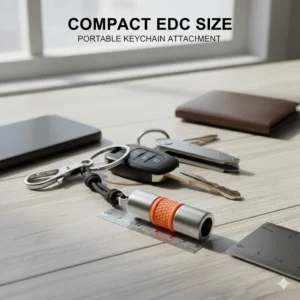
The integrated design features a small hole for lanyard attachment that doubles as a keychain mount. It’s so compact that many users wear it as a necklace on 26-inch paracord, making it truly always-available EDC (everyday carry) gear. The streamlined profile eliminates snag points that catch on clothing or gear.
Specifications:
- Material: Ti-6AL-4V titanium alloy
- Weight: 0.2 oz (6.7 grams)
- Dimensions: 2.02 x 0.28 inches
- Included: 2-pack with paracord
✅ Lightest option—barely noticeable
✅ Lifetime durability from titanium
✅ Hypoallergenic and non-toxic
❌ Higher cost than plastic alternatives
❌ Small size harder to grip with gloves
EDC enthusiasts and minimalist backpackers rave about the “forget you’re wearing it” comfort, while appreciating the premium materials that will outlast them.
7. HEIMDALL Emergency Survival Whistle – The Family-Friendly Option
The HEIMDALL Emergency Survival Whistle delivers solid performance at an entry-level price point, making it perfect for families building comprehensive emergency preparedness. The two-pack configuration means parents and kids can each carry one without worrying about cost.
The bright blue and purple colors might seem playful, but they serve a serious purpose—high visibility in emergency situations. The non-brittle ABS plastic construction survives drops and impacts that would crack cheaper alternatives, while the pealess design ensures consistent 120dB performance in any weather.
The dual attachment system offers flexibility: a lanyard with clip for wearing around the neck, plus a separate clip for attaching to belt loops, backpack straps, or life jacket D-rings. The two sound chambers provide excellent volume without requiring strong lung power—important for children or elderly family members.
Specifications:
- Sound power: 120 dB
- Design: Two-chamber pealess
- Colors: Blue, purple (high-visibility)
- Included: 2-pack with lanyards and clips
✅ Kid-friendly design and colors
✅ Multiple attachment options
✅ Excellent value for families
❌ Basic construction
❌ Not the most compact option
Parents appreciate the “reliable and affordable” combination, especially when outfitting multiple family members’ emergency bags and vehicles.
Understanding Decibel Rating Whistle Performance
Decibel ratings can be confusing because they use logarithmic scale rather than linear. Here’s what you need to know: every 10dB increase represents roughly a doubling of perceived loudness to human ears. A 120dB whistle isn’t just 20% louder than 100dB—it’s approximately four times louder.
The relationship between decibels and distance is equally important. Sound intensity follows the inverse square law, meaning each doubling of distance reduces sound energy by 75%. A whistle producing 120dB at one foot might register 100dB at four feet, 80dB at 16 feet, and so on. This is why starting with maximum volume matters—it gives you more usable range before the sound fades below the ambient noise threshold.
Context matters too. According to occupational safety research, sustained exposure above 85dB can cause hearing damage. The loudest survival whistle models approaching 140dB enter territory where even brief exposure without protection is harmful. This isn’t a design flaw—it’s intentional. In life-threatening emergencies, temporary hearing discomfort is infinitely preferable to remaining unheard.
Different frequencies also affect performance. Lower frequencies (2800-3150 Hz) carry farther and penetrate obstacles better, making them ideal for wilderness rescue. Higher frequencies (3400+ Hz) cut through urban noise pollution more effectively, making them better for city emergencies. The best survival whistle for your needs depends on your typical environment.
The Science Behind Pealess Whistle Design
Traditional whistles contain a small ball (the “pea”) that bounces around the chamber, intermittently blocking airflow to create the characteristic warbling sound. While effective for sports and casual use, pea whistles have critical vulnerabilities in emergency scenarios.
The pealess whistle design eliminates this moving part entirely, using carefully shaped air chambers to create sound through resonance alone. This innovation solves multiple problems:
Reliability in Extreme Conditions ⛄
Pea whistles can freeze solid in cold weather or become clogged with moisture. When hypothermia is setting in and your fingers barely work, discovering your whistle has failed is potentially fatal.
Consistent Performance 🔊
Without a bouncing pea, sound production is purely about airflow, making performance predictable. You can whistle with minimal effort or blast at full lung capacity, always getting proportional volume.
Hygiene and Maintenance 🧼
Pea whistles accumulate saliva, dirt, and debris around the ball, creating bacterial breeding grounds. Pealess designs have smooth internal chambers that rinse clean and dry quickly.
The dual or triple chamber designs in modern survival whistles create multiple resonating frequencies that combine into an exceptionally loud, attention-grabbing sound. It’s acoustic engineering at its finest—no moving parts, maximum reliability.
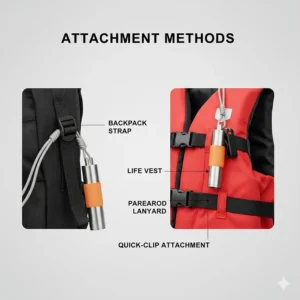
Proper Lanyard Attachment Techniques
Having a survival whistle is useless if it’s buried at the bottom of your pack when you need it. Proper lanyard attachment ensures instant accessibility while preventing loss.
Neck Lanyard Wear 🎯
The classic around-the-neck carry keeps your whistle immediately accessible. Use the adjustable slider to position it at mid-chest level—high enough to avoid bouncing against your stomach during activity, low enough to avoid choking hazards. For outdoor activities, tuck the lanyard inside your shirt collar to prevent snags on branches.
Pro tip: Choose lanyards with breakaway clasps that release under sudden force. This safety feature prevents strangulation if the lanyard catches on equipment or during falls.
Backpack Shoulder Strap 🎒
Many hikers prefer clipping their whistle to a backpack shoulder strap using a small carabiner. This keeps it visible and instantly grabbable without bouncing against your chest. The downside: if you drop your pack in an emergency, your signal device goes with it.
Life Jacket Integration 🛟
Water enthusiasts should integrate whistles directly into PFD (personal flotation device) attachment points. Use a short lanyard—12 inches maximum—to prevent the whistle from floating away from your body if you’re incapacitated in water.
Vehicle Emergency Kits 🚗
For car emergency kits, attach the whistle to the outside of your emergency bag using a bright-colored carabiner. In a crash or breakdown, you may need to signal for help before fully accessing your kit contents.
Emergency Whistle Camping Essentials
Wilderness camping multiplies the importance of reliable signaling devices. Cell coverage is often nonexistent, trails can be unmarked, and weather changes rapidly. Your best survival whistle becomes a critical backup when technology fails.
The Three-Blast Universal Distress Signal 📣
If you need rescue, blow three sharp blasts, wait one minute, then repeat. Three of anything—three whistle blasts, three fires, three rock piles—is internationally recognized as a distress signal. Rescuers will respond with one or two blasts to confirm they’ve heard you.
Energy Conservation Strategy ⚡
Your voice exhausts quickly when shouting. Studies show that calling for help verbally can drain energy reserves within 30 minutes. A quality emergency whistle camping tool requires minimal breath to produce maximum volume, letting you signal periodically for hours or even days without significant fatigue.
Multi-Day Trip Protocols 🏕️
For extended backcountry trips, carry at least two whistles. Stash one in an easily accessible pocket and another inside your pack as backup. Weight penalty is negligible (total: 1 ounce), but redundancy could save your life if one is lost or damaged.
Wildlife Deterrent Applications 🐻
While bear spray remains the primary defense against aggressive wildlife, a loud signal whistle hiking tool can help. Multiple sharp blasts often startle approaching animals, buying you time to deploy other defenses or slowly retreat. The Fox 40 and HyperWhistle models are particularly effective for this purpose.
Signal Whistle Hiking Safety Protocols
Day hiking seems safe compared to multi-day expeditions, but statistics tell a different story. Most wilderness rescues involve day hikers who got disoriented on familiar trails. Having your signal whistle hiking gear readily accessible can transform a minor inconvenience into a quick rescue.
Trail Communication Systems 🥾
When hiking in groups, establish whistle signals: one blast means “stop and wait,” two blasts mean “come toward the sound,” three blasts signal distress. This creates an audio beacon system when visibility drops due to weather, dense forest, or terrain.
Solo Hiking Considerations 🚶
Solo adventurers should clip a whistle to their chest strap or hydration pack shoulder strap. If you’re injured and can’t reach your pack, having a whistle on your body could be the difference between a few uncomfortable hours and a multi-day ordeal.
Weather-Dependent Strategies ⛈️
Sound carries differently in various conditions. In fog or dense forest, reduce the interval between signal blasts to maintain acoustic presence. In windy conditions, position yourself to whistle downwind when possible—sound carries farther with wind assist than against it.
Integration with Other Signaling 🔦
Combine whistle signals with visual markers. If rescue teams respond to your whistle, use a mirror, bright clothing, or flashlight to provide a visual target. Audio gets attention; visual confirmation enables precision rescue.
✨ Don’t Miss These Exclusive Deals!
🔍 Take your outdoor safety to the next level with these carefully selected products. Click on any highlighted item to check current pricing and availability. These tools will help you create authentic emergency preparedness your family will rely on!
Choosing the Right Whistle for Different Activities
Backpacking & Hiking 🏔️
Weight is king. The SOL Slim Rescue Howler or TISUR Titanium offer the best power-to-weight ratio. Pair with reflective lanyard for visibility and attach to chest strap for instant access.
Water Sports & Marine Use 🌊
Choose whistles explicitly rated for underwater use. The Storm All-Weather Safety Whistle leads this category, but HyperWhistle and most pealess designs work when submerged. Always use a floating lanyard attachment.
Urban Emergency Preparedness 🏙️
Higher frequency whistles like the Fox 40 Sonik Blast cut through traffic and machinery noise more effectively. Keep one in your vehicle, workplace desk, and home emergency kit.
Winter & Cold Climate 🥶
Metal whistles can freeze to lips in extreme cold. Stick with plastic or titanium models. The LuxoGear and HEIMDALL options both feature comfortable mouth grips that won’t cause cold injuries.
Family & Children 👨👩👧👦
Choose models requiring minimal lung power. The HEIMDALL two-pack is ideal for families—kids get their own whistle, which encourages carry compliance. Teach proper use: three blasts means real emergency only.

Maintenance and Longevity
Quality survival whistles require minimal maintenance, but a few simple practices extend lifespan:
Regular Cleaning 🧽
Rinse with warm water after trips. For pealess designs, flush water through both ends to clear any debris. Dry completely before storage to prevent mold.
Lanyard Inspection 🔍
Check lanyard for fraying or UV damage every six months. Paracord degrades in sunlight; replace annually if stored in vehicles. Reflective lanyards lose effectiveness over time.
Periodic Testing 🎵
Blow your whistle monthly to ensure it still produces full volume. This isn’t just maintenance—it familiarizes you with its sound characteristics and energy requirements.
Storage Conditions 📦
Store in dry, moderate temperature locations. Extreme heat (like car dashboards in summer) can warp plastic components. Extreme cold makes some plastics brittle.
Battery-Free Advantage ✅
Unlike electronic signaling devices, whistles never need charging or battery replacement. A whistle purchased today will function identically in 20 years if properly maintained.
How to Choose Best Survival Whistle: Step-by-Step Guide
Step 1: Assess Your Primary Use Case
Identify where you’ll most likely need emergency signaling. Wilderness backcountry, urban environments, water activities, and family preparedness each favor different whistle characteristics.
Step 2: Determine Required Decibel Level
For most users, 110-120dB provides sufficient range. If operating in extremely noisy environments or needing maximum distance, consider 130-142dB models.
Step 3: Consider Weight Constraints
Ultralight backpackers should prioritize sub-0.5oz options. Casual hikers and vehicle emergency kits can accommodate heavier, more durable models.
Step 4: Evaluate Material Preferences
Plastic offers the best weight-to-cost ratio. Titanium provides ultimate durability for EDC. Brass and stainless steel fall somewhere between.
Step 5: Budget Multiple Units
Plan to purchase at least two whistles. Redundancy costs little but provides enormous peace of mind. Distribute across different kits and locations.
Step 6: Test Before Trusting
Before relying on any whistle, test it in controlled conditions. Verify the volume, ease of use, and how much breath effort is required.
Step 7: Establish Carry Protocols
Decide on attachment method and practice accessing your whistle quickly. If you can’t grab it within three seconds, reassess your carry system.
The Psychology of Emergency Signaling
Understanding human behavior in crisis situations helps explain why whistles are so critical. When people are injured, exhausted, or panicked, complex tasks become impossible. Fine motor skills deteriorate. Decision-making slows. In these moments, simplicity saves lives.
A whistle requires one instinctive action: blow. No buttons, no switches, no aim required. The cognitive load is minimal, making it accessible even when you’re hypothermic, hypoglycemic, or in shock. Contrast this with trying to operate a smartphone with numb fingers or aim a signal mirror with shaking hands.
The psychological impact works both ways. For the lost person, the whistle provides agency—you’re doing something active to effect rescue rather than passively waiting. This combats despair and helps maintain mental clarity. For rescuers, the directional quality of whistle sound makes searching far more efficient than responding to shouting.
Research in search and rescue operations consistently shows that victims with whistles are located 3-5 times faster than those relying on voice alone. That time difference can mean the difference between a minor incident and a tragic outcome, especially in rapidly changing weather or approaching darkness.
Common Mistakes to Avoid
Leaving It In Your Pack ❌
The most common mistake is treating a whistle like other gear rather than as life-critical equipment. If it’s not immediately accessible on your person, it’s essentially not there.
Assuming “Good Enough” Quality ❌
Dollar store whistles may look similar, but decibel output matters enormously. The difference between 90dB and 120dB is the difference between being heard at 50 yards versus half a mile.
Neglecting to Test ❌
Many people purchase whistles and never actually blow them until an emergency. Test your whistle so you know what sound to expect and how much effort is required.
Ignoring Weather Effects ❌
Sound travels differently in various conditions. Wind, precipitation, and terrain all affect how far your whistle carries. Understanding these factors helps you signal more effectively.
Single Point of Failure ❌
Carrying only one whistle creates vulnerability. They’re small and easily lost. Two whistles cost under $20 combined and provide crucial redundancy.
FAQ
❓ How loud should a survival whistle be for emergency use?
❓ What is the advantage of pealess whistle design over traditional whistles?
❓ Can I use a survival whistle for bear deterrent while hiking?
❓ How should I attach a survival whistle to my hiking gear?
❓ What decibel rating whistle is recommended by FEMA for emergency kits?
Conclusion: Your Voice When Yours Fails
Choosing the best survival whistle isn’t about finding the most expensive or feature-packed option—it’s about matching the right tool to your specific needs while ensuring you’ll actually carry it. The best whistle is the one you have with you when crisis strikes.
For wilderness enthusiasts prioritizing weight, the SOL Slim Rescue Howler or TISUR Titanium deliver impressive performance in packages you’ll barely notice. Urban preparedness advocates will appreciate the Fox 40 Sonik Blast’s ability to cut through city noise. Families building comprehensive emergency kits get exceptional value from the HEIMDALL or LuxoGear two-packs. And anyone wanting absolute maximum volume needs the HyperWhistle Original.
Remember, emergency whistle camping gear and signal whistle hiking equipment become critical exactly when everything else has failed. Your phone’s dead, you’re beyond cellular range, darkness is falling, or you’re physically unable to navigate back to safety. In these moments, that tiny piece of gear clipped to your pack transforms from an afterthought into your primary lifeline.
According to emergency preparedness experts and FEMA guidelines, every household should have multiple whistles distributed across emergency kits, vehicles, and bug-out bags. At prices ranging from $8-22, there’s no excuse for being unprepared. Invest in quality whistles, practice proper carry techniques, and teach your family the universal three-blast distress signal.
Your survival whistle won’t prevent emergencies, but it might just ensure you survive them. Don’t wait for an emergency to realize its importance—equip yourself today.
Recommended for You
- Emergency Blanket for Camping: 7 Best Picks to Stay Warm in 2026
- 7 Best Bear Canisters for Backpacking – 2026
- 7 Best Bear Spray 2026: Ultimate Protection Guide
Disclaimer: This article contains affiliate links. If you purchase products through these links, we may earn a small commission at no additional cost to you.
✨ Found this helpful? Share it with your friends! 💬🤗
