In This Article
When you’re miles into the backcountry with nothing but your pack and the trail ahead, your water bottle isn’t just gear—it’s your lifeline. I’ve learned this the hard way after watching cheaper bottles crack at altitude and leak precious water into my sleeping bag. That’s why this Nalgene bottle camping guide exists: to help you choose the bottle that’ll actually survive your adventures.
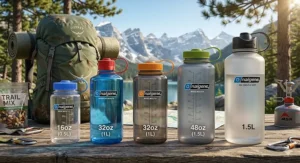
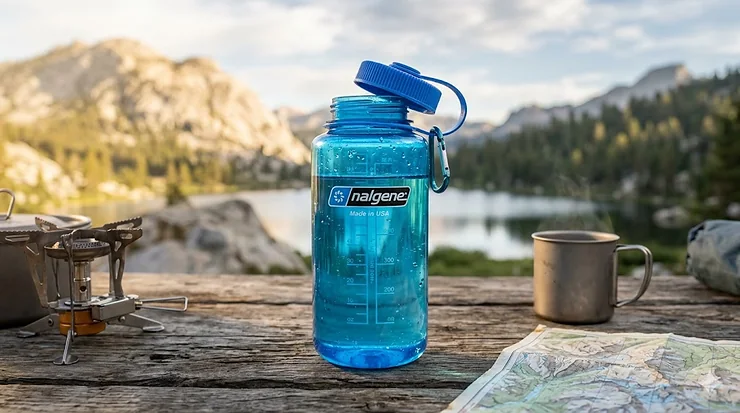
Nalgene bottles have dominated outdoor hydration for over 70 years, and there’s a reason experienced hikers swear by them. These aren’t the flimsy squeeze bottles that develop mysterious leaks after a few months. We’re talking about bottles that can freeze solid overnight, handle boiling water for camp coffee, and survive being dropped off a cliff (yes, I’ve tested this). But with sizes ranging from 16 to 48 ounces, materials from Tritan to HDPE, and features like wide mouths versus narrow spouts, choosing the right one isn’t obvious.
This comprehensive Nalgene bottle camping guide breaks down exactly what you need based on real backcountry use. Whether you’re planning a weekend camping trip or a week-long wilderness trek, understanding which bottle fits your specific needs—and why—makes the difference between comfortable hydration and constant frustration. Let’s dive into the bottles that have earned their reputation on the trail.
Quick Comparison Table: Top Nalgene Bottles at a Glance
| Model | Capacity | Material | Best For | Price Range |
|---|---|---|---|---|
| 32 oz Wide Mouth | 32 oz | Tritan | All-around camping | $12-$18 |
| 48 oz Silo | 48 oz | Tritan | Long hikes, base camp | $16-$22 |
| On The Fly 24 oz | 24 oz | Tritan | Day hikes, cycling | $14-$19 |
| 32 oz Narrow Mouth Sustain | 32 oz | Tritan Renew | Eco-conscious hikers | $13-$19 |
| 16 oz Wide Mouth | 16 oz | Tritan | Kids, ultralight trips | $10-$15 |
Looking at this comparison, the 32 oz wide mouth delivers the sweet spot for most campers—enough capacity for serious hydration without the bulk of the 48 oz models. However, if you’re planning multi-day trips where water sources are scarce, that extra 16 ounces in the Silo model means fewer refill stops. Budget-conscious beginners should note that the price difference between sizes is minimal, so choosing based on your actual water needs rather than cost makes more sense.
💬 Just one click — help others make better buying decisions too!😊
Top 7 Nalgene Bottles: Expert Analysis from the Trail
1. Nalgene 32 oz Wide Mouth Water Bottle
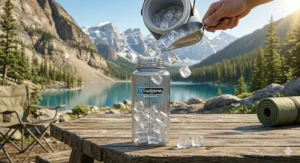
This is the bottle that started it all, and it’s still the gold standard for a reason. The Nalgene 32 oz Wide Mouth features a 63mm opening that completely changes how you interact with your water—you can add ice cubes without frustration, thoroughly scrub every corner, and even attach most water filtration systems directly to the threads.
Made from BPA-free Tritan copolyester, this bottle handles temperature extremes from -40°F to 212°F, which means you can freeze it overnight as a makeshift ice pack or fill it with boiling water for a backcountry foot warmer. The measurement markings (in both milliliters and ounces) aren’t just decorative—they’re genuinely useful for mixing electrolyte powders or measuring water for dehydrated meals. What really matters here is the semi-buttress thread design that creates a leak-proof seal without requiring gorilla-strength tightening.
In my experience with this bottle across dozens of camping trips, it excels for anyone who values versatility over specialized features. The wide mouth makes it perfect for cold morning coffee (just pour it in), but it also means you need to pay attention while drinking on bumpy trails unless you want water all over your face. I recommend this as your primary camping bottle if you’re just starting out or if you want one bottle that handles everything competently.
Customer feedback consistently praises the virtually indestructible build—people report bottles lasting 10-15 years of hard use. The only common complaint is that the wide opening can be awkward for drinking while moving, which is why some experienced hikers pair this with a narrow-mouth bottle.
Pros:
✅ Wide opening accommodates ice, filters, and easy cleaning
✅ Extreme temperature tolerance (-40°F to 212°F)
✅ Measurement markings for precise mixing
Cons:
❌ Wide mouth requires careful drinking while moving
❌ Slightly heavier than narrow-mouth alternatives
The bottle typically falls in the $12-$18 range, making it exceptional value given its lifetime durability. For most campers, this represents the best balance of features, price, and proven reliability.
2. Nalgene 48 oz Wide Mouth Silo
When standard 32-ounce bottles leave you constantly looking for refills, the Nalgene 48 oz Silo steps up with 50% more capacity in nearly the same footprint. This is engineering that actually matters—Nalgene designed the Silo to maintain the same diameter as their 32 oz bottles (so it still fits in pack side pockets) while extending vertically to 11.3 inches.
The 1,500ml capacity with maximum fill of 1,565ml means you’re carrying enough water for a full afternoon hike without the weight and bulk of multiple smaller bottles. Made from the same bombproof Tritan material, this bottle shares the temperature resistance and durability of its smaller sibling, but the extra height changes the center of gravity slightly—something you’ll notice when it’s full and clipped to your pack.
What most buyers overlook about this model is its strategic advantage for base camp situations. Fill it in the evening, freeze it overnight, and you’ve got cold water available well into the next afternoon. The graduated fill lines help with precise measurements when you’re cooking for a group or tracking daily water intake during hot weather.
Real-world users report that while the capacity is fantastic for thirsty hikers or hot climates, the height can make it tippy when sitting on uneven ground. I’ve also found that drinking from a full Silo requires two hands unless you’ve got exceptional grip strength—the weight distribution just doesn’t work one-handed when it’s topped off.
Pros:
✅ 48 oz capacity in a pack-friendly diameter
✅ Reduces refill frequency on long hikes
✅ Excellent for base camp ice/cold storage
Cons:
❌ Taller profile can be unstable when full
❌ Two-hand operation when completely full
Expect to pay in the $16-$22 range for the Silo. The premium over a 32 oz bottle is modest considering you’re getting significantly more versatility for multi-day trips or hot-weather hiking.
3. Nalgene On The Fly 24 oz
The On The Fly 24 oz breaks from Nalgene’s traditional screw-cap design with a flip-top mechanism featuring a push-button release and secondary locking bail. This is the bottle for anyone who’s struggled with one-handed hydration while cycling, driving, or scrambling up technical sections of trail.
At 24 ounces, it’s deliberately sized to fit standard cup holders—something the larger Nalgene bottles can’t claim. The slim profile (measuring 9.5 inches tall with a narrower diameter) slips easily into side pockets, hydration vest pouches, and even some larger jacket pockets. The BPA-free Tritan construction maintains the durability standards, though the flip mechanism introduces a potential failure point that doesn’t exist on traditional screw-tops.
The real innovation here is the dual-action lid: pop the button for quick sips during activity, then engage the metal locking bail for guaranteed leak-proof transport. That said, I need to be honest about the durability—customer reviews consistently mention the plastic catch mechanism as the weak link, with some reporting breakage within weeks of heavy use. However, Nalgene sells replacement lids separately, which speaks to their understanding that this is a wear component.
This bottle makes sense for day hikers, cyclists, or anyone who prioritizes convenience over maximum capacity. It’s not the choice for multi-day backcountry trips where you need serious water volume, but for morning trail runs or afternoon bike rides, the one-handed operation genuinely improves your experience.
Pros:
✅ True one-handed operation with flip-top
✅ Fits standard cup holders (car, bike)
✅ Compact size for day packs and vests
Cons:
❌ Flip mechanism less durable than screw caps
❌ Lower capacity limits long-distance use
Pricing sits around $14-$19. Given the lid durability concerns, consider this more of a convenience/day-use bottle rather than a primary backcountry workhorse.
4. Nalgene 32 oz Narrow Mouth Sustain
The Narrow Mouth Sustain represents Nalgene’s commitment to sustainability—it’s manufactured from Tritan Renew, a material derived from 50% recycled plastic waste using ISCC-certified mass balance methods. But the environmental story isn’t why you’d choose this bottle for camping; you’d choose it because the narrow opening (38mm versus the 63mm wide mouth) completely changes the drinking experience.
That smaller opening means controlled flow—you’re not getting splashed in the face when you drink while hiking, and you’re not losing water to spillage when the trail gets rough. The semi-buttress threads still create a leak-proof seal, and the reduced opening actually makes the bottle easier to drink from with cold, numb fingers (something you appreciate after a few nights below freezing).
The Sustain line maintains the same -40°F to 212°F temperature range and measurement markings you’d expect from Nalgene. What changes is your interaction pattern: this bottle encourages frequent small sips rather than big gulps, which actually promotes better hydration patterns during extended activity. However, the narrow mouth makes adding ice cubes nearly impossible (ice needs to be crushed first) and thorough cleaning requires a bottle brush rather than just hand washing.
For eco-conscious hikers who want to minimize their environmental impact without sacrificing performance, this bottle delivers. The recycled content doesn’t compromise durability—I’ve got a Sustain bottle that’s been through two seasons of hard use without any degradation. Just understand that choosing narrow mouth is a deliberate trade-off: better drinking control for reduced versatility.
Pros:
✅ Made from 50% recycled plastic waste
✅ Controlled flow prevents spills while moving
✅ Easier drinking with cold/gloved hands
Cons:
❌ Ice cubes won’t fit through narrow opening
❌ Requires bottle brush for thorough cleaning
Available in the $13-$19 range, the Sustain models cost roughly the same as standard Tritan bottles while offering a reduced environmental footprint—a straightforward choice for environmentally-minded campers.
5. Nalgene 16 oz Wide Mouth
Don’t dismiss the 16 oz Wide Mouth as just a kid’s bottle—ultralight backpackers and weekend warriors have discovered this smaller size offers strategic advantages. Weighing just 3.2 ounces empty, it’s light enough to justify carrying multiple bottles for different purposes: one for drinking water, one for electrolyte mix, one for camp cooking measurements.
The 16-ounce capacity is deliberately sized to fit into jacket pockets, smaller side pouches, and tight spaces where a 32 oz bottle won’t squeeze. That 63mm wide mouth opening maintains all the cleaning and ice-adding advantages of larger bottles, and the measurement markings remain useful for precise mixing despite the reduced volume.
What experienced hikers figure out is that two 16 oz bottles can be more versatile than one 32 oz bottle—you can freeze one overnight while keeping the other for immediate drinking, or designate one for treated water and one for untreated (crucial for avoiding cross-contamination). The smaller diameter also makes this bottle more manageable for younger campers or anyone with smaller hands.
The obvious limitation is capacity—16 ounces disappears quickly during summer hiking or high-altitude exertion. You’ll need reliable water sources or the willingness to carry multiple bottles. Customer reviews from parents consistently praise this size for elementary-age kids, while ultralight enthusiasts mention using it as a supplement to bladder hydration systems.
Pros:
✅ Ultra-portable at 3.2 oz empty weight
✅ Fits in jacket pockets and tight spaces
✅ Multiple bottles strategy for versatility
Cons:
❌ Capacity limits use in water-scarce areas
❌ Requires frequent refills during activity
Priced around $10-$15, this is Nalgene’s most affordable entry point. The lower cost makes buying multiple bottles practical, turning a capacity limitation into a strategic advantage.
6. Nalgene MultiDrink 20 oz
The MultiDrink 20 oz attempts to give you two bottles in one with its dual-lid design: a high-flow spout for gulping and an integrated straw for sipping without tilting. This hybrid approach targets people who want options depending on activity—straw for cycling or desk work, spout for post-hike chugging.
At 20 ounces, it’s sized between the compact 16 oz and standard 24 oz models, making it suitable for short day hikes or as a secondary bottle. The BPA-free Tritan construction maintains the temperature tolerance you expect, and the flip-top design offers one-handed operation similar to the On The Fly.
The straw feature divides users—some love the ability to drink without tilting (useful while driving or focusing on trail navigation), while others find the straw adds cleaning complexity and represents another potential leak point. The high-flow spout works as advertised, though it lacks the locking mechanism of the On The Fly, relying instead on the flip-top closure alone.
In my testing, this bottle makes most sense for mixed-use scenarios: car camping where you’re transitioning between activities, or family outings where different people have different drinking preferences. For serious backcountry use, the added complexity of the dual-drinking system doesn’t justify the minimal weight and bulk increase over simpler bottles.
Pros:
✅ Two drinking methods in one bottle
✅ Straw option for no-tilt drinking
✅ Versatile for mixed activities
Cons:
❌ More complex cleaning than simple bottles
❌ Dual system adds potential failure points
Expect pricing in the $14-$18 range. This represents a specialized choice rather than a universal solution—buy it if the dual-drinking feature solves a specific problem you actually have.
7. Nalgene HDPE Wide Mouth 48 oz
The HDPE 48 oz is Nalgene’s lightweight champion, made from high-density polyethylene instead of Tritan. This material choice drops the empty weight significantly—around 7.1 oz versus the Tritan Silo’s 7.4 oz despite the same 48 oz capacity. For ultralight backpackers counting every ounce, those grams matter.
HDPE offers different properties than Tritan: it’s more flexible (reducing cracking risk during freezing), naturally translucent rather than crystal clear, and slightly less impact-resistant in extreme cold. The wide mouth maintains the 63mm opening for ice and filters, and the BPA-free formulation ensures safe drinking. Where HDPE diverges is temperature tolerance—it’s rated to 180°F rather than Tritan’s 212°F, which means you shouldn’t pour genuinely boiling water directly into it.
The flexibility of HDPE becomes an advantage when the bottle freezes with water inside—rather than cracking like rigid materials might, it expands and contracts. Experienced winter campers exploit this by freezing the bottle overnight with space at the top, then carrying it as a slow-melting water source that lasts through the morning.
This bottle targets weight-conscious backpackers who prioritize ounces over absolute durability, or anyone who frequently camps in freezing conditions where flexibility prevents damage. The trade-off is a less premium feel—HDPE bottles don’t have the glass-like clarity of Tritan, and they can develop a slight smell over time if not cleaned thoroughly.
Pros:
✅ Lighter weight than Tritan at same capacity
✅ Flexible material prevents freeze-cracking
✅ Excellent for winter camping use
Cons:
❌ Lower heat tolerance (180°F max)
❌ Can develop odors without proper cleaning
Pricing typically ranges from $14-$20. The HDPE option makes sense for specific use cases (winter camping, ultralight trips) rather than general-purpose use where Tritan’s durability advantages justify the minimal weight penalty.
Real-World Camping Scenarios: Which Bottle Fits Your Trip?
Choosing the right Nalgene isn’t about picking the “best” bottle—it’s about matching capacity and features to your specific camping situation. Here’s how experienced campers actually make these decisions:
The Weekend Car Camper
You’re driving to an established campground with facilities nearby. Water availability isn’t a concern, but you want durability and versatility. Best choice: 32 oz Wide Mouth. The all-around capability handles morning coffee, afternoon hydration, and evening camp cooking measurements. The wide mouth means you’re not struggling to clean it after it spent all day in your dusty car. Buy two—one for clean drinking water, one for treating questionable sources.
The Multi-Day Backpacker
You’re covering 15-20 miles daily with water sources every 4-6 miles. Weight matters, but so does capacity between refills. Best choice: 32 oz Narrow Mouth Sustain paired with a 16 oz Wide Mouth. The narrow mouth is your primary drinking bottle (less spillage while hiking), while the 16 oz handles electrolyte mixes separately and serves as a backup. Total carried capacity of 48 oz without the bulk of a single large bottle.
The Desert Hiker
Water sources are 10+ miles apart, and summer heat means high consumption. You need maximum capacity without multiple bottles. Best choice: 48 oz Silo. Accept the extra height and weight—in arid conditions, running out of water is the bigger risk than carrying a few extra ounces. Fill it completely before leaving water sources, and use the measurement markings to track consumption and ration if necessary.
The Day Hiker/Trail Runner
You’re out for 2-4 hours with easy access to your car or trailhead facilities. Convenience and low weight trump capacity. Best choice: On The Fly 24 oz. The one-handed operation lets you hydrate without breaking stride, and the slim profile fits everywhere. If you’re really pushing pace, pair it with a handheld water bottle or vest bladder for continuous access.
Common Mistakes When Buying Nalgene Bottles for Camping
After watching countless hikers make poor bottle choices, these are the mistakes that consistently cause problems:
Choosing capacity based on daily water intake rather than refill frequency. You don’t need to carry a full day’s water at once—you need enough capacity to reach the next reliable source with margin for error. A 32 oz bottle refilled three times beats a single 96 oz monster you’ll never actually carry full.
Ignoring the mouth size implications. Wide mouths are objectively better for cleaning and ice, but they’re demonstrably worse for drinking while moving. If you’re primarily day-hiking on smooth trails, wide mouth wins. If you’re doing technical scrambling or cycling, narrow mouth or flip-top makes more sense. Don’t buy wide mouth just because it’s “better” without considering your actual use pattern.
Underestimating freeze/thaw impact on bottle longevity. If you camp in freezing conditions regularly, HDPE’s flexibility prevents the stress fractures that eventually develop in rigid materials. Tritan bottles can handle occasional freezing, but repeated freeze/thaw cycles accelerate wear. Match your material choice to your temperature environment.
Buying the cheapest option without considering replacement costs. A $10 bottle that lasts two seasons costs more than a $15 bottle that lasts a decade. Nalgene’s premium over generic brands is minimal, but the durability difference is substantial—this is one area where brand reputation directly correlates with longevity.
Essential Nalgene Camping Setup: Beyond the Bottle
Your Nalgene bottle works better as part of an integrated hydration system rather than a standalone item. Here’s what experienced campers pair with their bottles:
Water Treatment Integration
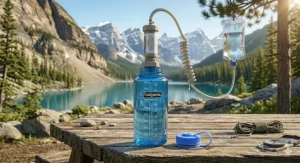
The wide mouth of Nalgene bottles accommodates most pump and gravity filters directly—you can thread many filter outputs onto the bottle opening. For chemical treatment, the measurement markings let you dose precisely: if your tablets treat 1 liter, fill to the 1000ml line. The transparency of Tritan bottles lets you visually confirm when chemical treatments have dissolved completely. According to Colorado State University Extension guidance on backcountry water treatment, proper containers are essential for preventing cross-contamination during water purification processes.
Temperature Management Tactics
Fill your Nalgene with boiling water before bed, wrap it in a spare shirt, and toss it in your sleeping bag—you’ve got a hot water bottle that’ll keep your feet warm for hours. The reverse works too: freeze the bottle during the day and wrap it against your back while hiking in desert heat. Nalgene’s temperature tolerance makes these tactics possible where other bottles would fail.
Organization Systems
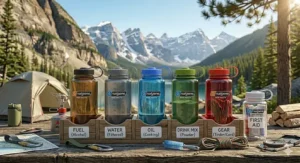
Use different colored bottles or caps to differentiate purposes: clear for drinking water, colored for electrolyte mixes, dark for cooking water. This prevents the common mistake of accidentally contaminating your drinking bottle with treated water or confusing your clean and dirty bottles during water purification.
Measurement Precision for Backcountry Cooking
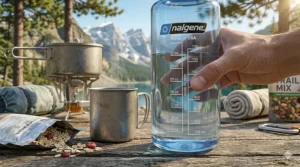
Those ml and oz markings aren’t decorative—they’re crucial for dehydrated meals. “Add 2 cups boiling water” becomes simple when you can fill directly to the 475ml line. This precision improves rehydration quality and reduces waste from over or under-watering meals.
How to Choose Your Nalgene: The Decision Framework
Stop overthinking and answer these questions in order:
1. What’s your longest time between water sources?
- Under 2 hours: 16-24 oz sufficient
- 2-4 hours: 32 oz recommended
- 4+ hours: 48 oz necessary
2. How important is weight to you?
- Ultralight priority: HDPE or 16 oz Tritan
- Balanced approach: 32 oz Tritan
- Durability priority: Tritan any size
3. Will you drink while moving?
- Yes, frequently: Narrow mouth or On The Fly
- No, mostly stationary: Wide mouth for versatility
4. Do you camp in freezing temperatures regularly?
- Yes: HDPE for freeze tolerance
- Occasionally: Tritan handles it
- No: Choose based on other factors
5. Environmental concerns matter?
- Yes: Sustain line with recycled content
- Nice bonus: Sustain if price equivalent
- Not priority: Standard Tritan fine
Your answers to these five questions will point you toward one or two specific bottles. If you’re still uncertain, default to the 32 oz Wide Mouth—it’s the most forgiving choice for beginners and handles the widest range of situations competently.
Nalgene vs Traditional Alternatives: Why Plastic Works for Camping
Metal and glass bottles have their advocates, but for camping specifically, Nalgene’s Tritan plastic offers advantages that often get overlooked:
Temperature Versatility Metal Can’t Match: Stainless steel bottles excel at insulation, but they can’t handle the temperature extremes Nalgene tolerates. You cannot safely pour boiling water into most metal bottles without risking burns from exterior heat transfer, and freezing with water inside can damage vacuum insulation. Nalgene bottles become your hot water bottle, ice pack, and beverage container with no special care needed.
Weight Without the Fragility: A 32 oz Tritan bottle weighs around 6.25 ounces empty. An equivalent stainless steel bottle weighs 12-15 ounces, doubling your empty bottle weight before you add any water. Glass is obviously worse. When you’re counting every ounce on a multi-day backpacking trip, that 6-9 ounce difference per bottle matters enormously.
Transparency Enables Treatment Verification: You can see water clarity in Tritan bottles, which matters when you’re treating questionable sources. Chemical treatment tablets dissolve visibly, and you can spot debris or contamination that would be invisible in opaque metal bottles. This visibility provides a safety advantage for backcountry water treatment.
Safety and Compliance: Understanding Tritan BPA-Free Plastic
The chemical safety of water bottles deserves more than marketing claims. Nalgene’s use of Tritan copolyester, a BPA-free plastic, is backed by certifications from the U.S. FDA, European Food Safety Authority (EFSA), and NSF International. Unlike polycarbonate plastics that required BPA for manufacturing, Tritan is molecularly different—it’s made from dimethyl terephthalate, cyclohexanedimethanol, and 2,2,4,4-Tetramethyl-1,3-cyclobutanediol without any bisphenol compounds.
Third-party testing has confirmed Tritan shows no estrogenic or androgenic activity, addressing concerns about hormone disruption that led to BPA’s phase-out from consumer products. The material maintains its chemical stability across repeated dishwasher cycles and temperature fluctuations, meaning it doesn’t degrade into your drinking water over time the way some plastics can.
For context on camping hydration safety, the Centers for Disease Control and Prevention emphasizes that water treatment while hiking and camping requires proper containers that won’t contaminate treated water. Nalgene’s chemical inertness means you can use chlorine dioxide tablets, iodine, or UV treatment without the plastic itself introducing contaminants.
FAQ: Your Nalgene Camping Questions Answered
❓ Can Nalgene bottles hold boiling water safely for camping?
❓ How long do Nalgene bottles last with regular camping use?
❓ Do measurement markings on Nalgene bottles fade over time?
❓ Can you put Nalgene bottles in the dishwasher safely?
❓ What's the difference between Nalgene Sustain and regular Tritan bottles?
Conclusion: Your Nalgene Bottle Camping Guide Action Plan
After reviewing seven proven Nalgene bottles and analyzing what actually matters in backcountry hydration, the path forward becomes clear: most campers are best served by starting with a 32 oz Wide Mouth Tritan bottle as their primary water carrier. It’s the most versatile option that handles everything from weekend car camping to multi-day backpacking without forcing compromises.
From there, your specific needs dictate additions: pair it with a 16 oz bottle for segregating electrolyte mixes, upgrade to the 48 oz Silo if you’re tackling arid environments with sparse water sources, or add an On The Fly bottle for day hikes where convenience matters more than capacity. The beauty of Nalgene’s system is that these bottles work together—you’re not locked into a single solution.
The investment is modest (under $20 for most bottles), the lifespan is measured in decades rather than seasons, and the reliability is proven across millions of trail miles. Compare that to cheaper alternatives that crack, leak, or develop mysterious odors within months, and the value proposition becomes obvious. Your Nalgene bottle camping guide journey doesn’t end with purchase—it begins there, as you discover through actual use which capacity and features match your outdoor rhythm.
Choose wisely based on your real needs, maintain them properly (yes, actually clean them after each trip), and these bottles will outlast most of your other gear. Water is non-negotiable in the backcountry, so your container deserves thoughtful selection rather than impulse buying.
✨ Don’t Miss These Exclusive Deals!
🔍 Take your camping hydration to the next level with these carefully selected Nalgene bottles. Click on any highlighted item to check current pricing and availability. These bottles will help you stay properly hydrated on authentic outdoor adventures your whole family will remember!
Recommended for You
- 7 Best Hydration Packs for Hiking That Keep You Crushing Trails (2026)
- Sawyer vs LifeStraw Comparison: 7 Best Backpacking Filters 2026
- 7 Best Insulated Water Bottle Camping Picks – 2026
Disclaimer: This article contains affiliate links. As an Amazon Associate, I earn from qualifying purchases. If you purchase products through these links, we may earn a small commission at no additional cost to you.
✨ Found this helpful? Share it with your friends! 💬🤗
