
In This Article
An ultralight mummy sleeping bag is a close-fitting, tapered sleeping bag built to deliver the most warmth for the least weight and packed volume. It typically pairs high fill power down, thin shell fabrics and a hooded, body-hugging cut, so backpackers can carry a warm night’s sleep for roughly a pound or two.
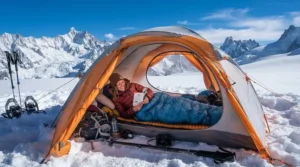
Here’s the thing about weight: every ounce on your back gets multiplied by every mile. A sleeping bag is usually one of the heaviest items in your pack, which makes the ultralight mummy sleeping bag one of the highest-leverage gear decisions you’ll ever make. Swap a clunky three-pound bag for a modern one near a pound and a quarter, and you’ve effectively deleted a day of snacks from your pack.
The market has shifted, too. By 2026, hydrophobic down, 10-denier shells and zoned insulation have moved from boutique experiments to mainstream features. The best bags now squeeze 850- to 900-fill power goose down into remarkably small stuff sacks. Mummy shapes win this game because there’s less empty space inside to heat.
Fair warning on method: I haven’t slept in these bags, and I won’t pretend otherwise. What follows is analysis built on manufacturer specs, retailer data and the patterns that show up across published reviews, with the spec-sheet fine print translated into what it means at 3 a.m. when the temperature drops. We’ll cover everything from a down mummy sleeping bag for thru-hiking to a mummy sleeping bag for winter mountaineering, plus a mummy sleeping bag for backpacking shape showdown and a practical compression sack guide.
Quick Comparison: 7 Best Ultralight Mummy Sleeping Bags for 2026
| Bag | Fill power | Weight (regular, approx.) | Temp rating | Price range | Best for |
|---|---|---|---|---|---|
| Sea to Summit Spark (45°F version) | 850+ goose | ~0.8 lb | 45°F (colder versions exist) | Mid-$300s | Warm-season thru-hikers |
| Therm-a-Rest Hyperion 20F | 900 goose | 1 lb 4 oz | 32°F comfort / 20°F limit | $470–$580 | Gram-counters on 3-season trips |
| Rab Mythic Ultra 360 | 900 goose | ~22.7 oz | 20°F sleep limit | Premium tier | Alpine-minded ultralighters |
| Western Mountaineering UltraLite 20 | 850+ goose | 28–31 oz by size | 20°F | $650–$700 | Cold sleepers on long trails |
| Naturehike Ultralight RDS Down | 650 duck | ~20 oz | 42°F comfort | Budget tier | Summer hikers and beginners |
| Kelty Cosmic Down 20 | 550 down | ~2 lb | 31°F comfort / 21°F limit | $150–$200 | Budget 3-season trips |
| NEMO Sonic 0 | 800 down | ~3 lb 2 oz | 0°F | Around $600 | Winter and mountaineering |
Looking at the table, the Therm-a-Rest Hyperion 20F and Rab Mythic Ultra 360 are the weight leaders among 20°F bags, but you pay for every ounce they shave. The Kelty Cosmic Down 20 costs a fraction as much while weighing roughly 12 ounces more, which is the core trade-off in this whole category. If your nights stay above 45°F, the Sea to Summit Spark gives you most of the ultralight benefit without the premium sticker.
💬 Just one click — help others make better buying decisions too!😊
Top 7 Ultralight Mummy Sleeping Bags: Expert Analysis
Each pick below covers real specs, what those specs mean in practice, and the themes that show up in published reviews. Prices are ranges and change often, so check current listings before you buy.
1. Sea to Summit Spark — the featherweight for warm-season miles
The Spark stands out for how little it asks of your pack. The 45°F version weighs roughly 0.8 pounds in the regular size, about the heft of a full soda can. Inside is RDS-certified 850+ fill power goose down with a non-PFAS Ultra-Dry treatment, wrapped in 10D nylon on both the shell and the lining.
The sewn-through baffles cut weight, but they typically leave thin seams where heat can leak. That barely matters at 45°F, and it matters more in the colder versions (one review roundup lists the 15°F model at 29°F comfort and 15°F limit). Translation: buy the version for the nights you’ll actually face, not the one that sounds heroic.
On paper, the Spark suits a down mummy sleeping bag for thru-hiking in summer and shoulder seasons, especially if you sleep warm or wear a puffy jacket to bed anyway. Reviewers consistently highlight its compressibility and low weight against similarly rated 850-fill bags. The main caution in user reports is the whisper-thin 10D fabric, which rewards careful handling around thorns and tent zippers.
Pros:
- ✅ About 0.8 lb in the 45°F regular size
- ✅ RDS-certified 850+ fill power goose down
- ✅ Roomier contour cut than many ultralight rivals
Cons:
- ❌ Thin 10D fabric demands careful handling
- ❌ Sewn-through baffles lose efficiency in deep cold
Price: the 45°F version sits in the mid-$300s, while colder versions climb into the $500s, so check current price. Verdict: strong value for gram-counters in mild conditions.
2. Therm-a-Rest Hyperion 20F — 900 fill power at one pound four ounces
Therm-a-Rest built the Hyperion around a simple idea: if you’re paying premium money, the spec sheet should look a little absurd. It does. You get 900-fill Nikwax hydrophobic goose down (RDS-certified), 12.5 ounces of fill in the regular size, and a manufacturer weight of about 1 lb 4 oz.
The zoned insulation puts roughly 70% of the down on the top and sides and 30% on the back. That’s smart, because the fill beneath you gets crushed flat anyway. Removable SynergyLink straps clip the bag to your pad, so you stop drifting off it at midnight.
The ratings are 32°F comfort and 20°F lower limit, with a −9°F extreme figure. If you sleep cold, treat 32°F as your real number. Here’s what the spec sheet whispers: a slim cut, half zip and compact hood. Reviewers describe it as one of the lightest bags in its class, and one roundup calls it a tight fit best suited to smaller body types. That makes this an ultralight mummy sleeping bag for hikers who’ve decided weight is the enemy and who fit the cut.
Pros:
- ✅ 900 fill power down keeps weight near 1 lb 4 oz
- ✅ Zoned insulation puts fill where it works hardest
- ✅ Pad straps stop the midnight slide
Cons:
- ❌ Slim cut can feel tight for broader sleepers
- ❌ Premium price with a half zip and small hood
Price: roughly the $470–$580 range depending on length and retailer. Verdict: worth it only if every ounce counts and the fit works for you.
3. Rab Mythic Ultra 360 — titanium-lined warmth for alpine-minded ultralighters
The Mythic Ultra 360 borrows a trick from space blankets. Its TILT lining coats fibers with titanium to reflect radiant heat back to your body, which lets the bag use less down for a given rating. Rab fills it in the UK with 360 grams of 900 fill power RDS-certified European goose down treated with a fluorocarbon-free Nikwax hydrophobic finish. The regular size weighs about 645 g (22.7 oz), and the sleep limit is −8°C (20°F).
What does that mean in practice? Trapezoidal boxwall baffles hold the down in place without sewn-through seams, so you avoid the cold lines cheaper construction can create. The half-length zipper and tapered cut save grams, but you’ll be shimmying in and out rather than flinging the bag open on a warm night.
Rab positions it for mountaineering, fastpacking and trekking, which tells you who it’s for: the hiker who wants an ultralight mummy sleeping bag that won’t embarrass itself on an alpine start. Sentiment I could verify is thin. One long-form review of an earlier version praised the comfort but still needed a down jacket and base layers on a night colder than the comfort limit, which is just physics. Treat this as a spec-driven pick.
Pros:
- ✅ 360 g of 900 fill power down at about 22.7 oz
- ✅ Boxwall baffles avoid sewn-through cold seams
- ✅ Hydrophobic, RDS-certified European goose down
Cons:
- ❌ Premium pricing with limited independent review data
- ❌ Half-length zipper limits ventilation
Price: squarely premium, and retailer pricing varies widely, so check current price. Verdict: a specialist’s bag, best for alpine-flavored trips.
4. Western Mountaineering UltraLite 20 — the warmth-to-weight benchmark
If gear nerds had a Hall of Fame, the UltraLite would’ve been inducted years ago. It’s a hand-built, American-made mummy with 850+ fill power goose down (15 to 17 ounces by size), a full draft collar, an insulated draft tube and continuous baffles. Those baffles let you shift down from one side of the bag to the other. Total weight runs about 28 to 31 ounces, and the extra ounces over the Hyperion are mostly extra down.
Continuous baffles and a fat draft tube mean fewer cold spots near the zipper, and the soft 12D shell is thin without being flimsy. Temperature-rating opinions split. One review praises Western Mountaineering’s conservative approach, while retail reviewers disagree: some call it under-rated, and one calls it the coldest 20°F bag they’ve owned. A retailer review lists ISO-style figures of 25°F comfort and 14°F limit. Reviewers also flag the narrow mummy cut (a 59-inch shoulder girth).
One test team judged the extra weight worthwhile and suggested a lifespan beyond 10 years, which changes the value math. If you want a down mummy sleeping bag for thru-hiking in cold shoulder seasons, this is the safe, boring, excellent answer.
Pros:
- ✅ Generous 850+ fill power goose down (15–17 oz)
- ✅ Insulated draft tube and continuous baffles
- ✅ Reviewers cite a decade-plus lifespan
Cons:
- ❌ Narrow cut feels snug for broad shoulders
- ❌ Price lands around $650–$700
Price: roughly $650–$700. Verdict: expensive, but spread over a decade of nights it’s easier to justify.
5. Naturehike Ultralight RDS Down — budget gram-shaver for warm nights
Naturehike pitches near-premium weight at a fraction of the price. The bag uses 650 fill power RDS-certified duck down, weighs about 20 ounces (roughly 1.3 pounds in roundups), and carries a 42°F comfort rating.
Here’s the honest analysis. 650 fill power duck down is less lofty than the 850+ goose in pricier bags, so more down is needed for the same loft. That’s why it warms less per ounce and packs bigger. At 42°F comfort, it’s a summer and shoulder-season bag, not a 20°F bag. Don’t ask it to be one.
It suits beginners trying a mummy sleeping bag for backpacking without a big bet, or hikers who want a lightweight summer second bag. One review roundup found the down lofted quickly and the 42°F rating held for average sleepers in a base layer, with channel construction that kept the fill from shifting. But independent review depth is thinner than for the big names, so read recent buyer feedback on the current listing before you commit.
Pros:
- ✅ Around 20 oz with RDS-certified down
- ✅ Budget-friendly entry into down insulation
- ✅ 42°F comfort rating held up in one roundup
Cons:
- ❌ Summer-only warmth
- ❌ Less independent testing than big brands
Price: budget tier, so check current price. Verdict: a smart low-risk pick for mild-weather trips.
6. Kelty Cosmic Down 20 — the affordable real-down workhorse
The Cosmic Down 20 is the “real down without the second mortgage” option. It uses 550 fill power down (some versions blend in synthetic fiber), carries 31°F comfort and 21°F limit ratings, and weighs about 2 pounds. One review lists roughly 1 lb 0.4 oz of fill.
Low fill power is the story. Compared with a bag like the Hyperion, the Cosmic needs far more down for similar warmth, so it’s heavier and bulkier. One test team noted that earlier versions weighed less, and that the downgrade in fill power added ounces. In exchange you get sturdier shell fabrics, a full draft tube, a zippered stash pocket and a price that’s hard to argue with.
Reviewers on retail sites love the value and the compact stuff size, but a recurring complaint is optimistic temperature ratings. A few say it felt cold near its 20°F label. Take the 31°F comfort number seriously and add layers if you sleep cold. This is a mummy sleeping bag for backpacking on a budget, not a true ultralight mummy sleeping bag.
Pros:
- ✅ Real down at a very approachable price
- ✅ Tougher shell than ultralight rivals
- ✅ Draft tube, collar and stash pocket included
Cons:
- ❌ Heavier and bulkier than 800+ fill bags
- ❌ Reviewers report optimistic temperature ratings
Price: around the $150–$200 range. Verdict: excellent value for occasional trips, less so for thru-hiking.
7. NEMO Sonic 0 — Thermo Gills for winter and mountaineering
The Sonic 0 earns its place by solving the “too hot or too cold” problem with Thermo Gills, chest-level vents you can open to dump heat without letting in drafts. It’s filled with 800 fill power hydrophobic down (RDS-certified and PFC-free), carries 1 lb 11 oz (770 g) of fill in the regular size, and weighs about 3 lb 2 oz.
That’s not ultralight by three-season standards, but for a 0°F mummy sleeping bag for winter mountaineering it’s a reasonable number. Chevron baffles limit down migration, stretch knees help side sleepers, and a review notes the footbox and hood get moisture-resistant fabric to protect the down where condensation concentrates.
Reviewer sentiment is strongly positive. One buyer describes two trips to Nepal with it, and another calls it the best 0°F bag they’ve owned. A skeptic argues NEMO’s men’s ratings run misleading. As always with cold bags, add a good pad and layers, and don’t treat 0°F as a guarantee.
Pros:
- ✅ Thermo Gills vent heat without drafts
- ✅ 800 fill power hydrophobic, RDS-certified down
- ✅ Stretch knees suit side sleepers
Cons:
- ❌ Heavy compared with 3-season ultralight bags
- ❌ Some reviewers question the temperature rating
Price: around $600, so check current price. Verdict: a versatile cold-weather bag with a wide comfort range.
Compression Sack Guide: Pack, Store, and Protect Your Down Bag
A compression sack is a trail tool, not a storage container. It squeezes your bag small enough to fit a pack, but leaving down compressed for weeks (or months) is a classic way to wear out its loft. Store your bag loose in a large breathable sack or hang it. The Rab Mythic Ultra 360 ships with both a compression stuff sack and a cotton storage sack, which shows how makers think about the two jobs.
Don’t crush harder than you need to. A long-time reviewer of the Western Mountaineering UltraLite 20 says he avoids compression sacks for 850-fill down, since the bag already stuffs small. One Sea to Summit Spark buyer prefers a separate ultralight stuff sack over the included compression sack. Both are reminders that “smaller” isn’t always “better.”
For packing, stuff the bag from the footbox in handfuls instead of folding it, which avoids creating permanent crease lines. Place it at the bottom of your pack inside a dry bag. For the first 30 days, avoid the three common mistakes: sleeping on bare ground (your pad matters), sleeping in sweaty clothes (body oils clump down), and skipping the daily airing out at lunch or camp.
Wash sparingly. Most makers recommend a down-specific cleaner, a gentle cycle and a low-heat dry cycle with clean tennis balls to break up clumps. A well-cared-for ultralight mummy sleeping bag can last years longer than a neglected one.

Real-World Scenarios: Which Bag Fits Which Hiker
Case studies beat spec sheets, so here are three hypothetical hikers and the bags I’d steer them toward, based purely on specs.
Scenario 1: the spring-start thru-hiker. Picture a 5’6″ hiker starting a long trail in April with nights near 20°F, a $700 gear budget, and five months of nightly use. The Therm-a-Rest Hyperion 20F fits a smaller frame and saves weight, while the Western Mountaineering UltraLite 20 offers more down and a decade-long lifespan if you want maximum margin. Either works as a down mummy sleeping bag for thru-hiking.
Scenario 2: the weekend backpacker. Think 12 nights a year in the Appalachians, fall temperatures in the 30s, and a $250 ceiling. The Kelty Cosmic Down 20 gives you real down and extra layers can cover the gap. For summer-only trips, the Naturehike Ultralight RDS Down is lighter and cheaper still.
Scenario 3: the winter climber. Three weeks in the Himalaya, nights well below freezing and heavy packs. The NEMO Sonic 0 adds venting and a protected footbox, but you’ll still want a down jacket and an insulated pad. This is a mummy sleeping bag for winter mountaineering where warmth beats grams.
✨ Don’t Miss These Top Picks!
🔍 Take your ultralight sleep system to the next level with these carefully selected bags. Click on any highlighted item to check current pricing and availability. These picks will help you create restful, warm nights on any trail you choose!
Problem and Solution: Fixing Cold Feet, Damp Down, and Tight Cuts
Problem 1: cold feet. Feet are far from your core, and in tapered footboxes the down gets compressed by your toes. Wear dry socks to bed, stuff your puffy jacket into the footbox, and look for bags with angled footboxes that keep fill lofted.
Problem 2: damp down. Condensation inside a tent can slowly saturate down. Open vents when you can, air the bag out each morning, and consider hydrophobic down like that in the Hyperion, Mythic Ultra 360 and Sonic 0, which resists moisture longer, though it isn’t waterproof.
Problem 3: claustrophobia. Narrow mummy cuts like the UltraLite 20 and Hyperion can feel confining. Try the bag at home with your sleeping clothes, or choose a roomier cut such as the Spark or Sonic 0.
Problem 4: the rating didn’t match reality. Some reviewers say the Kelty Cosmic Down 20 and NEMO Sonic 0 felt cooler than labeled. Use comfort ratings rather than lower limits, add a liner or layers, and pair your bag with a pad that has enough R-value.
How to Choose an Ultralight Mummy Sleeping Bag: 7 Steps
- Start with your coldest realistic night. Choose a bag rated 10–15°F below that temperature, because ratings assume ideal conditions.
- Read the right rating. The EN 13537 standard (now ISO 23537) reports comfort and lower-limit temperatures, so cold sleepers should lean on comfort.
- Pick fill power for your goals. 850+ is the ultralight sweet spot; 550–650 is fine if you accept extra weight.
- Check fill weight, not only fill power. Fill weight tells you how much insulation you’re really getting.
- Match the shell to your habits. 10D–12D fabrics save grams but need care; tougher 20D+ fabrics last longer.
- Test the cut. The Spark regular fits up to about 6’1″, while narrow cuts like the UltraLite 20 suit lean frames.
- Budget for the whole system. Pad R-value, a liner and a compression sack all affect warmth and weight.
Fill Power Explained: What 550, 650, 850 and 900 Actually Mean
Fill power measures how many cubic inches one ounce of down occupies when fully lofted. Higher numbers mean larger down clusters that trap more air per ounce. According to reference sources, 550 fill power down needs roughly 40–50% more weight than 800 fill power to achieve the same loft, which is why a 550-fill bag like the Kelty Cosmic Down 20 is heavier and bulkier than the 900-fill Therm-a-Rest Hyperion 20F.
But fill power isn’t the whole story. Warmth depends on fill power times fill weight, plus baffle design. A well-designed 850-fill bag with generous fill, like the Western Mountaineering UltraLite 20, can outwarm a skimpy 900-fill bag.
Source matters, too. Goose down tends to have larger clusters (and higher fill power) than duck down, which is why the Naturehike Ultralight RDS Down uses 650 fill duck. Most premium bags here also carry the Responsible Down Standard, a third-party certification that prohibits live-plucking and force-feeding. That’s a worthwhile tiebreaker.
Finally, hydrophobic treatment improves moisture resistance but doesn’t make down waterproof. Treat it as insurance, not an invitation to sleep in puddles.
Down Mummy Sleeping Bag for Thru-Hiking: What Matters Over Months on Trail
Thru-hiking is a different game. You’re not buying for a weekend; you’re buying for 150+ nights. That changes the math in three ways.
First, packed volume matters nearly as much as weight. Down compresses smaller than synthetic, leaving room for food and water between resupplies. Second, durability becomes real. A 10D shell like the Sea to Summit Spark‘s may need more careful handling over months than the 20D fabrics on the Kelty Cosmic Down 20. Third, temperature margin matters because a long trail can span 20°F mornings and 60°F afternoons.
My analytical take: for spring starts and cold-shoulder-season trails, a 20°F bag like the Therm-a-Rest Hyperion 20F, Rab Mythic Ultra 360 or Western Mountaineering UltraLite 20 is the sweet spot. For summer-heavy routes, the Spark (45°F or 30°F versions) or the Naturehike Ultralight RDS Down can save weight and money. Pair either with a puffy jacket you’ll wear anyway.
Honest caveat: long-term durability data for ultralight fabrics is limited. If you’re rough on gear, consider tougher shells even at a weight penalty.

Mummy Sleeping Bag for Winter Mountaineering: Where Ultralight Meets Survival
Winter changes priorities. Moisture, extreme cold and long nights mean warmth and reliability beat gram-shaving. A few facts shape the decision.
Standards help only so far. ISO 23537 explicitly excludes bags for extreme-climate expeditions, and its limit-temperature range stops at about −20°C. Below that, ratings are largely manufacturer claims, so treat them as estimates.
Fill weight scales with cold. One buying guide suggests over 800 g of fill for winter, which the NEMO Sonic 0 (about 770 g in the regular size) approaches. For comparison, one roundup lists the Western Mountaineering Kodiak 0 at roughly 2 lb 12 oz with 30 oz of fill, at a far steeper price than the Sonic‘s. Other winter-focused options in roundups include Sea to Summit’s Alpine series (850 fill, rated near −2°F) and Rab’s Andes Infinium line.
Moisture management is crucial. Hydrophobic down, protected footboxes and venting features like Thermo Gills reduce the risk of down saturating over multi-day trips. Add a vapor barrier or dry the bag whenever the sun appears. In this category, the best mummy sleeping bag for winter mountaineering is the one you can keep dry and ventilate.
Mummy Sleeping Bag for Backpacking: Mummy vs Quilt vs Rectangular
| Shape | Warmth-to-weight | Freedom of movement | Draft control | Best for |
|---|---|---|---|---|
| Mummy | Highest (less empty space) | Limited | Excellent (hood, collar) | Spark, Hyperion, UltraLite 20, Mythic Ultra 360 |
| Quilt | Very high (no bottom insulation) | High | Moderate (needs pad straps) | Side sleepers and restless sleepers |
| Rectangular | Lowest | Highest | Weaker | Car camping; roomy bags like Kelty Cosmic Down 20 variants |
Mummy bags win on efficiency because there’s less unused space to heat, and hoods plus draft collars handle cold drafts. Quilts shed weight by omitting the compressed bottom insulation, which some manufacturers say can cut weight 30–50% at the same rating, though that claim comes from quilt makers. Rectangular bags win on comfort but lose on weight.
Given that, a mummy sleeping bag for backpacking is the best default if you sleep still and camp in cold shoulder seasons. If you toss and turn, test a quilt or a roomier mummy like the Sea to Summit Spark or NEMO Sonic 0. And remember: any bag works poorly on a pad with too little insulation.
Long-Term Cost and Value: What You’re Really Paying For
| Tier | Example bags | Typical weight | Best for |
|---|---|---|---|
| Budget | Naturehike Ultralight RDS Down, Kelty Cosmic Down 20 | ~20 oz to ~2 lb | Occasional trips, beginners |
| Mid-premium | Sea to Summit Spark | ~0.8 lb (45°F) | Warm-season thru-hikers |
| Premium ultralight | Therm-a-Rest Hyperion 20F, Rab Mythic Ultra 360, Western Mountaineering UltraLite 20 | ~1.25–1.9 lb | Long trails, 20°F nights |
| Cold specialist | NEMO Sonic 0 | ~3 lb 2 oz | Winter, mountaineering |
Looking at that table, the real question is cost per ounce saved. Moving from the Kelty Cosmic Down 20 (about 2 lb) to the Hyperion (1 lb 4 oz) saves roughly 12 ounces for several hundred dollars, somewhere around $30 per ounce. Whether that’s worth it depends on how many nights you’ll use it. A bag in the $600 range used 30 nights a year for ten years works out to roughly $2 a night, while a budget bag used a dozen nights a year spreads its cost differently.
House-brand down bags, such as REI Co-op’s Magma 15 (850 fill, around the $400 mark per one review), are often cited as strong value, though availability varies by retailer. Higher-end bags also tend to hold their loft and warmth longer when cared for, which is why reviewers talk about 10-year lifespans for top-tier options.
Temperature Ratings and Safety: Know Your Numbers
Temperature ratings are standardized but imperfect. Under ISO 23537 (formerly EN 13537), labs use a thermal manikin to produce four numbers. The two that matter most are comfort, based on a standard woman in a relaxed posture, and lower limit, based on a standard man curled up. Testing assumes a base layer and an insulated pad, and one retailer notes its testing uses a pad with a minimum R-value of 5.38. If your pad is thinner, your bag will feel colder than labeled.
Some well-regarded cottage brands don’t publish ISO ratings at all, while others (like the Western Mountaineering UltraLite 20) have been tested by third parties. That’s why cross-checking reviews matters. As Backpacking Light’s standards overview puts it in spirit, the standard gives a consistent but imperfect way to compare bags.
The safety angle is real. An inadequate bag can mean a miserable night at best and hypothermia at worst. If you camp above roughly 3,000 feet, plan on a lower comfort rating than you think you need. Always check forecasts, carry a warm layer, and treat limit ratings as survival numbers, not comfort numbers.
FAQ
❓ How much should an ultralight mummy sleeping bag weigh?
❓ Is a down mummy sleeping bag for thru-hiking worth the premium price?
❓ What size ultralight mummy sleeping bag should I buy?
❓ Can a mummy sleeping bag for backpacking work for side sleepers?
❓ Is one mummy sleeping bag for winter mountaineering enough for all four seasons?
Conclusion
The best ultralight mummy sleeping bag is the one that matches your nights, your body and your budget. For long trails with cold shoulder seasons, the Western Mountaineering UltraLite 20, Therm-a-Rest Hyperion 20F and Rab Mythic Ultra 360 give you the lowest weight-to-warmth ratios. For warm-season miles, the Sea to Summit Spark delivers a big weight saving at a friendlier price. If money’s tight, the Kelty Cosmic Down 20 and Naturehike Ultralight RDS Down prove real down doesn’t have to cost a fortune, as long as you accept the weight or warmth trade-offs. And for winter, the NEMO Sonic 0 shows that a thoughtful mummy sleeping bag for winter mountaineering can balance weight, venting and warmth.
Remember the big levers: choose your rating from comfort numbers, check fill weight alongside fill power, store your bag uncompressed, and match your pad’s R-value to your bag. Do that, and even a mid-priced bag will outperform a premium one that’s misused.
✨ Ready to Lighten Your Pack?
🔍 Take your ultralight sleep system to the next level with these carefully selected bags. Click on any highlighted item to check current pricing and availability. Warm nights and lighter mornings are waiting for you on the trail!
Recommended for You
- Wide Rectangular Sleeping Bag For Big And Tall: 7 Best Picks 2026
- Rectangular Sleeping Bag For Family Camping: 7 Best Picks (2026)
- Rectangular Sleeping Bag For Car Camping: 7 Best Cozy Picks (2026)
Disclaimer: This article contains affiliate links. As an Amazon Associate, I earn from qualifying purchases. If you purchase products through these links, we may earn a small commission at no additional cost to you.
✨ Found this helpful? Share it with your friends! 💬🤗
