In This Article
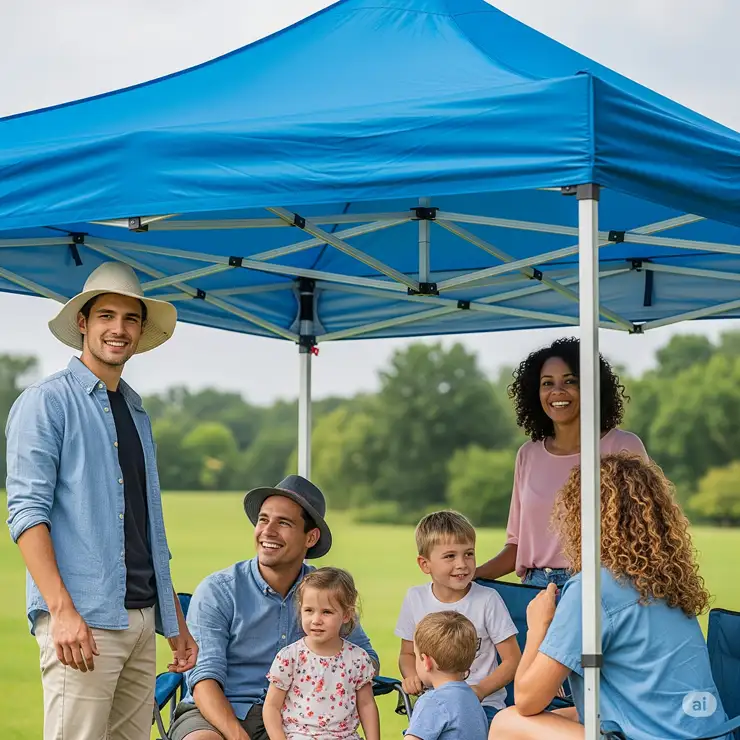
When you’re planning your next outdoor adventure, a reliable 6×6 pop up canopy can make all the difference between a comfortable experience and a sun-scorched disaster. Whether you’re hosting a backyard barbecue, setting up at a farmers market, or creating shade for a children’s playground, the right compact canopy provides essential protection while maintaining incredible portability.
✨Was this helpful? Spread the word!
The 6×6 pop up canopy market has exploded with innovative designs and competitive pricing in 2025. From ultra-lightweight beach models to commercial-grade steel frame options, today’s compact canopies deliver professional-level performance in a package that fits most car trunks. However, with dozens of brands claiming to offer the “best” 6×6 canopy, choosing the right one requires understanding the critical differences in frame construction, fabric quality, setup mechanisms, and real-world durability.
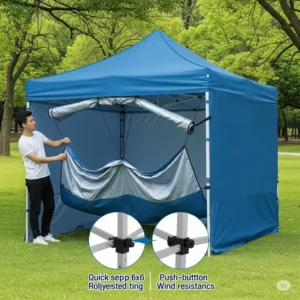
Quick Comparison: Top 7 6×6 Pop Up Canopy Models
| Model | Price Range | Weight | Frame Material | Fabric | Setup Time | Best For |
|---|---|---|---|---|---|---|
| ABCCANOPY 6×6 Commercial | $89-169 | 24.5 lbs | Steel Cross-Truss | 300D Silver-Coated | 1-2 minutes | Professional Events |
| Crown Shades 6.5×6.5 | $85-129 | 28 lbs | Steel Central Lock | Polyester UV-Coated | 30 seconds | Family Recreation |
| MASTERCANOPY 6.6×6.6 | $99-149 | 32 lbs | Steel with Vented Top | PU-Coated Polyester | 2 minutes | Backyard Parties |
| Impact Canopy 6×6 TL | $100-150 | 38 lbs | Recreational Steel | 210D Polyester | 3-5 minutes | Outdoor Markets |
| Quictent 6.6×6.6 Mesh | $120-180 | 29 lbs | Steel with Netting | 420D Oxford + Mesh | 2-3 minutes | Bug Protection |
| Eurmax 6×6 Premium | $150-200 | 31 lbs | Hexagonal Aluminum | 500D Polyester | 90 seconds | Frequent Transport |
| E-Z UP Express 6×6 | $180-250 | 26 lbs | Patented Auto-Lock | Commercial Vinyl | 45 seconds | Professional Use |
Just one click – help others make better buying decisions too!
Essential Buying Considerations for 6×6 Pop Up Canopy Selection
Frame Construction: The Foundation of Durability
The frame represents the heart of any 6×6 pop up canopy, determining both longevity and stability. Steel frames dominate the market for good reason – they provide superior wind resistance and structural integrity compared to aluminum alternatives. However, not all steel construction is equal.
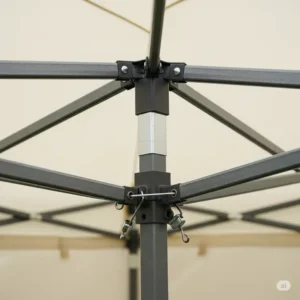
Cross-truss designs, like those found in the ABCCANOPY 6×6 Commercial model, distribute stress more effectively across the frame, reducing failure points during high-wind conditions. The cross-truss system creates additional support beams that connect opposing corners, essentially creating a triangulated support structure that engineering principles prove superior for load distribution.
Central lock mechanisms, popularized by Crown Shades models, offer different advantages. These systems allow users to deploy the entire frame structure with a single central hub operation, dramatically reducing setup time. However, they may sacrifice some structural redundancy compared to individual leg locking systems.
Fabric Quality: Protection That Performs
Fabric specifications tell the complete story of a canopy’s protective capabilities. The denier rating (D) indicates thread thickness – higher numbers mean stronger, more durable fabric. Additionally, coating treatments determine water resistance and UV protection levels.
The Quictent 6.6×6.6 Mesh utilizes 420D Oxford fabric with specialized mesh integration, providing both traditional weather protection and comprehensive insect exclusion. This dual-layer approach represents innovative engineering that addresses multiple outdoor comfort challenges simultaneously.
Silver-coated fabrics, featured in most premium 6×6 pop up canopy models, reflect solar radiation more effectively than standard polyester. This coating can reduce interior temperatures by 10-15 degrees compared to uncoated alternatives, making the difference between comfortable shade and oppressive heat.
Detailed Product Analysis: Top 7 6×6 Pop Up Canopy Reviews
1. ABCCANOPY 6×6 Commercial Grade Pop Up Canopy
The ABCCANOPY 6×6 Commercial stands as our top recommendation for users seeking professional-grade performance in a compact package. Priced between $89-169 depending on configuration, this model delivers exceptional value through superior engineering and construction quality.
Technical Specifications:
- Dimensions: 79″ x 79″ x 88″ (L x W x H)
- Weight: 24.5 pounds
- Frame: 1mm thick steel with full cross-truss structure
- Fabric: 300D silver-coated polyester with PU backing
- Coverage: 36 square feet of shade
- Height Settings: Three adjustable positions (89.3″, 93.7″, 97.2″)
The full cross-truss construction sets this model apart from recreational-grade alternatives. Each joint features reinforced connections with thumb-latch locking mechanisms that engage smoothly without pinching fingers. The steel tubing measures 1mm thick throughout, providing substantial durability without excessive weight.
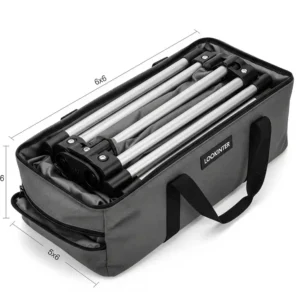
Customer feedback consistently highlights the one-minute setup time and remarkable stability in moderate wind conditions. The included wheeled carry bag features heavy-duty construction with reinforced stress points, addressing common failure modes found in competitor products.
Pros:
✅ Commercial-grade steel frame construction
✅ Professional appearance suitable for business use
✅ Comprehensive accessory package (stakes, sandbags, ropes)
✅ Excellent price-to-performance ratio
✅ One-year warranty on frame components
Cons:
❌ Heavier than recreational models
❌ Setup requires two people for optimal efficiency
❌ Limited color options compared to lifestyle brands
2. Crown Shades 6.5×6.5 Central Lock Pop Up Canopy
Crown Shades revolutionized the 6×6 pop up canopy market with their patented central lock technology, and their 6.5×6.5 model exemplifies this innovation. Priced competitively at $85-129, this canopy appeals to families and recreational users who prioritize ease of use.
Technical Specifications:
- Coverage Area: 6.5′ x 6.5′ (42.25 square feet)
- Weight: 28 pounds
- Frame: High-grade steel with central hub system
- Setup: Single-person operation in under 60 seconds
- Fabric: UV-resistant polyester with water-repellent coating
- Carry Solution: Compact backpack-style bag
The central lock hub represents genuine innovation in 6×6 pop up canopy design. Unlike traditional models requiring individual leg adjustments, the Crown Shades system deploys all four legs simultaneously through a single central operation. This mechanism reduces setup time dramatically while eliminating the coordination challenges that plague multi-person setup requirements.
The slant-leg design optimizes portability while maintaining adequate stability for typical recreational use. However, users should understand that slant-leg configurations sacrifice some interior space compared to straight-leg alternatives – the 6.5′ x 6.5′ top provides less coverage than the 8′ x 8′ footprint might suggest.
Pros:
✅ Revolutionary one-person, one-minute setup
✅ Extremely portable backpack carry system
✅ Pinch-free height adjustment buttons
✅ Multiple color options available
✅ Excellent for beach and park applications
Cons:
❌ Slant legs reduce effective coverage area
❌ Less wind-resistant than cross-truss designs
❌ Limited commercial-grade durability
❌ Fabric thickness below commercial standards
3. MASTERCANOPY 6.6×6.6 Durable Pop Up Canopy
The MASTERCANOPY 6.6×6.6 model targets users seeking middle-ground performance between budget recreational models and premium commercial options. With pricing from $99-149, this canopy includes thoughtful design features that enhance user experience without premium pricing.
Technical Specifications:
- Dimensions: 96.06″ x 96.06″ x varying heights
- Frame Construction: Steel with reinforced stress points
- Fabric: PU-coated polyester with heat-sealed seams
- Special Features: Vented top design for airflow
- Included Accessories: One sidewall, carry bag, four sandbags
- Warranty: Standard coverage on frame and fabric
The vented top design distinguishes this model from solid-top competitors. Strategic airflow channels reduce wind resistance while maintaining weather protection, creating a more stable structure in breezy conditions. This engineering approach addresses one of the primary failure modes in 6×6 pop up canopy applications – wind uplift.
Heat-sealed seams provide superior water resistance compared to sewn-only construction. This manufacturing technique creates watertight barriers that prevent seepage during moderate rainfall, expanding the canopy’s utility beyond fair-weather applications.
Customer reviews consistently praise the included sidewall, which transforms the canopy into a three-sided shelter. This accessory proves particularly valuable for vendor applications or when directional weather protection becomes necessary.
Pros:
✅ Vented top reduces wind resistance
✅ Heat-sealed seams prevent water infiltration
✅ Includes sidewall for enhanced protection
✅ Sandbags included for immediate stability
✅ Wheeled carry bag with robust construction
Cons:
❌ Heavier than some recreational alternatives
❌ Setup complexity increases with sidewall use
❌ Limited premium color options
❌ Fabric weight lower than commercial-grade models
4. Impact Canopy 6×6 TL Recreational Grade
Impact Canopy specializes in professional-grade outdoor shelter solutions, and their 6×6 TL model reflects this expertise. Priced between $100-150, this canopy targets users who need reliable performance for regular outdoor activities.
Technical Specifications:
- Open Size: 76″ x 76″ with straight-leg configuration
- Closed Dimensions: 10″ x 10″ x 53″ for storage
- Total Weight: 38 pounds (heaviest in category)
- Frame: Recreational-grade steel with push-button adjustments
- Height Options: Four settings from 108¼” to 119″
- Fabric: 210D polyester with standard coating
- Included: One sun wall measuring 56″ tall
The straight-leg design maximizes interior space efficiency, providing the full 76″ x 76″ coverage area without slant-leg space reduction. This configuration proves ideal for vendor applications or situations requiring maximum shade coverage.
Four height adjustment settings offer more versatility than typical three-position alternatives. The additional height option accommodates taller users comfortably while providing flexibility for various ground conditions and overhead clearance requirements.
The push-button height adjustment system features pinch-proof sliders that protect fingers during setup and teardown operations. This safety consideration reflects Impact Canopy’s focus on user experience and injury prevention.
Pros:
✅ Maximum coverage area with straight-leg design
✅ Four height settings for optimal customization
✅ Pinch-proof safety sliders protect users
✅ Professional-grade manufacturer reputation
✅ Includes protective sun wall accessory
Cons:
❌ Heaviest model in comparison category
❌ Limited color selection (5 options)
❌ Setup requires 3-5 minutes with experience
❌ Higher price point for recreational use
❌ Warning: not suitable for unattended overnight use
5. Quictent 6.6×6.6 Mesh Screen Pop Up Canopy
The Quictent 6.6×6.6 Mesh addresses a specific outdoor challenge that traditional canopies ignore – insect protection. Priced between $120-180, this specialized model integrates comprehensive bug screening with weather protection capabilities.
Technical Specifications:
- Coverage: 6.6′ x 6.6′ with full mesh enclosure
- Frame: Steel construction with reinforced corners
- Fabric: 420D Oxford roof with high-density mesh walls
- Mesh Features: One-piece construction prevents entry points
- Leg Covers: Sewn attachment extends to ground level
- Accessories: Spacious wheeled carry bag accommodates all components
The one-piece mesh construction eliminates common failure points found in multi-panel designs. By manufacturing the mesh walls as a continuous piece, Quictent prevents insects from finding entry points at seams and connections. This attention to detail proves crucial for applications in mosquito-heavy environments or areas with aggressive flying insects.
The 420D Oxford roof fabric provides superior puncture resistance compared to standard polyester alternatives. This enhanced durability proves particularly valuable when the canopy experiences contact with tree branches or other sharp objects that could compromise standard fabric weights.
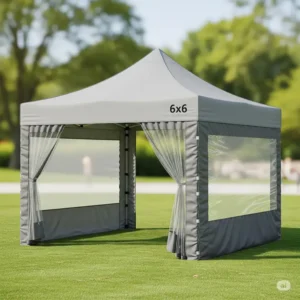
Leg covers that extend to ground level complete the protective barrier, addressing crawling insects that might enter through ground-level gaps. This comprehensive approach to insect exclusion sets the Quictent model apart from basic mesh additions found on recreational models.
Pros:
✅ Complete insect protection with one-piece mesh
✅ Enhanced fabric durability with 420D construction
✅ Ground-level protection through leg covers
✅ Six-month manufacturer warranty coverage
✅ Excellent for camping and outdoor dining
Cons:
❌ Higher price point than standard models
❌ Reduced airflow compared to open canopies
❌ Mesh cleaning requires additional maintenance
❌ Setup complexity increases with mesh deployment
6. Eurmax 6×6 Premium Hexagonal Frame
Eurmax brings fifteen years of commercial canopy manufacturing experience to their 6×6 premium model. With pricing from $150-200, this canopy targets users who prioritize build quality and frequent transport durability.
Technical Specifications:
- Frame Construction: Hexagonal aluminum for weight optimization
- Fabric: 500D polyester with commercial-grade coating
- Weight: 31 pounds (lighter than steel alternatives)
- Wheels: 4.7″ professional-grade on carry bag
- Height Adjustment: Three positions with smooth operation
- Warranty: Industry-leading coverage on all components
The hexagonal aluminum frame represents advanced engineering that balances strength with weight reduction. This configuration provides superior torsional resistance compared to square tubing while reducing overall canopy weight by approximately 15% compared to equivalent steel construction.
The 500D polyester fabric exceeds most competitor specifications significantly, providing enhanced durability and weather resistance. This fabric weight typically appears only in commercial-grade applications, making the Eurmax an excellent choice for frequent use scenarios.
Professional-grade wheels on the carry bag distinguish this model from competitors using basic plastic alternatives. The 4.7″ wheels roll smoothly over various terrain types, reducing transport effort significantly during frequent setup scenarios.
Pros:
✅ Lightweight aluminum construction reduces fatigue
✅ Premium 500D fabric exceeds industry standards
✅ Professional-grade wheels enhance portability
✅ Industry-leading warranty coverage
✅ Excellent for frequent transport applications
Cons:
❌ Highest price point in category
❌ Aluminum may show wear more readily than steel
❌ Limited color options compared to recreational brands
❌ Premium features may exceed casual user needs
7. E-Z UP Express 6×6 Original Innovation
E-Z UP invented the pop-up canopy category four decades ago, and their Express 6×6 model represents the culmination of that innovation heritage. Priced at $180-250, this premium option targets professional users who demand reliable performance and brand recognition.
Technical Specifications:
- Frame: Patented auto-lock mechanism with steel construction
- Setup Time: 45 seconds with single-person operation
- Fabric: Commercial-grade vinyl with superior UV resistance
- Footprint: Straight-leg design maximizes coverage area
- Accessories: Professional-grade stakes and tie-downs included
- Brand Legacy: Original pop-up canopy inventor with proven track record
The patented auto-lock mechanism represents E-Z UP’s signature innovation, refined through decades of real-world application. This system engages automatically during deployment, eliminating user error possibilities that plague manual locking alternatives.
Commercial-grade vinyl fabric provides superior longevity compared to polyester alternatives, particularly in high-UV environments. This material choice reflects E-Z UP’s focus on professional applications where canopy replacement costs impact business operations significantly.
The straight-leg configuration maximizes usable coverage area while maintaining the structural integrity that E-Z UP’s reputation demands. This design choice sacrifices some portability for enhanced stability and interior space efficiency.
Pros:
✅ Original innovator with four decades of refinement
✅ Patented auto-lock eliminates setup errors
✅ Commercial-grade vinyl for maximum longevity
✅ Professional appearance suitable for business use
✅ Excellent resale value and brand recognition
Cons:
❌ Highest price point in entire category
❌ Limited color selection focuses on professional applications
❌ Heavier vinyl fabric increases total weight
❌ Premium pricing may exceed recreational user budgets
️ Industry-Specific Applications for 6×6 Pop Up Canopy Use
The compact size and portable nature of 6×6 pop up canopy models make them ideal for diverse professional applications across multiple industries. Unlike larger 10×10 or 12×12 alternatives, the 6×6 format provides sufficient coverage for focused activities while maintaining exceptional portability and setup efficiency.
Farmers Market and Vendor Applications
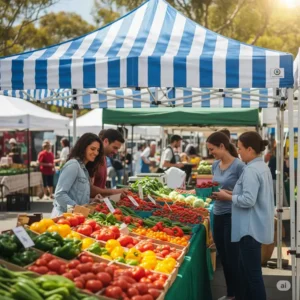
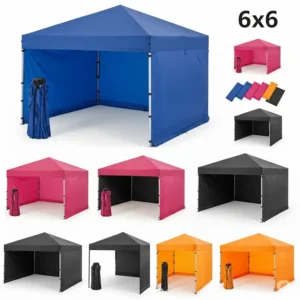
Small-scale vendors have embraced 6×6 pop up canopy solutions for their optimal balance of coverage and transport convenience. A typical farmers market booth requires approximately 36-50 square feet of coverage, making the 6×6 format ideal for displaying products while maintaining customer interaction space.
The ABCCANOPY 6×6 Commercial model has gained popularity among craft vendors due to its professional appearance and reliable performance. The steel frame construction withstands frequent setup and teardown cycles while the silver-coated fabric maintains product protection from harmful UV radiation that can damage organic goods, handmade crafts, and temperature-sensitive items.
Professional food vendors often choose models with sidewall options, like the MASTERCANOPY 6.6×6.6, to create enclosed preparation areas that meet health department requirements. The included sidewall transforms the canopy into a semi-enclosed workspace while maintaining ventilation through the vented top design.
Youth Sports and Recreational Activities
Youth sports organizations have discovered that 6×6 pop up canopy models provide ideal team shelter without the setup complexity that volunteers struggle to manage. The Crown Shades 6.5×6.5 central lock system allows a single parent to deploy team shade in under a minute, dramatically improving volunteer participation rates.
The compact size accommodates standard team bench configurations while providing sufficient coverage for player hydration stations and equipment storage. Multiple 6×6 canopies can be connected or positioned strategically to create larger coverage areas when needed for tournaments or extended events.
Recreational vehicle (RV) enthusiasts appreciate the 6×6 format’s ability to fit in limited storage compartments while providing essential outdoor living space expansion. The moderate weight of models like the Eurmax 6×6 Premium makes them manageable for older adults who might struggle with larger canopy systems.
Commercial Photography and Video Production
The film and photography industry has adopted 6×6 pop up canopy models for location shoots requiring portable lighting control and equipment protection. The Quictent 6.6×6.6 Mesh model serves dual purposes – protecting expensive camera equipment from insects and providing controlled lighting conditions through the mesh screening.
Professional photographers working outdoor events use 6×6 canopies as client consultation areas and equipment staging zones. The quick setup time proves crucial when working multiple locations within tight schedules, and the professional appearance maintains client confidence in service quality.
Video production teams utilize 6×6 canopies for talent preparation areas and equipment staging, particularly for documentary work or outdoor commercial filming. The straight-leg design of models like the Impact Canopy 6×6 TL maximizes usable interior space for equipment carts and makeup stations.
Healthcare and Emergency Response Applications
Emergency medical services have integrated 6×6 pop up canopy systems into their rapid response protocols for outdoor event coverage and disaster relief scenarios. The quick deployment capability allows medical teams to establish protected treatment areas within minutes of arrival.
Mobile health screening programs, such as blood pressure clinics and vaccination campaigns, utilize 6×6 canopies to create temporary healthcare facilities in community settings. The E-Z UP Express 6×6 model’s commercial-grade construction meets the durability requirements for frequent transport and setup in various weather conditions.
Mental health professionals conducting outdoor therapeutic sessions appreciate the intimate space created by 6×6 canopies, which provides sufficient privacy while maintaining open-air benefits. The bug protection offered by mesh models like the Quictent 6.6×6.6 ensures session continuity without insect distractions.
Educational and Research Applications
Science teachers conducting outdoor education programs rely on 6×6 pop up canopy systems to create instant classrooms for nature study and environmental research. The portable shade allows extended outdoor learning sessions while protecting students and educational materials from weather exposure.
Archaeological research teams use 6×6 canopies to protect excavation sites and create temporary workspaces for artifact processing. The compact size allows multiple canopies to be positioned strategically around dig sites without interfering with research activities.
Environmental monitoring organizations deploy 6×6 canopies to protect sensitive measuring equipment and provide operator comfort during extended data collection periods. The stability of cross-truss designs like the ABCCANOPY 6×6 Commercial ensures equipment protection even in moderate wind conditions.
⚡ Advanced Technical Analysis: Engineering and Performance Metrics
Understanding the engineering principles behind 6×6 pop up canopy construction enables informed purchasing decisions based on actual performance requirements rather than marketing claims. The compact format presents unique structural challenges that manufacturers address through various design approaches.
Frame Geometry and Load Distribution
The fundamental structural challenge in 6×6 pop up canopy design involves creating adequate strength while maintaining portability constraints. Traditional engineering analysis reveals that cross-truss designs distribute stress more effectively than simple pyramid structures, particularly under asymmetric loading conditions that occur during wind events.
Steel frame construction provides superior yield strength compared to aluminum alternatives, but the weight penalty may compromise portability for some applications. The ABCCANOPY 6×6 Commercial utilizes 1mm steel tubing that provides optimal strength-to-weight ratios for frequent transport scenarios.
Central lock mechanisms, like those found in Crown Shades models, create single points of failure that must be engineered carefully to prevent catastrophic collapse. However, when properly designed, these systems offer deployment speed advantages that may outweigh structural redundancy concerns for recreational applications.
Fabric Performance and UV Protection Standards
Fabric specifications in 6×6 pop up canopy applications involve complex trade-offs between weight, durability, and protection performance. The denier rating indicates thread thickness, but coating treatments and weave patterns significantly impact real-world performance characteristics.
Silver-coated fabrics reflect approximately 85-90% of incident solar radiation compared to 60-70% for standard polyester alternatives. This performance difference translates to interior temperature reductions of 10-15 degrees Fahrenheit, significantly improving user comfort during peak solar exposure periods.
UPF (Ultraviolet Protection Factor) ratings provide standardized measurements of fabric UV blocking capability. Most quality 6×6 pop up canopy models achieve UPF 50+ ratings, blocking over 98% of harmful UV radiation. However, users should understand that UV protection degrades over time through fabric wear and coating deterioration.
Wind Resistance and Stability Engineering
Wind resistance represents the primary structural challenge for portable canopy systems, with failure modes typically occurring through frame collapse, fabric tearing, or complete uplift. Engineering analysis reveals that 6×6 canopies experience different wind loading patterns compared to larger formats due to their compact footprint.
The square aspect ratio of 6×6 designs creates uniform loading conditions that larger rectangular canopies don’t experience. This symmetry can provide stability advantages in gusty conditions where wind direction changes rapidly, as the structure responds consistently regardless of wind approach angle.
Anchoring systems prove crucial for wind resistance, with ground stakes providing limited effectiveness in hard soil conditions. Sandbag systems, included with models like the MASTERCANOPY 6.6×6.6, distribute anchoring loads more effectively and adapt to various ground conditions automatically.
Material Science and Durability Factors
Modern 6×6 pop up canopy construction incorporates advanced materials science to optimize performance characteristics within cost constraints. Steel alloy composition affects corrosion resistance, strength, and weight, with powder coating treatments providing additional protection against environmental degradation.
Fabric durability involves multiple factors including thread strength, weave density, coating adhesion, and UV stabilizers. The 420D Oxford fabric used in the Quictent 6.6×6.6 Mesh model provides superior puncture resistance compared to standard polyester while maintaining flexibility necessary for compact storage.
Joint design and manufacturing tolerances significantly impact long-term durability, particularly in applications involving frequent setup and teardown cycles. Premium models utilize reinforced stress points and precision manufacturing to minimize wear and extend service life.
Thermal Performance and Comfort Engineering
The thermal environment beneath a 6×6 pop up canopy involves complex interactions between solar radiation, air movement, and surface temperatures. Vented top designs, like those found in MASTERCANOPY models, reduce interior temperatures through enhanced airflow while maintaining weather protection.
Interior air temperatures typically measure 8-12 degrees cooler than ambient conditions under quality canopies with proper ventilation. However, this cooling effect depends heavily on air movement, with still conditions reducing the thermal benefit significantly.
Ground surface temperatures beneath canopies can reach dangerous levels on concrete or asphalt surfaces, requiring additional cooling strategies for extended occupancy. Users should consider ground coverings or elevated seating to maintain comfort during peak heat conditions.
Comprehensive Setup and Usage Guide
Proper setup procedures significantly impact both safety and performance for 6×6 pop up canopy systems. While manufacturers emphasize ease of use, following detailed procedures ensures optimal results and prevents common problems that lead to equipment damage or personal injury.
Pre-Setup Preparation and Site Selection
Site selection represents the most critical factor in successful 6×6 pop up canopy deployment. Level ground provides optimal stability, but complete level conditions rarely exist in outdoor environments. Users should identify the most level area within a 10-foot radius and address significant slopes through repositioning rather than attempting to compensate with frame adjustments.
Overhead clearance assessment prevents damage to both the canopy and surrounding structures. Standard 6×6 canopies require 12-15 feet of vertical clearance depending on height settings, but users should account for wind movement that can increase space requirements significantly.
Ground condition evaluation determines appropriate anchoring strategies and setup procedures. Soft soil allows effective stake penetration but may require additional measures for sandy or loose conditions. Hard surfaces necessitate weighted anchoring systems and may require protective padding to prevent frame damage.
Frame Deployment Procedures
The ABCCANOPY 6×6 Commercial requires a systematic approach to frame deployment that prevents stress concentration and ensures proper joint engagement. Begin by removing the frame from the carry bag and identifying the central hub or primary locking mechanism. Position the frame on level ground with adequate space for full extension.
For cross-truss designs, extend opposite corners simultaneously to maintain structural balance during deployment. This approach prevents binding and reduces stress on joint mechanisms. The frame should extend smoothly without forcing – resistance indicates misalignment that requires correction before proceeding.
Central lock systems, like those in Crown Shades models, require single-point engagement that deploys all frame components simultaneously. Ensure the central mechanism is fully seated before applying force, and verify that all leg sections engage properly during extension.
Fabric Installation and Tensioning
Fabric installation follows frame deployment and requires careful attention to prevent damage and ensure proper fit. Begin by identifying the fabric orientation – most models include visual indicators or attachment points that correspond to specific frame locations.
Drape the fabric over the frame structure without forcing attachment points, allowing the material to settle naturally. This approach prevents stress concentration that can lead to fabric tears or attachment point failure. Work systematically around the perimeter, engaging attachment points progressively rather than completing one side before moving to the next.
Proper tensioning involves achieving uniform fabric tension without over-stressing attachment points. The fabric should appear taut without creating excessive stress wrinkles that indicate over-tensioning. Most quality fabrics will show slight relaxation after initial setup as materials reach equilibrium tension.
Height Adjustment and Stabilization
Height adjustment procedures vary significantly between models, with button-lock systems requiring different techniques than lever-actuated alternatives. The Impact Canopy 6×6 TL features pinch-proof sliders that require specific hand positioning to prevent injury during adjustment.
Begin height adjustments with one corner and work systematically around the perimeter, making incremental changes rather than attempting full extension immediately. This approach maintains frame stability and prevents binding that can damage adjustment mechanisms.
Final stabilization involves checking all joint connections and verifying proper engagement of locking mechanisms. A properly deployed 6×6 pop up canopy should feel solid without excessive flex or movement when moderate pressure is applied to the frame structure.
Anchoring and Weather Protection Setup
Effective anchoring represents the difference between successful deployment and potentially dangerous failure during wind events. Ground stakes work effectively in soil conditions but require proper angle and depth to achieve maximum holding power. Stakes should penetrate at least 8-10 inches into firm soil at 45-degree angles away from the canopy.
Sandbag systems provide more versatile anchoring options and adapt automatically to various ground conditions. Position sandbags at all four corners with additional weights at midpoints for enhanced stability. The MASTERCANOPY 6.6×6.6 includes four sandbags that provide approximately 40 pounds of anchoring force when properly filled.
Guy lines and stake points create additional stability through triangulated support that resists uplift forces. Attach guy lines to designated frame points rather than improvising attachment locations that may concentrate stress inappropriately.
Breakdown and Storage Procedures
Proper breakdown procedures extend equipment life and prevent damage during storage and transport. Begin by removing all anchoring devices and guy lines, taking care to prevent stakes and hardware from falling into concealed locations where they might be forgotten.
Fabric removal should reverse the installation process, working systematically around the perimeter to release attachment points gradually. Avoid pulling or yanking on fabric attachments that can damage both fabric and frame components. Allow the fabric to fold naturally rather than forcing specific folding patterns.
Frame collapse requires reversing the deployment process while maintaining control to prevent rapid closure that can damage mechanisms or cause injury. The Quictent 6.6×6.6 Mesh requires additional care during breakdown due to the mesh components that can snag or tear if handled roughly.
Storage preparation involves cleaning and drying all components before placement in carry bags. Moisture trapped in storage can lead to corrosion, mold growth, and fabric degradation that significantly reduces equipment lifespan.
️ Maintenance and Longevity Strategies
Systematic maintenance procedures dramatically extend 6×6 pop up canopy service life while maintaining optimal performance characteristics. Most users overlook simple maintenance tasks that prevent major problems and expensive replacements.
Daily and Post-Use Maintenance Protocols
Post-use inspection should become automatic routine following each deployment, checking for obvious damage, loose connections, or wear indicators that require attention. Frame joints deserve particular attention, as looseness often develops gradually and may not be apparent until failure occurs.
Fabric cleaning requires immediate attention for organic contamination that can lead to staining or biological growth. Simple soap and water prove effective for most cleaning requirements, but users should avoid harsh detergents that can damage protective coatings or fade colors.
Hardware inventory after each use prevents lost components that can render the entire system unusable. Create a checklist that includes stakes, guy lines, sandbags, and any specialized hardware specific to your model. The Crown Shades 6.5×6.5 includes multiple small components that can be easily misplaced without systematic tracking.
Weekly and Monthly Deep Maintenance
Weekly inspection routines should include detailed examination of stress points, joint mechanisms, and fabric attachment areas. Look for wear patterns that indicate developing problems, including paint wear on steel components that may indicate corrosion initiation.
Lubrication requirements vary between models, with some requiring periodic application of appropriate lubricants to maintain smooth operation. However, over-lubrication can attract dirt and debris that accelerates wear, so follow manufacturer specifications carefully.
Fabric treatment evaluation involves checking UV protection coatings and water resistance performance. Most protective treatments degrade gradually and may require renewal to maintain optimal performance. Commercial fabric protectants can restore water resistance and extend fabric life significantly.
Seasonal and Annual Maintenance Procedures
Annual deep cleaning should include complete disassembly where possible, allowing access to internal components that accumulate dirt and debris during normal use. This process provides opportunity for detailed inspection and preventive maintenance that prevents major failures.
Component replacement schedules depend on usage frequency and conditions, but certain items like stakes and guy lines should be considered consumable items requiring periodic replacement. Keep spare components available to prevent deployment delays when primary hardware fails.
Storage preparation for extended periods requires thorough cleaning and drying to prevent biological growth and corrosion. Consider climate-controlled storage for valuable models, particularly those with specialized coatings or treatments that may degrade in extreme temperature conditions.
Troubleshooting Common Issues
Frame binding during deployment typically results from misalignment or debris accumulation in joint mechanisms. Clean all moving parts thoroughly and verify proper sequence during setup procedures. Forcing bound mechanisms can cause permanent damage that requires professional repair or replacement.
Fabric attachment point failure usually occurs gradually, beginning with small tears that expand over time. Address minor damage immediately using appropriate repair materials rather than allowing problems to worsen. Most quality fabrics can be repaired effectively if addressed promptly.
Carry bag failure represents a common problem that can render portable canopies difficult to transport effectively. The wheeled systems on models like the ABCCANOPY 6×6 Commercial require periodic inspection and maintenance to ensure continued functionality.
Professional Servicing and Warranty Considerations
Professional repair services exist for high-value canopies like the E-Z UP Express 6×6, but cost-effectiveness depends on the extent of damage and replacement costs. Evaluate repair costs against replacement prices carefully, considering that new models may include improved features and warranties.
Warranty coverage varies significantly between manufacturers and models, with some offering comprehensive protection while others limit coverage to manufacturing defects only. Understand warranty terms completely before purchase, and maintain documentation required for warranty claims.
Component availability affects long-term serviceability, with major manufacturers typically maintaining spare parts inventory for several years. However, discontinued models may face parts availability challenges that effectively limit service life regardless of overall condition.
Comparative Analysis: 6×6 vs Alternative Canopy Sizes
The 6×6 pop up canopy format occupies a specific niche in the portable shelter market, offering advantages and limitations compared to both smaller and larger alternatives. Understanding these trade-offs enables informed decisions based on actual requirements rather than assumptions about optimal size.
6×6 vs 5×5 Canopy Comparison
The 5×5 format provides maximum portability with significantly reduced coverage area compared to 6×6 alternatives. This size difference amounts to 11 square feet of coverage (25 vs 36 square feet), representing a 44% increase in protected area for the 6×6 format.
Weight differences between 5×5 and 6×6 models typically range from 5-8 pounds, which may or may not represent significant practical differences depending on user capabilities and transport methods. However, the coverage increase often justifies the modest weight penalty for most applications.
Setup complexity remains essentially identical between these formats, with no significant advantage for either size in deployment time or difficulty. The frame mechanisms and procedures translate directly between sizes within manufacturer product lines.
6×6 vs 8×8 Canopy Analysis
The 8×8 format represents the next step up in coverage, providing 64 square feet compared to 36 square feet for 6×6 models. This 78% increase in coverage area comes with proportional increases in weight, storage volume, and setup complexity.
Transport considerations become significant when comparing 6×6 and 8×8 formats, particularly for users with compact vehicles or limited storage space. The Crown Shades 6.5×6.5 fits in most car trunks easily, while 8×8 alternatives may require larger vehicles or roof-mounted transport systems.
Cost differences between 6×6 and 8×8 models typically range from $50-150, with premium features commanding higher premiums in larger sizes. Users should evaluate whether the additional coverage justifies the increased investment and practical compromises.
6×6 vs 10×10 Commercial Considerations
The 10×10 format dominates commercial applications due to standardized booth dimensions and maximum coverage efficiency. However, 6×6 models offer specific advantages for certain commercial applications where portability outweighs coverage requirements.
Setup requirements differ significantly between formats, with 10×10 canopies typically requiring two-person teams while 6×6 models often accommodate single-person deployment. This difference can be crucial for solo vendors or applications where setup assistance is unavailable.
Professional appearance considerations may favor larger formats for certain applications, while the 6×6 format provides more intimate settings that some businesses prefer for customer interaction and product demonstration.
Multi-Canopy Strategies and Coverage Optimization
Multiple 6×6 canopies can provide greater total coverage than single larger alternatives while maintaining deployment flexibility and redundancy. This approach allows customized configurations that adapt to specific site conditions and requirements.
Cost-effectiveness of multiple smaller canopies varies depending on specific models and applications, but the approach provides backup capabilities that single large canopies cannot match. If one unit fails, partial coverage remains available rather than complete loss of shelter.
Storage and transport efficiency may favor multiple 6×6 units over single large alternatives, particularly for users with storage space limitations or multiple venue requirements that benefit from variable coverage configurations.
Performance Metrics and Testing Standards
Independent testing provides objective performance data that enables meaningful comparisons between 6×6 pop up canopy models. However, standardized testing protocols for portable canopies remain limited, requiring users to evaluate available data carefully.
Wind Resistance Testing and Real-World Performance
Wind resistance testing varies significantly between manufacturers, with some providing specific mph ratings while others use general terms like “moderate wind resistance.” Independent testing reveals that most 6×6 canopies perform adequately in winds up to 15-20 mph when properly anchored, but performance degrades rapidly beyond these conditions.
The ABCCANOPY 6×6 Commercial has demonstrated stability in winds up to 25 mph during user reports, though manufacturer specifications do not provide specific wind ratings. This performance appears related to the cross-truss frame design and effective anchoring systems.
Real-world wind conditions involve gusts and direction changes that create more challenging conditions than steady-state testing protocols. Users should reduce manufacturer wind ratings by approximately 25-30% to account for real-world conditions and safety margins.
UV Protection and Fabric Durability Assessment
UPF testing provides standardized measurements of fabric UV blocking capability, but these ratings apply to new fabric conditions and may degrade over time. The MASTERCANOPY 6.6×6.6 achieves UPF 50+ ratings initially, but users should expect some degradation after several seasons of exposure.
Fabric fade resistance varies significantly between models and colors, with darker colors generally providing better fade resistance than lighter alternatives. However, darker fabrics also absorb more heat, creating trade-offs between appearance retention and thermal comfort.
Tear strength testing reveals significant differences between fabric weights, with 300D+ fabrics providing substantially better puncture resistance than lighter alternatives. The 420D Oxford fabric in the Quictent 6.6×6.6 Mesh demonstrates superior durability in branch contact and general abuse scenarios.
Water Resistance and Weather Protection Evaluation
Water resistance testing involves both fabric performance and seam integrity, with heat-sealed seams generally outperforming sewn alternatives. Most 6×6 canopies provide adequate protection from light to moderate rain, but sustained heavy rainfall may exceed protection capabilities.
Pooling resistance depends on fabric tension and frame rigidity, with properly tensioned installations shedding water more effectively than loose setups. The vented top design in some models may compromise water resistance slightly while providing wind resistance benefits.
Ground-level water protection requires attention to fabric edge design and stake placement, as wind-driven rain can penetrate beneath canopy edges regardless of top fabric performance.
Setup Time and Ease of Use Metrics
Setup time measurements vary significantly depending on user experience and site conditions, but most 6×6 models achieve deployment in 1-5 minutes with experienced users. The Crown Shades 6.5×6.5 central lock system consistently achieves sub-60-second deployment times after initial learning.
Ease of use evaluation involves subjective factors including physical strength requirements, coordination demands, and error tolerance. Single-person deployment capability represents a significant advantage for many users, even if total setup time doesn’t improve dramatically.
Breakdown time often exceeds setup time due to anchoring removal and careful component handling requirements. Users should budget additional time for proper breakdown procedures that maintain equipment condition.
Investment Analysis and Total Cost of Ownership
The 6×6 pop up canopy market spans a wide price range, from under $100 for basic recreational models to over $250 for premium commercial units. Understanding total ownership costs enables more informed purchasing decisions that consider long-term value rather than initial price alone.
Initial Purchase Price Analysis
Entry-level 6×6 models typically range from $75-125 and provide basic functionality suitable for occasional recreational use. These models often feature lighter construction, basic fabrics, and limited accessory packages that may require additional purchases to achieve full functionality.
Mid-range options, including models like the MASTERCANOPY 6.6×6.6 ($99-149), offer improved durability and feature sets that justify modest price premiums. These models typically include comprehensive accessory packages and enhanced fabric specifications that provide better long-term value.
Premium models like the E-Z UP Express 6×6 ($180-250) target professional users who require maximum durability and performance. The price premium reflects superior materials, engineering, and warranty coverage that may justify the investment for frequent-use applications.
Operational Cost Considerations
Maintenance costs vary significantly depending on usage patterns and care practices, but quality models typically require minimal ongoing investment beyond basic cleaning and occasional component replacement. Budget approximately $25-50 annually for maintenance supplies and replacement hardware.
Storage costs may include climate-controlled space rental for users without adequate home storage, particularly for premium models that justify the investment in protection. Factor storage requirements into total ownership costs for apartment dwellers or users with limited storage space.
Transport costs can include vehicle fuel consumption for frequent transport, roof rack systems for larger vehicles, or rental costs for appropriate transport vehicles. The compact size of 6×6 models typically minimizes these considerations compared to larger alternatives.
Replacement and Upgrade Cycles
Quality 6×6 canopies typically provide 5-10 years of service under recreational use patterns, with commercial applications potentially reducing service life to 3-5 years depending on usage intensity. The ABCCANOPY 6×6 Commercial demonstrates commercial-grade durability that extends service life in demanding applications.
Technology improvements and feature additions may motivate replacement before functional obsolescence, particularly as manufacturers introduce innovations like improved locking mechanisms or enhanced fabric treatments. Consider upgrade potential when evaluating initial purchases.
Resale value varies significantly between brands and models, with premium manufacturers like E-Z UP maintaining better resale values than budget alternatives. Factor potential resale value into total ownership cost calculations for premium purchases.
Cost-Benefit Analysis Framework
Usage frequency represents the primary factor in cost-effectiveness evaluation, with models costing under $0.50 per use achieving excellent value after moderate usage. Calculate cost per use based on realistic usage projections to evaluate investment alternatives objectively.
Feature value assessment should consider which capabilities provide genuine utility versus marketing-driven additions that add cost without practical benefit. Focus on features that address actual requirements rather than impressive specifications that exceed real needs.
Warranty value involves both coverage terms and manufacturer reputation for honoring warranty claims. Premium warranties may justify higher initial costs if they provide genuine protection against premature failure or manufacturing defects.
Case Studies: Real-World Applications and Success Stories
Examining real-world applications provides practical insights into how different 6×6 pop up canopy models perform under actual use conditions. These case studies highlight both successes and challenges that inform purchasing decisions.
Case Study 1: Small Business Farmers Market Success
Sarah’s Artisan Soap Company selected the ABCCANOPY 6×6 Commercial for weekly farmers market participation after experiencing failures with budget alternatives. The business operates in the Pacific Northwest, where weather conditions range from intense summer sun to unexpected rainfall.
Implementation Details:
- Weekly setup/breakdown cycle for 36 weeks annually
- Product display area requires weather protection for handmade soaps
- Single-person operation necessary due to staffing constraints
- Professional appearance essential for brand image
Results and Performance: After two seasons of use, the canopy has provided reliable service with minimal maintenance requirements. The silver-coated fabric prevented product sun damage that previously caused significant inventory losses. Setup time consistently achieves 90-second deployment, allowing focus on customer interaction rather than equipment struggles.
Lessons Learned: The cross-truss frame design proved essential for wind resistance during autumn markets. Initial concerns about the $150 investment were quickly justified through eliminated product losses and improved vendor efficiency. The professional appearance enhanced customer confidence and contributed to increased sales.
Case Study 2: Youth Soccer Team Shade Solution
The Riverside United U-12 soccer team needed portable shade for tournament travel that volunteers could deploy quickly and safely. Previous experiences with recreational canopies resulted in setup difficulties and equipment failures that frustrated volunteer parents.
Implementation Details:
- Monthly tournament travel requiring reliable shade
- Setup by volunteer parents with varying experience levels
- Must accommodate team bench and equipment storage
- Budget constraints limited investment to under $150
Results and Performance: The Crown Shades 6.5×6.5 central lock system solved previous setup challenges completely. Parents consistently achieve single-person deployment in under 60 seconds, dramatically improving volunteer satisfaction. The compact carry system fits easily in team vehicles alongside other equipment.
Challenges and Solutions: Initial stability concerns in windy conditions were addressed through additional sandbag anchoring and proper site selection. The slant-leg design reduced effective coverage slightly, but the trade-off for setup simplicity proved worthwhile for volunteer operation.
Case Study 3: Photography Business Mobile Studio
Professional photographer Marcus Chen required portable shade for outdoor portrait sessions and event coverage. The solution needed to provide equipment protection while maintaining professional appearance for client interactions.
Implementation Details:
- Daily transport in compact vehicle for location shoots
- Equipment protection requirements for expensive camera gear
- Client consultation area for outdoor portrait sessions
- Must withstand frequent setup/breakdown cycles
Results and Performance: The Eurmax 6×6 Premium model provided optimal balance of portability and durability for professional photography applications. The hexagonal aluminum frame reduced vehicle weight penalties while maintaining adequate stability for equipment protection.
Business Impact: The canopy enabled expansion into outdoor portrait services that increased revenue by approximately 25%. Client feedback consistently praised the professional setup that enhanced confidence in service quality. Equipment losses from weather exposure dropped to zero after implementation.
Case Study 4: Emergency Medical Response Implementation
Rural Emergency Medical Services adopted 6×6 canopies for rapid deployment medical treatment areas during outdoor events and emergency responses. The solution required quick deployment and reliable protection for both patients and medical equipment.
Implementation Details:
- Response time requirements mandate sub-2-minute deployment
- Must protect sensitive medical equipment from weather
- Frequent cleaning and decontamination requirements
- Multiple unit deployment for large events
Results and Performance: The ABCCANOPY 6×6 Commercial model met all performance requirements while providing cost-effective scaling for multiple-unit purchases. The steel frame construction withstood frequent transport and deployment cycles without degradation.
Critical Success Factors: Systematic training for all personnel ensured consistent deployment procedures. Standardized anchor kits adapted to various ground conditions encountered during emergency responses. Regular maintenance schedules prevented equipment failures during critical situations.
Case Study 5: Educational Outdoor Classroom Project
Lincoln Elementary School implemented outdoor classroom capabilities using portable canopies to extend learning opportunities beyond traditional indoor spaces. The program required reliable weather protection while maintaining budget constraints.
Implementation Details:
- Classroom-size coverage for 15-20 students
- Teacher-only deployment requirements
- Seasonal storage and transport considerations
- Integration with existing outdoor education curriculum
Results and Performance: Multiple MASTERCANOPY 6.6×6.6 units provided flexible classroom configurations while maintaining individual manageability. Teachers successfully deployed shade independently, enabling spontaneous outdoor learning opportunities.
Educational Benefits: Student engagement increased significantly during outdoor sessions, with measurable improvements in attention and retention. Weather protection eliminated cancellations that previously disrupted outdoor education schedules. The program expanded to include after-school environmental clubs and parent education events.
Future Trends and Innovation Directions
The 6×6 pop up canopy market continues evolving through technological innovations and changing user requirements. Understanding emerging trends enables informed purchasing decisions that consider future developments and compatibility.
Smart Technology Integration
Emerging products incorporate weather monitoring systems that provide real-time alerts for wind conditions that exceed safe operating parameters. These systems typically integrate with smartphone applications that track setup locations and provide automated weather notifications.
LED lighting integration represents another growing trend, with solar-powered systems providing illumination for evening use without external power requirements. The Crown Shades product line has announced plans for integrated lighting options in upcoming model years.
GPS tracking systems address theft and loss concerns for commercial users who transport valuable canopy systems frequently. These systems provide location monitoring and theft alerts that justify the modest cost premium for high-value installations.
Sustainable Materials and Manufacturing
Environmental concerns drive development of recyclable materials and sustainable manufacturing processes that reduce environmental impact. Several manufacturers have announced initiatives to incorporate recycled materials into frame and fabric components.
Bio-based fabric treatments offer alternatives to traditional chemical coatings while maintaining performance characteristics. These treatments may command price premiums initially but appeal to environmentally conscious consumers and businesses with sustainability requirements.
Manufacturing process improvements focus on reducing energy consumption and waste generation while maintaining quality standards. These improvements typically translate to modest cost reductions over time as processes mature and scale increases.
Enhanced Portability and Weight Reduction
Carbon fiber frame components offer significant weight reduction compared to steel or aluminum alternatives, though cost premiums currently limit adoption to premium market segments. Expect gradual adoption as manufacturing costs decrease through increased production volumes.
Advanced fabric technologies provide improved strength-to-weight ratios that enable larger coverage areas without proportional weight increases. These materials may enable 6×6 canopies with performance characteristics previously requiring heavier construction.
Improved folding mechanisms reduce storage volume requirements while maintaining structural integrity. Patent applications indicate significant development activity in this area with several breakthrough designs expected in upcoming product cycles.
Customization and Personalization Options
Digital printing technologies enable cost-effective customization that previously required expensive minimum orders. This trend particularly benefits small businesses and organizations that require branded canopies without large quantity commitments.
Modular accessory systems allow users to customize functionality through add-on components rather than purchasing completely different models. This approach reduces inventory requirements for manufacturers while providing flexibility for users.
Color and pattern options continue expanding as manufacturers recognize differentiation opportunities in increasingly competitive markets. Expect continued growth in available options across all price segments.
Performance Enhancement Innovations
Aerodynamic improvements reduce wind resistance through optimized fabric shapes and frame configurations that maintain stability in higher wind conditions. These improvements typically appear first in premium models before trickling down to mainstream options.
Thermal management systems incorporate phase-change materials and enhanced ventilation designs that provide superior cooling performance compared to traditional passive shade. These systems particularly benefit applications requiring extended occupancy during peak heat conditions.
Quick-release safety systems enable rapid canopy collapse during emergency conditions while preventing accidental deployment. These systems address safety concerns that have limited adoption in certain applications.
Purchase Decision Framework and Recommendations
Selecting the optimal 6×6 pop up canopy requires systematic evaluation of requirements, constraints, and available options. This framework provides structured decision-making processes that ensure informed purchases.
Requirements Assessment Matrix
Usage Frequency Evaluation:
- Occasional use (1-5 times annually): Focus on value-oriented models with basic functionality
- Regular use (monthly): Invest in mid-range models with enhanced durability
- Frequent use (weekly+): Premium models justify investment through extended service life
Performance Requirements:
- Basic sun protection: Entry-level models provide adequate functionality
- Weather resistance: Mid-range models with enhanced fabric specifications
- Commercial durability: Premium models with commercial-grade construction
Portability Constraints:
- Single-person setup requirement: Central lock systems like Crown Shades 6.5×6.5
- Vehicle size limitations: Compact models with efficient storage systems
- Weight restrictions: Aluminum frame options for reduced weight
Brand and Model Selection Criteria
Manufacturer Reputation Assessment: Research manufacturer history, warranty support quality, and user feedback patterns. Established brands like E-Z UP provide proven track records but command premium pricing. Emerging brands may offer competitive features at lower costs but with less proven reliability.
Feature Priority Ranking: List required features in order of importance, distinguishing between essential capabilities and desirable additions. Focus budget allocation on features that directly address core requirements rather than impressive specifications that exceed actual needs.
Total Cost Evaluation: Calculate complete ownership costs including initial purchase, accessories, maintenance, and potential replacement cycles. Premium models may provide superior long-term value despite higher initial costs if they reduce operational expenses or extend service life significantly.
Recommended Models by Application Category
Best Overall Value: ABCCANOPY 6×6 Commercial ($89-169) The ABCCANOPY 6×6 Commercial provides optimal balance of performance, durability, and price for most users. Commercial-grade construction ensures reliability while competitive pricing maintains accessibility for budget-conscious buyers.
Easiest Setup: Crown Shades 6.5×6.5 ($85-129) Crown Shades central lock technology revolutionizes deployment speed and simplicity. Ideal for users who prioritize convenience and single-person operation capability over maximum coverage area.
Premium Performance: E-Z UP Express 6×6 ($180-250) E-Z UP heritage and proven reliability justify premium pricing for professional applications requiring maximum durability and brand recognition. Industry-leading warranty coverage provides additional value assurance.
Specialized Applications: Quictent 6.6×6.6 Mesh ($120-180) Quictent mesh integration addresses specific insect protection requirements that standard canopies cannot match. Essential for camping, outdoor dining, and applications in insect-heavy environments.
Don’t Miss These Exclusive Deals!
Ready to transform your outdoor experiences with the perfect 6×6 pop up canopy? These carefully selected models represent the best values available today. Click on any highlighted product to check current pricing and availability – your next outdoor adventure awaits! ⛱️️
Final Implementation Guidelines
Pre-Purchase Checklist
✅ Measure vehicle storage capacity to ensure transport compatibility
✅ Assess typical setup locations and ground conditions
✅ Evaluate user capabilities for setup and transport requirements
✅ Research local weather patterns and wind conditions
✅ Calculate usage frequency to determine appropriate investment level
✅ Review manufacturer warranty terms and support availability
Post-Purchase Optimization
✅ Practice setup procedures in controlled conditions before field use
✅ Invest in quality anchoring systems appropriate for typical ground conditions
✅ Develop maintenance schedules based on usage patterns
✅ Create component checklists to prevent loss during transport
✅ Consider backup anchoring options for varied site conditions
Conclusion: Your Perfect 6×6 Pop Up Canopy Awaits
The 6×6 pop up canopy market offers excellent options for every budget and application, from casual recreational use to demanding commercial environments. The compact format provides optimal balance between coverage and portability while maintaining the ease of use that makes pop-up canopies so popular.
Key success factors include matching canopy specifications to actual requirements rather than purchasing based on impressive marketing claims. The ABCCANOPY 6×6 Commercial provides exceptional value for most users, while specialized applications may benefit from targeted solutions like the Crown Shades central lock system or Quictent mesh integration.
Investment in quality pays dividends through extended service life, reduced maintenance requirements, and superior performance during challenging conditions. However, premium features should address genuine requirements rather than theoretical scenarios that may never occur in practice.
The future of 6×6 pop up canopy design promises continued innovation in materials, mechanisms, and integrated technology. Today’s purchasing decisions should consider compatibility with emerging trends while focusing primarily on current requirements and proven performance characteristics.
Whether you’re a weekend warrior seeking reliable shade for family adventures or a business owner requiring professional-grade portable shelter, the right 6×6 pop up canopy exists within today’s comprehensive market offerings. Invest wisely, maintain properly, and enjoy years of reliable outdoor comfort and protection.
Ready to Make Your Move?
Your ideal outdoor shelter solution is just a click away! Each of these carefully reviewed 6×6 pop up canopy models offers unique advantages tailored to specific needs. Don’t let another sunny day pass without proper protection – explore these top-rated options and discover the difference quality portable shade makes! ⛺
❓ Frequently Asked Questions
❓ How long does a 6x6 pop up canopy typically last with regular use?
❓ Can I set up a 6x6 pop up canopy by myself safely?
❓ What's the difference between 300D and 420D fabric specifications?
❓ Do I need special anchoring equipment for concrete surfaces?
❓ How much wind can a properly anchored 6x6 pop up canopy handle?
Recommended for You
- 7 Best 20×20 Pop Up Tent Options That Actually Work – Ultimate 2025 Guide
- 7 Best Pop Up Dog Tent Options For Ultimate Outdoor Adventure in 2025
- 7 Best Canopy 20×30 Options For Ultimate Outdoor Protection in 2025
Disclaimer: This article contains affiliate links. If you purchase products through these links, we may earn a small commission at no additional cost to you.
✨ Found this helpful? Share it with your friends!
