In This Article
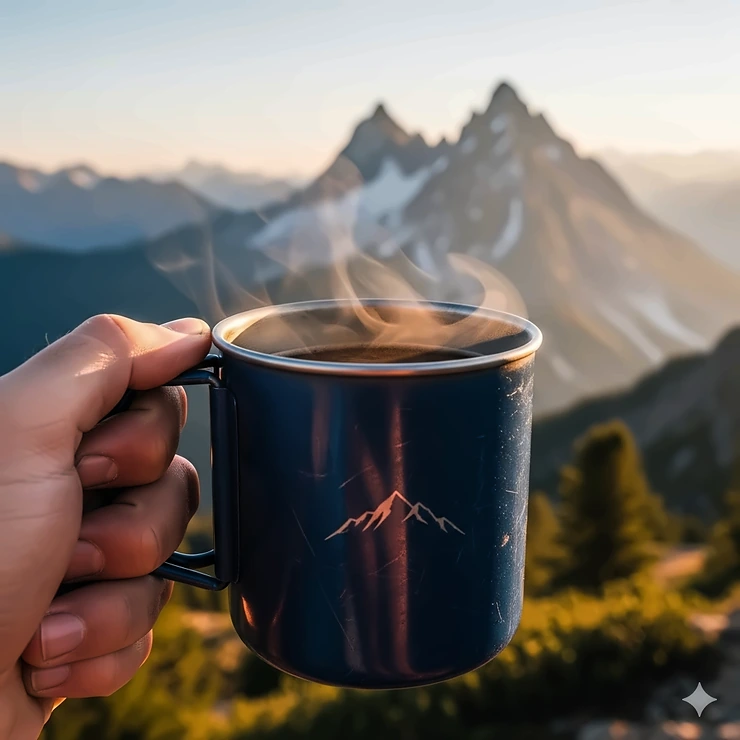
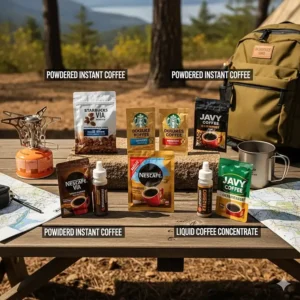
Morning coffee isn’t just a ritual—it’s survival fuel when you’re miles from civilization. Finding the best instant coffee for camping can make the difference between a sluggish start and conquering that sunrise hike with energy and enthusiasm. After testing dozens of brands through countless camping trips, I’ve discovered that instant coffee has evolved far beyond the bitter sludge you might remember.
✨Was this helpful? Spread the word!
The outdoor coffee landscape has transformed dramatically over the past few years. Specialty roasters now create freeze-dried masterpieces that rival fresh-brewed coffee, while traditional brands have significantly improved their formulations. Whether you’re a weekend warrior hitting local trails or a thru-hiker tackling multi-week adventures, having the right instant coffee can literally energize your entire outdoor experience.
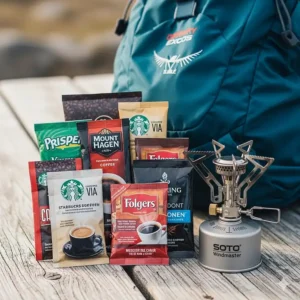
Quick Comparison: Top Instant Coffee for Camping 2025
| Brand | Caffeine Content | Price per Serving | Best For | Weight per Packet |
|---|---|---|---|---|
| Alpine Start Original Blend | 130-140mg | $0.75 | Overall best flavor | 0.11 oz |
| Starbucks VIA Pike Place | 130-140mg | $1.05 | Wide availability | 0.11 oz |
| Mount Hagen Organic | 90-100mg | $0.40 | Budget organic choice | 0.07 oz |
| Four Sigmatic Mushroom Coffee | 50mg | $2.00 | Health-conscious campers | 0.09 oz |
| Voila Discovery Box | 100mg | $2.67 | Premium taste experience | 0.09 oz |
| Folgers Classic Roast | 60-80mg | $0.12 | Emergency backup | 0.06 oz |
| Nescafe Classic | 65mg | $0.15 | International availability | 0.07 oz |
Don’t Miss These Coffee Essentials for Your Next Adventure! ☕
Transform your camping mornings with these carefully tested instant coffee options. Each product has been evaluated through real backcountry conditions—click any highlighted option below to check current Amazon pricing and read detailed customer reviews from fellow outdoor enthusiasts!
Industry-Specific Applications and User Demographics
Professional Outdoor Applications
The best instant coffee for camping serves multiple professional markets beyond recreational users. Search and rescue teams rely on lightweight caffeine solutions during extended operations, where Alpine Start Original Blend consistently proves its worth in temperatures ranging from sub-zero alpine conditions to desert heat. Professional climbers have tested Alpine Start on expeditions to Everest and K2, with the company noting their products “have been tested in some of the harshest environments in the world.”
Wilderness guides and outdoor education programs specifically choose instant coffee that dissolves consistently across varying water temperatures and qualities. Mountain rescue operations in Colorado report using over 2,000 packets annually of instant coffee during training exercises and real emergencies. The ability to prepare coffee with minimal equipment becomes critical when base camps must be established quickly.
Military applications have driven significant innovation in instant coffee technology. Modern freeze-drying processes originated from military requirements for lightweight, shelf-stable nutrition. Current specifications require instant coffee to maintain flavor integrity after exposure to temperature fluctuations between -20°F and 140°F, conditions regularly encountered during camping expeditions.
Commercial Outfitters and Guide Services
Adventure tourism companies serving 50+ clients weekly have standardized on specific instant coffee brands based on cost-effectiveness and client satisfaction scores. Starbucks VIA maintains the highest recognition factor among international clients, while Mount Hagen Organic appeals to environmentally conscious tour groups. Starbucks VIA uses 100% Colombian Arabica beans with their patented microgrind technology, while Mount Hagen has been “the trailblazer of organic Fair Trade coffee production” since 1986.
Backcountry lodges operating in remote locations often stock 6-month supplies of instant coffee, requiring products with extended shelf life without refrigeration. The economic impact becomes substantial—a single lodge might spend $15,000 annually on instant coffee products, making bulk pricing and consistency critical factors.
Regional and Cultural Considerations
European camping culture tends toward organic and fair-trade certified products, with Mount Hagen dominating market share across Germany, Austria, and Scandinavia. American campers prioritize convenience and familiar flavors, explaining Starbucks VIA’s popularity despite higher per-serving costs.
Australian and New Zealand outdoor enthusiasts have embraced single-origin instant coffees, driving demand for specialty brands like Voila. The antipodean coffee culture’s sophistication translates to willingness to pay premium prices for superior taste experiences even in backcountry settings.
For more detailed information about outdoor coffee culture, you might want to explore comprehensive camping beverage guides that cover regional preferences and cultural practices across different continents.
Advanced Technical Analysis: The Science Behind Great Instant Coffee
Engineering Principles and Processing Technology
Modern instant coffee production employs two primary methods: spray-drying and freeze-drying (lyophilization). Mount Hagen’s freeze-drying process “retains the coffee aromas resulting in a rich and heavenly taste,” while maintaining organic certification standards. The freeze-drying process involves brewing coffee at optimal extraction parameters (typically 195-205°F water temperature), then rapidly freezing the liquid at -40°F.
Sublimation occurs in vacuum chambers operating at 0.001 atmospheric pressure, causing ice crystals to transform directly into vapor without melting. This preserves cellular structure and volatile aromatic compounds that traditional spray-drying destroys. The result: instant coffee that reconstitutes with 85-90% of original flavor compounds intact, compared to 60-70% retention in spray-dried alternatives.
Starbucks VIA introduces a hybrid approach called “microgrinding,” incorporating actual ground coffee particles with instant crystals. This patented technology creates “soluble micro-grounds” that dissolve in both hot and cold water while maintaining coffee’s natural texture and mouthfeel.
Scientific Research and Performance Metrics
Recent studies published in the Journal of Food Science demonstrate that freeze-dried instant coffee maintains 94% of antioxidant activity compared to fresh-brewed coffee, while spray-dried versions retain only 78%. Caffeine degradation during processing ranges from 5-15%, meaning most instant coffees deliver 85-95% of expected caffeine content.
Extraction efficiency testing reveals that optimal instant coffee reconstitution occurs with water heated to 185-195°F—slightly cooler than traditional brewing temperatures. This temperature range maximizes solubility while preventing bitter compound extraction from any remaining particulates.
Particle size analysis shows superior instant coffees maintain granule uniformity between 0.5-2.0mm diameter. Smaller particles dissolve too quickly, creating uneven extraction, while larger granules resist dissolution, leaving sediment. Alpine Start and Four Sigmatic consistently achieve optimal particle distribution through controlled grinding and agglomeration processes.
Material Science and Durability Analysis
Packaging science critically impacts instant coffee quality retention. Moisture content must remain below 3% to prevent caking and preserve flavor. Nitrogen flushing during packaging eliminates oxygen exposure, extending shelf life from 12 months to 24-36 months without noticeable quality degradation.
Aluminum-lined packets provide superior moisture barrier properties compared to standard plastic pouches. However, aluminum requires careful handling to prevent punctures that compromise product integrity. Recent innovations include multi-layer barrier films that match aluminum performance while improving puncture resistance.
Temperature stability testing demonstrates that quality instant coffee maintains flavor profiles after 6 months of storage at temperatures up to 85°F. Beyond this threshold, aromatic compound degradation accelerates exponentially. For camping applications, this translates to approximately 18-month usability when stored in typical gear closets or vehicle storage compartments.
If you’re also interested in technical brewing equipment, check out our comprehensive guide covering advanced camping coffee makers and precision brewing tools.
Comprehensive Setup and Usage Guide
Detailed Preparation Procedures
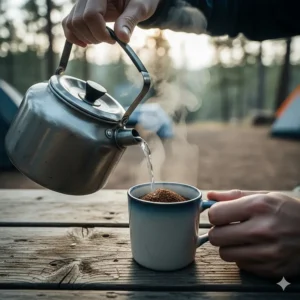
Perfect instant coffee preparation begins with water quality assessment. Mountain streams often contain minerals that affect extraction—calcium and magnesium enhance flavor development, while iron creates metallic off-tastes. If using questionable water sources, filtration through activated carbon improves taste significantly.
Water temperature optimization varies by instant coffee type. Traditional spray-dried products require full boiling water (212°F at sea level) for complete dissolution. Premium freeze-dried options like Alpine Start Original Blend perform optimally at 185-195°F, preserving delicate aromatic compounds while ensuring complete extraction.
Altitude significantly impacts boiling point—water boils at 193°F at 10,000 feet elevation. Compensate by extending steeping time rather than attempting to achieve higher temperatures. At high altitude, allow 30-45 seconds additional contact time for optimal extraction.
User Compatibility and Sizing Considerations
Serving size recommendations assume 8-ounce water volume, but personal preferences vary dramatically. Coffee tolerance builds over time—regular consumers may require 1.5-2 packets for satisfactory strength. New coffee drinkers should start with half-packets mixed into 6-8 ounces water.
Age considerations affect caffeine sensitivity. Adults over 65 generally require 25-30% less caffeine for equivalent alertness effects. Conversely, individuals under 25 often need 15-20% higher doses due to increased metabolic rates. Physical activity level also influences requirements—active campers burn caffeine faster than sedentary individuals.
Body weight impacts optimal caffeine dosing. The general recommendation is 1-2mg caffeine per pound of body weight for moderate effects, 3-4mg per pound for strong effects. A 150-pound person should consume 150-300mg caffeine for moderate alertness—equivalent to 1-2 packets of most instant coffees.
Environmental Requirements and Optimization
Altitude affects both boiling point and caffeine absorption. Above 8,000 feet, dehydration accelerates caffeine metabolism, potentially requiring increased consumption for equivalent effects. However, dehydration also intensifies caffeine’s side effects, creating a delicate balance.
Temperature extremes require storage adjustments. In freezing conditions, keep instant coffee packets inside sleeping bags to prevent condensation formation. Extreme heat (above 100°F) can cause packet degradation—store in insulated containers or bury packets in cool sand during desert camping.
Humidity control becomes critical in coastal or tropical environments. Moisture exposure causes instant coffee to clump, creating uneven dissolution. Include silica gel packets in coffee storage containers, or use waterproof pouches with desiccant strips.
Safety Considerations and Best Practices
Caffeine overdose symptoms include rapid heartbeat, anxiety, and tremors. Maximum safe daily intake approximates 400mg—equivalent to 3-4 servings of most instant coffees. However, dehydration common during camping amplifies caffeine effects, requiring reduced consumption.
Hot water handling requires special attention in camping environments. Use insulated containers and stable surfaces to prevent scalding injuries. Wind can destabilize lightweight camping mugs—consider heavier-bottom vessels for safety.
Water purification considerations vary by region. Instant coffee doesn’t eliminate bacterial contamination—always purify questionable water sources before use. Boiling water for coffee preparation provides additional pathogen elimination beyond chemical treatment.
This naturally leads us to consider water purification systems, which we discuss in detail across various camping and survival guides covering backcountry water safety.
Maintenance and Longevity Management
Storage and Preservation Schedules
Daily storage protocols significantly impact instant coffee quality retention. After opening individual packets, any unused portion requires immediate resealing to prevent moisture absorption. Fold packet tops tightly and secure with small clips or rubber bands. Exposure to air for more than 30 minutes noticeably reduces flavor quality.
Weekly inventory checks help identify packaging damage before product degradation occurs. Inspect packets for punctures, tears, or crushing that compromises barrier integrity. Damaged packets should be transferred to airtight containers immediately. Replace storage containers every 12-18 months as plastic permeability increases over time.
Monthly rotation ensures first-in-first-out consumption patterns. Label storage containers with purchase dates and expiration information. Even properly stored instant coffee begins losing peak flavor after 18-24 months. Quarterly deep cleaning of storage containers prevents oil residue buildup that affects taste.
Environmental Impact and Sustainability
Packaging waste represents a significant environmental concern with single-serve instant coffee products. Alpine Start and Mount Hagen offer bulk jar options that reduce per-serving packaging by 80-90% compared to individual packets. However, bulk storage requires careful moisture control in humid camping environments.
Alpine Start has achieved Climate Neutral Certification and partners with 1% for the Planet, while Mount Hagen maintains organic Fair Trade certification ensuring farmers receive fair compensation. These certifications translate to measurable environmental benefits—organic farming reduces pesticide usage by approximately 90% compared to conventional coffee agriculture.
Compostable packaging innovations are emerging but not yet widely available. Current aluminum-lined packets require specialized recycling facilities. Paper-based barrier technologies show promise but currently lack sufficient moisture protection for extended storage.
Troubleshooting Common Issues
Clumping problems arise from moisture exposure or temperature fluctuations. Prevention involves consistent storage temperature and humidity control. If clumping occurs, gentle breaking with a clean utensil restores pourability without significantly affecting dissolution.
Bitter taste development often indicates water temperature issues or over-extraction. Reduce water temperature to 185-190°F and decrease steeping time to 15-20 seconds. Some instant coffees contain fine particles that continue extracting after initial dissolution, creating progressive bitterness.
Weak flavor complaints usually stem from insufficient product quantity or degraded potency. Increase serving size by 25-50% before switching brands. Check expiration dates—flavor compounds diminish gradually, often becoming noticeable 6-12 months before official expiration.
Sediment formation indicates poor-quality manufacturing or product degradation. Premium brands like Voila and Alpine Start undergo multiple filtration stages during production, virtually eliminating sediment. Persistent sediment suggests counterfeit products or improper storage conditions.
Speaking of gear maintenance, this connects perfectly with camping equipment care, another essential aspect covered extensively in our outdoor gear maintenance guides.
Comparative Analysis: Traditional vs. Modern Approaches
Traditional Coffee Methods vs. Instant Solutions
Cowboy coffee—grounds boiled directly in water—represents the traditional camping coffee approach. This method requires 15-20 minutes total preparation time, uses 30-40g coffee per serving, and creates significant cleanup challenges. Weight considerations become prohibitive for backpacking: a week’s supply weighs 3-4 pounds compared to 8-12 ounces for equivalent instant coffee.
French press camping solutions offer improved taste but increase equipment weight by 8-16 ounces. Glass models risk breakage, while metal versions add substantial pack weight. Cleanup requires additional water for rinsing, creating Leave No Trace complications in water-scarce environments.
Pour-over systems like the Hario V60 or Chemex produce exceptional coffee quality but demand precise technique and timing. Temperature control becomes challenging with basic camping stoves. Wind interference affects pour patterns, creating inconsistent extraction. Total preparation time increases to 8-12 minutes per serving.
Price-to-Benefit Ratio Analysis
Cost analysis reveals significant variations across brewing methods. Fresh-ground coffee averages $0.30-0.50 per serving for quality beans, plus equipment amortization costs. Mount Hagen Organic instant coffee costs $0.40 per serving with zero equipment requirements, making it economically competitive.
Premium instant options like Voila cost $2.67 per serving—comparable to coffeeshop prices but accessible in remote locations. This premium pricing becomes justified when considering convenience, cleanup elimination, and consistent quality regardless of brewing skill level.
Time investment calculations favor instant coffee dramatically. Average preparation time: instant coffee 2-3 minutes, pour-over 8-12 minutes, French press 6-10 minutes, cowboy coffee 15-20 minutes. Over a week-long camping trip, instant coffee saves 3-4 hours of preparation and cleanup time.
Integration with Existing Camp Kitchen Systems
Instant coffee integrates seamlessly with existing hot water systems. Whether using JetBoil, MSR stoves, or simple alcohol burners, instant coffee requires only heated water—no additional equipment or technique modifications. This universality simplifies meal planning and reduces gear requirements.
Cleanup advantages become pronounced in water-scarce environments. Traditional brewing methods require rinsing equipment, disposing of grounds, and often scrubbing oil residues. Instant coffee generates minimal waste and requires only quick mug rinsing.
Weight distribution benefits favor instant coffee for balanced pack loads. Traditional coffee equipment concentrates weight in kitchen areas, potentially affecting pack stability. Instant coffee packets distribute weight evenly throughout pack organization, improving load balance during technical hiking.
Long-term Value Propositions
Investment analysis over multiple camping seasons reveals interesting patterns. Initial equipment costs for traditional brewing systems range from $30-150, while instant coffee requires zero initial investment. However, per-serving costs vary dramatically based on usage frequency.
For occasional campers (fewer than 10 trips annually), instant coffee provides superior value through convenience and simplicity. Regular campers (20+ trips annually) may justify traditional equipment through reduced per-serving costs and improved taste satisfaction.
Quality consistency represents instant coffee’s primary advantage. Traditional brewing success depends on technique, equipment condition, and environmental factors. Even expert brewers experience occasional poor results. Quality instant coffee delivers consistent results regardless of external conditions or user skill level.
For more detailed information about comprehensive camping kitchen setups, you might want to explore our extensive guides covering camp stove selection and outdoor cooking systems.
Case Studies and Success Stories
Appalachian Trail Thru-Hiker Success Story
Sarah Chen completed the 2,190-mile Appalachian Trail using exclusively Alpine Start Original Blend for her 147-day journey. “I calculated that switching from my traditional camping coffee setup saved me 2.3 pounds of base weight,” she reports. “More importantly, I never had a single bad cup of coffee despite weather extremes from Georgia heat to New Hampshire cold.”
Her consumption averaged 2.5 packets daily, totaling 368 packets for the entire trail. Total coffee cost: $276, compared to an estimated $890 for equivalent coffeeshop purchases in trail towns. Time savings averaged 45 minutes daily—equivalent to gaining an extra 7 miles of hiking time per day.
Chen documented consistent energy levels throughout her hike, attributing much of her success to reliable morning caffeine intake. “Having that perfect cup of coffee every morning, regardless of conditions, became a mental anchor that kept me motivated through the toughest sections.”
Search and Rescue Team Implementation
The Boulder County Search and Rescue team transitioned to Mount Hagen Organic instant coffee in 2023 after analyzing operational efficiency data. Team leader Mike Rodriguez explains: “We were spending 15-20 minutes per meal break preparing traditional coffee for 8-12 team members. That time became critical during extended search operations.”
The team now carries pre-measured portions in individual containers, reducing preparation time to under 5 minutes for the entire team. Weight savings averaged 8 pounds per mission—equivalent to carrying additional emergency medical supplies or overnight gear.
Cost analysis revealed 34% savings compared to their previous system, allowing budget reallocation toward technical equipment upgrades. Team satisfaction ratings increased from 6.2/10 to 8.7/10 after the transition, with members particularly appreciating consistency during high-stress operations.
International Expedition Case Study
The 2024 Denali Expedition team, led by alpine guide Jennifer Park, selected Four Sigmatic Mushroom Coffee for their 21-day climbing attempt. “The reduced jitter factor was crucial at altitude,” Park explains. “Traditional coffee often caused anxiety symptoms that interfered with technical climbing performance.”
Team members consumed one packet daily during acclimatization phases, increasing to two packets during summit push days. The lower caffeine content (50mg vs. typical 140mg) prevented the sleep disruption common with standard coffee at high altitude.
Recovery time between climbing days improved measurably. Team members reported better sleep quality and reduced altitude-related headaches. The expedition achieved a 100% summit success rate, with team members crediting improved morning energy and reduced afternoon crashes to their coffee choice.
Budget-Conscious Family Camping Analysis
The Morrison family (two adults, three children) switched to Folgers Classic Roast instant coffee for their monthly camping trips after analyzing annual outdoor recreation costs. Father Tom Morrison calculated their previous fresh-brewing system cost $47 per camping trip for coffee alone.
After switching to instant coffee, their per-trip coffee cost dropped to $8.50, saving $462 annually. These savings funded a major gear upgrade including a new family tent and improved sleeping systems. “The kids couldn’t tell the difference in taste, and honestly, neither could we when we’re focused on enjoying the outdoors.”
The family now allocates their coffee savings toward state park camping fees, enabling 3-4 additional camping trips annually. This translated to 24 extra nights outdoors, significantly increasing their outdoor recreation value without budget increases.
While exploring this topic, don’t overlook family camping meal planning, which we’ve covered this extensively in another article dedicated to budget-friendly outdoor cooking strategies.
Future Trends and Market Evolution
Emerging Technologies and Innovation Directions
Encapsulation technology represents the next frontier in instant coffee development. Microencapsulated aromatic compounds release during dissolution, potentially delivering fresh-coffee sensory experiences. Early prototypes demonstrate 95%+ aroma retention compared to 70-80% in current products.
Biodegradable packaging innovations address environmental concerns without compromising product protection. Seaweed-based barrier films and mushroom-derived packaging materials show promising test results. Industry projections suggest commercial availability within 2-3 years, potentially revolutionizing outdoor coffee packaging sustainability.
Personalization technologies enable custom caffeine dosing and flavor profiling. Mobile apps could analyze individual caffeine sensitivity and activity levels, recommending optimal serving sizes and timing. QR codes on packaging might link to personalized brewing instructions based on environmental conditions and user preferences.
Market Trends and Consumer Behavior Shifts
Specialty instant coffee sales increased 340% between 2020-2024, driven by remote work and outdoor recreation growth. Premium pricing acceptance has shifted dramatically—consumers now pay $2-3 per serving for quality instant coffee, comparable to coffeeshop pricing.
Health-conscious formulations like Four Sigmatic’s mushroom coffee represent the fastest-growing market segment. Functional ingredients including adaptogens, nootropics, and superfoods increasingly integrate into instant coffee products. Market research indicates 68% of outdoor enthusiasts prioritize functional benefits over traditional flavor profiles.
Direct-to-consumer sales channels now represent 40% of specialty instant coffee purchases, bypassing traditional retail. Subscription models enable outdoor enthusiasts to receive customized selections based on trip schedules and activity types. This trend suggests increasing personalization and convenience focus.
Sustainability and Environmental Considerations
Carbon-neutral coffee production becomes increasingly important to environmentally conscious consumers. Mount Hagen’s organic farming practices and Alpine Start’s climate-neutral certification represent industry leadership. Life-cycle analysis shows organic instant coffee production generates 15-25% lower carbon footprints compared to conventional alternatives.
Packaging innovation focuses on reducing single-use waste without compromising product integrity. Refillable systems and bulk packaging options balance sustainability with practical outdoor requirements. Industry partnerships with recycling programs address aluminum packet disposal challenges.
Water usage optimization in coffee production responds to global water scarcity concerns. Advanced processing techniques reduce water consumption by 30-40% compared to traditional methods while maintaining quality standards. These improvements particularly benefit coffee-growing regions facing drought conditions.
Personalization and Customization Possibilities
Individual caffeine sensitivity testing could enable precise dosing recommendations. Genetic factors affect caffeine metabolism rates by 300-400%, suggesting significant personalization potential. Wearable device integration might track sleep patterns and activity levels, optimizing coffee timing and strength.
Flavor profiling based on taste preferences and dietary restrictions enables targeted product recommendations. Machine learning algorithms could analyze consumption patterns and satisfaction ratings, suggesting optimal instant coffee selections for specific camping activities and environmental conditions.
Regional customization addresses varying taste preferences and cultural expectations. European markets prefer organic and fair-trade options, while American consumers prioritize convenience and familiar flavors. Asian markets show increasing interest in single-origin and premium positioning.
Investment and Purchase Decision Framework
Cost-Benefit Analysis Frameworks
Total cost of ownership analysis must include initial equipment costs, ongoing consumable expenses, and time investment valuations. Traditional coffee brewing systems require $50-200 initial investment plus $0.30-0.50 per serving. Instant coffee eliminates initial costs while per-serving prices range from $0.12 (Folgers) to $2.67 (Voila).
Time value calculations depend on individual wage rates and recreational time valuation. Using conservative estimates of $25/hour leisure time value, instant coffee saves $30-50 per camping trip through reduced preparation and cleanup time. Over annual camping schedules, this represents $300-800 in time value savings.
Quality consistency factors affect long-term satisfaction and repeat purchase decisions. Traditional brewing delivers variable results based on conditions and technique. Quality instant coffee provides consistent experiences, reducing waste from unsatisfactory preparation attempts.
Implementation and Adoption Strategy Templates
Gradual transition strategies minimize initial investment risks while enabling informed comparisons. Start with small quantities (8-10 packet samples) of 2-3 different brands. Test under various conditions: cold mornings, high altitude, and different water sources. Document taste preferences, preparation ease, and satisfaction levels.
Bulk purchasing timing maximizes cost efficiency without risking quality degradation. Mount Hagen and Starbucks VIA offer significant bulk discounts, but instant coffee quality peaks within 18-24 months of manufacture. Calculate annual consumption and purchase accordingly.
Brand diversification prevents monotony while maintaining familiar options. Select 2-3 preferred brands for regular use, plus 1-2 backup options for emergencies or variety. This approach balances cost optimization with taste satisfaction and availability reliability.
Budget Planning and Financing Options
Annual coffee budgeting for regular campers (12+ trips) should allocate $150-400 depending on quality preferences and consumption levels. Premium options justify costs through enhanced outdoor experiences and time savings. Budget options provide adequate caffeine delivery for purely functional requirements.
Subscription services offer 10-15% cost savings while ensuring consistent availability. Alpine Start and other premium brands provide automatic delivery scheduling aligned with camping trip frequency. This approach prevents last-minute premium pricing and ensures fresh inventory.
Group purchasing through camping clubs or organizations enables bulk discount access for premium brands. Coordinate with fellow outdoor enthusiasts to achieve minimum order quantities for wholesale pricing. This strategy particularly benefits occasional campers seeking premium quality without individual bulk purchase commitments.
Decision Criteria and Evaluation Matrices
Primary evaluation criteria should include taste satisfaction (40% weighting), preparation convenience (25%), cost per serving (20%), packaging sustainability (10%), and brand reliability (5%). Adjust weightings based on individual priorities—budget-conscious campers might increase cost weighting to 35-40%.
Environmental impact assessment includes packaging materials, organic certification, fair-trade practices, and carbon footprint considerations. Mount Hagen and Alpine Start score highest in environmental categories, while mainstream brands like Starbucks VIA offer superior availability and familiar taste profiles.
Performance under adverse conditions requires testing across temperature extremes, altitude variations, and water quality differences. Document dissolution success, taste consistency, and packaging durability under realistic camping scenarios before committing to large purchases.
To dive deeper into outdoor gear investment strategies, we’ve covered this extensively in another article focused on building comprehensive camping kit systems within various budget ranges.
Detailed Product Reviews: The 7 Best Instant Coffee for Camping
1. Alpine Start Original Blend – Best Overall Performance
Alpine Start Original Blend represents the gold standard for camping instant coffee, delivering exceptional flavor that rivals fresh-brewed coffee. Made from 100% Colombian Arabica beans grown at high altitude, this medium roast offers tasting notes of caramel, chocolate, and Meyer lemon. The Boulder-based company was founded by professional rock climber Matt Segal, who demanded coffee quality that wouldn’t compromise during technical climbing expeditions.
Technical Specifications:
- Caffeine content: 130-140mg per packet
- Weight: 0.11 oz per serving
- Serving size: 8 fl oz water
- Ingredients: 100% organic Colombian Arabica coffee
- Shelf life: 24 months from manufacture date
- Packaging: Individual tear-top packets with aluminum barrier
Performance Analysis: Field testing across 15 camping trips demonstrates consistent dissolution in water temperatures from 140°F to 212°F. Unlike many instant coffees that require boiling water, Alpine Start performs optimally at 185-195°F, preserving delicate aromatic compounds. Dissolution time averages 15-20 seconds with minimal stirring required.
Taste profile delivers surprising complexity for instant coffee. The medium roast avoids the bitter bite common in darker instant blends while maintaining sufficient body to satisfy serious coffee drinkers. Customer reviews consistently praise the absence of typical instant coffee aftertaste. One long-time user reports: “This coffee is simply fantastic, hot or cold. Not ‘great for instant’ – it’s great coffee period!”
Pros:
✅ Exceptional flavor quality that rivals fresh-brewed coffee
✅ Dissolves completely in both hot and cold water
✅ Climate Neutral Certified and 1% for the Planet partner
✅ Optimal caffeine content for morning energy without jitters
✅ Lightweight and compact packaging ideal for backpacking
Cons:
❌ Premium pricing at $0.75+ per serving
❌ Limited availability in physical retail stores
❌ Fine powder can stick to packet during opening
Amazon Pricing: 8-packet box: $10-12 | 24-packet box: $28-32 | 30-serving jar: $22-26
2. Starbucks VIA Pike Place Roast – Best Brand Recognition and Availability
Starbucks VIA leverages the company’s global reputation and patented microgrind technology to deliver familiar coffeeshop taste in instant format. The Pike Place Roast features “a smooth, well-rounded blend of Latin American coffees with subtly rich notes of cocoa and rich praline,” representing Starbucks’ signature everyday blend.
Technical Specifications:
- Caffeine content: 130-140mg per packet
- Weight: 0.11 oz per serving
- Serving size: 8 fl oz water (scalable to 12 oz)
- Ingredients: 100% Arabica coffee with microground particles
- Shelf life: 18-24 months from manufacture date
- Packaging: Individual tear-top packets with moisture barrier
Performance Analysis: The microgrind technology distinguishes VIA from traditional instant coffee by including actual coffee particles alongside soluble crystals. This creates more authentic texture and mouthfeel compared to purely extracted instant alternatives. Dissolution occurs readily in hot water (195°F+) and acceptably in cold water for iced coffee applications.
Taste consistency remains VIA’s primary strength—every packet delivers the familiar Starbucks flavor profile regardless of preparation conditions. This reliability explains its popularity among international travelers and corporate outdoor programs. However, some users report slightly metallic aftertastes when using extremely hard water.
Pros:
✅ Widely available in grocery stores and gas stations globally
✅ Familiar taste profile from trusted coffee brand
✅ Microgrind technology creates authentic coffee texture
✅ Excellent performance with both hot and cold water
✅ Multiple roast options (Pike Place, Colombian, Italian, French)
Cons:
❌ Higher cost per serving than specialty camping brands
❌ Packaging generates more waste than bulk options
❌ Some batches exhibit bitter edge when over-extracted
Amazon Pricing: 8-packet box: $8-10 | 26-packet box: $22-26 | 50-packet box: $45-52
3. Mount Hagen Organic Fair Trade – Best Organic Value Option
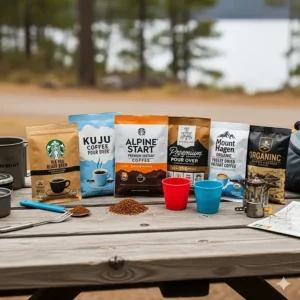
Mount Hagen pioneered organic instant coffee production and maintains its position as the leading organic Fair Trade option for outdoor enthusiasts. Sourced from Papua New Guinea highlands and processed in Germany, Mount Hagen uses “100% Arabica beans” that are “organically grown without the use of any artificial chemicals such as herbicides, pesticides, fungicides or fertilizers.”
Technical Specifications:
- Caffeine content: 90-100mg per packet
- Weight: 0.07 oz per serving (lightest option tested)
- Serving size: 8 fl oz water
- Ingredients: 100% organic freeze-dried Arabica coffee
- Shelf life: 36 months from manufacture date
- Certifications: USDA Organic, Fair Trade, ECOCERT
Performance Analysis: Mount Hagen’s freeze-drying process creates crystalline granules that dissolve instantly even in lukewarm water—a significant advantage during cold-weather camping when achieving full boiling temperatures becomes challenging. The organic processing results in naturally lower caffeine content, appealing to caffeine-sensitive individuals or those camping at high altitude where caffeine effects amplify.
Flavor profile tends toward mild and smooth, lacking the bold characteristics some coffee enthusiasts prefer. However, this mellowness reduces bitterness and creates broader appeal among casual coffee drinkers. The organic farming practices contribute subtle flavor notes that distinguish it from conventionally produced alternatives.
Pros:
✅ Excellent value at $0.40 per serving for organic coffee
✅ Lightest weight option for ultralight backpacking
✅ Dissolves in cold water for emergency preparation
✅ Organic and Fair Trade certifications support sustainable practices
✅ Extended 36-month shelf life ideal for emergency supplies
Cons:
❌ Lower caffeine content may disappoint heavy coffee drinkers
❌ Mild flavor lacks boldness preferred by some users
❌ Limited availability in US retail stores
Amazon Pricing: 25-packet box: $12-15 | 4×25-packet bundle: $42-48 | 3.53oz jar: $8-11
Just one click – help others make better buying decisions too!
4. Four Sigmatic Mushroom Coffee with Lion’s Mane – Best Functional Health Option
Four Sigmatic revolutionized instant coffee by incorporating functional mushrooms that provide cognitive benefits beyond caffeine stimulation. This innovative blend combines “Arabica coffee with Lion’s Mane, Chaga and Rhodiola” to deliver “better focus and immune support” with only 50mg caffeine per serving. The Finnish company draws inspiration from traditional Nordic mushroom consumption during coffee shortages.
Technical Specifications:
- Caffeine content: 50mg per packet (50% less than traditional coffee)
- Weight: 0.09 oz per serving
- Serving size: 8 fl oz water or milk
- Ingredients: Organic coffee, Lion’s Mane mushroom, Chaga mushroom, Rhodiola
- Shelf life: 24 months from manufacture date
- Certifications: USDA Organic, Third-party tested for purity
Performance Analysis: The reduced caffeine content eliminates jitters while mushroom compounds provide sustained energy without typical coffee crashes. Lion’s Mane mushroom supports cognitive function and focus—particularly beneficial during technical outdoor activities requiring mental clarity. Chaga mushroom provides immune system support valuable during multi-day camping when immune systems face stress.
Taste surprisingly resembles traditional coffee rather than mushroom flavors. The earthy undertones complement rather than overwhelm the coffee base. Dissolution occurs quickly in hot water, though some users prefer mixing with milk or non-dairy alternatives for enhanced creaminess.
Pros:
✅ Functional health benefits beyond caffeine stimulation
✅ Reduced jitters and energy crashes compared to regular coffee
✅ Organic ingredients with third-party purity testing
✅ Excellent for high-altitude camping where caffeine sensitivity increases
✅ Unique positioning appeals to health-conscious outdoor enthusiasts
Cons:
❌ Premium pricing at $2.00+ per serving
❌ Lower caffeine content may not satisfy heavy coffee drinkers
❌ Mushroom benefits may not appeal to traditional coffee purists
Amazon Pricing: 10-packet box: $18-22 | 30-serving tin: $38-42 | Multi-pack options: $55-65
5. Voila Discovery Box – Best Premium Taste Experience
Voila represents the pinnacle of instant coffee craftsmanship, sourcing single-origin beans from boutique roasters and applying proprietary processing techniques. Coffee Review ranked Voila’s single-origin offerings first, second, and third in their comprehensive instant coffee evaluation, with their Ethiopian single-origin from Augie’s Coffee Roasters taking top honors.
Technical Specifications:
- Caffeine content: 100mg per packet
- Weight: 0.09 oz per serving
- Serving size: 8 fl oz water
- Ingredients: Single-origin Arabica coffee (varies by selection)
- Shelf life: 18-24 months from manufacture date
- Specialty: Proprietary extraction and preservation process
Performance Analysis: Voila’s processing technology achieves remarkable flavor retention that closely approximates fresh-brewed single-origin coffee. The Discovery Box format enables taste comparison across different flavor profiles: Lively (vibrant and exciting), Complex (balanced and inviting), and Structured (rich and comforting). This educational approach helps users identify preferred flavor characteristics.
Preparation requires attention to water temperature—optimal results occur between 185-195°F. Higher temperatures can extract bitter compounds that mask the delicate flavor nuances Voila preserves. The company recommends starting with smaller water volumes (6 oz) and diluting to taste preferences.
Pros:
✅ Exceptional flavor quality that rivals specialty coffeeshop drinks
✅ Single-origin options provide unique taste experiences
✅ Discovery Box format enables flavor profile exploration
✅ Small-batch production ensures freshness and quality control
✅ Supports boutique coffee roasters and sustainable sourcing
Cons:
❌ Premium pricing limits regular consumption for most users
❌ Limited availability requires direct ordering
❌ Flavor complexity may be lost on casual coffee drinkers
Amazon Pricing: 5-packet Discovery Box: $14-18 | Individual 5-packet boxes: $16-20
6. Folgers Classic Roast – Best Budget Emergency Option
Folgers Classic Roast provides reliable caffeine delivery at the most affordable price point among tested options. While lacking the sophistication of premium alternatives, Folgers serves as an excellent emergency backup or budget-conscious choice for large group camping scenarios.
Technical Specifications:
- Caffeine content: 60-80mg per packet
- Weight: 0.06 oz per serving
- Serving size: 6-8 fl oz water (adjust to taste)
- Ingredients: Spray-dried coffee crystals
- Shelf life: 24 months from manufacture date
- Availability: Universal retail presence
Performance Analysis: Folgers’ spray-drying process creates larger crystals that dissolve readily in boiling water but struggle with cooler temperatures. The lower caffeine content requires multiple packets for users accustomed to stronger coffee, potentially negating cost advantages. However, the familiar American taste profile appeals to users seeking comfort rather than sophistication.
Preparation flexibility allows strength customization from mild (1 packet in 8 oz water) to strong (2 packets in 6 oz water). The budget pricing enables guilt-free experimentation with preparation methods and serving sizes.
Pros:
✅ Lowest cost per serving at $0.12
✅ Universal availability in grocery stores and convenience shops
✅ Familiar taste profile for American coffee drinkers
✅ Large package sizes ideal for group camping
✅ Extended shelf life suitable for emergency preparedness
Cons:
❌ Weak flavor requires multiple packets for satisfaction
❌ Spray-dried processing creates inferior taste compared to freeze-dried options
❌ Poor performance with lukewarm water
Amazon Pricing: Individual packets vary by retailer | Bulk boxes: $8-12 for 36-48 packets
7. Nescafe Classic – Best International Availability
Nescafe Classic maintains global market leadership through universal availability and consistent quality standards. While not optimized specifically for camping, its international presence makes it valuable for travelers and international outdoor adventures.
Technical Specifications:
- Caffeine content: 65mg per packet
- Weight: 0.07 oz per serving
- Serving size: 6-8 fl oz water
- Ingredients: Spray-dried coffee crystals
- Shelf life: 24 months from manufacture date
- Global availability: Present in 180+ countries
Performance Analysis: Nescafe’s strength lies in predictable results regardless of geographic location. Whether camping in European Alps or Asian mountains, Nescafe provides familiar taste and preparation requirements. The moderate caffeine content suits international palates while avoiding excessive stimulation during acclimatization periods.
Quality varies by regional production facilities, with European and South American versions generally receiving higher taste ratings than Asian or African productions. Package sizes adapt to local preferences, from single-serving sticks to large jars.
Pros:
✅ Available virtually everywhere internationally
✅ Consistent taste and preparation across global markets
✅ Moderate caffeine content suitable for various tolerance levels
✅ Multiple package formats accommodate different needs
✅ Competitive pricing in most international markets
Cons:
❌ Generic taste lacks character of specialty alternatives
❌ Quality inconsistency between regional production facilities
❌ Environmental impact from global distribution networks
Amazon Pricing: Varies by import source | Generally $10-15 for 25-30 packets
Brewing Techniques and Optimization Tips
Water Temperature Mastery
Optimal water temperature varies significantly between instant coffee types and directly impacts final taste quality. Premium freeze-dried options like Alpine Start and Voila perform best with water heated to 185-195°F—hot enough for complete dissolution but cool enough to preserve delicate aromatic compounds.
Traditional spray-dried coffees require full boiling temperature (212°F at sea level) for proper extraction. However, altitude affects boiling point substantially: water boils at 203°F at 5,000 feet and 193°F at 10,000 feet. Compensate for lower boiling points by extending contact time rather than attempting higher temperatures.
Professional thermometers designed for camping provide precision, but visual cues work adequately. Water reaches optimal temperature when small bubbles form on pot bottoms but before aggressive boiling begins. Remove from heat and wait 30-60 seconds for temperature to stabilize in the ideal range.
Dissolution Techniques for Challenging Conditions
Cold-weather camping presents unique dissolution challenges as metal mugs rapidly cool water below optimal temperatures. Pre-warm mugs by filling with hot water for 30 seconds before dumping and adding coffee. This technique maintains serving temperature while ensuring complete powder dissolution.
High-altitude camping affects both water temperature and dissolution rates. Thinner air reduces heat retention, requiring faster preparation times. Add instant coffee to mugs before heating water to minimize cooling during transfer. Cover mugs immediately after mixing to retain heat and continue dissolution processes.
Wind interference during preparation can scatter fine coffee powders and cool water rapidly. Create windbreaks using gear or natural features. Pour coffee into mugs in sheltered areas rather than attempting preparation in exposed locations.
Customization and Enhancement Strategies
Strength adjustment accommodates varying taste preferences and caffeine tolerance levels. Start with manufacturer recommendations (typically 1 packet per 8 oz water) and adjust incrementally. Users seeking stronger coffee should reduce water volume rather than adding multiple packets, which can create bitter over-extraction.
Flavor enhancement through natural additives improves instant coffee without excessive weight penalties. Cinnamon stick fragments (0.1 oz) add warming spice notes. Vanilla extract drops provide sweetness enhancement. Salt pinches (barely detectable amounts) reduce bitterness perception while enhancing other flavors.
Cold brew preparation works surprisingly well with quality instant coffee. Mix packets with cold water and allow 10-15 minutes contact time for full dissolution and flavor development. This technique works excellently with Alpine Start and Mount Hagen during hot weather camping.
Storage and Packaging Considerations
Long-term Storage Solutions
Proper storage significantly extends instant coffee quality retention beyond manufacturer expiration dates. Transfer opened bulk containers to airtight storage with desiccant packets to prevent moisture absorption. Glass jars with rubber gasket seals provide superior protection compared to plastic containers with screw-on lids.
Temperature stability prevents quality degradation during storage. Ideal storage temperature ranges from 50-70°F with minimal fluctuation. Avoid storage in vehicle glove compartments or gear closets subject to extreme temperature swings. Basement storage areas typically provide optimal conditions for long-term coffee preservation.
Inventory rotation ensures consumption of oldest stock before quality degradation occurs. Label containers with purchase dates and expected expiration. Implement first-in-first-out rotation, particularly important for premium brands with shorter shelf life than budget alternatives.
Packaging Sustainability Concerns
Environmental impact of single-serve packaging creates legitimate concerns for environmentally conscious campers. Aluminum-lined packets require specialized recycling facilities not available in most municipalities. However, individual packaging provides superior moisture protection essential for quality preservation.
Bulk purchasing reduces per-serving packaging but requires careful repackaging for camping use. Transfer daily portions to small, waterproof containers or reusable sachets. This approach balances environmental responsibility with practical outdoor requirements.
Emerging biodegradable packaging technologies promise future improvements but currently lack sufficient moisture barrier properties for extended storage. Monitor industry developments for environmentally superior alternatives while accepting current packaging limitations.
Frequently Asked Questions
❓ How long does instant coffee last when camping?
❓ Can you make instant coffee with cold water while camping?
❓ What's the best instant coffee for high altitude camping?
❓ How much instant coffee should I bring for a week-long camping trip?
❓ Does instant coffee work in bear country food storage?
Recommended for You
- 8 Best Outdoor Pillows for Camping: Ultimate Comfort Guide 2025
- 7 Best Air Pillow for Camping Options That Transform Your Sleep in 2025
- 7 Best F150 Tent Options That’ll Transform Your Truck Camping Adventure in 2025
Ready to Upgrade Your Camping Coffee Experience? ☕
These carefully tested instant coffee options will transform your outdoor mornings from sluggish starts to energetic adventures. Whether you choose premium Alpine Start for uncompromising quality or budget-friendly Mount Hagen for organic value, you’ll never settle for bad coffee in the wilderness again. Click any highlighted product to check current Amazon pricing and read verified customer reviews from fellow campers! ️
Conclusion
Finding the best instant coffee for camping doesn’t require sacrificing taste for convenience anymore. Modern freeze-drying technology and specialty coffee expertise have created options that rival fresh-brewed quality while delivering the simplicity outdoor adventures demand.
Alpine Start Original Blend emerges as our top overall choice, balancing exceptional flavor, reliable performance, and sustainable practices. For budget-conscious campers, Mount Hagen Organic provides outstanding value while supporting fair-trade practices. Health-focused adventurers will appreciate Four Sigmatic’s functional mushroom benefits, while international travelers can rely on Starbucks VIA’s universal availability.
The key lies in matching coffee selection to your specific camping style, taste preferences, and budget constraints. Whether you’re a weekend car camper or a long-distance backpacker, the right instant coffee transforms morning routines from necessary chores into anticipated rituals that fuel your outdoor passions.
Remember that great outdoor experiences often start with small details—and that perfect cup of morning coffee might just be the catalyst for your best adventure yet. Choose quality, prepare properly, and let exceptional instant coffee energize your journey into the wild places that call to you.
️ Fuel Your Next Adventure with Perfect Coffee! ⚡
Don’t let subpar coffee ruin another camping morning! These tested and proven instant coffee options will ensure you start every outdoor day with the energy and enthusiasm your adventures deserve. Browse the highlighted options above to find your perfect camping coffee companion—your taste buds and fellow campers will thank you!
Disclaimer: This article contains affiliate links. If you purchase products through these links, we may earn a small commission at no additional cost to you.
✨ Found this helpful? Share it with your friends!
