
In This Article
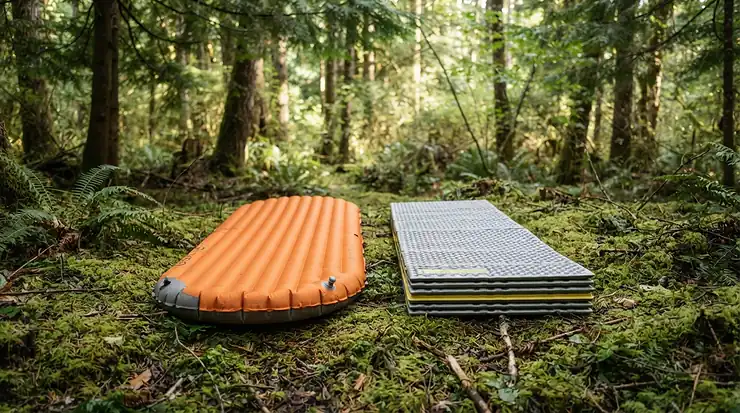
An ultralight air pad for thru-hiking is an inflatable sleeping pad, typically under 16 ounces, that uses internal baffles and thin nylon to deliver cushioning and ground insulation while rolling down to roughly the size of a water bottle. It trades the bulky foam slab for a few ounces of air, built for hikers who count every gram.
Here’s the uncomfortable truth about long trails. You can talk yourself into a lighter stove, a thinner rain jacket, even a shorter toothbrush. You can’t negotiate with a bad night. Sleep recharges the legs for 20-mile days, and the pad under you is the charging cable. Choose poorly and you’ll spend months waking at 3 a.m. to the sound of a potato-chip bag, which, to be fair, is just you rolling over.
This guide ranks seven real, widely reviewed pads. They run from an 8.5-ounce featherweight to a four-inch-thick side-sleeper cloud and a winter-ready R-value powerhouse. It makes no claim of hands-on mileage. It leans on published specs and the aggregated verdict of independent reviewers, then explains what each number means once you’re horizontal in a vestibule. REI’s sleeping pad guide sorts the market into air, self-inflating and closed-cell foam pads, and this article lives in the first category. Choosing an ultralight air pad for thru-hiking comes down to three numbers: weight, R-value and packed size.
Quick Comparison: 7 Ultralight Air Pads for Thru-Hiking
| Pad | Weight (regular) | R-value | Thickness | Packed Size | Best For |
|---|---|---|---|---|---|
| Therm-a-Rest NeoAir XLite NXT | 13 oz | 4.5 | 3 in | 9 x 4.1 in | One pad for the whole trail |
| NEMO Tensor All-Season Ultralight Insulated | 14.1 oz | 5.4 | 3.5 in | 10 x 4 in | Cold sleepers, shoulder seasons |
| NEMO Tensor Elite | 8.5 oz | 2.4 | 3 in | Smaller than a Nalgene | Warm-weather gram counters |
| Therm-a-Rest NeoAir XTherm NXT | 15.5 oz | 7.3 | 3 in | 9 x 4.5 in | Winter and very cold nights |
| Sea to Summit Ether Light XT Insulated | 16.6 oz | 3.2 | 4 in | 9.5 x 4.5 in | Side sleepers |
| Big Agnes Rapide SL Insulated | 18 oz | 4.8 | 3.5 in | 7 x 4 in | Comfort on a mid-range budget |
| Klymit Insulated V Ultralite SL | 16 oz | 1.9* | 2.5 in | 7 x 4.5 in | Tight budgets |
*ASTM-rated figure listed by retailers; Klymit’s older in-house rating is 4.4. Specs are brand and reviewer figures for regular sizes and vary slightly by source.
Looking at the comparison above, the NeoAir XLite NXT and Tensor All-Season are the two most balanced picks, separated by about an ounce and nearly a full point of R-value. The Tensor Elite is the weight champion but only suits warm nights, while the Klymit Insulated V Ultralite SL is the budget door-opener with a clear warmth trade-off. One trust note: the R-values here follow the ASTM F3340-18 test method, which SectionHiker’s rundown of the standard says brands including Therm-a-Rest, NEMO, Sea to Summit, Big Agnes and Klymit have adopted. That is what makes cross-brand comparisons fair.
💬 Just one click — help others make better buying decisions too!😊
Top 7 Ultralight Air Pads for Thru-Hiking: Expert Analysis
Every price below is a range at the time of research. Prices may vary, so check the current price and availability before you buy.
1. Therm-a-Rest NeoAir XLite NXT — the benchmark every thru-hiker measures against
Few pads have earned the trail-town reputation of the NeoAir XLite NXT, and reviewers keep naming it the benchmark in any ultralight air pad for thru-hiking shootout.
On paper it weighs 13 ounces in the regular size, offers an R-value of 4.5, inflates to 3 inches and packs to roughly 9 x 4.1 inches. In practice, that R 4.5 covers most of the three-season window, and the packed size disappears beside a water bottle. Horizontal baffles and a reflective ThermaCapture layer do the heavy lifting without adding bulk.
Here’s what to weigh. This is the “one pad, whole trail” answer for hikers who want Georgia-to-Maine or Mexico-to-Canada coverage without gambling on temperature swings. The 30D nylon sits between featherweight and rugged, so it tolerates rough campsites. Based on the spec comparison, comfort is where it merely holds its own, because the 20-inch mummy width can feel snug for side sleepers.
Reviewers consistently praise the warmth-to-weight ratio, and one long-term reviewer reports more than 8,000 miles on it across trails like the PCT. The common complaint is lingering crinkle noise, even though Therm-a-Rest says the NXT cut noise by 83% versus its predecessor.
Pros:
- ✅ Best warmth-to-weight balance in the group
- ✅ Packs to roughly water-bottle size
- ✅ Pump sack and repair kit included
Cons:
- ❌ Some crinkle noise remains
- ❌ Narrow mummy cut cramps side sleepers
Expect roughly $200-$240 depending on size. Spread over a months-long hike, that is a modest nightly cost for the most proven all-rounder here.
2. NEMO Tensor All-Season Ultralight Insulated — most warmth per ounce without a comfort penalty
If the NeoAir XLite NXT is the default, the Tensor All-Season is the upgrade for people who sleep cold. It weighs about 14.1 ounces, carries an R-value of 5.4, inflates to roughly 3.5 inches and packs to about 4 x 10 inches.
That extra ounce over the Therm-a-Rest buys nearly a full point of insulation and a thicker, more stable platform. The practical meaning: you can start a trail in early spring, or cross high passes in fall, without adding a second pad. NEMO’s suspended Thermal Mirror film inside the chambers is the reason it stays quieter than typical metallized designs.
This pad suits hikers who value a pillowy night more than the last ounce of base weight. Reviewers do note that a few insulated pads undercut it by an ounce or so, so pure gram counters may look elsewhere.
CleverHiker rates it 4.7 out of 5, and reviewers generally describe it as lightweight, warm and above-average in comfort. A few retail reviewers mention a small learning curve with the inflation sack.
Pros:
- ✅ R 5.4 at roughly 14 ounces
- ✅ Thick, stable, quiet surface
- ✅ Many sizes and shapes available
Cons:
- ❌ Not the lightest insulated option
- ❌ Priced above most mid-range pads
Plan on about $200-$260 depending on size. Value verdict: strong for cold sleepers, slightly overbuilt for strictly summer hikers.
3. NEMO Tensor Elite — lightest full-length inflatable you can buy
At 8.5 ounces, the Tensor Elite makes most other pads feel like a gym bag. It has an R-value of 2.4, 3 inches of loft, a trim mummy shape and a 10D Cordura nylon shell. Reviewers note it rolls up smaller than a Nalgene bottle.
That R-value tells the story. Seasonal guides generally place spring and fall nights in the R 3-5 band, so treat this as a summer pad. The ounces you save versus the NeoAir XLite NXT are real, nearly five of them, but you’ll feel the cold if the forecast dips.
It’s built for experienced hikers running a minimalist kit on warm routes. Pairing it with a torso-length foam pad is a common way to stretch it into cooler nights, though that eats part of the weight advantage.
Treeline Review’s team was skeptical about durability at this weight, yet reports thru-hiking the entire Appalachian Trail on it without problems. Sentiment elsewhere centers on its tiny size and a snug fit.
Pros:
- ✅ Just 8.5 ounces for a full-length pad
- ✅ Packs smaller than a Nalgene bottle
- ✅ Durable beyond its feather weight, per a long-distance reviewer
Cons:
- ❌ R 2.4 limits it to warm nights
- ❌ Trim mummy cut feels tight
Budget around $230. Value verdict: a premium for ounces, worthwhile only if your route and quilt keep you warm.
4. Therm-a-Rest NeoAir XTherm NXT — warmest pad under a pound
The NeoAir XTherm NXT pairs an R-value of 7.3 with a weight of about 15.5 ounces. It inflates to 3 inches, packs to roughly 9 x 4.5 inches and uses a tougher 70D bottom fabric.
Put plainly, it adds about two and a half ounces over the NeoAir XLite NXT and nearly triples the winter-grade insulation of many ultralight pads. SectionHiker recommends a minimum R-value of 5 for snow camping, so this one clears the bar with room to spare.
It suits cold sleepers, high-alpine routes and shoulder-season starts where nights flirt with freezing. In fairness, the same reviewer argues that anything above R 6 is overkill for typical lower-48 winter use, so don’t buy more pad than your route demands.
Reviewers consistently highlight the warmth-to-weight ratio and durability. The recurring complaint is that crinkle noise is still noticeable when you shift, even after Therm-a-Rest’s quieting work.
Pros:
- ✅ R 7.3 for under 16 ounces
- ✅ Tougher 70D bottom fabric
- ✅ Four-season versatility
Cons:
- ❌ Overkill and warm-sleeping for summer
- ❌ Audible crinkle when you move
Expect roughly $230-$270. Value verdict: a bargain for winter, wasted money for August.
5. Sea to Summit Ether Light XT Insulated — four-inch cloud for side sleepers
Four inches of loft is the headline. The Ether Light XT Insulated weighs about 16.6 ounces, has an R-value of 3.2 and packs to roughly 4.5 x 9.5 inches. Its Air Sprung Cells work like tiny pocket springs rather than long tubes.
What the spec sheet won’t tell you, but reviewers note: thickness protects hips and shoulders on side-sleeper nights, where thinner pads bottom out. The trade is weight, since it’s heavier than the NeoAir XLite NXT while offering less insulation. Sea to Summit positions R 3.2 as late spring to early fall territory.
It’s the “sleep quality first” pick for hikers on warm routes who can spare a few ounces. The integrated Airstream pump stuff sack is a thoughtful touch at camp.
CleverHiker calls it one of the more comfortable and easy-to-set-up backpacking pads it has tested, while noting it isn’t the warmest or most affordable. Other reviewers echo the modest R-value-for-weight trade-off.
Pros:
- ✅ Plush four-inch cushioning
- ✅ Integrated pump stuff sack
- ✅ Great for side sleepers
Cons:
- ❌ R 3.2 limits cold-weather use
- ❌ Heavier than higher-R rivals
Budget about $190-$240. Value verdict: you’re paying ounces for comfort, which is fair for warm-season hikers.
6. Big Agnes Rapide SL Insulated — plush rectangular comfort at a fair price
The Big Agnes Rapide SL Insulated has an R-value of 4.8 in its updated version, a 3.5-inch thickness and an approximate weight of 18 ounces. It packs to a compact 7 x 4 inches. Older listings show R 4.2 and slightly different weights, so confirm the version when you shop.
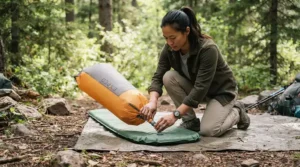
I-Beam construction gives a stable, rectangular platform with extra real estate for rolling over. The pad also ships with a pump sack, patch kit and spare valve seal, which counts for something on a long trail.
Based on the spec comparison, it’s the value pick for hikers who prioritize comfort and can live with a few extra ounces. The warning from reviewers is real, though: several, including CleverHiker’s testers and retail reviewers, report it sleeps colder than R 4.8 suggests, and CleverHiker wouldn’t recommend it for regular near-freezing nights.
Overall sentiment praises comfort, durability and packed size, with warmth the recurring caveat.
Pros:
- ✅ Very comfortable cushioned surface
- ✅ Compact 7 x 4 inch packed size
- ✅ Patch kit and spare valve seal included
Cons:
- ❌ Reviewers say it sleeps colder than its R-value
- ❌ Heavier than the top ultralight pads
Expect roughly $150-$180 in the regular size. Value verdict: excellent for mild-weather comfort seekers on a budget.
7. Klymit Insulated V Ultralite SL — lowest-cost way into air pads
The Klymit Insulated V Ultralite SL weighs about 16 ounces and measures 72 x 20 x 2.5 inches. It packs to roughly 7 x 4.5 inches, uses 20D polyester and inflates in about 7-10 breaths, per Klymit.
The R-value needs a careful read. Klymit’s older rating is 4.4, while the ASTM-rated figure listed by retailers is 1.9. In practice, treat it as a warm-weather pad, since a re-rated 1.9 is a very different number from 4.4 when the temperature drops.
It’s best for first-time thru-hikers testing the air pad concept, or anyone with a tight gear budget. The V-chamber design is comfortable for back sleepers, but the 2.5-inch loft means less cushion for side sleepers.
Reviewers praise the weight, packed size and price, and flag the thin fabric plus the short, narrow cut. One retailer reviewer said they felt misled after learning of the ASTM re-rating, which is exactly why you should compare ASTM numbers.
Pros:
- ✅ Lowest price on this list
- ✅ About 16 ounces with compact packed size
- ✅ Easy 7-10 breath inflation
Cons:
- ❌ ASTM R-value far below the older claim
- ❌ Thin fabric and narrow cut
Budget roughly $100-$140. Value verdict: fine for warm trips, not a four-season workhorse.
Practical Guide: Setting Up and Caring for Your Air Pad on Trail
A pad is only as reliable as your habits. Start before the trailhead by inflating it at home and leaving it overnight. Slow leaks announce themselves in your living room instead of at mile 40.
At camp, sweep the tent floor for twigs and pine cones, because a single sharp stick can do what months of trail wear can’t. Use the pump sack when one is included. It saves breath and effort and gives you consistent firmness. Inflate until firm, then let out a little air for comfort if you must. One industry Q&A estimated that doing so might cost roughly 5-10% of the R-value, though that was an estimate, so don’t overdo it on cold nights.
In the morning, deflate fully and roll from the opposite end of the valve to push out stubborn air. Store the pad unrolled and partially inflated at home so the baffles don’t crease.
Carry the patch kit and learn how to use it before you need it. To find a leak, inflate the pad, listen closely, or dunk sections in a stream and watch for bubbles. Dry the spot, then apply the patch firmly.
The common mistakes in the first 30 days are predictable: sitting on the pad in muddy boots, leaving it in a hot car, and skipping the home leak test. Avoid those and a good pad should reward you for years.

Real-World Scenarios: Matching Pads to Hikers
Three hiker profiles show how the spec sheet translates into decisions.
Scenario 1: The warm-weather section hiker. Two weeks in summer, nights mostly above 50°F, flexible budget and a gram-counting mindset. The NEMO Tensor Elite saves nearly five ounces over the NeoAir XLite NXT, and the low R-value is manageable in these conditions.
Scenario 2: The March Appalachian Trail starter. Five to six months of daily use, frosty mornings in the Southeast, moderate budget. Many thru-hikers run an insulated pad plus a 20°F quilt, and here the NEMO Tensor All-Season Ultralight Insulated (R 5.4) or the NeoAir XLite NXT (R 4.5) fits best, with the NEMO favored if you sleep cold.
Scenario 3: The side sleeper with sore hips. Four months out, comfort is non-negotiable. The Sea to Summit Ether Light XT Insulated gives the thickest cushion, while the Big Agnes Rapide SL Insulated offers a wider rectangular platform at a lower price, with the warmth caveat in mind. A budget-first hiker testing the waters could start with the Klymit Insulated V Ultralite SL.
✨ Not Sure Which Pad Fits Your Trail?
🔍 Match the pad to your coldest expected night, then click any highlighted product to check current pricing and availability. Your future self, mid-night, will thank you. 🏔️
How to Choose an Ultralight Air Pad for Thru-Hiking
Start with the coldest night you expect, then work backward through the other criteria.
- Set a weight ceiling. Many ultralight hikers draw the line near 16 ounces for a standalone pad, so anything heavier needs a comfort or warmth justification.
- Match R-value to your coldest nights. Seasonal guides generally treat spring and fall as roughly R 3-5 and winter as 5 or higher, and your pad is half of your warmth system.
- Check packed size. A roll that fits inside your pack stays safe from branches and sun, which protects the fabric.
- Pick thickness and shape for your sleep style. Side sleepers benefit from 3.5-4 inches and wider rectangular shapes; back sleepers can go thinner.
- Look for an ASTM F3340-18 rating. It keeps R-value claims comparable across brands.
- Weigh fabric durability. 10D shells save ounces, while 30D and 70D fabrics resist abrasion better.
- Confirm the valve, pump sack and warranty. Lifetime warranties from brands like Therm-a-Rest and NEMO matter when a pad fails at mile 800.
R-Value Explained: How Warm Is Warm Enough?
R-value measures resistance to heat flow, meaning how well your pad stops the ground from stealing body heat. Higher is warmer. Unlike a sleeping bag’s loft, which compresses under you, the pad is your real barrier against the ground, and a bag’s bottom insulation is mostly squashed flat.
Two facts help. First, R-values are additive: stack two pads and the totals combine. Second, bag temperature ratings assume a pad of roughly R 5, according to ZenBivy’s explanation of EN/ISO-matched performance, so a thinner pad can effectively make your quilt colder than advertised.
The numbers on this list span a wide range. The NEMO Tensor Elite (2.4) is for summer. The Sea to Summit Ether Light XT Insulated (3.2) covers late spring through early fall. The NeoAir XLite NXT (4.5), Big Agnes Rapide SL Insulated (4.8) and NEMO Tensor All-Season Ultralight Insulated (5.4) handle most shoulder-season nights. The NeoAir XTherm NXT (7.3) belongs on cold-weather trips.
Bear in mind that reviewers say a pad can feel colder than its rating in practice, as with the Big Agnes Rapide SL Insulated. Add a margin for cold sleepers.
Packed Size and Weight: What Actually Fits in Your Pack
Packed size sounds like a minor spec until your pack is full. Among these pads, the Big Agnes Rapide SL Insulated (7 x 4 inches) and Klymit Insulated V Ultralite SL (7 x 4.5 inches) are the shortest rolls. The NeoAir XLite NXT (9 x 4.1 inches) and NeoAir XTherm NXT (9 x 4.5 inches) are slightly taller. The NEMO Tensor All-Season Ultralight Insulated rolls to about 10 x 4 inches, and the Sea to Summit Ether Light XT Insulated to 9.5 x 4.5 inches. The NEMO Tensor Elite is smaller than a Nalgene bottle.
Compare that with the foam alternative: the Therm-a-Rest Z Lite Sol packs to about 20 x 5 x 5.5 inches, which is why foam rides outside the pack.
The practical takeaway is that packed size matters most for frameless packs and tight volumes, and for protecting the pad inside rather than lashing it outside. Weight and packed size also interact with R-value. A pad that is slightly heavier but warmer can replace a second layer of insulation elsewhere in your kit, which is how the NeoAir XTherm NXT earns its ounces.
Baffled Air Chambers: How Internal Structure Shapes Comfort
Baffled air chambers are the internal walls that divide a pad into pockets. They stop the air from sloshing to the center, they set the pad’s stability, and they control how “bouncy” or firm it feels. Different brands take different approaches.
The NeoAir XLite NXT uses horizontal baffles with a Triangular Core Matrix. The Big Agnes Rapide SL Insulated uses I-Beam construction for multi-directional support. The Sea to Summit Ether Light XT Insulated replaces long tubes with Air Sprung Cells, which mimic a spring mattress. The Klymit Insulated V Ultralite SL uses V-shaped chambers with body mapping.
Why does this matter on trail? More baffles generally add stability and even weight distribution but also add material and ounces. Wide side rails improve edge support for rolling around. Fewer, thinner chambers save weight but may feel springier.
When comparing baffled air chambers, remember that the numbers on the spec sheet don’t capture the feel, so reviewer sentiment about stability and bounce is worth more than a single thickness figure.
Air Pad vs Foam Pad for Camping: Which Wins on the Trail?
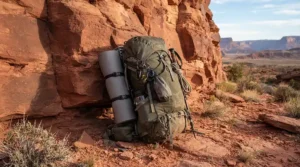
The air pad vs foam pad for camping debate is really a trade between comfort and bulletproof simplicity. REI’s closed-cell versus self-inflating comparison notes that foam is lighter and more puncture-resistant than self-inflating pads, but it offers less cushioning and less insulation. It also notes that air pads are the most likely of the three types to rip or puncture.
| Feature | Air Pad (NeoAir XLite NXT) | Closed-Cell Foam (Therm-a-Rest Z Lite Sol) | Self-Inflating (Therm-a-Rest ProLite Plus) |
|---|---|---|---|
| Weight | 13 oz | 14 oz | 23 oz |
| R-value | 4.5 | 2 | 3.2 |
| Packed Size | 9 x 4.1 in | 20 x 5 x 5.5 in | 11 x 6.8 in |
| Durability | Puncture-prone | Nearly indestructible | Moderate |
| Best For | Thru-hikers wanting warmth and small size | Backup or budget minimalists | Car campers and comfort seekers |
Looking at the table above, the NeoAir XLite NXT weighs about the same as the Therm-a-Rest Z Lite Sol but delivers more than double the R-value and a fraction of the packed size. The foam pad, however, can’t be punctured, which is why some thru-hikers carry it as a torso pad or backup. The Therm-a-Rest ProLite Plus sits in the middle and is better suited to car camping or shorter trips.
Air Sleeping Pad for Winter Camping: Warmth You Can Trust
An air sleeping pad for winter camping lives and dies by R-value and redundancy. SectionHiker recommends a minimum combined R-value of 5 for snow camping, and a combined 5.5-6.0 is a common target. Since R-values are additive, you can stack: an insulated air pad on top of a closed-cell foam pad.
Examples from this list: the NeoAir XTherm NXT gives R 7.3 on its own. A NEMO Tensor All-Season Ultralight Insulated (R 5.4) over a Therm-a-Rest Z Lite Sol (R 2) totals about 7.4. A NeoAir XLite NXT (R 4.5) with the same foam pad reaches about 6.5. For extreme cold, the NEMO Tensor Extreme Conditions is rated at R 8.5.
The foam layer does a second job: it keeps you insulated if the air pad fails. A flat pad in a snow shelter is a real hazard, because conduction to the ground removes heat quickly.
Cascade Designs explains that it measures each pad’s R-value in a cold chamber at about 39°F, so the number reflects a controlled test, not a subzero night. Add margin, and don’t count on a pad rated for mild conditions to protect you in deep winter.
Air Sleeping Pad for Backpacking: Where Thru-Hiking Changes the Rules
A weekend trip and a months-long thru-hike ask different things of an air sleeping pad for backpacking. For a few nights, a thicker, heavier pad like the Sea to Summit Ether Light XT Insulated is easy to justify, because the extra ounces only matter for a short stretch.
On a thru-hike, every ounce compounds across hundreds of nights, and so does wear. Durability, repairability and warranty support matter more. A pad that’s 2 ounces lighter but fragile can cost more in replacements than it saves in carry weight.
REI’s guidance points backpackers toward an air pad or lightweight self-inflating pad, with ultralight air pads for minimalists. Frequency of use is the difference: the more nights you’ll sleep on it, the more it pays to buy for warmth range and toughness. That’s why the NeoAir XLite NXT and NEMO Tensor All-Season Ultralight Insulated show up so often on long trails, while the NEMO Tensor Elite is better treated as a specialist.
Price Range and Value Analysis
R-value per ounce is calculated from published weight and R-value; higher is better.
| Pad | Price Range | Weight | R-value | R-value per Ounce | Best For |
|---|---|---|---|---|---|
| Therm-a-Rest NeoAir XTherm NXT | $230-$270 | 15.5 oz | 7.3 | 0.47 | Winter, cold sleepers |
| NEMO Tensor All-Season Ultralight Insulated | $200-$260 | 14.1 oz | 5.4 | 0.38 | Shoulder-season comfort |
| Therm-a-Rest NeoAir XLite NXT | $200-$240 | 13 oz | 4.5 | 0.35 | All-round thru-hiking |
| NEMO Tensor Elite | Around $230 | 8.5 oz | 2.4 | 0.28 | Summer ultralighters |
| Big Agnes Rapide SL Insulated | $150-$180 | 18 oz | 4.8 | 0.27 | Budget comfort |
| Sea to Summit Ether Light XT Insulated | $190-$240 | 16.6 oz | 3.2 | 0.19 | Side sleepers |
| Klymit Insulated V Ultralite SL | $100-$140 | 16 oz | 1.9 | 0.12 | Warm-weather budget |
Looking at the numbers, the NeoAir XTherm NXT delivers the most insulation per ounce, but you only need that if you sleep cold or camp cold. The Big Agnes Rapide SL Insulated gives up weight to save money, and the reviewer warmth caveat means its value is best in mild weather. The Klymit Insulated V Ultralite SL is cheapest, though its ASTM-rated insulation per ounce is the lowest here, a fine trade only if you’ll hike in warm conditions.

FAQ
❓ How much should an ultralight air pad for thru-hiking weigh?
❓ Is an air sleeping pad for backpacking durable enough for 2,000 miles?
❓ What R-value do I need for an air sleeping pad for winter camping?
❓ Can you repair a leaking air pad mid-hike?
❓ Is a wider ultralight pad worth the extra weight?
Conclusion
The best ultralight air pad for thru-hiking isn’t the lightest or the warmest. It’s the one that matches your coldest night, your sleeping position and your tolerance for fiddling with gear at dusk.
If you want a single, proven answer, the Therm-a-Rest NeoAir XLite NXT is the benchmark. If you sleep cold, the NEMO Tensor All-Season Ultralight Insulated adds warmth for about an ounce. Gram counters on warm routes should look at the NEMO Tensor Elite, and winter hikers belong on the Therm-a-Rest NeoAir XTherm NXT. Side sleepers will appreciate the Sea to Summit Ether Light XT Insulated or the Big Agnes Rapide SL Insulated, and budget-minded hikers can start with the Klymit Insulated V Ultralite SL, keeping its ASTM R-value in mind.
Before you buy, check the ASTM-rated R-value, confirm the packed size fits your pack and consider a foam backup if you’ll hike in cold conditions. Take your ultralight air pad for thru-hiking seriously, and the miles will feel shorter.
Recommended for You
- Budget Self-Inflating Sleeping Pad: 7 Best Buys In 2026
- Self-Inflating Sleeping Pad For Truck Bed Camping: 7 Best Picks 2026
- Self-Inflating Sleeping Pad For Backpacking: 7 Best Picks 2026
Disclaimer: This article contains affiliate links. As an Amazon Associate, I earn from qualifying purchases. If you purchase products through these links, we may earn a small commission at no additional cost to you.
✨ Found this helpful? Share it with your friends! 💬🤗
