In This Article
A rectangular sleeping bag for family camping is a wide, boxy bag with a full-length zipper that opens flat like a quilt. It trades packability for room to sprawl, and many models pair with a matching bag to make a double. For car campers, cabin weekends and kids who sleep like starfish, it’s the comfort-first choice.
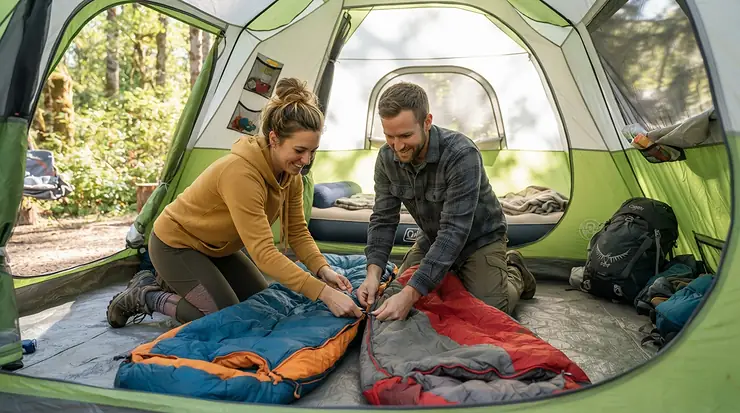
Picture 11 p.m. at the campsite. A mummy bag has your knees pinned together, a six-year-old’s heel is in your kidney, and the zipper has found your hair. That is the moment a rectangular sleeping bag for family camping earns its trunk space. You get room to roll, to kick, to tuck a kid in beside you, or to unzip the whole thing and use it as a blanket by the fire.
The catch is that “rectangular” covers a huge range. Some bags weigh 2 pounds and some weigh 13. Some are rated to 40°F and some claim -25°F. Some zip into a double, and some quietly refuse to. Ratings follow lab protocols like the ISO 23537 testing standard, and real-world warmth still depends on your pad, your clothing and your tent.
I built this guide from manufacturer specs, retailer listings and published gear-test write-ups. It is analysis of that research, not a claim of hands-on testing. Along the way we’ll cover a rectangular sleeping bag that zips together, a rectangular sleeping bag for cabin camping, tent size math for a multi-person camping setup, and kid-friendly gear. Prices below are ranges only, so check current pricing before you buy. ⛺
Quick Comparison: 7 Rectangular Sleeping Bags at a Glance
Here is the lineup side by side. Temperatures are manufacturer-claimed ratings, and sizes are listed dimensions or fit ranges.
| Product | Claimed Rating | Size / Fit | Zips Together? | Price Range | Best For |
|---|---|---|---|---|---|
| REI Co-op Siesta Hooded 20 | 20°F | 4 sizes (Medium to Long Wide) | Yes, per reviewer reports | $140-$160 | Adults who want a hood and a roomy fit |
| Coleman Brazos 20 | 20°F (30°F version exists) | 75 x 33 in | Yes | $50-$65 | Tight budgets and growing kids |
| Kelty Galactic 30 | 30°F | Regular and long | Yes | $170-$210 | Warm-weather trips and light packing |
| ALPS OutdoorZ Redwood -25 | -25°F | 80 x 38 in | Yes | $180-$220 | Cold base camps and cabins |
| TETON Sports Celsius XXL | 0°F | 90 x 39 in | Left- and right-zip versions | $90-$130 | Tall or broad sleepers in the cold |
| Exped MegaSleep Duo 25/40 | 25°F / 40°F (two sides) | 63 in wide; 71 or 82.7 in long | Built-in double that splits | $190-$260 | Couples and flexible sleeping plans |
| REI Co-op Kindercamp 40 | 40°F | Kids up to 5 ft | Unzips flat as a quilt | $50-$75 | Young campers and sleepovers |
Look at the table and one thing jumps out. The Coleman Brazos 20 and the REI Co-op Kindercamp 40 can outfit a whole family for less than one Exped MegaSleep Duo 25/40. The pricier bags earn their premium through sizing range, hoods, double-bag flexibility or serious cold-weather insulation. If your nights stay above 40°F, the budget pair does most of the work.
💬 Just one click — help others make better buying decisions too!😊
Top 7 Rectangular Sleeping Bags for Family Camping: Expert Analysis
I picked these seven to cover budget, mid-range and premium tiers, plus cold-weather, double and kids’ options. Each one is judged on what its specs mean at 2 a.m. in a tent, not on how it reads on a listing.
1. REI Co-op Siesta Hooded 20 — hooded comfort in four sizes
The twist here is a roomy rectangular body with a real hood bolted on, which is rare in this category.
The bag uses recycled polyester insulation and is rated to 20°F. It comes in Medium, Medium Wide, Long and Long Wide, and the larger sizes land around 5 to 6 pounds. A two-way zipper opens the whole bag into a quilt. In practice, the hood fixes the classic flat-bag problem of a cold neck and a draft down your collar. The size range matters too, because a bag that fits properly has less dead air to heat.
Based on the spec comparison, this is the best single choice if every adult in your family wants one bag type. Reviewers consistently praise the bed-like roominess and the hood that holds a full-size pillow. The common complaints are bulk and trunk space. One testing outlet also wished the standard size were wider through the shoulders.
Pros:
- ✅ Insulated hood fits a regular pillow
- ✅ Four sizes for different body types
- ✅ Opens fully into a quilt
Cons:
- ❌ Bulky and heavy to haul
- ❌ Takes up serious trunk space
Expect the $140-$160 range, which is strong value if you camp from spring through fall.

2. Coleman Brazos 20 — the budget workhorse that zips into a double
This is the bag you buy when you need four people outfitted this weekend and the budget is a hard number.
The listed size is 75 x 33 inches for campers up to 5’11”. It has Fiberlock construction, a draft tube along the zipper, a roll-control closure and a five-year limited warranty. A full-length zipper lets two bags join into a double. Coleman also sells a 30°F version that’s lighter. The warranty is a quiet selling point, since kids are hard on gear.
One gear-test outlet found the 20°F rating plausible against other 20°F bags, but noted there’s no hood or neck cinch to block drafts. That’s the trade-off. Plan to pair it with a hat and a decent pad. Reviewers praise the warmth for the price and the soft lining. The recurring complaint is wrestling the bag back into its stuff sack.
Pros:
- ✅ Very low price for a 20°F rating
- ✅ Machine washable with a five-year warranty
- ✅ Two bags zip into a double
Cons:
- ❌ No hood or neck draft collar
- ❌ Frustrating to repack into the sack
Expect roughly the $50-$65 range, which makes it a clear budget win for family camping.
3. Kelty Galactic 30 — rare down-filled rectangular bag
Down in a rectangular bag is unusual, and this one is a genuine light-packing option for car campers.
The Galactic uses 550-fill duck down, carries a 30°F rating and weighs about 2 pounds in the regular size. Another testing outlet lists it under 3 pounds in the long size. Two bags can zip together. In real terms, that weight is a fraction of a synthetic bag’s and it compresses easily, which helps in a packed hatchback. Down in a box-shaped bag can also shift and leave cold spots in the corners. One testing outlet specifically cautioned against relying on the 30°F lower limit.
My read is that this is a summer and early-fall bag for adults who value space in the car. Reviewers like the spacious feel and the low weight. They also note that the down can be slow to warm the corners and that the bag may develop cold spots.
Pros:
- ✅ Very light for a rectangular bag
- ✅ Zips together for couples
- ✅ Roomy, non-restrictive cut
Cons:
- ❌ Can develop cold spots in corners
- ❌ Don’t push its 30°F limit
Expect the $170-$210 range, which makes the Kelty Galactic 30 fair value for down, not for cold-weather insurance.
4. ALPS OutdoorZ Redwood -25 — the heavyweight base-camp blanket
If this were a vehicle, it’d be a farm truck. It is overbuilt and unapologetic, and it is wonderfully warm.
The bag measures 38 x 80 inches and has a cotton canvas shell, a cotton flannel liner and TechLoft Silver synthetic insulation. Two-layer offset construction targets cold spots. Retailers list weight between 11 and 13 pounds, and it ships without a stuff sack. One gear-test outlet named it the warmest rectangular option in its comparison. It also called the packed size the largest it had seen. In practice, that heft is the point. The weight drapes over you like a duvet, and two Redwoods zipped together make a very warm double.
Reviewers love the plush, rugged feel. The most repeated warning is that it’s too warm for 40°F nights, and the packed volume is huge. Availability note: one retailer lists it as discontinued while others show stock, so confirm before you plan around it.
Pros:
- ✅ Exceptionally warm for cold base camps
- ✅ Rugged canvas shell and flannel liner
- ✅ Zips with a second bag for a toasty double
Cons:
- ❌ Huge, heavy and hard to store
- ❌ Overkill for mild weather
Expect the $180-$220 range, which is good value only if you truly camp cold.
5. TETON Sports Celsius XXL — extra-long and extra-wide for big sleepers
It’s built for people who have been punished by standard-size bags, and that includes your six-foot-four partner.
Retailers list the Celsius XXL at 90 x 39 inches with a claimed 0°F rating. It uses SuperLoft Elite insulation, a poly-flannel lining and double-layer construction with draft tubes at the zipper. It also has a mummy-style hood and a compression sack, and it’s sold in left- and right-zip versions. That last detail is what makes pairing two bags possible, but verify compatibility on the listing.
One roundup suggested real-world comfort sits closer to 10 to 15°F, which is still impressive for the price. Reviewers praise the roominess for tall and broad sleepers. The pattern in the complaints is that it compresses poorly and takes effort to repack.
Pros:
- ✅ Huge cut for tall or broad sleepers
- ✅ Soft flannel lining and draft tubes
- ✅ Strong cold-weather performance for the money
Cons:
- ❌ Poor compression, hard to repack
- ❌ Real-world rating likely warmer than claimed
Expect the $90-$130 range, which is excellent value for a cabin or cold-night car camp.

6. Exped MegaSleep Duo 25/40 — a double bag that splits into singles
It’s the only entry here designed as a double from day one, and it does a surprising number of jobs.
The REI listing describes it as a configurable bag. It works as a 25°F two-person bag, a 40°F two-person bag, two single bags or two camp blankets. Retailer specs list a 63-inch width and lengths of 71 or 82.7 inches, with synthetic fill and a zipper draft tube. Weight listings vary, from roughly 4.5 to 5 pounds at one retailer to a heavier figure elsewhere. That inconsistency is worth checking before you buy.
The reviews are split in a useful way. One reviewer found it too large to trap shared body heat and noted it slid on an air mattress. Another thought the 25°F claim was optimistic. Others liked it as a double for 50s and 60s nights.
Pros:
- ✅ Flips between two temperature ratings
- ✅ Splits into two single bags
- ✅ Wide enough for real couple comfort
Cons:
- ❌ Can slide on air mattresses
- ❌ 25°F side may run optimistic
Expect the $190-$260 range, which makes the Exped MegaSleep Duo 25/40 a flexibility play, not a bargain.
7. REI Co-op Kindercamp 40 — a kid-friendly bag that grows into a quilt
The unglamorous feature is the snag-guard zipper, and it’s the one a seven-year-old will thank you for.
The bag fits kids up to 5 feet tall and is rated to 40°F. Listings give a weight of roughly 3 pounds, with synthetic insulation, an insulated muffler and zipper draft tube, and an attached stuff sack. It unzips fully into a quilt. The rectangular shape gives kids room to wiggle, which beats a hood-pinned mummy for summer. It also works for sleepovers.
Parents and reviewers praise the easy zipper and built-in stuff sack. One reviewer who used it at altitude still added a sleeping pad for comfort, and that’s good advice. A bag provides insulation from above, but the ground steals heat from below.
Pros:
- ✅ Snag-guard zipper kids can manage
- ✅ Built-in stuff sack for easy packing
- ✅ Unzips into a quilt for sleepovers
Cons:
- ❌ Only 40°F, so not for cold nights
- ❌ Kids outgrow it past 5 feet
Expect the $50-$75 range, which is good value for the first couple of seasons.
How to Choose a Rectangular Sleeping Bag for Family Camping
Choosing well comes down to a handful of decisions, in a sensible order. Here’s the checklist I’d use.
- Pick your coldest realistic night. Use the forecast low for your usual campsites and add a buffer. Lab-based ratings come from standards like ISO 23537, which uses a heated manikin and a defined pad, so your real conditions will differ. This Switchback Travel guide to temperature ratings walks through how the testing works and why a buffer matters.
- Match the rating type to the sleeper. Comfort ratings suit cold sleepers and Limit ratings suit warm sleepers. Never plan around an Extreme rating, which is a survival number.
- Check the real dimensions. A bag labeled for adults still needs to fit a 6’5″ dad or a 5’2″ mom. Sizing matters for warmth, since extra air space is extra cold.
- Decide on synthetic or down. Synthetic is cheaper, tougher with kids and more forgiving when damp. Down packs smaller and weighs less, but costs more and can leave corner cold spots.
- Confirm zip-together compatibility. You need opposite zipper sides, and some brands only pair within one model line.
- Plan the pad. A great bag over a thin pad sleeps cold. Pad insulation counts as much as the bag.
- Count storage. Rectangular bags are bulky. Check packed size against your trunk.
The pattern is simple. Choose for your coldest night, then for the people, then for the car.
Rectangular Sleeping Bag That Zips Together: A Practical Setup Guide
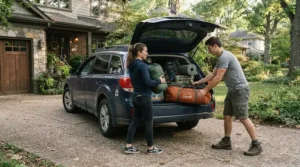
A rectangular sleeping bag that zips together can turn two singles into a family-sized nest, but only if you set it up properly. The first rule is hardware. You need one left-zip and one right-zip bag so the zippers face each other. Gear writers note that most brands’ bags will mate if purchased with opposite zipper configurations, though some only pair within a specific model or series. Rectangular bags join much more easily than tapered mummy bags.
Here’s the setup I’d follow:
- Unzip both bags fully and lay them flat, shells down.
- Line the zipper teeth up at the foot end first, then work toward the head.
- Check the draft tubes. If a gap opens along the seam, tuck a spare blanket over it.
- Join your pads with a pad-coupling kit so you don’t wake up in a gap between them.
- Do a trial night in the living room before the trip.
Warmth is a real bonus. A testing outlet notes that adding a second person’s body heat inside a combined bag raises the temperature. There’s a limit, though. One reviewer of a purpose-built double found it so large that it was hard to trap shared heat. That’s the case for two matched single bags (like a pair of Coleman Brazos 20 or ALPS OutdoorZ Redwood -25 bags) over one giant double.
For a family with a small child, many couples zip two adult bags together and let the child sleep in a separate kids’ bag nearby. That keeps warmth predictable and avoids crowding.
✨ Don’t Miss These Exclusive Deals!
🔍 Take your family camping setup to the next level with these carefully selected bags. Click on any highlighted item to check current pricing and availability. These picks will help you build cozy, well-rested nights your family will love!
Tent Size and Your Multi-Person Camping Setup
Tent labels are optimistic. A “4-person” tent is rated by how many sleeping pads fit side by side on the floor. That says nothing about comfort, gear or the width of a bulky rectangular bag.
KOA’s family tent guide offers a handy rule of thumb of 20 square feet per sleeper. Other guides suggest about 15 square feet as a bare minimum and 25 to 30 for roomy comfort with gear inside. Air mattresses and pet beds need more.
| Family Size | Floor Space at 20-25 sq ft Each | Practical Tent Size |
|---|---|---|
| 2 adults + 1 child | 60-75 sq ft | 4-person tent |
| 2 adults + 2 kids | 80-100 sq ft | 6-person tent (about 10 x 10 ft) |
| 2 adults + 3 kids | 100-125 sq ft | 8-person tent |
| Large family or double bags | 120-150 sq ft | 10-person tent |
One chart puts the ideal capacity of a 6-person tent at about 4 people, and of an 8-person tent at about 6. That lines up with the table above.
Now for the bag-specific wrinkle. The Coleman Brazos 20 is 33 inches wide. Four of them side by side add up to 132 inches, or 11 feet, which won’t fit across a 10 x 10 floor on paper. The TETON Sports Celsius XXL at 39 inches takes about 9.75 feet for three. Bags sit narrower over pads in practice, but the arithmetic is a useful gut-check.
The practical fix is staggering heads and feet, or choosing a bigger tent than the label suggests. For a family of four, an 8-person tent is often the most comfortable choice, because the label counts pad slots, not duffels.
Rectangular Sleeping Bag for Cabin Camping
A cabin changes the equation. You have a roof and walls, but often no insulation worth the name and no heat. A rectangular sleeping bag for cabin camping has to handle drafty rooms, bunk-bed mattresses and the occasional 3 a.m. trip to the outhouse.
Here’s why the shape works. A rectangular bag unzips into a quilt, so on a mild night it can lie over you like a bedspread. Bunk and cot mattresses are typically twin-sized, and a bag about 33 to 39 inches wide fits that without hanging off the edge.
For the dedicated cold-cabin case, a heavy bag like the TETON Sports Celsius XXL is a natural fit. One roundup specifically called it great as a guest bag for cold houses or cabins. The ALPS OutdoorZ Redwood -25 takes that further, though its size can crowd a small cabin. For milder cabins, the Coleman Brazos 20 is promoted by at least one retailer as a bag for camp or cabin.
Here’s the cabin checklist:
- Bring a pad or mattress topper, since cabin mattresses can be thin or musty.
- Slide the bag over a fitted sheet for comfort and easier cleaning.
- Pack a stuff sack or storage bin, since cabin floors aren’t always clean.
- Keep a pillowcase on your own pillow to avoid cabin-mattress mystery.
Think of it as car camping with a roof. You don’t need the lightest bag. You need the one you’ll actually sleep in.
Kid-Friendly Gear: Sizing Sleeping Bags for Young Campers
Kid-friendly gear starts with a rule that’s easy to forget. Children need an appropriately sized sleeping bag. An oversized adult bag has too much air to heat, so a small child can end up colder in the big bag than in a snug one. Guides for parents say the same.
The REI Co-op Kindercamp 40 is a clean example of the right idea. It fits kids up to 5 feet, has a snag-guard zipper kids can work themselves and includes a stuffing sack. Because it’s rectangular, it also unzips into a quilt for sleepovers.
Older, taller kids may fit the Coleman Brazos 20. One parent reported buying two for sons aged 9 and 10, citing the 20°F rating for damp, chilly nights. For a cold-weather family trip, it’s worth considering a warmer kids’ bag in place of an adult one.
Beyond the bag itself, kid-friendly gear includes:
- A hat and base layers for sleeping.
- A personal headlamp or flashlight. Pediatric advice says kids should have their own light.
- A dry run at home. One family-camping guide recommends practicing in the sleeping bag first, since toddlers often wiggle out at night.
- Close supervision around fire and a campsite check for hazards.
For more, this Seattle Children’s camping safety guide includes pediatrician advice on shelter, bedding and campsite safety. Pair it with the right bag and a pad, and kids sleep warmer and happier.
Rectangular vs Mummy vs Semi-Rectangular: Which Shape Wins?
The honest answer is that it depends on how you camp. Here’s the breakdown.
| Feature | Rectangular | Semi-Rectangular | Mummy |
|---|---|---|---|
| Room to move | Highest | Moderate | Lowest |
| Warmth efficiency | Lowest (more air to heat) | Moderate | Highest |
| Packability | Bulky | Moderate | Compact |
| Zips into a double | Easiest | Often possible | Harder |
| Best For | Family car camping, cabins (e.g., REI Co-op Siesta Hooded 20) | Cooler-night comfort seekers | Backpacking and cold weather |
A mummy bag wraps closely and wastes less heat. Rectangular trades that efficiency for freedom. Gear testers describe the rectangular cut as better for restless sleepers and anyone who feels claustrophobic in tapered bags.
Notice that a hood changes things. The REI Co-op Siesta Hooded 20 borrows a mummy bag’s best feature without taking away the space. That’s why it keeps topping rectangular roundups. If you camp near the car, you almost never need a mummy bag’s compactness, and you’ll feel the extra room every night.
Real-World Scenarios: Matching Bags to Real Families
Spec sheets are abstract, so here are three family profiles. These are illustrative scenarios based on the specs above, not reports from real trips.
Scenario 1: The budget-conscious summer family. Two adults and two kids at state parks from June to September, with lows in the 40s and 50s. A pair of Coleman Brazos 20 bags for the adults and two REI Co-op Kindercamp 40 bags for the kids puts the total in roughly the $200-$280 range. It’s a sensible, no-drama setup.
Scenario 2: The couple with a toddler, October weekends. Lows near freezing at a drive-up site. A pair of REI Co-op Siesta Hooded 20 bags (opposite zippers) can zip into a double for shared warmth, with the toddler in a warmer kids’ bag. The hood is worth the money for 30°F mornings.
Scenario 3: The cabin-weekend crew. A family of five in an unheated cabin in late fall. The TETON Sports Celsius XXL suits the tall dad and the cold sleepers. The Exped MegaSleep Duo 25/40 can serve a couple, and it splits if bunk beds are the plan.
The takeaway is to match the bag to the night, not to the marketing. A bag that handles your actual lows with a margin beats a heroic rating you’ll never use.
Common Mistakes When Buying a Rectangular Sleeping Bag
Even smart campers trip over the same few things.
- Trusting the number on the label. An advertised 30°F bag can test at 28°F or 32°F, and a lab manikin isn’t a real person. Give yourself a buffer.
- Forgetting the pad. The ISO test assumes a specific pad, and a thinner one means you won’t reach the rating.
- Buying kids an adult bag. Extra space means extra cold.
- Ignoring packed size. The ALPS OutdoorZ Redwood -25 is a spectacular bag that can eat half a small trunk.
- Mismatched zippers. Two left-zip bags won’t join.
- Overbuying warmth. One reviewer noted the Redwood’s warmth is a drawback at 40°F.
- Sizing the tent by the label. Count bag widths and gear, not just heads.
Long-Term Cost and Maintenance
A cheaper bag isn’t always cheaper over time, and a pricey one can be a bargain if you use it enough. Here’s some rough cost-per-night math using the price ranges above.
A Coleman Brazos 20 used 40 nights over a few seasons works out to roughly $1.25-$1.60 a night. A REI Co-op Siesta Hooded 20 used 60 nights lands around $2.30-$2.70 a night. A Kelty Galactic 30 with a long lifespan can justify its price if you care about weight, but a down bag’s care demands are higher.
Care matters as much as price. Always follow the label. The REI Co-op Kindercamp 40 specifies a front-load washer only, and the ALPS OutdoorZ Redwood -25 is a chore to hand-wash. Store bags uncompressed in a breathable cotton or mesh sack in a cool, dry spot, not crushed in the stuff sack all winter. That keeps the insulation lofty and extends the bag’s life.
Features That Actually Matter (And Those That Don’t)
Marketing loves a buzzword. Here’s what deserves your attention.
Matters:
- A zipper draft tube blocks the cold seam, and a two-way zipper lets you vent your feet.
- A hood or draft collar for neck warmth.
- Offset quilting to reduce cold spots.
- An anti-snag zipper, especially for kids.
- Machine-washable construction if you camp with children.
Doesn’t matter much:
- A claimed extreme rating.
- A stylish print.
- A fancy stuff sack. The ALPS OutdoorZ Redwood -25 ships without one, and a big storage bag works fine.
If you only add one feature to your wish list, make it the hood. It is the cheapest warmth upgrade a rectangular bag can offer.
FAQ
❓ Can I zip together two rectangular sleeping bags from different brands?
❓ How do I stop a double sleeping bag from sliding on an air mattress?
❓ Are down rectangular sleeping bags worth it for families?
❓ Can I wash a rectangular sleeping bag in a home washing machine?
❓ Is a rectangular sleeping bag warm enough for winter cabin camping?
Conclusion
The best rectangular sleeping bag for family camping is the one that fits your coldest night, your car and your kids. For most families, the REI Co-op Siesta Hooded 20 is the best all-round pick. The Coleman Brazos 20 wins on budget, and the ALPS OutdoorZ Redwood -25 and TETON Sports Celsius XXL take the cold-weather crown. The Kelty Galactic 30 appeals to weight-watchers, the Exped MegaSleep Duo 25/40 to couples, and the REI Co-op Kindercamp 40 to young campers.
Remember the other half of the system. A rectangular sleeping bag that zips together makes a cozy double, but only with opposite zippers and a pad that stays put. A rectangular sleeping bag for cabin camping should lean warm and wide. Your multi-person camping setup depends on honest tent size math, and kid-friendly gear starts with a bag that fits the child.
Choose for your real nights, leave yourself a temperature buffer, and test the setup at home. Then let the family spread out.
✨ Ready to upgrade your family’s sleep?
🏕️ Click any highlighted bag above to check current pricing and availability, and get everyone ready for cozy, roomy nights under the stars! 🌙
Recommended for You
- Rectangular Sleeping Bag For Car Camping: 7 Best Cozy Picks (2026)
- Winter Sleeping Bag For Women: 7 Warmest Picks For 2026
- Warmest Winter Sleeping Bag For Car Camping: 7 Proven Picks (2026)
Disclaimer: This article contains affiliate links. As an Amazon Associate, I earn from qualifying purchases. If you purchase products through these links, we may earn a small commission at no additional cost to you.
✨ Found this helpful? Share it with your friends! 💬🤗
