

In This Article
A quiet air sleeping pad for light sleepers is an inflatable camping mattress built to stay nearly silent when you shift, using softer face fabrics and insulation films that don’t crinkle. It cushions pressure points, blocks ground cold, and keeps your tent-mate asleep, which protects your own sleep quality as much as theirs.
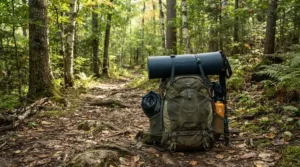
Anyone who has shared a tent with a crinkling pad knows the sound. Every roll-over becomes a snack-bag percussion solo at 2 a.m. For a heavy sleeper, that’s a shrug. For a light sleeper, it’s the difference between waking up rested and waking up plotting revenge.
The science backs the frustration. The World Health Organization’s noise guidance recommends staying under roughly 30 dB(A) in bedrooms at night for good-quality sleep. That figure describes steady environmental noise, not a pad’s intermittent crackle. Still, the lesson carries over: sudden sounds trigger micro-arousals even when you don’t fully wake.
Here’s the catch. Quiet used to mean heavy, cold, or both. Newer designs have narrowed that trade-off, but they haven’t erased it, and reviewer opinions still split on nearly every pad. So this guide sticks to what I could verify: published specs, independent test results, and the patterns that recur in real owner reviews. I’ll be upfront wherever the evidence runs thin.
Below you’ll find seven pads, a decision framework, and practical tent-mate etiquette. You’ll also see why “quiet” is never a single number.
Quick Comparison: Quiet Air Sleeping Pad for Light Sleepers at a Glance
Short on time? This table sorts the seven picks by what each does best. Prices are ranges at the time of research and may vary, so check current price before buying.
| Pick | Standout Quality | Price Range | Best For |
|---|---|---|---|
| NEMO Tensor All-Season | Floated film baffles, quiet for an insulated pad | Around $200-$230 | Quietest premium all-rounder |
| Therm-a-Rest NeoLoft | 4.6-inch loft, no crinkle, stretch-knit top | Mid-$200s | Side sleepers who toss and turn |
| Sea to Summit Ether Light XT Insulated | 4-inch Air Sprung Cells | $150-$200 range | Summer comfort seekers |
| Big Agnes Rapide SL Insulated | Quilted top, raised rails | $150-$200 range | Mid-range value and stability |
| Exped Ultra 6.5R | Very high warmth-to-weight | Around $200 | Cold sleepers |
| Therm-a-Rest NeoAir XLite NXT | Lightest of the group | $200-$240 range | Ounce-counting backpackers |
| FUN PAC Camping Sleeping Pad | Built-in foot pump | Budget, well under $100 | Car camping on a budget |
Looking at the table, the NEMO Tensor All-Season and Therm-a-Rest NeoLoft are the safest bets if silence is your top priority. The Therm-a-Rest NeoAir XLite NXT wins on weight but asks light sleepers to accept a faint rustle. Budget buyers should read the FUN PAC Camping Sleeping Pad entry carefully, because its noise behavior is the least documented of the seven.
💬 Just one click — help others make better buying decisions too!😊
Top 7 Quiet Air Sleeping Pads for Light Sleepers: Expert Analysis
1. NEMO Tensor All-Season — quietest premium film-baffle design
The standout is the insulation film that floats inside the baffles instead of being bonded to the fabric, giving it less to crackle when you move.
On paper, the NEMO Tensor All-Season weighs about 14.1 ounces in the regular mummy size and offers an R-value of 5.4 at 3.5 inches thick. That R-value means shoulder-season camping is comfortable without a second pad. The 3.5-inch loft gives side sleepers room for hips and shoulders to sink in. The included Vortex pump sack saves breath and keeps moist exhalations out of the pad.
Based on the spec comparison, this is the pad I’d shortlist first for anyone who shares a shelter. It pairs high warmth with a reputation for restraint. What most buyers overlook is the pump sack: reviewers describe it as workable but not the most efficient, and a thick pad takes real air.
Aggregated review sentiment leans positive. Independent testers describe it as quiet for an insulated air pad, and side sleepers report not bottoming out. It isn’t unanimous, though. Some owners report noise anyway, and a few mention valve or baffle failures that the lifetime warranty helps offset.
Pros:
- ✅ Quiet for an insulated air pad
- ✅ High warmth for its weight
- ✅ Thick enough to cradle side sleepers
Cons:
- ❌ Noise complaints from some sleepers
- ❌ Pump sack is slow on a thick pad
Price: around $200-$230 range. For light sleepers who camp in cooler months, it’s strong value.

2. Therm-a-Rest NeoLoft — most plush loft with no crinkle
The Therm-a-Rest NeoLoft trades gram-counting for pure comfort, with a 4.6-inch profile and a soft knit polyester top.
Measured weights run roughly 25-27 ounces, which is heavy by backpacking standards. Its R-value of 4.7 suits three seasons. Twin valves let you inflate and deflate separately, and the oversized pump sack makes inflation quick. Raised side rails gently funnel you toward the middle, which helps if you roll in your sleep.
Here’s what the spec sheet won’t tell you, but test data does: OutdoorGearLab’s reviewers placed it among the quietest pads they tested, with no crinkle at all. That’s exactly the profile a light sleeper wants, and the stretchy top fabric is the likely reason, since it dampens friction sounds.
Reviewers consistently praise side-sleeper comfort. The common complaints are weight and the learning curve of that tall, wide surface. One reviewer noted that rolling off it feels different from rolling off a thinner pad.
Pros:
- ✅ Among the quietest pads independently tested
- ✅ 4.6-inch loft ideal for side sleepers
- ✅ Separate valves speed inflation and deflation
Cons:
- ❌ Heavy for long backpacking trips
- ❌ Pricey for a three-season pad
Price: in the mid-$200s. It’s worth it if sleep matters more to you than ounces.
3. Sea to Summit Ether Light XT Insulated — springy 4-inch Air Sprung Cells
The Sea to Summit Ether Light XT Insulated uses pocket-spring-style air cells so the surface conforms to your body rather than holding a rigid shape.
At 4 inches thick, it’s among the thickest backpacking pads. The regular size weighs around 15 ounces. CleverHiker measured an R-value near 3.2, which means summer and early fall, not frost. The integrated pump sack doubles as a stuff sack, and Pillow Lock pads stop your pillow from wandering.
On noise, the evidence is mixed but encouraging. Reviewers say it lacks the potato-chip crinkle of older NeoAir models, though CleverHiker noted a faint rubbery squeak when you move. Another reviewer called it quieter than a NeoAir but not silent.
Side sleepers consistently report never bottoming out. The most common complaint is warmth: one buyer got cold at 30°F, so pair it with a foam layer in shoulder season.
Pros:
- ✅ 4 inches of cushion for hips and shoulders
- ✅ No crinkle, only faint rubbery squeak
- ✅ Integrated pump and stuff sack
Cons:
- ❌ Modest R-value limits cold-weather use
- ❌ Some owners report minor squeaking
Price: $150-$200 range. Excellent value for summer-leaning light sleepers.
4. Big Agnes Rapide SL Insulated — quilted top with raised rails
Think of the Big Agnes Rapide SL Insulated as a mid-range comfort play: a quilted top, 3.5 inches in the center, and 4.25-inch rails that keep you centered.
CleverHiker’s regular-size pad weighed 18 ounces, with an R-value around 4.8 (older listings show lower figures, so check the version). The Pumphouse inflation sack is included, though testers call the valve connection finicky. Meanwhile, CleverHiker described the sleeping surface as quiet, and its testers found it felt colder than expected near freezing.
My read: the raised rails matter for tent etiquette because they reduce the sliding and re-centering that generate noise. Reviews are genuinely split on sound. One REI reviewer called it the quietest pad they’d tried, while a Backcountry reviewer rated noise one star after four nights. Side sleepers praise it for not letting hips touch the ground.
Pros:
- ✅ Raised rails keep you centered
- ✅ Thick quilted surface cushions side sleepers
- ✅ Included pump sack inflates quickly
Cons:
- ❌ Noise reports vary widely
- ❌ Pump sack connection can be finicky
Price: $150-$200 range for regular sizes. Good value if you can tolerate some sound variance.
5. Exped Ultra 6.5R — very high warmth-to-weight for cold sleepers
If you run cold, the Exped Ultra 6.5R stands out with a spec-sheet R-value of 6.9 at 3.5 inches thick.
CleverHiker measured the medium at about 16.2 ounces, and a Schnozzel-style pump bag comes included. That combination means winter-capable insulation without hauling a brick. Reviewers rate it very comfortable for side sleepers, and Treeline Review found it outperforms competitors on warmth-to-weight and comfort.
Here’s the honest caveat: I couldn’t find detailed noise testing for this exact model. Earlier Exped Ultra 5R owners described it as very quiet, and one reviewer said it was quieter than a NEMO Tensor. But Exped’s lineup is mixed, and an older Winterlite model drew crinkle complaints on forums. Treat the Ultra 6.5R’s silence as promising rather than proven.
Pros:
- ✅ Excellent warmth for its weight
- ✅ Very comfortable for side sleepers
- ✅ Pump bag included for lung-free inflation
Cons:
- ❌ Noise for this exact model is poorly documented
- ❌ Older model reviews don’t guarantee current behavior
Price: around $200. Strong value for cold-weather campers who also prize a quiet pad.

6. Therm-a-Rest NeoAir XLite NXT — lightest pad with a muted crinkle
The Therm-a-Rest NeoAir XLite NXT remains the benchmark for warmth per ounce: about 13 ounces, 3 inches thick, R 4.5.
The NXT update matters for light sleepers. Packstack reports Therm-a-Rest claims an 83 percent noise reduction over the previous XLite, and the Outdoor Life review notes it quiets further with use. Even so, it’s still louder than some competitors. Insulation and crinkle are linked here, a trade-off that Outdoor Life’s reviewer explains well.
Reviewers split. One UK Climbing reviewer said the worst of the crinkle was muted but not gone. Another found the DCF floor of their tent louder than the pad. CleverHiker calls the pump sack below average.
Side sleepers find it adequate, though the 3-inch loft is the thinnest of the seven.
Pros:
- ✅ Lightest pad of the seven
- ✅ Much quieter than previous versions
- ✅ Strong warmth for its weight
Cons:
- ❌ Still audible to very light sleepers
- ❌ Thinnest loft of the group
Price: $200-$240 range. Great for weight-focused hikers who aren’t extremely noise-sensitive.
7. FUN PAC Camping Sleeping Pad — budget pick with a built-in foot pump
The FUN PAC Camping Sleeping Pad is the budget outlier, and it’s the only pick here with a genuine built-in foot pump.
Listings describe a 3-inch pad around 1.5 pounds and 27 inches wide, with a 40D nylon-and-TPU shell and an integrated pillow. The pump reportedly inflates it in 30-60 seconds. Buyers frequently cite quick inflation and the wide surface as the main draws. Across several thousand ratings, the average sits around 4.3 out of 5 at the time of research.
I couldn’t verify its noise behavior from independent tests, and reviews focus on inflation and comfort rather than sound. Based on how coated 40D nylon pads generally behave, light sleepers should expect more rustle than from the premium options. Insulation isn’t clearly stated either, so treat it as a warm-weather and car-camping choice.
Pros:
- ✅ Built-in foot pump needs no extra gear
- ✅ Wide 27-inch surface for restless sleepers
- ✅ Very low cost of entry
Cons:
- ❌ Noise level unverified by independent testing
- ❌ Insulation value not clearly published
Price: budget, generally well under $100. Fine for casual trips; not my first pick for a very light sleeper.
Top 7 Compared Side by Side
Numbers help, but only when you interpret them. The table below lines up the seven pads on weight, warmth, thickness, and reputation for noise. Weights are regular or medium sizes as measured by reviewers, and prices are ranges at the time of research.
| Pad | Weight | R-Value | Thickness | Price Range | Noise Reputation | Best For |
|---|---|---|---|---|---|---|
| NEMO Tensor All-Season | ~14.1 oz | 5.4 | 3.5 in | $200-$230 | Quiet, some dissent | Shared tents, cool nights |
| Therm-a-Rest NeoLoft | ~25-27 oz | 4.7 | 4.6 in | Mid-$200s | Among the quietest | Restless side sleepers |
| Sea to Summit Ether Light XT Insulated | ~15 oz | ~3.2 | 4 in | $150-$200 | No crinkle, faint squeak | Summer comfort |
| Big Agnes Rapide SL Insulated | ~18 oz | ~4.8 | 3.5-4.25 in | $150-$200 | Mixed reports | Mid-range value |
| Exped Ultra 6.5R | ~16.2 oz | 6.9 | 3.5 in | Around $200 | Predecessors quiet | Cold sleepers |
| Therm-a-Rest NeoAir XLite NXT | ~13 oz | 4.5 | 3 in | $200-$240 | Muted, not silent | Ultralight hikers |
| FUN PAC Camping Sleeping Pad | ~1.5 lb | Not stated | 3 in | Well under $100 | Unverified | Casual car camping |
Reading across, the Therm-a-Rest NeoLoft buys silence and comfort with weight, while the Therm-a-Rest NeoAir XLite NXT buys weight savings with a faint rustle. The NEMO Tensor All-Season and Exped Ultra 6.5R deliver the best warmth for the ounces. If you only sleep in warm weather, the Sea to Summit Ether Light XT Insulated gives you the most cushion per dollar.

Tent-Mate Etiquette: Practical Rules for Sharing a Shelter
Even the quietest pad can’t fix a poorly handled night. Good tent-mate etiquette is mostly about timing and communication, and it costs nothing.
Start with a pre-trip conversation. Tell your partner whether you’re the light sleeper, and ask about their pad too. A quick test at home, with both people rolling over on the floor, reveals more than any spec sheet. According to OutdoorGearLab’s NeoLoft review, a quiet pad lets you toss and turn without annoying a tent mate, which is the standard to aim for.
Then set simple ground rules:
- Inflate and deflate pads before the other person settles in, not at midnight.
- Agree on wake-up times, since morning deflation is its own alarm clock.
- Place pads edge-to-edge only if both are stable; sliding creates noise.
- Keep a quilt or sleeping bag over the pad surface, which softens friction sounds.
- If a pad squeaks, stop adjusting it. Repeated shifting is louder than settling once.
Here’s the bigger point about tent-mate etiquette: noise tolerance isn’t symmetrical. A heavy sleeper may genuinely not hear a pad that wrecks your night. So treat a light sleeper’s request as data, not drama, and consider swapping to a quieter pad before resentment builds.
Practical Setup Guide: Inflating, Breaking In, and Quieting Your Pad
Buying the right pad is half the work. Setup decides the other half, and a few habits make a measurable difference to both noise and sleep quality.
Inflate with a pump sack, not your lungs. Breath adds moisture inside the pad, and NEMO specifically notes its Vortex sack minimizes that. For thick pads, an electric pump saves effort, as one tester recommended for the NEMO Tensor All-Season.
Dial the firmness. Inflate fully, then release air until your hip sinks slightly when you lie on your side. An over-firm pad feels drum-like and slides more, which tends to add noise, based on how the pad’s surface responds when you move.
Give it a break-in period. Outdoor Life’s testing suggests that some pads quiet down with use, so don’t judge a new pad on night one.
Know the first-30-day mistakes:
- Skipping a home test before a big trip.
- Storing the pad tightly rolled for months instead of loosely.
- Ignoring slow leaks until the middle of the night.
- Forgetting a ground sheet, which protects thin fabrics.
Finally, patch kits ship with most of these pads, so check yours before leaving home. A pad that deflates at 3 a.m. is the loudest pad of all.
Real-World Scenarios: Matching a Pad to Your Trip
Specs are abstract. Here are three profiles to make the choice concrete.
The couple’s weekend, one light sleeper. You’re backpacking 10 miles each weekend through fall in a two-person tent. Weight matters, but sleep quality matters more. The NEMO Tensor All-Season fits the budget and conditions, while the Sea to Summit Ether Light XT Insulated suits warmer trips. Frequency is high, so durability and warranty coverage deserve weight.
The side sleeper with hip pain. You mostly car camp and take short hikes, and you’ve woken sore on every thin pad. The Therm-a-Rest NeoLoft is the logical choice: the loft and noise profile address your two biggest complaints. The extra weight is irrelevant when the trunk carries it.
The casual family camper. You camp four weekends a year, sharing a tent with two kids in summer. Budget dominates, so the FUN PAC Camping Sleeping Pad deserves a look, with the caveat that noise is unverified. Spending a bit more on the Big Agnes Rapide SL Insulated buys better-documented comfort and stability.
For more comparison data, CleverHiker’s sleeping pad roundup lines up weight, warmth, and noise commentary across many pads and is a good cross-check on any pick above.
How to Choose a Quiet Air Sleeping Pad for Light Sleepers
Choosing well comes down to a repeatable sequence. Follow these steps in order.
- Set your noise threshold first. If a faint rustle ruins your night, shortlist the Therm-a-Rest NeoLoft and NEMO Tensor All-Season. If you can tolerate some sound, the field widens.
- Match R-value to your coldest night. Around R 3 suits summer, R 4.5-5 handles most three-season trips, and R 6+ covers cold shoulder seasons. A pad that leaves you shivering isn’t quiet either; you’ll fidget.
- Check thickness for your sleep position. Side sleepers should lean toward 3.5 inches or more. Back sleepers have more flexibility.
- Weigh the pump system. A good pump sack saves effort; a finicky one frustrates. Budget pads may include a built-in pump.
- Compare fabric and baffle design. Stretch-knit or quilted tops and floated films tend to suppress friction sounds.
- Read for patterns, not single reviews. One reviewer’s silence is another’s squeak. Look for repeated themes across several sources.
- Confirm warranty and patch support. A lifetime warranty reduces the sting if a baffle fails.
Fabric Noise Level: What Actually Makes an Air Pad Crinkle
Fabric noise level isn’t a single spec. It’s a result of several design decisions working together.
First, the insulation. Reflective metalized films bounce heat back to you, but they can also crackle like a snack bag. Outdoor Life’s reviewer describes this as the core trade-off in NeoAir pads: high insulation arrived with crinkle. Newer designs, such as the NEMO Tensor All-Season, float the film loosely in baffles to reduce the effect.
Second, the face fabric. Thin 20D nylon is light but can rustle against a sleeping bag. Softer knit or quilted tops, like those on the Therm-a-Rest NeoLoft and Big Agnes Rapide SL Insulated, dampen friction.
Third, baffle geometry. Wider, more stable baffles shift less, and less shifting means less noise.
Here’s what the spec sheet won’t say: no manufacturer publishes a decibel rating, so the fabric noise level of any pad comes from tester descriptions. That’s why I’ve framed noise as reputations rather than numbers throughout. Treat any “silent” claim skeptically, and remember that your sleeping bag and tent floor add their own sounds.
Air Sleeping Pad for Side Sleepers: Why Thickness and Width Matter
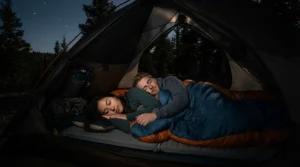
An air sleeping pad for side sleepers has one job: keep your hip and shoulder off the ground. Side sleeping concentrates body weight onto two narrow contact points, so a thin pad bottoms out quickly.
Thickness is the first filter. The Sea to Summit Ether Light XT Insulated at 4 inches and the Therm-a-Rest NeoLoft at 4.6 inches lead the group, and both draw repeated praise from side sleepers. The NEMO Tensor All-Season and Big Agnes Rapide SL Insulated sit at 3.5 inches or higher, which most reviewers found sufficient. The Therm-a-Rest NeoAir XLite NXT, at 3 inches, is acceptable but the least forgiving.
Width and rails matter too. Raised rails prevent rolling off and reduce the micro-adjustments that wake light sleepers. Meanwhile, firmness is personal: too firm and your shoulder can’t sink; too soft and your hip bottoms out.
For light sleepers specifically, an air sleeping pad for side sleepers also needs a quiet surface, since side sleepers shift more often. That’s why the Therm-a-Rest NeoLoft earns its price: it pairs loft with a reputation for silence.
Air Sleeping Pad With Built-In Pump: Convenient, but Is It Quiet?
An air sleeping pad with built-in pump sounds ideal: no sack to lose, no breath wasted. But the term covers three different things, and noise behaves differently in each.
Pump sacks. The NEMO Tensor All-Season, Therm-a-Rest NeoLoft, and Big Agnes Rapide SL Insulated include separate sacks. They add no noise to the pad but can be fiddly.
Integrated stuff-and-pump sacks. The Sea to Summit Ether Light XT Insulated combines both, saving ounces and a step.
True built-in foot pumps. The FUN PAC Camping Sleeping Pad embeds the pump in the pad itself. Listings promise inflation in under a minute, and reviewers of this category like the convenience. Still, some say the pump tires you out, and one said the pad was bouncy and needed a separate pump to firm up.
Here’s my analytical take: built-in pumps shine for casual car camping, but they add a bulky valve section and rely on cheaper, coated shells. For an air sleeping pad with built-in pump that’s also quiet, evidence is thin. If silence is the priority, a premium pad plus a lightweight electric pump is the safer route.
✨ Don’t Miss These Carefully Selected Picks!
🔍 Take your sleep to the next level with these carefully selected pads. Click on any highlighted item to check current pricing and availability. A quieter night is one tap away!
Noise and Sleep Quality: What the Research Says
Sleep quality isn’t just about hours; it’s about uninterrupted cycles. The WHO notes that night noise can raise heart rate, trigger arousals, and shift sleep stages, even without full awakening. Vulnerable groups, including children and the elderly, are affected more.
What does that mean for camping? Intermittent noises, like a pad crinkling every time your partner rolls over, are the kind that fragment sleep. You may not remember waking, yet you feel unrested.
Add physical comfort to the equation. A pad that bottoms out forces constant repositioning, which creates more noise and more arousals. That’s why thickness, stability, and quiet belong in the same conversation. A thicker, more stable pad such as the Therm-a-Rest NeoLoft or Sea to Summit Ether Light XT Insulated can improve sleep quality twice: once by cushioning you, and once by reducing the micro-movements that cause sound.
One caution. The research concerns environmental noise levels, not pad crinkle specifically, so I’m drawing an analogy, not citing direct proof. Still, the logic holds up: fewer sudden sounds, better rest.
Quiet Air Pads vs Self-Inflating and Foam Alternatives
Is an air pad the right category at all? Here’s how it stacks up against the main alternatives.
| Pad Type | Typical Noise | Side-Sleeper Comfort | Weight and Pack Size | Best For |
|---|---|---|---|---|
| Quiet air pad (e.g., NEMO Tensor All-Season) | Low to moderate | Excellent | Light, compact | Backpackers wanting comfort |
| Self-inflating foam | Generally quiet | Good | Heavier, bulkier | Car campers |
| Closed-cell foam | Generally quiet | Limited | Light but bulky | Budget and backup use |
Self-inflating pads are generally quiet, though one reviewer noted their warmth-to-weight ratio is poor. Closed-cell foam is nearly silent but thin and bulky. Air pads win on comfort and pack size, and the quietest air pads now close much of the noise gap.
Looking at the table, a quiet air pad is the best compromise for most backpackers. Car campers who don’t mind weight could choose self-inflating foam for guaranteed silence, while ultralight hikers may pair a thin foam sheet with an air pad. Either way, the Therm-a-Rest NeoLoft shows air pads can rival foam on noise.
FAQ
❓ Do quiet air sleeping pads stay completely silent?
❓ Which air sleeping pad for side sleepers is also quiet?
❓ Is an air sleeping pad with built-in pump worth it?
❓ Does fabric noise level improve as a pad ages?
❓ How much should I spend on a quiet pad?
Conclusion
Finding a quiet air sleeping pad for light sleepers means balancing four things: noise, thickness, warmth, and weight. No single pad wins them all, and anyone promising perfect silence is overselling.
Here’s the short version. If you want the quietest premium option and cooler-weather versatility, the NEMO Tensor All-Season is the pad to beat. Restless side sleepers who can carry the weight should choose the Therm-a-Rest NeoLoft. For summer cushion on a budget, the Sea to Summit Ether Light XT Insulated punches above its price, while the Big Agnes Rapide SL Insulated offers dependable mid-range comfort. Cold sleepers should look to the Exped Ultra 6.5R, and ounce-counters can accept the Therm-a-Rest NeoAir XLite NXT‘s faint rustle for its weight savings. The FUN PAC Camping Sleeping Pad is a convenient built-in-pump option for casual trips, with noise still unproven.
Whatever you choose, test it at home, agree on tent-mate etiquette before the trip, and remember that sleep quality is the real prize. A quiet pad isn’t a luxury when it saves two people’s nights.
Recommended for You
- Ultralight Air Pad For Thru-Hiking: 7 Proven Picks Ranked 2026
- Budget Self-Inflating Sleeping Pad: 7 Best Buys In 2026
- Self-Inflating Sleeping Pad For Truck Bed Camping: 7 Best Picks 2026
Disclaimer: This article contains affiliate links. As an Amazon Associate, I earn from qualifying purchases. If you purchase products through these links, we may earn a small commission at no additional cost to you.
✨ Found this helpful? Share it with your friends! 💬🤗
