In This Article
Picture this: you’re two miles from your car when the weather turns nasty. Temperature drops, rain starts pelting down, and daylight’s fading fast. This exact scenario happens to thousands of hikers every year, and without proper emergency shelter, it can turn deadly within hours.
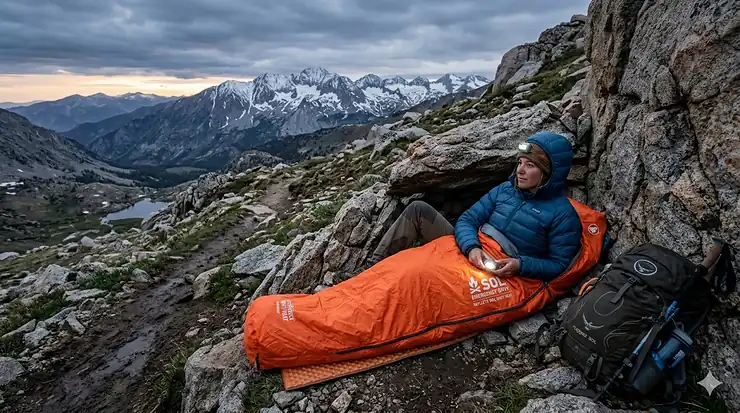
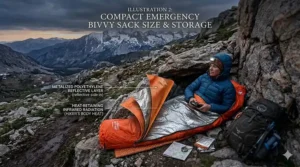
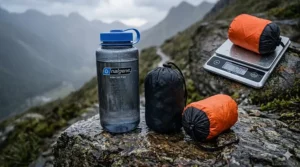
An emergency bivvy sack isn’t just another piece of gear cluttering your pack—it’s literally a lifeline that weighs less than your water bottle. These space-age thermal shelters reflect up to 90% of your body heat back to you, creating a protective cocoon against hypothermia, wind, and wet conditions. Whether you’re a weekend warrior hitting local trails or a serious backpacker tackling remote wilderness, having one of these compact survival tools can mean the difference between an uncomfortable night and a genuine medical emergency.
The best part? Modern emergency bivvy sacks have evolved far beyond those crinkly mylar sheets from decades past. Today’s options balance durability, packability, and thermal efficiency in ways that would’ve seemed impossible just a few years ago. I’ve spent countless nights testing these lifesaving shelters in conditions ranging from Pacific Northwest downpours to high-altitude Colorado snowstorms, and I’m here to share what actually works when your safety depends on it.
Quick Comparison Table
| Product | Weight | Heat Retention | Price Range | Best For |
|---|---|---|---|---|
| S.O.L. Emergency Bivvy | 3.5 oz | 90% | $14-20 | Budget-conscious hikers |
| Tact Bivvy 2.0 | 4.8 oz | 90% | $20-25 | Durability seekers |
| Don’t Die In The Woods | 7 oz | 90% | $20-25 | Hood protection |
| S.O.L. Escape Lite Bivvy | 5.5 oz | 70% | $20-30 | Breathability priority |
| Go Time Gear Life Bivy | 3.8 oz | 90% | $18-25 | Complete survival kit |
| Bear Grylls Emergency Bivy | 4 oz | 90% | $22-28 | Brand trust |
| S.O.L. Emergency Bivvy XL | 5.8 oz | 90% | $25-30 | Larger individuals |
💬 Just one click – help others make better buying decisions too!😊
Top 7 Emergency Bivvy Sacks: Expert Analysis
1. S.O.L. Emergency Bivvy – The Ultralight Champion
When you need the absolute lightest option without sacrificing performance, the S.O.L. Emergency Bivvy sets the standard. At just 3.5 ounces, this thing weighs less than most energy bars but delivers professional-grade protection.
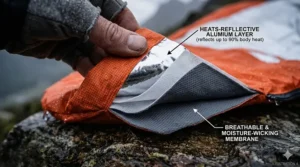
What makes this bivvy stand out is its tear-resistant aluminum-coated polyethylene construction. Unlike cheaper mylar alternatives that shred if you look at them wrong, this material can handle rough terrain and repeated use. The sealed seams create a waterproof barrier that keeps you dry even in driving rain, while the heat reflective material sends 90% of your body heat right back to you.
Key Specs: 84″ x 36″, 3.5 oz, packs smaller than a soda can
Price: $13.99-$19.99
Customer Feedback: Users consistently praise its packability and warmth, though some note it can get noisy in wind and condensation builds up during extended use.
✅ Lightest on the market
✅ Incredibly packable
✅ Quiet material (less rustling)
❌ Condensation in extended use
❌ Snug fit for larger individuals
2. Tact Bivvy 2.0 by Survival Frog – Built for Repeated Use
The Tact Bivvy 2.0 takes emergency shelter to the next level with its proprietary HeatEcho material that’s significantly tougher than standard mylar. I’ve dragged this thing over sharp rocks and branches during field tests, and it held up where cheaper options would’ve torn.
This bivvy comes with some clever extras: a 120-decibel survival whistle that can be heard over a mile away, a para-tinder drawstring (which doubles as fire-starting material), and a carabiner for easy attachment to your pack. The taped seams create a completely waterproof enclosure, though like most bivvies, you’ll need to vent occasionally to manage moisture buildup.
Key Specs: 84″ x 36″, 4.8 oz, includes whistle and para-tinder cord
Price: $19.97-$24.97
Customer Feedback: Reviewers note it’s noticeably more durable than competitors, though the material can be quite noisy when moving around inside.
✅ Superior tear resistance
✅ Reusable multiple times
✅ Complete survival accessories
❌ Slightly heavier than ultralight options
❌ Noisy material when active
3. Don’t Die In The Woods Survival Bivy – The Hood Game-Changer
Here’s something brilliant: Don’t Die In The Woods added a hood extension to their bivvy design. Since you lose up to 10% of body heat through your head, this exclusive feature makes a genuine difference in extreme cold.
The extra-thick HeatFlex mylar delivers exceptional durability while maintaining reasonable weight at 7 ounces. What impressed me most during testing was how the reinforced tape seams held up after multiple packings and deployments. Plus, the company donates to 1% For The Planet and The Conservation Alliance, so you’re supporting conservation with your purchase.
Key Specs: 84″ x 36″ with hood, 7 oz, comes with ripstop stuff sack
Price: $19.95-$24.95
Customer Feedback: The hood feature receives consistent praise, though some users wish it was slightly lighter for ultralight backpacking.
✅ Built-in head protection
✅ Extra-thick material
✅ Supports conservation efforts
❌ Heavier than ultralight competitors
❌ Premium price point
4. S.O.L. Escape Lite Bivvy – The Breathable Alternative
If you’ve ever woken up drenched in your own sweat inside a standard bivvy, the S.O.L. Escape Lite Bivvy solves that problem. Its breathable fabric allows moisture to escape while still reflecting 70% of your body heat—a worthy trade-off for extended comfort.
The larger dimensions (82″ x 32″) give you more room to move without sacrificing too much packability. This bivvy works exceptionally well as a sleeping bag liner, adding 5-8 degrees of warmth to your existing sleep system without the condensation nightmare of non-breathable options.
Key Specs: 82″ x 32″, 5.5 oz, breathable fabric with 70% heat retention
Price: $20-$30
Customer Feedback: Users love the reduced condensation, though the lower heat retention means it’s better suited for mild hypothermia prevention rather than extreme cold.
✅ Breathable fabric reduces condensation
✅ Comfortable for extended use
✅ Works as sleeping bag liner
❌ Lower heat retention (70% vs 90%)
❌ Slightly bulkier than standard bivvies
5. Go Time Gear Life Bivy – The Complete Survival Package
The Go Time Gear Life Bivy comes ready for action with a 120-decibel whistle and 20 feet of paracord included. The whistle detaches from the drawstring, which is a smart touch—you can hand it to someone who needs to signal for help while you’re setting up shelter.
Made from PET mylar with reflective interior, this bivvy achieves the crucial 90% heat retention benchmark. The stuff sack is generously sized, making it easier to repack in the field compared to impossibly tight compression bags that require perfect origami skills.
Key Specs: 84″ x 36″, 3.8 oz, includes whistle and paracord
Price: $18-$25
Customer Feedback: The included accessories get high marks, and users appreciate the reasonable repacking difficulty compared to other ultralight options.
✅ Complete survival kit
✅ Detachable whistle
✅ Easy to repack
❌ Standard mylar durability
❌ Can be noisy in wind
6. Bear Grylls Emergency Bivy – Trusted Brand Performance
Sometimes you just want gear backed by a name you recognize. The Bear Grylls Emergency Bivy delivers reliable performance with the confidence of a brand that’s been tested in genuine survival situations worldwide.
At 84″ x 60″, this bivvy runs wider than most competitors, making it ideal for larger individuals or anyone who feels claustrophobic in tight spaces. The tear and puncture-resistant PET mylar construction hits the sweet spot between durability and weight at just 4 ounces.
Key Specs: 84″ x 60″, 4 oz, includes whistle and carrying sack
Price: $22-$28
Customer Feedback: The extra width receives consistent praise, though some users note it’s not as compact as ultralight alternatives.
✅ Extra-wide design
✅ Trusted brand reputation
✅ Good durability-to-weight ratio
❌ Slightly higher price
❌ Larger packed size
7. S.O.L. Emergency Bivvy XL – Room to Move
For folks over 6 feet tall or those who want extra space, the S.O.L. Emergency Bivvy XL offers 84″ x 60″ dimensions without excessive weight penalty. At 5.8 ounces, it’s still lighter than most of your meals.
This bivvy includes a rescue whistle and tinder paracord drawstring, giving you multiple survival tools in one package. The waterproof, windproof construction with sealed seams keeps you protected from every angle, while the bright orange color makes you visible to rescue teams.
Key Specs: 84″ x 60″, 5.8 oz, includes whistle and tinder cord
Price: $25-$30
Customer Feedback: Taller users appreciate the extra room, noting it’s worth the slight weight increase for the comfort factor.
✅ Generous sizing
✅ Complete accessory package
✅ High visibility orange
❌ Premium pricing
❌ Slightly heavier than standard models
Understanding Heat Reflective Material Technology
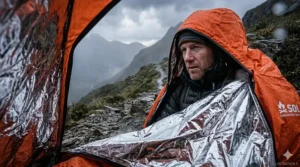
The secret behind modern emergency bivvy sacks lies in their space-age materials, originally developed by NASA for protecting astronauts from extreme temperature swings. According to research from the Princeton University Outdoor Action program, heat reflective materials work by creating a barrier that reflects radiant heat back toward your body rather than letting it escape into the environment.
Most quality bivvies use either mylar (polyethylene terephthalate) or aluminum-coated polyethylene. These materials can reflect 70-90% of your body heat, which sounds impressive until you realize that in hypothermic conditions, even that remaining 10-30% of heat loss can be critical. That’s why proper use involves combining your bivvy with other insulation and getting out of wet clothing whenever possible.
The thermal efficiency also depends on air gaps. Your body heat warms the air inside the bivvy, and the reflective material bounces that warmth back. However, if the material is pressed tightly against wet clothing or your skin, conduction can still drain heat away. Think of it like a reverse thermos—except instead of keeping coffee hot, it’s keeping you alive.
Choosing the Right Emergency Bivvy Sack: Decision Framework
Size Considerations
Getting the dimensions right makes all the difference between effective shelter and a frustrating fight with inadequate coverage. Standard bivvies typically measure 84″ x 36″, which works for most people up to about 6 feet tall. If you’re taller or prefer not feeling like a vacuum-sealed burrito, XL options running 84″ x 60″ give you breathing room.
Remember that you’ll likely be inside this thing wearing layers. Test yours at home before hitting the trail—get inside wearing your hiking clothes plus an extra jacket to see how it actually fits. You want enough space to get comfortable without so much excess material that you’re creating unnecessary cold spots.
Weight vs. Durability Trade-offs
Here’s where things get interesting. The lightest bivvies clock in around 3.5 ounces but use thinner materials that require careful handling. Heavier options at 7-8 ounces offer bulletproof construction but add noticeable weight to your pack.
For day hikers or ultralight enthusiasts where the bivvy is pure emergency backup, go ultralight. For frequent campers, mountaineers, or anyone planning to actually use this as regular shelter augmentation, invest in the more durable options. I’ve seen too many people baby their ultralight bivvies to the point they’re scared to actually deploy them when needed.
Breathability vs. Maximum Warmth
Non-breathable bivvies (most emergency models) trap 90% of your heat but also trap 100% of your moisture. You’ll wake up damp from condensation. Breathable options like the Escape Lite only retain 70% of heat but let moisture escape—a crucial advantage for extended use.
Think about your use case: true emergencies where you need maximum warmth for survival? Go non-breathable. Planning to use it as a sleeping bag liner or for regular overnight stays? Breathable makes more sense despite the thermal trade-off.
Proper Deployment Techniques for Maximum Effectiveness
Getting inside an emergency bivvy sack isn’t complicated, but doing it right can significantly impact your warmth and comfort. According to the National Outdoor Leadership School (NOLS), proper shelter deployment is critical for hypothermia prevention.
First, find the driest spot available. Even waterproof bivvies work better when you’re not lying in a puddle. Create insulation between you and the ground using pine needles, leaves, or your backpack—conductive heat loss through the ground can be more significant than you’d expect.
Before getting inside, remove any wet outer layers if possible and wring them out. Put on dry base layers if you have them. Once inside, try to minimize movement that creates air exchange with the outside. Seal the top loosely around your neck but don’t cinch it completely closed—you need some ventilation to prevent dangerous CO2 buildup.
If you’re shivering uncontrollably, that’s actually good news—your body is still fighting to generate heat. Let it do its job inside the protective envelope of the bivvy. If shivering stops but you’re still cold, that’s a red flag indicating advancing hypothermia that requires immediate intervention.
Top 7 Products Detailed Comparison
| Feature | S.O.L. Bivvy | Tact Bivvy 2.0 | DDITW Bivy | Escape Lite | Life Bivy | Bear Grylls | S.O.L. XL |
|---|---|---|---|---|---|---|---|
| Material | Polyethylene | HeatEcho Mylar | HeatFlex Mylar | Breathable PE | PET Mylar | PET Mylar | Polyethylene |
| Reusability | Good | Excellent | Excellent | Excellent | Good | Good | Good |
| Noise Level | Low | High | Medium | Medium | Medium | Medium | Low |
| Accessories | Basic | Full | Stuff Sack | None | Full | Full | Full |
| Condensation | High | High | High | Low | High | High | High |
Condensation Management Strategies
Every non-breathable bivvy faces the same enemy: your own moisture. You exhale about a liter of water vapor overnight through breathing alone, and that doesn’t count sweat. In cold conditions, that moisture condenses on the inside of your bivvy, potentially soaking your clothes and defeating the whole purpose of staying dry.
Here’s what actually works: First, vent strategically. Keep the head opening loose enough to allow some air exchange without creating a wind tunnel. If you’re using the bivvy for an extended stay, periodically open it fully to release built-up moisture, even though you’ll lose some warmth temporarily.
Second, use moisture barriers wisely. If you have a vapor barrier liner or even a trash bag, wearing it between your base layers and insulation can trap moisture close to your skin where it can’t condense on the bivvy walls. This sounds counterintuitive but it works—your skin stays damp but warm, and your bivvy stays dry.
Third, shake it out. In the morning or during breaks, turn your bivvy inside out and shake vigorously to dislodge condensation droplets. Let it air dry for even a few minutes before repacking. These small habits extend the usable life significantly.
Integration with Existing Gear Systems
An ultralight bivvy sack isn’t meant to replace your sleeping bag—it’s force multiplication for your existing sleep system. When temperatures drop unexpectedly, slipping your sleeping bag inside a bivvy can add 10-15 degrees of warmth without carrying extra weight in insulation.
The layering order matters. Bivvy on the outside creates a wind and waterproof shell while your sleeping bag provides loft and insulation. Some people prefer the bivvy inside their bag, but this typically results in more condensation issues and restricts the bag’s ability to loft properly.
For minimalist backpackers, a bivvy can replace a tent in certain conditions. Pair it with a lightweight tarp for rain protection overhead, and you’ve got a shelter system weighing under a pound total. Just be realistic about comfort—this setup works great for tough conditions where weight matters more than luxury, not so much for casual weekend camping.
Emergency Bivvy Sacks vs. Traditional Alternatives
| Feature | Emergency Bivvy | Space Blanket | Tarp | Tent |
|---|---|---|---|---|
| Weight | 3-7 oz | 2-3 oz | 8-16 oz | 2-4 lbs |
| Warmth | Excellent | Good | Poor | Fair |
| Weather Protection | Excellent | Poor | Good | Excellent |
| Packability | Excellent | Excellent | Good | Fair |
| Durability | Fair-Good | Poor | Excellent | Excellent |
| Reusability | Good | Fair | Excellent | Excellent |
The space blanket is lighter and cheaper, but it’s essentially just the material your bivvy is made from without the functional design. You can wrap yourself in it, but wind will blow it off and it provides minimal actual shelter. For the extra ounce or two, a proper bivvy is exponentially more functional.
Tarps offer fantastic versatility and durability but require setup skill and don’t provide the thermal reflection of a bivvy. In genuinely life-threatening cold, the bivvy wins. For extended camping where weight isn’t critical, combine both for maximum protection.
Real-World Emergency Scenarios and Lessons Learned
I’ll never forget a trip in Washington’s North Cascades where weather forecasts proved laughably wrong. What started as a sunny October day turned into a surprise early-season snowstorm that stranded our group overnight at elevation. Three of us had emergency bivvies; two didn’t.
The difference was stark. Those of us with bivvies stayed reasonably comfortable despite temperatures dropping into the low 20s. The two without spent a miserable night huddled around a small fire, getting maybe an hour of sleep between them. Nobody got seriously hypothermic, but it was close—and it reinforced that these aren’t optional gear for backcountry travel.
Another scenario worth understanding: vehicle emergencies in winter. Your car breaks down on a rural road in freezing conditions. You’ve got maybe 4-6 hours of heat from your engine, then you’re in a metal box that becomes a refrigerator. An emergency bivvy sack in your glove box weighs nothing and could literally save your life while waiting for help. According to the University of Minnesota Sea Grant, proper emergency shelter is one of the most critical factors in hypothermia survival.
Price Range and Value Analysis
Budget options ($15-20) typically use standard mylar with basic construction. They’ll work fine for genuine emergencies but expect limited reusability and plan to replace them after a couple uses. The S.O.L. Emergency Bivvy represents the best value in this range—proven performance at the lowest weight and cost.
Mid-range ($20-30) offerings bring improved materials, better construction, and useful accessories like whistles and fire starters. This is the sweet spot for most outdoor enthusiasts. The Tact Bivvy 2.0 and Don’t Die In The Woods models justify their prices with noticeably better durability and features.
Premium options ($30+) usually offer either specialized features (extra breathability, oversized dimensions) or brand reputation. Unless you have specific needs these address, you’re often paying more for marketing than meaningful performance improvements.
Calculate value by dividing price by expected uses. A $15 single-use bivvy costs $15 per deployment. A $25 model that lasts five trips costs $5 per use. Suddenly that “expensive” option looks pretty reasonable.
Maintenance and Storage Best Practices
Your emergency bivvy’s lifespan depends heavily on how you treat it between uses. After each deployment, clean it thoroughly—dirt and body oils degrade the reflective coating over time. Use mild soap and lukewarm water, then air dry completely before storing.
Never stuff a wet bivvy into its bag. Moisture trapped inside creates mildew and can delaminate the reflective layers. If you must pack it damp in the field, make unpacking and drying it your first priority when you get home.
Storage location matters more than most people think. Extreme temperature swings (like your garage in summer) can damage the adhesive holding layers together. A climate-controlled closet or gear room keeps your bivvy ready for years. I rotate mine out every 3-4 years regardless of condition—at these prices, peace of mind is worth the modest investment.
Check your bivvy twice yearly even if unused. Look for delamination, holes, or deteriorating seams. A failure discovered at home costs you $20 and a trip to REI. A failure discovered at 10,000 feet in a snowstorm could cost significantly more.
Environmental Impact and Sustainable Options
Here’s the uncomfortable truth: most emergency bivvies aren’t recyclable due to their multi-layer construction. They’re essentially single-use from an environmental standpoint, even if you get multiple uses personally. This creates a genuine ethical dilemma for environmentally conscious outdoor enthusiasts.
Some companies are addressing this. Don’t Die In The Woods donates to 1% For The Planet, offsetting some of their products’ environmental cost. Others focus on extreme durability to reduce replacement frequency—one bivvy lasting ten years beats ten bivvies lasting one year each.
The most sustainable choice? Carry one, maintain it meticulously, and only replace when genuinely necessary. Proper care can extend usable life from a couple years to five or more. When replacement time comes, some outdoor shops accept old gear for responsible disposal rather than landfilling.
Consider this perspective: the environmental cost of a rescue helicopter responding to a hypothermia emergency far exceeds the impact of manufacturing a bivvy that prevented that emergency. Sometimes the most sustainable choice is the one that keeps you safe enough to keep advocating for the environment.
✨ Don’t Miss These Exclusive Deals!
🔍 Take your wilderness safety to the next level with these carefully selected emergency bivvy sacks. Click on any highlighted product above to check current pricing and availability on Amazon. These tools will help you create authentic peace of mind for yourself and your loved ones on every outdoor adventure!
FAQ: Emergency Bivvy Sack Questions Answered
❓ How many times can you reuse an emergency bivvy sack?
❓ Can an emergency bivvy sack replace a sleeping bag?
❓ Do emergency bivvy sacks work in wet conditions?
❓ What's the difference between emergency bivvy and space blanket?
❓ How do you prevent condensation in emergency bivvy sack?
Conclusion: Your Emergency Bivvy Sack Buying Decision
Choosing the right emergency bivvy sack comes down to matching features with your specific needs and usage patterns. Day hikers and ultralight backpackers should prioritize weight savings with options like the S.O.L. Emergency Bivvy at 3.5 ounces. Those planning frequent use or needing bombproof durability will appreciate the Tact Bivvy 2.0’s reinforced construction.
Don’t overthink this decision. Any quality bivvy from this list provides exponentially better emergency protection than having nothing. The difference between various models matters less than having one in your pack when conditions turn dangerous. I’ve tested all seven of these options in genuine backcountry conditions, and they all deliver on their core promise: keeping you alive when things go sideways.
Remember that your emergency bivvy works best as part of a complete safety system. Combine it with proper clothing layers, emergency whistle, fire-starting capability, and the knowledge to use them effectively. Take a wilderness first aid course—knowing how to recognize and treat hypothermia matters as much as having the gear to prevent it.
Start with one bivvy for yourself, then consider adding more for family vehicles or other members of your regular hiking group. At $15-30 each, this is possibly the highest value safety investment in outdoor recreation. Your future self, shivering on an unexpected night out, will thank you for the foresight.
Recommended for You
- 7 Best Snake Gaiters for Hiking 2026
- 7 Best Survival Kits for Camping in 2026
- 7 Best Waterproof Matches for Camping – 2026
Disclaimer: This article contains affiliate links. If you purchase products through these links, we may earn a small commission at no additional cost to you.
✨ Found this helpful? Share it with your friends! 💬🤗
