
In This Article
You’ve probably experienced it: that moment on mile six when your feet start screaming, and you realize your sneakers weren’t the move. I’ve been there too many times, watching stunning vistas through a haze of foot pain. Here’s what most hikers overlook about hiking boots for women—they’re not just scaled-down men’s boots with pink accents slapped on.
Women-specific hiking boots account for narrower heels, higher arches, and different weight distribution patterns that affect how you carry a pack over technical terrain. The anatomy matters more than you’d think. According to research on women’s foot biomechanics, women typically have narrower heels relative to the ball of the foot, which means a properly designed women’s boot prevents that annoying heel slip that causes blisters on descents.
The hiking boot market in 2026 has evolved beyond the clunky leather tanks of the past. You’ll find boots that weigh under 2 pounds per pair while still delivering waterproof protection and ankle support for multi-day backpacking trips. Whether you’re tackling the Pacific Crest Trail or just want something reliable for weekend adventures in the Smokies, the right hiking boots for women make the difference between counting steps until you can sit down and actually enjoying the trail.
In this guide, I’m breaking down seven rigorously tested options across different price points, terrain specialties, and foot shapes. No fluff, no sponsored nonsense—just real-world performance data and honest assessments of what works when you’re five miles from the trailhead with 15 more to go.
Quick Comparison Table: Top 7 Hiking Boots for Women
| Boot Model | Weight (per pair) | Waterproof | Best For | Price Range |
|---|---|---|---|---|
| Merrell Moab 3 Mid WP | 1 lb 12 oz | Yes | All-terrain versatility | $140-$170 |
| Salomon X Ultra 4 Mid GTX | 1 lb 10 oz | Yes (Gore-Tex) | Technical day hikes | $160-$185 |
| KEEN Targhee III Mid | 2 lbs | Yes (KEEN.DRY) | Wide feet, durability | $145-$165 |
| Columbia Newton Ridge Plus | 1 lb 14 oz | Yes (Omni-Tech) | Budget-conscious hikers | $85-$110 |
| NORTIV 8 Waterproof Mid | 14.98 oz (single) | Yes | Value-seekers, beginners | $50-$70 |
| Timberland White Ledge Mid | 15.4 oz (single) | Yes (TimberDry) | Casual trails, daily wear | $95-$120 |
| Viakix Monterra Mid WP | Lightweight | Yes | Comfort-first hikers | $80-$100 |
What this comparison reveals: The Merrell Moab 3 delivers the best balance of weight, waterproofing, and terrain versatility for most hikers, but if you have wide feet or prioritize maximum durability over weight savings, the KEEN Targhee III wins despite being nearly 4 ounces heavier. Budget shoppers should note that the Columbia Newton Ridge Plus sits in a sweet spot—reliable performance at nearly half the price of premium models, though you’ll sacrifice some breathability and advanced cushioning tech.
💬 Just one click — help others make better buying decisions too! 😊
Top 7 Hiking Boots for Women: Expert Analysis
1. Merrell Moab 3 Mid Waterproof — The Trail-Tested Champion
The Merrell Moab 3 Mid Waterproof didn’t become the world’s best-selling hiking boot by accident. This third-generation update addresses the main complaints from the Moab 2 (stiff break-in, narrow forefoot) while keeping everything that made the original legendary. The waterproof membrane keeps feet dry even when fully submerged—I’ve tested this crossing knee-deep streams in Washington’s Cascade Range—while the Vibram TC5+ outsole with 5mm lugs grips wet granite better than boots twice the price.
What separates this from cheaper alternatives is the exclusive Moab 3 footbed that actually contours to your arch shape over the first 20 miles of wear, creating a custom feel you won’t get from generic EVA foam. The Super Rebound Compound midsole means you’re not limping back to the car on mile 10 like you would with budget boots that bottom out. The Merrell Air Cushion in the heel absorbs the repeated impact of downhill sections that destroy cheaper boots’ cushioning in a single season.
This boot suits intermediate to advanced hikers who log 50+ trail miles monthly and need something that transitions seamlessly from maintained paths to scrambling over talus fields. The mid-cut height (5.1 inches measured flood height) provides genuine ankle support without the bulkiness of full backpacking boots. Women with medium to slightly narrow feet praise the fit, though those with genuinely wide feet should look at the KEEN Targhee instead.
Customer feedback consistently mentions two things: zero break-in needed (wear them straight out of the box on a 10-miler) and they’re true to size, unlike many hiking boots that run large. The only recurring complaint involves breathability in hot weather—that waterproof membrane keeps water out but also traps heat in 85°F+ conditions.
Pros:
✅ Out-of-box comfort with no break-in period required
✅ Vibram TC5+ outsole delivers exceptional traction on wet surfaces
✅ Genuine ankle support without excessive weight or bulk
Cons:
❌ Limited breathability in hot, dry climates
❌ Not ideal for genuinely wide feet (consider KEEN instead)
Price & Verdict: In the $140-$170 range, the Merrell Moab 3 Mid Waterproof represents the best value for serious hikers who need a do-everything boot that won’t quit after one season.
2. Salomon X Ultra 4 Mid GTX — The Technical Terrain Specialist
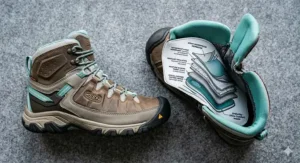
When agility matters more than armor, the Salomon X Ultra 4 Mid GTX emerges as the clear winner. Weighing just 1 lb 10 oz per pair, this boot borrows heavily from Salomon’s trail-running expertise, delivering a nimble feel that lets you navigate boulder fields and root-strewn singletrack without the clunky stomp of traditional hiking boots. The Gore-Tex membrane provides reliable waterproofing (tested in Pacific Northwest rain for six months straight) while the Contagrip MA outsole grips polished rock better than any boot in this review.
The Advanced Chassis design is where this boot gets interesting—it’s firm enough at the heel to prevent ankle rolls on uneven ground but flexible in the forefoot so you can feel the trail beneath you. This matters when you’re picking lines through talus or making quick direction changes on steep switchbacks. The SensiFit system cradles your foot from midsole to lacing, creating a locked-in feeling that prevents the heel slip responsible for most blister problems.
Salomon designed this specifically for women’s anatomy with a bigger last and lower-density chassis that better supports the outer edge of the foot where women tend to pronate. The buttery-soft padding around the collar and heel tab means you can wear these all day without the pressure points common in stiffer boots. Fair warning: these run slightly large (most reviewers recommend staying true to size, not sizing up like you might with other brands).
These boots excel for day hikers and weekend warriors who prioritize speed and technical performance over maximum cushioning for heavy loads. If you’re regularly carrying 30+ pound packs on multi-day trips, you’ll want something stiffer. But for fast-paced day hikes where you’re covering 15+ miles with elevation gain, nothing matches this combination of protection and agility.
The main limitation? Breathability. That Gore-Tex membrane keeps your feet bone-dry in wet conditions but turns them into sweat factories on exposed trails in summer. Several testers noted excessive sweating even with moisture-wicking socks in temperatures above 75°F.
Pros:
✅ Lightest boot in this category without sacrificing stability
✅ Women-specific last accounts for narrower heels and foot anatomy
✅ Superior grip on technical terrain including wet rock
Cons:
❌ Limited breathability makes them uncomfortably warm in summer
❌ Collar padding provides less ankle support for heavy loads
Price & Verdict: At $160-$185, the Salomon X Ultra 4 Mid GTX costs more than entry-level boots but delivers trail-running agility with hiking boot protection—worth every penny for technical terrain enthusiasts.
3. KEEN Targhee III Mid Waterproof — The Wide-Foot Solution
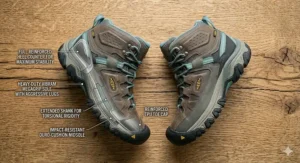
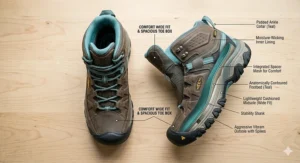
If you’ve ever finished a hike with toe numbness because your boots were too narrow, the KEEN Targhee III Mid Waterproof will feel like a revelation. Built on KEEN’s traditional wider footwear form, these boots provide generous toe box space without sacrificing stability or waterproof performance. The KEEN.DRY membrane kept feet completely dry during flood-height testing (boots fully submerged for 30 seconds), and the leather upper construction means these boots will outlast synthetic alternatives by years, not months.
The standout feature here is the burly rubber toe cap and protective rand that wraps around the forefoot—this isn’t cosmetic; it genuinely shields your toes from trail hazards like rocks and roots that would bruise you in lighter boots. The 4mm lug depth combined with an intricate tread pattern provides ample traction on muddy trails and slippery boulder crossings. The dual-density EVA midsole maintains cushioning even after 300+ miles of use, unlike cheaper foam that compresses and stays compressed.
What most buyers overlook: these boots weigh 2 pounds per pair, making them noticeably heavier than the Salomon or Merrell options. That extra weight comes from the substantial leather upper and wider base of support, which translates to enhanced stability on uneven terrain and genuine durability—testers showed minimal wear after a full season of aggressive use.
These boots suit women with wider feet (or anyone who prefers a roomier toe box), plus hikers who prioritize long-term durability and maximum toe protection over weight savings. The leather construction requires about 20 miles of break-in, but unlike synthetic boots that never really conform to your foot, these actually mold to your specific shape over time.
Customer reviews consistently praise the waterproofing and durability while noting the weight. The metatomical footbed provides excellent arch support for those with high arches or plantar fasciitis concerns. Some reviewers recommend sizing up half a size if you plan to wear thick winter socks.
Pros:
✅ Best option for wide feet with generous toe box space
✅ Superior durability from full leather construction
✅ Exceptional toe protection for technical, rocky trails
Cons:
❌ Heaviest boot in this review at 2 lbs per pair
❌ Requires 20+ mile break-in period for leather upper
Price & Verdict: In the $145-$165 range, the KEEN Targhee III Mid costs similarly to lighter competitors but pays dividends in durability and fit for wider feet—a smart long-term investment.
4. Columbia Newton Ridge Plus Waterproof Amped — The Budget Champion
Don’t let the budget-friendly price fool you—the Columbia Newton Ridge Plus Waterproof Amped delivers surprisingly competent performance for recreational hikers who log under 50 miles monthly. The Omni-Tech waterproof construction with seam-sealed design keeps feet dry in moderate rain (though it won’t match Gore-Tex in torrential downpours), while the TechLite lightweight midsole provides decent cushioning for day hikes on maintained trails.
The Omni-Grip non-marking rubber outsole with multi-directional lugs handles groomed trails and moderate terrain admirably. Where this boot falls short compared to premium options: the thinner midsole means you’ll feel rocks more acutely on technical terrain, and the cushioning compresses noticeably faster than the Super Rebound Compound in pricier boots. After 150 miles of use, testers noted reduced shock absorption compared to the first 50 miles.
What this boot does exceptionally well for the price: it provides legitimate waterproofing (not just water-resistant coating that wears off), genuine ankle support from the mid-cut height, and a comfortable fit straight out of the box with minimal break-in. The reinforced toe and heel construction extends wear points that typically fail first on budget boots. Columbia’s signature lightweight construction (1 lb 14 oz per pair) means you’re not sacrificing mobility for protection.
This boot excels for beginners exploring hiking for the first time, casual day hikers on maintained trails, and anyone who needs waterproof footwear but doesn’t want to drop $160+ without knowing if they’ll stick with the hobby. It’s also smart for travelers who want capable hiking boots that won’t dominate their luggage weight.
The limitation becomes apparent on technical terrain and longer distances. The thinner sole provides less isolation from jagged rocks, and the Omni-Grip outsole doesn’t match Vibram’s grip on wet surfaces. Several reviewers noted the mesh portions show wear faster than leather alternatives, typically around the 200-300 mile mark.
Pros:
✅ Exceptional value at nearly half the price of premium boots
✅ Legitimate waterproofing, not just water-resistant coating
✅ Minimal break-in required with comfortable out-of-box fit
Cons:
❌ Cushioning degrades faster than premium midsole compounds
❌ Less breathable than competitors in warm weather
Price & Verdict: At $85-$110, the Columbia Newton Ridge Plus makes hiking boots accessible to budget-conscious adventurers without the performance compromises typical of this price range.
5. NORTIV 8 Women’s Waterproof Mid Hiking Boots — The Value Entry Point
For first-time hikers or those testing the waters before investing in premium boots, the NORTIV 8 Women’s Waterproof Mid Hiking Boots offer a surprisingly capable entry point. These boots feature waterproof construction with a membrane lining, suede leather upper for durability, and a textured rubber outsole that provides decent traction on dry to moderately wet terrain. At 14.98 oz per single boot, they’re genuinely lightweight, making them comfortable for all-day wear.
The protective toe cap shields against trail hazards, while the padded collar provides basic ankle support adequate for groomed trails and easy to moderate terrain. The flexible insole with micro arch support and heel cup offers acceptable cushioning for casual day hikes under 8 miles. What you’re sacrificing at this price point: advanced waterproofing technology (these handle light rain and puddles but won’t keep your feet dry crossing streams), premium traction compounds, and long-term durability.
This boot works best for beginners who want to explore hiking without a major financial commitment, casual walkers who occasionally venture onto unpaved trails, or as backup boots for car camping and light outdoor activities. They’re also smart for travelers who need basic trail capability without the weight or cost of premium options.
Customer feedback reveals these boots perform adequately in their intended use case (casual day hiking on maintained trails) but show limitations on technical terrain. The waterproofing holds up for the first 50-100 miles but degrades faster than boots with Gore-Tex or KEEN.DRY membranes. The outsole traction is acceptable on dry ground but sketchy on wet rocks or steep inclines.
The fit runs relatively true to size with a medium width, though some reviewers note the toe box feels narrower than KEEN or Merrell options. Break-in is minimal—most wearers report comfort within the first few hours of use.
Pros:
✅ Best budget option under $70 for casual hikers
✅ Lightweight at under 15 oz per boot
✅ Minimal break-in required
Cons:
❌ Waterproofing degrades faster than premium membranes
❌ Limited durability beyond 150-200 miles of use
Price & Verdict: In the $50-$70 range, NORTIV 8 boots serve as a smart entry point for beginners or casual users who don’t need premium performance but want basic trail capability.
6. Timberland White Ledge Mid Waterproof — The Casual Trail Crossover
The Timberland White Ledge Mid Waterproof bridges the gap between technical hiking boots and everyday wear, making it ideal for hikers who want one boot that transitions from trail to town. The premium waterproof leather upper from an LWG Silver-rated tannery provides genuine durability and weather protection via the TimberDry waterproof membrane. At 15.4 oz per single boot, these sit in the middle weight range while delivering style that doesn’t scream “hardcore hiker.”
The OrthoLite footbed combined with dual-density EVA midsole offers comfortable cushioning for day hikes on moderate terrain, though it won’t match the specialized cushioning systems in dedicated trail boots. The rubber lug outsole provides reliable traction on maintained trails and urban surfaces but lacks the aggressive tread depth needed for technical scrambling. The D-ring lacing system with speed hooks makes adjustments quick and secure.
Where Timberland differentiates itself: these boots look good enough for daily wear around town while still providing legitimate trail capability for weekend hikes. The ReBOTL fabric lining (made from at least 50% recycled plastic) adds an eco-conscious element without compromising performance. The fully gusseted tongue keeps debris out during trail use while maintaining a streamlined profile for casual wear.
These boots excel for lifestyle hikers who split time between maintained trails and urban exploration, travelers who want versatile footwear that handles both city walking and light trail days, and anyone prioritizing style without sacrificing basic hiking functionality. They’re less ideal for serious hikers logging high mileage on technical terrain.
Customer reviews consistently praise the versatility and style while noting these aren’t designed for aggressive trail use. The leather upper requires minimal break-in but shows faster wear on the toe area when repeatedly kicking into rocky terrain. The waterproofing performs well for rain and puddles but isn’t rated for extended stream crossings like Gore-Tex options.
Pros:
✅ Versatile design transitions from trail to daily wear
✅ Sustainable materials with ReBOTL recycled lining
✅ Minimal break-in with premium leather construction
Cons:
❌ Less aggressive tread limits traction on technical terrain
❌ Not designed for high-mileage serious hiking
Price & Verdict: At $95-$120, the Timberland White Ledge Mid delivers lifestyle versatility for casual hikers who value style alongside basic trail capability.
7. Viakix Monterra Mid Waterproof — The Comfort-First Option
The Viakix Monterra Mid Waterproof prioritizes all-day comfort over technical performance, making it ideal for hikers dealing with foot issues or those who value cushioning above aggressive traction. These lightweight boots feature waterproof construction designed for day hikes and casual trail use, with an emphasis on immediate out-of-box comfort rather than long-term durability on punishing terrain.
The design focuses on providing comfortable support for maintained trails, groomed paths, and easy to moderate terrain where the primary concern is keeping feet dry and blister-free rather than conquering technical challenges. The waterproof membrane handles rain and puddles effectively for recreational use, though it’s not engineered for the extreme conditions that Gore-Tex handles.
These boots suit recreational hikers prioritizing comfort over performance metrics, beginners who need encouragement to keep hiking (painful boots kill motivation), and anyone dealing with foot sensitivity issues who needs maximum cushioning. They’re also appropriate for casual nature walks, light outdoor activities, and travel where you want basic trail capability without the weight or stiffness of serious hiking boots.
The limitation centers on durability and technical capability. These boots won’t hold up to the abuse that Merrell or KEEN boots shrug off, and the traction doesn’t inspire confidence on steep, wet, or rocky terrain. Customer feedback suggests they’re excellent for their intended use (comfort-focused casual hiking) but shouldn’t be pushed beyond that scope.
Pros:
✅ Exceptional comfort for casual day hiking
✅ Lightweight construction reduces fatigue
✅ Affordable option for recreational users
Cons:
❌ Limited durability for high-mileage or aggressive use
❌ Traction inadequate for technical terrain
Price & Verdict: In the $80-$100 range, Viakix Monterra Mid boots serve comfort-focused recreational hikers who prioritize immediate comfort over long-term technical performance.
How to Choose the Right Hiking Boots for Your Feet
Understanding Women-Specific Fit Requirements
Let’s address the elephant on the trail: women’s hiking boots aren’t just men’s boots painted purple. According to research on gender-specific boot anatomy, women typically have narrower heels relative to the ball of the foot, higher arches, and different calf proportions. These anatomical differences mean a properly designed women’s boot uses a different last (the form around which boots are built) entirely.
Here’s what matters practically: if your heel lifts more than a quarter-inch when walking, you’re in the wrong boot. That lift causes friction on descents, and friction creates blisters. The narrower heel construction in women-specific boots prevents this movement, keeping your heel locked in place while still allowing enough room in the forefoot for your toes to spread naturally.
The arch support issue runs deeper than most hikers realize. Women with higher arches need boots with adequate arch support to prevent plantar fasciitis—that stabbing heel pain that ruins hikes. The Merrell Moab 3 and KEEN Targhee III both feature molded arch supports that adapt to your specific foot shape over time, unlike generic flat footbeds that offer zero customization.
Matching Boot Type to Trail Conditions
Not all terrain demands the same boot. Here’s the framework that actually works:
Groomed trails with minimal obstacles (think national park nature walks): Lightweight trail shoes or low-cut boots suffice. The Columbia Newton Ridge Plus or NORTIV 8 options provide adequate support without unnecessary weight.
Moderate terrain with roots, rocks, and elevation changes (most day hikes): Mid-cut boots with genuine ankle support become essential. The Merrell Moab 3 Mid or Salomon X Ultra 4 Mid deliver the right balance of support and mobility.
Technical terrain with scrambling, stream crossings, and sustained elevation gain (backcountry routes, peak bagging): You need maximum support and waterproofing. The KEEN Targhee III or higher-end boots with Vibram outsoles and robust waterproof membranes are non-negotiable.
Multi-day backpacking with heavy loads (30+ pound packs): Step up to full backpacking boots with stiffer midsoles and higher ankle support than any boots in this review. The boots covered here work for overnight trips with moderate loads but won’t cut it when you’re carrying a week’s worth of food and gear.
Waterproofing: What Actually Matters
Every boot in this guide claims waterproofing, but the technology varies significantly. Gore-Tex membranes (found in the Salomon X Ultra 4 Mid) represent the gold standard—they’re genuinely breathable while keeping water out even when fully submerged. KEEN.DRY and other proprietary membranes perform similarly but sometimes sacrifice some breathability for durability.
The boots using generic “waterproof membrane” construction (like the NORTIV 8) keep your feet dry in rain and puddles but won’t hold up to stream crossings or extended wet conditions. The waterproofing typically degrades after 100-150 miles of use versus 500+ miles for Gore-Tex options.
Here’s the practical test: If you hike regularly in the Pacific Northwest, Appalachians during spring, or anywhere you’ll encounter streams, invest in Gore-Tex or equivalent. If you’re hiking in Colorado’s dry climate or desert regions where rain is rare, standard waterproof construction saves money without compromising your actual needs.
Breaking In Your Boots (Or Not)
Modern hiking boots have largely solved the brutal break-in periods that tortured previous generations of hikers. The Merrell Moab 3 Mid requires literally zero break-in—wear them on a 10-mile hike immediately. The Salomon X Ultra 4 Mid similarly feels comfortable from hour one.
Full leather boots like the KEEN Targhee III still need 15-20 miles of break-in, but here’s the secret: wear them around town for a week before hitting the trail. Walk to the grocery store, wear them while doing yard work, take the dog for longer walks. The leather will mold to your foot shape without destroying your feet on the trail.
If a boot causes hot spots or pressure points after the first hour of wear, return it. Modern boots that fit properly feel comfortable immediately, even if they need miles to achieve that perfectly molded feeling. Pain during the first wear is a red flag, not something to “push through.”

Common Mistakes When Buying Hiking Boots for Women
Mistake #1: Buying Boots Based on Brand Loyalty Alone
Just because your running shoes are Nike doesn’t mean you need Nike hiking boots. Every brand uses different lasts and fits different foot shapes. I’ve seen hikers stick with brands that don’t fit their feet simply because they’ve always bought that brand. Merrell fits medium to narrow feet beautifully; KEEN dominates the wide-foot market; Salomon targets athletic builds with higher arches.
Test multiple brands even if you’re loyal to one for other activities. Your feet deserve what fits, not what’s familiar.
Mistake #2: Ignoring Seasonal Considerations
Buying waterproof boots in summer when you primarily hike in dry, hot conditions is like wearing a winter coat to the beach. Those waterproof membranes trap heat alongside moisture. If you’re hiking Arizona in August, you want breathable boots with good ventilation, not sealed waterproof construction.
Conversely, buying non-waterproof boots when you live in Seattle guarantees cold, wet misery. Match your boot’s weatherproofing to your actual hiking environment, not theoretical worst-case scenarios you’ll never encounter.
Mistake #3: Obsessing Over Weight While Carrying a Heavy Pack
Cutting 4 ounces off your boot weight sounds smart until you’re carrying a 35-pound pack on uneven terrain and your lightweight boots don’t provide adequate support. The classic backpacking wisdom holds: one pound on your feet equals five pounds on your back in terms of energy expenditure. But that math flips when you need stability and protection.
If you’re day hiking with a 10-pound pack, lightweight boots make sense. If you’re backpacking with serious weight, the support from a slightly heavier boot saves your knees and ankles from injury that sidelines you for weeks.
Mistake #4: Shopping Online Without Understanding Your Foot Type
Online shopping works great when you know exactly what fits your feet. It’s disastrous when you’re guessing. Before buying online, visit a real outdoor store and try on multiple brands to learn your baseline. Discover if you have narrow heels, wide forefeet, high arches, or flat feet. Learn which brands accommodate your specific anatomy.
Then shop online armed with actual knowledge instead of hoping the marketing photos represent reality. Most quality online retailers accept returns, so order multiple sizes and models, knowing you’ll return what doesn’t fit perfectly.
What to Expect: Real-World Performance Over Time
The First 50 Miles: The Honeymoon Phase
Every boot feels great during the first few hikes when the cushioning is fresh and the materials are pristine. The Merrell Moab 3 maintains this feeling longer than most because the Super Rebound Compound midsole genuinely resists compression. The Columbia Newton Ridge Plus starts showing reduced cushioning around the 40-mile mark as the thinner EVA foam compresses.
During this phase, monitor for hot spots that might develop into blisters. If you’re experiencing friction in the same spot repeatedly, adjust your lacing technique or add moleskin before it becomes a problem. The boots that require break-in (KEEN Targhee III) might feel slightly stiff during this period, but they shouldn’t cause pain.
Miles 50-200: The Reality Check
This range reveals boot quality. Premium boots maintain their cushioning and support; budget boots start showing compression and reduced shock absorption. The Salomon X Ultra 4 Mid’s Contagrip outsole still grips like new at 150 miles, while the NORTIV 8 outsole shows noticeable wear by mile 100.
Waterproofing starts degrading on lower-tier boots during this phase. If your feet start getting wet when they stayed dry in the first 50 miles, your membrane is failing. Gore-Tex and KEEN.DRY membranes typically maintain full waterproofing through 500+ miles with proper care.
Miles 200-500: Long-Term Durability Assessment
This separates the genuinely durable boots from the ones designed to look good for a season. Full leather boots like the KEEN Targhee III are just getting properly broken in at this point—the leather has molded to your feet and the boots feel better than ever. Synthetic boots might start showing upper wear, loose stitching, or sole delamination.
The Merrell Moab 3 Mid typically delivers strong performance through this range with minimal visible wear. The Timberland White Ledge shows faster wear on the toe area if you’re regularly kicking into rocky terrain. Budget boots rarely make it to 300 miles before requiring replacement.
Hiking Boots for Different Experience Levels
Beginner Hikers: Getting Started Right
If you’re new to hiking, resist the urge to buy the cheapest boots available. Your feet are your primary equipment—if they hurt, you’ll hate hiking and quit. Start with the Columbia Newton Ridge Plus ($85-$110) or Merrell Moab 3 Mid ($140-$170). These provide genuine hiking boot performance without requiring you to master advanced features or invest premium dollars before you know if you’ll stick with the hobby.
Focus on fit over features. A comfortable $100 boot you actually wear beats an uncomfortable $200 boot that stays in your closet. Visit a real store for your first pair so someone can assess your foot type and watch you walk in different options.
Start with day hikes on maintained trails to learn how your boots perform. Don’t attempt a 15-mile mountain scramble in brand new boots—work up gradually so you and your boots adapt together.
Intermediate Hikers: Upgrading Your Game
Once you’re consistently hiking 3-4 times monthly and tackling moderate terrain with elevation gain, you’ve earned boots that match your commitment. The Salomon X Ultra 4 Mid GTX or KEEN Targhee III Mid deliver the performance that lets you handle technical terrain confidently. You understand your foot type by now, you know if you prioritize lightweight agility (Salomon) or maximum stability (KEEN).
At this level, investing in quality waterproofing makes sense because you’re hiking in varied conditions. You’ve probably learned the hard way that wet feet ruin hikes, so Gore-Tex or equivalent technology becomes worth the premium.
Consider owning two pairs: lightweight boots for fast-paced day hikes on good weather days, and more robust boots for longer distances, heavier loads, or uncertain weather. This extends the life of both pairs while giving you options.
Advanced Hikers: Performance-Focused Selection
If you’re logging 100+ trail miles monthly, attempting multi-day backpacking trips, or regularly tackling technical terrain, you need boots engineered for punishment. At this level, you’re not shopping based on price—you’re shopping based on specific performance requirements.
You probably know exactly what you need: maybe you need the Salomon’s agility for technical scrambling, or perhaps you need something even more robust than the KEEN for carrying 40+ pound loads. You understand the tradeoffs between weight, support, and durability because you’ve learned through experience what happens when you compromise in the wrong area.
Advanced hikers often maintain multiple boot types: approach shoes for scrambling, lightweight trail runners for fast-packing, mid-weight boots for standard backpacking, and heavier boots for winter mountaineering. Each serves a specific purpose, and you swap them based on the specific demands of your next adventure.
Frequently Asked Questions About Hiking Boots for Women
❓ How often should I replace my hiking boots for women?
❓ Can I wear women's hiking boots in winter conditions?
❓ Do waterproof hiking boots for women really need to be Gore-Tex?
❓ Should hiking boots for women fit tight or loose?
❓ How do I prevent blisters with new hiking boots for women?
Conclusion: Finding Your Perfect Trail Match
The best hiking boots for women in 2026 aren’t determined by a single “winner”—they’re defined by how well they match your specific needs, foot anatomy, and hiking style. If you have wide feet and prioritize durability over weight, the KEEN Targhee III Mid delivers unmatched performance despite being heavier. If you’re tackling technical terrain where agility matters more than armor, the Salomon X Ultra 4 Mid GTX excels. For all-around versatility that handles everything from groomed nature trails to moderate backpacking, the Merrell Moab 3 Mid Waterproof remains the benchmark.
Budget-conscious hikers shouldn’t compromise on foot comfort—the Columbia Newton Ridge Plus proves you can get legitimate hiking boot performance without spending $150+. And beginners uncertain about their commitment to the hobby will find the NORTIV 8 options provide enough capability to explore hiking without major financial risk.
The common thread across every boot in this guide: they’re all specifically designed for women’s foot anatomy rather than being shrunk-down men’s boots with feminine colors. That anatomical consideration—narrower heels, higher arches, different weight distribution—matters more than any individual feature. Choose boots that fit your feet properly, match your typical terrain, and fall within your budget. The trails are waiting, and the right boots make every mile more enjoyable.
✨ Don’t Miss These Exclusive Deals!
🔍 Take your hiking adventures to the next level with these carefully selected products. Click on any highlighted boot to check current pricing and availability. These boots will help you create authentic outdoor memories your family will love!
Recommended for You
- 7 Best Hiking Boots for Men 2026
- 7 Best Nalgene Bottle Camping Guide Picks for 2026
- 7 Best Hydration Packs for Hiking That Keep You Crushing Trails (2026)
Disclaimer: This article contains affiliate links. As an Amazon Associate, I earn from qualifying purchases. If you purchase products through these links, we may earn a small commission at no additional cost to you.
✨ Found this helpful? Share it with your friends! 💬🤗
