

In This Article
Somewhere between “just five more minutes at the campfire” and “I promise I’m not scared of the dark,” every parent eventually goes shopping for the best kids headlamp. It sounds like a small purchase. It is not. Hand a seven-year-old the wrong headlamp and you’ll get a dead battery by 8 p.m., a strap that slides down over one eyebrow like a tiny disco DJ, or a beam so weak it barely lights up a marshmallow. Hand them the right one, and suddenly they’re the self-appointed “night guide” of the whole family, proudly leading the way to the bathroom trailer at 11 p.m.

We spent hours digging through real product specs, verified retailer data, and aggregated review sentiment from actual buyers to find headlamps that survive sticky fingers, mud puddles, and the occasional launch across a tent. This guide covers real, current products — from ultra-gentle toddler lights to rechargeable options built for scout-aged campers — along with what the specs actually mean once the light leaves the box and hits a dark trail.
Every product below is presented honestly: real names, real specifications, and real aggregated review themes, never fabricated experience. If you’re weighing a children’s headlamp camping trip, a rainy-night dog walk, or a backyard game of flashlight tag, you’ll find a fit here. Let’s get into it.
Quick Comparison Table
| Headlamp | Power Source | Brightness | Best For |
|---|---|---|---|
| Petzl TIKKID | 3 AAA (included) | 20 lumens | Toddlers, gentle first headlamp |
| Black Diamond Wiz Kid Headlamp | USB-C rechargeable | 40 lumens | No-hassle rechargeable use |
| Foxelli MX20 Headlamp | 3 AAA | 165 lumens | Budget-conscious families |
| Foxelli 180 Lumen USB-C Headlamp | USB-C rechargeable | 180 lumens | Kids 8+ on real trails |
| EverBrite RGB Kids Headlamp | USB rechargeable | 50 lumens | Color-loving younger kids |
| EverBrite Kids Dragon Headlamp | Batteries included | Low-output LED | Imaginative, novelty-loving kids |
| Energizer Universal+ LED Headlamp (2-Pack) | 4 AAA (included) | Standard LED | Siblings who share everything |
Looking across the table, the split comes down to power source and brightness ceiling. The Petzl TIKKID and Black Diamond Wiz Kid Headlamp intentionally cap their output to protect younger eyes, while the Foxelli 180 Lumen USB-C Headlamp pushes well past that for kids who actually need to see a trail marker at night. Budget shoppers gravitate toward the Foxelli MX20 Headlamp or the Energizer Universal+ LED Headlamp (2-Pack), both of which run on easy-to-replace AAA batteries instead of asking you to remember another gadget to charge.
💬 Found a favorite already? Save this list so you don’t lose track of it before bedtime hits.
Top 7 Kids Headlamps: Expert Analysis
Below are seven real, currently available headlamps spanning budget, mid-range, and premium price points, plus a mix of battery types and personalities — because let’s be honest, some kids want function and some kids want a dragon on their forehead.
1. Petzl TIKKID — gentlest glow built for toddlers’ eyes
The standout here is restraint: Petzl deliberately limited this light instead of chasing bigger lumen numbers. The Petzl TIKKID tops out at 20 lumens, a number that looks tiny next to adult headlamps but is exactly the point — it’s bright enough to read a bedtime story or find a stuffed animal under the bunk, without blasting anyone’s retinas at close range.
Under the hood, it runs on three included AAA batteries, weighs about 80 grams, and carries an IPX4 water-resistance rating, meaning it shrugs off splashes and light rain without flinching. The wide flood beam trades distance for comfort, which matters more than most parents expect: a narrow, focused beam at toddler eye-level is genuinely uncomfortable to look at directly, and toddlers will look directly at it.
Based on the spec sheet, this is squarely a headlamp for children three and up who are just getting used to wearing something on their head at all — not a trail light for an eight-year-old scout. Reviewers consistently note that the single-button interface is nearly foolproof for small hands, and that the phosphorescent strip helps them spot the light in a dark tent when it inevitably rolls under a sleeping bag.
Pros:
- ✅ Capped at 20 lumens to protect young, sensitive eyes
- ✅ Breakaway strap releases automatically under tension
- ✅ Battery compartment requires a screwdriver to open safely
Cons:
- ❌ Not bright enough for older kids doing real trail hikes
- ❌ Costs more upfront than several battery-powered competitors
At around $25-$30, the Petzl TIKKID sits at the premium end for what is objectively a simple light — but for a first headlamp aimed at a toddler, the safety engineering behind that price is the actual product.

2. Black Diamond Wiz Kid Headlamp — rechargeable and nearly kid-proof
What most buyers overlook about this model is that Black Diamond didn’t just shrink an adult headlamp — they rebuilt the whole interaction around durability testing with actual kids. The Black Diamond Wiz Kid Headlamp runs on a built-in USB-C rechargeable battery, which eliminates the “we’re out of AAAs at 6 p.m. on a Friday” problem entirely.
Two SinglePower LEDs put out 40 lumens with full-strength, dimmed, and strobe modes, and diffused side lighting softens the beam so it’s comfortable at close range. Here’s what the spec sheet won’t tell you, but user reports suggest: the head tilts in both directions on purpose, so the light still works correctly even when a four-year-old inevitably puts it on backward or upside down.
An automatic two-hour shutoff is the sleeper feature — it means a headlamp left on inside a backpack won’t quietly murder its own battery by the next trip. Aggregated review sentiment is largely positive on the newer rechargeable version, with several parents specifically praising the switch away from constantly swapping batteries, though a handful mention occasional confusion with the charging indicator lights.
Pros:
- ✅ USB-C rechargeable, no more disposable battery runs
- ✅ Automatic two-hour shutoff prevents accidental drain
- ✅ Works correctly even when worn upside down
Cons:
- ❌ Some reviewers report inconsistent charge-indicator behavior
- ❌ 40 lumens is still modest for kids nearing their teens
Expect to pay somewhere in the mid-$20s to low-$30s range, which puts it just above budget AAA models — reasonable given you’re not buying batteries every month.
3. Foxelli MX20 Headlamp — best budget all-rounder for growing kids
The Foxelli MX20 Headlamp earns its spot by refusing to overcomplicate things. It’s rated at 165 lumens with a roughly 200-foot beam, powered by three standard AAA batteries, and — importantly for this list — it has two separate buttons for white and red light instead of cycling through a menu of modes.
On paper this means a kid can jump straight to red light mode for a nighttime bathroom run without accidentally strobing the whole campsite while fumbling through settings. The elastic, ergonomically designed headband is genuinely adjustable enough to fit a range of head sizes, which is part of why it gets marketed as usable by “every member of the family,” not just kids.
What most buyers overlook is the battery format itself: AAA cells are a practical advantage for family trips, since you can top off with the same batteries powering the TV remote instead of hunting for a specific USB cable at a campsite with no outlets. Reviewers consistently report solid build quality at this price, along with genuine surprise at how bright 165 lumens feels compared to typical kids’ toy-grade lights.
Pros:
- ✅ Runs on easy-to-find, swappable AAA batteries
- ✅ Separate one-touch buttons for white and red light
- ✅ Reviewers consistently praise the durability for the price
Cons:
- ❌ No rechargeable battery option built in
- ❌ Adult-styled design feels less playful to younger kids
Priced under $15 in most listings, the Foxelli MX20 Headlamp is the value pick on this list — the one to grab if you need multiple headlamps without multiplying your budget.
4. Foxelli 180 Lumen USB-C Headlamp — brightest pick for youth campers 8+
If your kid has aged out of “gentle glow” and into “actually needs to see the trail,” the Foxelli 180 Lumen USB-C Headlamp is the logical step up. It delivers 180 lumens with a claimed 300-foot throw, five light modes including a dimmed setting and red night-vision light, and a 45-degree tilt for aiming the beam.
The spec comparison here matters: unlike disposable-battery models, this one runs on USB-C with up to 40 hours of runtime per charge, and it weighs just 2.4 ounces — light enough that kids stop noticing it’s even on their head after the first ten minutes. An IPX5 waterproof rating means it handles rain, dew-soaked tents, and the occasional water-bottle mishap without drama.
Based on the spec comparison against the rest of this list, this is the headlamp built for actual outdoor use rather than bedtime ambiance — think scouting trips, family hikes after dinner, or backyard capture-the-flag with real visibility requirements. One outdoor-gear review outlet specifically flagged a similar Foxelli model as its pick for kids eight and older, citing durability and feature richness relative to price as the deciding factors — see the full testing writeup for their side-by-side notes.
Pros:
- ✅ USB-C fast charging with up to 40 hours of runtime
- ✅ IPX5 waterproof rating handles rain and splashes
- ✅ Lightweight at 2.4 ounces for comfortable all-day wear
Cons:
- ❌ Single stretch headband can run loose on smaller heads
- ❌ Bright enough that younger siblings still need supervision
Expect a price in the high-teens to low-$20s range — reasonable for a rechargeable light with genuine outdoor-grade specs rather than toy-grade ones.
5. EverBrite RGB Kids Headlamp — most colorful mode-switching fun
Some kids don’t want a “tool,” they want an experience, and the EverBrite RGB Kids Headlamp leans into that completely. It offers three lighting modes: a gentle white low setting, a brighter 50-lumen white high mode with roughly a 33-foot range, and an automatic RGB color-cycling mode that kids can lock onto a favorite color by holding the button for two seconds.
Here’s what the spec sheet won’t tell you: the RGB mode functions as a legitimate incentive tool. Parents consistently report using the color-cycle feature to get reluctant kids excited about wearing a headlamp at all, which matters more for actual nighttime safety than an extra 50 lumens most toddlers will never need. It’s USB rechargeable via an included cable, with a full charge taking about an hour according to the manufacturer.
Reviewers frame this less as a “serious” outdoor tool and more as a hybrid toy-slash-light — appropriate for reading, backyard play, trick-or-treating, or holiday-themed fun, with camping as a secondary use case rather than the primary one.
Pros:
- ✅ RGB color-cycle mode kids can lock to a favorite hue
- ✅ USB rechargeable with roughly a one-hour full charge
- ✅ Gentle 50-lumen white mode stays easy on young eyes
Cons:
- ❌ Only three total modes limits versatility for older campers
- ❌ Plastic housing feels less rugged than metal-bodied rivals
Typically priced in the mid-teens, the EverBrite RGB Kids Headlamp is an easy pick for a birthday or holiday gift where fun outranks trail performance.
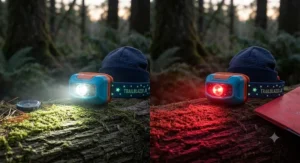
6. EverBrite Kids Dragon Headlamp — most playful novelty design
The EverBrite Kids Dragon Headlamp commits fully to the bit: it’s shaped like a dragon, includes a roar sound mode alongside a silent mode, and ships with batteries already installed so it works the moment it’s unboxed. This is a headlamp built explicitly around imaginative play rather than lumens-per-dollar efficiency.
What most buyers overlook about novelty-shaped headlamps in general is legitimate: costume-style housings can be bulkier and less streamlined than a standard flat-profile headlamp, which matters if the goal is serious hiking. But that’s not really the goal here. Based on the spec comparison against purpose-built trail lights on this list, the Dragon model is best understood as a gateway product — something that makes a reluctant three- or four-year-old want to wear a light on their head, which solves a completely different problem than raw brightness ever could.
Aggregated review sentiment for character-themed kids’ headlamps in this category tends to split along predictable lines: strongly positive for younger kids who respond to the theme, and more lukewarm from parents evaluating it purely as outdoor gear. Both reactions are honest, because it’s genuinely built to be a toy first and a light second.
Pros:
- ✅ Roar and silent modes add real imaginative play value
- ✅ Novelty design makes reluctant kids excited to wear it
- ✅ Ships with batteries included, ready right out of the box
Cons:
- ❌ Costume-style shape is bulkier than a standard headlamp
- ❌ Less suited to serious hiking or extended trail use
At around $17, the EverBrite Kids Dragon Headlamp is priced like a toy, which is honestly the right framing for what it’s trying to be.
7. Energizer Universal+ LED Headlamp (2-Pack) — best value multi-pack for siblings
Buying one headlamp solves one kid’s problem. Buying two solves the sibling-fairness problem too, and the Energizer Universal+ LED Headlamp (2-Pack) is built exactly for that math. Each unit is lightweight, includes a red light mode suited to nighttime use, and the pack comes bundled with four Energizer MAX AAA batteries — enough to get both lamps running immediately.
On paper this means no mid-trip negotiation over whose turn it is with “the good light.” The design is straightforward: no rechargeable battery, no app, no memory function — just a hands-free light with basic mode-cycling that’s genuinely easy for a six-year-old to operate without adult help.
What the spec sheet won’t tell you is how much simplicity matters at scale. For families with two, three, or more kids, a headlamp with fewer buttons and modes usually means fewer “it’s broken!” false alarms at 9 p.m., because there’s less to accidentally mis-set in the dark.
Pros:
- ✅ Two-pack lets siblings each get their own light
- ✅ Includes a dedicated red light mode for night vision
- ✅ Comes bundled with four AAA batteries included
Cons:
- ❌ Basic three-mode interface lacks a memory function
- ❌ No rechargeable option, so battery costs add up over time
Deal pricing has put this two-pack as low as the high single digits with a clipped coupon, though expect a more typical range of roughly $10-$18 for the pair at full price.
Practical Usage Guide: Setting Up Your Kid’s First Headlamp
Getting a new headlamp right in the first 30 days prevents most of the “it’s broken” complaints that follow. Start by charging or battery-testing it fully before the first outing — nothing kills excitement faster than a light that dies twenty minutes into a campfire story. Show your child the strap adjustment themselves rather than doing it for them; kids retain the skill better, and it means less midnight fumbling if the headlamp shifts.
Walk through every mode in a lit room first, not in the dark. This matters more than it sounds: a strobe mode that seems harmless in daylight can genuinely startle a child (or a sibling) the first time it fires off unexpectedly at night. If the model has a red light mode, explain why it exists — preserving night vision and being less disruptive to others in a tent — so it isn’t just a random extra button.
A common first-month mistake is leaving the headlamp on inside a backpack or toy bin, which quietly drains batteries or rechargeable cells over days. Models with an automatic shutoff, like the Black Diamond Wiz Kid Headlamp, largely solve this on their own; battery-powered models without auto-off need a simple household rule — “off means the button is pressed twice,” or whatever matches your specific unit. For rechargeable models, build a charging routine into an existing habit, like plugging it in next to a tablet each night, so it isn’t a separate thing to remember.
Real-World Scenarios: Which Headlamp Fits Your Family?
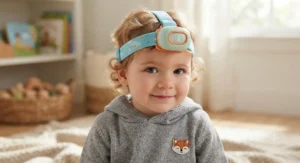
If you’re the parent of a three-year-old who’s scared of the dark hallway to the bathroom, the low-output, ultra-gentle Petzl TIKKID is built for exactly that use case — bright enough to be reassuring, dim enough not to overstimulate right before bed. Budget matters less here than eye-safety engineering, since this light will get worn constantly around the house.
If you’ve got an eight- to twelve-year-old heading into scouting or regular family camping, look at the Foxelli 180 Lumen USB-C Headlamp. At this age, kids are navigating actual trails, setting up their own tent stakes, and reading late under the covers, all of which benefit from real brightness and a longer runtime than a toddler light can offer.
If you’re managing multiple kids on a tight budget — say, three siblings ages five, seven, and nine heading to a weekend campground — the math favors the Energizer Universal+ LED Headlamp (2-Pack) paired with a spare Foxelli MX20 Headlamp, since all three run on the same AAA batteries. One spare battery pack covers the whole crew, which matters more at 10 p.m. in a dark parking lot than any single feature does.
✨ Ready to gear up the whole family? Compare these picks side by side before you check out.
What Is a Kids Headlamp?
A kids headlamp is a compact, hands-free light source worn on an adjustable strap around the head, designed with lower maximum brightness, child-safe battery access, and simplified controls compared to adult models. Most target output between roughly 20 and 200 lumens, prioritizing eye comfort at close range over long-distance throw.
The broader headlamp category has been used for hands-free lighting in mining, search and rescue, and outdoor recreation for well over a century, and the outdoor headlamp design that modern kids’ versions descend from was built around exactly the same core idea: freeing up both hands while still lighting the way forward. Kids’ versions simply dial back the intensity and add safety features like breakaway straps and screw-secured battery compartments.
How to Choose the Best Kids Headlamp
- Match brightness to age, not to marketing. A toddler doesn’t need 180 lumens; a scout-aged kid navigating real trails does. Higher lumens aren’t automatically better for younger children.
- Prioritize kid-friendly controls over feature count. A single, obvious on/off button beats five stacked modes that require memorizing a sequence in the dark.
- Check the battery format against your lifestyle. Rechargeable is convenient at home but risky on multi-day trips without power; AAA batteries are simple to restock anywhere.
- Look for a genuinely adjustable, lightweight headband. A strap that won’t tighten enough slides down over eyes constantly, which is the single most common complaint in kids’ headlamp reviews.
- Confirm there’s a red light mode. It matters more than most parents expect — see the dedicated section below.
- Verify water resistance if camping is on the agenda. An IPX4 rating or higher handles dew, rain, and spills without failing mid-trip.
- Check the battery compartment’s child-safety design. A screw-secured or tool-required closure keeps curious younger siblings from accessing batteries entirely.
Kid-Friendly Controls Matter More Than Lumens
Here’s what most buyers overlook when comparing spec sheets: a headlamp with six lighting modes sounds impressive until a seven-year-old is standing in a dark tent, mashing a single button, cycling through strobe, dim, red, and off in a panic. Reviewers consistently note that models with two dedicated buttons — one for white, one for red or off — get far less frustrated feedback than single-button, multi-cycle designs. The Foxelli MX20 Headlamp is a good example of getting this right with its separate white/red buttons.
Common Mistakes When Buying a Kids Headlamp
The single most common mistake is buying based on lumens alone, treating a headlamp like a spec race instead of a tool matched to a specific kid’s age and use case. A three-year-old blinded by an accidental full-brightness flash is a worse outcome than a slightly dimmer light that stays comfortable.
The second mistake is ignoring the strap. Reviewers across nearly every kids’ headlamp brand mention slippage as a top complaint, and it’s almost always because the buyer didn’t check whether the headband adjusts down small enough for a genuinely small head, not just a “kid-sized” marketing claim. The third mistake is skipping the battery-format question entirely — buying a rechargeable-only model for a family that camps somewhere without reliable outlet access, or vice versa, buying a battery-hungry model for a family that already juggles enough disposable batteries around the house.
Kids Headlamp vs Regular Flashlight
| Factor | Kids Headlamp | Regular Flashlight |
|---|---|---|
| Hands-free use | Yes, worn on the head | No, requires one hand |
| Bedtime/reading use | Comfortable, stays aimed | Awkward to hold steady |
| Risk of dropping | Low, strapped in place | Higher, easy to set down/lose |
| Best For | Camping, hiking, reading, hands-free tasks | Quick spot-checks, closets, cars |
The core advantage of a headlamp is obvious once you’ve watched a kid try to unzip a sleeping bag while holding a flashlight in their teeth: hands-free light simply does more for active kids. A flashlight still earns a place in a family’s gear closet for quick jobs like checking under a bed for a “monster,” but for anything involving both hands — building a tent, roasting marshmallows, or reading a bedtime book — a headlamp wins decisively.
Red Light Mode for Kids: Why It Matters
A dedicated red light mode isn’t a gimmick; it’s a genuinely useful low-light feature for kids. Red wavelengths disturb night-adapted vision far less than white light does, which is why models like the Foxelli MX20 Headlamp, Foxelli 180 Lumen USB-C Headlamp, and Energizer Universal+ LED Headlamp (2-Pack) all build it in as a standard mode. In practice, this means a kid can use the red setting for a middle-of-the-night bathroom trip in a shared tent without flooding a sleeping sibling’s face with bright white light.
The underlying mechanism comes down to how the eye adapts to darkness in the first place — the rod cells responsible for night vision are far less sensitive to red wavelengths than the cone cells used for color vision in bright light, which is well documented in eye-health literature on night vision. For a family camping trip specifically, that translates into fewer “you woke me up!” complaints and a genuinely more pleasant shared sleeping space.
Safety, Regulations & Compliance Guide
Battery safety is the area where kids’ headlamps intersect most directly with federal regulation, and it’s worth understanding as a buyer. Following Reese’s Law, U.S. regulators have pushed manufacturers toward child-resistant battery compartments — requiring either a tool like a screwdriver or coin, or at least two simultaneous hand movements, to access button or coin cell batteries in consumer products. While most kids’ headlamps use standard AAA cells rather than the smaller button batteries this rule specifically targets, the same child-safety design philosophy shows up across the category: the Petzl TIKKID‘s screw-secured compartment and the Black Diamond Wiz Kid Headlamp‘s child-safe closure both reflect this broader push toward keeping battery access difficult for small hands.
For parents buying secondhand or older headlamp models, it’s worth doing a quick check of the battery compartment before handing it to a child — a cracked latch or worn screw thread is exactly the kind of wear that regulators have specifically flagged as a hazard in products with accessible batteries. It’s a thirty-second inspection that’s worth doing every season.
Children’s Headlamp for Camping: What to Pack Alongside It
A children’s headlamp camping kit is only as good as what surrounds it. Pack at least one spare set of batteries even for rechargeable models — a backup battery-powered light, even a basic one, covers you if a charging cable gets left at home. A small dry bag or zippered pouch keeps the headlamp from getting buried at the bottom of a duffel, which matters more than it sounds once you’re digging through gear in the dark.
Consider bringing a lightweight carabiner or clip too; kids lose headlamps constantly the moment they take them off, and clipping it to a belt loop or backpack strap solves that instantly. If your trip involves shared sleeping quarters, prioritize a model with a red light mode for exactly the reasons covered above — it’s one of the more practical, low-cost upgrades to a group camping trip. For broader trip-planning context beyond gear, REI’s guide to camping with kids covers pacing, patience, and expectation-setting that pairs well with getting the gear itself right.
Lightweight Headband & Comfort: Getting the Fit Right
A lightweight headband isn’t a nice-to-have; it’s the difference between a headlamp a kid keeps wearing and one that ends up in a jacket pocket by the second night. Weight matters here more than most parents assume — models in the 2 to 3 ounce range, like the Foxelli 180 Lumen USB-C Headlamp at 2.4 ounces, disappear on a kid’s head within minutes, while heavier units start to feel noticeable after extended wear.
Adjustability range matters just as much as raw weight. A headband that only cinches down to an adult “small” setting will still slide over a five-year-old’s ears. Look specifically for stretch-fit or multi-point adjustable straps, and when possible, have your child try it on in the store or immediately after unboxing rather than assuming a stated size range will fit.
Youth Headlamp Features That Actually Matter (And Those That Don’t)
Once kids age into the “youth headlamp” category — roughly eight and up — the feature list expands, and not every addition is worth paying for. What actually matters: genuine water resistance (IPX4 or better), a runtime long enough to cover an evening without a mid-hike recharge, and a beam angle that tilts, so the light can be aimed down at a trail instead of straight ahead into a tree line. What doesn’t matter nearly as much: extreme lumen counts far beyond what a kid’s activities require, or elaborate multi-color light shows that drain battery faster without adding functional value on an actual hike.
Fun Headlamp Kids Actually Want to Wear
Function only works if a kid is willing to put the thing on their head in the first place. This is where a fun headlamp kids specifically respond to — like the color-cycling EverBrite RGB Kids Headlamp or the character-driven EverBrite Kids Dragon Headlamp — earns its place on this list despite lower raw brightness than the trail-focused options. A technically superior headlamp that stays in a drawer helps nobody; a “good enough” one a kid actually wears every night is the better real-world outcome.
✨ Don’t Miss These Exclusive Deals!
🔍 Take movie nights, campouts, and backyard adventures to the next level with these carefully selected headlamps. Click on any highlighted pick above to check current pricing and availability, and give your family the bright, safe, genuinely fun nights they’ll actually remember.
FAQ
❓ What lumens are safe for a kids headlamp?
❓ Is a rechargeable or battery-powered kids headlamp better?
❓ At what age can a child start using a headlamp?
❓ Why does a kids headlamp need a red light mode?
❓ How do I stop my kid's headlamp strap from sliding down?
Conclusion
There isn’t one single best kids headlamp, and honestly, that’s the useful takeaway here. A toddler heading to bed needs the restrained, eye-safe glow of the Petzl TIKKID. A family juggling three kids on a tight budget is better served by the Energizer Universal+ LED Headlamp (2-Pack) paired with a spare Foxelli MX20 Headlamp. A scout-aged kid actually navigating trail terrain after dark needs the real output of the Foxelli 180 Lumen USB-C Headlamp. And a reluctant three-year-old who simply refuses to wear anything that isn’t shaped like a dragon has a perfectly legitimate answer waiting in the EverBrite Kids Dragon Headlamp.
What matters most across every option on this list is matching brightness and controls to your child’s actual age and use case, not chasing the highest lumen count on the shelf. Get that part right, and the rest — color, character, price — is just personal preference. Whichever one ends up strapped to a small, excited forehead this weekend, it’s a genuinely good problem to have.
Recommended for You
- Child Carrier Backpack for Hiking: 7 Best Picks for 2026
- Kids Hiking Boots 2026: 7 Top Picks Parents Actually Trust
- 7 Best kids hiking backpack Picks Parents Actually Love (2026)
Disclaimer: This article contains affiliate links. As an Amazon Associate, I earn from qualifying purchases. If you purchase products through these links, we may earn a small commission at no additional cost to you.
✨ Found this helpful? Share it with your friends! 💬🤗
