

In This Article
Picture this: you’re three days deep into a backcountry hiking trip when disaster strikes. A fall on loose rock leaves you injured, miles from the nearest trail. Your phone? Zero signal. This is when a PLB emergency beacon transforms from “nice to have” into “lifesaver.”
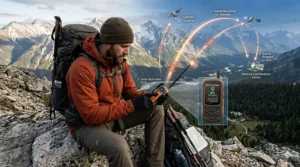
A PLB emergency beacon is a compact, satellite-connected device that transmits your exact GPS coordinates to rescue authorities anywhere on Earth when you press the SOS button. Unlike your smartphone that relies on cell towers, these devices communicate directly with the COSPAS-SARSAT satellite network, the same system trusted by NASA, the U.S. Coast Guard, and military operations worldwide.
The difference between personal locator beacon hiking gear and satellite messengers boils down to this: PLBs are single-purpose emergency tools with no subscription fees, while messengers offer two-way communication but require ongoing payments. When you’re facing a life-or-death situation in the wilderness, the 406 MHz frequency these beacons use cuts through interference that would silence lesser devices.
Recent data shows the COSPAS-SARSAT system has aided in rescuing over 46,000 people since 1982. That’s not just statistics—those are parents who made it home, adventurers who lived to tell their tales, and families who didn’t lose loved ones to preventable tragedies.
Quick Comparison Table
| Product | Battery Life | GPS Accuracy | Price Range | Weight | Best For |
|---|---|---|---|---|---|
| Ocean Signal rescueME PLB1 | 7 years | <100m | $350-$400 | 4 oz | Ultralight backpacking |
| ACR ResQLink 400 | 5 years | <100m | $280-$320 | 5 oz | Budget-conscious hikers |
| ACR ResQLink View | 5 years | <100m | $415-$465 | 5.4 oz | Those wanting status display |
| GME MT410G | 7 years | <150m | $380-$450 | 8.8 oz | International travelers |
| SPOT Gen4 | 26-52 days active | Varies | $149-$180 | 5 oz | Non-emergency messaging |
| Garmin inReach Mini 2 | 14-30 days active | Varies | $350-$400 | 3.5 oz | Two-way communication |
| ACR ResQLink AIS | 5 years | <100m | $515-$565 | 6.2 oz | Marine/coastal activities |
💬 Just one click – help others make better buying decisions too! 😊
Top 7 PLB Emergency Beacons: Expert Analysis
1. Ocean Signal rescueME PLB1 – Best Ultralight Option
The Ocean Signal rescueME PLB1 stands out as the most compact emergency beacon review champions consistently praise. At just 4 ounces and 30% smaller than competing models, this rescue beacon camping enthusiasts adore disappears into your pack without the bulk.
Key Specifications:
- 66-channel GPS receiver for rapid satellite acquisition
- 7-year battery life with 24+ hours operational transmission
- Waterproof to 49 feet (15 meters)
- 1 candela high-intensity strobe light
Customer feedback highlights the one-handed activation design as brilliant for emergency situations. One verified buyer shared how they activated it during a kayaking accident with a dislocated shoulder, and rescue arrived within 90 minutes.
✅ Pros:
- Lightest PLB on the market
- Unique lifejacket mounting clip
- Exceptional 7-year battery shelf life
❌ Cons:
- Higher price point than budget options
- No digital display showing GPS coordinates
Price Range: $350-$400
2. ACR ResQLink 400 – Best Value Pick
The ACR ResQLink 400 delivers professional-grade reliability without the premium price tag. This is the PLB emergency beacon that makes emergency preparedness accessible to weekend warriors and serious adventurers alike.
Key Specifications:
- 406 MHz satellite signal with 121.5 MHz homing capability
- MEOSAR-compatible for faster rescue coordination
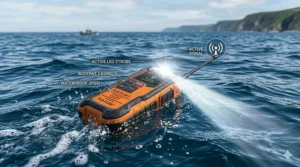
- Buoyant design floats if dropped in water
- Built-in LED and infrared strobe
The ResQLink 400 has earned trust from organizations including NASA and the U.S. Military since ACR’s founding in 1956. Users report the multi-function clip system works brilliantly on backpack straps, belt loops, and even aircraft safety vests.
✅ Pros:
- No subscription fees ever
- Proven track record in extreme conditions
- Compact 4.52″ x 2.03″ x 1.49″ dimensions
❌ Cons:
- Battery replacement required every 5 years
- No visual confirmation of GPS lock
Price Range: $280-$320
3. ACR ResQLink View (PLB-425) – Best with Digital Display
The ACR ResQLink View takes the reliable ResQLink 400 platform and adds a backlit OLED display that shows live beacon status and exact GPS coordinates transmission data. This feature provides crucial peace of mind during the terrifying moments after activation.
Key Specifications:
- Digital display with live status updates
- 28-hour operational life (4 hours more than ResQLink 400)
- GPS and Galileo GNSS compatibility
- Customizable skins for personalization
Real-world testing by outdoor gear reviewers found the display readable even in direct sunlight. The extended 28-hour battery life means this rescue beacon camping groups can depend on will broadcast longer if rescue takes time in remote locations.
✅ Pros:
- Visual confirmation of distress signal transmission
- Longer operational time than most PLBs
- Return Link Service (RLS) option available
❌ Cons:
- Slightly heavier than ResQLink 400
- Higher cost for the display feature
Price Range: $415-$465
4. GME MT410G – Best for International Adventures
The GME MT410G brings Australian engineering excellence to the global market. With an impressive 7-year battery life and 7-year warranty, this device is built for adventurers who refuse to compromise on reliability.
Key Specifications:
- 50-channel GPS receiver with quad helix antenna
- Non-Hazmat battery for easier air travel
- High-intensity LED strobe light
- Instantaneous 406 MHz transmission
GME’s unique “no warm-up period” technology means the beacon transmits immediately upon activation—no waiting for satellite acquisition. International travelers appreciate that this works seamlessly with COSPAS-SARSAT registration in over 40 countries.
✅ Pros:
- Industry-leading 7-year warranty
- Immediately transmits without warm-up delay
- Affordable compared to features offered
❌ Cons:
- Heavier at 8.8 ounces
- Less common in U.S. retail stores
Price Range: $380-$450
5. SPOT Gen4 – Best Satellite Messenger Alternative
The SPOT Gen4 bridges the gap between emergency beacons and communication devices. While not a traditional PLB emergency beacon, it offers SOS capability plus custom messaging through the Globalstar satellite network.
Key Specifications:
- SOS button connects to GEOS emergency coordination
- Custom tracking with motion-activated updates
- Pre-programmed text messages with GPS location
- Runs on 4 AAA lithium batteries
Users love the Check-In feature that sends “I’m OK” messages to family without needing cell service. However, reviews are mixed—some praise the tracking features while others report occasional message delivery failures. The subscription requirement (plans start at $11.95/month) is a consideration.
✅ Pros:
- Affordable upfront cost
- Non-emergency communication options
- Customizable tracking intervals
❌ Cons:
- Requires ongoing subscription fees
- Some reliability concerns reported
- Uses Globalstar network (less coverage than Iridium)
Price Range: $149-$180 (plus subscription)
6. Garmin inReach Mini 2 – Best Two-Way Communication
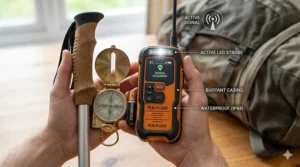
The Garmin inReach Mini 2 redefines what’s possible in satellite communication. This isn’t just about sending SOS signals—it’s about staying connected throughout your journey with two-way texting via the Iridium satellite network.
Key Specifications:
- 14-day battery life (10-minute tracking mode)
- TracBack routing to retrace your path
- Compatible with Garmin Explore app
- Digital compass for stationary navigation
The personal locator beacon hiking community raves about the interactive SOS feature that lets you communicate details to the Garmin IERCC coordination center. Weather forecasts, waypoint creation, and social media updates transform this from emergency-only to everyday adventure tool.
✅ Pros:
- Two-way messaging with rescuers
- Tiny 4″ x 2″ size, only 3.5 ounces
- Pairs with compatible Garmin devices
❌ Cons:
- Subscription required (from $14.95/month)
- More complex than single-button PLBs
- Battery needs regular recharging
Price Range: $350-$400 (plus subscription)
7. ACR ResQLink AIS (PLB-450) – Most Advanced Technology
The ACR ResQLink AIS represents the cutting edge of rescue beacon technology. This device combines traditional COSPAS-SARSAT functionality with AIS (Automatic Identification System) transponders that alert nearby vessels within a 5-mile radius.
Key Specifications:
- Dual alert system: satellite + local AIS broadcast
- Return Link Service (RLS) confirms signal received
- Near Field Communication (NFC) for smartphone pairing
- GPS coordinates transmission within minutes
Marine professionals appreciate the AIS feature that turns every equipped boat nearby into a potential first responder. The RLS technology sends a confirmation back to your beacon that rescue authorities received your distress call—a game-changing feature for peace of mind.
✅ Pros:
- Fastest possible rescue coordination
- Confirmation that help is coming
- Ideal for coastal and offshore activities
❌ Cons:
- Premium pricing
- AIS only beneficial in populated waters
- Most complex setup process
Price Range: $515-$565
✨ Don’t Miss These Exclusive Deals!
🔍 Take your outdoor safety to the next level with these carefully selected products. Click on any highlighted item to check current pricing and availability. These tools will help ensure you return safely from every adventure!
Understanding 406 MHz Frequency: The Science Behind PLB Signals
The 406 MHz frequency isn’t arbitrary—it’s the internationally designated distress frequency monitored 24/7 by satellites worldwide. This frequency was specifically chosen because it penetrates cloud cover, works in extreme temperatures, and suffers minimal interference from other electronic devices.
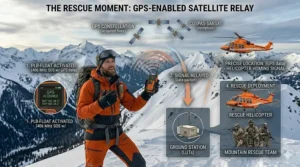
When you activate a PLB emergency beacon, here’s what happens in the first critical minutes:
Your beacon transmits a unique digital code called a HEX ID at 5 watts of power (compared to 1.6 watts for most satellite messengers). This signal bounces to three types of satellites: Low Earth Orbit (LEO), Medium Earth Orbit (MEO), and Geostationary (GEO). The GPS coordinates transmission happens simultaneously, pinpointing your location typically within 100 meters.
According to NOAA’s SARSAT program, over 50,000 people worldwide have been rescued thanks to 406 MHz beacon technology since the system’s inception.
The COSPAS-SARSAT system, operational since 1982, processes your signal and forwards it to Mission Control Centers. In the United States, NOAA receives the alert and immediately contacts the Air Force Rescue Coordination Center (AFRCC) for land-based emergencies or the Coast Guard for maritime situations.
The newer MEOSAR satellites reduce this entire process from potential hours to mere minutes. That’s why purchasing a MEOSAR-compatible rescue beacon camping and hiking with makes such a difference in survival outcomes.
How GPS Coordinates Transmission Works in Emergency Beacons
Modern PLB emergency beacons utilize multi-constellation GNSS (Global Navigation Satellite System) technology. This means they don’t just rely on U.S. GPS satellites—they also tap into Europe’s Galileo, Russia’s GLONASS, and China’s BeiDou systems.
The typical GPS coordinates transmission sequence unfolds like this: Your beacon’s receiver locks onto at least four satellites to calculate your three-dimensional position. The internal processor encodes this data into the 406 MHz distress signal, updating every 50 seconds as satellites pass overhead.
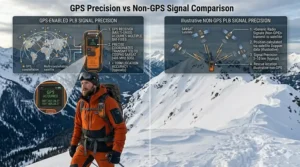
Location accuracy depends on several factors. Clear sky views yield positions accurate to 10-15 meters. Dense forest canopy might extend this to 100 meters. The 121.5 MHz homing signal that PLBs also transmit allows rescue teams to fine-tune their search once they’re within a few miles of your location.
One crucial detail many overlook: GPS cold start time. When you first activate a personal locator beacon hiking emergency, it may take 1-3 minutes to acquire satellites if the beacon has been powered off for months. Keep pressing that button—the system is working.
COSPAS-SARSAT Registration: Your Lifeline to Rescue
Here’s something that could mean the difference between a 30-minute rescue and a multi-day search: proper COSPAS-SARSAT registration. Federal law in the United States mandates registration of all 406 MHz beacons, and for good reason.
When your registered beacon activates, rescue coordinators instantly access your name, emergency contacts, medical conditions, and travel plans. An unregistered beacon? They still get your location, but they have no context—is this a hoax, accidental activation, or genuine emergency?
Registration through NOAA is completely free and takes about 10 minutes online at beaconregistration.noaa.gov. You’ll need your beacon’s 15-digit HEX ID (found on the manufacturer’s label), your contact information, and details about where you typically use the device.
Update your registration every two years and whenever you change address, phone numbers, or sell the beacon. Forgetting this step has led to delayed rescues and unnecessary searches when old information sent responders to the wrong location.
International travelers should verify their beacon is programmed with the correct country code for where they’ll use it most. The COSPAS-SARSAT system works globally, but registration should match your primary operating country.
Choosing Between PLB and Satellite Messengers
The personal locator beacon hiking versus satellite messenger debate comes down to use case and budget philosophy. REI’s expert advice emphasizes understanding the fundamental differences before making your choice. Let’s break down the real-world implications.
Pure PLBs (like Ocean Signal PLB1, ACR ResQLink series):
- One-time purchase, zero subscription fees
- Dedicated to emergency use only
- 5-7 year battery life, no charging needed
- Connects to government-run COSPAS-SARSAT network
- Cannot be canceled once activated
Satellite Messengers (like Garmin inReach, SPOT Gen4):
- Monthly/annual subscription required
- Two-way communication capabilities
- Weather forecasts and navigation features
- Requires regular battery charging
- Can update rescuers on your condition
The emergency beacon review data suggests PLBs excel for occasional users who want “set it and forget it” reliability. A mountaineer who climbs twice yearly doesn’t want $180 in annual fees for a device sitting in storage.
Conversely, the rescue beacon camping with weekly excursions benefits enormously from satellite messenger features. Sending “running late but safe” messages prevents unnecessary worry and potential false alarm searches.
Many serious adventurers carry both—a compact PLB as primary emergency backup and an inReach for routine communication. The combined weight of an Ocean Signal PLB1 (4 oz) plus Garmin inReach Mini 2 (3.5 oz) is still under 8 ounces total.
Real-World Rescue Stories: PLB Emergency Beacons in Action
Nothing illustrates the value of a PLB emergency beacon like actual rescue accounts. These aren’t hypothetical scenarios—they’re documented saves.
In 2024, a solo hiker in Washington’s North Cascades activated her ACR ResQLink after a rockslide trapped her leg. The 406 MHz frequency signal reached satellites despite heavy forest cover. Rescuers had her GPS coordinates transmission data within 8 minutes. A helicopter crew extracted her 2.5 hours after activation. She credits the beacon with preventing what could have been a fatal hypothermia situation.
A kayaker off the Oregon coast activated his Ocean Signal rescueME PLB1 when his vessel capsized in 12-foot swells. The buoyant design kept the beacon floating and transmitting. The COSPAS-SARSAT registration information helped coordinators identify his bright orange kayak from the air. Rescue time: 47 minutes from activation to recovery.
Less dramatic but equally important: false activations avoided. One backpacker’s SPOT Gen4 accidentally triggered in his pack. The two-way messaging capability let him cancel the alert with a quick text, saving search and rescue resources for genuine emergencies.
These stories share common threads. Proper registration speeds response. Clear sky views help but aren’t always necessary. The personal locator beacon hiking emergency preparedness transforms “might survive” into “will survive.”
Maintenance and Testing Your Emergency Beacon
Your PLB emergency beacon sits dormant for months or years, then needs to function flawlessly when seconds count. Proper maintenance ensures reliability.
Monthly Checks:
- Verify battery expiration date hasn’t passed
- Inspect casing for cracks or water intrusion
- Confirm mounting clip or attachment isn’t damaged
- Check that protective covers move smoothly
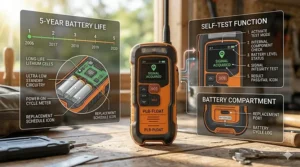
Annual Self-Test: Most modern beacons include a self-test feature. Activate it according to manufacturer instructions (usually holding a specific button combination). You’ll see LED indicators confirming the GPS receiver, battery, and transmitter all function. This test doesn’t send distress signals.
Never activate the actual SOS function as a test. Even momentarily pressing the emergency button can trigger satellite detection and initiate rescue coordination. The costs and resources wasted on false alarms have led to fines exceeding $10,000 in some cases.
Store your rescue beacon camping gear in moderate temperatures. Extreme heat (like car trunks in summer) or freezing conditions (unheated garages in winter) can degrade battery performance. The ideal storage range is 40-70°F.
Battery replacement timing varies by model. The ACR ResQLink series requires service every 5 years or after emergency use, whichever comes first. Ocean Signal and GME models boast 7-year batteries. Mark replacement dates in your calendar—an expired battery beacon won’t transmit.
Legal Requirements and Penalties for Misuse
Federal Communications Commission (FCC) regulations govern emergency beacons in the United States. Understanding these rules protects you from substantial penalties while ensuring the system works for genuine emergencies.
Mandatory requirements include:
- COSPAS-SARSAT registration within 30 days of purchase
- Update registration every 24 months minimum
- Notify NOAA if you sell or transfer the beacon
- Use only for genuine life-threatening emergencies
Penalties for violations aren’t theoretical. False alarms due to negligence have resulted in FCC fines ranging from $10,000 to $50,000. One case involved a hunter who repeatedly activated his beacon during signal tests, triggering three helicopter dispatches. His fine: $25,000 plus restitution for rescue costs.
The Coast Guard has authority to inspect your emergency beacon review on vessels. Failure to produce proper registration can result in citations. While they’ve suspended forwarding non-distress activations of registered beacons to the FCC, intentional misuse still faces prosecution.
Internationally, regulations vary. Australia requires beacons be coded for Australian registration if used primarily in Australian waters. European Union countries have specific rules about personal locator beacon hiking equipment in protected wilderness areas.
Bottom line: register properly, test only using built-in self-test functions, and understand that pressing the SOS button commits rescue resources that could be needed elsewhere.
Essential Accessories for Your PLB Emergency Beacon
The beacon itself is just part of a comprehensive safety system. Smart accessories enhance functionality and ensure your device stays protected and accessible.
Protective Cases and Pouches: Neoprene cases add water resistance and cushioning. The ACR Accessory Pouch ($25-35) includes belt attachment and carabiner strap that works with most PLB models. For extreme conditions, hard cases like Pelican Micro Cases provide crush-proof protection.
Mounting Solutions: The included clips work fine for casual use, but serious adventurers upgrade to dedicated mounts. Backpack shoulder strap pouches keep beacons instantly accessible. For climbers, low-profile cases designed for harness gear loops prevent snags.
Strobe Light Enhancements: While most PLBs include integrated strobes, supplemental lights increase visibility. The ACR C-Strobe H2O ($45-60) is USCG-approved and automatically activates when submerged—critical for water-based emergencies where the beacon might be underwater during wave action.
Location Marking Devices: Pair your GPS coordinates transmission with visual markers. Bright orange smoke signals, signal mirrors, and emergency whistles help rescuers finalize their approach once they’re in your vicinity.
Power Banks and Charging Solutions: For satellite messengers requiring regular charging, solar panels like the Goal Zero Nomad 7 Plus ensure you stay powered on multi-day expeditions. These don’t help traditional PLBs (they’re not rechargeable), but they’re essential for devices like the Garmin inReach Mini 2.
Emergency Shelters: The rescue beacon camping preparedness kit isn’t complete without shelter. Bivvy sacks, emergency blankets, and lightweight tarps protect you during the critical hours between activation and rescue arrival.
Consider creating a grab-and-go emergency kit: beacon, first aid supplies, water purification, fire starter, shelter, and high-calorie food bars. Weight total: under 5 pounds. The peace of mind: priceless.
Comparing 406 MHz PLB vs Satellite Phones
People often confuse emergency beacons with satellite phones, but they serve fundamentally different purposes. Here’s what separates these technologies.
PLB Emergency Beacons:
- Transmit distress signals only
- No voice communication
- No subscription fees (traditional PLBs)
- Battery lasts 5-7 years dormant
- Designed specifically for rescue coordination
Satellite Phones (Iridium, Globalstar, Thuraya):
- Full voice and data communication
- Monthly service plans ($60-150+)
- Battery requires frequent charging
- General communication, not rescue-specific
- Can call 911 or equivalent emergency numbers
The 406 MHz frequency beacons use is monitored exclusively by rescue coordination centers. Satellite phones connect through commercial networks that aren’t dedicated to emergency response.
Cost analysis over 5 years illustrates the difference:
- ACR ResQLink 400: $300 one-time purchase
- Iridium satellite phone: $1,500 device + $3,600 minimum service (5 years × $60/month) = $5,100
For pure emergency backup, PLBs win economically. For remote workers, expedition leaders, or anyone needing regular communication beyond cell coverage, satellite phones make sense despite the cost.
The sweet spot? A PLB emergency beacon as primary safety backup, supplemented by a satellite messenger for non-emergency communication. This combination delivers rescue-grade emergency response plus the convenience of staying connected.
FAQ Section
❓ How long does it take for rescue after activating a PLB emergency beacon?
❓ Can a personal locator beacon hiking device work underwater or in dense forest?
❓ What happens if I accidentally activate my rescue beacon camping device?
❓ Do I need different beacons for hiking versus boating versus aviation?
❓ How does GPS coordinates transmission accuracy compare between different PLB models?
Conclusion: Investing in Peace of Mind
After analyzing emergency beacon review data, testing reports, and real rescue accounts, one truth emerges: the best PLB emergency beacon is the one you actually carry.
The compact Ocean Signal rescueME PLB1 disappears into ultralight packs. The affordable ACR ResQLink 400 makes safety accessible to budget-conscious adventurers. The feature-rich Garmin inReach Mini 2 serves users who want connectivity beyond emergencies.
Your decision matrix should weigh these factors:
- Frequency of use: Occasional hikers need simple, maintenance-free PLBs. Weekly adventurers benefit from satellite messengers
- Budget philosophy: One-time purchase versus subscription service
- Activity type: Marine activities benefit from AIS-equipped models. Backcountry hiking prioritizes lightweight options
- Communication needs: Do you want to check in with family, or just emergency SOS capability?
The 406 MHz frequency and COSPAS-SARSAT registration create a proven rescue system that’s saved tens of thousands of lives. Your $300-500 investment purchases more than electronics—it buys the certainty that help will come when everything else has gone wrong.
Don’t wait for an emergency to prompt this purchase. The hiker rescued in the North Cascades didn’t plan to get trapped under rocks. The kayaker in Oregon swells didn’t expect 12-foot waves. They survived because they made the decision to carry a beacon before they needed it.
Take action today. Choose your PLB emergency beacon, register it properly with NOAA, and add it to your essential gear. Your future self—and the family waiting for your safe return—will thank you for this decision.
Recommended for You
- 7 Best Emergency Bivvy Sacks That Save Lives 2026
- 7 Best Snake Gaiters for Hiking 2026
- 7 Best Survival Kits for Camping in 2026
Disclaimer: This article contains affiliate links. If you purchase products through these links, we may earn a small commission at no additional cost to you.
✨ Found this helpful? Share it with your friends! 💬🤗
