
In This Article
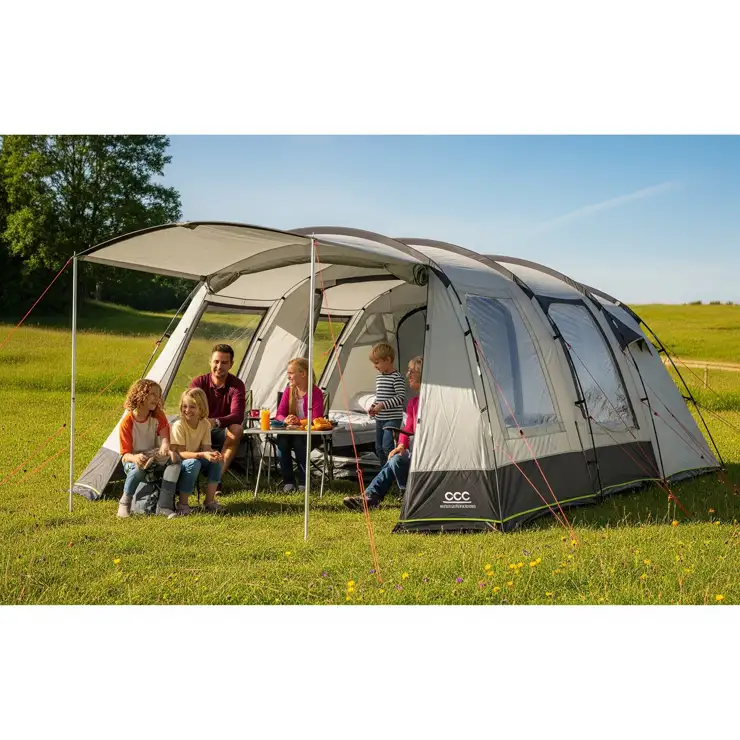
Picture it: rain drumming on the fly, two kids arguing about whose elbow is where, a dog who has decided your sleeping bag is his sleeping bag. This is the moment you find out whether you bought the best tent 8 person campers can get, or a polyester lie with a nice label.
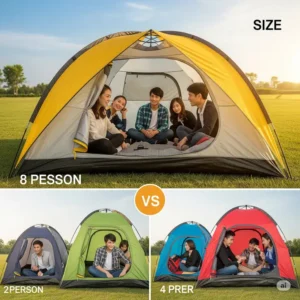
So what is an 8 person tent? It’s a large car-camping shelter, usually a cabin, dome, or hybrid design, rated to sleep eight people shoulder to shoulder. Real-world comfort is closer to four to six people plus gear. That’s why many buyers treat the 8 person tent as the “family of four, with breathing room” size.
Here’s the honest truth about capacity. A tent’s number is a packing-density claim, not a comfort promise. Add air mattresses, duffels, and one wet-weather pile of boots, and the usable headcount drops fast. A common rule from outdoor retailers is to size up, so a family of four often lands on an 8 person tent. REI’s family camping tent guide frames four-plus sleepers as the “family or base camp” category, where weight matters far less than livability.
This guide is built from published spec sheets, independent review roundups, and aggregated buyer feedback. I haven’t personally slept in these tents, so you won’t get invented campfire anecdotes here. You will get honest analysis of seven real options, what their specs mean at 2 a.m., and how to match a tent to your crew.
Quick Comparison: Best Tent 8 Person Picks at a Glance
Before the deep dive, here’s the cheat sheet. Prices are ranges at the time of research and may vary, so check current price before buying.
| Tent | Style | Standout Trait | Price Range | Best For |
|---|---|---|---|---|
| CORE 9 Person Instant Cabin | Instant cabin | Fastest setup | $200-$300 range | Best for impatient campers |
| Eureka Copper Canyon LX8 | Cabin | Tall walls, roomy interior | Premium, $400+ range | Best for serious weather |
| NEMO Wagontop 8 | Hybrid wagon-top | Group-friendly layout | Premium, $450+ range | Best for big groups |
| Coleman 8-Person Dark Room Skydome | Dome | Darkened sleeping space | $250-$300 range | Best for light sleepers |
| CAMPROS CP 8 Person | Cabin-style | Two-room divider | $130-$200 range | Best for value seekers |
| Ozark Trail 8-Person Modified Dome | Modified dome | Cheapest entry point | $110-$150 range | Best for occasional campers |
| Coleman 8-Person Montana Cabin | Cabin | Hinged door, mesh roof | $160-$250 range | Best for warm-weather trips |
Looking at the table, the CAMPROS CP 8 Person and Ozark Trail 8-Person Modified Dome dominate on price, while the Eureka Copper Canyon LX8 and NEMO Wagontop 8 charge a premium for weather performance. The CORE 9 Person Instant Cabin sits in the middle on money but wins on convenience. If you camp three or four times a summer, the mid-range picks usually deliver the most value per night.
💬 Just one click — help others make better buying decisions too!😊
Top 7 Best Tent 8 Person Options: Expert Analysis
1. CORE 9 Person Instant Cabin Tent — fastest setup of the group
The pitch is simple: pre-attached poles and a pop-and-lock frame mean the shelter goes up in minutes, not an hour of pole Tetris. Listings and reviewer roundups cite roughly two-minute setup, which is plausible for an instant cabin but will stretch on windy days.
On paper, it’s a 14 x 9 foot footprint with a center height around 78 inches, and the listings say it fits two queen mattresses. That height means most adults can stand and change clothes without doing the camp-chair-yoga shuffle. The waterproof rating cited is around 1,200mm, which is respectable for fair-weather and light-rain camping, but not storm-proof territory.
Who is it for? Anyone whose idea of “roughing it” includes minimal fuss: new campers, parents managing wiggly kids, or groups arriving at camp after dark. Reviewer sentiment, as aggregated across retailer and review-site listings, trends strongly positive on ease of setup. The most common caution is that instant frames are heavier and bulkier than dome tents, so you’re trading trunk space for convenience.
Pros:
- ✅ Genuinely fast setup with pre-attached frame
- ✅ Tall walls and standing room throughout
- ✅ Fits two queen air mattresses comfortably
Cons:
- ❌ Heavy and bulky when packed
- ❌ Waterproofing is average for serious storms
Price range: roughly $200-$300 range depending on the listing; verdict, strong value if speed matters more than storm armor.
2. Eureka Copper Canyon LX8 — best overall for real weather
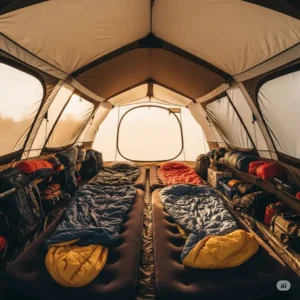
If the best tent 8 person shortlist were a Formula 1 grid, this would be pole position. Outdoor Life ranked it best overall after putting several 8-person tents through wind and rain testing, including conditions where one competitor’s poles broke and another leaked.
The design is a tall-walled cabin, which turns floor space into usable living space. Steep walls mean you can arrange cots, bins, and a camp table without everything migrating to the center. The main spec trade-off, per that same testing, is rainfly handling: one tester could pitch the body solo but needed a taller helper to get the fly on. Translation: bring a second adult.
Sentiment across published reviews favors its sturdiness and roominess; the recurring knock is price and pitching effort. This is a tent for people who camp often, hit shoulder-season weather, and want a shelter that feels like a rented cabin.
Pros:
- ✅ Top-ranked in independent wind and rain testing
- ✅ Tall walls maximize usable interior space
- ✅ Built for repeat, multi-season car camping
Cons:
- ❌ Rainfly typically needs two people
- ❌ Premium price versus budget cabins
Price range: premium, well above $400; check current price. Verdict: worth it if you camp often, overkill for twice-a-year trips.
3. NEMO Wagontop 8 — most group-friendly layout
NEMO’s “wagon top” shape is basically a dome that went to the gym: a long ridge with steeper walls that stretches headroom across more of the floor. Outdoor Life named it best for groups, and the design logic backs that up.
The listed materials are 75D polyester with a 1,500mm rating on the canopy and a heavier 300D floor, also rated 1,500mm. That’s modest on paper, but NEMO pairs it with adjustable window and door configurations, so you can open it wide for summer or battened down for cool, damp nights. Ventilation flexibility is the underrated spec here, because condensation is what actually soaks tents from the inside.
If your “eight” includes teenagers, friends, and cousins who all demand personal space, this layout handles bodies better than a plain dome. Reviewers emphasize the group-friendly interior, though premium pricing is the usual hesitation.
Pros:
- ✅ Wagon-top shape adds headroom across the floor
- ✅ Flexible window and door ventilation options
- ✅ Strong fit for larger, mixed-age groups
Cons:
- ❌ Premium price tier
- ❌ Waterproof ratings are average on paper
Price range: premium, $450+ range. Verdict: best for groups who’ll use it repeatedly.
4. Coleman 8-Person Dark Room Skydome — best for light sleepers
Sunrise at 5:40 a.m. is the natural enemy of every camping parent. Dark Room fabric is Coleman’s answer, designed to cut interior brightness so kids (and adults) sleep past dawn.
The Skydome platform is a freestanding dome, and Coleman’s spec page lists a roughly 12 x 9 foot floor, a weight around 19 pounds, and sub-five-minute setup thanks to pre-attached poles. Honest analysis: a dome sheds wind better than a boxy cabin, but you’ll lose some sidewall headroom. The product line is rated three-season, so treat it as spring-through-fall.
Retailer listings show ratings around 4.1 stars, with reviewers praising the darkness effect and easy pitching. Recurring complaints involve modest ventilation and the “8 person” label running optimistic. It’s a smart pick for sleep quality over square footage.
Pros:
- ✅ Darkened interior for sleeping in
- ✅ Pre-attached poles speed up pitching
- ✅ Dome shape handles breezy campsites
Cons:
- ❌ Less sidewall headroom than cabins
- ❌ Capacity feels generous for eight adults
Price range: around the $250-$300 range. Verdict: pay for darkness if sleep is your top priority.
5. CAMPROS CP 8 Person Tent — best value two-room layout
Here’s the quiet overachiever. CAMPROS has become a recurring name on value-focused roundups, and the specs explain why: about 126 square feet of floor, 72 inches of center height, color-coded poles, a full rainfly, and a removable room divider.
That divider is the real feature. It splits the tent into two sleeping zones, giving parents a (thin) fabric wall of privacy from kids. Color-coded poles cut the “which one goes where?” confusion, and reviewers commonly cite roughly five-minute setup with two people.
Aggregated sentiment skews positive for the money: reviewers like the space and quick pitching, while the common caution is that budget zippers and stakes won’t last forever. Swap in sturdier stakes and treat the seams, and this tent punches above its price tag.
Pros:
- ✅ Removable divider creates two rooms
- ✅ Color-coded poles speed up setup
- ✅ Roomy for the price tier
Cons:
- ❌ Included stakes and zippers feel budget-grade
- ❌ Smaller review history than legacy brands
Price range: roughly $130-$200 range depending on listing. Verdict: the smartest budget-to-mid pick for most families.
6. Ozark Trail 8-Person Modified Dome Tent — cheapest way in
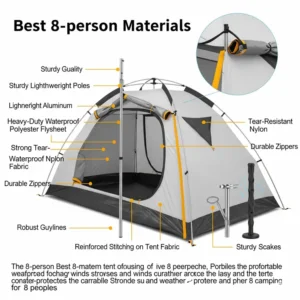
Ozark Trail is the “let’s see if we even like camping” option. Specs from comparison listings show about 128 square feet of floor, a weight near 17.6 pounds, five extra-large windows, and a removable center divider. It reportedly fits two queen mattresses, which is impressive at this price.
Now the reality check. It’s rated three-season, the warranty is short, and testers flagged flimsy steel stakes and a tendency to collapse without guylines. Translation: it’s a calm-weather tent. Stake it properly, use every guyline, and don’t expect it to laugh at storms.
Comparison scoring placed it in the mid-six range out of ten, with value as its high point. For occasional campers and backyard sleepovers, that’s a fair trade.
Pros:
- ✅ Lowest price among 8-person options here
- ✅ Two-queen capacity with a divider
- ✅ Five large windows for airflow
Cons:
- ❌ Flimsy included stakes
- ❌ Needs guylines for stability in wind
Price range: around $110-$150. Verdict: perfect starter tent, not a forever tent.
7. Coleman 8-Person Montana Cabin Tent — best for warm-weather comfort
The Montana is a classic: a cabin-style shelter with a hinged door (no more fighting a zipper at midnight) and a mesh roof panel for stargazing and airflow. It has been named best overall on at least one buyer’s guide, and retailer ratings hover around four stars.
The mesh roof is a double-edged feature. It makes summer nights lovely and keeps condensation down, but it’s less ideal for cold, damp trips. Coleman’s reputation for weather-sealed seams helps, though reviewers sometimes report the tent feeling smaller than the label suggests.
The hinged door deserves its fan club. Anyone who’s wrestled a zipper snagged on mesh will understand. Pair it with a ground tarp and seam sealer for long-term durability.
Pros:
- ✅ Hinged door is easy to use with kids
- ✅ Mesh roof boosts summer ventilation
- ✅ Familiar brand with broad parts support
Cons:
- ❌ Some buyers find interior smaller than expected
- ❌ Less ideal for cold, damp conditions
Price range: roughly $160-$250 range. Verdict: great for July, less for October.
How to Set Up Your 8 Person Tent: A First-Trip Playbook
An 8 person tent rewards preparation. Think of the first pitch as a dress rehearsal, not a performance.
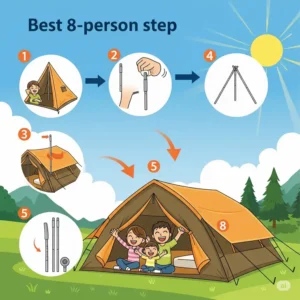
Pitch it at home first. A backyard trial run reveals missing stakes, confusing pole sleeves, and who in your family is best at holding things steady. Do it once in daylight, and the real campsite will feel easy.
Pick the site like a real estate agent. Look for flat ground, natural drainage, and shade for hot days. Clear sticks and pinecones, then lay a footprint or tarp slightly smaller than the floor so rain doesn’t pool between tarp and tent.
Follow a repeatable sequence:
- Lay out the footprint and floor.
- Assemble poles and thread them through sleeves or clips.
- Raise the frame with a partner on each side.
- Stake the corners first, then the walls.
- Add the rainfly, tensioning each guyline.
First-30-day mistakes to avoid: skipping guylines, leaving the tent packed damp, and forcing zippers (which is how zippers die). For the Ozark Trail 8-Person Modified Dome Tent specifically, guylines aren’t optional. For the Eureka Copper Canyon LX8, recruit a taller helper for the fly.
Real-World Scenarios: Which 8 Person Tent Fits Your Crew
Specs are abstract. Families are not. Here are three profiles and the tents that match them.
Scenario 1: The weekend-warrior family of five. Two adults, three kids, one dog, six summer weekends at state parks. Budget is moderate, patience is low. The CORE 9 Person Instant Cabin Tent wins on speed, while the CAMPROS CP 8 Person Tent wins on price and divider privacy. If the kids are light sleepers, the Coleman 8-Person Dark Room Skydome earns its extra cost.
Scenario 2: The friend group of six, three nights, shoulder season. Fall nights get cold, weather gets unpredictable, and everyone brings their own gear. This calls for a sturdier shelter, so the Eureka Copper Canyon LX8 or NEMO Wagontop 8 make sense. The wagon-top layout gives larger bodies more room to turn without elbowing a friend.
Scenario 3: The once-a-year reunion camper. Budget matters, usage is rare, and the forecast is warm. The Ozark Trail 8-Person Modified Dome Tent or Coleman 8-Person Montana Cabin Tent fit nicely. Skipping a premium tent here is perfectly rational, because cost-per-night over a decade is what matters.
Common Camping Tent Problems and Their Fixes
Even a great tent has bad days. Here are the usual suspects and how to fix them.
Problem: Condensation drip. Moisture from breathing collects on cold fabric. Fix: crack windows and vents, even in cool weather, and pitch away from standing water.
Problem: Floor puddles. Rain pools beneath the tent when the footprint sticks out past the edges. Fix: tuck the footprint slightly inside the tent’s perimeter.
Problem: Fly flapping all night. Loose guylines turn wind into a drum solo. Fix: retension every guyline and use all stake points. This matters most for lighter-weight domes like the Ozark Trail 8-Person Modified Dome Tent.
Problem: Zipper snags. Mesh fabric loves to grab zippers. Fix: hold fabric taut, work slowly, and rub a small amount of zipper lubricant on stubborn runners. The hinged door on the Coleman 8-Person Montana Cabin Tent sidesteps part of this issue.
Problem: A tent that “sleeps eight” but feels like six. This isn’t a defect, it’s marketing. Fix: plan on sleeping fewer people than the label suggests, and use the bulk of the extra space for gear.
How to Choose the Best Tent 8 Person Setup
Use these steps as a quick filter when comparing the best tent 8 person candidates.
- Start with true headcount. Add one or two to your party size for gear and breathing room. Four people usually means an 8 person tent.
- Pick a shape. Cabin tents offer upright walls and standing room. Domes shed wind better. Hybrids split the difference.
- Check headroom. Center height of 72 inches or more makes dressing and moving around less of a chore.
- Read the weather rating honestly. Three-season tents are fine for spring through fall; storms demand stronger poles and fuller rainflys.
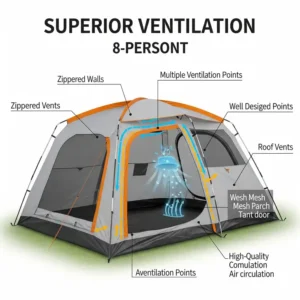
- Look at ventilation. Multiple windows and a mesh roof panel reduce condensation.
- Consider setup style. Instant tents save time, traditional pole tents save weight and money.
- Budget for extras. Footprint, better stakes, and seam sealer add real-world durability.
Common Mistakes When Buying an 8 Person Tent
Most buyers make the same few missteps. Avoid them and your first trip gets better immediately.
Believing the capacity number. “Sleeps eight” assumes eight sleeping bags with no gear. Real comfort lives at roughly half that.
Ignoring packed size. A tent that fits two queens also takes up a mountain of trunk space. Measure your car before you buy, especially for instant cabin models like the CORE 9 Person Instant Cabin Tent.
Chasing the highest waterproof number. A bigger millimeter count isn’t a magic shield. Seams, floor coating, and fly coverage matter just as much.
Skipping the footprint. The floor is the part of your tent that takes the abuse. A cheap tarp underneath is one of the highest-return upgrades you can make.
Buying premium for rare use. If you camp twice a year in July, a mid-range cabin is smarter than a storm-rated palace.
Forgetting car-camping reality. Field and Stream notes that these big tents suit car camping or canoe camping, not backpacking. That’s a feature, not a flaw, but it should shape what you expect.
Features That Actually Matter (And Those That Don’t)
Marketing copy loves buzzwords. Here’s the filter.
Matters: Seam quality and rainfly coverage. A full-coverage fly and taped seams do more for staying dry than any headline number. Which? has warned that high waterproof ratings still end up with puddles inside some tents, since fabric rating is only part of the story.
Matters: Ventilation. Opposing windows, mesh panels, and vents fight condensation. That’s why the Ozark Trail 8-Person Modified Dome Tent with five large windows and the NEMO Wagontop 8 with flexible vent options score well here.
Matters: Pole quality. Outdoor Life’s testing saw poles break in heavy wind on at least one tent in the field, which is exactly why aluminum or sturdy fiberglass matters.
Matters: Floor durability. The floor takes the weight of cots, kids, and gear. Thicker floor fabric (like the 300D floor listed for the NEMO Wagontop 8) holds up longer.
Doesn’t matter: Built-in LED gimmicks. Nice to have, but a good headlamp and a camp lantern do the same job.
Doesn’t matter: Fancy gear lofts. You’ll use them for a few hats and a phone. Skip the premium for features you won’t use.
Depends: Instant setup. Great for speed, but heavier and bulkier. Worth it for family trips; unnecessary for patient campers.
8 Person Tent vs 6 Person Tent vs 10 Person Tent
The size debate is where many buyers go wrong. Think of it as a Goldilocks problem with real consequences for your trunk, budget, and nighttime sanity.
| Tent Type | Comfort Zone | Weight & Bulk | Setup Effort | Best For |
|---|---|---|---|---|
| 6 person | 3-4 people with gear | Lighter, more compact | Easier | Couples with kids |
| 8 person | 4-6 people with gear | Moderate, trunk-friendly | Moderate | Families, friend groups |
| 10 person | 6-8 people with gear | Heavy, bulky | Harder | Large reunions |
An 8 person tent is the sweet spot for most car-camping families. A six-person option is easier to carry and pitch, but it can feel claustrophobic once the air mattresses go in. A ten-person tent gives luxurious room, yet it’s bigger than many campsites’ tent pads and harder to heat, cool, and pitch.
Looking at the comparison above, the 8 person size wins on balance for most families. If you regularly bring dogs, extra friends, or a pile of gear, stepping up to 10 can make sense. If you camp with two adults and one kid, step down to 6 and save the hassle.
Best Tent 8 Person Picks by Audience: Families, Friends, and Dogs
Different crews want different things. Here’s how to match tent to team.
Families with young children. Prioritize darkness, divider privacy, and easy zippers. The Coleman 8-Person Dark Room Skydome helps with early wake-ups, and the CAMPROS CP 8 Person Tent gives parents a divided space.
Friend groups and adults. Headroom and layout matter more than price. The NEMO Wagontop 8 and Eureka Copper Canyon LX8 shine for adults who want to stand up, move around, and avoid knocking elbows.
Dog owners. Look for tougher floors and easy-clean surfaces. Dogs make a mockery of thin flooring, so a footprint and a washable rug matter more than tent specs.
Beginners. Instant setup and straightforward layouts reduce frustration. The CORE 9 Person Instant Cabin Tent is a strong first tent for people who want fewer decisions on day one.
Budget campers. The Ozark Trail 8-Person Modified Dome Tent and CAMPROS CP 8 Person Tent keep costs low while still delivering real floor space.
Safety Guide: Weather, Wind, and Campsite Basics
A big tent catches a big wind. Respect it.
Check the forecast, honestly. Three-season tents are built for mild weather. If the forecast turns ugly, pack up early rather than gamble on an overnight storm.
Pitch with the wind in mind. Point the narrow end toward the wind, and stake every corner. Wide cabin walls act like sails, so full guyline use is essential, particularly for models like the Ozark Trail 8-Person Modified Dome Tent.
Avoid low spots and dead trees. Flood-prone depressions and widowmakers (dead branches) are the two quickest ways to ruin a trip.
Respect fire rules. Keep stoves and campfires well away from tent fabric, which is flammable. Never cook inside the tent, a rule that matters even more with sealed, weatherproof designs.
Keep ventilation open. Even when it’s cold, a bit of airflow reduces condensation and helps avoid stuffy, damp air.
Know your limits. If gusts start flexing the poles, take the tent down. A replacement tent is cheaper than an emergency.
Long-Term Cost and Maintenance: What Your Tent Really Costs Per Night
A $150 tent and a $500 tent are not different by $350, they’re different by use. Divide cost by nights camped. A budget tent used five nights a year for three years lands near $10 per night. A premium tent used twenty nights a year for ten years drops below $3.
The maintenance habits that stretch that lifespan are simple:
- Dry it fully before storage. Mildew is the silent killer of fabric coatings.
- Clean gently. Mild soap and a soft sponge only.
- Reseal seams when needed. Fresh seam sealer is cheap insurance.
- Retreat the fly occasionally. Water-repellent sprays keep the outer layer shedding rain.
- Store loosely. Cramming a tent into a stuff sack creases coatings.
For a deeper look at how waterproof coatings behave, SectionHiker’s hydrostatic head explainer covers how coatings wear down over time. Washing, abrasion, and age can all lower performance, so treating your tent well keeps its rain-fighting power intact.
✨ Don’t Miss These Exclusive Deals!
🔍 Take your next camping trip to the next level with these carefully selected tents. Click on any highlighted item to check current pricing and availability. The right shelter will help you create unforgettable campsite memories your family will love!
Price Range and Value Analysis: What You Get at Each Tier
Spend where it counts. Here’s the value map.
| Tier | Tents | Trade-Off | Best For |
|---|---|---|---|
| Budget (under $200) | CAMPROS CP 8 Person, Ozark Trail 8-Person Modified Dome | Lighter-duty stakes and zippers | New or occasional campers |
| Mid-range ($200-$300) | CORE 9 Person Instant Cabin, Coleman Dark Room Skydome, Coleman Montana 8 | Mostly three-season performance | Regular family trips |
| Premium ($400+) | Eureka Copper Canyon LX8, NEMO Wagontop 8 | Higher price, more setup effort | Frequent, all-weather camping |
Looking at the table, mid-range tents cover most campers’ needs, while premium models make sense when weather performance becomes non-negotiable. The budget tier is where smart upgrades (stakes, footprints, seam sealer) deliver outsized returns. Always check current price, since retail numbers shift often.
FAQ
❓ What size tent do I need for a family of four?
❓ Is a cabin tent or dome tent better for an 8 person tent?
❓ Are instant tents worth it for 8 person camping?
❓ How waterproof should a family camping tent be?
❓ Where can I buy a good 8 person tent for a reasonable price?
Conclusion: Choosing the Best Tent 8 Person Shelter for Your Crew
There’s no single best tent 8 person buyers can grab off the shelf, only the best match for how you camp. Speed lovers should look at the CORE 9 Person Instant Cabin Tent. Weather-focused campers will be happiest in the Eureka Copper Canyon LX8 or NEMO Wagontop 8. Light sleepers get real value from the Coleman 8-Person Dark Room Skydome, while budget-minded families can’t ignore the CAMPROS CP 8 Person Tent. Occasional campers can start with the Ozark Trail 8-Person Modified Dome Tent, and warm-weather fans will like the Coleman 8-Person Montana Cabin Tent.
Remember the basics: size up on capacity, match the shape to your weather, and invest a few dollars in a footprint and better stakes. A tent is only as good as the trips it enables. Pick the one that gets your family outside more often, and you’ve already made the right call.
Recommended for You
- 10 Best Personal Pop Up Tent Options For Quick Outdoor Adventures in 2025
- 10 Amazing Core 6-Person Cabin Tent with Screenhouse Options for Ultimate Camping Bliss
- 7 Best 4 Person Hot Tent Options For Ultimate Winter Camping Freedom in 2025
Disclaimer: This article contains affiliate links. As an Amazon Associate, I earn from qualifying purchases. If you purchase products through these links, we may earn a small commission at no additional cost to you.
✨ Found this helpful? Share it with your friends! 💬🤗
