

In This Article
Picture this: you’ve spent an incredible day hiking mountain trails and exploring scenic backroads. You return to your camper as the summer sun beats down, only to step into what feels like a mobile sauna. Sound familiar? I’ve been there more times than I’d like to admit, and that’s exactly why investing in a proper camper ceiling fan transformed my RV adventures.
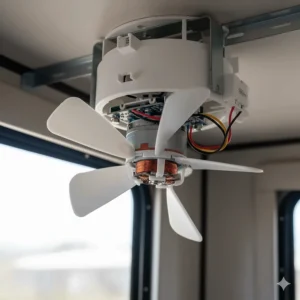
A camper ceiling fan isn’t just about comfort—it’s about creating a livable space in your home away from home. Unlike traditional air conditioning units that drain your battery faster than you can say “boondocking,” ceiling fans offer an energy-efficient solution that keeps air circulating without breaking the bank or your power budget. They help eliminate cooking odors after dinner, reduce humidity after showers, and create that gentle breeze that makes sleeping in your rig actually pleasant.
Whether you’re a weekend warrior or a full-time road tripper, finding the right ceiling fan can make the difference between sweating through sleepless nights and enjoying comfortable living on the road. In this comprehensive guide, I’ll walk you through the top seven camper ceiling fans available in 2025, covering everything from budget-friendly USB options to premium 12V models with remote controls.
Quick Comparison Table: Top Camper Ceiling Fans at a Glance
| Fan Model | Size | Power Type | Control | Price Range | Best For |
|---|---|---|---|---|---|
| RecPro 42″ Brushed Nickel | 42″ | 12V DC | Wall Switch | $130-$160 | Permanent Installation |
| RecPro 36″ Brushed Nickel | 36″ | 12V DC | Wall Switch | $115-$135 | Smaller Spaces |
| LaSalle Bristol 42″ | 42″ | 12V DC | Wall Switch | $150-$165 | Premium Build Quality |
| Camper Comfort 42″ | 42″ | 12V DC | Wall Switch | $128-$145 | Budget-Conscious Buyers |
| Trusty Products 36″ Remote | 36″ | 12V DC | Remote Control | $155-$170 | Convenience Seekers |
| SCOOYEEES USB Fan | 16.5″ | USB 5V | Remote Control | $30-$45 | Portable/Temporary Use |
| SKYRI Portable USB | 16.5″ | USB 5V | Manual | $20-$30 | Ultra-Budget Option |
💬 Just one click – help others make better buying decisions too! 😊
Top 7 Camper Ceiling Fans: Expert Analysis & Reviews
1. RecPro RV Ceiling Fan 12V 42″ Brushed Nickel
If you’re serious about cooling your entire RV living space, the RecPro 42-inch ceiling fan stands out as a powerhouse performer. This flush-mount beauty combines style with substance, featuring a brushed nickel finish that complements virtually any RV interior design.
Key Specifications:
- Dimensions: 40″W x 4.25″H
- Power consumption: 20 watts
- Motor type: Brushless DC
What really impresses me about this fan is its whisper-quiet brushless motor and four-speed wall switch control (25%, 50%, 75%, and 100%). The reversible blade direction means you can use it year-round—pulling warm air down in winter or pushing cool air circulation in summer. Customers consistently praise its silent operation and substantial airflow, though some note that proper installation requires bending the blades slightly for optimal performance.
✅ Pros:
- Energy-efficient at only 20 watts
- Four adjustable speeds
- Reversible for seasonal use
❌ Cons:
- May require blade adjustment out of box
- Slightly pricey for budget travelers
Price: $133-$160 | Best For: Full-time RVers wanting premium performance
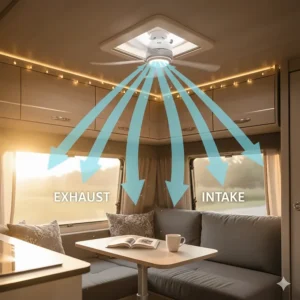
2. RecPro RV Ceiling Fan 12V 36″ Brushed Nickel
The RecPro 36-inch model delivers the same quality construction as its bigger sibling but in a more compact package perfect for smaller RVs, toy haulers, or bedroom installations.
Key Specifications:
- Dimensions: 34″W x 4.25″H
- Blade options: Black, Oak, Cherry, White
- Close-mount design
This smaller version still packs impressive cooling power while drawing minimal current from your battery system. The double-sealed motor bearing ensures longevity, and the low-profile design means even taller passengers won’t need to duck. One reviewer mentioned installing these in both their living area and bedroom because they loved the first one so much—that’s the kind of endorsement that speaks volumes.
✅ Pros:
- Perfect for tight spaces
- Multiple blade color options
- Low profile at just 4.25″ high
❌ Cons:
- Smaller coverage area than 42″ models
- Wall switch sold separately on some retailers
Price: $115-$135 | Best For: Compact campers and multi-fan installations
3. LaSalle Bristol 12V RV Ceiling Fan 42″
The LaSalle Bristol 42-inch fan represents the gold standard in RV ceiling fans, with decades of manufacturing experience backing every unit. This hugger-style fan sits right against your ceiling, maximizing headroom while delivering consistent airflow.
Key Specifications:
- Four-speed reversible motor
- Includes wall switch
- Available in multiple finishes
What sets LaSalle Bristol apart is their attention to detail and quality control. Users report excellent customer service and reliable long-term performance. The fan operates efficiently on your RV’s 12-volt system, and the included wall switch makes speed and direction changes effortless. Some owners have reported slightly higher noise levels at maximum speed compared to premium brands, but overall performance remains solid.
✅ Pros:
- Proven reliability and brand reputation
- Easy installation process
- Strong airflow at all speeds
❌ Cons:
- Can be noisy at highest setting
- Premium pricing
Price: $150-$165 | Best For: Those who prioritize brand reputation and reliability
4. Camper Comfort RV Ceiling Fan 12V 42″
For budget-conscious campers who refuse to compromise on features, the Camper Comfort 42-inch fan delivers surprising value. Available in both 36″ and 42″ sizes, this fan brings modern style to your RV without the premium price tag.
Key Specifications:
- 12V DC motor with four speeds
- Brushed nickel with black blades
- Energy-efficient 20-watt operation
This fan aims to bridge the gap between affordability and functionality. While some customers have experienced mixed results with airflow (noting that blade adjustment can dramatically improve performance), others rave about its easy installation and attractive appearance. The wall switch provides convenient control, though instructions could be clearer according to several reviewers.
✅ Pros:
- Competitive pricing
- Attractive brushed nickel design
- Low energy consumption
❌ Cons:
- Instructions could be improved
- Airflow may require blade adjustment
Price: $128-$145 | Best For: Value shoppers and first-time RV owners
5. Trusty Products 36″ RV Ceiling Fan with Remote Control
Say goodbye to wall switches and hello to convenience with the Trusty Products remote-controlled ceiling fan. This innovative design eliminates the need for routing wires through walls, making installation a breeze.
Key Specifications:
- Remote control operation (batteries included)
- Three-speed settings (low, medium, high)
- 5.5″ total height from ceiling
The remote control operates on/off, fan speed, forward/reverse functions—all from the comfort of your RV couch or bed. The stamped steel construction with concealed screw heads creates a clean, modern aesthetic. At just 1.2 amps draw, this fan won’t drain your battery, and the CSA/CUS approval ensures safety standards are met. The only real drawback some users mention is occasional remote sensor adhesion issues.
✅ Pros:
- No wall switch wiring required
- Remote control convenience
- Ultra-low 1.2-amp draw
❌ Cons:
- Remote sensor may need better adhesive
- Requires 2 AAA batteries
Price: $155-$170 | Best For: RVers wanting installation simplicity and remote convenience
6. SCOOYEEES USB Powered Ceiling Fan with Remote
Not every camper needs a permanent 12V installation. The SCOOYEEES 16.5-inch USB fan offers incredible portability and versatility for tent campers, van dwellers, or as supplemental cooling in specific RV zones.
Key Specifications:
- USB 5V DC powered
- Four-speed remote control
- 6 detachable blades
This lightweight champion runs off any USB power source—laptops, power banks, solar chargers, or wall adapters. The remote control provides four speed settings plus timing functions, allowing you to set automatic shutoff. At just 5 watts consumption, a 10,000mAh power bank can run this fan for approximately 10 hours. The detachable blades make it incredibly packable for outdoor adventures.
✅ Pros:
- Extremely portable and lightweight
- Multiple power source options
- Silent operation under 36dB
❌ Cons:
- Smaller coverage area
- Requires external power source
Price: $30-$45 | Best For: Tent campers, van conversions, and temporary installations
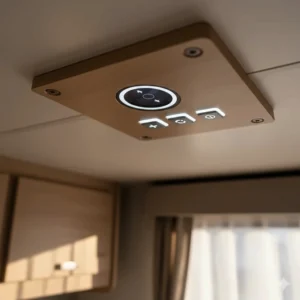
7. SKYRI Portable USB Ceiling Fan
Rounding out our list is the ultra-budget SKYRI portable fan, perfect for minimalist campers or those testing the waters before committing to permanent installations.
Key Specifications:
- 16.5″ diameter with 3 blades
- USB 5V powered (6W)
- 3-meter power cord included
This no-frills option gets the job done without breaking the bank. While it lacks remote control features, the simplicity means fewer things can go wrong. The 3-meter (approximately 10-foot) cord provides flexibility in placement, and the unit is compatible with any standard USB power source. Don’t expect hurricane-force winds, but for personal cooling in small spaces, it performs admirably.
✅ Pros:
- Extremely affordable
- Simple plug-and-play operation
- Long USB cord included
❌ Cons:
- No remote or speed control
- Limited airflow compared to larger models
Price: $20-$30 | Best For: Ultra-budget campers and supplemental cooling needs
Understanding Camper Ceiling Fan Power Systems
One of the most critical decisions you’ll make when selecting a camper ceiling fan involves understanding power requirements. Let me break down the two main types you’ll encounter.
12V DC Ceiling Fans: The RV Standard
Most permanent RV ceiling fans operate on 12-volt direct current (DC) power, directly integrating with your RV’s electrical system. This setup offers several advantages: consistent power supply, no need for inverters, and the ability to run fans even when disconnected from shore power. A typical 12V fan draws between 1-4 amps depending on speed settings, making them remarkably efficient for battery-powered boondocking.
The installation does require basic electrical knowledge—you’ll need to connect to your RV’s 12V system, usually replacing an existing light fixture. Most draw between 20-35 watts at maximum speed, which translates to roughly 2-3 amps from your battery bank. For extended dry camping, this efficiency becomes crucial.
USB-Powered Fans: Maximum Flexibility
USB-powered fans revolutionize portable cooling by running off 5V DC power from virtually any USB source. Connect them to power banks, solar panels, laptop ports, or vehicle charging adapters. This versatility makes them perfect for van conversions, tent camping, or supplemental cooling in specific RV areas.
The tradeoff? USB fans typically produce less airflow than their 12V counterparts due to lower wattage (usually 5-6 watts). However, their portability and minimal power consumption (often 1A or less) make them ideal for personal cooling zones or emergency backup situations.
Size Matters: Choosing the Right Fan Diameter
Selecting the proper fan size significantly impacts both cooling effectiveness and installation success. Here’s what you need to know about common sizes.
42-Inch Fans: Maximum Coverage
The largest standard RV ceiling fans measure 42 inches in diameter and excel at cooling main living areas, large bedrooms, or open floor plans. These fans move substantially more air with each rotation, creating better circulation throughout your entire space. If your RV measures 25 feet or longer, a 42-inch fan should be your baseline consideration for the living area.
Keep in mind that larger fans require more ceiling clearance and stronger mounting points. Always verify your RV’s ceiling structure can support the weight (typically 6-8 pounds) before installation.
36-Inch Fans: Versatile Middle Ground
The 36-inch fan represents the sweet spot for many RVers, offering excellent airflow in a more compact package. These work brilliantly in bedrooms, dinette areas, or smaller travel trailers under 25 feet. The reduced diameter also means easier installation in tight spaces and less clearance concern for taller individuals.
Power consumption typically runs slightly lower than 42-inch models while still providing robust air circulation. Many RV owners opt for multiple 36-inch fans rather than a single large unit, creating customized cooling zones.
Portable Fans (16-20 inches): Targeted Cooling
Compact portable fans shine in specific scenarios: personal sleeping areas, tent extensions, outdoor covered spaces, or as supplemental cooling for hot spots. While they won’t cool an entire RV, their portability and minimal power requirements make them invaluable for creating comfortable micro-environments.
Installation Essentials: DIY or Professional?
Installing a camper ceiling fan ranges from straightforward to moderately challenging depending on your electrical comfort level and whether you’re replacing existing fixtures or creating new installations.
Replacing Existing Fixtures
If your RV already has a ceiling light or vent in the desired location, congratulations—you’re halfway there! Most 12V ceiling fans use similar wiring configurations as existing fixtures. You’ll typically find three wires: positive (usually red or black), negative (white), and ground (green or bare copper). The included wall switch adds complexity but comes with detailed diagrams.
Budget 2-4 hours for a first-time installation, including testing. Make sure to shut off 12V power at your breaker panel before beginning work, and always test wiring with a multimeter to verify connections.
New Installations
Creating a new fan location requires cutting through your RV’s ceiling material, running new electrical lines, and ensuring proper support structure. Unless you possess advanced carpentry and electrical skills, I strongly recommend hiring an RV technician for new installations. Improper cutting can compromise your roof’s waterproof integrity, and incorrectly sized wiring creates fire hazards.
USB Fan Setup
USB fans offer remarkably simple installation—literally plug and play. Most include hanging hooks or attachment hardware allowing you to suspend them from ceiling loops, tent poles, or mounting screws. The biggest consideration involves cable management and ensuring your power source (bank, solar panel, or adapter) stays protected from moisture.
Maintenance Tips to Maximize Fan Lifespan
Proper maintenance keeps your ceiling fan running smoothly for years of comfortable camping.
Monthly Tasks:
- Wipe down blades with a microfiber cloth to remove dust
- Check mounting screws for tightness (vibration loosens them over time)
- Inspect electrical connections if you notice performance changes
Seasonal Maintenance:
- Deep clean motor housing using compressed air
- Apply a small amount of electrical contact cleaner to switch connections
- Verify blade balance (unbalanced blades cause wobbling and premature wear)
- Test reversible motor function in both directions
Annual Inspection:
- Examine wiring for fraying or damage
- Check mounting bracket integrity
- Lubricate motor bearings if applicable (check manufacturer specifications)
- Clean or replace screens if your fan includes bug screens
Most quality RV ceiling fans feature sealed bearings requiring no lubrication. However, if you notice squeaking or grinding sounds, consult your manufacturer’s maintenance guidelines before applying any lubricants.
Energy Efficiency: Keeping Cool Without Draining Batteries
Understanding power consumption becomes critical when boondocking or dry camping away from shore power. Let’s examine real-world energy usage.
A typical 12V ceiling fan at medium speed draws approximately 1.5-2 amps. Running continuously for 24 hours consumes roughly 36-48 amp-hours from your battery bank. Compare this to air conditioning units drawing 130-170 amps, and the efficiency advantage becomes crystal clear.
Battery Conservation Strategies:
- Use solar panels to offset daytime fan operation
- Run fans at lower speeds during sleeping hours
- Combine ceiling fans with proper ventilation (open windows/roof vents)
- Park in shaded locations to reduce interior heat buildup
USB fans prove even more efficient, typically consuming under 1 amp at 5V (roughly 0.4 amps at 12V equivalent). A 100Ah power bank can theoretically run a USB fan for 100+ hours, though real-world performance varies based on battery chemistry and temperature.
Common Installation Mistakes to Avoid
Having helped numerous friends install RV ceiling fans, I’ve witnessed these mistakes repeatedly. Learn from others’ errors.
Mistake #1: Ignoring Ceiling Structure
RV ceilings aren’t always solid—many feature hollow spaces or thin luan. Installing a ceiling fan without proper backing can lead to sagging, damage, or complete failure. Always locate ceiling joists or install reinforcement backing before mounting.
Mistake #2: Incorrect Wire Sizing
Using undersized wiring creates voltage drop and potential fire hazards. Twelve-volt systems require heavier gauge wire than 120V applications due to higher current draw. Stick with 14 AWG wire minimum for fan installations, and use 12 AWG for runs exceeding 15 feet.
Mistake #3: Poor Sealant Application
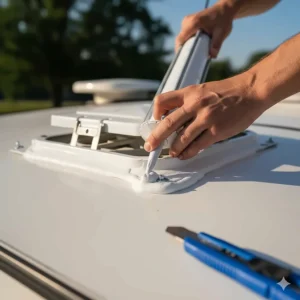
For roof-mounted vent fans, inadequate sealing allows water intrusion. Use proper RV sealants (like Dicor self-leveling sealant) and reapply annually. Interior ceiling fans still require attention to holes drilled for wiring—seal penetrations to prevent moisture and pest entry.
Mistake #4: Forgetting Blade Balance
Unbalanced blades create vibration, noise, and premature bearing wear. After installation, test the fan at various speeds and observe for wobbling. Blade balancing kits cost under $10 and solve 90% of wobble issues.
Smart Features Worth Considering
Modern camper ceiling fans incorporate technology that enhances convenience and functionality.
Remote Control Operation
Remote-controlled fans eliminate wall switch installations, perfect for rental RVs or situations where running wiring proves impractical. Look for remotes with good range (15+ feet) and multiple speed settings. Battery-free remotes using kinetic energy exist but remain rare in RV applications.
Reversible Motor Direction
Reversible fans pull double duty across seasons. Summer mode (counterclockwise) pushes air downward, creating cooling breeze. Winter mode (clockwise) circulates warm air from ceiling downward along walls. This versatility justifies paying slightly more for reversible motors.
Automatic Thermostat Control
Premium roof vent fans include thermostats that automatically activate when interior temperature exceeds set thresholds. While adding cost, this automation proves invaluable if you travel with pets or store temperature-sensitive items.
Rain Sensors
Nothing ruins camping faster than returning to discover your roof vent leaked during a rainstorm. Rain sensors automatically close vent covers when detecting moisture, though ceiling fans mounted flush against interiors don’t require this feature.
❓ Frequently Asked Questions
❓ How many amps does a camper ceiling fan use?
❓ Can I run a ceiling fan off my RV battery while boondocking?
❓ What size ceiling fan do I need for my RV?
❓ Are RV ceiling fans easy to install for beginners?
❓ Do camper ceiling fans work without shore power?
Conclusion: Finding Your Perfect Camper Ceiling Fan
Choosing the right camper ceiling fan ultimately depends on your specific camping style, RV size, and budget constraints. If you’re a full-timer prioritizing performance and longevity, invest in proven brands like RecPro or LaSalle Bristol with their robust 12V systems. Weekend warriors and budget-conscious campers will find excellent value in the Camper Comfort line or versatile USB-powered options from SCOOYEEES and SKYRI.
Remember that proper installation and regular maintenance extend fan lifespan significantly. Whether you opt for permanent 12V installation or portable USB flexibility, the comfort and air quality improvements will transform your camping experience. No more sweaty nights or stuffy mornings—just comfortable, well-ventilated living spaces that make your RV feel like home.
The investment in a quality ceiling fan pays dividends in improved sleep quality, reduced air conditioning costs, and enhanced overall comfort. Start with one fan in your primary living space and expand as budget allows. Your future camping self will thank you when you’re relaxing in comfortable temperatures while neighboring campers run noisy generators to power their AC units.
✨ Don’t Miss These Exclusive Deals!
🔍 Take your RV comfort to the next level with these carefully selected ceiling fans. Click on any highlighted product name to check current pricing and availability. These fans will help you create authentic cool comfort your family will love during every adventure!
Recommended for You
- 7 Best Camp Trunks That’ll Transform Summer Packing 2025
- 7 Best Tent Heaters for Camping 2025 | Expert Safety Tips
- 7 Best Propane Heater for Camper: Expert Guide 2025
Disclaimer: This article contains affiliate links. If you purchase products through these links, we may earn a small commission at no additional cost to you.
✨ Found this helpful? Share it with your friends! 💬🤗
