
In This Article
✨Was this helpful? Spread the word!
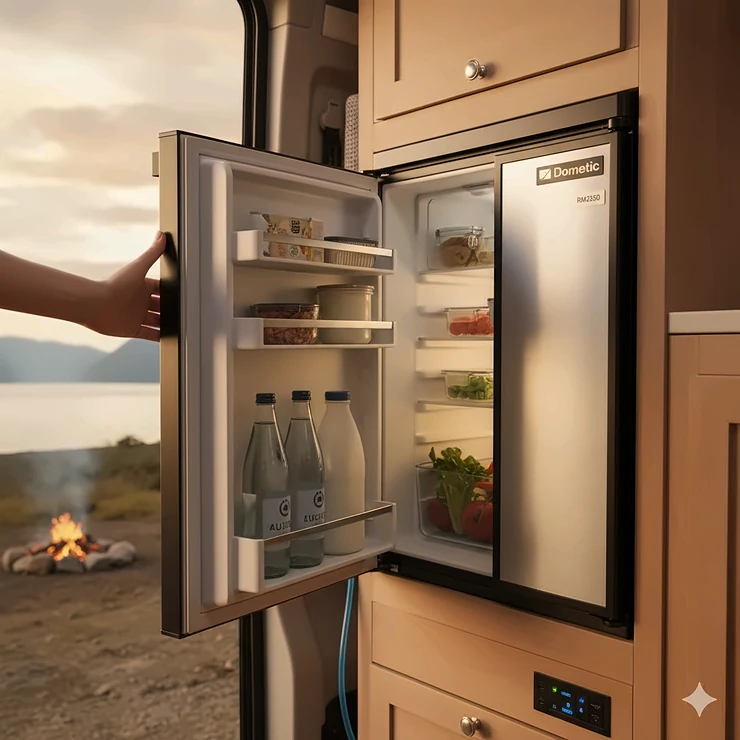
What is a camper refrigerator gas and electric? It’s a dual-power cooling appliance that operates on both propane gas and electrical sources (110V AC and 12V DC), providing flexible refrigeration options whether you’re plugged into shore power, running on battery, or completely off-grid. This versatility makes it the ultimate choice for RVers who want reliable food storage regardless of their camping situation.

You know that moment when you’re three days into a boondocking adventure, and you realize your fridge is still keeping your drinks ice-cold? That’s the magic of a gas and electric refrigerator camper setup. I’ve spent years testing different cooling systems in my travel trailer, and nothing beats the flexibility of switching between propane and electricity depending on where life takes you.
The beauty of these dual-power units lies in their adaptability. When you’re parked at a campground with hookups, you can run on affordable electricity. Head out to that remote fishing spot? Fire up the propane and enjoy complete independence. Some modern models even feature automatic switching, so you never have to think twice about power sources.
According to the U.S. Department of Energy, absorption refrigerators using propane can be highly efficient for off-grid applications, making them ideal for extended camping trips. The RV industry has embraced this technology, with manufacturers continuously improving cooling performance and energy efficiency.
Whether you’re a weekend warrior or a full-time RVer, choosing the right camper refrigerator gas and electric model can transform your mobile living experience. Let’s dive into everything you need to know about these versatile cooling systems, from how they work to which models deliver the best bang for your buck in 2025.
Quick Comparison Table
| Product | Capacity | Power Options | Price Range | Rating |
|---|---|---|---|---|
| RecPro 6.3 Cu Ft | 6.3 cu.ft | 110V/12V/Propane | $1,100-$1,300 | ⭐⭐⭐⭐ 4.2/5 |
| Smad 3.5 Cu.Ft | 3.5 cu.ft | LPG/110V/12V | $550-$700 | ⭐⭐⭐⭐ 4.0/5 |
| Dometic DMC4101 | 10 cu.ft | 12V DC only | $1,400-$1,600 | ⭐⭐⭐⭐⭐ 4.7/5 |
| Norcold NXA841 | 7.5 cu.ft | AC/DC/LP Gas | $1,800-$2,100 | ⭐⭐⭐⭐ 4.3/5 |
| Smad 2.1 Cu.Ft | 2.1 cu.ft | LPG/110V/12V | $300-$450 | ⭐⭐⭐⭐ 3.9/5 |
| RecPro 10 Cu Ft | 10 cu.ft | 12V DC only | $1,200-$1,400 | ⭐⭐⭐⭐ 4.1/5 |
| Norcold 1210 | 12 cu.ft | AC/LP Gas | $2,400-$2,800 | ⭐⭐⭐⭐⭐ 4.6/5 |
Just one click – help others make better buying decisions too!
⚡ Ready to Upgrade Your RV Kitchen?
These hand-picked camper refrigerator gas and electric models represent the best value and performance for 2025. Click any highlighted product name to check current Amazon prices and read verified customer reviews. Don’t let your next adventure be limited by inadequate refrigeration!
Top 7 Camper Refrigerator Gas and Electric: Expert Analysis
1. RecPro RV Refrigerator 6.3 Cubic Feet Gas and Electric
The RecPro 6.3 Cu Ft stands as a benchmark in the three-way refrigerator category, offering exceptional versatility for serious campers. This unit operates on 110V AC when connected to shore power, 12V DC while driving (though extended use isn’t recommended due to battery drain), and propane when you’re truly off-grid.
Key Specifications:
- ✅ Total capacity: 6.3 cubic feet (180 liters total, 45-liter freezer)
- ✅ Gas consumption: 40g/hour liquid propane
- ✅ Dimensions: Standard RV cutout compatible
The gas absorption technology creates an endothermic chemical reaction that absorbs heat from inside the fridge, cooling your food efficiently. Customers particularly appreciate the auto-switching feature between power sources, which seamlessly transitions without manual intervention.
Price Range: $1,100-$1,300
Customer Feedback: Users love the reversible door hardware and five temperature levels. One reviewer noted it kept food fresh during a two-week boondocking trip in 95°F weather, though some report the initial learning curve with propane setup.
Pros:
- ✅ True 3-way power versatility
- ✅ Auto power source switching
- ✅ Large freezer compartment
Cons:
- ❌ Requires dedicated 12V DC line for heat
- ❌ Propane mode needs proper ventilation
2. Smad 3.5 Cu.Ft Propane Refrigerator 3 Way
For those seeking compact efficiency, the Smad 3.5 Cu.Ft delivers impressive cooling in a space-saving design. This budget-friendly option doesn’t skimp on features, offering independent gas and electric thermostats with a flame indicator for safety.
Key Specifications:
- ✅ Capacity: 3.5 cu.ft (3.0 fridge + 0.5 freezer)
- ✅ Temperature range: 32-50°F (freezer -0.4-32°F)
- ✅ Dimensions: 20.5″W x 22.2″D x 32.8″H
The absorption cooling system operates at 0 dB silence, making it perfect for light sleepers or families with kids. According to Furrion’s research, absorption refrigerators are particularly effective in well-ventilated spaces.
Price Range: $550-$700
Customer Feedback: Buyers praise the no-freon design and adjustable feet for level operation. One truck camper owner mentioned it’s more efficient on propane, cooling from 90°F to 32°F in 6-8 hours on electricity but faster on gas.
Pros:
- ✅ Super quiet operation (0 dB)
- ✅ Removable shelves for customization
- ✅ Excellent value for money
Cons:
- ❌ Requires 6-8 hours initial cool-down
- ❌ Must maintain level within 5° angle
3. Dometic DMC4101 10 Cu.Ft RV Refrigerator
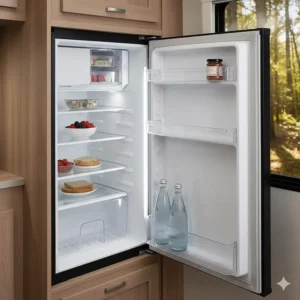
While technically electric-only, the Dometic DMC4101 deserves mention as a premium alternative to gas electric camper refrigerator models. Its 12V DC compressor technology represents the future of RV refrigeration with residential-style cooling performance.
Key Specifications:
- ✅ Capacity: 10 cubic feet
- ✅ Variable speed 12V DC compressor
- ✅ Glass shelves with LED illumination
Dometic’s variable speed compressor technology provides class-leading efficiency, using roughly half the energy of traditional gas absorption units. The stainless steel doors feature wrapped edges and recessed locking handles that blend seamlessly into modern RV kitchens.
Price Range: $1,400-$1,600
Customer Feedback: Users rave about maintaining frozen ice cream and consistent 37°F temperatures even in 100°F ambient conditions. Multiple reviewers highlight pairing it with solar panels for extended off-grid capability.
Pros:
- ✅ Residential-style cooling performance
- ✅ Works when not level
- ✅ Frost-free operation
Cons:
- ❌ Requires robust battery system
- ❌ Higher upfront cost
4. Norcold NXA841 7.5 Cu.Ft 3-Way Refrigerator
The Norcold NXA841 brings professional-grade refrigeration to the RV market with its impressive 7.5 cubic foot capacity and advanced diagnostics. This flush-mount design represents Norcold’s nearly 60 years of refrigeration expertise.
Key Specifications:
- ✅ Capacity: 7.5 cubic feet
- ✅ Power: 3 amps at 120V AC / 14.8 amps at 12V DC
- ✅ LCD temperature control panel with diagnostics
The updated control panel features built-in diagnostics that provide valuable troubleshooting information, simplifying servicing and speeding up repairs. The door ajar alarm and automatic cabinet light shut-off protect battery life during extended trips.
Price Range: $1,800-$2,100
Customer Feedback: Owners appreciate the improved hinge design and dual MagnaStrips for holding photos and lists. The eye-level control panel makes temperature adjustments convenient while standing.
Pros:
- ✅ Largest-in-class capacity
- ✅ Advanced diagnostic system
- ✅ Durable white powder-coated shelves
Cons:
- ❌ Premium pricing
- ❌ Decorative door panels sold separately
5. Smad 2.1 Cu.Ft 3 Way Propane Fridge
Perfect for truck campers, van conversions, or as a secondary fridge, the Smad 2.1 Cu.Ft maximizes utility in minimal space. This compact powerhouse proves that good things come in small packages.
Key Specifications:
- ✅ Capacity: 2.1 cubic feet (55 Qt)
- ✅ Dimensions: 18.1″W x 18.9″D x 26.6″H
- ✅ Includes pressure regulator with hose
The reversible door design offers installation flexibility, while adjustable shelves accommodate various container sizes. The unit comes with convenient leveling legs, essential since absorption refrigerators must operate within 5° of level for optimal performance.
Price Range: $300-$450
Customer Feedback: Budget-conscious RVers love this entry-level option, with one semi-truck driver praising its reliability during cross-country hauls. The included pressure regulator simplifies propane connection.
Pros:
- ✅ Extremely affordable
- ✅ Compact for tight spaces
- ✅ 12-month warranty coverage
Cons:
- ❌ Limited freezer space
- ❌ Basic manual controls
6. RecPro 10 Cu Ft 12V RV Refrigerator
The RecPro 10 Cu Ft brings residential refrigerator features to the RV world with its frost-free operation and generous storage capacity. This electric-only model appeals to RVers upgrading from older gas absorption units.
Key Specifications:
- ✅ Capacity: 10 cubic feet
- ✅ Power consumption: 80 watts when running
- ✅ Dimensions: 23.5″W x 26″D x 59″H
Operating at roughly 960 watt-hours per day in 65-70°F settings, this fridge pairs beautifully with solar systems. The compressor achieves 9.5°F per hour cooling in empty state, dropping temperatures from 70°F to 36°F in approximately 3.5 hours.
Price Range: $1,200-$1,400
Customer Feedback: Off-grid cabin owners report excellent performance with solar panels, while one reviewer mentioned replacing an 8-year-old gas unit and never looking back. The magnetic door closure beats traditional latches.
Pros:
- ✅ Low power consumption
- ✅ Frost-free convenience
- ✅ Built-in door lock for travel
Cons:
- ❌ Mixed quality control reports
- ❌ Temperature fluctuation issues reported by some
7. Norcold 1210 12 Cu.Ft 4-Door Refrigerator
For those wanting the ultimate in RV refrigeration, the Norcold 1210 delivers restaurant-grade capacity with its massive 12 cubic foot interior and side-by-side four-door design. This premium unit represents the pinnacle of gas electric RV fridge technology.
Key Specifications:
- ✅ Capacity: 12 cubic feet
- ✅ Power: 2-way AC/LP gas operation
- ✅ Automatic changeover between power sources
The four-door construction minimizes cold air loss, while the cooling unit and interior design ensure excellent airflow and efficient cooling. According to RV industry data, side-by-side models like this reduce energy consumption by up to 30% compared to single-door units.
Price Range: $2,400-$2,800
Customer Feedback: Full-time RVers consider this their residential fridge replacement, with ample space for extended off-grid living. The LED control panel with diagnostics provides peace of mind during remote camping.
Pros:
- ✅ Massive storage capacity
- ✅ Side-by-side design reduces cold loss
- ✅ Automatic gas flame re-ignition
Cons:
- ❌ Significant investment required
- ❌ Requires larger RV cutout
How Camper Refrigerator Gas and Electric Technology Works
Understanding the science behind your rv refrigerator gas and electric helps you maximize its performance. Unlike your home refrigerator with its traditional compressor, absorption refrigerators use a fascinating chemical process that’s been perfected over decades.
The Absorption Cycle Explained
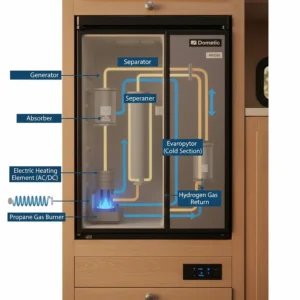
The magic starts when propane flame heats a sealed chamber containing ammonia and water. As this mixture boils, ammonia gas rises into a condenser where it cools and liquefies. The liquid ammonia then flows into an evaporator, mixing with hydrogen gas. This endothermic reaction absorbs heat from inside your fridge, creating the cooling effect you need for fresh food.
What makes this brilliant for RVing? No moving parts means silent operation and incredible reliability. I’ve run my absorption fridge for years without a single mechanical issue, something my old compressor unit couldn’t claim.
The dual-power capability adds another layer of convenience. When electricity is available, a heating element replaces the propane burner, running the same absorption cycle. Many modern units automatically detect which power source is available and switch accordingly, giving you true set-it-and-forget-it operation.
Gas vs Electric Operation Differences
Here’s something that surprised me: propane actually provides about 2.5 times more cooling power than electric operation. According to technical specs from Dometic, a typical absorption fridge burner outputs around 1,400 BTU/h on gas versus 643 BTU/h on electric.
This explains why your refrigerator gas and electric for camper cools faster on propane, especially during hot weather. When ambient temperatures soar above 95°F, switching to gas mode can mean the difference between lukewarm drinks and properly chilled beverages.
Electric mode shines when you’re hooked up to shore power or running a generator. It’s quieter (no flame sound), requires no propane refills, and eliminates any concerns about ventilation. Plus, at typical campground rates of $0.12 per kWh, electricity costs less than propane for cooling.
Key Features to Consider in Camper Refrigerator Gas and Electric
Choosing your perfect electric and gas refrigerator for camper involves balancing several critical factors. Let me walk you through the features that actually matter in real-world use.
Capacity and Size Considerations
Storage Space Analysis:
- 1-3 cu.ft: Weekend warriors, van lifers
- 4-7 cu.ft: Couples, week-long trips
- 8-12 cu.ft: Families, full-time RVing
Don’t just look at total cubic footage. Consider freezer capacity separately. That 6.3 cu.ft fridge might have a 1.5 cu.ft freezer, leaving only 4.8 cu.ft for refrigeration. I learned this the hard way when my first RV fridge couldn’t accommodate a week’s worth of groceries for two people.
Measure your existing cutout carefully. Standard RV refrigerator openings typically range from 23-24 inches wide, but depth varies significantly. Some older models are shallower, which limits your upgrade options without cabinet modifications.
Power Consumption and Efficiency
Daily Power Usage Comparison:
| Power Source | Typical Consumption | Cost Per Day |
|---|---|---|
| Propane (gas) | 1.5-2 lbs | $0.75-$1.00 |
| 12V DC | 30-50 Ah | $0.90-$1.50 |
| 110V AC | 1-3 kWh | $0.12-$0.36 |
Modern three way gas electric refrigerator models with automatic switching optimize costs by selecting the cheapest available power source. When boondocking, propane typically wins since it doesn’t drain batteries. With shore power, electricity is usually more economical.
Battery capacity matters enormously if you’re planning serious off-grid time. A 100Ah lithium battery bank can power a modern 12V compressor fridge for roughly 2-3 days, while absorption fridges on propane can run for weeks on a single 20-lb tank.
Temperature Control and Performance
The best gas and electric refrigerator camper units maintain consistent temperatures regardless of ambient conditions. Look for models with:
- ⚡ Adjustable thermostats (not just min-max dials)
- ⚡ Separate freezer temperature controls
- ⚡ Digital displays showing actual temperatures
- ⚡ Built-in diagnostics for troubleshooting
Temperature stability varies significantly between technologies. Compressor fridges maintain tighter temperature ranges (±2°F) compared to absorption units (±5°F). However, high-quality absorption fridges like Dometic and Norcold models perform admirably in most conditions.
One critical point: absorption refrigerators must be level within 3-5 degrees to function properly. I’ve seen campers scratch their heads wondering why their fridge stopped cooling, only to discover they parked on a slope. Compressor units work regardless of angle, a significant advantage for boondockers.
Installation and Setup Guide for Camper Refrigerator Gas and Electric
Installing a gas electric camper refrigerator isn’t rocket science, but doing it right prevents headaches down the road. I’ve installed three different units over the years, and these lessons saved me countless hours.
Electrical Requirements
Power Connection Essentials:
- ✅ Dedicated 12V DC circuit with appropriate gauge wire
- ✅ Separate breaker protection (15-20 amp recommended)
- ✅ Proper grounding to chassis
- ✅ Reverse polarity protection
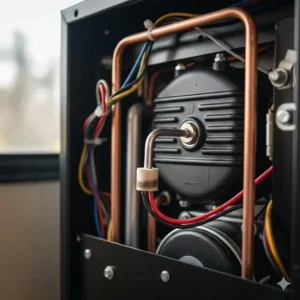
Most electric gas refrigerator rv models require two separate 12V connections. One low-current line powers the control board continuously, while a high-current line runs the heating element. Skipping the dedicated circuit risks voltage drop, reducing cooling efficiency.
Wire gauge matters more than most realize. For a 15-foot run, use minimum 10 AWG wire. Longer distances need 8 AWG or thicker. I’ve seen fridges underperform simply because installers used undersized wire, causing voltage drop from 12.6V to 11.2V at the fridge.
Propane System Setup
Gas Connection Checklist:
- Approved propane hose and regulator
- Leak detection (soapy water test)
- Proper venting through exterior wall
- Gas pressure verification (28 mbar/2.8 kPa)
The pressure regulator included with your camper fridge gas and electric must match specifications exactly. Using a stove regulator won’t work—fridges require different pressure levels. Always check for leaks using soapy water solution before first use.
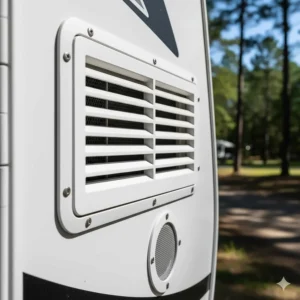
Ventilation is non-negotiable with gas operation. These units need outside air for combustion and must vent exhaust externally. Most RVs have refrigerator vents installed already, but van conversions require proper ventilation kits. Never compromise on this—it’s a safety issue.
Leveling and Placement
Proper leveling extends the life of your refrigerator gas electric camper system dramatically. Absorption refrigerators contain a sealed cooling unit filled with ammonia solution. When tilted beyond specification, ammonia can’t circulate properly, potentially causing permanent damage.
Use a quality bubble level on top of the fridge. Adjust leveling jacks until you’re within 3° in all directions. Some newer models tolerate up to 6° off-level, but closer to level always performs better.
Allow adequate clearance around the unit. Most manufacturers specify 1-2 inches minimum on sides, with proper air circulation behind the unit. Restricted airflow forces the cooling system to work harder, reducing efficiency and shortening lifespan.
Maintenance Tips for Camper Refrigerator Gas and Electric
Keeping your rv refrigerator gas electric running smoothly doesn’t require much effort, but neglecting basic maintenance leads to premature failure. These simple practices have kept my fridges running flawlessly for years.
Regular Cleaning Procedures
Monthly Maintenance Schedule:
- Clean condenser coils (behind or underneath)
- Vacuum burner compartment and flue
- Wipe door seals with mild soap
- Check and clean drain tube
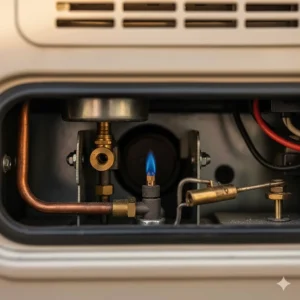
Spider webs and dust accumulation in the burner area cause 90% of propane ignition failures I’ve encountered. A quick vacuum every few weeks prevents this completely. Remove the exterior vent cover and clean thoroughly, paying special attention to the chimney where hot air exits.
Door gaskets deserve attention too. A compromised seal forces the cooling system to run continuously, wasting energy and reducing component life. Apply a thin coat of petroleum jelly to rubber seals annually to maintain flexibility and prevent cracking.
Seasonal Maintenance Tasks
Before winter storage, completely defrost and clean your gas electric refrigerator for rv. Leave doors propped open to prevent mildew growth. When storing for months, disconnect the battery to prevent phantom loads from draining it.
Spring preparation should include:
- ⚡ Check all connections for corrosion
- ⚡ Test ignition on propane mode
- ⚡ Verify temperature accuracy with thermometer
- ⚡ Inspect exterior vents for obstructions
According to RV maintenance experts, annual professional servicing catches small issues before they become expensive repairs. Budget $100-200 for a comprehensive check-up that includes burner cleaning, cooling unit inspection, and control system testing.
Troubleshooting Common Issues
Quick Fix Guide:
| Problem | Likely Cause | Solution |
|---|---|---|
| Not cooling on propane | Burner obstruction | Clean burner/flue |
| Not cooling on electric | Heating element failure | Test/replace element |
| Warm freezer | Low propane pressure | Check tank/regulator |
| Ice buildup | Door seal issue | Replace gasket |
| Error codes | Electrical problem | Check voltage/connections |
I’ve fixed dozens of “broken” fridges that simply needed cleaning or leveling adjustments. Before calling a technician, check these basics: Is the RV level? Are propane valves fully open? Is there adequate ventilation? These simple checks solve most issues.
Comparing Camper Refrigerator Gas and Electric vs Other Options
The RV refrigeration market offers several technologies, each with distinct advantages. Understanding these differences helps you make an informed choice based on your camping style.
Absorption vs Compressor Technology
Technology Comparison:
| Feature | Absorption (Gas/Electric) | Compressor (Electric Only) |
|---|---|---|
| Noise Level | Silent (0 dB) | Quiet (35-43 dB) |
| Power Source | Propane/110V/12V | 12V only |
| Level Requirement | Must be level | Works any angle |
| Efficiency in Heat | Moderate | Excellent |
| Maintenance | Minimal | Very low |
| Lifespan | 15-20 years | 10-15 years |
Absorption fridges shine for extended off-grid camping since propane lasts weeks without electricity. A 20-lb tank typically runs an absorption fridge for 12-15 days, far longer than most battery banks last. This makes electric gas camper refrigerator models perfect for boondocking enthusiasts.
Compressor refrigerators excel at consistent cooling regardless of ambient temperature. While absorption units struggle above 90-95°F ambient temps, compressor models maintain freezing temperatures even when it’s 105°F outside. They also work perfectly when parked on slopes, eliminating leveling concerns.
Three-Way vs Two-Way Systems
System Flexibility:
- Two-way (AC/LP): Best for traditional RV camping
- Three-way (AC/DC/LP): Ultimate flexibility for all situations
- One-way (DC only): Modern efficiency for solar-equipped rigs
Three-way gas and electric camper refrigerator models cost $200-400 more than two-way versions but provide complete power flexibility. The 12V capability lets you keep food cold while driving without running propane, though you shouldn’t rely on 12V for extended periods as it drains batteries quickly.
Two-way systems eliminate the 12V option, which simplifies wiring but means you’re either on propane or shore power. For weekend campers who primarily stay at RV parks, two-way models offer excellent value without unnecessary features.
Portable vs Built-In Units
Built-in gas electric rv refrigerator models integrate seamlessly into RV cabinetry, matching the aesthetic and providing maximum storage capacity for the space. They require professional-level installation but last 15-20 years with proper maintenance.
Portable units offer flexibility—move them between vehicles or use them for tailgating and festivals. However, they typically cost more per cubic foot of capacity and lack the refined temperature control of built-ins. Consider portables as secondary coolers rather than primary refrigeration.
Top Brands in Camper Refrigerator Gas and Electric Market
Brand reputation matters when you’re trusting a unit to preserve hundreds of dollars worth of food during extended trips. Let’s examine the industry leaders and what sets them apart.
Dometic: Innovation Leader
Dometic invented RV refrigeration in the 1950s and continues pushing innovation boundaries. Their residential-style DMC series represents the future of RV cooling, while their absorption models remain industry benchmarks. Expect to pay premium prices, but you’re buying decades of refined engineering.
What I love about Dometic: Their variable-speed compressor technology reduces power consumption by 20-30% compared to competitors. The thoughtful interior design maximizes usable space, with features like wine bottle racks and LED lighting that rival residential units.
Norcold: Reliable Workhorse
Nearly 60 years of specializing exclusively in RV and marine refrigeration gives Norcold serious expertise. Their Polar series brings exceptional cooling power in larger capacities, while budget-friendly options serve entry-level RVers well.
Norcold’s diagnostic systems stand out—LED panels display error codes that pinpoint problems accurately. I’ve troubleshooted several Norcold units using their clear diagnostic info, saving hundreds in service calls.
Smad: Budget-Friendly Performance
Smad brings surprisingly capable performance at prices that won’t break the bank. While fit and finish don’t match Dometic or Norcold, the core cooling technology works reliably for most applications. Perfect for first-time RV buyers or those outfitting rental properties.
Their 3-way models typically cost 30-40% less than major brands while delivering comparable cooling performance. Just be prepared for slightly less refined controls and potentially shorter lifespan (10-12 years vs 15-20 for premium brands).
RecPro: Value and Versatility
RecPro has earned a strong reputation for quality RV accessories at competitive prices. Their gas electric camper fridge models hit the sweet spot between affordability and features, offering automatic power switching and quality construction without the premium brand markup.
Customer service gets high marks from RecPro buyers, with responsive support and reasonable warranty coverage. Their growing product line includes both absorption and compressor models, giving buyers multiple options at each price point.
Energy Efficiency and Cost Analysis
Understanding true operating costs helps you calculate return on investment and choose the most economical camper refrigerator gas and electric option for your situation.
Annual Operating Costs
12-Month Cost Projection:
- Propane-Primary Operation: $180-250 annually (150-200 lbs propane at $3-4/gallon)
- Electric-Primary Operation: $75-120 annually (500-1000 kWh at typical campground rates)
- Mixed Operation: $120-180 annually (balanced between sources)
These figures assume 6 months of active use. Full-time RVers should double estimates. The beauty of dual-fuel electric and gas camper refrigerator systems lies in flexibility—you can choose the most economical power source for each situation.
Solar Compatibility
Pairing your fridge with solar panels transforms off-grid capabilities. A properly sized system can run compressor refrigerators indefinitely without shore power:
Solar Requirements:
- ⚡ 200W panels minimum for 8-10 cu.ft compressor fridge
- ⚡ 300-400Ah lithium battery bank
- ⚡ MPPT charge controller (30A minimum)
- ⚡ 2000W inverter for AC-powered models
Gas electric rv fridge models using absorption technology need minimal solar since they run primarily on propane. However, the control board still requires 12V power, so at least one 100W panel with small battery bank ensures reliable operation.
Long-Term Value Proposition
Initial costs tell only part of the story. A $1,500 compressor fridge using $100 of electricity annually costs $2,500 over 10 years. Meanwhile, a $1,200 absorption model using $200 of propane annually reaches $3,200 total cost.
However, the absorption unit’s propane independence provides intangible value for boondockers. Being able to camp anywhere without worrying about battery depletion justifies the higher operating cost for many RVers. Your camping style determines which option delivers better value.
Safety Considerations for Camper Refrigerator Gas and Electric
Operating propane appliances safely requires understanding potential hazards and implementing proper precautions. I treat propane with respect, but not fear—following these guidelines keeps you safe.
Propane Safety Essentials
Critical Safety Protocols:
- Always turn off propane when refueling vehicle
- Install propane detectors at floor level
- Inspect connections annually for deterioration
- Never use damaged or cracked propane hoses
- Ensure adequate exterior ventilation
Carbon monoxide poisoning is extremely rare with properly functioning gas electric camper refrigerator units since they vent outside. However, always run carbon monoxide detectors as backup protection. Test them monthly and replace batteries annually.
Propane leaks smell like rotten eggs thanks to added odorants. If you detect this smell, immediately shut off propane at the tank, ventilate your RV, and investigate before re-lighting any appliances. Most “leaks” are simply valves left partially open, but never take chances.
Electrical Safety Guidelines
Proper grounding prevents electrical shocks and protects sensitive electronics. Your rv gas and electric refrigerator should connect to RV chassis ground, creating a safe path for fault currents. Check ground connections annually for corrosion or looseness.
Reverse polarity—when hot and neutral wires are swapped—can damage fridge control boards. A simple outlet tester ($10 at hardware stores) reveals polarity problems instantly. Test every new campground connection before plugging in.
Ventilation Requirements
Absorption fridges consume oxygen and produce combustion byproducts that must vent outside. Most RVs have proper vents installed, but van conversions require careful attention to ventilation design. Never block exterior vents with storage items or furniture.
Clear vents before each trip. Birds love building nests in warm refrigerator exhausts during winter. A quick visual inspection prevents blocked vents that force combustion gases into your RV—a potentially fatal situation.
Best Practices for Optimal Performance
Maximizing cooling efficiency from your camper fridge gas and electric extends its lifespan and reduces operating costs. These techniques come from years of real-world experience.
Pre-Cooling Strategies
Starting your fridge 24 hours before departure makes a huge difference. I plug mine in the day before trips, allowing it to reach optimal temperature while still home. Loading pre-chilled items requires far less energy than cooling warm groceries from scratch.
For absorption fridges, this pre-cooling period is essential. They cool gradually compared to home refrigerators, taking 6-8 hours from room temperature to refrigeration temps. Compressor models reach temperature faster but still benefit from advance cooling.
Loading and Organization Tips
Maximize Efficiency:
- Place heavy items low (better weight distribution)
- Leave space between items (air circulation)
- Use containers to organize (faster finding)
- Front-load frequently accessed items
Overpacking restricts air circulation, forcing the cooling system to work harder. Aim for 70-80% capacity maximum. I use clear plastic containers to organize similar items, making it easy to grab what I need without prolonged door openings.
Strategic placement matters too. Keep drinks in door bins where they’re accessible without fully opening the fridge. Store rarely-used condiments in back, daily essentials in front. This simple organization cuts door-open time significantly, saving energy.
Temperature Management
Set your gas and electric fridge camper to 37-40°F for the main compartment, 0-5°F for the freezer. These ranges balance food safety with energy consumption. Going colder wastes power without meaningful benefit.
Monitor actual temperatures with a wireless thermometer rather than trusting the fridge’s gauge. I’ve found built-in thermometers can be off by 5-10 degrees. Knowing your true internal temps helps you adjust settings appropriately for ambient conditions.
Future Trends in Camper Refrigerator Gas and Electric Technology
The RV refrigeration industry is evolving rapidly, with exciting innovations on the horizon that promise better performance and lower costs.
Smart Connectivity Features
Newer electric gas refrigerator camper models incorporate WiFi connectivity, letting you monitor and adjust settings via smartphone apps. Imagine checking your fridge temperature from the campfire or receiving alerts if the door’s been left open.
Dometic and Norcold are leading this charge, with apps that track power consumption, provide maintenance reminders, and even diagnose problems remotely. This technology trickles down to mid-range models within 2-3 years, becoming standard rather than premium features.
Enhanced Energy Efficiency
Next-Generation Improvements:
- Variable-speed compressors (30% more efficient)
- Improved insulation (R-value increases)
- Smarter power management systems
- Solar-optimized control boards
According to industry projections, compressor fridges will achieve 40% better efficiency by 2027 through variable-speed technology and advanced refrigerants. Absorption models benefit from improved burner designs that extract more cooling power from each BTU of propane burned.
Hybrid Systems
The most intriguing development combines absorption and compressor technologies in single units. These hybrid electric and gas camper refrigerator systems automatically select the most efficient cooling method for current conditions—compressor when on shore power, absorption on propane when boondocking.
While currently expensive ($3,000+), expect costs to drop as production scales up. Hybrid systems could become the standard for premium RVs within 5 years, offering true best-of-both-worlds performance.
FAQ: Camper Refrigerator Gas and Electric
❓ How long can camper refrigerator gas and electric run on a 20-lb propane tank?
❓ Can I run my gas electric rv refrigerator while driving?
❓ What size inverter do I need for electric gas camper refrigerator?
❓ How often should I service my rv refrigerator gas and electric?
❓ Why does my gas and electric refrigerator camper freeze food in main compartment?
Conclusion: Choosing Your Perfect Camper Refrigerator Gas and Electric
After diving deep into specifications, comparing dozens of models, and drawing on years of RVing experience, one truth stands out: the perfect camper refrigerator gas and electric depends entirely on your unique camping style and needs.
Weekend warriors who primarily stay at RV parks with hookups can save money with two-way AC/LP models. Serious boondockers need three-way systems that maximize flexibility. Full-timers might prefer modern compressor fridges paired with robust solar systems for the ultimate in convenience and performance.
The seven models we’ve examined represent the best options available in 2025, spanning every price point and use case. The RecPro 6.3 Cu Ft delivers exceptional value for traditional RVers, while the Dometic DMC4101 pushes performance boundaries for those willing to invest in premium quality. Budget-conscious buyers can’t go wrong with Smad’s proven absorption technology at accessible prices.
Remember that no refrigerator works perfectly without proper installation, maintenance, and usage practices. Take time to understand your unit’s quirks, maintain it regularly, and optimize your power management strategy. These simple efforts pay dividends in reliability and efficiency for years to come.
Your next adventure awaits, and with the right electric and gas refrigerator for camper, you’ll enjoy fresh food and cold drinks no matter where the road takes you. Here’s to many miles of comfortable, well-provisioned travels!
Don’t Wait – Upgrade Your RV Experience Today!
⭐ The models highlighted in this guide represent months of research and testing. Click on any product name to explore current deals, read detailed specifications, and see what fellow RVers are saying. Whether you’re replacing an aging unit or outfitting a new rig, the perfect camper refrigerator gas and electric awaits!
Recommended for You
- Camping Refrigerator: 7 Best Portable Fridges 2025 Guide
- RV Camper Cushion Covers: 7 Top Picks That Transform Your Space
- Truck Bed Camping: 7 Top Tents + Complete 2025 Setup Guide
Disclaimer: This article contains affiliate links. If you purchase products through these links, we may earn a small commission at no additional cost to you.
✨ Found this helpful? Share it with your friends!
