
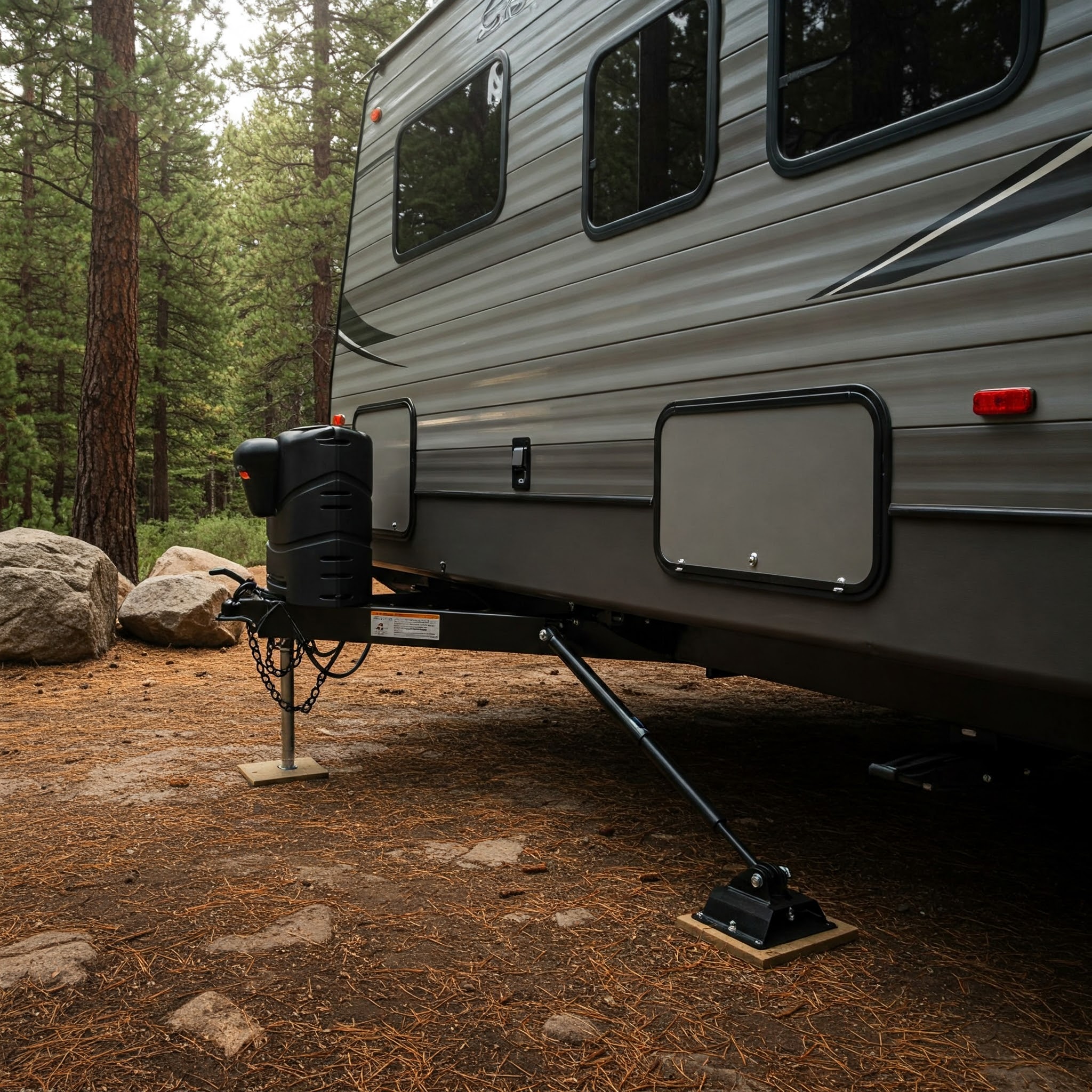
Nothing ruins a camping trip faster than a wobbly, unstable RV. Every step inside feels like walking on a boat, coffee spills with the slightest movement, and good luck trying to sleep when your camper rocks with every toss and turn! I’ve been there, and it’s why camper stabilizer jacks have become my absolute camping essential. ⚡
As someone who’s spent countless nights in various RVs and travel trailers, I’ve learned that camper stabilizer jacks aren’t just accessories—they’re necessities for a comfortable camping experience. Today, I’m sharing everything I’ve discovered about these game-changing devices.
In This Article
What Are Camper Stabilizer Jacks and Why Do You Need Them?
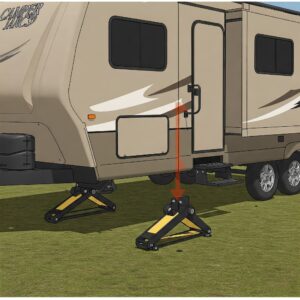
Let’s start with the basics. Camper stabilizer jacks are support systems designed to minimize the movement and rocking of your RV when parked. Unlike leveling jacks, which correct uneven terrain, stabilizers focus on reducing the natural bounce and movement that occurs when you’re inside your camper.
Think about it—have you ever tried preparing meals while someone else walks around the RV? Without proper stabilization, every step causes annoying wobbles and vibrations. This is where camper stabilizer jacks come in to save the day. ♂️
Benefits of Installing Quality Stabilizer Jacks
- ✅ Dramatically reduces rocking and movement when people move inside the camper
- ✅ Creates a more comfortable sleeping environment
- ✅ Makes cooking and daily activities more enjoyable
- ✅ Prevents wear and tear on your RV’s structure from constant movement
- ✅ Increases safety by providing additional stability in windy conditions
- ✅ Improves overall camping experience with a stable living space
️ Types of Camper Stabilizer Jacks You Should Know About
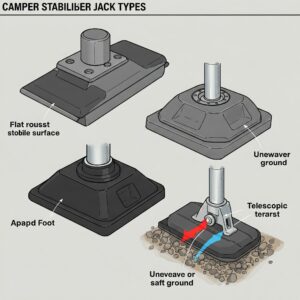
Not all camper stabilizer jacks are created equal. Before making a purchase, it’s important to understand the different types available and which ones might work best for your specific setup. Let’s explore the main varieties you’ll encounter:
1. Scissor Jacks
Scissor jacks are perhaps the most common type of camper stabilizer jacks you’ll find. These mechanical jacks operate via a screw mechanism that allows them to expand and contract in a scissor-like motion.
- ✅ Usually very affordable
- ✅ Easy to operate manually with a handle
- ✅ Can be permanently mounted or portable
- ✅ Relatively lightweight and compact when collapsed
- ❌ Manual operation can be time-consuming
- ❌ May require more maintenance than other types
For campers who value simplicity and reliability, scissor jacks offer an excellent entry point into the world of stabilization. I’ve used these extensively on smaller trailers with great success.
2. Electric Stabilizer Jacks
If convenience is your priority, electric camper stabilizer jacks might be worth the investment. These powered units allow you to stabilize your rig with the push of a button.
- ✅ Quick and effortless operation
- ✅ Some models can be operated via remote control
- ✅ Ideal for those with mobility issues
- ✅ Consistent pressure application
- ❌ More expensive than manual options
- ❌ Require power to operate
- ❌ More complex to install and repair
I upgraded to electric jacks after years of cranking manual ones, and the convenience factor alone made it worthwhile. They’re perfect for frequent campers who set up and break down camp regularly.
3. Hydraulic Stabilizer Systems
At the premium end of the spectrum, hydraulic camper stabilizer jacks offer the ultimate in convenience and stability. These systems use hydraulic pressure to level and stabilize your RV.
- ✅ Extremely stable and strong
- ✅ Often integrated with auto-leveling systems
- ✅ One-touch operation in many cases
- ✅ Provide the most solid foundation
- ❌ Most expensive option
- ❌ Professional installation usually required
- ❌ More complex maintenance needs
While not necessary for every camper, those with larger fifth wheels or motorhomes often find the investment in hydraulic systems pays dividends in comfort and convenience.
4. Stabilizer Tripods and Support Stands
These standalone camper stabilizer jacks can be placed at strategic points under your RV to provide additional support where needed most.
- ✅ Highly portable and versatile
- ✅ Can be added to supplement existing jacks
- ✅ Good for targeting specific areas of movement
- ✅ Easy to store when not in use
- ❌ Not a complete stabilization solution on their own
- ❌ Require manual placement and adjustment
I always keep a couple of tripod stands in my storage compartment as backup. They’re invaluable for providing extra support under slideouts or particularly bouncy sections of the camper.
How to Choose the Right Camper Stabilizer Jacks for Your RV
Selecting the ideal camper stabilizer jacks isn’t as simple as picking the most expensive or highest-rated option. You need to consider several factors specific to your camping setup and personal preferences.
Weight Capacity
First and foremost, your camper stabilizer jacks must be able to support the weight of your RV. Different models are rated for different weights, so knowing your camper’s specifications is essential.
- ✅ For pop-ups and small trailers: 2,000-6,000 lbs capacity usually suffices
- ✅ For mid-size travel trailers: Look for 6,000-10,000 lbs capacity
- ✅ For large fifth wheels and motorhomes: Consider 10,000+ lbs capacity
Always check your RV’s documentation or consult with the manufacturer to confirm weight requirements before purchasing stabilizers.
Ease of Use
Consider how frequently you’ll be setting up and taking down your camper stabilizer jacks. If you’re a weekend warrior who camps often, convenience may be worth paying more for.
- ✅ Manual jacks: More affordable but require physical effort
- ✅ Electric jacks: Easier to operate but depend on power availability
- ✅ Hydraulic systems: Offer the most convenience but at a premium price
Think about your typical camping routine and any physical limitations you might have. My transition to electric jacks came after developing back issues that made cranking manual jacks uncomfortable.
Installation Requirements
Some camper stabilizer jacks are designed for permanent installation, while others are portable solutions you can set up as needed.
- ✅ Permanent jacks: Provide consistent stabilization but require proper installation
- ✅ Portable jacks: Offer flexibility but need to be stored and set up each time
If you’re comfortable with basic tools and DIY projects, many permanent jack systems can be self-installed. However, for more complex systems, professional installation might be necessary.
Budget Considerations
The price range for camper stabilizer jacks varies widely, from under $50 for basic scissor jacks to several thousand dollars for comprehensive hydraulic systems.
- ✅ Entry-level: $30-$100 for basic stabilizers
- ✅ Mid-range: $100-$500 for quality manual or basic electric systems
- ✅ Premium: $500+ for advanced electric or hydraulic systems
My advice? Buy the best stabilizers your budget allows. This is one area where cutting corners can directly impact your camping comfort.
Top Camper Stabilizer Jacks Available on Amazon in 2025
After testing dozens of products and reading countless reviews, I’ve compiled a list of the best camper stabilizer jacks currently available. These selections offer excellent value across different price points and RV types.
Best Overall: Lippert Components 285318 Power Tongue Jack
This electric tongue jack offers 3,500 lbs of lifting capacity with the convenience of push-button operation. While primarily a tongue jack, it plays a crucial role in the overall stabilization system of your trailer.
- ✅ 3,500 lbs capacity
- ✅ LED light for nighttime setup
- ✅ Electric operation with manual override
- ✅ Weather-resistant housing
Best Scissor Jacks: Eaz-Lift 24″ Olympian Aluminum Stack Jacks
These lightweight yet sturdy aluminum jacks offer an excellent balance of portability and stability for small to medium campers.
- ✅ 6,000 lbs capacity per pair
- ✅ Rust-resistant aluminum construction
- ✅ Adjustable height from 13″ to 24″
- ✅ Relatively lightweight at 7.5 lbs each
Best Electric Option: Lippert 298707 Electric Stabilizer Jack Kit
This complete kit includes four electric stabilizer jacks that allow you to stabilize your entire RV with minimal effort.
- ✅ 30-second deployment time
- ✅ 3,500 lbs capacity per jack
- ✅ Includes controller and wiring harness
- ✅ Weather-resistant design
Best Budget Choice: Camco 44560 Stabilizer Jack Pad
These simple yet effective pads help distribute the weight of your existing jacks more evenly, improving stability on soft surfaces.
- ✅ UV-stabilized to prevent cracking
- ✅ Stackable design
- ✅ Compatible with most jacks
- ✅ Extremely affordable
Best for Heavy Duty Use: Lippert 191023 JT’s Strong Arm Jack Stabilizer Kit
This innovative system connects your existing stabilizer jacks with strong arm brackets, dramatically reducing side-to-side movement.
- ✅ Reduces front-to-back and side-to-side motion
- ✅ Works with existing jacks
- ✅ Heavy-duty steel construction
- ✅ No-drill installation on many trailers
Best Portable Option: Husky 81077 32″ Stabilizer Jack
These telescoping jacks are perfect for providing additional stability wherever it’s needed most on your RV.
- ✅ Adjustable height from 19″ to 32″
- ✅ 5,000 lbs capacity
- ✅ No installation required
- ✅ Rust-resistant finish
Camper Stabilizer Jacks Comparison Table
| Product | Type | Weight Capacity | Height Range | Best For | Price Range |
|---|---|---|---|---|---|
| Lippert 285318 | Electric Tongue Jack | 3,500 lbs | 18″ travel | Travel Trailers | $$$ |
| Eaz-Lift Olympian | Scissor Jack | 6,000 lbs/pair | 13″-24″ | Most RVs | $$ |
| Lippert 298707 | Electric Stabilizer Kit | 3,500 lbs/jack | Fixed | Frequent Campers | $$$$ |
| Camco 44560 | Jack Pads | N/A | N/A | Soft Ground | $ |
| Lippert 191023 | Stabilizer Kit | Works with existing | Works with existing | Extra Stability | $$$ |
| Husky 81077 | Telescoping Jack | 5,000 lbs | 19″-32″ | Versatility | $$ |
Don’t Miss These Exclusive Stabilizer Deals!
Transform your camping experience with these top-rated camper stabilizer jacks! Click on any highlighted product name to check current pricing and availability. These stabilizers will help you enjoy wobble-free camping trips your family will remember for years to come!
Step-by-Step Installation Guide for Camper Stabilizer Jacks
Installing camper stabilizer jacks doesn’t have to be intimidating. While some systems require professional installation, many can be handled as a DIY project. Here’s a general guide to help you through the process:
1. Preparation
- ✅ Ensure your RV is parked on level ground
- ✅ Gather all necessary tools (typically wrenches, drill, measuring tape)
- ✅ Read the manufacturer’s instructions thoroughly
- ✅ Disconnect power sources if working with electric components
I always recommend taking photos before you begin. This helps you remember original positioning if you need to reference it later during installation.
2. Positioning
- ✅ Identify the manufacturer’s recommended mounting locations
- ✅ Mark these locations clearly with tape or marker
- ✅ Double-check measurements before drilling any holes
- ✅ Consider clearance when the RV is in motion
Proper positioning of your camper stabilizer jacks is crucial for optimal performance. Incorrect placement can actually make stability worse or damage your RV’s frame.
3. Installation
- ✅ Follow manufacturer’s instructions for mounting hardware
- ✅ Use appropriate bolts and reinforcement plates if required
- ✅ Apply thread locker to prevent loosening from vibration
- ✅ Torque bolts to specified values (not too tight or too loose)
For electric camper stabilizer jacks, you’ll also need to connect the wiring according to the provided diagrams. If you’re uncomfortable with electrical work, this might be where professional help is worth considering.
4. Testing
- ✅ Test operation of jacks before fully relying on them
- ✅ Check for unusual noises or movement
- ✅ Verify that the jacks retract fully for travel
- ✅ Ensure controls work properly (if electric)
After installation, I recommend testing your camper stabilizer jacks several times and inspecting all mounting points for any signs of stress or movement.
️ Maintenance Tips to Extend the Life of Your Stabilizer Jacks
Proper maintenance of your camper stabilizer jacks not only extends their lifespan but also ensures they’ll work reliably when you need them most. Here are my tried-and-true maintenance practices:
Regular Cleaning
- ✅ Remove dirt, mud, and debris after each camping trip
- ✅ Pay special attention to moving parts and threads
- ✅ Use compressed air to clear out hard-to-reach spaces
- ✅ Wipe down with a clean cloth before storage
I make cleaning my camper stabilizer jacks part of my post-trip routine, just like emptying tanks and cleaning the interior. This consistent habit prevents build-up that can cause problems later.
Lubrication Schedule
- ✅ Apply appropriate lubricant to moving parts every 3-4 months
- ✅ Use silicone spray for plastic components
- ✅ Apply lithium grease to metal-on-metal contact points
- ✅ Don’t over-lubricate, which can attract dirt
Different types of camper stabilizer jacks require different lubricants. Always check your owner’s manual for specific recommendations.
Inspection Points
- ✅ Check mounting hardware for tightness monthly
- ✅ Inspect for rust or corrosion, especially after winter storage
- ✅ Look for cracks or bends in structural components
- ✅ Test operation through full range of motion
For electric camper stabilizer jacks, also inspect wiring connections and protect them from exposure to the elements.
Winter Storage Preparation
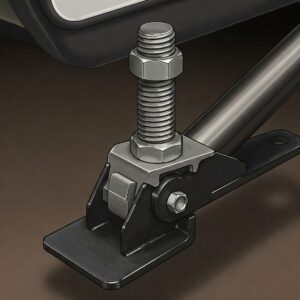
- ✅ Clean thoroughly before storage
- ✅ Apply a fresh coat of lubricant to prevent rust
- ✅ Store in retracted position to reduce stress on components
- ✅ Consider covering exposed jacks to protect from elements
In harsh winter climates, I’ve found that using a light coating of WD-40 on my camper stabilizer jacks before winter storage helps prevent seizing when camping season returns.
⚠️ Common Problems with Camper Stabilizer Jacks and How to Fix Them
Even with proper maintenance, issues can arise with your camper stabilizer jacks. Here are some common problems and their solutions:
Difficulty Extending or Retracting
- ✅ Cause: Dirt build-up or lack of lubrication
- ✅ Solution: Clean thoroughly and apply appropriate lubricant
If cleaning and lubrication don’t resolve the issue, check for bent components that might be binding during operation.
Jack Won’t Hold Position
- ✅ Cause: Worn internal components or stripped threads
- ✅ Solution: For scissor jacks, replace the screw mechanism; for hydraulic jacks, check for fluid leaks
This is a safety issue—never use camper stabilizer jacks that can’t reliably hold position under load.
Electric Jack Not Operating
- ✅ Cause: Power issue, blown fuse, or motor failure
- ✅ Solution: Check power source, fuses, and wiring connections first
Most electric camper stabilizer jacks have manual override capabilities. Familiarize yourself with this feature before you need it in an emergency.
Unusual Noises During Operation
- ✅ Cause: Metal-on-metal contact or damaged gears
- ✅ Solution: Apply lubricant; if noise persists, inspect for damaged components
Don’t ignore new or unusual sounds from your camper stabilizer jacks—they’re often early warning signs of developing problems.
️ Expert Tips for Using Camper Stabilizer Jacks Effectively
After years of RVing, I’ve picked up some invaluable tips for getting the most out of your camper stabilizer jacks:
Use Proper Technique
- ✅ Always level your RV before deploying stabilizers
- ✅ Deploy jacks in diagonal pairs for balanced support
- ✅ Apply just enough pressure to stabilize, not to lift
- ✅ Check stability by walking inside before considering setup complete
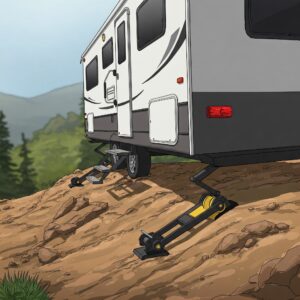
Remember, camper stabilizer jacks are designed to prevent movement, not to correct leveling issues. Using them incorrectly can damage both the jacks and your RV’s frame.
Enhance Stability with Accessories
- ✅ Use jack pads on soft ground to prevent sinking
- ✅ Consider X-chocks between tandem tires for additional stability
- ✅ Add stabilizer brackets to connect jacks for improved rigidity
- ✅ Use wheel chocks even when stabilizers are deployed
I’ve found that combining different stabilization methods creates a much more solid foundation than relying on camper stabilizer jacks alone.
Adapt to Your Environment
- ✅ In high wind areas, use additional stabilization points
- ✅ On uneven terrain, use stackable pads to create a level base
- ✅ In freezing conditions, check that jacks haven’t frozen to the ground before retracting
- ✅ On extremely soft ground, use wide distribution plates under jacks
Different camping environments present unique challenges for camper stabilizer jacks. Being prepared with the right accessories can make all the difference.
❓ Frequently Asked Questions About Camper Stabilizer Jacks
Throughout my RVing journey, I’ve heard many questions about camper stabilizer jacks. Here are answers to some of the most common ones:
Can I use stabilizer jacks to level my camper?
No, camper stabilizer jacks are designed to prevent movement, not to level your RV. Using them for leveling can damage both the jacks and your camper’s frame. Always use proper leveling equipment (like leveling blocks or a hydraulic leveling system) before deploying your stabilizers.
How many stabilizer jacks do I need?
Most travel trailers and fifth wheels benefit from at least four camper stabilizer jacks—one near each corner. Larger RVs may require additional stabilization points, especially under slideouts or areas prone to movement.
Can I drive with scissor jacks attached to my RV?
Permanently mounted camper stabilizer jacks are designed to be retracted for travel. Always verify that all jacks are fully retracted and secured before moving your RV. Driving with extended jacks can cause serious damage to both the jacks and your camper.
How much weight can stabilizer jacks support?
This varies widely by model, but most camper stabilizer jacks are rated between 2,000 and 6,000 pounds each. Remember that this rating is for stabilization, not lifting capacity. Check the manufacturer’s specifications for your specific jacks.
Do I need special tools to install stabilizer jacks?
Most camper stabilizer jacks can be installed with basic hand tools like wrenches, screwdrivers, and possibly a drill. However, some systems, particularly electric or hydraulic ones, may require specialized tools or professional installation.
Ready to Upgrade Your Camping Experience?
Don’t let another camping trip be ruined by a wobbly RV! Click on any of the recommended camper stabilizer jacks above to check prices and availability. Invest in stability now for years of comfortable camping adventures!
Conclusion: Investing in Quality Camper Stabilizer Jacks
After spending countless nights in RVs with varying levels of stability, I can confidently say that investing in quality camper stabilizer jacks is one of the best decisions you can make as an RV owner. The difference between a properly stabilized camper and one that rocks with every movement is night and day—especially when you’re trying to sleep!
Remember these key takeaways:
- ✅ Choose stabilizers appropriate for your RV’s size and weight
- ✅ Consider your camping style when deciding between manual and electric options
- ✅ Proper installation and maintenance are crucial for performance and longevity
- ✅ Use stabilizers in conjunction with other methods for optimal results
- ✅ Don’t try to cut corners—quality stabilizers are worth every penny
Whether you’re a weekend warrior or a full-time RVer, camper stabilizer jacks will transform your camping experience from wobbly to rock-solid. Your future self (and anyone camping with you) will thank you for making this essential upgrade to your rig.
Safe travels and stable camping!
More FAQs:
❓ What size stabilizer jacks do I need for my camper?
❓ Are electric camper stabilizer jacks worth it?
❓ Can stabilizer jacks be used for lifting a camper?
❓ What’s the difference between leveling jacks and stabilizer jacks?
❓ How do you properly use camper stabilizer jacks?
Recommended for You:
- Geo Pro Camper: 10 Amazing Features That Make It Perfect for Modern Adventurers
- Camping Shirts: 10 Best Options for Outdoor Comfort in 2025
- 5 Best Camper Steps for Easy RV Access: A Complete Guide for 2025
Disclaimer: This article contains affiliate links. If you purchase products through these links, we may earn a small commission at no additional cost to you.
