In This Article
When you’re planning your next outdoor adventure, nothing beats the convenience and organization that a well-designed camping kitchen station brings to your campsite. Whether you’re heading out for a weekend getaway with friends or embarking on an extended family camping expedition, having the right outdoor cooking setup can literally make or break your experience. I’ve spent countless hours testing various camping kitchen station models, and I’m excited to share everything you need to know about choosing the perfect portable outdoor kitchen for your adventures.
✨Was this helpful? Spread the word!
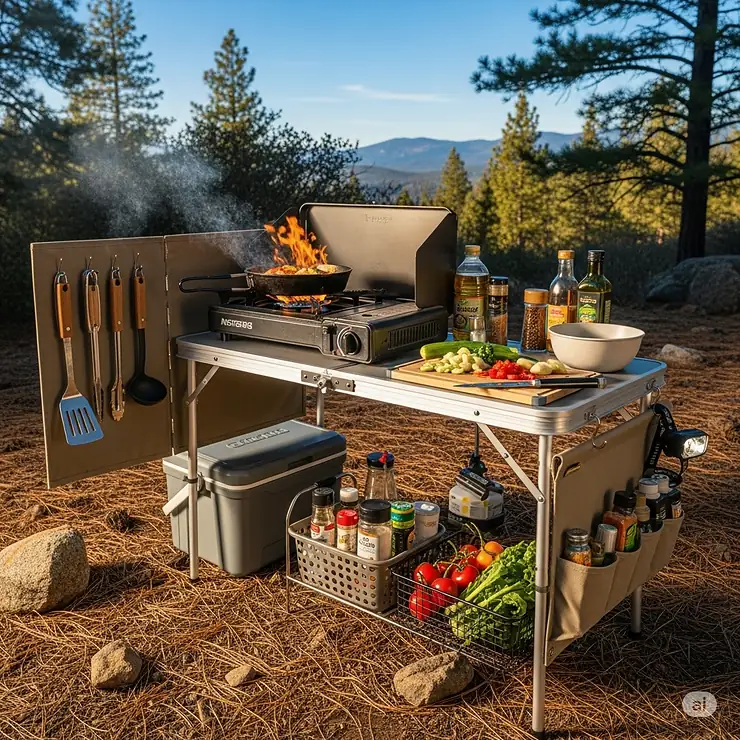
The modern camping kitchen station has evolved far beyond the basic folding table of yesteryear. Today’s innovative designs combine smart storage solutions, heat-resistant surfaces, integrated sinks, and weatherproof construction to create genuine outdoor kitchens that rival many indoor setups. From compact units perfect for couples to expansive large camping kitchen systems designed for groups, there’s a solution that matches every camping style and budget.
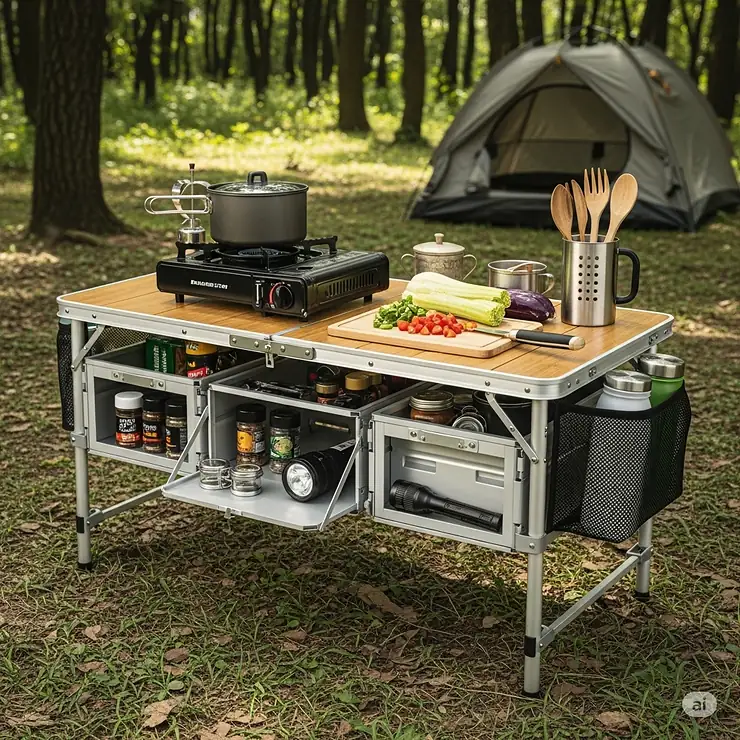
What excites me most about modern camping kitchen stations is how they’ve transformed the outdoor cooking experience. No longer do you need to balance cutting boards on uneven logs or search through multiple bags for that one essential tool. A quality family camping kitchen provides designated spaces for food prep, cooking, cleaning, and storage – all in one cohesive system that sets up in minutes and packs away just as quickly.
Understanding Different Types of Camping Kitchen Stations ️
Portable Folding Kitchen Stations
The most popular category includes lightweight, foldable designs that balance portability with functionality. These camping kitchen station models typically feature aluminum construction, heat-resistant surfaces, and multiple storage compartments. They’re ideal for car camping, RV travel, and base camp setups where you need substantial cooking space without permanent installation.
All-in-One Mobile Kitchen Units
These comprehensive systems include built-in stoves, sinks, water systems, and extensive storage. While heavier than folding models, they provide restaurant-quality functionality for serious outdoor cooks. Many include wheels for easy transport and can serve groups of 6-12 people comfortably.
Compact Travel Kitchen Organizers
Perfect for minimalist campers or those with limited vehicle space, these units prioritize smart storage and organization over cooking surface area. They excel at keeping gear organized and accessible while taking up minimal space when packed.
Specialty Application Stations
Some camping kitchen station designs target specific uses like overlanding, van life, or beach camping. These often feature unique mounting systems, weatherproofing, or specialized storage configurations.
Detailed Product Reviews and Analysis
GCI Outdoor Master Cook Station
The GCI Outdoor Master Cook Station stands out as one of the most feature-rich camping kitchen station options available today. Priced around $150-169, this unit delivers exceptional value through its comprehensive design and thoughtful engineering.
Key Specifications:
- Dimensions: 56″ L x 20″ W x 32″ H when fully deployed
- Weight: 28 pounds
- Heat-resistant aluminum tabletop (48 lb capacity)
- Integrated soft-shell collapsible sink with drain
- Telescoping lantern pole
- Three plastic side tables with cup holders
- Storage shelf capacity: 35 pounds
- One-piece folding design
What impresses me most about the GCI Outdoor Master Cook Station is its thoughtful approach to outdoor cooking workflow. The large aluminum surface provides ample space for a two-burner stove while still leaving room for food preparation. The integrated sink eliminates the need to carry separate washbasins, and the telescoping pole creates perfect ambient lighting for evening cooking sessions.
Customer feedback consistently highlights the unit’s stability and ease of setup. Many users report using it for 10+ camping trips without significant wear, testament to its robust construction. The soft-shell sink, while occasionally criticized for its drain design, provides genuine utility for light cleaning tasks and food preparation.
Pros:
✅ Exceptional surface area for the price point
✅ Genuine one-minute setup time
✅ Integrated sink adds significant convenience
✅ Stable even when fully loaded
✅ Comprehensive storage solutions
Cons:
❌ Sink drain system can be finicky
❌ No included carrying case
❌ Lantern pole can slide out during transport
VEVOR Camping Kitchen Table Series
VEVOR offers an extensive range of camping kitchen station models, with prices ranging from $89-122 depending on configuration. Their aluminum construction and reinforced X-frame design create surprisingly robust platforms for outdoor cooking.
Available Models:
- Standard version with 1 cupboard and windscreen ($89)
- Deluxe version with 3 cupboards and detachable windscreen ($122)
- Adjustable height model with 3 height settings ($95)
- Mobile version with wheels and integrated storage ($134)
The VEVOR Camping Kitchen Table series emphasizes durability and weather resistance. The aluminum frame construction resists corrosion while maintaining lighter weight than steel alternatives. The MDF tabletops, while not as heat-resistant as aluminum, provide excellent cutting surfaces and easy cleanup.
What sets VEVOR apart is their modular approach to storage. The zippered compartments allow customization based on your specific gear needs, while the windscreen system provides genuine protection in breezy conditions. Multiple customers report successful use with Blackstone griddles and other substantial cooking equipment.
Key Features:
- Reinforced X-shaped frame structure
- 3-sided detachable windscreen
- Multiple zippered storage compartments
- Quick-setup design (under 10 minutes)
- Weight capacity: 66 lbs for countertop
Camp Chef Sherpa Table & Organizer
The Camp Chef Sherpa Table & Organizer takes a unique approach to camping kitchen station design, functioning more like a portable kitchen cupboard system than a traditional cooking table. Priced around $130-150, it excels in organization and portability.
Distinctive Features:
- Four color-coded, removable storage bags
- 600-denier water-resistant fabric construction
- Aluminum roll-top table surface
- Telescoping legs with 28″ working height
- One bag lined for cooler/sink use
- Individual bag dimensions: 12″ x 11″ x 6.5″
The Camp Chef Sherpa Table revolutionizes camping organization. Each storage bag features clear identification pouches for labeling contents, making meal preparation significantly more efficient. The insulated bag maintains ice for approximately 24 hours and doubles as a washbasin when needed.
Professional outdoor guides frequently choose this system for group expeditions because it streamlines meal preparation logistics. While the tabletop surface is smaller than traditional camping kitchen station designs, the organizational benefits often outweigh this limitation for many users.
Customer reviews consistently praise the system’s ability to keep entire cooking setups organized in one portable unit. Many report fitting complete stove setups, cookware, and ingredients within the storage system.
SHIWAGIN Wooden Overland Camping Slide-Out Kitchen
For overlanding enthusiasts and van life adventurers, the SHIWAGIN Wooden Overland Camping Slide-Out Kitchen represents the pinnacle of mobile cooking solutions. Priced around $300-400, this premium system mounts directly to vehicle cargo areas.
Professional Specifications:
- High-grade birch plywood construction
- Heavy-duty drawer slides rated for outdoor use
- Dimensions: 70″ x 19″ x 11″ when deployed
- Folded size: 25″ x 19″ x 11″
- Includes ratchet straps for secure mounting
- Accommodates most 2-burner camp stoves
This camping kitchen station excels in scenarios where ground conditions are problematic. Whether you’re camping on sand, mud, rocks, or steep terrain, the vehicle-mounted system provides a stable, clean cooking platform regardless of ground conditions.
The birch plywood construction offers excellent durability while maintaining reasonable weight. Professional-grade drawer slides ensure smooth operation even after thousands of deployments. Multiple customers report successful installations in Ford Escapes, Subaru Outbacks, and various SUV models.
Installation Considerations: ⚡ Requires vehicle with suitable cargo area
⚡ Installation time: 2-3 hours initially
⚡ Weight when loaded: 40-50 pounds
⚡ Professional installation recommended for safety
Creating Your Outdoor Cooking Command Center
Setup Strategy and Workflow Optimization
Successful camping kitchen station deployment goes far beyond simply unfolding a table. Professional outdoor cooks understand that kitchen setup directly impacts cooking efficiency, safety, and enjoyment. I recommend following a systematic approach that considers wind direction, traffic flow, and safety zones.
Wind and Weather Considerations: Position your camping kitchen station with the cooking surface perpendicular to prevailing winds when possible. This minimizes flame interference while maximizing windscreen effectiveness. Many experienced campers carry a small wind meter to make informed positioning decisions, especially in mountain or coastal environments where wind patterns change throughout the day.
Traffic Flow Planning: Design your kitchen layout to minimize conflicts between cooking activities and campsite traffic. Create clear pathways for people moving between tents, vehicles, and facilities. Position storage areas for easy access without disrupting active cooking zones.
Safety Zone Management: Establish a 6-foot perimeter around active cooking areas, clearly marked and communicated to all group members. This prevents accidents and gives the cook adequate working space. Many family camping kitchen setups benefit from designated child-safe zones with engaging activities positioned away from cooking hazards.
Advanced Setup Techniques for Different Environments
Beach and Coastal Camping: Salt air and sand present unique challenges for camping kitchen station equipment. Use protective covers during windy conditions to prevent sand infiltration into storage compartments. Position your setup on the leeward side of vehicles or natural windbreaks when possible. Regularly clean aluminum components with fresh water to prevent salt corrosion.
Mountain and High-Altitude Locations: Temperature variations affect equipment performance and food safety. Many large camping kitchen users invest in insulated storage solutions to maintain consistent food temperatures. Altitude affects cooking times and propane efficiency, requiring adjustments to recipes and fuel planning.
Forest and Wooded Areas: Overhead coverage provides protection but limits natural lighting. The telescoping lantern poles on systems like the GCI Outdoor Master Cook Station become essential for adequate workspace illumination. Consider LED lighting systems with dimmer controls to avoid attracting unwanted insects.
Industry-Specific Applications and Professional Use Cases
Commercial Outfitters and Guide Services
Professional outdoor guide services have specific requirements that differ significantly from recreational camping kitchen station needs. These operations demand equipment that withstands daily use, serves large groups efficiently, and maintains sanitation standards required by health departments.
Durability Requirements: Commercial operations typically deploy camping kitchen stations 100+ days annually. Components must withstand repeated setup/breakdown cycles, transportation stresses, and varying weather conditions. Professional outfitters often choose systems with replaceable components and manufacturer support for field repairs.
Capacity and Efficiency Standards: A professional family camping kitchen setup must accommodate 12-20 people per seating. This requires larger surface areas, increased storage capacity, and workflow designs that support multiple cooks working simultaneously. Many operations use multiple coordinated stations rather than single large units.
Regulatory Compliance: Commercial food service regulations apply to many guide operations. This affects surface materials, cleaning procedures, and waste management systems. Stainless steel components and food-grade plastic storage become essential rather than optional features.
Educational and Youth Group Applications
Summer camps, scouting organizations, and educational programs represent significant camping kitchen station users. These applications prioritize safety features, ease of supervision, and educational value alongside cooking functionality.
Safety-First Design Requirements: Youth-oriented setups require enhanced safety features including rounded corners, secure storage for sharp objects, and clear sight lines for supervisor observation. Many organizations prefer systems with multiple smaller cooking zones rather than single large surfaces to distribute supervision requirements.
Educational Integration: Progressive outdoor education programs integrate cooking instruction with camping kitchen station use. This includes food safety education, nutrition planning, and outdoor cooking technique development. Equipment selection should support skill progression from basic to advanced cooking techniques.
Group Management Features: Successful youth group camping kitchen station setups include designated roles and clear organizational systems. Color-coded storage areas, clearly marked tool locations, and systematic cleanup procedures become essential for group coordination.
Emergency Preparedness and Disaster Relief
Emergency management organizations increasingly utilize high-capacity camping kitchen station systems for disaster relief and emergency shelter operations. These applications demand rapid deployment, high-volume food preparation, and operation in challenging conditions.
Rapid Deployment Requirements: Emergency response camping kitchen station systems must deploy within 30 minutes of arrival. This requires simplified setup procedures, minimal tool requirements, and components that function regardless of ground conditions. Many systems include pre-staged storage with essential cooking supplies already organized.
High-Volume Capacity: Disaster relief operations may need to feed 100+ people per meal service. This requires coordinated multiple-station setups with standardized equipment and procedures. Large camping kitchen systems must integrate with commercial-grade cooking equipment and refrigeration systems.
Extreme Condition Performance: Emergency deployments occur regardless of weather conditions. Equipment must function in rain, wind, extreme temperatures, and contaminated environments. This drives selection toward fully enclosed systems with weatherproof storage and easy decontamination procedures.
Advanced Technical Analysis and Engineering Principles
Material Science and Durability Engineering
Modern camping kitchen station design leverages advanced materials to optimize the strength-to-weight ratio while maintaining cost-effectiveness. Understanding these materials helps buyers make informed decisions based on their specific use patterns and environmental conditions.
Aluminum Alloy Selection: Premium camping kitchen station manufacturers use 6061-T6 aluminum alloy for structural components. This provides excellent corrosion resistance, weldability, and strength characteristics while maintaining workability for complex shapes. The heat treatment process (T6) increases yield strength to approximately 35,000 PSI, sufficient for portable furniture applications while remaining lightweight.
Surface Treatment Technologies: Anodizing processes create protective oxide layers that significantly extend component life in marine and high-moisture environments. Powder coating provides color stability and additional corrosion protection but may affect heat dissipation properties on cooking surfaces. Many VEVOR Camping Kitchen Table models use powder-coated finishes for enhanced aesthetics and protection.
Fabric Engineering: High-denier ripstop nylon fabrics used in systems like the Camp Chef Sherpa Table incorporate tear-resistant weaving patterns and water-repellent treatments. The 600-denier specification indicates thread weight and directly correlates to puncture resistance and longevity under field conditions.
Load Distribution and Structural Analysis
Camping kitchen station engineering must account for dynamic loading conditions including wind loads, uneven ground, and concentrated point loads from cooking equipment. Professional designs incorporate safety factors of 2-3x expected working loads.
Frame Geometry Optimization: X-braced and triangulated frame designs provide optimal rigidity while minimizing weight. The GCI Outdoor Master Cook Station utilizes these principles in its leg assembly, creating stable platforms even on uneven terrain. Computer-aided design analysis identifies stress concentration points and optimizes material distribution.
Weight Distribution Strategies: Successful large camping kitchen designs locate heavy storage areas low in the structure to minimize tipping potential. Multi-tier designs must account for shifting loads as storage compartments are accessed during cooking operations.
Performance Testing Standards and Methodology
Independent testing laboratories evaluate camping kitchen station products using standardized protocols that simulate years of field use in accelerated timeframes. Understanding these tests helps consumers interpret manufacturer claims and warranty provisions.
Cyclic Loading Tests: Repeated loading cycles simulate thousands of setup/breakdown operations. Premium manufacturers test to 10,000+ cycles, significantly exceeding typical recreational use patterns. This testing identifies fatigue failure modes and validates design life expectations.
Environmental Exposure Testing: Salt spray, UV exposure, and thermal cycling tests evaluate material performance under extreme conditions. These tests guide material selection and surface treatment specifications for different geographic markets and use patterns.
Comparative Performance Metrics: Standardized load testing, setup time measurements, and packed volume calculations enable objective comparisons between competing designs. Consumer testing organizations frequently publish these metrics for popular camping kitchen station models.
Comprehensive Setup and Usage Guide
Site Selection and Environmental Assessment
Proper camping kitchen station placement significantly impacts cooking efficiency, safety, and equipment longevity. Professional outdoor cooks conduct systematic site evaluations before equipment deployment, considering factors that recreational users often overlook.
Ground Condition Analysis: Evaluate soil stability, drainage patterns, and surface irregularities before setup. Sandy soils may require stabilization techniques, while rocky surfaces need protective measures for equipment feet. Clay soils become extremely slippery when wet, affecting safety during food preparation activities.
Microclimate Considerations: Local wind patterns, sun exposure, and natural shelter influence cooking conditions throughout the day. Position your family camping kitchen to take advantage of morning shade and afternoon wind protection. Many experienced campers use portable weather monitoring equipment to track conditions and adjust setup accordingly.
Water and Waste Management: Plan greywater disposal and potable water access during initial site selection. Position sinks and washing stations to direct wastewater toward appropriate disposal areas while maintaining convenience for cooking operations. Consider local regulations regarding wastewater disposal in sensitive environments.
Progressive Setup Procedures and Skill Development
Efficient camping kitchen station deployment requires systematic procedures that minimize setup time while ensuring proper configuration. Professional guides use standardized checklists to maintain consistency across different personnel and environmental conditions.
Initial Site Preparation (15-20 minutes): Clear the designated area of debris, rocks, and vegetation that could interfere with stable equipment placement. Level high spots and fill depressions to create a stable foundation. Many users carry lightweight folding shovels and rakes specifically for site preparation tasks.
Sequential Assembly Process (10-15 minutes): Deploy major components in logical sequence, typically starting with structural elements and progressing to accessories and storage organization. The GCI Outdoor Master Cook Station exemplifies efficient design with its one-piece folding mechanism that eliminates complex assembly sequences.
System Integration and Testing (5-10 minutes): Verify all connections, test moving parts, and confirm proper operation before loading the system with cooking equipment and supplies. This prevents accidents and identifies problems while solutions remain simple to implement.
User Compatibility and Ergonomic Considerations
Camping kitchen station design must accommodate users of different heights, physical capabilities, and cooking experience levels. Understanding these factors helps buyers select systems that work well for their specific group compositions.
Height Adjustment Strategies: Most quality camping kitchen station models provide height adjustment capabilities to accommodate users ranging from 5’2″ to 6’4″ comfortably. The VEVOR Camping Kitchen Table series offers three distinct height settings, allowing optimization for different tasks and user preferences.
Accessibility Features: Consider the needs of users with limited mobility or physical restrictions when selecting and configuring camping kitchen station equipment. Many systems can be modified with aftermarket accessories to improve accessibility without compromising functionality.
Multi-User Workflow Design: Large camping kitchen systems must accommodate multiple people working simultaneously without conflicts or safety hazards. Plan cooking zones, storage access, and traffic patterns to support coordinated meal preparation activities.
Maintenance, Longevity, and Total Cost of Ownership
Preventive Maintenance Schedules and Procedures
Systematic maintenance extends camping kitchen station life significantly while maintaining optimal performance and safety standards. Professional outfitters typically follow formal maintenance schedules that recreational users can adapt for their equipment.
Daily Field Maintenance (5-10 minutes post-use): Clean all surfaces with appropriate cleaners, remove food debris from storage areas, and inspect for damage or wear indicators. Lubricate moving parts according to manufacturer specifications, paying particular attention to hinges, slides, and adjustment mechanisms.
Weekly Deep Cleaning (30-45 minutes): Disassemble removable components for thorough cleaning and inspection. Clean fabric elements according to care instructions, typically involving mild soap solutions and air drying. Inspect fasteners, connections, and structural elements for signs of loosening or fatigue.
Seasonal Overhaul and Storage Preparation (2-3 hours): Complete disassembly, deep cleaning, and inspection of all components before long-term storage. Apply protective treatments to metal surfaces, replace worn consumable items, and update spare parts inventory. Many users photograph assembly sequences during this process to simplify spring setup procedures.
Common Issues and Detailed Troubleshooting Solutions
Understanding typical failure modes and repair techniques enables field repairs that prevent trip interruptions. Many camping kitchen station problems have simple solutions when diagnosed correctly.
Structural Component Issues: Loose fasteners account for most stability problems in camping kitchen station equipment. Carry appropriate tools for field tightening, including metric and standard hex keys, adjustable wrenches, and thread-locking compounds for critical joints.
Fabric and Surface Wear: Tear repair kits designed for outdoor gear work effectively on camping kitchen station fabric components. Clean tears promptly to prevent expansion, and use appropriate patch materials that match original fabric specifications. The Camp Chef Sherpa Table fabric construction typically responds well to standard tent repair techniques.
Moving Part Maintenance: Sluggish or binding adjustment mechanisms usually respond to cleaning and lubrication. Use white lithium grease for metal-on-metal contact points and silicone spray lubricants for plastic components. Avoid petroleum-based lubricants that may degrade rubber seals and plastic parts.
Replacement Parts Availability and Warranty Considerations
Long-term camping kitchen station ownership requires access to replacement parts and manufacturer support. Evaluate these factors during initial purchase decisions to avoid future frustrations and unexpected replacement costs.
Manufacturer Support Policies: Premium brands like GCI Outdoor typically provide parts support for 5-7 years after production discontinuation. Budget manufacturers may offer limited parts availability, making repairs difficult or impossible after short periods.
Common Wear Item Identification: Fabric components, adjustment knobs, and small fasteners represent typical wear items requiring periodic replacement. Many experienced users purchase spare parts during initial equipment acquisition to ensure availability when needed.
Warranty Coverage Analysis: Compare warranty terms carefully, paying attention to coverage duration, covered components, and claim procedures. Some manufacturers offer enhanced warranty coverage for commercial users, while others limit coverage to recreational applications.
Total Cost-of-Ownership Analysis Framework
Understanding long-term costs helps buyers make informed decisions between budget and premium camping kitchen station options. Professional analysis includes purchase price, maintenance costs, replacement schedules, and productivity benefits.
Annual Operating Cost Calculations: Factor maintenance supply costs, replacement parts, storage requirements, and transportation impacts into total ownership costs. Premium systems often demonstrate lower annual operating costs despite higher initial purchase prices.
Productivity and Convenience Valuations: Quantify time savings, improved meal quality, and enhanced camping experiences when comparing options. Many families find that efficient camping kitchen station systems enable more frequent camping trips, effectively reducing per-use costs.
Resale Value Considerations: Quality camping kitchen station equipment typically retains 40-60% of original value after 3-5 years of recreational use. This residual value should factor into total cost calculations, particularly for premium systems with strong brand recognition.
Comparative Analysis and Competitive Assessment
Traditional vs. Modern Camping Kitchen Approaches
The evolution from basic camping tables to integrated camping kitchen station systems represents a fundamental shift in outdoor cooking philosophy. Understanding these differences helps buyers appreciate the value proposition of modern systems.
Traditional Approach Limitations: Basic folding tables require separate solutions for storage, food preparation, cooking surfaces, and cleanup. This fragmented approach increases setup time, reduces organization, and often results in higher total costs when quality components are selected for each function.
Modern Integration Benefits: Contemporary camping kitchen station designs address these limitations through integrated approaches that combine multiple functions in optimized packages. The GCI Outdoor Master Cook Station exemplifies this philosophy with its combination of cooking surface, storage, sink, and lighting in a single deployable unit.
Transitional Considerations: Many camping enthusiasts transition gradually from basic equipment to comprehensive systems. This evolutionary approach allows skill development and budget spreading while building understanding of personal preferences and requirements.
Price-to-Benefit Ratio Analysis Across Market Segments
Camping kitchen station pricing varies dramatically based on features, quality, and target markets. Understanding value propositions at different price points helps buyers optimize their investment decisions.
Budget Segment ($50-100): Entry-level options like basic VEVOR Camping Kitchen Table models provide essential functionality with limited features and shorter service life expectations. These systems work well for occasional use and budget-conscious buyers testing camping kitchen station concepts.
Mid-Range Market ($100-200): This segment includes popular models like the GCI Outdoor Master Cook Station that balance features, quality, and value. Most recreational users find optimal value in this price range, with sufficient features for regular camping without premium pricing.
Premium Category ($200-400+): High-end systems like the SHIWAGIN Wooden Overland Camping Slide-Out Kitchen target serious enthusiasts and professional applications. These justify premium pricing through superior materials, extended warranties, and specialized features.
Integration with Existing Camping Equipment Systems
Successful camping kitchen station selection requires consideration of existing equipment compatibility and workflow integration. Many buyers overlook these factors, resulting in inefficient or frustrating camping experiences.
Stove and Cooking Equipment Compatibility: Verify that your existing cooking equipment works properly with prospective camping kitchen station surfaces and configurations. Heat output, stability requirements, and safety clearances vary significantly between different stove designs and kitchen station platforms.
Storage and Transportation Coordination: Consider how camping kitchen station equipment integrates with existing storage and transportation systems. Vehicle capacity, packing sequences, and setup logistics affect practical usability regardless of individual product quality.
Power and Utility System Integration: Modern camping often includes electrical systems for lighting, refrigeration, and device charging. Plan how camping kitchen station placement interacts with power distribution, cable routing, and equipment protection requirements.
Long-Term Value Propositions and Upgrade Pathways
Smart camping kitchen station buyers consider long-term equipment evolution and upgrade potential during initial selection processes. This forward-thinking approach prevents costly mistakes and supports gradual system improvement.
Modular System Advantages: Systems that support incremental expansion and component upgrades provide better long-term value than monolithic designs. The Camp Chef Sherpa Table organizational approach enables gradual enhancement through additional storage solutions and accessories.
Technology Integration Potential: Consider how emerging technologies like portable power stations, LED lighting systems, and smart temperature monitoring might integrate with camping kitchen station designs. Future-ready systems accommodate technological evolution without requiring complete replacement.
Skill Development and Evolving Requirements: Camping skills and preferences change over time, often leading to different equipment requirements. Versatile systems that support multiple cooking styles and group sizes adapt better to changing needs than specialized designs.
Case Studies and Real-World Success Stories
Multi-Generational Family Camping Operations
The Johnson family of Colorado represents a typical multi-generational camping group that transformed their outdoor experiences through strategic camping kitchen station implementation. Their story illustrates practical benefits and challenges faced by many families.
Initial Situation and Challenges: The extended Johnson family group includes grandparents in their 70s, middle-aged parents, and children ranging from toddlers to teenagers. Traditional camping setups created accessibility challenges for elderly members while requiring excessive setup time that reduced actual recreational activities.
Solution Implementation: After extensive research, they selected the GCI Outdoor Master Cook Station as their primary cooking platform, supplemented by a Camp Chef Sherpa Table for organization and storage. This two-system approach provides adequate capacity for their 12-person group while maintaining reasonable transportation requirements.
Measured Outcomes and Benefits: Setup time decreased from 45 minutes to 15 minutes, allowing more time for family activities. The improved organization system reduced meal preparation time by approximately 30%, while the elevated cooking surfaces enabled comfortable participation by all family members regardless of physical limitations.
Lessons Learned and Optimization: The family discovered that coordination between multiple systems requires practice and clear role assignments. They developed laminated setup checklists and established permanent equipment assignments to maximize efficiency. Their success led three other family groups to implement similar systems.
Professional Outdoor Education Program Implementation
The Mountain West Outdoor School operates adventure education programs for college students, requiring reliable, efficient cooking systems for groups of 15-20 participants in wilderness settings.
Operational Requirements and Constraints: Programs operate in remote locations with limited resupply opportunities, requiring self-sufficient systems that support meal preparation for large groups. Equipment must withstand heavy use by inexperienced users while maintaining safety standards required by institutional policies.
Equipment Selection and Rationale: The program selected multiple VEVOR Camping Kitchen Table units with 3-compartment configurations, providing distributed cooking capacity and redundancy for safety. The aluminum construction and reinforced frames handle student use while remaining within transportation weight limits.
Performance Results and Student Feedback: Meal preparation times decreased by 40% compared to previous ground-level systems, allowing more time for educational activities. Student evaluations consistently highlight improved cooking experiences and enhanced group coordination around structured cooking stations.
Scalability and Program Expansion: The successful implementation led to program expansion from 3 to 7 annual sessions, with camping kitchen station systems enabling larger group management without proportional staff increases. The school now offers equipment training as part of their outdoor leadership curriculum.
Commercial Outfitter Efficiency Improvements
Bear Country Adventures, a Wyoming-based outfitter, upgraded their camp kitchen systems to improve client satisfaction and operational efficiency during multi-day wilderness expeditions.
Business Challenge and Market Pressures: Client expectations for outdoor comfort continue increasing while regulatory requirements for food safety become more stringent. Traditional camping approaches couldn’t meet these evolving demands while maintaining cost-effective operations.
Strategic Equipment Investment: The company invested in GCI Outdoor Master Cook Station units for each base camp, supplemented by specialized storage systems and transportation solutions. The integrated sink capabilities proved particularly valuable for meeting health department requirements during inspections.
Quantified Business Results: Client satisfaction scores increased 15% in post-trip evaluations, with cooking and meal quality receiving the highest improvement ratings. Food safety compliance improved significantly, eliminating previous violations and associated fines. Operating efficiency improvements reduced guide labor requirements by approximately 20%.
Competitive Advantage and Market Position: The enhanced camp kitchen capabilities enabled premium pricing strategies and differentiation from competitors using basic equipment. Word-of-mouth referrals increased 25%, directly attributable to improved client experiences during meal times.
Future Trends and Market Evolution
Emerging Technologies and Innovation Directions
The camping kitchen station industry continues evolving rapidly, driven by advances in materials science, manufacturing technologies, and changing consumer expectations for outdoor experiences.
Smart Integration and Connectivity: Future camping kitchen station designs will likely incorporate digital technologies including temperature monitoring, inventory tracking, and integration with smartphone applications for recipe guidance and nutrition planning. Early prototypes already demonstrate Bluetooth-enabled temperature sensors and LED lighting systems with programmable control.
Advanced Materials and Manufacturing: Carbon fiber components, 3D-printed custom fittings, and advanced aluminum alloys promise significant weight reductions without compromising strength. These technologies will enable larger, more capable systems while maintaining portability requirements for diverse transportation methods.
Modular Design Evolution: Increasing emphasis on customization and adaptability drives development of modular systems that accommodate diverse user requirements within standardized component frameworks. This approach reduces manufacturing costs while improving user satisfaction through personalized configurations.
Market Trends and Consumer Behavior Shifts
Understanding broader market trends helps predict future camping kitchen station development directions and guides informed purchasing decisions for current equipment needs.
Sustainability and Environmental Consciousness: Growing environmental awareness drives demand for durable, repairable equipment that minimizes environmental impact throughout product lifecycles. Manufacturers increasingly emphasize recyclable materials, reduced packaging, and take-back programs for end-of-life equipment.
Experience-Focused Consumption: Modern consumers prioritize experience quality over equipment quantity, driving demand for premium camping kitchen station systems that enable better outdoor experiences rather than basic functionality. This trend supports market premium pricing for innovative, high-quality solutions.
Multi-Generational and Accessible Design: Demographic trends toward multi-generational recreation groups increase demand for camping kitchen station systems that accommodate diverse physical capabilities and experience levels. Universal design principles become increasingly important for market success.
Personalization and Customization Possibilities
Future camping kitchen station development will likely emphasize individual customization over one-size-fits-all approaches, enabled by advanced manufacturing technologies and direct-to-consumer business models.
Configurator-Based Ordering Systems: Online configurators will enable customers to specify exact component combinations, colors, and features during ordering processes. This approach reduces inventory requirements while providing personalized solutions that match specific use cases and preferences.
Aftermarket Modification and Enhancement: Growing maker movement and 3D printing accessibility enable user modifications and enhancements to standard camping kitchen station designs. Manufacturers may embrace this trend through open-source design elements and modification-friendly architectures.
Regional and Cultural Adaptations: Global market expansion drives development of region-specific features and configurations that address local cooking traditions, climate conditions, and regulatory requirements. This creates opportunities for specialized products within larger product families.
Industry Predictions and Development Trajectories
Analyzing current trends and technological capabilities enables informed predictions about future camping kitchen station development directions over the next 5-10 years.
Weight Reduction and Portability Improvements: Continued materials advances will enable 20-30% weight reductions in premium camping kitchen station systems while maintaining or improving functionality. This will expand addressable markets to include backpacking and human-powered transportation applications.
Integration with Renewable Energy Systems: Growing adoption of portable solar power and battery systems will drive camping kitchen station designs that incorporate electrical components including lighting, refrigeration, and food processing capabilities. This integration will blur lines between camping and home kitchen functionality.
Artificial Intelligence and Automation: Early-stage AI applications including meal planning, inventory management, and cooking assistance will gradually integrate into camping kitchen station systems. While full automation remains distant, advisory systems and smart assistance features will enhance user experiences significantly.
Investment and Purchase Decision Framework
Cost-Benefit Analysis Frameworks and Decision Matrices
Systematic analysis methods help buyers make informed camping kitchen station investment decisions that align with their specific requirements, budgets, and usage patterns.
Multi-Criteria Decision Analysis: Develop weighted scoring systems that account for factors including initial cost, expected service life, feature requirements, transportation constraints, and user satisfaction priorities. This systematic approach prevents emotional purchasing decisions that often lead to buyer’s remorse.
Total Cost-of-Ownership Modeling: Calculate comprehensive costs including purchase price, accessories, maintenance supplies, replacement parts, and opportunity costs associated with setup time and efficiency losses. Many buyers discover that premium systems provide better long-term value despite higher initial costs.
Use Case Matching and Requirements Analysis: Document specific requirements including group size, cooking styles, transportation methods, storage constraints, and frequency of use. Match these requirements against product specifications to identify optimal solutions rather than purchasing based on features or marketing claims.
Budget Planning and Financing Considerations
Strategic financial planning enables optimal camping kitchen station investments while managing cash flow and budget constraints effectively.
Staged Implementation Strategies: Many families successfully implement camping kitchen station systems through phased approaches that spread costs over time while building experience and refining requirements. Start with core functionality and add enhancements based on actual usage patterns and identified needs.
Value Retention and Resale Planning: Premium camping kitchen station equipment typically retains significant value, making upgrade paths more affordable through trade-in or resale arrangements. Factor this residual value into purchase decisions, particularly when comparing budget and premium options.
Group Purchase and Cost Sharing: Extended family groups or camping clubs often share costs for high-quality systems that exceed individual budget constraints. Develop clear usage agreements and maintenance responsibilities to prevent conflicts while maximizing equipment utilization.
Success Metrics and Performance Evaluation
Establish clear success criteria before camping kitchen station implementation to guide selection decisions and evaluate results objectively.
Quantitative Performance Indicators: Measure setup time, cleanup time, meal preparation efficiency, and storage effectiveness before and after implementation. Document these metrics to validate investment decisions and identify optimization opportunities.
Qualitative Experience Improvements: Survey family members or group participants regarding satisfaction improvements, stress reduction, and overall camping experience enhancement. These subjective measures often provide the most compelling justification for quality equipment investments.
Long-Term Usage and Adaptation Assessment: Monitor actual usage patterns compared to initial expectations, identifying features that prove valuable and others that remain unused. This analysis guides future upgrade decisions and recommendations to other potential buyers.
Product Comparison Tables and Buying Guide
| Camping Kitchen Station Model | Price Range | Weight | Setup Time | Key Features | Best For |
|---|---|---|---|---|---|
| GCI Outdoor Master Cook Station | $150-169 | 28 lbs | 1-2 minutes | Soft-shell sink, telescoping pole, heat-resistant surface | Car camping, families |
| VEVOR Camping Kitchen Table | $89-122 | 25-30 lbs | 5-10 minutes | Windscreen, aluminum frame, multiple storage | Budget-conscious campers |
| Camp Chef Sherpa Table | $130-150 | 13.4 lbs | 3-5 minutes | Color-coded storage bags, organizational system | Organized campers, guides |
| SHIWAGIN Overland Kitchen | $300-400 | 35-40 lbs | 10-15 minutes | Vehicle-mounted, birch plywood, slide-out design | Overlanding, van life |
| Nice C Camping Kitchen Station | $80-120 | 20-25 lbs | 8-12 minutes | Windshield, light stand, multiple organizers | Casual camping |
Transform Your Camping Experience Today!
Ready to revolutionize your outdoor cooking setup? These carefully selected camping kitchen stations will elevate your adventures from basic meal preparation to gourmet outdoor dining experiences. Click on any highlighted product to check current pricing and customer reviews! ⭐
Just one click – help others make better buying decisions too!
| Feature Comparison | GCI Master | VEVOR Series | Camp Chef Sherpa | Overland Kitchen |
|---|---|---|---|---|
| Heat Resistance | ✅ Aluminum surface | ✅ Aluminum/MDF | ✅ Aluminum roll-top | ✅ Birch plywood |
| Built-in Sink | ✅ Soft-shell collapsible | ❌ Not included | ✅ Lined storage bag | ❌ Not included |
| Storage Capacity | ⭐⭐⭐⭐ | ⭐⭐⭐⭐⭐ | ⭐⭐⭐⭐⭐ | ⭐⭐⭐ |
| Portability | ⭐⭐⭐ | ⭐⭐⭐⭐ | ⭐⭐⭐⭐⭐ | ⭐⭐ |
| Weather Resistance | ⭐⭐⭐⭐ | ⭐⭐⭐⭐⭐ | ⭐⭐⭐ | ⭐⭐⭐⭐⭐ |
Frequently Asked Questions About Camping Kitchen Stations ❓
❓ What size camping kitchen station do I need for my family?
❓ How much weight can a typical camping kitchen station support?
❓ Can camping kitchen stations work with all types of camp stoves?
❓ What's the difference between budget and premium camping kitchen stations?
❓ How do I clean and maintain my camping kitchen station properly?
Take Your Outdoor Adventures to the Next Level!
Investing in the right camping kitchen station transforms outdoor cooking from a chore into an enjoyable centerpiece of your camping experience. Whether you choose the feature-rich GCI Outdoor Master Cook Station, the organized efficiency of the Camp Chef Sherpa Table, or the rugged versatility of VEVOR systems, you’re making an investment in countless memorable meals shared under the stars.
The evolution from basic camping tables to sophisticated outdoor kitchen systems reflects our growing appreciation for quality outdoor experiences. Today’s camping kitchen station designs combine innovative engineering, thoughtful features, and robust construction to create genuine outdoor kitchens that rival many indoor setups for functionality and convenience.
Remember that the best camping kitchen station is the one that matches your specific needs, usage patterns, and budget constraints. Consider your typical group size, cooking styles, transportation limitations, and setup preferences when making your selection. Whether you’re planning weekend getaways with friends, extended family camping adventures, or serious overlanding expeditions, there’s a camping kitchen station system designed to enhance your outdoor cooking experiences.
Don’t let another camping trip pass with inadequate cooking facilities that limit your menu options and create unnecessary stress. The difference between struggling with basic equipment and enjoying the convenience of a well-designed family camping kitchen is transformative – and more affordable than you might expect.
Limited Time: Upgrade Your Camping Setup Now!
Don’t miss these incredible deals on premium camping kitchen stations! Each product link provides access to current pricing, detailed specifications, and real customer reviews. Your next outdoor adventure deserves the convenience and reliability these systems provide! ️
Recommended for You:
- 15 Ultimate Camp Kitchen Set Up Ideas That Transform Your Outdoor Cooking Experience in 2025
- 10+ Best Kitchen Kit Camping Solutions for Ultimate Outdoor Cooking in 2025
- 7 Ultimate Portable Camp Kitchen Solutions That Will Transform Your 2025 Camping Adventures
Disclaimer: This article contains affiliate links. If you purchase products through these links, we may earn a small commission at no additional cost to you.
✨ Found this helpful? Share it with your friends!
