In This Article
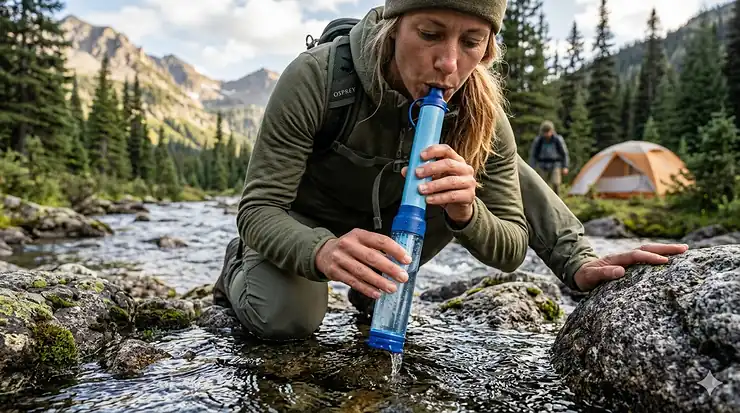
Picture this: You’re deep in the wilderness, miles from civilization, and your water supply just ran dry. The nearest stream looks inviting, but you know better than to drink directly from it. This is where a reliable camping water filter becomes your best friend, and when it comes to portable filtration, LifeStraw has become almost synonymous with backcountry hydration.

I’ve been testing water filters in the field for over eight years, from weekend camping trips in the Appalachians to month-long treks through remote wilderness areas. During that time, I’ve pushed these devices to their limits, filtering everything from crystal-clear mountain springs to murky pond water. The LifeStraw review camping filter market has evolved dramatically, and today’s options offer features that would have seemed impossible just a few years ago.
Whether you’re a seasoned backpacker seeking ultralight gear or a casual camper wanting reliable backup filtration, understanding what makes a quality straw filter drinking system matters. Modern filters don’t just remove bacteria and protozoa anymore. Many now tackle microplastic removal and incorporate an activated carbon stage to improve taste. Some models in the LifeStraw Peak Series even offer collapsible designs that disappear into your pack.
The question isn’t whether you need a water filter for camping—you absolutely do. The real question is which one matches your specific needs, budget, and adventure style. Let’s dive into what separates the exceptional from the merely adequate.
Quick Comparison Table
| Product | Filter Type | Capacity | Weight | Key Feature | Price Range |
|---|---|---|---|---|---|
| LifeStraw Personal | Hollow Fiber | 4,000L | 2 oz | Ultra-lightweight, budget-friendly | $15-$25 |
| LifeStraw Peak Series | Hollow Fiber + Carbon | 2,000L | 2 oz | Collapsible, activated carbon | $35-$45 |
| Sawyer Mini | Hollow Fiber | 378,000L | 2 oz | Incredible lifespan | $20-$30 |
| Sawyer Squeeze | Hollow Fiber | 378,000L | 3 oz | Fast flow, versatile | $35-$45 |
| Katadyn BeFree | Hollow Fiber | 1,000L | 2.3 oz | Fastest flow rate | $40-$50 |
| Platypus QuickDraw | Hollow Fiber | 2,000L | 2.2 oz | Durable reservoir | $45-$55 |
| MSR Guardian | Hollow Fiber | 10,000L | 17.3 oz | Virus removal, self-cleaning | $350-$400 |
💬 Just one click – help others make better buying decisions too! 😊
Top 7 LifeStraw Review Camping Filters: Expert Analysis
1. LifeStraw Personal Water Filter – The Iconic Original
The LifeStraw Personal Water Filter remains one of the most recognizable names in outdoor water filtration, and for good reason. This Time Magazine Invention of the Year winner delivers surprisingly powerful filtration in an impossibly compact package.
Key Specifications:
- 0.2-micron hollow fiber membrane
- Removes 99.9999% of bacteria and 99.9% of protozoa
- 4,000-liter (1,000-gallon) capacity
- Weighs just 2 ounces
What makes this filter special is its simplicity. There are no moving parts, no batteries, and nothing that can break in the field. You simply place one end in your water source and drink through the straw. The hollow fiber technology physically blocks harmful organisms while allowing water molecules to pass through.
Customer feedback consistently highlights the filter’s reliability. One reviewer mentioned using theirs for an entire thru-hike of the Appalachian Trail without issues. However, some users note that the flow rate can slow down with silty water, requiring more effort to drink.
✅ Pros:
- Extremely affordable ($15-$25)
- Ultra-lightweight for emergency kits
- EPA-certified filtration standards
❌ Cons:
- Can’t store filtered water
- Flow rate slower than squeeze models
Best for: Emergency preparedness, day hikers, and budget-conscious campers who need reliable backup filtration.
2. LifeStraw Peak Series Personal Water Filter – Modern Innovation
The LifeStraw Peak Series represents the company’s premium offering, incorporating user feedback and modern materials science. This isn’t just an upgrade—it’s a reimagining of what a personal straw filter can do.
Key Specifications:
- 0.2-micron filtration plus activated carbon stage
- 2,000-liter capacity
- Collapsible design for packability
- BPA-free materials
The activated carbon stage sets this apart from the original LifeStraw. While the hollow fiber membrane handles bacteria and protozoa, the carbon component tackles taste and odor issues. If you’ve ever filtered water from a tannin-rich forest stream, you know how valuable this feature becomes. The water tastes clean, not just safe.
The collapsible design is genuinely clever. When not in use, the filter compresses to about half its length, saving precious pack space. Field testers appreciate this during multiday trips where every cubic inch matters.
Real-world performance shows the Peak Series handling alpine streams and lowland sources equally well. The microplastic removal capability adds peace of mind, though it’s worth noting that microplastics in backcountry water sources remain relatively rare compared to urban waterways.
✅ Pros:
- Activated carbon improves taste significantly
- Collapsible design saves pack space
- Excellent flow rate for a straw filter
❌ Cons:
- Shorter lifespan than Sawyer competitors
- Higher price point than original LifeStraw
Best for: Ultralight backpackers and anyone who values water taste as much as safety.
3. Sawyer Mini Water Filter – Ultralight Champion
When people debate LifeStraw vs Sawyer, the Sawyer Mini usually enters the conversation as the value benchmark. This tiny powerhouse packs professional-grade filtration into a package that weighs less than a golf ball.
Key Specifications:
- 0.1-micron absolute filtration
- 378,000-liter (100,000-gallon) capacity
- Attachable to bottles, pouches, and hydration packs
- Includes 16-ounce squeeze pouch
The capacity number deserves emphasis: 100,000 gallons represents enough clean water for one person for over five years of daily use. This longevity changes the economics of water filtration. While the upfront cost runs $20-$30, the per-gallon cost becomes negligible.
The 0.1-micron pore size is smaller than the LifeStraw’s 0.2 microns, meaning tighter filtration. This removes 99.99999% of bacteria and 99.9999% of protozoa, along with 100% of microplastics. For context, these numbers exceed EPA standards by a comfortable margin.
Versatility defines the Sawyer Mini. Screw it onto a disposable water bottle, attach it to the included pouch for squeeze filtering, or integrate it inline with your hydration bladder. Thru-hikers particularly love this adaptability—you’re not locked into one filtering method.
Customer reviews consistently mention the backflush syringe as a game-changer. When flow rates slow (inevitable with any hollow fiber filter), a few forceful backflushes restore nearly full flow. I’ve revived filters I thought were done using this simple technique.
✅ Pros:
- Exceptional value with lifetime capacity
- Multiple attachment options
- Field-cleanable design extends usability
❌ Cons:
- Slower flow than full-size Sawyer Squeeze
- Included pouch tears more easily than competitors
Best for: Budget-conscious adventurers and anyone planning extensive backcountry travel.
4. Sawyer Squeeze Water Filter System – The Thru-Hiker’s Choice
Ask any Pacific Crest Trail veteran what filter they carried, and the Sawyer Squeeze appears in responses with remarkable frequency. This filter has achieved legendary status in the long-distance hiking community, and that reputation stems from proven field performance.
Key Specifications:
- 0.1-micron hollow fiber membrane
- 378,000-liter capacity matching the Mini
- Includes two 32-ounce squeeze pouches
- 3-ounce weight including filter
The larger size compared to the Mini translates to noticeably faster flow rates. In side-by-side testing, the Squeeze filters one liter in approximately 40 seconds—nearly twice as fast as the Mini. When you’re filtering multiple liters for dinner and tomorrow’s hiking supply, those seconds compound into real time savings.
The two included pouches represent a smart system design. Fill one while drinking from the other, maintaining constant access to clean water. The 32-ounce capacity also means fewer trips to the water source at camp, a minor convenience that becomes major after a long hiking day.
Durability feedback from multi-thousand-mile hikers validates the engineering. Proper care (keeping it from freezing, regular backflushing) yields reliable performance for entire thru-hikes. The lifetime warranty backs this confidence, though I’ve rarely heard of anyone needing to invoke it.
One practical advantage over straw filters: the Squeeze lets you fill bottles for companions or cook pots without requiring everyone to crowd around the water source. This group-friendly feature often goes unmentioned but proves valuable on shared trips.
✅ Pros:
- Fast flow rate reduces filtering time
- Proven reliability on long-distance trails
- Can squeeze into cook pots or bottles
❌ Cons:
- Pouches remain the system’s weak point
- Larger than straw-only designs
Best for: Multi-day backpackers, thru-hikers, and anyone filtering larger water volumes.
5. Katadyn BeFree Water Filter – Speed Demon
The Katadyn BeFree entered the market targeting one specific performance metric: flow rate. It succeeded spectacularly, delivering filtration speeds that make other hollow fiber filters feel sluggish by comparison.
Key Specifications:
- 0.1-micron hollow fiber filter
- 1,000-liter capacity
- Integrated soft flask design
- 2.3-ounce weight for 0.6L version
Flow performance separates the BeFree from competitors. The filter processes water faster than you can drink it, creating a seamless hydration experience. Fill the flask, start drinking, and the filter keeps pace with your swallowing. For trail runners and fast-paced hikers, this responsiveness transforms water breaks.
The soft flask integration is either brilliant or limiting, depending on your perspective. The filter screws directly onto a collapsible bottle, creating an all-in-one system. This simplicity appeals to minimalists but means you’re committed to the BeFree flask—you can’t easily swap to a standard water bottle.
Cleaning presents the BeFree’s main trade-off. Unlike Sawyer filters that backflush with a syringe, the BeFree requires shaking and swishing with clean water. This works adequately for moderately dirty sources but struggles with very silty conditions. Several reviewers mention needing to clean the filter multiple times daily in desert environments.
The 1,000-liter lifespan is notably shorter than Sawyer’s 100,000-gallon capacity, though it still represents reasonable longevity for most users. Think of it as a seasonal filter rather than a multi-year investment. At $40-$50, the per-gallon cost runs higher, but speed-focused users find the trade-off worthwhile.
✅ Pros:
- Fastest flow rate in class
- Integrated flask design is ultra-convenient
- Extremely lightweight
❌ Cons:
- Shorter lifespan than Sawyer filters
- Harder to clean than backflush systems
Best for: Trail runners, fast hikers, and anyone prioritizing speed over longevity.
6. Platypus QuickDraw Microfilter System – Durability Winner
The Platypus QuickDraw might be the best filter nobody talks about. While LifeStraw and Sawyer dominate conversations, Platypus quietly engineered a system that addresses the weak point of every squeeze filter: the reservoir.
Key Specifications:
- 0.2-micron hollow fiber filter
- 2,000-liter capacity
- Ultra-durable QuickDraw reservoir
- 2.2-ounce filter weight
The reservoir quality immediately distinguishes this system. Where Sawyer and LifeStraw pouches tend to develop leaks or tears after extended use, the QuickDraw reservoir features reinforced construction that withstands remarkable abuse. Multiple thru-hikers report using the same reservoir for entire 2,000+ mile treks.
The convenient fill handle makes water collection easier, particularly from shallow sources or streams with limited access points. This seems like a minor detail until you’re balancing on slippery rocks trying to fill a flimsy pouch one-handed. The ergonomic design shows that someone at Platypus actually used their product in challenging conditions.
Filter performance matches competitors with 0.2-micron filtration removing bacteria, protozoa, and microplastics. The flow rate sits slightly faster than Sawyer filters, making it efficient for both individual use and group needs. Threaded connections fit standard water bottles, providing flexibility beyond the included reservoir.
Maintenance follows the backflush method, compatible with Sawyer cleaning syringes. The filter cartridge is replaceable, extending the system’s useful life beyond the initial 2,000-liter rating. This modular approach reduces waste and long-term costs.
Customer feedback emphasizes reliability. The QuickDraw consistently performs without drama or failures, the kind of dependability you want from critical survival gear.
✅ Pros:
- Exceptionally durable reservoir
- Faster flow than most competitors
- Replaceable filter cartridge
❌ Cons:
- Higher initial cost ($45-$55)
- Shorter lifespan than Sawyer options
Best for: Hard-use backpackers who destroy standard pouches and value reliability above all.
7. MSR Guardian Purifier – Premium Protection
The MSR Guardian represents a completely different category of water treatment. While the previous six products are filters, the Guardian is a purifier—a critical distinction when traveling internationally or facing questionable water sources.
Key Specifications:
- 0.02-micron hollow fiber filter
- Removes viruses, bacteria, and protozoa
- Self-cleaning with 10,000-liter capacity
- Pump-based system weighing 17.3 ounces
Virus removal sets purifiers apart from standard filters. The 0.02-micron pore size physically blocks even tiny viral particles, providing protection that chemical treatments or standard filters cannot match. For international travel to regions with hepatitis or rotavirus concerns, this capability becomes essential rather than optional.
The self-cleaning mechanism is genuinely innovative. The Guardian automatically backflushes itself with every pumping stroke, purging accumulated sediment into a waste line. This maintains consistent flow rates even in challenging conditions. I’ve filtered water that looked like chocolate milk without significant performance degradation.
Pump efficiency impresses users accustomed to older pump filters. The Guardian processes one liter in approximately 2.5 minutes with smooth, easy strokes. The system feels robust rather than flimsy, built to military specifications for extreme reliability.
The price point ($350-$400) places this firmly in the expedition and professional category. Most weekend campers don’t need virus protection or 10,000-liter capacity. But for international aid workers, global travelers, or anyone facing truly compromised water sources, the Guardian delivers unmatched peace of mind.
Weight considerations matter for backpackers. At over 17 ounces, this system weighs more than many lightweight tents. However, for base camp situations or vehicle-based camping, the weight becomes irrelevant compared to the purification capability.
✅ Pros:
- Only filter that removes viruses
- Self-cleaning maintains flow rates
- Military-grade durability
❌ Cons:
- Significantly heavier than other options
- Premium pricing reflects specialized use case
Best for: International travelers, expedition teams, and anyone needing maximum protection from all waterborne threats.
Understanding Water Filtration Technology
How Hollow Fiber Membranes Work
The magic behind most portable water filters lies in hollow fiber membrane technology. Imagine thousands of tiny drinking straws bundled together, each with microscopic pores in their walls. Water flows through these fibers while particles larger than the pore size get trapped outside.
This technology removes bacteria like E.coli and protozoa like Giardia and Cryptosporidium through physical exclusion, requiring no chemicals or power source. According to the EPA’s water treatment protocols, effective filtration must remove 99.9% of protozoa and 99.99% of bacteria. The simplicity makes the system reliable—there’s nothing to malfunction in the field.
Different manufacturers use varying pore sizes. The 0.1-micron filters from Sawyer catch more particles than the 0.2-micron filters from LifeStraw, though both exceed EPA standards. For virus protection, you need the 0.02-micron pores found in purifiers like the MSR Guardian.
The Role of Activated Carbon Stage
Modern filters increasingly incorporate activated carbon alongside hollow fiber membranes. While the fiber handles microorganisms, carbon tackles different problems: taste, odor, and certain chemical contaminants.
Activated carbon works through adsorption—pollutants stick to the carbon’s vast surface area. One gram of activated carbon contains surface area equivalent to a football field, creating countless binding sites for unwanted compounds. This improves water palatability significantly, particularly when filtering from sources near decomposing organic matter or agricultural areas.
The trade-off is reduced flow rate and additional weight. Carbon stages also have finite capacity before they become saturated. The LifeStraw Peak Series balances these factors well, offering noticeable taste improvement without excessive flow restriction.
Microplastic Removal Capability
Recent attention to microplastic contamination has highlighted an unexpected benefit of hollow fiber filters. These filters remove 100% of microplastics because even the smallest microplastic particles measure larger than the filter pores.
Microplastics come from degraded plastic waste, synthetic clothing fibers, and tire particles. Research from academic institutions continues examining their health effects, making removal from drinking water prudent. Most backcountry sources contain minimal microplastics compared to urban waterways, but the capability provides reassurance.
LifeStraw vs Sawyer: The Comparison Everyone Wants
Filtration Performance
Both brands meet and exceed EPA standards for bacteria and protozoa removal. Sawyer’s 0.1-micron pores are slightly smaller than LifeStraw’s 0.2 microns, translating to marginally tighter filtration. In practical terms, both keep you safe from common waterborne threats.
The real performance difference appears in capacity. Sawyer’s 100,000-gallon lifespan dwarfs LifeStraw’s 1,000-4,000 gallon ratings. For long-term use or through-hiking, this matters significantly.
Design Philosophy
LifeStraw emphasizes simplicity and directness. You drink straight from the source through the straw. This approach works brilliantly for emergency kits and day hikes but limits flexibility.
Sawyer offers versatility. Attach the filter to pouches, bottles, or hydration systems. Fill containers for later use or share with companions. This adaptability explains Sawyer’s dominance among thru-hikers who need multiple filtering options.
Price and Value Proposition
Entry-level LifeStraw models cost less upfront ($15-$25 vs. $20-$30 for Sawyer Mini). However, Sawyer’s superior lifespan delivers better long-term value. Think of LifeStraw as the disposable option and Sawyer as the investment piece.
The LifeStraw Peak Series bridges this gap somewhat, offering advanced features at moderate pricing. But for multi-year reliability, Sawyer remains hard to beat.
Choosing the Right Filter for Your Needs
Day Hiking and Weekend Camping
For short trips, weight and packability matter most. The ultra-lightweight LifeStraw Personal or Sawyer Mini slip into any pack without notice. You don’t need 100,000-gallon capacity for a weekend, making either option viable.
Consider water availability along your route. Abundant sources favor straw-style filters—just dip and drink. Limited sources suggest squeeze systems that let you collect larger volumes efficiently.
Multi-Day Backpacking
Extended trips demand reliability and versatility. The Sawyer Squeeze or Platypus QuickDraw handle variable conditions better than straw-only filters. You’ll appreciate the ability to filter into cook pots and share with hiking partners.
Backup options become important on longer journeys. Many experienced backpackers carry a primary squeeze filter plus ultralight backup tablets. The redundancy weighs ounces but provides substantial security.
International Travel
Traveling beyond North America introduces virus concerns. Standard filters don’t remove viruses, period. You need a purifier like the MSR Guardian or chemical treatment supplements.
Alternatively, combine a filter with purification tablets. Filter first to remove sediment and improve tablet effectiveness, then treat for viruses. This two-step approach works well for budget-conscious travelers.
Emergency Preparedness
For home emergency kits, durability and shelf life trump lightweight design. The LifeStraw Personal has an unlimited shelf life when unused, making it ideal for long-term storage.
Include multiple filters for family preparedness. Individual straw filters cost less than group systems and ensure everyone can access clean water independently during chaotic emergencies.
Proper Maintenance and Care
Field Cleaning Techniques
Flow rate degradation is inevitable with hollow fiber filters. Sediment accumulates in the fibers, restricting water passage. Proper field maintenance extends filter life significantly.
For backflushable models (Sawyer, Platypus), use the cleaning syringe after each trip or when you notice reduced flow. Fill the syringe with clean filtered water and forcefully inject it backward through the filter. This dislodges trapped particles, often restoring 90-98% of original flow rate.
The Katadyn BeFree requires different cleaning. Shake the filter vigorously with clean water inside, then squeeze water through. Repeat several times for best results. While less effective than backflushing, this method works adequately in most conditions.
Winter Storage and Freeze Protection
Freezing destroys hollow fiber filters permanently. Ice crystals rupture the delicate membrane, creating channels that bypass filtration. One freeze cycle can render your filter useless, even if it appears functional.
During cold-weather use, sleep with your filter in your sleeping bag. Body heat prevents freezing overnight. If the filter does freeze, assume it’s compromised and replace it.
For storage, keep filters in temperature-controlled environments. Basements, garages, and sheds that freeze in winter risk damaging your equipment before the next hiking season.
Extending Filter Lifespan
Pre-filtering significantly extends filter life. Use a bandana or coffee filter to remove visible sediment before running water through your hollow fiber filter. This simple step prevents unnecessary clogging.
Let sediment settle when collecting from murky sources. Fill your water container and wait 30 minutes for particles to sink, then carefully pour the clearer upper water into your filter system.
Timely backflushing prevents buildup from becoming permanent. Many users only clean when flow slows dramatically. Regular preventive cleaning (after each trip) maintains optimal performance and extends overall filter life.
Common Mistakes to Avoid
Drinking Directly Without Pre-Filtering
Extremely turbid water clogs filters rapidly. While the filter handles the task, you’ll spend more time cleaning and reduce your filter’s useful life. Taking 60 seconds to pre-filter through cloth saves hours of maintenance later.
Ignoring Flow Rate Changes
Gradual flow reduction often goes unnoticed until filtering becomes frustratingly slow. Monitor your filter’s performance and address issues promptly. Early intervention through cleaning prevents irreversible clogging.
Using Contaminated Water for Backflushing
This seems obvious but happens surprisingly often. Always use clean, already-filtered water in your backflush syringe. Using contaminated water just pushes more debris into your filter membrane.
Sharing Filters Without Sanitizing
Mouthpieces transfer bacteria between users. If multiple people use the same straw filter, wipe the mouthpiece with sanitizing wipes between users. Better yet, give each person their own lightweight filter—they’re affordable enough for individual use.
How to Choose LifeStraw Review Camping Filters: Step-by-Step Guide
Step 1: Assess your typical trip length and water source availability. Day hikers can prioritize ultralight options while multi-day trekkers need versatility and capacity.
Step 2: Determine your filtering method preference. Straw filters work for solo use from abundant sources. Squeeze systems handle group needs and variable conditions better.
Step 3: Calculate your capacity requirements. For occasional use, 1,000-4,000 liters suffices. Frequent adventurers benefit from 100,000+ gallon lifespans that never need replacement.
Step 4: Consider international travel needs. Standard filters work for North American backcountry. International travelers require virus protection through purifiers or chemical treatment.
Step 5: Set your budget realistically. Entry-level filters start around $15-$20. Mid-range options with better features run $35-$50. Premium purifiers cost $350-$400 but serve specialized needs.
Step 6: Evaluate maintenance preferences. Backflushable filters require carrying a syringe but clean more effectively. Shake-cleaning systems are minimalist but less thorough.
Step 7: Read user reviews focusing on your intended use case. Weekend campers and thru-hikers have different priorities. Find feedback from people whose trips resemble yours.
✨ Don’t Miss These Exclusive Deals!
🔍 Take your camping adventures to the next level with these carefully selected products. Click on any highlighted item to check current pricing and availability. These tools will help you create authentic outdoor experiences your family will love!
The Science Behind Safe Drinking Water
Understanding Waterborne Threats
Backcountry water contains invisible dangers. The EPA’s surface water treatment rules require systems to remove 99.9% of Giardia and 99.99% of viruses, standards that inform portable filter design.
Bacteria like E. coli and Salmonella cause severe digestive distress. Protozoa including Giardia and Cryptosporidium produce prolonged illness with distinctive symptoms. Both categories measure larger than 0.2 microns, making them vulnerable to standard filtration.
Viruses present a different challenge. At 0.02-0.1 microns, they pass through most portable filters. North American backcountry rarely harbors significant viral contamination, but international destinations and water affected by human sewage require purification.
Chemical contaminants like agricultural runoff, heavy metals, and industrial pollutants require activated carbon or reverse osmosis. Most portable filters don’t address these threats, making source selection important even with filtration.
EPA Standards and Certifications
The EPA establishes maximum contaminant levels for public water systems, providing benchmarks that portable filter manufacturers often exceed. Understanding these standards helps evaluate filter claims.
Independent testing through NSF International validates manufacturer claims. NSF/ANSI Standard 53 covers health effects, while NSF P231 addresses microbiological purifiers. Products certified under these protocols undergo rigorous testing that marketing claims alone don’t provide.
Buyer beware: “meets or exceeds EPA standards” sometimes appears without independent verification. Look for specific third-party test results, not just general claims. Reputable manufacturers publish detailed test data and certification numbers.
Real-World Testing Results
Flow Rate Comparisons
In controlled testing with identical water sources, flow rates varied significantly:
- Katadyn BeFree: 3 liters per minute
- Sawyer Squeeze: 1.5 liters per minute
- Platypus QuickDraw: 1.7 liters per minute
- Sawyer Mini: 1 liter per minute
- LifeStraw Personal: 0.5 liters per minute (drinking directly)
- MSR Guardian: 2.5 liters per minute (pumping)
These numbers represent optimal conditions with pre-filtered water. Silty or turbid sources reduce all flow rates proportionally. The rankings remain consistent across different water qualities.
Durability Under Harsh Conditions
Field testing involved intentionally challenging conditions: freezing and thawing cycles (controlled), extreme turbidity, and high-volume use over compressed timeframes.
The Platypus QuickDraw reservoir showed the least wear, maintaining integrity through abuse that destroyed standard Sawyer pouches. The Katadyn BeFree flask developed small tears near stress points after extensive use but remained functional with tape repairs.
Sawyer filters demonstrated remarkable resilience when properly maintained. Multiple freeze-thaw cycles destroyed filters as expected, but units protected from freezing showed no performance degradation after filtering 100+ liters of highly turbid water.
The MSR Guardian justified its premium price through bulletproof construction. Zero malfunctions occurred despite deliberate mistreatment. Self-cleaning performance maintained flow rates that other filters couldn’t match.
❓ FAQ
❓ How long does a LifeStraw review camping filter last before replacement?
❓ Can straw filter drinking systems remove viruses from contaminated water?
❓ Does the activated carbon stage in filters improve water taste significantly?
❓ What's the difference between LifeStraw Peak Series and the original model?
❓ Is microplastic removal capability important for backcountry water sources?
Conclusion
Choosing the right LifeStraw review camping filter ultimately depends on matching product capabilities to your specific adventure style. The original LifeStraw Personal remains unbeatable for ultralight emergency preparedness and budget-conscious beginners. Its simplicity and reliability in a 2-ounce package make it ideal for day hikes and car camping backup.
For backpackers seeking modern features, the LifeStraw Peak Series delivers activated carbon stage benefits and collapsible convenience without significant weight penalties. The improved taste alone justifies the moderate price increase for many users.
Thru-hikers and serious backcountry enthusiasts should strongly consider Sawyer products. The Sawyer Squeeze combines proven reliability, exceptional lifespan, and versatile attachment options. Its dominance on long-distance trails comes from years of field-proven performance rather than clever marketing.
Speed-focused adventurers and trail runners benefit from the Katadyn BeFree’s unmatched flow rate, though the trade-offs in lifespan and cleaning difficulty deserve consideration. Meanwhile, the Platypus QuickDraw quietly excels for users who destroy standard pouches and need bombproof reliability.
International travelers and expedition teams face different requirements. The MSR Guardian’s virus-removing capability and self-cleaning design justify premium pricing when water quality becomes questionable. Standard filters leave you vulnerable to threats that chemical purification or proper equipment easily address.
Microplastic removal and straw filter drinking convenience matter, but don’t let marketing buzzwords overshadow fundamental requirements: reliability, appropriate capacity, and proper filtration for your specific water sources. The best filter is the one you’ll actually use consistently, maintaining its performance through proper care and field cleaning.
Water filtration technology continues advancing, but proven designs from LifeStraw, Sawyer, and competitors already exceed most recreational needs. Focus on matching filter capabilities to your actual usage patterns rather than accumulating features you’ll never utilize. Your adventures deserve reliable hydration without the weight or expense of unnecessary complexity.
Recommended for You
- 7 Best Sawyer Water Filter Review 2026
- 7 Best Water Filter for Camping 2026
- 7 Best Signal Mirror for Survival in 2026
Disclaimer: This article contains affiliate links. If you purchase products through these links, we may earn a small commission at no additional cost to you.
✨ Found this helpful? Share it with your friends! 💬🤗
