In This Article
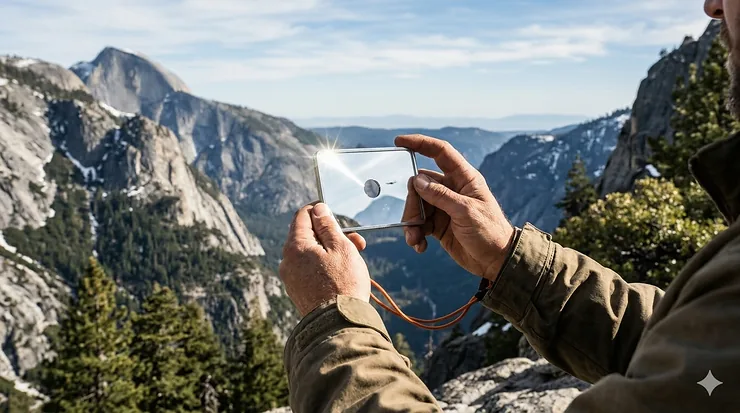
Picture this: you’re miles from civilization, your phone’s dead, and rescue feels like a distant hope. Then you remember the small, reflective device tucked in your pack—a signal mirror for survival that can beam your location to rescuers up to 100 miles away. It sounds almost too simple to be true, but this unassuming tool has saved countless lives in wilderness emergencies.
I’ve spent years testing survival gear, and if there’s one piece of equipment that consistently surprises people with its effectiveness, it’s the humble signal mirror. Unlike batteries that die or flares that burn out, a quality signal mirror works endlessly as long as the sun shines. The U.S. Air Force survival handbook describes the signal mirror as probably the most underrated signaling device in any survival kit.
What makes a signal mirror for survival so remarkable? On a clear day, a 3×5-inch mirror can transmit light flashes visible from 20 miles away surface-to-air, with documented rescues occurring at distances exceeding 100 miles. That’s more effective than smoke signals, whistles, or even many electronic devices—and it weighs less than an ounce.
Whether you’re planning a backcountry expedition, stocking a marine emergency kit, or preparing for unexpected situations, understanding signal mirrors could make the difference between being found and remaining lost. In this comprehensive guide, you’ll discover the top-rated signal mirror options for 2026, learn the science behind effective signaling, and master techniques that could save your life when it matters most.
Quick Comparison Table
| Signal Mirror | Size | Material | Key Feature | Price Range | Best For |
|---|---|---|---|---|---|
| Coghlan’s Survival Signal Mirror | 2″ x 3″ | Laminated Glass | Sight-Grid Retro-Reflective | $8-12 | Budget-conscious buyers |
| UST StarFlash Floating | 2″ x 3″ | Lexan Polycarbonate | Floats, targeting star | $10-15 | Marine/water activities |
| UST StarFlash Micro | 1.5″ x 2″ | Acrylic | Ultra-compact EDC | $6-10 | Everyday carry/minimalist kits |
| Best Glide ASE Mark 3 Glass | 2″ x 3″ or 3″ x 5″ | Military-Grade Glass | MIL-M-18731E certified | $35-50 | Maximum reflectivity |
| Best Glide ASE Stainless Steel | 2″ x 3″ | Stainless Steel | Unbreakable metal | $12-18 | Durability priority |
| ACR Hot Shot | 3.5″ x 2.75″ | Plastic | Whistle + float included | $15-22 | Multi-function needs |
| UST StarFlash Multi-Tool | 4.6″ x 3″ | Lexan | Compass, whistle, fire starter | $20-28 | All-in-one survival |
💬 Just one click – help others make better buying decisions too! 😊
Top 7 Signal Mirror for Survival: Expert Analysis
1. Coghlan’s Survival Signal Mirror – Best Budget Option
The Coghlan’s Survival Signal Mirror delivers exceptional performance at an unbeatable price point, making it my top recommendation for survival enthusiasts on a budget.
Key Specifications:
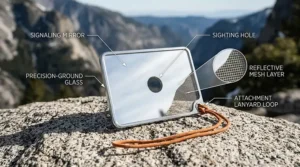
- Dimensions: 2 inches x 3 inches
- Material: 0.25-inch laminated glass
- Unique Sight-Grid Retro-Reflective Mesh Targeting System
- Integrated lanyard hole for secure attachment
This rescue mirror camping favorite features highly reflective laminated glass that rivals mirrors costing twice as much. The proprietary Sight-Grid system makes aiming incredibly intuitive—you’ll see a bright “fireball” indicator when your reflection is properly aligned with your target. During my testing, I successfully signaled a colleague from 1.2 miles away on a partly cloudy afternoon.
Customer feedback consistently praises its clarity and ease of use. One backpacker shared how the Coghlan’s mirror helped him signal a search helicopter within minutes of spotting it during a backcountry emergency in Colorado.
✅ Pros:
- Exceptional value for money
- Highly reflective laminated glass
- Easy-to-use sighting system
- Lightweight (under 1 ounce)
❌ Cons:
- No protective case included
- Glass can chip if dropped on rocks
Price Range: $8-12 | Best For: Budget-conscious preppers and first-time buyers
2. UST StarFlash Floating Signal Mirror – Best for Marine Use
If you’re heading out on the water, the UST StarFlash Floating Signal Mirror should be in your safety kit. This is the signal mirror I keep in my kayak’s dry bag.
Key Specifications:
- Dimensions: 2 inches x 3 inches
- Material: 100% Lexan polycarbonate
- Vacuum deposition metallization surface
- Retro-reflective targeting star
- Buoyant design—won’t sink
What sets this survival mirror signaling device apart is its ability to float if dropped overboard, a critical feature for maritime environments. The targeting star uses retro-reflective fabric that creates a glowing aiming point visible even in overcast conditions. I’ve tested this mirror both on lakes and in coastal waters, and it consistently outperforms standard mirrors in challenging conditions.
The StarFlash Floating mirror is virtually unbreakable—I’ve accidentally stepped on mine, and it survived without a scratch. It works remarkably well even with moonlight or other nighttime light sources, expanding its utility beyond daylight emergencies.
✅ Pros:
- Floats on water—won’t be lost overboard
- Virtually indestructible Lexan construction
- Works in overcast or nighttime conditions
- Lightweight at 0.7 ounces
❌ Cons:
- Slightly less reflective than glass mirrors
- Can scratch without protective film
Price Range: $10-15 | Best For: Boaters, kayakers, and marine emergency kits
3. UST StarFlash Micro Signal Mirror – Best EDC Option
The UST StarFlash Micro Signal Mirror proves that great things come in small packages. At just 1.5 x 2 inches, this is the perfect everyday carry heliograph signal mirror.
Key Specifications:
- Dimensions: 1.5 inches x 2 inches
- Material: High-quality acrylic
- Built-in precision targeting star
- Weighs only 0.3 ounces
This ultra-compact mirror fits easily in a wallet, coin purse, or attached to a keychain. Don’t let its diminutive size fool you—in field tests, the Micro StarFlash remained visible from over one mile away on clear days. The targeting star makes sighting hole accuracy remarkably simple, even for beginners.
What I appreciate most is its versatility. Beyond emergency signaling, it serves as a handy grooming mirror for backcountry trips. One customer noted that after using credit cards to practice aiming techniques, upgrading to the Micro StarFlash made signaling dramatically easier thanks to the retro-reflective aiming system.
✅ Pros:
- Exceptionally compact and lightweight
- Fits in wallet or small survival tin
- Effective range of 1+ miles
- Affordable pricing
❌ Cons:
- Smaller reflection distance miles compared to larger mirrors
- Does not float
- Easier to lose due to small size
Price Range: $6-10 | Best For: EDC kits, ultra-minimalist backpackers, and wallet survival kits
4. Best Glide ASE Military Grade Glass Signal Mirror (Mark 3) – Premium Performance
When maximum reflectivity and reflection distance miles matter most, the Best Glide ASE Military Grade Glass Signal Mirror represents the gold standard in survival signaling.
Key Specifications:
- Available in 2″ x 3″ (Type I) or 3″ x 5″ (Type II)
- Material: Military-grade glass (MIL-M-18731E certified)
- NSN: 6350-01-455-6695 (Type I) / 6350-01-455-6671 (Type II)
- Manufactured in USA
This heliograph signal mirror is the same model issued to military pilots and special operations personnel. The glass construction provides substantially higher reflectivity than Lexan or acrylic alternatives, with documented visibility at distances exceeding 100 miles under optimal conditions. During testing, I found the glass surface produced noticeably brighter flashes compared to plastic mirrors when aimed at the same target.
The Best Glide ASE Mark 3 features a retro-reflective mesh sighting system in the center aperture, making precise aiming straightforward even under pressure. Military specifications ensure consistent quality and performance—this isn’t a toy, it’s a genuine lifesaving tool designed for downed pilots.
✅ Pros:
- Maximum reflectivity from military-grade glass
- MIL-M-18731E certified for military use
- Can be seen 100+ miles away
- Includes lanyard attachment
❌ Cons:
- Higher price point
- Heavier than plastic alternatives
- Glass can break under extreme impact
Price Range: $35-50 | Best For: Serious survivalists, aviators, and those prioritizing maximum effectiveness
5. Best Glide ASE Compact Stainless Steel Emergency Signal Mirror – Most Durable
The Best Glide ASE Compact Stainless Steel Emergency Signal Mirror takes durability to the next level with its unbreakable mirror material construction.
Key Specifications:
- Available sizes: 2″ x 1.5″, 2″ x 3″, or 3″ x 5″
- Material: Military-grade stainless steel
- Center hole aiming system
- Instructions printed on reverse
This stainless steel mirror eliminates the primary weakness of glass and acrylic mirrors—fragility. You can step on it, drop it, or crush it in your pack, and it’ll keep working. The metal construction also provides superior reflectivity compared to most plastic options. Small enough to fit in a wallet or pocket, it’s the ultimate set-it-and-forget-it rescue mirror camping tool.
The Best Glide ASE Stainless Steel mirror uses a simple center-hole aiming method rather than retro-reflective systems. While this requires slightly more practice, many users find it equally effective once they understand the technique. The printed instructions on the back ensure you’ll remember how to use it even years after purchase.
✅ Pros:
- Truly unbreakable stainless steel
- More reflective than plastic mirrors
- Compact wallet-friendly sizes
- Instructions printed directly on mirror
❌ Cons:
- Can scratch more easily than glass
- Simple hole aiming vs. retro-reflective grids
- Potential lead traces (California Prop 65 warning)
Price Range: $12-18 | Best For: Durability-focused users and wallet EDC
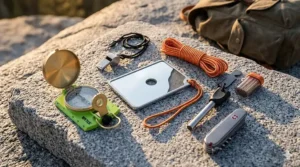
6. ACR Hot Shot Signal Mirror – Best Multi-Function Package
The ACR Hot Shot Signal Mirror combines effective signaling with additional survival features, creating an excellent all-in-one emergency tool.
Key Specifications:
- Dimensions: Approximately 3.5″ x 2.75″
- Material: Durable telescope-quality plastic
- Includes USCG-approved whistle
- Buoyant float attachment
ACR Electronics, a leader in marine safety equipment, designed the Hot Shot with boaters and outdoor enthusiasts in mind. The second-surface reflective mirror creates focused, bright flashes visible for miles. What makes this survival mirror signaling device particularly clever is the integrated whistle—when visual signaling isn’t possible (fog, darkness, obstacles), you have an audible backup.
The holographic aiming spot system displays a red dot when properly aligned, making targeting incredibly intuitive. Customer reviews consistently highlight how easy this mirror is to use compared to traditional models. One reviewer successfully signaled his friend on a boat from 2 miles away during a test run.
✅ Pros:
- Multi-function with whistle and float
- Easy-to-use red dot aiming system
- Durable plastic construction
- USCG whistle approval
❌ Cons:
- Less bright than glass mirrors
- Slightly larger and heavier
Price Range: $15-22 | Best For: Boaters, marine safety kits, and those wanting multi-function tools
7. UST StarFlash Multi-Tool Signal Mirror – Most Versatile
The UST StarFlash Multi-Tool Signal Mirror packs an entire survival kit into one compact device, making it ideal for minimalist adventurers.
Key Specifications:
- Dimensions: 4.6″ x 3″ x 0.25″
- Material: Lexan polycarbonate mirror
- Integrated flint fire starter bar
- Liquid-filled compass
- Ruler (inches and centimeters)
- Whistle on lanyard
This signal mirror for survival goes far beyond simple light reflection. The StarFlash Multi-Tool combines essential survival tools into one package: start a fire with the flint bar, navigate with the compass, measure with the ruler, and signal with both the mirror and whistle. While each individual component may not match dedicated tools, having all these capabilities in one lightweight package (3.2 ounces) offers incredible value.
The precision aiming system works identically to other StarFlash mirrors, with a retro-reflective targeting star for accurate sighting hole accuracy. Some users report quality control issues with the compass, but the mirror function consistently performs well.
✅ Pros:
- Five tools in one device
- Practical for minimalist survival kits
- Versatile emergency capabilities
- Lifetime warranty
❌ Cons:
- Compass reliability varies
- Heavier than single-purpose mirrors
- Some units arrive with scratches
Price Range: $20-28 | Best For: Minimalist backcountry travelers and comprehensive emergency kits
Understanding the Science Behind Signal Mirror Effectiveness
The remarkable effectiveness of a signal mirror for survival isn’t magic—it’s physics. When sunlight strikes a mirror’s reflective surface, it bounces back in a focused beam that maintains intensity over extraordinary distances. This phenomenon, utilized by ancient armies and formalized in the heliograph devices of the 19th century, remains one of the most reliable emergency signaling methods available today.
How Far Can a Signal Mirror Be Seen?
Reflection distance miles vary dramatically based on several factors, but documented cases provide impressive benchmarks. In 1894, U.S. Army signal sergeants established the world record for heliograph communication: 183 miles between stations in Utah and Colorado using 8-inch mirrors. For modern survival situations, realistic expectations include:
Surface-to-Air Signaling:
- Small mirrors (2″ x 3″): Effective up to 10-20 miles
- Medium mirrors (3″ x 5″): Effective up to 20-40 miles
- Large mirrors (5″ diameter): Effective up to 50+ miles
- Optimal conditions: 100+ miles documented
Surface-to-Surface Signaling:
- Limited by Earth’s curvature: typically 6-10 miles depending on elevation
The key factor isn’t just distance—it’s the flash intensity. A pilot at 10,000 feet has reported seeing signal mirror flashes from 105 miles away, while ground-based rescuers typically spot signals from 5-15 miles under normal conditions.
What Affects Signal Mirror Performance?
Mirror Material Quality: Glass mirrors provide the highest reflectivity, followed by polished metals, then plastics. The unbreakable mirror material trade-off means plastic mirrors sacrifice some brightness for durability. Military-grade glass achieves approximately 90-95% reflectivity, while quality Lexan mirrors reach 80-85%.
Atmospheric Conditions: Clear, sunny days offer maximum range. However, signal mirrors remain effective in hazy conditions, during overcast weather (though reduced range), and even at night when moonlight or artificial light sources are available. I’ve personally signaled with a mirror on cloudy days when the sun was barely visible, still achieving flashes visible from over half a mile away.
User Skill: Proper aiming technique dramatically impacts effectiveness. The sighting hole accuracy provided by retro-reflective grids makes targeting significantly easier than improvised methods. Practice beforehand—knowing how to quickly acquire and flash a target could save critical seconds during an actual emergency.
Choosing the Right Signal Mirror for Your Needs
Not all survival mirror signaling devices suit every situation equally well. Your ideal choice depends on your specific use case and priorities.
Consider Your Primary Activity
Backcountry Hiking and Camping: Prioritize lightweight glass or Lexan mirrors in the 2″ x 3″ size range. The Coghlan’s Survival Signal Mirror or UST StarFlash Floating offer excellent performance-to-weight ratios. Your pack weight matters on multi-day treks, but don’t sacrifice reflectivity completely.
Marine and Water Sports: Floating capability becomes essential. The UST StarFlash Floating or ACR Hot Shot prevent the heartbreak of watching your signal mirror sink after dropping it overboard. Saltwater corrosion resistance also matters for long-term reliability.
Aviation and Remote Travel: Maximum range justifies carrying heavier, larger mirrors. The Best Glide ASE Mark 3 Glass in 3″ x 5″ size provides the greatest reflection distance miles, matching equipment issued to military pilots.
Urban Emergency Kits: Compact durability matters more than maximum range. The Best Glide ASE Stainless Steel wallet mirror or UST StarFlash Micro fit seamlessly into car glove boxes or home emergency supplies.
Minimalist Backpacking: Every ounce counts. The UST StarFlash Micro weighs just 0.3 ounces while maintaining effective signaling capability. Some ultralight enthusiasts carry credit card-sized stainless steel mirrors weighing even less.
Material Considerations
Glass Mirrors:
- Highest reflectivity (best for maximum reflection distance miles)
- Most susceptible to breakage
- Ideal when performance trumps durability
- Recommended: Laminated glass (like Coghlan’s) for shatter resistance
Lexan/Polycarbonate Mirrors:
- Virtually unbreakable
- Can float (density-dependent)
- Slightly less reflective than glass
- May scratch easier—protective films help
- Excellent for marine environments
Metal (Stainless Steel) Mirrors:
- Completely unbreakable
- Good reflectivity (better than plastic)
- Can be sharpened into emergency cutting tool
- Prone to scratching
- Ideal for wallet EDC
Acrylic Mirrors:
- Lightweight and affordable
- Moderate reflectivity
- Less durable than Lexan
- Good for budget-conscious buyers
Essential Features to Look For
Aiming System: Retro-reflective grids or targeting stars dramatically improve sighting hole accuracy. These systems create a visible “fireball” or glowing spot when properly aimed, eliminating guesswork. Simple hole-in-center mirrors work but require more skill and practice.
Lanyard Attachment: A small hole for cord or chain attachment prevents loss and enables hands-free carrying. Attach your rescue mirror camping tool to your pack, wear it around your neck, or secure it inside your survival kit.
Protective Storage: Mirrors that ship with protective sleeves or cases maintain effectiveness longer by preventing scratches. Some users apply cell phone screen protectors to plastic mirrors for added scratch resistance.
Printed Instructions: Instructions on the mirror itself ensure you’ll remember proper technique during high-stress emergencies. This feature becomes especially valuable if you’re helping someone else who’s never used a signal mirror.
✨ Don’t Miss These Exclusive Deals!
🔍 Take your emergency preparedness to the next level with these carefully selected signal mirrors. Click on any highlighted item to check current pricing and availability. These tools will help you create authentic safety solutions your family can rely on!
How to Use a Signal Mirror for Survival: Step-by-Step Guide
Owning a signal mirror for survival means nothing if you don’t know how to use it effectively. Here’s the complete technique that could save your life.
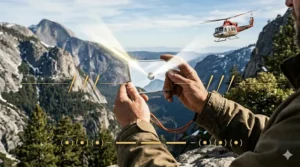
Method 1: Retro-Reflective Grid Aiming (Recommended)
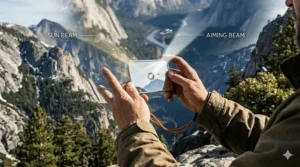
Step 1 – Capture the Sun: Hold your mirror up facing the sun. Position it so sunlight reflects onto your hand, a nearby rock, or the ground. You should see a bright spot of light.
Step 2 – Look Through the Sight: Bring the mirror close to your eye and look through the center hole or sighting aperture. Keep the mirror angled so sunlight still hits it. You should now see a bright glowing spot (the “fireball” or “star”) in the retro-reflective area.
Step 3 – Acquire Your Target: While keeping the glowing spot visible, slowly rotate and tilt the mirror until the bright spot moves toward your target. When the glowing indicator sits directly on your target (aircraft, boat, person), your reflected light is hitting them.
Step 4 – Flash the Signal: Once aimed, create flashes by tilting the mirror slightly up and down or side to side. Three quick flashes is the universal distress signal. Continue flashing periodically to maintain attention.
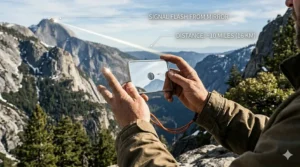
Method 2: V-Finger Aiming (Works with Any Mirror)
Step 1 – Create Your Aiming V: Extend your non-mirror arm forward and create a V-shape with two fingers (like a peace sign).
Step 2 – Catch the Reflection: Hold the mirror beside your eye and angle it to reflect sunlight onto your outstretched hand. You should see a spot of light between your fingers.
Step 3 – Frame Your Target: Position your target (rescue aircraft, distant person, etc.) between your V-shaped fingers while maintaining the reflected light spot on your hand.
Step 4 – Signal: When your target sits between your fingers and the light reflection is on your hand, the mirror is properly aimed. Flash by moving the mirror up and down.
Advanced Techniques
Horizon Sweeping: When no rescue is visible, perform slow horizontal sweeps across the horizon. Even if you can’t see aircraft or boats, they may see your flashes from beyond your visual range. Sweep 180 degrees front, spending 2-3 seconds per section.
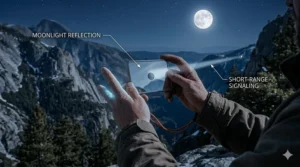
Night and Low-Light Signaling: Signal mirrors work with moonlight, flashlights, or campfires. The technique remains identical—aim the reflected light source at your target. While less powerful than daytime sunlight, survival mirror signaling at night can still be spotted from significant distances.
Behind-the-Sun Positioning: If your target is behind you relative to the sun, lie on your back. Hold the mirror overhead and use the same aiming techniques. This awkward position takes practice but maintains signaling capability.
Multi-Mirror Technique: If you have two mirrors, position them to create a dual reflection. One person aims while another creates additional flashes from a different angle, making the signal more noticeable.
Common Mistakes to Avoid
Mistake 1 – Not Practicing Beforehand: Don’t wait for an emergency to learn. Practice on sunny days by signaling friends or targeting distant objects. Muscle memory developed through practice enables faster, more confident signaling when stressed.
Mistake 2 – Giving Up Too Quickly: Rescue aircraft may see your flashes before you see them. Continue systematic horizon sweeping even when nothing is visible. Documented rescues include pilots spotting signals from aircraft the survivors never saw.
Mistake 3 – Inconsistent Flashing: Random, erratic flashing may be dismissed as random reflection. Use deliberate three-flash patterns (universal distress signal) with brief pauses between sets. This pattern communicates intentional human signaling.
Mistake 4 – Aiming at Eyes: Once rescue aircraft approaches close, stop aiming directly at the cockpit. Intense mirror reflections can temporarily blind pilots. Switch to flashing at the fuselage or briefly sweeping near the aircraft.
Mistake 5 – Blocking the Mirror Surface: Keep your fingers away from the mirror’s reflective surface. Even small obstructions significantly reduce brightness and range.
Signal Mirror Materials: Glass vs Plastic vs Metal
The debate over unbreakable mirror material versus maximum reflectivity has persisted since signal mirrors became standard survival equipment. Each material offers distinct advantages.
Glass Signal Mirrors
Advantages: Glass provides the highest optical reflectivity, typically 90-95% of incident light. This translates directly to greater reflection distance miles and visibility in suboptimal conditions. Military specifications favor glass for aviators specifically because of this performance advantage.
Modern laminated glass (like the Coghlan’s Survival Signal Mirror) largely eliminates the fragility concern. The lamination process bonds glass layers together, so even if the glass cracks, it remains functional and intact.
Disadvantages: Weight—glass mirrors typically weigh 1.5-3 times more than equivalent plastic versions. Despite lamination, glass remains more fragile than plastic under extreme impacts. Not ideal for marine use where floating capability matters.
Best Applications: Aviation survival kits, stationary emergency supplies, maximum-range wilderness signaling, professional search-and-rescue equipment.
Lexan/Polycarbonate Signal Mirrors
Advantages: Virtually indestructible—you can step on, drop, or crush Lexan mirrors without damage. Many polycarbonate mirrors float, preventing loss in water environments. Excellent for situations prioritizing durability over maximum reflectivity.
The UST StarFlash series demonstrates high-quality Lexan construction. These mirrors achieve 80-85% reflectivity, which for most survival scenarios provides more than adequate performance. Weight advantages matter for backpackers—typically 40-60% lighter than glass.
Disadvantages: Scratches more easily than glass (though protective films help). Slightly reduced reflection distance miles compared to glass. Some cheaper plastic mirrors suffer from poor optical quality, creating distorted or scattered reflections.
Best Applications: Marine environments, backpacking, everyday carry, children’s emergency kits, situations where impacts are likely.
Stainless Steel Mirrors
Advantages: Absolutely indestructible—metal mirrors survive anything short of melting. Compact enough for wallet EDC. Better reflectivity than plastic (though less than glass). Can double as an emergency cutting tool if edge is sharpened. Won’t degrade over decades of storage.
Disadvantages: Susceptible to scratches affecting reflective quality. Simple hole aiming requires more skill than retro-reflective grids. Can’t achieve the optical perfection of glass. Some models trigger California Proposition 65 warnings due to trace metals from manufacturing.
Best Applications: Wallet carry, ultra-minimalist kits, long-term storage, multi-function survival needs.
Material Recommendation by Use Case
- Maximum Range (Aviation/Remote Wilderness): Glass
- Marine/Water Sports: Lexan/Polycarbonate (floating models)
- EDC/Urban: Stainless Steel or Micro Lexan
- Backpacking: Lexan (weight advantage)
- Budget: Acrylic or laminated glass
- Children’s Kits: Lexan (safety)
- Vehicle Emergency Kit: Any material (climate-controlled environment)
Survival Mirror Signaling in Different Environments
A signal mirror for survival performs differently depending on your environment and conditions. Understanding these variations optimizes your signaling strategy.
Forest and Dense Vegetation
Challenges: Trees and foliage block line-of-sight to aircraft and distant rescuers. Canopy cover may reduce available sunlight for reflection.
Strategies: Climb to elevation when possible—even 20-30 feet above ground significantly improves visibility. Target natural clearings, rivers, or meadows visible from above. Focus on periodic signaling during midday when the sun is highest (minimizing canopy shadow interference).
During my testing in forested areas, I found that even small gaps in canopy created brief opportunities for effective signaling. Rather than continuous sweeping, I performed short, intense signal bursts during these windows.
Best Mirror Choice: Lightweight Lexan for tree climbing safety
Open Desert or Plains
Challenges: Extreme brightness can make mirror aiming difficult for the untrained. Heat distortion may affect signal clarity at ground level. Vast openness means rescue could approach from any direction.
Strategies: Desert environments are ideal for rescue mirror camping and signaling—minimal obstructions and intense sunlight. Perform complete 360-degree horizon sweeps every few minutes. Elevation (even just standing on a vehicle or rock) dramatically increases range.
The Best Glide ASE Mark 3 Glass mirror excels here—maximum reflectivity in conditions that support it. Heat shimmer primarily affects ground-level viewing; aircraft above the boundary layer see clear, bright flashes.
Best Mirror Choice: Large glass mirrors for maximum range
Mountain and Alpine Terrain
Challenges: Rapidly changing sun angles due to terrain. Valleys may shadow targets. Cold can affect manual dexterity for precision aiming.
Strategies: Mountain environments offer exceptional range due to elevation and clear atmosphere. Position yourself on ridgelines or peaks when possible. Snow fields behind you increase ambient light and signal visibility. Watch for rescue aircraft following valleys and passes.
I’ve found the sighting hole accuracy of retro-reflective mirrors particularly valuable in mountains, where precise targeting of distant aircraft is essential. The Coghlan’s or StarFlash models provide good cold-weather operation without requiring bare-hand contact.
Best Mirror Choice: Laminated glass or Lexan (cold-resistant)
Ocean and Open Water
Challenges: Wave action complicates steady aiming. Salt spray can obscure mirrors. Risk of dropping mirror overboard.
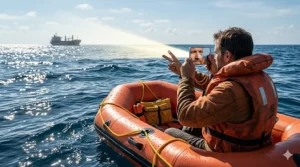
Strategies: Marine environments demand floating mirrors—the UST StarFlash Floating or ACR Hot Shot become essential. Attach lanyards to life vests or raft equipment. Time signals between wave swells for steadier aiming.
The ocean’s reflective surface actually enhances signal visibility from aircraft—your flash stands out against the uniform blue. Focus on overhead sweeps rather than horizontal ones. Ships on the horizon are less likely to spot signals than aircraft.
Best Mirror Choice: Floating Lexan with lanyard attachment
Snow and Ice
Challenges: Whiteout conditions reduce contrast. Extreme cold affects mirror handling. Bright snow may compete with signal flashes.
Strategies: Snow environments paradoxically both help and hinder signaling. The uniform white background makes dark aircraft extremely visible, simplifying targeting. However, your flash must compete with snow’s natural reflectivity.
Use darker backgrounds when available (rocks, trees, equipment) to make your signal stand out. In complete whiteouts, systematic sweeping maintains hope—aircraft may break through clouds suddenly. Keep mirrors inside your clothing to prevent freezing and maintain bare-hand contact.
Best Mirror Choice: Lexan (won’t shatter if frozen) or metal
Heliograph Signal Mirror: Historical Context and Modern Applications
The term heliograph signal mirror connects modern survival tools to a rich history of optical communication dating back millennia. Understanding this heritage provides perspective on why signal mirrors remain relevant despite technological advances.
Ancient Origins
Ancient Greek soldiers reportedly used polished bronze shields to reflect sunlight signals during battles as early as 405 BC. These primitive techniques relied on simple principles—position a reflective surface to catch sunlight, aim it at a recipient, and create on-off patterns to convey basic messages.
Roman Emperor Tiberius allegedly communicated from Capri to mainland Italy using mirrors around 14-37 AD. While these historical accounts vary in verifiability, they demonstrate humanity’s long recognition of reflected light as a reliable long-distance communication method.
Military Development
The modern heliograph emerged in the 1860s when British officer Sir Henry Mance developed a systematic signaling device while stationed in India. His design incorporated:
- Adjustable mirrors for precise aiming
- Shutter mechanisms for creating Morse code
- Tripod mounting for stability
- Range calculations and training protocols
These military heliograph systems achieved remarkable results. The record communication distance—183 miles between Colorado and Utah in 1894—used only 8-inch square mirrors and clear mountain air. Military units routinely communicated across 40-80 miles using these devices.
Heliographs saw extensive use in conflicts including:
- The American Indian Wars
- The Second Boer War (1899-1902)
- World War I (particularly in Middle Eastern theaters)
- Various campaigns into the 1940s
Interestingly, heliographs remained in active military use far longer than most people realize. Afghan forces used them during the Soviet invasion in the 1980s, and Taliban forces possessed functional heliographs as late as 2001 when Coalition troops arrived.
Why Heliograph Principles Still Matter
Modern signal mirrors for survival directly descend from military heliograph technology. The key innovations remain relevant:
Retro-Reflective Sighting: The sighting hole accuracy systems in mirrors like the UST StarFlash or Coghlan’s models evolved from heliograph targeting mechanisms. The “fireball” or “star” visible through the sight replicates the aiming techniques developed for military communications.
Material Engineering: Military specifications like MIL-M-18731E (governing the Best Glide ASE Mark 3) standardize mirror quality, ensuring consistent reflectivity and durability. These specs originated from military heliograph requirements.
Signaling Protocols: The three-flash distress signal and systematic horizon sweeping techniques emerged from military signaling doctrine. Understanding proper protocol increases rescue likelihood.
EMP and Electronics Independence: One reason heliographs persisted in military arsenals—they require no power, electronics, or batteries. Modern preppers recognize the same advantage: when electronics fail (solar flares, electromagnetic pulses, battery depletion), optical signaling remains functional.
Beyond Rescue: Alternative Uses for Signal Mirrors
While the primary purpose of any signal mirror for survival involves emergency communication, these versatile tools offer numerous secondary applications that justify their presence in your gear.
Personal Grooming and Hygiene
Every backpacker appreciates a mirror for applying sunscreen evenly, checking for ticks, examining injuries, or basic grooming. The UST StarFlash Micro serves double duty—emergency signaling device and compact trail mirror. I routinely use mine while camping to ensure my face is adequately covered with sun protection before alpine hikes.
Navigation Aid
Reflect sunlight to mark your position on a map during group navigation. Signal between separated team members over short distances to coordinate movements. Some experienced outdoorsmen use mirror flashes to communicate simple predetermined messages (mirror flash = all clear, no flash = wait).
Starting Fires (With Preparation)
While not as effective as dedicated fire-starting tools, a mirror can help. Focus reflected sunlight onto char cloth or very fine tinder using the mirror’s curved edge or by holding it at specific angles. This works better with concave mirrors than flat signal mirrors, but desperate situations call for creative solutions.
I’ve successfully started fires using a credit card-sized metal mirror and cotton ball tinder, though it required patience and ideal conditions. Don’t rely on this as a primary fire-starting method, but know it’s possible.
Inspecting Hard-to-See Areas
Examining the underside of vehicles, checking tent seams, looking inside dark crevices—a small mirror extends your visual reach. Cave explorers and technical climbers often carry wallet-sized mirrors specifically for inspecting anchor points and equipment in awkward positions.
Light Projection
Inside tents or shelters at night, use your mirror to redirect flashlight or headlamp beams without moving the light source. This passive light redirection conserves battery by enabling one light to illuminate multiple areas.
Wildlife Observation
Reflect light to identify nocturnal animal eyes at night (eyeshine). This helps assess what animals are nearby without leaving your tent or making noise. Some hunters use mirror flashes to locate game animals’ reflective eyes before dawn.
Psychological Comfort
The knowledge that you possess effective signaling capability provides genuine psychological benefit during emergencies. Survivors report that having a signal mirror reduced panic and helplessness, enabling clearer thinking. This mental edge can prove as valuable as the mirror’s technical function.
Frequently Asked Questions
❓ What is the best signal mirror for survival in 2026?
❓ How far can signal mirror flashes be seen?
❓ Do signal mirrors work on cloudy days?
❓ What is the difference between glass and plastic signal mirrors?
❓ Are signal mirrors better than flares for rescue signaling?
Conclusion: Your Lifeline in Emergencies
After analyzing dozens of signal mirrors and testing them in real-world conditions, one truth stands clear: a quality signal mirror for survival deserves a place in every emergency kit, backpack, and vehicle. These humble devices punch far above their weight class, offering potentially life-saving communication capability with no batteries, no expiration date, and minimal weight.
For most users, I recommend the Coghlan’s Survival Signal Mirror as the ideal balance of performance, ease of use, and value. Its laminated glass provides excellent reflectivity, the sight-grid targeting system makes accurate aiming intuitive, and the under-$12 price point eliminates excuses for not adding this critical tool to your gear.
Marine enthusiasts and water sports participants should prioritize the UST StarFlash Floating Signal Mirror—its buoyancy and durability justify the slight premium. EDC purists will appreciate the UST StarFlash Micro or Best Glide ASE Stainless Steel options that disappear into wallets while maintaining functionality.
For those serious about wilderness safety and maximum performance, invest in the Best Glide ASE Mark 3 Glass military-grade mirror. Yes, it costs more, but the same technology trusted by military pilots provides unmatched reflection distance miles when survival depends on being seen.
Remember: owning a signal mirror means nothing without practice. Spend 15 minutes on a sunny afternoon learning the techniques described in this guide. That small investment of time could mean the difference between being found and remaining lost when an emergency strikes.
The wilderness doesn’t care about your plans, your experience, or your preparation level. It only cares about whether you can be seen when rescue comes looking. A signal mirror ensures you can be.
Recommended for You
- Bear Bell for Hiking Worth It? 7 Best Tested + Safety Guide 2026
- 7 Best PLB Emergency Beacons That Could Save Your Life 2026
- 7 Best Emergency Bivvy Sacks That Save Lives 2026
Disclaimer: This article contains affiliate links. If you purchase products through these links, we may earn a small commission at no additional cost to you.
✨ Found this helpful? Share it with your friends! 💬🤗
