In This Article
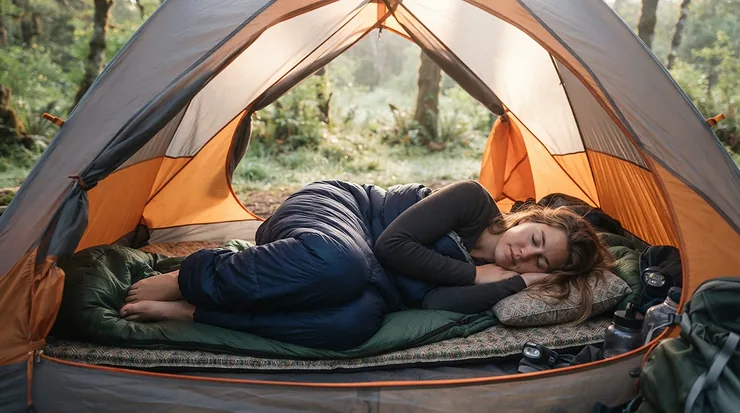
A 3-season sleeping bag for side sleepers is a spring-through-autumn bag, typically rated somewhere between 15°F and 35°F. It’s cut with extra space at the shoulders, elbows, hips and knees. That room lets you curl up, roll over and stack your legs without stretching the fabric tight or squeezing the insulation thin.

Here’s the problem. Most technical bags are mummies, and mummies were engineered for people who sleep like mummies: flat on the back, arms tucked, perfectly still. You are not that person. At 2 a.m. you’re on your left side, one knee drifting toward your chest, and the bag is doing its best straitjacket impression. The hood ends up over your ear, the zipper digs into a rib, and the shoulder you’re lying on has found the only cold spot in the tent.
The stakes are real, too. On your side, your shoulders and hips carry most of your weight against the ground, which is why side sleeping concentrates pressure at those two joints. A cramped bag makes every one of those pressure points louder. Add cold ground and compressed insulation, and you get a night that ends with a 5 a.m. stare at the tent ceiling.
So this guide does the homework. Below you’ll find seven real bags compared on bag shape, roominess and draft collar design. There are also dedicated sections for anyone shopping for a 3-season sleeping bag for cold sleepers or a 3-season sleeping bag for tall people.
One honest note: everything here comes from spec-sheet analysis and published reviews from gear testers and buyers. I’m not claiming to have slept in all seven. Where reviewers disagree, I’ll say so.
Quick Comparison: The Best 3-Season Sleeping Bag for Side Sleepers by Need
| Best For | Pick | Bag Shape | Name Rating |
|---|---|---|---|
| Most roomy overall | NEMO Disco 15 Endless Promise | Spoon | 15°F |
| Purpose-built side-sleeper fit | Big Agnes Sidewinder SL 20 | Side-sleeper mummy | 20°F |
| Tall sleepers | Therm-a-Rest Questar 20 | Roomy semi-mummy | 20°F |
| Budget-conscious buyers | Kelty Cosmic Down 20 | Semi-rectangular mummy | 20°F |
| Cold sleepers | Western Mountaineering Versalite | Roomy mummy | 10°F |
Read this table as a starting map, not a verdict. The NEMO Disco 15 Endless Promise wins on pure sprawl-room. The Big Agnes Sidewinder SL 20 is the only one here designed around where your head and zipper end up when you roll onto your side. Budget shoppers should note that the Kelty Cosmic Down 20 trades roominess and weight for a lower price, while the Western Mountaineering Versalite is the splurge for anyone who runs cold.
💬 Just one click — help others make better buying decisions too!😊
Top 7 3-Season Sleeping Bag for Side Sleepers: Expert Analysis
I split the field into budget, mid-range and premium options, then filtered for shapes and features that matter when you sleep on your side. Specs come from manufacturer and retailer listings plus independent reviews. Prices are ranges only, so check current pricing before you buy.
1. NEMO Disco 15 Endless Promise — the spoon-shaped benchmark
The NEMO Disco 15 Endless Promise is the bag that made “spoon” a household word among side sleepers. It’s wide at the elbows and knees, then tapered at the hips and feet so warmth doesn’t leak out. The men’s version uses 650-fill hydrophobic, RDS-certified down. That fill power sits in the “good quality” band for down bags, and the bag lists an ISO comfort rating in the mid-20s °F against its 15°F name.
Reviewers measured roughly 62 inches at the shoulders, 57 at the hips and 61 at the knees. That knee number is the one to care about, because it lets you pull a leg into a fetal curl without dragging the footbox sideways. Weight runs about 2 lb 11 oz in Regular, so this is a comfort-first bag, not a gram-counter’s dream.
Based on the spec comparison, it suits weekend backpackers and car campers who value sleep over speed. The zippered Thermo Gill vents let you dump heat without cracking the main zipper and inviting a draft.
Reviewers consistently praise the plush, blanket-style draft collar and the roomy cut. The recurring complaint is that it’s heavier and bulkier than slimmer bags with similar ratings. One reviewer also notes the current version is slightly narrower than the original Disco.
Pros:
- ✅ Elbow and knee room for constant rollers
- ✅ Oversized draft collar blocks neck drafts
- ✅ Vents fine-tune warmth without opening the zipper
Cons:
- ❌ Heavier and bulkier than sleeker down bags
- ❌ Less wide than the original Disco
Price range: around the $300 range at the time of research (check current price). Verdict: strong value for a feature-loaded bag, especially next to 800-fill rivals that cost noticeably more.

2. Big Agnes Sidewinder SL 20 — built around how you actually lie down
Most brands sell roominess. The Big Agnes Sidewinder SL 20 sells geometry. The hood, head opening and a center zipper are oriented for side-lying, so the bag rotates with you instead of twisting around you.
It uses 650-fill down with body-mapped synthetic panels at the shoulders, hips and knees. That’s a clever answer to compressed insulation: the spots that flatten under your weight get fill that doesn’t collapse. Reviewers put the weight at just over 2 pounds, and it comes in Regular and Long (one review lists 72 and 78 inches).
In practice, the ambidextrous center zipper removes the left-or-right zipper gamble, so you’re never lying on hardware. It’s aimed at people who’ve been burned by mummy hoods but still want a familiar warmth-to-weight profile. It is not a winter or ultralight bag. Reviewers position it for spring-through-fall trips.
Reviewers consistently like the hood that stays aligned when you roll and the fair price for a down bag. Common quibbles: the hood can feel odd if you end up lying on top of it, the pillow pocket isn’t as well executed as on other Big Agnes bags, and one review reports some down shedding.
Pros:
- ✅ Hood and zipper stay aligned when you roll
- ✅ Body-mapped insulation cushions hips and shoulders
- ✅ Lightweight for a comfort-cut down bag
Cons:
- ❌ Hood feels awkward if you lie on it
- ❌ Pillow pocket gets mixed reviews
Price range: roughly $250-$330 depending on version (check current price). Verdict: arguably the best value for pure side-sleeping ergonomics.
3. NEMO Forte 20 Endless Promise — spoon shape with damp-proof synthetic fill
The NEMO Forte 20 Endless Promise takes the spoon idea and swaps down for recycled synthetic insulation. Synthetic keeps its loft when damp, a real advantage in condensation-prone tents. The listed ISO figures are 30°F comfort and 19°F lower limit, so it’s honest about being a cold-sleeper-aware 20°F bag.
Expect a heavier pack: one reviewer weighed the men’s Regular at 3 lb 10 oz, with a maximum fit of about 6 feet. The cut sits between a mummy and a car-camp rectangle. One tester found it noticeably narrower than a big camp bag, and that’s the trade-off. You get wiggle room without a giant cold-air pocket.
The sweet spot is shoulder-season side sleepers in wet climates, or anyone who doesn’t want to baby down. The vents and the waterproof-treated hood and footbox help with condensation. Two Fortes with opposing zippers can also join into a double.
Reviewers describe it as roomy and cozy. The recurring complaints are bulk and weight, plus a pillow pocket that didn’t fit one tester’s pillow. A retailer reviewer also flagged thin fabric that can snag zippers, so treat it gently.
Pros:
- ✅ Synthetic fill holds warmth when damp
- ✅ Spoon cut gives knees and elbows space
- ✅ Zips together with a second bag
Cons:
- ❌ Heavier and bulkier than down equivalents
- ❌ Thin fabric can snag the zipper
Price range: the launch price was around $200, but current pricing varies by size, so check current price. Verdict: excellent value if you camp where things get wet.
4. Therm-a-Rest Questar 20 — tall-friendly sizing with pad connectors
For side sleepers who slide off their pad, the Therm-a-Rest Questar 20 has a party trick: SynergyLink connectors that strap the bag to your pad so you stay put. It’s filled with 650-fill hydrophobic down and comes in Small, Regular and Long, fitting up to 5’6″, 6’0″ and 6’6″.
Retailer specs list the Long at about 85 inches with a 66-inch shoulder girth and 64-inch hip girth. Regular weighs around 2 lb 3 oz. Listed ISO comfort is 32°F with a 20°F limit. Cold sleepers should read that as “this is a 30-something bag.” The draft collar, full-length draft tube and cinchable hood do the sealing, and a down-lined footbox handles cold toes.
It’s a roomy semi-mummy rather than a spoon, so it gives up a little elbow-and-knee space to the Disco. But girth grows with length, which rescues broad-shouldered tall sleepers. Reviewers, including a 6-foot buyer around 250 pounds, describe plenty of space. Several side sleepers call it comfortable and unrestrictive. The recurring complaint is service: one buyer describes a months-long repair wait.
Pros:
- ✅ Pad connectors stop nighttime sliding
- ✅ Long size fits up to 6’6″
- ✅ Draft collar and tube seal well
Cons:
- ❌ Comfort rating is well above the name rating
- ❌ Not a true spoon cut
Price range: roughly $250-$300 (check current price). Verdict: a smart mid-range buy for tall or broad side sleepers.
5. Big Agnes Anvil Horn 15 — boxy cut with a built-in pad sleeve
The Big Agnes Anvil Horn 15 flips the usual script. Instead of a body-hugging tube, it’s a semi-rectangular bag with a stretchy sleeve underneath that captures your sleeping pad. If you roll, the pad rolls with you. No more waking up on cold ground.
Retailer listings show 650-fill water-resistant DownTek. The Regular fits to 5’10” at 2 lb 8 oz, and the Long fits to 6’6″. The Wide Long lists 80-inch shoulder girth and 71-inch hip girth for pads up to 30 inches wide. Because the underside is lightly insulated, your pad’s R-value decides how warm you sleep.
This is the roominess champion for large frames and restless sleepers, especially in the Wide Long. It’s also the bag where pad pairing matters most. Reviewers, including a 6’1″ side sleeper, call the Wide Long very roomy yet warm. Some forum users feel the 15°F rating is optimistic, so cold sleepers should plan around a higher number. Big Agnes has updated this line over the years, so confirm current specs before buying.
Pros:
- ✅ Pad sleeve keeps you on your pad
- ✅ Wide Long offers huge shoulder and hip room
- ✅ Water-resistant down handles tent damp
Cons:
- ❌ Warmth depends heavily on your pad
- ❌ Some buyers say the rating runs optimistic
Price range: roughly $300-$450 depending on size (check current price). Verdict: the pick for big frames who roll around and don’t mind pad-dependence.

6. Kelty Cosmic Down 20 — budget down that punches above its price
I’ll be upfront: the Kelty Cosmic Down 20 isn’t the ideal side-sleeper cut. It’s a semi-rectangular mummy with 550-fill DriDown, offered in Short, Regular and Long (fitting to 66, 72 and 78 inches), and weighs about 3 pounds. Testers list comfort around 31°F with a 21°F limit.
One reviewer noted nearly two pounds of down in the bag. That sheer quantity makes up for the lower-grade fill, and the insulated collar and draft tube help hold heat.
Opinions split on shape. One tester found the taper at hips and feet restrictive for side sleepers, another called it roomy for a mummy, and a third says to skip it if you’re a broad-shouldered side sleeper. Based on the spec comparison, it works best for narrower-framed side sleepers who mostly car camp. If you need real elbow room, spend more.
Reviewers commonly note it runs colder than its name suggests. Cold sleepers should treat it as a 30°F bag, and it’s heavier than premium down.
Pros:
- ✅ Lots of real down for the money
- ✅ Draft collar and tube included
- ✅ Available in Short, Regular and Long
Cons:
- ❌ Mummy taper can feel tight on your side
- ❌ Heavier than premium down bags
Price range: about $190-$240 depending on version (check current price). Verdict: great value if your frame isn’t broad and your budget is tight.
7. Western Mountaineering Versalite — premium warmth for cold-natured sleepers
The Western Mountaineering Versalite is a 10°F bag, so it’s the outlier in a three-season roundup. For cold sleepers, though, it works as a shoulder-season bag with headroom. It carries about 20 ounces of 850+ fill goose down, a full down-filled draft collar, an insulated draft tube and a 12-denier shell. All of that comes in roughly 2 pounds, made in the USA. Lengths run from 5’6″ to 6’6″ per retailer listings.
A 62-inch shoulder girth (per one review) is a balanced cut. It isn’t a spoon, but reviewers repeatedly call it roomy for a mummy, and continuous baffles let you shift down where you need it. The collar and tube also solve the gap that opens at your shoulder when you roll. One tester warns that the hook-and-loop closures on the hood and collar can loosen if you thrash all night.
Reviewers praise the warmth-to-weight ratio and the snag-free zipper. The complaints are price and the fact that it’s still a mummy. Western Mountaineering also advertises an unlimited defect warranty.
Pros:
- ✅ Exceptional warmth for about 2 pounds
- ✅ Full draft collar plus insulated tube
- ✅ Long sizes up to 6’6″
Cons:
- ❌ Premium price puts it out of reach for many
- ❌ Mummy cut, not a side-sleeper design
Price range: typically north of $600 (check current price). Verdict: an investment that makes sense if you sleep cold and camp often.
Side-by-Side Spec Snapshot
| Product | Bag Shape | Fill | Name Rating | Approx. Weight (Regular) | Price Range | Best For |
|---|---|---|---|---|---|---|
| NEMO Disco 15 Endless Promise | Spoon | 650 down | 15°F | 2 lb 11 oz | ~$300 | Restless rollers |
| Big Agnes Sidewinder SL 20 | Side-sleeper mummy | 650 down + synthetic | 20°F | Just over 2 lb | $250-$330 | Side-lying ergonomics |
| NEMO Forte 20 Endless Promise | Spoon | Recycled synthetic | 20°F | ~3 lb 10 oz | ~$200-$300 | Damp climates |
| Therm-a-Rest Questar 20 | Roomy semi-mummy | 650 down | 20°F | 2 lb 3 oz | $250-$300 | Tall sleepers |
| Big Agnes Anvil Horn 15 | Semi-rectangular | 650 DownTek | 15°F | 2 lb 8 oz | $300-$450 | Big frames, pad sliders |
| Kelty Cosmic Down 20 | Semi-rectangular mummy | 550 down | 20°F | ~3 lb | $190-$240 | Budget car camping |
| Western Mountaineering Versalite | Roomy mummy | 850+ goose down | 10°F | ~2 lb | $600+ | Cold sleepers |
Notice the pattern: the roomiest cuts weigh more, and the lightest bags cost more. If weight matters less than sleep, the NEMO Disco 15 Endless Promise and Big Agnes Anvil Horn 15 deliver the most space per dollar. If you’re counting ounces and have cash, the Western Mountaineering Versalite and Big Agnes Sidewinder SL 20 are the efficient choices. The Kelty Cosmic Down 20 remains the entry ticket.
✨ Ready to Find Your Bag?
🔍 Take your camp sleep to the next level with these carefully selected bags. Click on any highlighted product to check current pricing and availability. Better sleep is one tap away!
Setup Guide: Get the Most From a 3-Season Sleeping Bag for Side Sleepers
Even the best bag underperforms if you set it up badly. Here’s the routine that separates a great night from a mediocre one:
- Loft it before you lie in it. Pull the bag out of its stuff sack when you arrive at camp and give it a shake. Down needs a few minutes to recover its volume.
- Match the pad to the bag. A pad rated around R-3 to R-4.5 is a solid three-season range. Also check width: a wider pad keeps your elbows and hips off the cold ground when you roll.
- Check your zipper side. If you sleep on your left, make sure the zipper isn’t under your body. The Big Agnes Sidewinder SL 20‘s center zipper sidesteps this entirely.
- Add a knee cushion. A stuff sack full of spare clothes between your knees keeps hips aligned, a tip physical therapists recommend for side sleepers.
- Use a thicker pillow. REI notes that side sleepers need more neck support than back sleepers, so pack accordingly.
Common mistakes in the first 30 days are easy to avoid. Don’t store your bag compressed for weeks, since that flattens loft. Don’t cinch the hood tight while lying on the drawcord. And don’t overdress inside the bag: extra layers can compress insulation and make you sweat. Store your bag loose in a mesh sack, and wash it only when it’s truly dirty, following the manufacturer’s care instructions.
Real-World Scenarios: Matching a Bag to Your Side-Sleeping Life
Specs only matter in context. Here are three sleeper profiles, each with budget, environment and frequency of use.
The budget weekend car camper. Say you spend about $200, camp roughly ten nights a year in fall campgrounds where lows hit the high 30s, and you sleep on your side. Weight isn’t an issue. If you have a narrower frame and prioritize price, the Kelty Cosmic Down 20 makes sense. If your nights are damp, or you want a real spoon cut, the NEMO Forte 20 Endless Promise is the better fit.
The 6’3″ section hiker. Picture 25 nights a year, lows in the 30s, a wide pad, and shoulders that don’t fit standard mummies. The Therm-a-Rest Questar 20 in Long solves length and girth in one purchase. If you roll constantly and slide off pads, the Big Agnes Anvil Horn 15 in Wide Long is the alternative.
The cold-natured shoulder-season backpacker. Consider nights dipping to the mid-20s, 30-plus trips a year, and a habit of piling on layers. The NEMO Disco 15 Endless Promise gives you roominess with a draft collar you can snuggle into. If your budget allows, the Western Mountaineering Versalite delivers serious warmth at low weight.
The pattern is simple: choose a bag for your worst night, not your average one, and choose a shape for how you actually move.
Problem → Solution: Five Classic Side-Sleeper Complaints
1. The hood ends up on your face. Look for a jacket-style hood, like the one on the Big Agnes Sidewinder SL 20, that’s oriented for side-lying. Otherwise, loosen the drawcord and let the collar fold down.
2. A cold gap opens at your shoulder. This is what a draft collar is for. The NEMO Disco 15 Endless Promise and Western Mountaineering Versalite both feature generous collars. A beanie and a thin puffy layer help too.
3. You slide off your pad. Choose a system with connectors, like the Therm-a-Rest Questar 20, or a pad sleeve, like the Big Agnes Anvil Horn 15.
4. Hips and shoulders go numb. Add pad thickness, let a little air out of an inflatable pad so your hips sink in, and consider body-mapped insulation.
5. You overheat mid-night. Use zippered vents like the NEMO Forte 20 Endless Promise‘s Thermo Gills, unzip slightly, or flip the collar outside the bag.
How to Choose a 3-Season Sleeping Bag for Side Sleepers
Here’s the short version, in order of importance:
- Start with bag shape. Spoon and side-sleeper cuts give the most freedom; semi-rectangular is roomy but less efficient; a traditional mummy is warmest.
- Check three girth numbers. Shoulder, hip and knee girth tell you far more than the label “roomy.”
- Read the comfort rating, not just the name. The number in the product name is usually the lower limit; comfort is what matters for cold sleepers.
- Pick the right length. Choose a bag at least a couple of inches longer than you are tall.
- Decide down or synthetic. Down is lighter and more compressible; synthetic holds warmth when damp.
- Pair it with the right pad. The bag can’t insulate what your pad doesn’t.
If you’re between two bags, pick the one that’s roomier at the knees. It’s the measurement most side sleepers regret skimping on.
Bag Shape: Spoon, Semi-Rectangular or Mummy?
Bag shape decides how much of your movement the bag accommodates and how much air you have to heat. Here’s how the main options compare.
| Bag Shape | Roominess | Warmth Efficiency | Best For |
|---|---|---|---|
| Spoon (NEMO Disco 15 Endless Promise, NEMO Forte 20 Endless Promise) | High at elbows and knees | Good; tapers at hips and feet | Restless side sleepers |
| Side-sleeper mummy (Big Agnes Sidewinder SL 20) | Moderate, mapped to side-lying | Very good | Warmth-to-weight seekers |
| Semi-rectangular (Big Agnes Anvil Horn 15, Kelty Cosmic Down 20) | High to moderate | Lower; more air to heat | Car campers, larger frames |
| Roomy mummy (Western Mountaineering Versalite, Therm-a-Rest Questar 20) | Low to moderate | Highest | Cold sleepers, shoulder season |
| Full rectangular camp bag | Highest | Lowest | Summer car camping |
The takeaway is that shape is a trade, not a ranking. A spoon buys freedom at a small weight and efficiency cost. A roomy mummy buys warmth at the cost of some elbow space. For most side sleepers, a spoon or side-sleeper mummy hits the best balance, while semi-rectangular cuts are best when weight doesn’t matter.
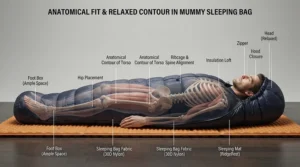
Roominess: The Girth Numbers That Actually Matter
Roominess isn’t a vibe. It’s measured in inches at three points. The numbers reviewers and retailers listed for the bags above give you a rough guide: the NEMO Disco 15 Endless Promise measures about 62 inches at the shoulders, 57 at the hips and 61 at the knees, while the Therm-a-Rest Questar 20 Long lists 66, 64 and 51 at the foot. The Big Agnes Anvil Horn 15 Wide Long stretches to 80 and 71 at the shoulders and hips.
Why do those numbers matter? Shoulder girth decides whether you can roll without twisting the bag. Hip girth affects stacking your legs. Knee girth decides how far you can curl up.
Here’s the catch: more room means more air to warm. That’s why the roomiest bags either weigh more or rely on features like a draft collar and vents to hold heat. A good rule is to buy the narrowest bag that still lets you roll without a fight. If you can pull a knee up and turn over in the store or at home, you have enough. If you feel the fabric pull tight, size up or change shapes.

Draft Collar: Friend or Foe for Side Sleepers?
A draft collar is an insulated tube around the neck and shoulders that blocks warm air from escaping when you move. For side sleepers, that matters because rolling opens exactly that gap.
The NEMO Disco 15 Endless Promise has an oversized, blanket-style draft collar you can tuck in for warmth or fold out to vent heat. The Western Mountaineering Versalite offers a full down collar with its own cinch cord. The Therm-a-Rest Questar 20 pairs a collar with a full-length draft tube along the zipper.
There’s a caveat. Some testers note that a collar can feel restrictive when you toss side to side, and one reviewer of a bag without a collar pointed out that colder sleepers are likely to miss it. So the rule is simple: cold sleepers and near-freezing trips want a draft collar; warm sleepers in mild weather can skip one.
If you’re comparing bags, look for a collar that folds out of the way and doesn’t bunch under your chin. That small detail separates a cozy collar from a claustrophobic one.
3-Season Sleeping Bag for Cold Sleepers: Reading the Ratings Right
If you run cold, the number on the label may not be your number. Standard tests assign two ratings, and REI explains the difference: the comfort rating suits a cold sleeper, while the lower limit suits a warm sleeper. Women’s bags generally list comfort, while men’s and unisex bags list limit.
That’s why a 3-season sleeping bag for cold sleepers should be judged by its comfort figure. The Therm-a-Rest Questar 20 lists 32°F comfort against a 20°F limit. The NEMO Forte 20 Endless Promise lists 30°F comfort. The NEMO Disco 15 Endless Promise lists a mid-20s comfort figure, better than most on this list. Reviewers also say the Kelty Cosmic Down 20 runs colder than its name, so cold sleepers should treat it as a roughly 30°F bag.
A few practical moves stretch any bag: a pad with a higher R-value, a liner, dry base layers, a warm drink before bed. Some guides suggest side sleepers may feel slightly colder because of extra air pockets, so choose a bag rated 5°-10°F below your expected low. For maximum warmth, the Western Mountaineering Versalite is the top pick here, thanks to its full collar and 10°F rating.
3-Season Sleeping Bag for Tall People: Length, Girth and Footbox Reality
A 3-season sleeping bag for tall people has to solve three things at once: length, girth and footbox space. Start with length. REI’s guidance is to pick a bag at least a couple of inches longer inside than your height, so a 6-footer wants roughly 6’2″.
Then check girth in that long size, because some bags lengthen without widening. The Therm-a-Rest Questar 20 Long grows to 66 inches at the shoulders and 64 at the hips, and fits up to 6’6″. The NEMO Disco 15 Endless Promise Long also fits up to 6’6″ in men’s sizing. The Big Agnes Anvil Horn 15 Wide Long fits 6’6″ and adds serious shoulder and hip room. The Kelty Cosmic Down 20 Long runs 78 inches, and the Western Mountaineering Versalite goes up to 6’6″ in some sizes.
A caution: extra length means extra air at your feet. Tall sleepers often find cold toes, so use a footbox with a down lining, stuff spare clothes into the bottom, or choose a bag with a snug foot section. Whatever you buy, confirm the current size chart, since brands revise their fits.
Long-Term Cost and Maintenance: What Your Bag Really Costs Per Night
Sticker price misleads. A $300 bag used 20 nights a year for eight years works out to under $2 a night. Even a bag in the $600-plus range averages out to just a few dollars per night over a decade.
Down and synthetic age differently. Reviewers note that down lasts longer than synthetic, while synthetic compresses over time. The trade-off is that synthetic, like the NEMO Forte 20 Endless Promise, keeps its loft when damp. One reviewer of the Kelty Cosmic Down 20 expects five-plus years with care, and the Western Mountaineering Versalite carries an unlimited defect warranty. NEMO’s Endless Promise line also offers a takeback program.
To make any bag last, follow a few rules. Store it loose in a large mesh sack, never compressed. Air it out after trips, and use a liner to cut down on washing. Wash only when needed, following the care label. Spend where it counts: a slightly warmer, roomier bag you use 30 nights a year beats a cheaper bag you dread.

Frequently Asked Questions
❓ Is a spoon-shaped 3-season sleeping bag for side sleepers colder than a mummy?
❓ How wide should a 3-season sleeping bag for side sleepers be?
❓ Do I need a draft collar in a 3-season sleeping bag?
❓ Which size should tall side sleepers buy?
❓ Is a 20°F bag warm enough for a cold sleeper in fall?
Conclusion: Sleep Like You Mean It
The best 3-season sleeping bag for side sleepers is the one that lets you move the way you already do. The NEMO Disco 15 Endless Promise is the all-round comfort benchmark, the Big Agnes Sidewinder SL 20 is the purpose-built side-sleeper fit, and the NEMO Forte 20 Endless Promise is the synthetic answer for damp trips. For tall people, the Therm-a-Rest Questar 20 and Big Agnes Anvil Horn 15 offer long sizes with real girth. On a budget, the Kelty Cosmic Down 20 gets you started, and cold sleepers who can afford it should look at the Western Mountaineering Versalite.
Remember the framework: shape first, girth second, comfort rating third, then length and pad. One sleep specialist quoted by Harvard Health notes that people rarely stay in one position all night, which is exactly why a bag that moves with you beats one that fights you.
Prices and specs change, so check current pricing and confirm sizes before you buy. Your shoulders will thank you at 2 a.m.
Recommended for You
- Budget 3-Season Sleeping Bag: 7 Proven Warm Picks For 2026
- 7 Best 3-Season Sleeping Bags For Backpacking In 2026
- Summer Sleeping Bag For Festivals: 7 Picks To Beat The Heat In 2026
Disclaimer: This article contains affiliate links. As an Amazon Associate, I earn from qualifying purchases. If you purchase products through these links, we may earn a small commission at no additional cost to you.
✨ Found this helpful? Share it with your friends! 💬🤗
