In This Article
Anyone who’s ever woken up at 4am inside a nylon sauna, peeling a sleeping bag off like a wet sock, knows the problem. A summer sleeping bag for festivals isn’t about staying warm — it’s about not roasting, not freezing during that one weird cold snap at 3am, and not needing an engineering degree to shove the thing back in its stuff sack before the shuttle bus leaves. Most people show up to a festival with whatever bag they grabbed from the garage, rated for a Colorado winter, and spend the whole weekend regretting it.

A summer sleeping bag for festivals is a lightweight, breathable sleeping bag rated roughly 35–50°F, designed to keep you comfortable on warm nights without trapping excess heat, while packing small enough to fit in a festival-friendly bag or backpack. That’s the whole job description, and surprisingly few bags actually nail it.
We dug into real product specs, verified pricing, and aggregated owner reviews across seven genuine options — from a $55 Coleman that’s basically a padded blanket with a zipper, to a $349 ultralight down bag that weighs less than a bag of coffee. Temperature ratings referenced throughout follow the EN 13537 standard, the lab-tested benchmark most outdoor brands use so you can actually compare bags apples-to-apples instead of trusting marketing copy.
Whether you’re driving to the festival grounds with a trunk full of gear or hiking a mile in from parking with everything on your back, there’s a bag on this list that fits your situation — plus real guidance on hot weather camping, car camping setups, stuff sack strategy, and building a proper camping checklist so you’re not the person borrowing a lighter and a tarp from strangers at 1am.
Quick Comparison: Best Summer Sleeping Bags for Festivals
| Bag | Temp Rating | Weight | Price Range | Best For |
|---|---|---|---|---|
| Coleman Brazos 30°F | 30°F | ~5 lb 3 oz | $50-$60 range | Budget car camping |
| Coleman Biscayne 40°F Big & Tall | 40°F | ~5-6 lb | $55-$65 range | Bigger campers, car camping |
| Kelty Cosmic Synthetic 40 | 40°F | ~2 lb 4 oz | $70-$100 range | Value-minded backpackers |
| Marmot NanoWave 45 | 45°F | 2 lb 1.5 oz | $70-$90 range | Squeezing gear into tight packs |
| REI Co-op Trailmade 25 | 25°F | 2.8-3.5 lb | $119-$139 range | Custom fit across body types |
| REI Co-op Siesta Hooded 20 | 20°F | 5.5-6.5 lb | $149-$159 range | Roomy comfort, cooler nights |
| Sea to Summit Spark 45 | 45°F | 12.8 oz | $300-$350 range | Ultralight backpack-in trips |
Looking at the spread here, the split is really between “car camping comfort” and “carry-it-yourself efficiency.” The Coleman pair and the REI Siesta trade weight for roominess and price, which is exactly right if your festival gear is riding in a trunk, not on your spine. The Sea to Summit Spark sits at the opposite extreme — you’re paying a real premium, but you’re also carrying roughly a quarter of the weight of the Coleman bags for a comparable warm-weather temperature rating. The Kelty and Marmot bags occupy a sensible middle ground for anyone splitting the difference between budget and backpack space.
💬 Already got a favorite? Tap through and lock in your pick before festival season sells out.
Top 7 Summer Sleeping Bags for Festivals: Expert Analysis
1. Coleman Brazos 30°F — best budget bag for car-camping festivals
There’s a reason the Coleman Brazos shows up on nearly every budget camping list — it’s absurdly cheap for what it delivers. The 30°F version weighs in around 5 pounds 3 ounces, built with a flannel-like polyester lining that genuinely feels nicer against skin than the crinkly nylon on cheaper bags twice its price. The rectangular cut measures 75 by 33 inches, comfortably fitting campers up to about 5’11”, with a full-length two-way zipper that unzips flat into a blanket or connects to a second Brazos for couples sharing a tent.
This bag makes the most sense for someone outfitting a whole group cheaply, or a first-timer who isn’t ready to invest in specialty gear before they know if festival camping is even their thing. Reviewers consistently report that the Brazos runs true to its temperature claim in mild conditions but lacks the hood and cinch cords that would make it viable much below 40°F — exactly the profile you want for a summer trip.
A recurring theme in owner reviews is that the Brazos is heavy and bulky compared to synthetic backpacking bags, and its included stuff sack is notoriously tight — several reviewers mention debris sticking to the interior fabric after a few uses. For a car-camping festival where you’re not hauling gear far, none of that matters much.
Pros:
- ✅ Extremely low price for a comfortable, warm-weather bag
- ✅ Soft flannel-style lining beats the feel of many pricier bags
- ✅ Zips flat into a blanket or connects to a second bag
Cons:
- ❌ Heavy and bulky if you’re walking any real distance with gear
- ❌ Stuff sack is famously hard to repack once opened
At around $50 to $60, the Brazos delivers real comfort-per-dollar. If your festival plan involves a car, a cooler, and minimal walking, it’s genuinely hard to beat.
2. Coleman Biscayne 40°F Big & Tall — roomiest budget pick for bigger campers
The Coleman Biscayne 40°F Big & Tall solves a problem a lot of festival-goers run into with standard sleeping bags: they’re cut for someone under six feet who doesn’t move much in their sleep. The Big & Tall design gives broader-shouldered or taller campers room to actually roll over without feeling shrink-wrapped, while keeping the 40°F synthetic rating appropriate for warm summer nights.
What most buyers overlook about oversized rectangular bags is that the extra interior volume actually helps with temperature regulation in hot weather — you get more airflow to kick a foot out or vent the zipper without feeling instantly exposed. Based on the spec comparison with Coleman’s standard-sized Brazos, the Biscayne trades a small amount of packability for meaningfully better comfort if you’re above average height or simply prefer to sprawl.
Independently verified customer review counts for this specific SKU are thinner than for Coleman’s flagship Brazos line, so it’s worth reading a handful of current listings before buying rather than assuming identical performance — but the underlying construction (synthetic fill, rectangular shape, easy-clean shell) follows Coleman’s well-established playbook.
Pros:
- ✅ Generous cut fits taller or broader-shouldered campers comfortably
- ✅ 40°F rating is well matched to summer festival nights
- ✅ Budget-friendly price keeps it accessible for group trips
Cons:
- ❌ Bulkier to pack than any of the backpacking-style bags on this list
- ❌ Limited third-party review data compared to Coleman’s best-sellers
Expect a price in the $55 to $65 range, making this one of the most affordable ways to solve a fit problem without upgrading to a premium brand.
3. Kelty Cosmic Synthetic 40 — best value lightweight step-up
If the Coleman bags are the entry-level rung, the Kelty Cosmic Synthetic 40 is the next logical step up, and it’s a big one. At roughly 2 pounds 4 ounces, it’s less than half the weight of the Coleman options while still landing in a comparable price bracket once you catch a sale. The mummy-style cut uses CirroLoft synthetic insulation made from recycled fibers, wrapped in a recycled 20D nylon shell with a PFAS-free DWR coating — genuinely current, sustainability-minded construction rather than marketing dressing.
Here’s what the spec sheet won’t tell you, but reviewers note: the natural-fit footbox is a small detail that makes a real difference on warm nights, since it gives your feet room to splay out rather than staying pinned mummy-style, which helps dump excess heat. The dual locking zipper sliders also mean you can vent from the top, the bottom, or both, which matters more for a summer bag than almost any other single feature.
Aggregated review sentiment describes the Cosmic Synthetic as an “excellent value” pick, with buyers specifically calling out the quality of materials relative to price. The tradeoff versus a down bag is unavoidable physics: synthetic fill packs bulkier for the same warmth, so don’t expect this to disappear into a daypack the way the ultralight options further down this list will.
Pros:
- ✅ Roughly half the weight of budget rectangular bags
- ✅ Recycled, PFAS-free materials without a premium price tag
- ✅ Dual-zipper venting handles warm nights well
Cons:
- ❌ Packs noticeably bulkier than a comparable down bag
- ❌ Footbox venting helps, but it’s still a mummy cut, so less room to sprawl
Pricing tends to swing between $70 and $100 depending on retailer and season, occasionally dipping into clearance territory — worth checking current listings before you commit.
4. Marmot NanoWave 45 — most packable for hauling gear through festival gates
For anyone who’s ever tried to cram a sleeping bag, a tent, snacks, and three days of clothes into whatever a festival’s bag-check policy allows, the Marmot NanoWave 45 solves a real logistics problem. It weighs just 2 pounds 1.5 ounces and compresses down small enough to disappear into a kayak stern or bike pannier — which means it disappears just as easily into a backpack’s bottom compartment.
The SpiraFil synthetic insulation is designed to keep insulating even when damp, a genuinely useful trait for anyone who’s dealt with morning dew soaking through a tent floor. Based on the spec comparison with similarly priced synthetic bags, the NanoWave’s real strength is pure packed volume — it’s built for people who are optimizing for space, not maximum plushness.
Here’s the honest caveat: aggregated reviews are split on the actual temperature performance. Several owners report the bag performs closer to a 49-50°F comfort range rather than its 45°F name suggests, and more than one reviewer specifically flagged the included stuff sack as difficult to use, recommending an upgrade to a separate compression sack. Reviewers consistently note the bag is a great value for the weight it saves, provided you set warmth expectations conservatively.
Pros:
- ✅ Among the lightest and most packable synthetic bags available
- ✅ Insulation stays effective even if it gets damp
- ✅ Full-length two-way zipper for flexible ventilation
Cons:
- ❌ Real-world warmth tends to run a few degrees colder than advertised
- ❌ Included stuff sack is widely reported as difficult to repack
Prices typically fall between $70 and $90, though it’s worth checking current listings, as this model frequently appears on seasonal promotions.
5. REI Co-op Trailmade 25 — best size range for a true custom fit
Sleeping bag sizing is one of those things nobody thinks about until they’re stuck in a bag two sizes too small at 1am. The REI Co-op Trailmade 25 addresses that head-on by offering more size variations — regular, wide, and additional length options — than almost anything else in this price bracket, with weight ranging from 2.77 to 3.51 pounds depending on the size selected.
What most buyers overlook about sizing is that a too-tight bag doesn’t just feel cramped — it compresses the insulation against your body and actually reduces the bag’s effective warmth in cold spots, while a too-loose bag leaves dead air space that takes longer to heat with your own body warmth. Based on the spec comparison with fixed-size competitors, the Trailmade’s flexibility is the real feature here, not the 25°F rating itself, which is honestly more insulation than most summer festival nights call for (though it does give you a margin of error for an unexpected cold front).
Aggregated review sentiment specifically praises the accommodating cut for broader body types, with one detailed field review noting the wide size felt “palace-levels of roomy” around the torso. The tradeoff is that, like most synthetic bags at this weight, it compresses into a larger stuffed size than buyers coming from ultralight backpacking gear might expect.
Pros:
- ✅ Widest range of sizes of any bag on this list
- ✅ Comfortable, accommodating cut for larger or broader body types
- ✅ 25°F rating adds a safety margin for surprise cold nights
Cons:
- ❌ Compresses larger than its weight would suggest
- ❌ More insulation than most will need for a genuinely hot festival
Expect to pay between $119 and $139, which lands squarely in the “worth it if fit has ever been a problem for you” zone.
6. REI Co-op Siesta Hooded 20 — comfiest hooded bag for chilly festival nights
Not every “summer” festival stays warm all night — mountain venues and shoulder-season events can dip into the 40s after sundown, and that’s exactly where the REI Co-op Siesta Hooded 20 earns its spot. At 20°F, it’s the warmest-rated bag on this list, weighing between 5.45 and 6.47 pounds depending on size, with a hood that seals in warmth during those unexpectedly cold pre-dawn hours.
The honest trade being made here is warmth and comfort versus weight — this is unambiguously a car-camping bag, not something built for a long carry-in. What that buys you is real comfort: it’s REI’s top-rated sleeping bag in its category, with reviewers giving it an average of 4.6 out of 5 stars across nearly a hundred reviews, a genuinely strong signal in a product category full of mediocre 3.5-star bags.
Based on the spec comparison with the lighter bags on this list, the Siesta Hooded makes the most sense for anyone prioritizing sleep quality over pack weight — festival veterans who’ve learned that a rough night’s sleep ruins day two far more than an extra pound of gear in the trunk ever will.
Pros:
- ✅ Highest-rated comfort and warmth combination on this list
- ✅ Hood adds real protection against unexpectedly cold nights
- ✅ Strong, verified review history (4.6/5 average)
Cons:
- ❌ Meaningfully heavier than every other bag except the Coleman pair
- ❌ Overkill warmth for a genuinely hot summer festival
Pricing runs from $149 to $159, positioning it as a premium car-camping choice rather than a budget pick.
7. Sea to Summit Spark 45 — lightest ultralight pick for backpack-in festivals
For festivals where you’re hiking a distance from parking, or camping options require you to carry everything on your back, the Sea to Summit Spark 45 is in a different category entirely. It weighs just 12.8 ounces — genuinely less than most people’s shoes — using 850 fill-power down insulation to hit that number without sacrificing much warmth.
This is where honest analysis matters most, because the price tag demands it. At around $300 to $350, you are paying a real premium for weight savings that only matter if you’re actually carrying the bag any real distance. The spec comparison here is telling: several detailed reviews of the broader Spark lineup specifically note that 850 fill power is “great, not excellent” at this price point, with some reviewers expecting closer to 900+ fill power given the cost — a fair critique worth knowing before you buy.
What the spec sheet won’t tell you, but reviewers note, is that the minimalist zipper design (shorter than a traditional full-length zip) that helps shave weight also means less venting flexibility if temperatures spike unexpectedly warm. For a dedicated warm-weather bag used specifically for short trips, most reviewers still land on this being one of the best ultralight options available, provided you’re not expecting flagship-tier fill power at every price point.
Pros:
- ✅ Genuinely ultralight — a fraction of the weight of any other bag here
- ✅ Compresses to an extremely small packed size
- ✅ Warmth-to-weight ratio remains excellent even at 45°F
Cons:
- ❌ Premium price relative to fill power compared to top-tier competitors
- ❌ Shorter zipper limits venting flexibility on unexpectedly warm nights
If weight is genuinely your top constraint — say, a mile-plus hike-in from parking — this is the bag that makes that trip painless.
Festival Camping Checklist & Setup Guide
Getting a new summer sleeping bag for festivals is only half the equation — how you set it up and pack it matters just as much. Start building your camping checklist around three categories: sleep system, shelter, and personal gear. Your sleep system needs the bag itself, a sleeping pad (even a thin foam pad meaningfully improves comfort on hard festival ground), and ideally a lightweight liner you can add or remove depending on the night’s temperature.
Before you leave, do a full test-pack at home. Stuff your bag into its stuff sack once, time yourself, and note if it’s a genuine struggle — if it is, buy a compression sack separately rather than discovering the problem in a muddy field at midnight. This single dry run solves more festival headaches than any gear upgrade.
On setup night, pitch your tent before dark whenever possible, and lay your sleeping bag out to loft for at least twenty minutes before climbing in — compressed insulation doesn’t trap heat efficiently until it’s had time to expand. A common first-30-days mistake is sleeping directly on bare ground or a thin tarp; even the best summer sleeping bag can’t compensate for cold conducting up from the earth beneath you.
For responsible camping at any festival with designated camping zones, following Leave No Trace principles — packing out everything you bring in, camping on durable surfaces, and minimizing your footprint — keeps festival grounds usable for future events and often keeps organizers from tightening camping rules the following year.
Real Festival Scenarios: Matching the Bag to the Trip
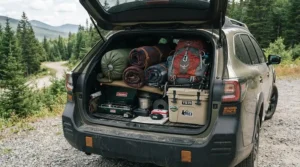
The one-night trip minimalist: If you’re only staying for a single night — a day-festival with an overnight extension, or a last-minute decision to camp — you don’t need premium gear. One-night trip gear should prioritize speed and simplicity over comfort refinements you won’t have time to appreciate. The Coleman Brazos or Biscayne, tossed in a car trunk, gets the job done without justifying a bigger investment.
The car camping family or group: If you’re parking near your campsite and unloading gear in trips rather than carrying everything at once, weight stops mattering and comfort takes over. The REI Co-op Siesta Hooded 20 or either Coleman option make sense here — you have the trunk space, so use it for a bag that actually sleeps well.
The backpack-in solo camper: If your festival requires hiking gear in from a remote lot, or you’re combining the trip with backcountry camping before or after, every ounce counts. The Sea to Summit Spark 45 or Marmot NanoWave 45 are built for exactly this — trading some price or warmth margin for a pack that doesn’t wreck your shoulders on the walk in.
Common Sleeping Bag Problems (And How to Solve Them)
Problem: You can’t get the bag back in its stuff sack. This is the single most common complaint across budget bags on this list. Solution: buy a separate compression stuff sack (widely available for $10-$20) rather than fighting the included one — a compression sack with side straps can shrink a bag’s packed size by 30% or more compared to simple stuffing.
Problem: You’re overheating despite a “summer” rating. Solution: unzip fully and use the bag as a quilt or blanket, which most rectangular bags (including the Coleman line) are specifically designed to allow. Down and synthetic mummy bags can also be worn unzipped with one arm or leg exposed for ventilation.
Problem: The bag feels damp or clammy by morning. Solution: this is almost always condensation from tent walls, not the bag itself. Crack a tent vent or rainfly gap for airflow, and avoid packing a damp bag straight into its stuff sack the next morning — air it out for ten minutes first to prevent mildew smell setting in.
Problem: Cold spots despite an adequate temperature rating. Solution: check that your sleeping pad has an adequate R-value; ground conduction, not air temperature, is the usual culprit, and a bag alone can’t fix a pad problem.
Problem: You need a stuff sack replacement mid-trip. Solution: a large dry bag or even a doubled trash bag works as an emergency stuff sack in a pinch — it won’t compress as well, but it keeps your bag dry until you’re home.
How to Choose a Summer Sleeping Bag for Festivals
- Check the expected overnight lows for your specific event and region, not just “summer” as a season — festival nights in the mountains or desert can swing 30+ degrees from daytime highs.
- Match the temperature rating to your travel method — car camping can absorb extra weight for a warmer, comfier bag; backpack-in trips reward lighter, less insulated options.
- Decide between down and synthetic fill — down packs smaller and lighter for the same warmth but loses insulating power when wet and costs more; synthetic insulates even damp and costs less, at the price of bulk.
- Confirm the size fits your actual body, not just “regular” — a too-tight bag reduces warmth by compressing insulation, while too-loose wastes weight and space.
- Test-pack the stuff sack before your trip so you’re not discovering a packing nightmare in the field.
- Consider hood and zipper features only if cold mornings are a real risk — they add weight and cost that a genuinely hot festival doesn’t need.
- Buy from a retailer with a reasonable return policy, since sleeping bag fit and warmth perception are genuinely personal and hard to judge from specs alone.
Common Mistakes When Buying a Summer Sleeping Bag for Festivals
The most frequent mistake is buying based on temperature rating alone without considering pack weight and your actual travel method — a 20°F bag is wasted insulation and wasted money for someone hiking a mile into a genuinely warm-weather event. A close second is ignoring size charts entirely; reviewers across nearly every brand on this list flag fit issues from buyers who skipped checking height and shoulder girth specs.
Another common misstep is assuming all “summer” bags perform identically because they carry similar temperature numbers — as this comparison shows, a 45°F rating from one brand can behave meaningfully differently from another depending on fill type, cut, and construction quality. Reviewers consistently note that reading multiple sources’ real-world testing, not just the manufacturer’s stated rating, gives a more reliable picture.
Finally, buyers frequently underestimate stuff sack quality as a factor, only to discover mid-trip that repacking a bag each morning eats fifteen frustrating minutes. It’s a small detail that makes an outsized difference in how much you enjoy the actual trip.
Sleeping Bag for Hot Weather Camping: What to Expect
On paper, a 40-45°F rated bag sounds like it might run hot on a summer night, and in practice, it often does — which is exactly the point for a sleeping bag for hot weather camping. The goal isn’t maximum insulation; it’s a bag you can fully unzip, drape over yourself like a blanket, or sleep in with just a sheet-like liner when temperatures spike unexpectedly.
What most buyers overlook is that ventilation features — two-way zippers, footbox vents, looser cuts — matter more for actual comfort than the temperature number on the label. According to detailed breakdowns of the EN 13537 rating system, manufacturers typically publish either a “comfort” or “limit” temperature, and the two can differ by 10-15 degrees for the same bag — which explains why two “40°F” bags can feel meaningfully different in practice.
Based on the spec comparison across this list, rectangular bags (like the Coleman and REI Siesta options) generally out-ventilate mummy-cut bags in genuinely hot conditions simply because they offer more interior air volume, even though mummy bags win decisively on pack weight and warmth-to-weight ratio.
Summer Sleeping Bag for Car Camping vs Backpacking Bags
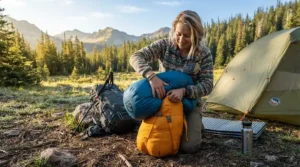
The single biggest decision point for any summer sleeping bag for car camping is that weight essentially stops being a constraint the moment your gear isn’t riding on your back. That changes the entire calculus: a car camper can justify the Coleman Brazos’s 5-plus pounds or the REI Siesta’s roomy hooded comfort, because neither one has to survive a mile-long walk to a campsite.
Backpacking-style bags — the Kelty Cosmic, Marmot NanoWave, and Sea to Summit Spark — solve a completely different problem, optimizing grams and packed volume at the cost of either price (down) or interior room (mummy cuts). Feature-by-feature, a car camping bag typically wins on hood comfort, interior roominess, and price-per-comfort; a backpacking bag wins on weight, packed size, and often on genuine performance-per-ounce.
The practical takeaway: don’t buy backpacking gear for a car-camping trip out of habit, and don’t bring a 6-pound rectangular bag if you’re actually hiking gear in. Matching bag category to travel method, not just temperature rating, is where most buyers get the most value for their money.
Features That Actually Matter (And Those That Don’t)
Features that matter for a summer festival bag: a functional two-way zipper for venting, an honestly-rated temperature (checked against multiple review sources, not just the box), and a size that actually fits your body. Fill type matters, but mostly as a price-versus-weight tradeoff rather than a performance one — both down and synthetic insulate well when dry.
Features that matter far less than marketing suggests: draft collars and hoods, unless you’re genuinely expecting sub-40°F nights; “extreme” temperature claims on any bag marketed for summer use; and premium fill-power numbers (900+ down) for a trip where you’re only shaving a couple ounces off an already-light bag. A stash pocket is a nice-to-have, not a deciding factor.
Long-Term Value & Care: Getting More Festivals Out of Your Bag
A sleeping bag’s total cost of ownership depends heavily on care, not just purchase price. Machine-washing (when the care label allows it) in a front-loading machine on gentle cycle, then thorough air-drying, keeps synthetic insulation lofting properly for years; down bags generally need specialty down wash and a slower drying process to avoid clumping.
Storage matters just as much as washing — compressing a bag tightly in its stuff sack between trips gradually reduces loft over time. Store it loosely in a large mesh or cotton bag between festival seasons instead, reserving the tight compression sack only for actual travel days.
Looked at over a five-year ownership window, a $60 Coleman bag replaced every two seasons due to wear costs roughly the same as one $150 REI bag that lasts the full stretch — meaning the “budget” option isn’t automatically the better long-term value once replacement frequency enters the math.
Safety, Comfort, and Festival Weather
Summer festivals bring their own weather risks that a good sleeping bag can’t solve alone. Daytime heat is often the bigger danger than nighttime cold — the CDC’s extreme heat guidance recommends staying hydrated throughout the day, scheduling strenuous activity for cooler hours, and knowing the warning signs of heat exhaustion, all of which matter more at a packed outdoor festival than most people realize until it’s an issue.
At night, even a genuinely hot-weather event can see a real temperature swing after sundown, especially at elevation or in desert climates — which is exactly why checking the local forecast a day or two out, not just assuming “summer means warm,” should be a permanent line item on your camping checklist.

Frequently Asked Questions
❓ What temperature rating is best for a summer sleeping bag for festivals?
❓ Can I use a regular sleeping bag for camping at a festival?
❓ Is down or synthetic better for a hot weather sleeping bag?
❓ How do I fit a sleeping bag back into a small stuff sack?
❓ What else should be on my camping checklist besides a sleeping bag?
Conclusion
Picking the right summer sleeping bag for festivals really comes down to one honest question: how are you getting your gear to the campsite? Car campers have the luxury of prioritizing comfort and price with options like the Coleman Brazos or REI Co-op Siesta Hooded 20, while anyone hiking gear in benefits from the Sea to Summit Spark 45 or Marmot NanoWave 45’s dramatically lighter carry.
Whatever you choose, the details matter more than the temperature number on the label — a functional stuff sack, honest fit, and real ventilation options will shape your actual comfort far more than an extra few degrees of warmth you likely won’t need on a genuinely warm night. Build your full camping checklist around the bag, not the other way around, and whether it’s a quick one-night trip or a full weekend, you’ll actually sleep instead of just surviving until sunrise.
Recommended for You
- Budget Summer Sleeping Bag: 7 Picks For Hot Nights (2026)
- Summer Sleeping Bag For Backpacking: 7 Best Picks For 2026
- 7 Best S’mores Kits For Camping In 2026
Disclaimer: This article contains affiliate links. As an Amazon Associate, I earn from qualifying purchases. If you purchase products through these links, we may earn a small commission at no additional cost to you.
✨ Found this helpful? Share it with your friends! 💬🤗
