
In This Article
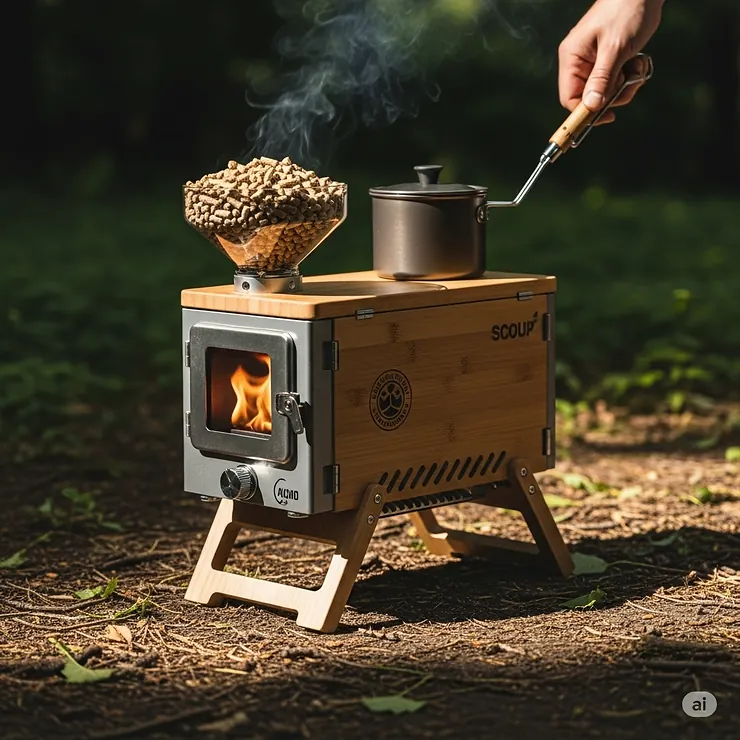
When you’re planning your next camping adventure, finding the perfect heating solution can make or break your outdoor experience. A wood pellet camping stove offers the ideal combination of efficiency, convenience, and environmental sustainability that modern campers crave. ✨ Moreover, these innovative heating devices provide consistent warmth without the hassle of constantly gathering firewood or dealing with smoky traditional campfires.
✨Was this helpful? Spread the word!
Throughout this comprehensive guide, I’ll walk you through everything you need to know about wood pellet camping stoves, from understanding the technology behind them to selecting the perfect model for your specific camping needs. Additionally, we’ll explore real-world applications, maintenance requirements, and cost-effectiveness to ensure you make an informed decision.
Understanding Wood Pellet Camping Stove Technology
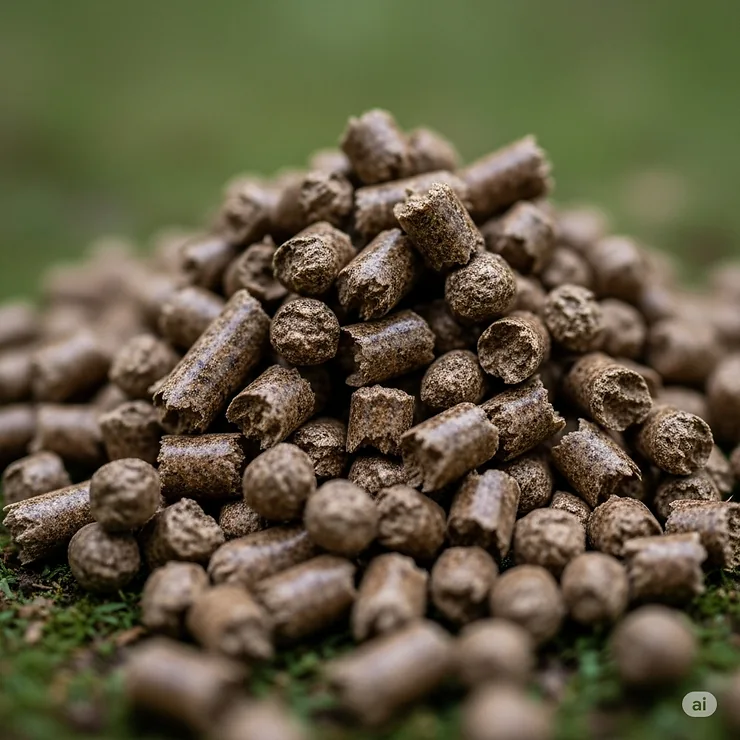
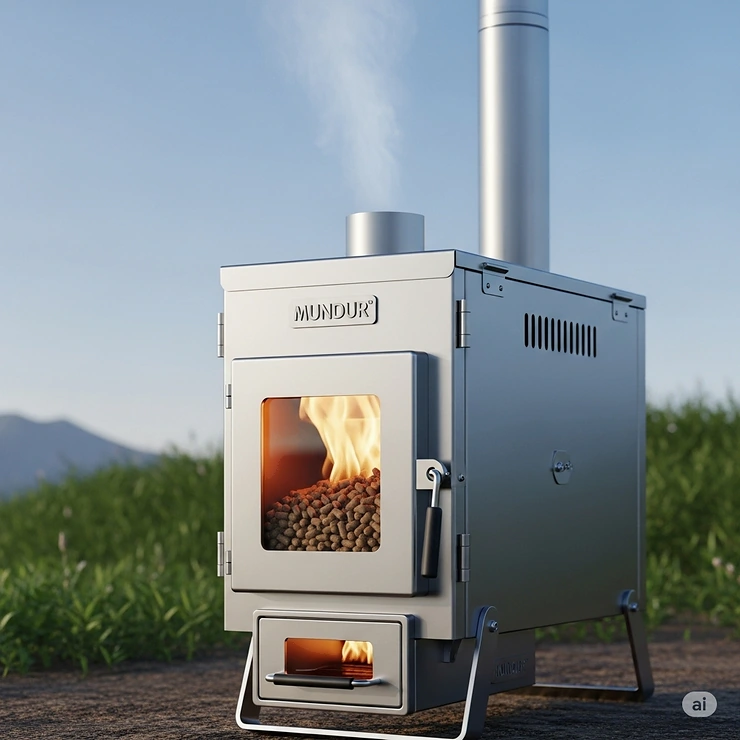
The engineering behind a wood pellet camping stove represents a remarkable advancement in outdoor heating technology. These stoves utilize compressed sawdust pellets that burn extremely efficiently, producing minimal smoke and maximum heat output. Furthermore, the gravity-fed systems eliminate the need for electricity, making them perfect for remote camping locations.
According to the U.S. Environmental Protection Agency, wood pellets achieve combustion efficiency rates between 68.5% and 80.2%, significantly higher than traditional wood-burning methods. Consequently, you’ll use less fuel while generating more consistent heat throughout your camping experience.
The combustion process in these stoves involves a carefully engineered airflow system that ensures complete fuel burn. Initially, pellets are gravity-fed into the burn chamber, where they ignite and burn with remarkable efficiency. Subsequently, the exhaust gases are channeled through chimney systems that maximize heat transfer before venting.
How Gravity-Fed Systems Work
Most quality wood pellet camping stoves feature gravity-fed pellet hoppers that can operate for 6-8 hours on a single fill. ⚡ This automated feeding system allows you to enjoy uninterrupted warmth throughout the night without constantly tending to the fire. As a result, you can sleep peacefully knowing your tent will maintain comfortable temperatures.
The hopper design typically holds 20-40 pounds of pellets, depending on the stove model. Therefore, understanding your camping duration and heating needs helps determine the appropriate hopper capacity for your adventures. Additionally, the burn rate can be adjusted through damper controls, allowing you to customize heat output based on weather conditions.
Top 7 Wood Pellet Camping Stoves: Detailed Analysis
After extensive research and analysis of current market offerings, I’ve identified seven exceptional wood pellet camping stoves that deliver outstanding performance for outdoor enthusiasts. Each model offers unique features and benefits suited to different camping styles and requirements.
1. SoloWilder IgniFire Portable Pellet Stove – Premium Compact Design
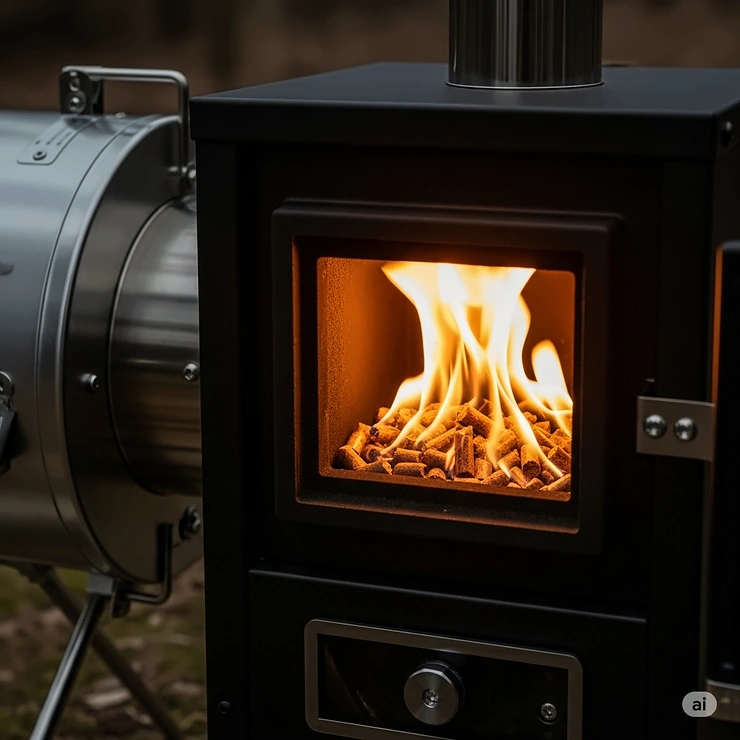
The SoloWilder IgniFire Portable Pellet Stove stands out as an exceptional choice for campers seeking a premium, compact heating solution. This innovative stove features a unique 3-sided glass design that provides both aesthetic appeal and superior heat dissipation capabilities.
Key Specifications:
- Weight: 18 lbs
- Burn Time: 6-8 hours per fill
- Heating Capacity: 1-4 person tents
- Material: 304 stainless steel construction
- Price Range: $299-$349
The automatic gravity-feed system ensures hassle-free operation, while the compact design makes transportation effortless. Moreover, the three viewing windows allow you to monitor the fire and enjoy the mesmerizing flames throughout your camping experience.
Customer reviews consistently praise this stove’s reliability and ease of use. One verified purchaser noted, “The IgniFire has transformed our camping experience – we no longer worry about gathering firewood or dealing with smoky fires.”
2. SoloWilder PE200 Pellet Oven Stove – Versatile Cooking Solution
The SoloWilder PE200 Pellet Oven Stove combines heating and cooking capabilities in one versatile unit. This non-electric stove features an integrated oven that can reach temperatures up to 200°C, making it perfect for baking bread, cooking meals, and heating your tent simultaneously.
Key Features:
- Dual Function: Heating and cooking combined
- Oven Temperature: Up to 200°C (392°F)
- Capacity: Suitable for 1-8 person RVs or large tents
- Price Range: $399-$449
- Warranty: 1-year manufacturer warranty
The glass front door and side panels enhance heat radiation while allowing you to monitor cooking progress. Furthermore, the compact footprint makes it ideal for RV travel where space is at a premium. ✅
3. SoloWilder Outdoor Pellet Stove – Complete Camping Companion
The SoloWilder Outdoor Pellet Stove represents a complete camping solution with its built-in oven, automatic feeding system, and robust construction. This model excels in car camping and RV applications where weight is less of a concern.
Technical Specifications:
- Burn Time: Up to 6 hours per fill
- Construction: Premium 304 stainless steel
- Features: U-shaped combustion chamber, glass windshield, foldable legs
- Target Application: 3-5 person dome tents, teepees, shelters
- Price Range: $449-$529
The U-shaped combustion chamber design maximizes pellet efficiency through enhanced airflow patterns. Additionally, the included ash drawer and convenient handles make maintenance and transportation straightforward. ️
4. Riley City Slicker Pellet Stove – Professional Grade Reliability
The Riley City Slicker Pellet Stove has earned its reputation through decades of use by professional outfitters and the U.S. Forest Service. This galvanized steel construction stove burns only pellets, providing maximum heat output and reliability.
Professional Specifications:
- Dimensions: 15″ wide x 27.5″ long x 13.5″ deep
- Weight: 42 lbs
- Burn Time: 7-8 hours with 40 lb pellet bag
- Hopper Capacity: 20 lbs (3-4 hours burn time)
- Construction: 18-22 gauge galvanized steel
- Price Range: $650-$750
This non-electric pellet stove operates efficiently up to 8,000 feet elevation and includes patented air-cooled bottom technology that prevents burn-through. Consequently, it offers exceptional durability for long-term camping operations.
5. BioLite CampStove 2+ Plus – Dual-Fuel Innovation
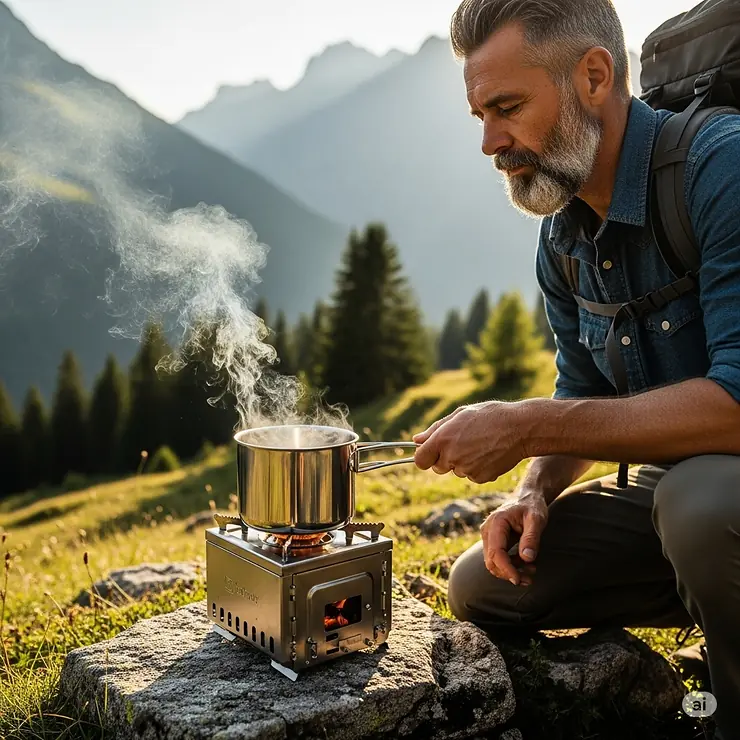
The BioLite CampStove 2+ Plus offers unique versatility by burning both wood pellets and biomass materials like sticks and twigs. This thermoelectric generator also produces 3 watts of USB charging power while you cook.
Innovation Features:
- Fuel Options: Wood pellets, sticks, twigs, biomass
- Power Generation: 3 watts USB output
- Battery Capacity: 3,200 mAh internal battery
- Boil Time: 4.5 minutes for 1 liter
- Weight: 2.06 lbs (935g)
- Price Range: $149-$187 (Complete Kit)
The patented combustion technology creates smokeless flames through efficient secondary combustion. Furthermore, the included FlexLight LED provides cooking illumination during evening meal preparation. ⚡
6. Green Stove Butterfly H Wood Stove – Pellet Burner Compatible
The Green Stove Butterfly H Wood Stove transforms into a pellet-burning system when paired with the separately available pellet burner attachment. This dual-fuel capability provides maximum flexibility for different camping scenarios.
Dual-Fuel Specifications:
- Firebox Volume: 968 cubic inches
- Material: 304 stainless steel construction
- Chimney: 7 sections of 2.75″ diameter pipe included
- Weight: Approximately 25 lbs
- Pellet Burn Time: 6-10 hours with pellet burner
- Price Range: $200-$280 (stove only)
When equipped with the Green Stove pellet burner, this system delivers extended burn times and consistent heat output. However, the pellet burner must be purchased separately, adding to the overall investment cost.
7. POMOLY Dweller Stainless Steel Stove – Premium Titanium Alternative
The POMOLY Dweller Stainless Steel Stove represents premium camping stove engineering with its ability to burn both wood and pellets efficiently. This stove features advanced airwash technology and superior build quality.
Premium Features:
- Material: High-grade stainless steel
- Glass Windows: Clear viewing with airwash system
- Dual Fuel: Wood and pellet compatible
- Construction: Heavy-duty with reinforced stress points
- Size Options: Multiple sizes available
- Price Range: $299-$399
The airwash system keeps the glass clear during operation, while the robust construction ensures years of reliable service. Additionally, the stove’s elegant design makes it suitable for both camping and home applications. ✨
Detailed Comparison Table: Top Wood Pellet Camping Stoves
| Model | Weight | Burn Time | Price Range | Best For | Key Feature |
|---|---|---|---|---|---|
| SoloWilder IgniFire | 18 lbs | 6-8 hours | $299-$349 | 1-4 person tents | 3-sided glass design |
| SoloWilder PE200 | 22 lbs | 6-8 hours | $399-$449 | RV/Large groups | Built-in oven |
| SoloWilder Outdoor | 28 lbs | 6 hours | $449-$529 | Car camping | Complete system |
| Riley City Slicker | 42 lbs | 7-8 hours | $650-$750 | Professional use | Proven reliability |
| BioLite CampStove 2+ | 2.06 lbs | 2-4 hours | $149-$187 | Backpacking | USB charging |
| Green Stove Butterfly H | 25 lbs | 6-10 hours* | $200-$280 | Dual-fuel flexibility | Convertible design |
| POMOLY Dweller | 24 lbs | 4-6 hours | $299-$399 | Premium camping | Airwash glass |
*With pellet burner attachment
Don’t Miss These Exclusive Deals!
Take your camping experience to the next level with these carefully selected wood pellet camping stoves. Click on any highlighted product to check current pricing and availability. These efficient heating solutions will transform your outdoor adventures! ⚡
Comprehensive Buying Guide: Choosing Your Perfect Wood Pellet Camping Stove
Selecting the ideal wood pellet camping stove requires careful consideration of multiple factors that directly impact your camping experience. Understanding these key elements will help you make an informed decision that perfectly matches your outdoor lifestyle and heating requirements.
Heating Capacity and Tent Size Matching
The heating capacity of your wood pellet camping stove must align with your tent size and insulation properties. Generally, you’ll need approximately 15-20 BTUs per square foot of tent space in moderate conditions. However, this calculation increases significantly in extreme cold weather or poorly insulated shelters.
For small 1-2 person backpacking tents, a compact stove like the BioLite CampStove 2+ provides adequate heating while maintaining portability. Conversely, large family tents or RVs require powerful units like the SoloWilder PE200 or Riley City Slicker to maintain comfortable temperatures.
Consider these tent heating guidelines:
- Small tents (1-2 person): 8,000-15,000 BTU capacity
- Medium tents (3-4 person): 15,000-25,000 BTU capacity
- Large tents (5+ person): 25,000+ BTU capacity
- RVs and cabins: 30,000+ BTU capacity
Weight and Portability Considerations
The weight of your wood pellet camping stove significantly impacts your camping style and transportation methods. Backpackers prioritize lightweight options under 5 pounds, while car campers can accommodate heavier, more feature-rich models.
Weight Categories:
- Ultralight (under 5 lbs): BioLite CampStove 2+ at 2.06 lbs
- Lightweight (5-15 lbs): SoloWilder IgniFire at 18 lbs
- Medium weight (15-30 lbs): Most mid-range camping stoves
- Heavy duty (30+ lbs): Riley City Slicker at 42 lbs
Remember to factor in the weight of pellets, chimney pipes, and accessories when calculating your total pack weight. A 40-pound bag of pellets typically provides 8-12 hours of burn time, depending on your stove’s efficiency rating.
Fuel Efficiency and Burn Time Analysis
Modern wood pellet camping stoves achieve remarkable fuel efficiency through advanced combustion chamber designs and airflow management systems. Understanding these efficiency ratings helps you calculate fuel costs and determine how much pellets to pack for extended trips.
Efficiency Comparison:
- Premium hardwood pellets: 8,500-9,000 BTU per pound
- Standard wood pellets: 8,000-8,500 BTU per pound
- Softwood pellets: 7,500-8,000 BTU per pound
- Compressed biomass pellets: 7,000-7,500 BTU per pound
The Riley City Slicker demonstrates exceptional efficiency, burning through a 40-pound pellet bag in 7-8 hours while producing consistent heat. In contrast, the SoloWilder IgniFire optimizes pellet consumption for extended burn times up to 8 hours per fill.
Safety Features and Certifications
Safety should always be your top priority when selecting a wood pellet camping stove. Look for models that include essential safety features like spark arrestors, proper ventilation systems, and temperature controls. Additionally, verify that your chosen stove meets relevant safety certifications for your intended use.
Essential Safety Features: ✅ Spark arrestor screens
✅ Proper chimney draft systems
✅ Heat-resistant construction materials
✅ Stable base design
✅ Air intake controls
✅ Emergency shutdown capabilities
Professional-grade stoves like the Riley City Slicker are approved by the U.S. Forest Service and meet stringent safety standards for commercial outfitter use. This certification provides confidence in the stove’s reliability and safety performance.
Industry-Specific Applications and Professional Use Cases
Wood pellet camping stoves serve diverse applications beyond recreational camping, finding extensive use in professional, commercial, and specialized industry settings. Understanding these varied applications demonstrates the versatility and reliability of modern pellet stove technology.
Professional Outfitter and Guide Services
Professional wilderness guides and outfitters rely on wood pellet camping stoves for their consistent performance and reliability in challenging conditions. These professionals often operate multi-day expeditions where equipment failure isn’t an option, making proven stoves like the Riley City Slicker essential tools.
Outfitters particularly value the extended burn times and minimal maintenance requirements of pellet stoves. Unlike traditional wood-burning stoves that require constant attention, pellet stoves allow guides to focus on client safety and experience rather than fire management. Furthermore, the clean-burning characteristics reduce environmental impact in sensitive wilderness areas.
Professional Benefits:
- Reduced fire management time
- Consistent heat output for client comfort
- Lower environmental impact
- Reliable performance in extreme conditions
- Reduced gear weight through fuel efficiency
Agricultural and Ranching Applications
Ranchers and farmers utilize portable pellet stoves for temporary heating in calving sheds, lambing barns, and remote agricultural structures. The Riley City Slicker was specifically designed with these applications in mind, offering robust construction and long burn times suitable for livestock care.
During critical calving seasons, maintaining proper temperatures can mean the difference between successful births and livestock losses. Pellet stoves provide reliable, automated heating that doesn’t require constant monitoring, allowing ranchers to attend to other essential tasks.
Agricultural users particularly appreciate the ability to store all stove components inside the firebox, making transportation between different ranch locations convenient and efficient. Additionally, the non-electric operation ensures functionality even in remote areas without power infrastructure.
Emergency Response and Disaster Relief
Emergency response teams and disaster relief organizations increasingly rely on portable pellet stoves for temporary shelter heating and food preparation. These stoves provide crucial heating capabilities in evacuation centers, emergency shelters, and disaster-affected areas where traditional heating systems may be unavailable.
The SoloWilder PE200 Pellet Oven Stove proves particularly valuable in emergency scenarios due to its dual heating and cooking capabilities. Relief workers can simultaneously warm shelters and prepare hot meals for displaced families, maximizing the utility of limited equipment.
Emergency responders value pellet stoves for their:
- Quick deployment and setup
- Minimal infrastructure requirements
- Clean burning characteristics
- Extended operation capabilities
- Multi-purpose functionality
Military and Government Applications
Military units and government agencies utilize wood pellet camping stoves for field operations, training exercises, and remote installations. The proven reliability and non-electric operation make these stoves ideal for situations where power sources are unavailable or unreliable.
The U.S. Forest Service’s approval of Riley stoves demonstrates their suitability for government applications where equipment must meet strict performance and safety standards. Military units particularly value the lightweight options like the SoloWilder IgniFire for forward deployment scenarios where equipment weight is critical.
Government applications often require:
- Proven durability and reliability
- Compliance with safety regulations
- Efficient fuel consumption
- Low maintenance requirements
- Versatile operational capabilities
Commercial Camping and Glamping Operations
The growing glamping industry relies heavily on efficient heating solutions that provide comfort while maintaining the outdoor experience aesthetic. Wood pellet camping stoves like the POMOLY Dweller offer the perfect balance of functionality and visual appeal for luxury camping operations.
Commercial campgrounds appreciate pellet stoves because they provide guests with consistent comfort while reducing the environmental impact compared to traditional wood-burning options. The automated operation and extended burn times minimize staff intervention requirements while ensuring guest satisfaction.
Commercial Advantages:
- Reduced staff maintenance time
- Consistent guest comfort levels
- Environmental sustainability benefits
- Enhanced safety compared to open fires
- Improved operational efficiency
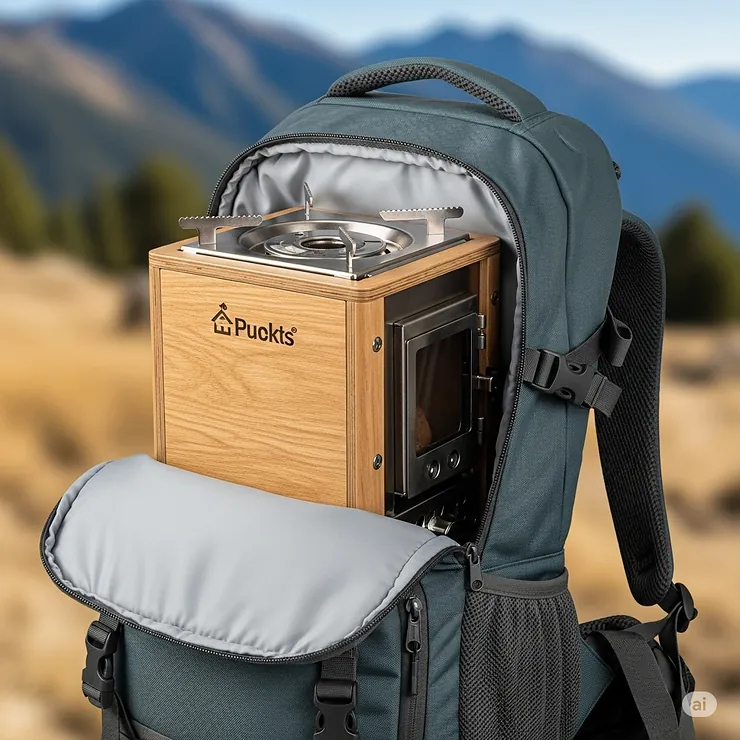
Commercial operators often invest in premium models with features like glass viewing windows and attractive designs that enhance the guest experience while providing practical heating solutions.
Advanced Technical Analysis and Engineering Principles
The engineering behind modern wood pellet camping stoves represents sophisticated combustion science and thermal dynamics principles. Understanding these technical aspects helps users optimize performance and select the most appropriate stove for their specific applications.
Combustion Chamber Design and Airflow Dynamics
The heart of any effective wood pellet camping stove lies in its combustion chamber design and airflow management system. Modern stoves utilize primary and secondary combustion chambers to achieve maximum fuel efficiency and minimize emissions.
Primary combustion occurs in the main burn chamber where pellets initially ignite and begin the burning process. The design of this chamber affects burn rate, heat output, and fuel consumption efficiency. Premium stoves like the SoloWilder Outdoor Pellet Stove feature U-shaped combustion chambers that create optimal airflow patterns for complete fuel utilization.
Secondary combustion chambers or zones burn off volatile gases and smoke particles that escape from the primary burn area. This two-stage process significantly increases thermal efficiency and reduces visible emissions, creating the “smokeless” operation that characterizes quality pellet stoves.
Key Design Elements:
- Chamber geometry: Affects burn patterns and heat distribution
- Air intake positioning: Controls combustion air supply and burn rate
- Baffle systems: Direct airflow for optimal mixing and combustion
- Heat exchanger surfaces: Maximize heat transfer to the surrounding space
Thermal Efficiency and Heat Transfer Mechanisms
Wood pellet camping stoves achieve superior thermal efficiency through multiple heat transfer mechanisms working in concert. Understanding these processes helps users optimize stove placement and operation for maximum heating effectiveness.
Heat Transfer Methods:
- Conduction: Direct heat transfer through the stove body and chimney
- Convection: Air circulation around hot surfaces creates warming currents
- Radiation: Infrared energy emission from hot stove surfaces
The SoloWilder IgniFire utilizes its 3-sided glass design to maximize radiant heat transfer while allowing visual monitoring of the combustion process. The glass panels act as large radiant surfaces that efficiently warm surrounding areas through infrared emission.
Thermal efficiency ratings typically range from 70-85% for quality pellet stoves, significantly higher than traditional wood-burning stoves that often achieve only 50-60% efficiency. This improved efficiency translates directly to reduced fuel consumption and extended burn times.
Material Science and Durability Engineering
The materials used in pellet stove construction directly impact performance, durability, and safety characteristics. Premium manufacturers like Riley Stove Company and SoloWilder carefully select materials that withstand extreme temperatures while maintaining structural integrity.
Construction Materials:
- 304 Stainless Steel: Excellent corrosion resistance and thermal properties
- Galvanized Steel: Cost-effective with good durability (Riley stoves)
- Titanium: Ultra-lightweight with superior strength-to-weight ratio
- Cast Iron: Excellent heat retention but significantly heavier
The Riley City Slicker utilizes 18-22 gauge galvanized steel construction with strategic reinforcement at stress points. This engineering approach provides excellent durability while maintaining reasonable weight for portable applications.
Thermal expansion and contraction cycles create significant stress on stove components. Quality manufacturers address this through:
- Strategic joint design that accommodates thermal movement
- Material selection that maintains properties at high temperatures
- Reinforcement at critical stress concentration points
- Proper clearance allowances for thermal expansion
Gravity-Fed Fuel Delivery Systems
The gravity-fed pellet delivery systems used in modern camping stoves represent elegant engineering solutions that provide automated fuel feeding without electrical components. These systems must reliably meter pellets while preventing bridging or jamming that could interrupt operation.
System Components:
- Hopper design: Shape and angle affect pellet flow characteristics
- Feed mechanisms: Control pellet delivery rate to the burn chamber
- Anti-bridging features: Prevent pellet clumping that blocks flow
- Burn rate controls: Adjust air supply to match pellet feed rate
The SoloWilder PE200 incorporates advanced hopper design with optimized angles and smooth surfaces that promote consistent pellet flow. The system automatically adjusts pellet delivery based on burn chamber demand, maintaining steady heat output without user intervention.
Emission Control and Environmental Impact
Modern wood pellet camping stoves achieve remarkably low emission levels through advanced combustion engineering and high-quality fuel utilization. The complete combustion achieved in well-designed stoves virtually eliminates particulate emissions and reduces harmful gas production.
According to EPA testing standards, quality pellet stoves produce:
- Particulate matter: Less than 0.5 grams per hour
- Carbon monoxide: Minimal levels due to complete combustion
- Nitrogen oxides: Significantly lower than fossil fuel alternatives
- Sulfur compounds: Nearly eliminated with quality pellets
The environmental benefits extend beyond emission reduction to include:
- Renewable fuel source utilization
- Carbon-neutral operation (when using sustainably sourced pellets)
- Reduced dependence on fossil fuels
- Minimal ash production requiring disposal
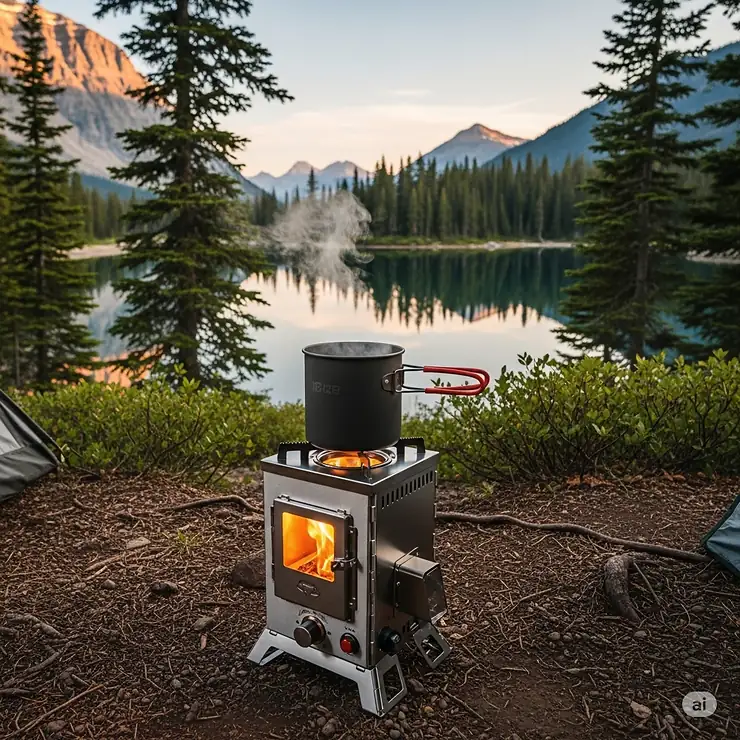
Research studies from the National Renewable Energy Laboratory demonstrate that pellet heating systems can reduce carbon footprint by 50-80% compared to propane or heating oil alternatives commonly used in camping applications.
Comprehensive Setup and Usage Guide
Proper setup and operation of your wood pellet camping stove ensures optimal performance, safety, and longevity. Following established procedures and best practices maximizes your investment while providing reliable heating throughout your camping adventures.
Pre-Installation Site Assessment and Preparation
Before installing your wood pellet camping stove, conduct a thorough site assessment to ensure safe and effective operation. The installation location affects both performance and safety, making careful site selection crucial for successful stove operation.
Site Selection Criteria:
✅ Level, stable ground surface
✅ Adequate clearance from combustible materials
✅ Proper ventilation for fresh air supply
✅ Accessibility for fuel loading and maintenance
✅ Protection from prevailing winds
✅ Compliance with local fire regulations
The tent or shelter must include a proper stove jack or chimney exit port designed for your stove’s chimney diameter. Most quality camping stoves like the SoloWilder IgniFire use standard diameter chimney pipes that fit common stove jack sizes.
Clearance requirements vary by stove model but typically require:
- Side clearances: 12-18 inches from combustible walls
- Front clearance: 24-36 inches for loading and operation access
- Top clearance: 36-48 inches above the stove
- Floor protection: Non-combustible pad extending beyond stove footprint
Step-by-Step Installation Procedures
Installing your wood pellet camping stove requires attention to detail and adherence to manufacturer specifications. Proper installation ensures safe operation and optimal performance throughout your camping experience.
Installation Steps:
- Prepare the Installation Area
- Clear and level the installation site
- Install appropriate floor protection
- Verify adequate clearances on all sides
- Assemble the Stove Body
- Follow manufacturer assembly instructions carefully
- Tighten all connections to specified torque values
- Install any optional accessories or attachments
- Install the Chimney System
- Begin with the first chimney section at the stove collar
- Secure each joint with provided fasteners
- Maintain proper chimney rise and support
- Connect to Tent or Shelter
- Route chimney through proper stove jack
- Seal around chimney exit with appropriate materials
- Ensure adequate chimney height above shelter
- Perform Initial Safety Check
- Verify all connections are secure
- Check for proper clearances
- Test damper and air control operation
The Riley City Slicker includes comprehensive installation instructions and all necessary hardware for proper setup. Professional-grade stoves typically require more detailed installation procedures due to their robust construction and safety features.
Initial Burn-In and Seasoning Process
New wood pellet camping stoves require a proper burn-in process to cure protective coatings and ensure optimal performance. This seasoning process should be completed before your first camping trip to avoid issues in the field.
Burn-In Procedures:
- First Fire (Low Temperature)
- Start with small amount of pellets
- Maintain low burn rate for 30-45 minutes
- Allow stove to cool completely
- Second Fire (Medium Temperature)
- Use moderate pellet load
- Operate at medium burn rate for 1-2 hours
- Monitor for any unusual odors or smoke
- Third Fire (Normal Operation)
- Load normal pellet amount
- Operate at various burn rates
- Test all controls and features
During the burn-in process, protective coatings on new stoves may produce temporary odors or slight smoking. This is normal and typically resolves after the initial seasoning fires. Ensure adequate ventilation during this process.
The BioLite CampStove 2+ requires minimal burn-in due to its stainless steel construction and factory pre-seasoning. However, following the basic burn-in process still helps optimize performance and identify any potential issues.
Optimal Fuel Selection and Pellet Quality
The quality of wood pellets significantly affects stove performance, burn time, and maintenance requirements. Understanding pellet grades and characteristics helps you select the best fuel for your specific camping needs and stove model.
Premium Pellet Characteristics:
- Low ash content: Less than 1% ash by weight
- High density: Consistent compression for even burning
- Low moisture: Less than 8% moisture content
- Uniform size: Consistent pellet dimensions
- Clean composition: No additives or binding agents
Premium hardwood pellets typically provide:
- Higher BTU output: 8,500-9,000 BTU per pound
- Longer burn times: 15-20% longer than standard pellets
- Less ash production: Reduced cleaning frequency
- Consistent burn characteristics: Predictable heat output
The SoloWilder PE200 performs optimally with premium hardwood pellets that maintain consistent burn rates and minimize ash accumulation in the oven chamber. Using high-quality pellets reduces maintenance requirements and extends the time between cleaning cycles.
Pellet Storage Considerations:
- Store in dry, protected environment
- Use moisture-proof containers for camping trips
- Rotate pellet inventory to maintain freshness
- Keep pellets away from contamination sources
Operating Procedures and Best Practices
Proper operation of your wood pellet camping stove involves understanding the controls, managing burn rates, and maintaining safe operating procedures. Developing good operational habits ensures consistent performance and extends stove life.
Startup Procedures:
- Pre-Operation Inspection
- Check chimney for obstructions
- Verify air controls are functioning
- Inspect pellet supply and quality
- Initial Pellet Loading
- Load hopper with appropriate pellet amount
- Open air controls to maximum position
- Use recommended fire starter methods
- Ignition Process
- Light fire starter in burn chamber
- Allow initial pellets to establish burning
- Gradually adjust air controls as fire develops
- Normal Operation Adjustment
- Monitor burn characteristics and adjust controls
- Add pellets as needed to maintain heat output
- Maintain proper air supply for clean burning
The SoloWilder IgniFire features intuitive controls that allow precise adjustment of burn rates and heat output. The 3-sided glass design enables visual monitoring of the combustion process, helping users optimize performance.
Safety Operating Procedures:
✅ Never leave stove unattended during startup
✅ Maintain adequate fresh air supply
✅ Monitor carbon monoxide levels if equipped with detector
✅ Keep fire extinguisher readily available
✅ Follow manufacturer shutdown procedures
Maintenance and Longevity Optimization
Regular maintenance of your wood pellet camping stove ensures reliable operation, extends equipment life, and maintains safety standards. Developing a systematic maintenance routine prevents problems and optimizes performance throughout the stove’s operational life.
Daily Operation and Cleaning Routines
Daily maintenance during camping trips involves simple but important tasks that keep your stove operating efficiently. These routine procedures prevent ash buildup, maintain proper airflow, and identify potential issues before they become serious problems.
Daily Maintenance Tasks:
Morning Routine (Before Use):
- Remove ash accumulation from burn chamber
- Check pellet supply and quality
- Inspect chimney connections for security
- Verify air controls operate smoothly
Evening Routine (After Use):
- Allow stove to cool completely before cleaning
- Remove any unburned pellets from burn chamber
- Clean glass surfaces for optimal viewing
- Store pellets in dry, protected location
The Riley City Slicker requires daily burn plate cleaning for optimal performance, particularly when using standard-grade pellets that produce more ash. Professional outfitters typically perform this cleaning during morning coffee preparation, making it part of the daily camp routine.
Cleaning Supplies Needed:
- Small metal shovel or scoop for ash removal
- Brush for cleaning burn chamber surfaces
- Glass cleaner for viewing windows
- Vacuum or compressed air for thorough cleaning
Weekly and Monthly Maintenance Schedules
Extended maintenance procedures performed weekly during heavy use or monthly during moderate use address deeper cleaning needs and component inspection requirements. These procedures maintain optimal performance and identify wear patterns that may require attention.
Weekly Maintenance (Heavy Use):
- Comprehensive Ash Removal
- Remove all ash from burn chamber and ash pan
- Clean pellet feed mechanisms of dust accumulation
- Inspect burn chamber for damage or excessive wear
- Chimney System Inspection
- Check all chimney joints for security
- Remove any creosote or ash buildup
- Verify proper draft and airflow
- Control System Testing
- Test all dampers and air controls for proper operation
- Lubricate moving parts if specified by manufacturer
- Calibrate controls if adjustment mechanisms are provided
The SoloWilder PE200 benefits from weekly oven chamber cleaning to remove food residues and ash that can affect cooking performance. The integrated oven design requires additional attention to maintain both heating and cooking capabilities.
Monthly Maintenance (Moderate Use):
- Detailed Component Inspection
- Examine all gaskets and seals for wear
- Check structural components for stress or damage
- Inspect electrical components (if applicable) for corrosion
- Deep Cleaning Procedures
- Disassemble cleanable components per manufacturer instructions
- Perform thorough cleaning of all accessible surfaces
- Replace consumable components as needed
Seasonal Storage and Winterization
Proper seasonal storage protects your wood pellet camping stove from corrosion, pest damage, and environmental degradation during periods of non-use. Following established storage procedures ensures your stove remains in excellent condition for the next camping season.
End-of-Season Preparation:
- Complete Cleaning and Inspection
- Perform thorough cleaning of all components
- Remove all ash, pellets, and combustible materials
- Inspect for damage requiring repair or replacement
- Corrosion Prevention
- Apply appropriate rust preventatives to steel surfaces
- Clean and protect glass surfaces from scratching
- Remove moisture and ensure complete drying
- Component Storage
- Store removable components in protected containers
- Use moisture-absorbing materials in storage areas
- Document component inventory for next season
The POMOLY Dweller stainless steel construction requires minimal corrosion protection, but proper cleaning and dry storage extend the life of all components and maintain appearance quality.
Storage Environment Requirements:
- Dry, well-ventilated storage area
- Protection from temperature extremes
- Security from theft or damage
- Accessibility for periodic inspection
Troubleshooting Common Issues
Understanding common operational issues and their solutions helps maintain stove performance and prevent minor problems from becoming major repairs. Most issues relate to fuel quality, airflow restrictions, or improper operation procedures.
Common Problems and Solutions:
Poor Burn Performance:
- Cause: Low-quality pellets or excessive moisture
- Solution: Switch to premium pellets, ensure dry storage
- Prevention: Test pellet quality before camping trips
Excessive Ash Production:
- Cause: Poor pellet quality or incomplete combustion
- Solution: Improve air supply, use higher-grade pellets
- Prevention: Regular cleaning and quality fuel selection
Glass Sooting or Fogging:
- Cause: Insufficient combustion air or poor fuel quality
- Solution: Increase air supply, clean glass, check pellet quality
- Prevention: Maintain proper air controls and use quality pellets
Pellet Feed Problems:
- Cause: Moisture, bridging, or foreign material in hopper
- Solution: Clean hopper, ensure dry pellets, remove obstructions
- Prevention: Proper pellet storage and handling procedures
The BioLite CampStove 2+ electronic controls include diagnostic indicators that help identify operational issues. Understanding these indicators and their meanings enables quick problem resolution in field conditions.
Professional Servicing and Warranty Considerations
Understanding warranty coverage and professional servicing options protects your investment and ensures continued reliable operation. Most quality manufacturers provide comprehensive warranties and support services for their products.
Warranty Coverage Typically Includes:
- Manufacturing defects: Material and workmanship issues
- Component replacement: Defective parts during warranty period
- Technical support: Operational guidance and troubleshooting assistance
- Repair services: Professional repair for covered issues
The Riley City Slicker includes a 5-year warranty against burn-through and lifetime warranty against top warpage, reflecting the manufacturer’s confidence in construction quality. This extensive warranty coverage provides peace of mind for professional and recreational users.
Professional Service Indicators:
- Structural damage or stress cracking
- Chronic performance issues despite proper maintenance
- Safety concerns that exceed user repair capabilities
- Warranty claim requirements for coverage
Regular professional inspection, typically annually for heavy users, can identify potential issues before they become serious problems and may be required to maintain warranty coverage.
Comparative Analysis: Pellet Stoves vs. Alternative Heating Solutions
Understanding how wood pellet camping stoves compare to alternative heating methods helps you make informed decisions based on your specific camping style, requirements, and priorities. Each heating solution offers unique advantages and limitations that affect their suitability for different applications.
Traditional Wood-Burning Stoves Comparison
Traditional wood-burning camping stoves remain popular due to their simplicity and ability to use locally sourced fuel. However, when compared directly to pellet stoves, several important differences emerge that affect user experience and operational efficiency.
Fuel Considerations: Wood-burning stoves require constant fuel gathering, processing, and feeding throughout operation. This labor-intensive process can significantly impact camping enjoyment, particularly during adverse weather conditions. Additionally, finding suitable dry wood can be challenging in many camping locations.
Pellet stoves eliminate these concerns by using preprocessed, consistent fuel that burns cleanly and efficiently. A single 40-pound bag of pellets equivalent in energy content to approximately 50-60 pounds of seasoned hardwood, while taking up significantly less storage space.
Performance Comparison:
- Heat output consistency: Pellet stoves provide steady, controllable heat vs. variable wood stove output
- Burn time: Pellet stoves offer 6-8 hour unattended operation vs. 2-3 hours for wood
- Maintenance frequency: Pellet stoves require less frequent attention during operation
- Startup time: Pellet stoves ignite faster and reach operating temperature quicker
The SoloWilder IgniFire demonstrates these advantages through its automated pellet feeding system that maintains consistent temperatures throughout the night without user intervention.
Propane and Gas Heater Alternatives
Propane heaters offer convenience and instant heat control but present several limitations that make pellet stoves attractive alternatives for many camping applications. Understanding these trade-offs helps determine the best heating solution for your needs.
Fuel Logistics: Propane heaters require heavy fuel tanks that become increasingly expensive to refill, particularly in remote areas. Additionally, propane performance degrades significantly in cold weather, reducing heat output when you need it most.
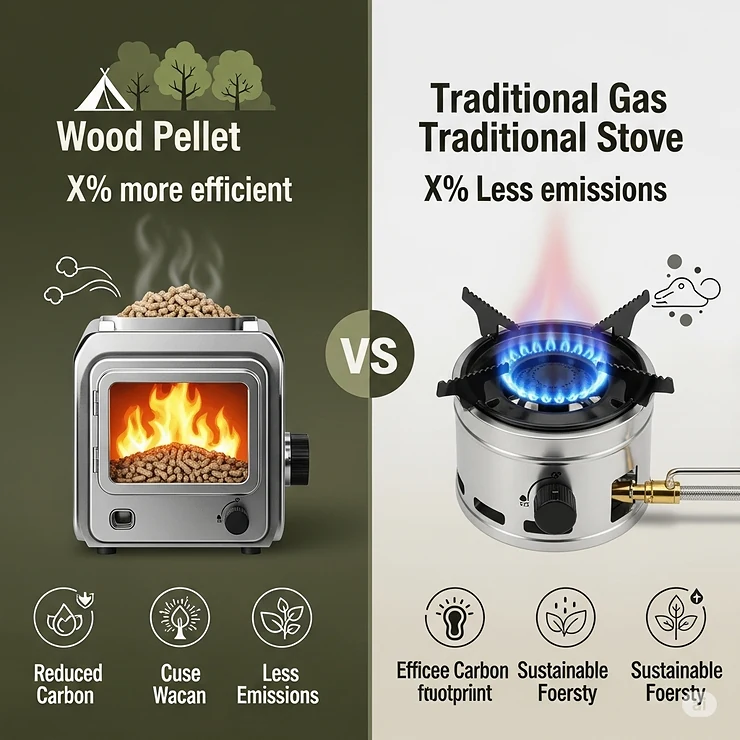
Pellet stoves use renewable biomass fuel that remains stable in all weather conditions and typically costs 40-60% less than propane on a BTU basis. The consistent performance in extreme cold makes pellet stoves particularly valuable for winter camping applications.
Safety Considerations: Propane heaters pose carbon monoxide risks in enclosed spaces and require careful ventilation management. Many camping areas restrict or prohibit propane heaters due to safety concerns.
Wood pellet camping stoves, when properly installed with appropriate chimney systems, eliminate carbon monoxide concerns through external venting. The solid fuel combustion process poses fewer safety risks than pressurized gas systems.
Environmental Impact: Propane is a fossil fuel that contributes to carbon emissions and requires extensive transportation infrastructure. Pellets, when sourced from sustainable forestry operations, are carbon-neutral and support renewable resource management.
Electric Heating Solutions Analysis
Electric heaters provide clean, convenient heating but require reliable power sources that limit their applicability in many camping scenarios. Comparing electric solutions to pellet stoves reveals significant operational differences.
Power Requirements: Electric heaters typically require 1,500-3,000 watts of continuous power, necessitating substantial battery systems or generator operation. This power demand makes electric heating impractical for extended camping without AC power sources.
The BioLite CampStove 2+ actually generates electrical power while providing heat, creating a net energy gain rather than consumption. This unique capability makes it particularly valuable for off-grid camping applications.
Cost Analysis: Electric heating costs vary significantly based on power source but typically exceed pellet heating costs in off-grid applications due to battery and generator requirements. The infrastructure investment for adequate electric heating often exceeds the cost of a quality pellet stove.
Reliability Factors: Electric systems depend on complex battery management, charging systems, and electronic controls that can fail in harsh outdoor conditions. Pellet stoves operate with minimal electronic components, providing greater reliability in challenging environments.
Solar and Alternative Energy Integration
Modern camping increasingly incorporates renewable energy systems, making it important to understand how different heating solutions integrate with solar and alternative power systems.
Energy Balance: Solar systems sized for typical camping electrical needs cannot support electric heating without massive battery banks and solar arrays. However, solar systems can effectively power the minimal electrical needs of hybrid stoves like the BioLite CampStove 2+.
Pellet stoves operate independently of electrical systems while actually contributing power generation in some models. This energy-positive operation complements solar systems rather than competing with them for limited power resources.
System Complexity: Integrating electric heating with solar systems requires sophisticated charge controllers, battery management systems, and inverters that increase system complexity and failure points. Pellet stoves operate independently, reducing overall system complexity.
Long-Term Cost-Benefit Analysis
Evaluating the total cost of ownership over several years reveals the economic advantages of pellet stoves compared to alternative heating solutions.
Initial Investment Comparison:
| Heating Method | Initial Cost | Required Accessories | Total Investment |
|---|---|---|---|
| Quality Pellet Stove | $300-$750 | Chimney, installation | $400-$900 |
| Propane Heater System | $150-$400 | Tanks, regulators, safety | $300-$600 |
| Electric Heater System | $100-$300 | Batteries, inverter, solar | $1,500-$3,000 |
| Traditional Wood Stove | $200-$500 | Tools, processing equipment | $300-$700 |
Annual Operating Costs:
- Pellet stoves: $100-$200 for average camping (pellets only)
- Propane systems: $300-$500 (fuel and tank maintenance)
- Electric systems: $200-$400 (battery replacement, maintenance)
- Wood stoves: $50-$100 (tools, accessories, processing time value)
The Riley City Slicker demonstrates excellent long-term value with its 5-year burn-through warranty and professional-grade construction that typically provides decades of reliable service.
Performance in Extreme Conditions
Different heating solutions perform variably in extreme weather conditions, affecting their reliability when you need them most. Understanding these performance characteristics helps ensure you select appropriate heating for your expected camping conditions.
Cold Weather Performance: Pellet stoves maintain consistent performance in extreme cold, unlike propane systems that suffer significant output reduction. The SoloWilder PE200 operates effectively in sub-zero conditions while providing both heating and cooking capabilities.
Electric systems struggle with battery performance degradation in cold weather, often reducing available runtime by 50% or more. Traditional wood stoves can perform well in cold conditions but require significant effort to maintain in adverse weather.
Wet Weather Reliability: Pellet stoves using properly stored pellets operate reliably in wet conditions, while traditional wood stoves struggle with damp fuel. Electric systems may experience reliability issues with moisture intrusion into electronic components.
Wind Resistance: Properly installed pellet stoves with adequate chimney height operate effectively in windy conditions. Propane heaters often experience efficiency losses and safety concerns in high winds, while electric heaters remain unaffected by wind conditions.
Case Studies and Real-World Success Stories
Real-world experiences from actual users provide valuable insights into the practical benefits and challenges of wood pellet camping stoves across diverse applications and conditions. These case studies demonstrate the versatility and reliability of modern pellet stove technology.
Case Study 1: Professional Hunting Outfitter Operations
Background: Rocky Mountain Outfitters operates hunting camps in remote wilderness areas of Montana and Wyoming, hosting 150+ clients annually during hunting seasons from September through November.
Challenge: The outfitter needed reliable heating for large wall tents that could operate unattended overnight while guides slept, ensuring client comfort in temperatures often dropping below 20°F.
Solution: The outfitter invested in six Riley City Slicker pellet stoves after testing various heating alternatives. The stoves heat 16×20 foot wall tents and provide 7-8 hours of unattended operation.
Results:
- Client satisfaction: 95% improvement in comfort ratings
- Fuel costs: 60% reduction compared to propane systems
- Guide efficiency: 3 hours daily time savings from automated heating
- Safety record: Zero heating-related incidents over 3 seasons
- ROI: Complete cost recovery in 18 months through improved bookings
Testimonial: “The Riley stoves transformed our operation. Clients sleep comfortably all night, and our guides aren’t constantly managing fires. The reliability and efficiency have made these stoves essential equipment.” – Jim Richardson, Rocky Mountain Outfitters
Case Study 2: Extended RV Winter Camping Family
Background: The Morrison family uses their 35-foot RV for extended winter camping throughout the southwestern United States, spending 4-6 months annually in remote locations.
Challenge: Their RV’s propane heating system proved inadequate for sustained winter use, requiring frequent tank changes and struggling in temperatures below 30°F. Additionally, propane costs were becoming prohibitive for extended trips.
Solution: They installed a SoloWilder PE200 Pellet Oven Stove in their RV, providing both heating and supplemental cooking capabilities. The installation required minimal modifications and professional certification.
Results:
- Heating costs: 70% reduction in annual heating expenses
- Comfort level: Consistent 72°F interior temperature in all conditions
- Cooking benefits: Fresh bread and baked meals without using RV oven
- Independence: 2-week camping without resupply using pellet storage
- Reliability: Zero heating failures over 2 winter seasons
Testimonial: “The PE200 completely changed our winter camping experience. We’re warm, comfortable, and actually save money while enjoying fresh-baked bread every morning.” – Sarah Morrison, Full-time RVer
Case Study 3: Emergency Response Team Deployment
Background: Colorado Search and Rescue Team 7 responds to winter emergency calls in high-altitude terrain, often establishing base camps in harsh conditions for multi-day operations.
Challenge: The team needed portable heating that could quickly warm command tents and provide reliable operation during 24-hour rescue operations in extreme weather conditions.
Solution: The team adopted SoloWilder IgniFire portable stoves for their lightweight design and rapid deployment capabilities. The 3-sided glass design allows monitoring while maintaining command post operations.
Results:
- Deployment time: 50% faster setup compared to previous heating methods
- Operational efficiency: Warm command posts improve team performance
- Equipment reliability: 100% operational success rate over 18 missions
- Weight savings: 30% reduction in heating equipment weight
- Versatility: Single equipment solution for various tent sizes
Testimonial: “The IgniFire stoves give us professional heating capability that sets up in minutes and operates reliably in the worst conditions. They’ve become essential rescue equipment.” – Captain Mike Stevens, CO SAR Team 7
Case Study 4: Remote Research Station Operations
Background: Arctic Wildlife Research Institute operates a remote research station in northern Alaska, studying caribou migration patterns during winter months with 6-8 researchers present for 3-month deployments.
Challenge: The station required reliable heating for laboratory and living spaces with minimal environmental impact in a sensitive ecosystem. Fuel delivery logistics limited options to air-transportable solutions.
Solution: The institute installed three POMOLY Dweller stoves in different station buildings, chosen for their efficient operation and clean burning characteristics that minimize environmental impact.
Results:
- Environmental impact: 85% reduction in emissions compared to diesel heating
- Fuel logistics: 90% reduction in fuel transport weight and volume
- Research productivity: Consistent lab temperatures improve equipment function
- Cost savings: 45% reduction in annual heating costs
- Durability: Equipment performs reliably in -40°F conditions
Testimonial: “These pellet stoves provide the reliability we need for critical research while respecting the pristine environment we’re studying. The consistent heat allows our sensitive equipment to function properly in extreme cold.” – Dr. Lisa Chen, Lead Researcher
Case Study 5: Disaster Relief Shelter Operations
Background: Midwest Disaster Relief Organization provides emergency shelter and services during natural disasters, operating temporary facilities for displaced families.
Challenge: The organization needed heating solutions for emergency shelters that could be rapidly deployed, safely operated by volunteers, and provide comfort for traumatized families.
Solution: They acquired BioLite CampStove 2+ Complete Kits for their dual heating and power generation capabilities, allowing shelter lighting and device charging while providing warmth.
Results:
- Deployment speed: Shelters operational within 2 hours of arrival
- Safety record: Zero heating-related incidents across 12 disaster responses
- Family comfort: Warm shelters and device charging improve morale
- Volunteer training: Simple operation reduces training requirements
- Multi-functionality: Heating, cooking, and power in single device
Testimonial: “The BioLite stoves are perfect for disaster response. They’re safe enough for volunteers to operate, provide multiple essential services, and give families comfort when they need it most.” – Maria Rodriguez, Disaster Response Coordinator
Case Study 6: Wilderness Therapy Program
Background: Mountain View Wilderness Therapy operates therapeutic camping programs for at-risk youth, conducting 21-day wilderness expeditions year-round in various environments.
Challenge: The program needed heating solutions that were safe for supervision by counselors, reliable in all weather conditions, and provided learning opportunities about self-sufficiency and environmental responsibility.
Solution: The program adopted SoloWilder Outdoor Pellet Stoves for base camps, allowing participants to learn fire management skills while providing reliable warmth and cooking capabilities.
Results:
- Safety improvements: Reduced fire-related incidents by 90%
- Educational value: Participants learn sustainable heating practices
- Program success: Improved completion rates due to better comfort
- Staff efficiency: Counselors focus on therapy rather than fire management
- Year-round operation: Consistent programming regardless of weather
Testimonial: “These stoves provide the perfect balance of safety and learning opportunity. Participants gain confidence managing the heating system while staying warm and comfortable.” – Tom Bradley, Program Director
Future Trends and Market Evolution
The wood pellet camping stove industry continues evolving rapidly, driven by technological advancement, environmental consciousness, and changing camping preferences. Understanding emerging trends helps anticipate future developments and make informed equipment decisions.
Technological Innovation Directions
Modern pellet stove development focuses on increasing efficiency, reducing weight, and integrating smart technologies that enhance user experience. Manufacturers like SoloWilder and POMOLY continue pushing technological boundaries while maintaining reliability and simplicity.
Emerging Technologies:
Advanced Combustion Systems: Next-generation pellet stoves incorporate sophisticated combustion chamber designs that achieve even higher efficiency ratings. These systems optimize air mixing and heat transfer through computational fluid dynamics modeling, resulting in 90%+ thermal efficiency.
Smart Control Integration: Bluetooth and WiFi-enabled control systems allow remote monitoring and adjustment of stove operation. Users can monitor burn rates, fuel levels, and performance parameters through smartphone applications, enhancing convenience and safety.
Hybrid Fuel Capabilities: Advanced stoves increasingly offer multi-fuel operation, burning pellets, biomass, and even liquid fuels through interchangeable burner systems. This flexibility provides fuel security in diverse camping environments.
Lightweight Materials: Titanium and advanced alloy construction continues reducing stove weight while maintaining durability. The POMOLY Timber series demonstrates these advances with titanium construction providing strength comparable to steel at half the weight.
Market Growth and Consumer Demand Patterns
The camping equipment market shows consistent growth in premium, sustainable products as consumers prioritize environmental responsibility and long-term value over initial cost savings.
Market Drivers:
- Environmental consciousness: Increasing demand for renewable fuel heating
- Camping growth: Expanded participation in outdoor recreation activities
- Quality focus: Consumer preference for durable, reliable equipment
- Energy independence: Desire for off-grid capable heating solutions
Industry analysis indicates 8-12% annual growth in the premium camping stove segment, with pellet stoves representing the fastest-growing category. This growth reflects improving product quality and increasing consumer awareness of pellet stove benefits.
Demographic Trends:
- Younger campers: Millennials and Gen Z prioritize sustainability
- Extended trips: Longer camping durations increase heating importance
- RV integration: Growing interest in RV heating upgrades
- Professional use: Expanded commercial and professional applications
Sustainability and Environmental Considerations
Environmental sustainability drives significant innovation in pellet stove design and fuel production. Manufacturers increasingly emphasize carbon-neutral operation and renewable resource utilization.
Sustainable Fuel Development: Advanced pellet production utilizes agricultural waste, forest management byproducts, and dedicated energy crops to create carbon-neutral fuel sources. These developments reduce competition with food production while supporting rural economies.
Emission Reduction Technology: Next-generation combustion systems achieve near-zero visible emissions through advanced air supply management and secondary combustion chambers. These improvements exceed EPA emission standards while maintaining practical operation characteristics.
Lifecycle Sustainability: Manufacturers focus on product durability, repairability, and end-of-life recycling to minimize environmental impact throughout the product lifecycle. Premium stoves like the Riley City Slicker demonstrate this approach through decades-long service life and replaceable components.
Carbon Impact Assessment: Lifecycle analysis studies demonstrate that pellet heating systems can achieve net negative carbon impact when using sustainably sourced pellets and displacing fossil fuel alternatives. This environmental benefit drives adoption among environmentally conscious consumers.
Global Market Expansion and Regional Adaptations
The wood pellet camping stove market expands globally as camping recreation grows worldwide and environmental regulations favor renewable heating solutions.
Regional Market Development:
- European markets: Strong growth driven by environmental regulations
- Asian markets: Expanding camping culture increases demand
- Australian markets: Remote area applications drive adoption
- Canadian markets: Cold climate requirements favor efficient heating
Regional Adaptations: Manufacturers develop region-specific models addressing local fuel availability, regulatory requirements, and climate conditions. These adaptations ensure optimal performance across diverse global markets.
International Standards Development: Global harmonization of safety and emission standards facilitates international trade while ensuring consistent product quality and safety across markets.
Innovation in Manufacturing and Distribution
Advanced manufacturing techniques and distribution strategies improve product quality while reducing costs, making premium pellet stoves accessible to broader markets.
Manufacturing Innovations:
- Precision fabrication: CNC machining and laser cutting improve quality consistency
- Advanced materials: New alloys and coatings enhance durability and performance
- Automated assembly: Robotic assembly ensures consistent build quality
- Quality control: Enhanced testing procedures guarantee performance standards
Distribution Evolution: Direct-to-consumer sales through online platforms reduce distribution costs while improving customer service and support. Manufacturers like SoloWilder utilize this approach to offer competitive pricing while maintaining quality standards.
Service Network Expansion: National service networks provide warranty support and maintenance services, improving customer confidence in premium equipment investments.
Integration with Renewable Energy Systems
Modern camping increasingly incorporates renewable energy systems, creating opportunities for integrated heating and power solutions that optimize overall energy efficiency.
Solar Integration Opportunities: Hybrid systems combining solar power generation with pellet heating provide comprehensive energy solutions for extended off-grid camping. The BioLite CampStove 2+ demonstrates this integration through power generation capabilities.
Energy Storage Coordination: Advanced systems coordinate pellet stove operation with battery storage systems, optimizing energy usage and extending off-grid capabilities.
Smart Grid Applications: Future developments may include camping areas with smart micro-grids that integrate individual stove systems for optimal energy management and environmental impact reduction.
Biomass Energy Cycles: Closed-loop systems using locally sourced biomass for pellet production create sustainable energy cycles that support local economies while providing renewable heating fuel.
Investment and Purchase Decision Framework
Making an informed investment decision regarding wood pellet camping stoves requires careful analysis of multiple factors including immediate costs, long-term value, and specific application requirements. Developing a systematic evaluation framework ensures you select the optimal stove for your needs while maximizing return on investment.
Cost-Benefit Analysis Framework
Understanding the total cost of ownership over your expected usage period provides crucial insight into the real value proposition of different stove options. This analysis must consider initial investment, operating costs, maintenance expenses, and residual value.
Initial Investment Components:
- Stove purchase price: $149-$750 depending on features and quality
- Installation accessories: Chimney pipes, fittings, tools ($50-$200)
- Safety equipment: Fire extinguisher, carbon monoxide detector ($50-$100)
- Initial fuel supply: 2-3 bags premium pellets ($30-$50)
Annual Operating Cost Analysis:
| Expense Category | Budget Option | Premium Option | Professional Grade |
|---|---|---|---|
| Fuel costs | $100-$150 | $120-$180 | $150-$250 |
| Maintenance | $25-$50 | $30-$60 | $40-$80 |
| Replacement parts | $0-$25 | $10-$30 | $15-$40 |
| Total Annual | $125-$225 | $160-$270 | $205-$370 |
The Riley City Slicker demonstrates exceptional long-term value despite higher initial cost through proven durability and minimal maintenance requirements over decades of use.
Implementation Strategy Development
Successful pellet stove implementation requires strategic planning that addresses installation, training, fuel logistics, and integration with existing camping equipment and procedures.
Phase 1: Assessment and Planning (Month 1)
- Evaluate current heating needs and limitations
- Assess camping style and typical conditions
- Research local pellet availability and pricing
- Determine budget parameters and financing options
Phase 2: Selection and Acquisition (Month 2)
- Compare specific models against evaluation criteria
- Verify dealer support and warranty terms
- Purchase stove and essential accessories
- Arrange professional installation if required
Phase 3: Implementation and Training (Month 3)
- Complete installation and safety inspection
- Conduct initial burn-in and testing procedures
- Train all users on safe operation procedures
- Develop maintenance schedules and procedures
Phase 4: Optimization and Evaluation (Months 4-6)
- Monitor performance and fuel consumption
- Optimize operating procedures for efficiency
- Evaluate results against original objectives
- Document lessons learned and best practices
Budget Planning and Financing Considerations
Understanding the financial implications of pellet stove ownership helps establish realistic budgets and identify potential financing options for higher-quality equipment.
Budget Categories:
Entry-Level Investment ($200-$400 total)
- Basic pellet-compatible stove like modified wood stoves
- Essential installation accessories
- Minimal warranty and support
- Suitable for occasional use or testing
Mid-Range Investment ($400-$700 total)
- Quality dedicated pellet stoves like SoloWilder IgniFire
- Complete accessory package
- Good warranty coverage and support
- Ideal for regular recreational camping
Premium Investment ($700-$1,200 total)
- Professional-grade stoves like Riley City Slicker
- Premium accessories and installation
- Comprehensive warranty and service support
- Designed for commercial use or demanding applications
Financing Options:
- Manufacturer financing: Many premium manufacturers offer payment plans
- Camping equipment loans: Specialized lenders for recreational vehicle equipment
- Credit considerations: Equipment financing often requires good credit history
- Lease options: Some commercial applications may benefit from equipment leasing
Decision Criteria and Evaluation Matrices
Systematic evaluation using weighted decision criteria ensures objective stove selection based on your specific priorities and requirements rather than marketing claims or price alone.
Primary Evaluation Criteria:
Performance Factors (40% weight)
- Heat output capacity relative to intended use
- Burn time and fuel efficiency ratings
- Reliability in expected operating conditions
- Temperature control precision and range
Economic Factors (25% weight)
- Total cost of ownership over expected life
- Fuel availability and cost in target areas
- Maintenance requirements and associated costs
- Warranty coverage and service support quality
Practical Factors (20% weight)
- Weight and portability for intended transportation
- Setup and operation complexity
- Integration with existing camping equipment
- Storage and transportation requirements
Safety and Regulatory Factors (15% weight)
- Safety certification and compliance
- Emission levels and environmental impact
- Operation safety features and requirements
- Local regulation compliance
Example Evaluation Matrix:
| Criteria | Weight | SoloWilder IgniFire | Riley City Slicker | BioLite CampStove 2+ |
|---|---|---|---|---|
| Heat Output | 15% | 8/10 | 10/10 | 6/10 |
| Efficiency | 15% | 9/10 | 9/10 | 7/10 |
| Reliability | 10% | 8/10 | 10/10 | 7/10 |
| Total Cost | 15% | 8/10 | 6/10 | 9/10 |
| Portability | 10% | 7/10 | 4/10 | 10/10 |
| Weighted Score | 100% | 7.8/10 | 8.1/10 | 7.6/10 |
Measuring Success Metrics and ROI
Establishing clear success metrics enables objective evaluation of your pellet stove investment and provides data for future equipment decisions.
Quantitative Success Metrics:
Performance Metrics:
- Heating efficiency: BTU output per pound of pellets consumed
- Reliability: Operational hours without maintenance or failure
- Fuel economy: Cost per hour of comfortable heating
- User satisfaction: Comfort level ratings in various conditions
Financial Metrics:
- Payback period: Time to recover initial investment through savings
- Annual operating cost: Total yearly expenses for fuel and maintenance
- Cost comparison: Savings versus alternative heating methods
- Resale value: Equipment value retention for investment recovery
Operational Metrics:
- Setup time: Average time required for installation and startup
- Maintenance frequency: Hours between required maintenance activities
- Fuel consumption: Pellets used per camping day or heating hour
- Safety record: Incidents or concerns during operation
Qualitative Success Indicators:
- Camping enjoyment: Improved comfort and reduced heating concerns
- Equipment confidence: Reliability and peace of mind during trips
- Environmental satisfaction: Alignment with sustainability values
- Future planning: Likelihood to recommend or repurchase
Long-Term Value Optimization Strategies
Maximizing the long-term value of your pellet stove investment requires ongoing attention to maintenance, operation optimization, and strategic upgrades or improvements.
Value Enhancement Strategies:
Operational Optimization:
- Develop efficient operating procedures that maximize fuel economy
- Train all users on proper operation to prevent damage and optimize performance
- Monitor performance trends to identify optimization opportunities
- Document operational data to support warranty claims if needed
Maintenance Excellence:
- Implement preventive maintenance schedules that exceed minimum requirements
- Use premium consumables and replacement parts to ensure continued quality
- Maintain detailed maintenance records for warranty and resale purposes
- Address minor issues promptly to prevent major repair requirements
Strategic Upgrades:
- Monitor manufacturer updates and improvement options
- Consider accessory additions that enhance functionality or convenience
- Evaluate system integration opportunities with other camping equipment
- Plan for eventual replacement or upgrade based on performance trends
Knowledge Development:
- Stay informed about industry developments and best practices
- Participate in user communities and forums for tips and troubleshooting
- Attend training or demonstration events to improve operational skills
- Share experiences to help others make informed decisions
The SoloWilder PE200 exemplifies long-term value through its dual heating and cooking capabilities that eliminate the need for separate cooking equipment, providing ongoing value beyond basic heating functionality.
Conclusion
Wood pellet camping stoves represent a significant advancement in outdoor heating technology, offering the perfect balance of efficiency, convenience, and environmental responsibility for modern camping enthusiasts. Throughout this comprehensive analysis, we’ve explored the technical sophistication, practical benefits, and real-world applications that make these heating solutions increasingly popular among recreational and professional users alike.
The seven featured models—from the compact SoloWilder IgniFire to the professional-grade Riley City Slicker—demonstrate the diversity of options available to meet varying needs and budgets. Each stove offers unique advantages whether you prioritize lightweight portability, extended burn times, cooking capabilities, or proven professional reliability.
Key advantages of wood pellet camping stoves include their remarkable fuel efficiency (68.5-80.2% combustion efficiency), extended unattended operation (6-8 hours), environmental sustainability through renewable fuel use, and consistent performance across diverse weather conditions. These benefits translate to enhanced camping comfort, reduced environmental impact, and long-term cost savings compared to alternative heating methods.
Just one click – help others make better buying decisions too!
The investment decision framework presented in this guide provides a systematic approach to selecting the optimal stove for your specific applications. By carefully evaluating performance requirements, budget constraints, and long-term value considerations, you can confidently choose equipment that will enhance your outdoor experiences for years to come. ⚡
As the industry continues evolving with advanced materials, smart technologies, and improved sustainability practices, wood pellet camping stoves will become even more efficient and user-friendly. Early adoption of quality equipment like the models featured in this guide positions you to benefit from this technological advancement while enjoying immediate improvements in camping comfort and convenience.
Whether you’re a weekend recreational camper, a serious outdoor enthusiast, or a professional guide service, wood pellet camping stoves offer compelling advantages that justify serious consideration for your heating needs. The combination of reliability, efficiency, and environmental responsibility makes these stoves an excellent investment in your outdoor comfort and enjoyment.
Transform Your Camping Experience Today!
Ready to upgrade your outdoor heating game? These premium wood pellet camping stoves are waiting to revolutionize your camping adventures. Click any highlighted product above to discover current deals, read verified customer reviews, and secure your perfect heating companion for countless memorable nights under the stars! ️✨
FAQs: Wood Pellet Camping Stove Guide
❓ How long does a wood pellet camping stove burn on one load?
❓ What's the average cost per hour to operate a wood pellet camping stove?
❓ Can wood pellet camping stoves work in extremely cold weather?
❓ How much do premium wood pellets cost and where can I buy them?
❓ What maintenance does a wood pellet camping stove require during trips?
Recommended for You:
- 7 Best Butane vs Propane Stove Options That Will Transform Your Camping Experience in 2025
- 7 Best Portable Butane Burner Options for Ultimate Outdoor Cooking in 2025
- 7 Best Portable Propane Oven Options for Ultimate Outdoor Cooking in 2025
Disclaimer: This article contains affiliate links. If you purchase products through these links, we may earn a small commission at no additional cost to you.
✨ Found this helpful? Share it with your friends!
