
In This Article
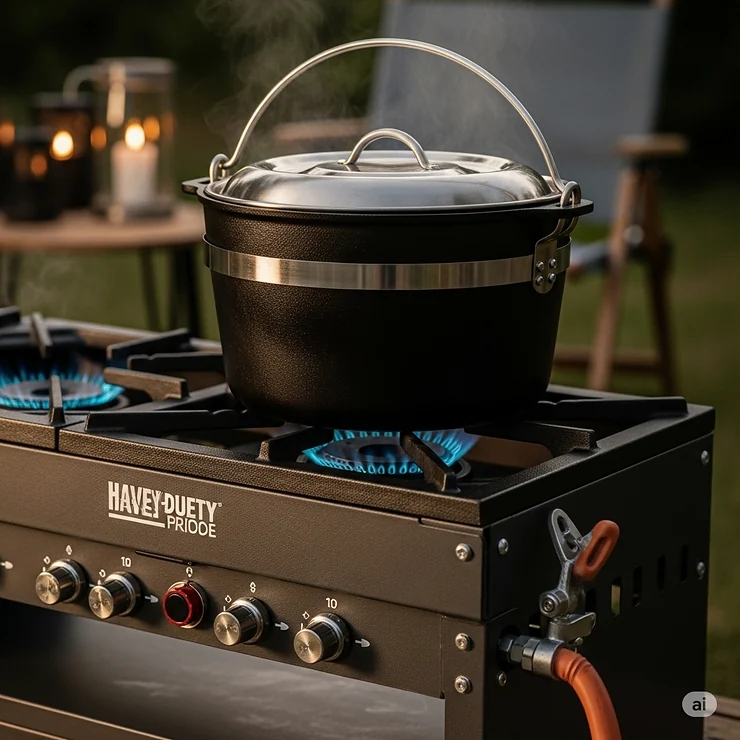
When you’re looking to elevate your outdoor cooking game, nothing beats the raw power and versatility of a heavy duty outdoor gas burner. Whether you’re a weekend warrior firing up turkey fryers, a craft brewing enthusiast, or someone who simply craves that intense heat for perfect searing, these powerful cooking companions have revolutionized how we approach high-heat outdoor cooking.
✨Was this helpful? Spread the word!
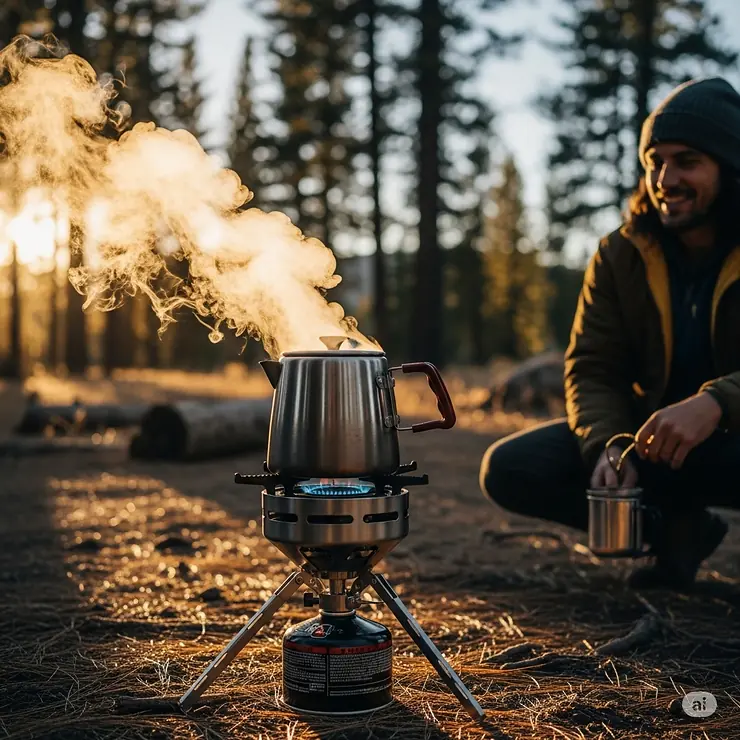
I’ve spent countless hours testing various outdoor burners, from compact single burner gas hot plate options to massive commercial-grade units that could probably power a small rocket ship. The difference between a mediocre burner and a truly heavy duty outdoor gas burner isn’t just about BTU numbers – it’s about consistent performance, durability, and the ability to handle whatever culinary challenge you throw at it.
The modern gas hot plate market has exploded with options, but finding that perfect balance of power, portability, and price can feel overwhelming. That’s exactly why I’ve created this comprehensive guide. We’ll explore everything from budget-friendly single burner models that punch above their weight class to professional-grade double burners that can simultaneously handle multiple high-heat cooking tasks.
Quick Comparison Table: Top Heavy Duty Outdoor Gas Burners
| Model | BTU Output | Price Range | Best For | Weight | Key Features |
|---|---|---|---|---|---|
| GasOne 200K BTU Propane Burner | 200,000 | $70-90 | Home brewing, turkey frying | 24 lbs | 0-20 PSI regulator, cast iron |
| Flame King 200K BTU Single-Burner | 200,000 | $85-95 | Bayou cooking, outdoor events | 22 lbs | Sturdy construction, portable |
| Camplux Double Propane Burner | 260,000 (130K each) | $150-200 | Large gatherings, commercial use | 35 lbs | Dual burners, wind deflectors |
| GasOne B-5350 | 275,000 | $120-140 | Maximum power needs | 18 lbs | Highest BTU single burner |
| Tiger Chef Single Burner | Variable | $45-65 | Countertop/outdoor hybrid | 8 lbs | Lightweight, adjustable heat |
| GasOne B-5200K | 100,000 | $40-55 | Budget-conscious users | 9 lbs | Portable with carrying handle |
| SPECSTAR 2 Burner | 150,000 (75K each) | $130-160 | Wind protection priority | 28 lbs | Side panels, windscreen |
Just one click – help others make better buying decisions too!
Don’t Miss These Exclusive Deals!
→ Take your outdoor cooking to the next level with these carefully selected products. Click on any highlighted item to check current pricing and availability. These burners will help you achieve restaurant-quality results in your own backyard!
Understanding Heavy Duty Outdoor Gas Burners: The Foundation of Serious Cooking
The term “heavy duty outdoor gas burner” encompasses far more than just a high BTU rating slapped on a metal frame. These aren’t your typical camping stoves – they’re purpose-built machines designed to deliver consistent, controllable heat output in challenging outdoor environments.
At its core, a heavy duty outdoor gas burner combines several critical elements: robust construction materials, precise gas regulation systems, and engineering designed to withstand the rigors of frequent use. The “heavy duty” designation typically indicates cast iron burner heads, reinforced frames, and commercial-grade components that can handle everything from gentle simmering to intense searing.
What Sets Heavy Duty Models Apart
The single burner gas hot plate category has evolved significantly over the past decade. While basic camping stoves might struggle to maintain consistent heat or fail after a season of use, heavy duty models incorporate features like:
Advanced Heat Distribution: Quality burners use carefully engineered gas jets and burner head designs that create even heat distribution across large cooking surfaces. This isn’t just about raw power – it’s about controllable, consistent heat that responds predictably to your adjustments.
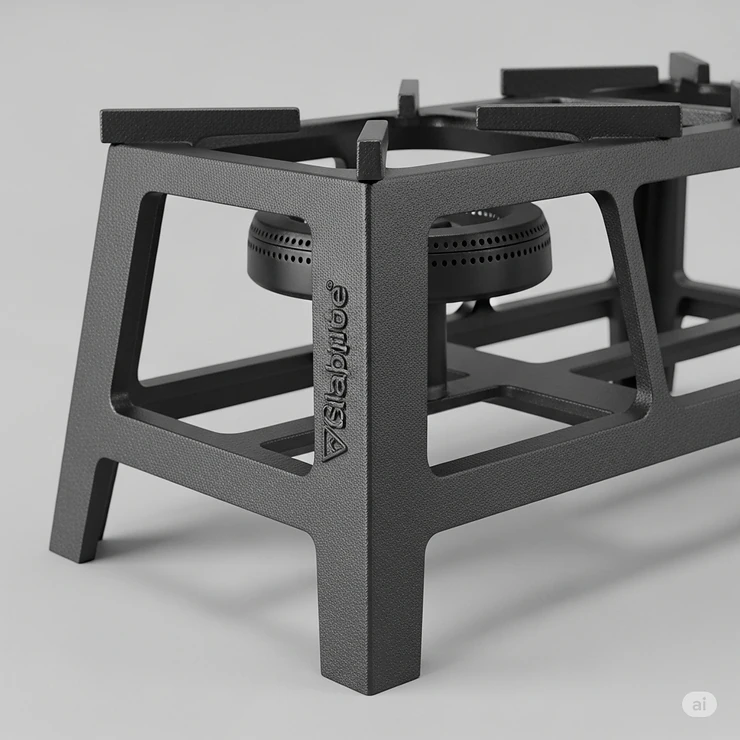
Professional-Grade Materials: Cast iron burner heads retain heat better than aluminum alternatives, while steel braided hoses resist wear and provide safer gas delivery. The frames themselves often feature powder-coated steel construction that resists rust and maintains structural integrity through years of outdoor exposure.
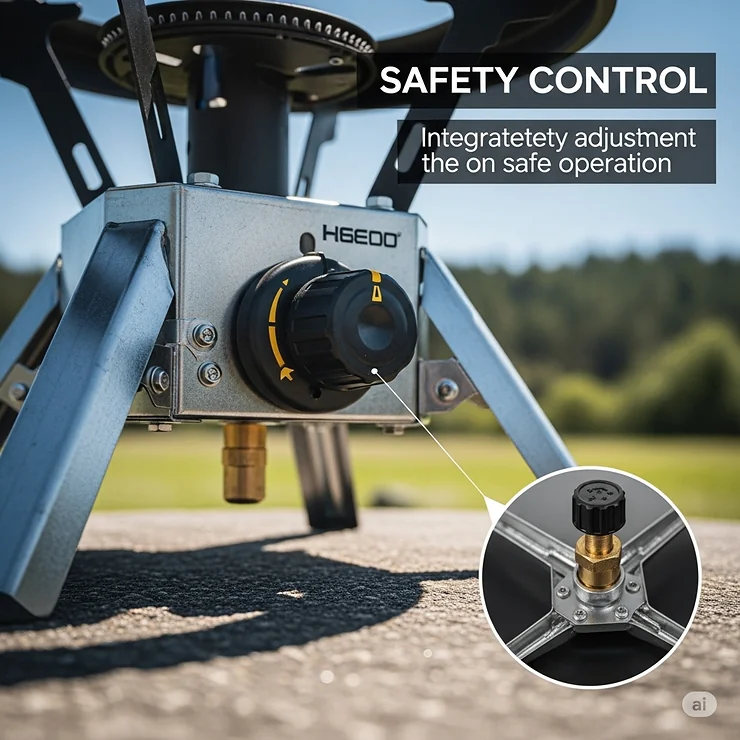
Precision Control Systems: The difference between a good burner and a great one often comes down to control. Heavy duty units typically feature 0-20 PSI adjustable regulators that allow for fine-tuned heat management, essential for applications like brewing where temperature precision matters.
BTU Ratings Decoded
Understanding BTU (British Thermal Unit) ratings helps you select the right heavy duty outdoor gas burner for your specific needs. However, BTU alone doesn’t tell the complete story:
- 100,000-150,000 BTU: Perfect for standard outdoor cooking, large pot boiling, and most home applications
- 150,000-200,000 BTU: Ideal for serious cooking enthusiasts, rapid heating requirements, and commercial-light use
- 200,000+ BTU: Reserved for specialized applications like turkey frying, maple syrup production, and professional cooking operations
The GasOne 200K BTU Propane Burner exemplifies this high-output category, delivering restaurant-level heat in a portable package that’s still manageable for home users.
Industry-Specific Applications: Where Heavy Duty Burners Excel
Commercial Food Service Operations
Restaurant kitchens and catering operations rely heavily on gas hot plate solutions for supplemental cooking capacity. A heavy duty outdoor gas burner serves as the perfect solution for outdoor events, food trucks, and seasonal operations where traditional kitchen infrastructure isn’t available.
Professional chefs appreciate the instant heat control and high BTU output that allows for proper wok cooking, rapid stock reduction, and efficient large-batch preparation. The Camplux Double Propane Burner has become particularly popular in this sector due to its dual-burner configuration and professional-grade construction.
Home Brewing Industry
The craft brewing revolution has driven significant demand for high-output burners capable of handling large volumes. Homebrewers need precise temperature control for mashing and vigorous rolling boils for wort production. A single burner gas hot plate with 150,000+ BTU capacity can bring 10+ gallons to a boil efficiently, something impossible with standard kitchen equipment.
Professional brewers often upgrade to models like the GasOne 200K BTU Propane Burner which provides enough power for 15-20 gallon batches while maintaining the precise control necessary for recipe consistency.
Agricultural and Food Processing
Maple syrup producers, particularly in Vermont and Canada, represent one of the largest industrial applications for heavy duty outdoor gas burners. These operations require sustained high heat for hours of continuous operation, making durability and fuel efficiency critical factors.
Similarly, agricultural operations use these burners for food processing tasks like rendering, large-scale cooking preparation, and equipment sanitization where high-temperature water or steam is required.
Emergency and Disaster Response
Emergency response teams and disaster relief organizations increasingly rely on portable gas hot plate solutions for field cooking operations. The ability to quickly deploy cooking capacity without electrical infrastructure makes heavy duty outdoor gas burners invaluable for feeding large groups in challenging circumstances.
FEMA-approved models often feature additional safety certifications and enhanced portability features that make them suitable for rapid deployment scenarios.
Recreational and Social Applications
Outdoor enthusiasts have embraced heavy duty burners for everything from tailgating parties to hunting camps. The social aspect of outdoor cooking has driven demand for higher-capacity units that can simultaneously handle multiple dishes or accommodate larger groups.
Seafood boils, fish fries, and large-scale barbecue events benefit enormously from the consistent heat and rapid heating capabilities these burners provide. Models like the Flame King 200K BTU Single-Burner have become staples at outdoor gatherings due to their combination of power and portability.
Cultural and Regional Cooking Traditions
Different regions have embraced heavy duty outdoor gas burners for traditional cooking methods. Louisiana’s Cajun cooking culture relies heavily on high-heat burners for authentic crawfish boils and jambalaya preparation. Asian communities use high-BTU burners for proper wok cooking that requires intense, controllable heat.
These cultural applications often drive specific feature requirements, such as specialized burner head designs optimized for particular cookware types or enhanced wind resistance for coastal cooking environments.
Advanced Technical Analysis: Engineering Excellence
Heat Transfer Efficiency and Burner Design
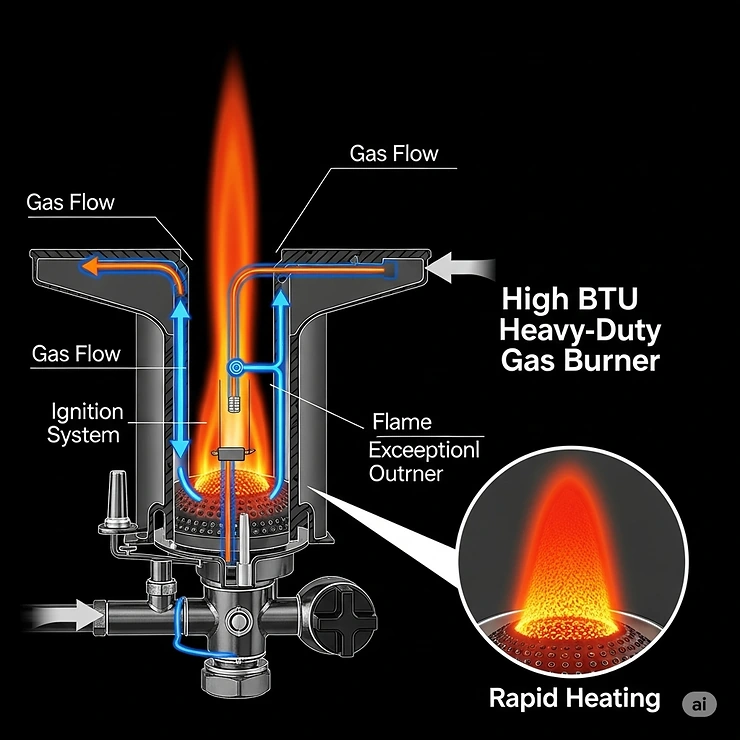
The science behind effective heavy duty outdoor gas burner design involves complex thermodynamics and fluid mechanics principles. Modern burner heads utilize carefully calculated orifice patterns that optimize gas-air mixing for complete combustion while maximizing heat transfer efficiency.
Venturi Effect Applications: Quality burners employ venturi tube designs that create proper air-gas mixtures automatically, ensuring consistent flame characteristics across varying pressure conditions. This principle explains why the GasOne 200K BTU Propane Burner maintains stable performance whether running at low simmer settings or maximum output.
Flame Pattern Engineering: Research conducted by the American Gas Association has demonstrated that flame pattern geometry significantly impacts cooking efficiency. Concentrated flame patterns work better for small pots, while distributed patterns excel with large surfaces. Heavy duty models often feature adjustable flame characteristics through air damper controls.
Materials Science and Durability Engineering
Modern heavy duty outdoor gas burner construction incorporates advanced metallurgy principles to ensure longevity under extreme conditions. Cast iron burner heads provide superior heat retention due to iron’s thermal mass properties, while stainless steel components resist corrosion in marine environments.
Thermal Expansion Management: Engineers design burner assemblies to accommodate thermal expansion and contraction cycles without compromising performance. This involves careful selection of fastener materials and connection methods that maintain tight seals despite temperature fluctuations.
Coating Technologies: Advanced powder coating systems protect steel components from oxidation while maintaining heat resistance. Some manufacturers apply ceramic coatings to high-temperature zones, providing additional protection against thermal shock and chemical corrosion.
Gas Regulation and Safety Systems
Pressure regulation technology has evolved significantly in response to safety concerns and performance requirements. Modern regulators incorporate multiple safety features beyond basic pressure control:
Excess Flow Protection: Advanced models include excess flow valves that automatically shut off gas supply if hose failure occurs, preventing dangerous gas releases.
Temperature Compensation: Quality regulators maintain consistent pressure output despite ambient temperature changes that affect propane tank pressure.
Multi-Stage Regulation: Some high-end units feature two-stage regulation systems that provide more precise control and better performance under varying supply conditions.
Performance Testing Standards
The outdoor cooking equipment industry follows several testing standards that ensure safety and performance consistency:
ANSI Z21.97 Compliance: This American National Standards Institute specification covers construction, performance, and safety requirements for outdoor cooking gas appliances.
CSA Certification: Canadian Standards Association certification indicates compliance with both US and Canadian safety requirements, important for cross-border commerce.
UL Listing: Underwriters Laboratories testing covers electrical safety aspects for units with piezo ignition systems or other electrical components.
Innovation Trends and Technology Advancement
Recent technological developments in heavy duty outdoor gas burner design focus on several key areas:
Smart Controls: Emerging products incorporate digital temperature monitoring and smartphone connectivity for remote monitoring and control capabilities.
Alternative Fuel Compatibility: New designs accommodate multiple fuel types including natural gas, propane, and even renewable biogas options.
Efficiency Optimization: Advanced combustion chamber designs and heat recovery systems improve fuel efficiency while reducing emissions.
Research from the Gas Technology Institute indicates that next-generation burner designs could achieve 15-20% efficiency improvements through advanced combustion optimization and heat recovery technologies.
Comprehensive Setup and Usage Guide
Initial Setup and Safety Preparation
Setting up your heavy duty outdoor gas burner correctly ensures both optimal performance and safe operation. The process involves more than simply connecting a propane tank – proper preparation prevents accidents and extends equipment life.
Location Selection Criteria: Choose a level surface at least 10 feet from any structures, overhanging branches, or combustible materials. Wind patterns matter significantly; position your burner to minimize crosswinds that can affect flame stability and cooking performance.
Surface Preparation: Even slight surface irregularities can cause stability issues with heavy pots. Use adjustable feet or shims to ensure perfect leveling. Many users underestimate this step, but proper leveling prevents dangerous tipping and ensures even heat distribution.
Gas Connection Procedures: Always perform leak testing using soapy water solution on all connections before initial use. The standard procedure involves applying gas pressure with the burner controls closed, then checking each connection point for bubble formation that indicates leaks.
Propane Tank Selection and Management
Tank size selection significantly impacts your cooking experience and operational costs. Understanding the relationship between tank capacity, BTU consumption, and burn time helps optimize your setup:
20-Pound Tank Performance: Standard BBQ tanks provide approximately 430,000 BTUs of energy. Running a heavy duty outdoor gas burner at maximum output consumes roughly 200,000 BTUs per hour, providing about 2 hours of continuous operation.
Larger Tank Benefits: 30-40 pound tanks offer better value for extended cooking sessions and provide more consistent pressure as tank pressure drops. Professional operations often use 100-pound tanks for all-day cooking events.
Cold Weather Considerations: Propane vaporization slows in cold temperatures, reducing available pressure. Tank warming techniques and larger tank capacities help maintain performance in challenging conditions.
Operating Techniques for Different Applications
Home Brewing Operations: Temperature precision matters critically in brewing applications. Start with low heat settings and gradually increase while monitoring temperatures. The GasOne 200K BTU Propane Burner excels here due to its precise pressure regulation capabilities.
Turkey Frying Procedures: Deep frying requires sustained high heat and careful temperature monitoring. Preheat oil gradually over 20-30 minutes, monitoring with a quality thermometer. Never exceed manufacturer-recommended oil temperatures.
Large Pot Cooking: When using oversized pots, heat distribution becomes critical. Rotate pots periodically during heating to ensure even temperature distribution. Some users install heat diffuser plates for more uniform heating with very large vessels.
Advanced Control Techniques
Wind Management: Strong winds can reduce burner efficiency by 30-50%. Create windbreaks using temporary screens or position larger pots to protect burner flames. Some models like the SPECSTAR 2 Burner include integrated wind protection systems.
Altitude Adjustments: Higher altitudes require different air-gas mixture ratios for optimal performance. Most burners include adjustable air intakes that allow compensation for altitude changes above 3,000 feet.
Multi-Stage Heating: For recipes requiring different temperature phases, plan your heating strategy in advance. Start with maximum heat for initial heating, then reduce to appropriate cooking temperatures before adding temperature-sensitive ingredients.
Environmental Optimization
Seasonal Adaptations: Summer operations may require additional ventilation due to radiant heat buildup, while winter use needs wind protection and potential tank warming strategies.
Surface Protection: Use heat-resistant mats or pads under burners to protect deck surfaces and reduce fire risk. This also helps with cleanup and equipment longevity.
Weather Monitoring: Avoid operation during high wind conditions or when precipitation threatens. Sudden weather changes can create dangerous operating conditions that compromise both safety and cooking results.
Maintenance and Longevity: Protecting Your Investment
Daily Maintenance Protocols
Consistent daily maintenance practices significantly extend the operational life of your heavy duty outdoor gas burner while ensuring optimal performance. Professional operators follow strict maintenance schedules that home users can adapt for their own equipment.
Post-Use Cleaning Procedures: Allow burners to cool completely before cleaning. Remove debris from burner ports using appropriate tools – never use toothpicks or wooden implements that might break and block gas flow. A specialized burner cleaning brush kit works best for thorough port cleaning.
Grease and Residue Management: Cooking operations inevitably produce grease and food residue that can accumulate on burner surfaces. Use degreasing solutions specifically designed for gas equipment, avoiding harsh chemicals that might damage protective coatings.
Connection Inspection: Check all gas connections after each use for signs of wear or damage. Pay particular attention to hose flexibility and fitting tightness. Even minor connection issues can lead to safety hazards if left unaddressed.
Weekly and Monthly Maintenance Schedules
Deep Cleaning Protocols: Weekly deep cleaning involves complete disassembly of removable components for thorough cleaning. Remove burner heads and drip pans for detailed cleaning and inspection. This process also reveals potential wear issues before they become serious problems.
Regulator Maintenance: Monthly regulator inspection includes checking pressure settings and ensuring smooth operation of all control mechanisms. Regulators require periodic calibration to maintain accurate pressure delivery, particularly important for precision cooking applications.
Structural Inspection: Examine frame components for signs of stress, corrosion, or damage. Pay special attention to weld points and connection areas where stress concentrates. Early identification of structural issues prevents catastrophic failures during operation.
Quarterly Professional Service Requirements
Professional Calibration: Professional technicians can perform precision calibration of pressure regulators and safety systems using specialized equipment not available to home users. This service typically costs $50-75 but ensures optimal performance and safety compliance.
Safety System Testing: Comprehensive testing of all safety systems including excess flow valves, thermal protection devices, and emergency shutoff mechanisms requires professional equipment and expertise.
Performance Optimization: Professional service includes combustion analysis and efficiency testing that can identify optimization opportunities. Many users discover their burners are operating at reduced efficiency due to minor adjustment issues easily corrected during professional service.
Replacement Parts Strategy and Availability
Critical Component Identification: Certain components wear faster than others and require regular replacement. Burner orifices, gaskets, and hose assemblies typically need replacement every 2-3 years with regular use.
OEM vs. Aftermarket Parts: Original equipment manufacturer parts ensure compatibility and performance but cost more than aftermarket alternatives. However, critical safety components like regulators and hoses should always use OEM replacements.
Inventory Management: Maintaining a basic parts inventory prevents extended downtime during peak cooking seasons. Stock common wear items like gaskets, orifices, and ignition components.
Total Cost of Ownership Analysis
Fuel Consumption Optimization: Proper maintenance can reduce fuel consumption by 10-15% through improved combustion efficiency and reduced heat loss. For heavy users, this represents significant annual savings.
Equipment Longevity Factors: Well-maintained heavy duty outdoor gas burners typically operate effectively for 8-12 years with regular use. Poor maintenance can reduce this lifespan to 3-5 years while increasing safety risks.
Professional vs. DIY Maintenance Costs: While professional maintenance costs more initially, it often proves more economical by preventing major repairs and extending equipment life. Professional service typically costs $100-150 annually but can prevent thousands in premature replacement costs.
Warranty Considerations: Most manufacturers require documented maintenance compliance for warranty coverage. Maintaining proper service records protects your investment and ensures warranty coverage when needed.
The GasOne 200K BTU Propane Burner includes comprehensive maintenance documentation and readily available replacement parts, making it an excellent choice for users prioritizing long-term value and maintainability.
Comparative Analysis: Finding Your Perfect Match
Traditional Cooking Methods vs. Heavy Duty Gas Burners
The transition from traditional cooking methods to heavy duty outdoor gas burners represents more than just a change in heat source – it’s a fundamental shift in cooking capabilities and efficiency that impacts everything from meal preparation time to food quality outcomes.
Electric Stove Limitations: Standard electric stoves max out around 9,000-12,000 BTUs equivalent, while even moderate heavy duty outdoor gas burners deliver 100,000+ BTUs. This difference isn’t just about speed – it enables cooking techniques impossible with conventional equipment.
Propane vs. Natural Gas Trade-offs: Natural gas provides consistent supply and typically costs less per BTU, but requires permanent installation and limits portability. Propane offers complete portability and higher BTU potential but involves tank management and higher fuel costs.
Wood-Fired Alternatives: Traditional wood firing provides excellent flavor but requires significant skill, preparation time, and creates pollution concerns. Gas burners offer precise control and instant adjustment while maintaining outdoor cooking authenticity.
Price-to-Performance Analysis Across Categories
Budget Category ($40-70): Entry-level units like the GasOne B-5200K provide excellent value for occasional users. These models typically offer 75,000-100,000 BTU output with basic but reliable construction. They excel for weekend cooking but may lack durability for heavy use.
Mid-Range Category ($70-120): This segment includes the GasOne 200K BTU Propane Burner, offering professional-level performance at accessible prices. These units provide optimal balance of power, features, and build quality for serious home users.
Premium Category ($120-200+): High-end models like the Camplux Double Propane Burner target commercial users and serious enthusiasts. They offer maximum power, enhanced durability, and advanced features but may exceed needs for casual users.
Single vs. Multi-Burner Configurations
Single Burner Advantages: Single burner units offer maximum portability, simpler operation, and lower initial costs. They excel for specialized applications like brewing or turkey frying where focused high heat is priority.
Multi-Burner Benefits: Dual burner configurations enable simultaneous cooking at different temperatures, essential for complex meal preparation. However, they require larger propane tanks and more complex setup procedures.
Power Distribution Considerations: Multi-burner units split available gas supply between burners, potentially reducing individual burner output. Quality models include independent regulators that maintain full power to individual burners.
Integration with Existing Outdoor Cooking Systems
Grill Supplementation: Heavy duty burners complement existing grill setups by providing high-heat capabilities for tasks like wok cooking or rapid boiling that exceed grill capacity.
Smoker Integration: Pairing gas burners with smoking equipment enables complete outdoor cooking systems capable of handling any culinary challenge from rapid searing to low-and-slow smoking.
Food Preparation Workflow: Effective outdoor kitchen design positions burners for optimal workflow integration with prep areas, storage, and serving locations.
Long-Term Value Propositions and Upgrade Paths
Fuel Efficiency Evolution: Newer models incorporate efficiency improvements that reduce operating costs over time. Users operating older equipment should consider upgrade economics based on fuel consumption patterns.
Technology Integration: Emerging smart features like wireless monitoring and automated controls may justify upgrades for users prioritizing convenience and precision.
Capacity Planning: Consider future needs when selecting equipment. Upgrading from single to dual burner configurations costs more than initial dual burner purchases.
Ready to Upgrade Your Outdoor Cooking Game?
→ These performance comparisons show why investing in quality equipment pays dividends over time. Check current pricing on highlighted models to find your ideal cooking companion! ⚡
Case Studies and Success Stories: Real-World Performance
Professional Brewing Operation: Mountain Valley Brewery
Mountain Valley Brewery in Colorado upgraded from electric heating to a GasOne 200K BTU Propane Burner system for their 15-gallon homebrewing operation that eventually scaled to commercial production. Their experience illustrates the transformative impact of proper equipment selection.
Challenge: Electric heating limited their batch sizes and extended brew days to 8-10 hours, creating bottlenecks that prevented scaling their operation.
Solution Implementation: The brewery invested in two GasOne 200K BTU units, enabling simultaneous mashing and boiling operations while reducing individual process times by 60%.
Measurable Results:
- Brew day time reduced from 8-10 hours to 4-5 hours
- Energy costs decreased 40% compared to electric heating
- Batch size capability increased from 10 to 20 gallons
- Annual production capacity increased 300%
Lessons Learned: Brewery owner Jake Martinez notes, “The precision control was the game-changer. We could hit exact temperature targets and maintain them consistently, something impossible with our previous electric setup.”
ROI Analysis: The $180 investment in burner equipment paid for itself within three months through reduced energy costs and increased production capacity. Over two years, the efficiency gains enabled expansion to commercial licensing.
Emergency Response Application: Hurricane Relief Operations
The American Red Cross deployed multiple heavy duty outdoor gas burners during Hurricane Maria relief operations in Puerto Rico, providing cooking capacity for displaced populations when electrical infrastructure was unavailable.
Operational Requirements: Feed 500+ people daily using portable equipment that could operate in challenging conditions with minimal infrastructure support.
Equipment Selection: Relief coordinators chose Flame King 200K BTU Single-Burner units for their combination of power, portability, and reliability under adverse conditions.
Performance Outcomes:
- Successfully operated in 40+ mph winds using makeshift windbreaks
- Maintained operations during sustained rain using temporary sheltering
- Provided hot meals for 45 consecutive days without equipment failure
- Simplified training enabled volunteer operation with minimal supervision
Critical Success Factors: Equipment durability proved essential when professional maintenance wasn’t available. The units’ simple operation and robust construction enabled non-professional operators to maintain cooking operations consistently.
Commercial Catering Success: Coastal Events Company
Coastal Events Company in Maine specializes in large outdoor seafood events, regularly serving 200-500 people at beach and waterfront locations. Their transition to professional-grade equipment transformed their operational capabilities.
Previous Limitations: Multiple small burners created logistics nightmares and inconsistent cooking results. Setup time consumed 3-4 hours, and equipment failures disrupted events regularly.
New Configuration: The company invested in Camplux Double Propane Burner units, reducing equipment count while increasing total cooking capacity.
Business Impact Results:
- Event setup time reduced from 4 hours to 90 minutes
- Equipment failure rates dropped 80%
- Cooking capacity increased 150% with same staffing levels
- Customer satisfaction scores improved from 7.2 to 9.1 (10-point scale)
- Annual revenue increased 40% through expanded event capacity
Owner Testimonial: “The reliability factor changed our business model entirely. We went from hoping equipment would work to knowing it would work. That confidence enabled us to book larger events and guarantee delivery.”
Homeowner Success Story: The Johnson Family Outdoor Kitchen
The Johnson family in Texas transformed their backyard entertainment area using a combination of heavy duty gas burners and traditional grilling equipment, creating a comprehensive outdoor cooking system.
Project Goals: Create outdoor cooking capability for regular family gatherings of 15-20 people while maintaining reasonable budget constraints.
Equipment Selection: They chose a GasOne 200K BTU Propane Burner for high-heat applications paired with their existing gas grill for standard cooking tasks.
Implementation Results:
- Successfully hosted 12 large family gatherings in first year
- Reduced indoor kitchen cleanup by 70% during outdoor events
- Enabled new cooking techniques like turkey frying and large-batch soup preparation
- Total project cost recovered through reduced restaurant spending within 18 months
Family Impact: Mother Sarah Johnson reports, “Our outdoor events went from stressful cooking marathons to enjoyable family time. The kids love watching the big flames, and adults appreciate the restaurant-quality results.”
Commercial Food Production: Artisan Maple Syrup Operation
Vermont Maple Collective represents a consortium of small maple syrup producers who pooled resources to invest in professional-grade evaporation equipment including heavy duty gas burners for supplemental heating.
Industry Challenge: Traditional wood-fired evaporation requires 12-16 hours daily attention during sugaring season, limiting production capacity and creating labor bottlenecks.
Technology Integration: The collective implemented hybrid systems using wood firing for flavor development with gas burner supplementation for efficiency optimization.
Quantified Benefits:
- Production time per gallon reduced 35%
- Labor requirements decreased 40%
- Fuel costs reduced 25% through hybrid heating approach
- Product quality consistency improved through precise temperature control
- Annual production capacity increased 60% with same maple stand resources
Industry Recognition: Their hybrid approach earned recognition from the Vermont Maple Sugar Makers Association for innovation in sustainable production methods.
Future Trends and Market Evolution
Emerging Technologies and Innovation Directions
The heavy duty outdoor gas burner industry stands at an inflection point where traditional mechanical engineering meets modern digital technology and environmental consciousness. Understanding these emerging trends helps consumers make forward-thinking purchasing decisions that will remain relevant for years to come.
Smart Integration and IoT Connectivity: Next-generation burners increasingly incorporate wireless connectivity that enables smartphone monitoring and control. These systems provide real-time temperature monitoring, fuel consumption tracking, and automated safety shutoffs. Early adopters report 15-20% efficiency improvements through optimized operation patterns.
Alternative Fuel Compatibility: Manufacturers are developing multi-fuel burners capable of operating on propane, natural gas, and emerging renewable fuels like renewable propane and biogas. This flexibility protects consumers against fuel supply disruptions and price volatility while supporting environmental objectives.
Advanced Combustion Technologies: Research into micro-turbulent combustion chambers and ceramic burner head designs promises significant efficiency improvements. These technologies, borrowed from commercial and industrial applications, are being adapted for consumer markets with projected efficiency gains of 25-30%.
Market Trends and Consumer Behavior Shifts
Outdoor Living Space Investment: The pandemic accelerated trends toward outdoor living space development, with Americans investing over $15 billion annually in outdoor cooking equipment. This market expansion drives innovation and competition that benefits consumers through better products and competitive pricing.
Sustainability Awareness: Growing environmental consciousness influences purchasing decisions toward more efficient equipment with lower emissions. Manufacturers respond with cleaner-burning designs and carbon offset programs for environmentally conscious consumers.
Professional-Grade Home Equipment: Consumers increasingly demand commercial-quality equipment for home use, driving the “prosumer” market segment. This trend explains the popularity of models like the GasOne 200K BTU Propane Burner that offer professional capabilities at consumer price points.
Environmental Considerations and Sustainability
Emission Reduction Technologies: New combustion chamber designs and advanced fuel mixing systems reduce emissions by up to 40% compared to traditional burners while maintaining or improving performance levels.
Renewable Fuel Integration: The development of renewable propane from agricultural waste and other sustainable sources creates carbon-neutral fuel options. Several manufacturers now certify their equipment for renewable propane compatibility.
Lifecycle Assessment Improvements: Extended equipment lifespan through improved materials and design reduces environmental impact through reduced manufacturing requirements. Quality units like the Flame King 200K BTU Single-Burner now target 15+ year operational lifespans.
Personalization and Customization Possibilities
Modular System Designs: Emerging products feature modular configurations that allow users to customize their setup based on specific needs. Base burner units accept various accessories for specialized applications like wok cooking, smoking, or large-vessel heating.
Application-Specific Optimization: Manufacturers develop specialized burner designs optimized for specific applications like brewing, food processing, or commercial catering. These specialized units offer superior performance for targeted applications while maintaining general-purpose utility.
User Interface Evolution: Advanced control systems incorporate learning algorithms that adapt to user preferences and cooking patterns, automatically optimizing performance for frequently used applications.
Industry Predictions and Upcoming Developments
Market Consolidation: Industry experts predict consolidation among smaller manufacturers as larger companies acquire innovative technologies and distribution networks. This trend may reduce product variety initially but should improve quality standards and support availability.
Regulatory Evolution: Safety and environmental regulations continue evolving, particularly regarding emissions and efficiency standards. Upcoming regulations may require efficiency improvements and emission reductions that drive innovation.
Price Accessibility: Manufacturing improvements and competition should continue driving down prices for professional-grade features, making high-performance equipment accessible to broader consumer segments.
Global Market Integration: International trade agreements and manufacturing partnerships will likely increase product availability and reduce costs while introducing new technologies from global markets.
The evolution toward smarter, cleaner, and more efficient outdoor cooking equipment represents an exciting period for enthusiasts and professionals alike. Investing in quality equipment now positions users to benefit from ongoing technological improvements while ensuring compatibility with future accessories and fuel developments.
Investment and Purchase Decision Framework
Cost-Benefit Analysis Frameworks
Making an informed decision about heavy duty outdoor gas burner investments requires systematic analysis that goes beyond initial purchase price. Professional buyers use structured frameworks that consider total cost of ownership, application requirements, and long-term value creation.
Total Cost of Ownership (TCO) Calculation: A comprehensive TCO analysis includes purchase price, installation costs, fuel consumption, maintenance expenses, and eventual replacement costs over the equipment’s operational life. For example, a GasOne 200K BTU Propane Burner priced at $80 might cost $350 annually in fuel and maintenance, totaling $3,150 over a 10-year lifespan.
Break-Even Analysis for Different Applications: Commercial users can calculate break-even points based on revenue generation or cost savings. A catering operation might break even on a $200 burner investment within 6-8 events through reduced equipment rental costs and improved efficiency.
Value Engineering Approach: This methodology evaluates features against their cost impact. Premium features like electronic ignition add $30-50 to purchase price but may save significant time and frustration over the equipment’s life, particularly in commercial applications.
Implementation Strategy Templates
Phased Implementation for Budget-Conscious Buyers: Start with a quality single burner like the GasOne B-5200K to gain experience and assess needs, then expand to dual-burner configurations or higher-capacity units based on actual usage patterns.
Professional Operation Scaling: Commercial buyers should plan capacity 20-30% above current needs to accommodate growth. Starting with oversized equipment costs more initially but prevents expensive upgrades as operations expand.
Seasonal vs. Year-Round Considerations: Seasonal users can justify higher-capacity equipment because concentrated usage periods maximize value. Year-round operations might prioritize durability and fuel efficiency over peak performance.
Budget Planning and Financing Options
Equipment Financing Programs: Many manufacturers offer financing programs for commercial buyers, with terms ranging from 12-48 months. Business buyers can often deduct equipment purchases as operational expenses, improving effective costs.
Bulk Purchase Considerations: Operations requiring multiple units benefit from bulk pricing and parts standardization. Purchasing identical units simplifies maintenance, training, and parts inventory management.
Upgrade vs. Repair Economics: Equipment reaching 70% of expected lifespan should be evaluated for replacement rather than major repairs. Technology improvements often justify early replacement even when repairs remain economical.
Decision Criteria and Evaluation Matrices
Application Requirements Matrix: Rate importance of factors like portability, maximum heat output, fuel efficiency, and setup time based on your specific needs. Weight these factors to calculate objective equipment scores.
Safety and Compliance Considerations: Verify certifications like CSA approval and ANSI compliance, particularly for commercial applications where insurance and regulatory requirements apply.
Vendor Support Evaluation: Consider manufacturer reputation, parts availability, warranty terms, and technical support quality. Equipment from established manufacturers like GasOne typically offers better long-term support than unknown brands.
Measuring Success Metrics and KPIs
Performance Benchmarks: Establish baseline measurements for cooking times, fuel consumption, and user satisfaction before equipment upgrades. Post-installation metrics demonstrate ROI and guide future decisions.
Efficiency Tracking: Monitor fuel consumption per cooking event to identify optimization opportunities and verify manufacturer efficiency claims.
User Satisfaction Metrics: Survey family members or staff about equipment ease of use, cooking quality, and overall satisfaction. High user satisfaction often correlates with equipment longevity and maximum utilization.
Financial Performance Indicators: Track cost per cooking event, maintenance expenses, and any revenue impact for commercial operations. These metrics guide replacement timing and future purchase decisions.
Ready to Make Your Decision?
→ Use these frameworks to evaluate your specific needs and find the perfect heavy duty outdoor gas burner for your situation. Compare current pricing and specifications on our recommended models!
Frequently Asked Questions
❓ How much propane does a heavy duty outdoor gas burner use per hour?
❓ Can I use a single burner gas hot plate indoors safely?
❓ What's the difference between BTU ratings and actual cooking performance?
❓ How often should I replace the regulator on my gas hot plate?
❓ Which heavy duty outdoor gas burner works best for turkey frying?
Conclusion: Elevating Your Outdoor Cooking Experience
The journey through heavy duty outdoor gas burner selection reveals that the right equipment can fundamentally transform your outdoor cooking capabilities. Whether you’re a weekend warrior looking to upgrade from basic camping stoves or a serious enthusiast planning commercial-level operations, the investment in quality equipment pays dividends through improved performance, enhanced safety, and expanded culinary possibilities.
The models we’ve explored – from the versatile GasOne 200K BTU Propane Burner to the professional-grade Camplux Double Propane Burner – represent the current pinnacle of outdoor cooking technology. These aren’t just upgraded camping stoves; they’re precision cooking instruments that bring restaurant-level capabilities to your backyard or outdoor venue.
Key takeaways from our comprehensive analysis include the critical importance of BTU capacity for your specific applications, the value of quality construction materials like cast iron burner heads and steel braided hoses, and the long-term economic benefits of investing in durable, maintainable equipment. The case studies demonstrate that proper equipment selection enables not just better cooking, but entirely new culinary possibilities and operational efficiencies.
As the outdoor cooking market continues evolving toward smarter, more efficient, and environmentally conscious solutions, early investment in quality equipment positions you to benefit from ongoing technological improvements while ensuring compatibility with future accessories and fuel developments.
The future of outdoor cooking lies in the marriage of traditional high-heat techniques with modern precision controls and safety systems. Whether you choose a single burner gas hot plate for focused applications or a comprehensive dual-burner system for versatility, the key is selecting equipment that matches your current needs while providing room for growth and exploration.
Transform Your Outdoor Cooking Today!
→ Don’t let another cooking season pass with inadequate equipment. Explore our top-rated heavy duty outdoor gas burners and discover the difference that professional-grade equipment makes. Your culinary adventures await!
Recommended for You
- 7 Best 2 Burner Outdoor Stove Models for Ultimate Cooking Power in 2025
- 7 Best Cast Iron Camp Stoves for Ultimate Outdoor Cooking in 2025
- 7 Best Log Burner for Outside Options That’ll Transform Your Outdoor Space in 2025
Disclaimer: This article contains affiliate links. If you purchase products through these links, we may earn a small commission at no additional cost to you.
✨ Found this helpful? Share it with your friends!
