In This Article
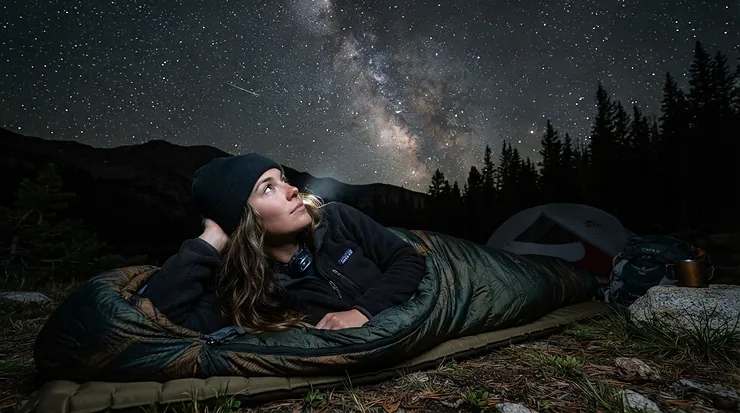
A mummy sleeping bag for side sleepers is a hooded, tapered, heat-efficient bag that has been re-cut with extra shoulder girth, a roomier taper through the knees, or expandable side panels. That lets you lie on your side, bend your legs, and roll over without wrestling the fabric. Think sarcophagus, minus the dread.
Here’s the dirty little secret of the backpacking aisle. The mummy was designed by weight-obsessed engineers, not by people who flip over at 2 a.m. That tapered cut is still the standard backpacking shape for good reason: less empty air to heat, fewer ounces on your back. But curl onto your side in a conventional one and your knees jam against the wall, your hip flattens the insulation, and the hood rotates to stare at the tent fabric while your face stares at the ceiling.
You’re not fussy. You’re normal. NEMO claims roughly seventy percent of people sleep on their side, and a mummy sleeping bag for side sleepers is the fix.
A quick note on method. This guide is built from manufacturer specifications and aggregated reviewer feedback. It is not hands-on testing, and where I couldn’t verify real reviews I say so. Prices appear as ranges only, so check current pricing before you buy.
We’ll cover seven bags, then the details that make or break a night: shoulder girth, the draft tube, a roomier taper, and fit advice for claustrophobic sleepers and tall hikers.
Quick Comparison: 7 Roomy Mummy Bags at a Glance
| Product | Temp Rating | Shoulder Girth | Price Range | Best For |
|---|---|---|---|---|
| Big Agnes Sidewinder SL 20 | 20°F | 61″ (Reg) / 65″ (Long) | ~$250–$330 | Restless rollers |
| NEMO Disco 15 | 15°F | 64″ (Reg) / 66″ (Long) | ~$260–$330 | Knee-bending side sleepers |
| Big Agnes Torchlight EXP 20 | 20°F | 57″–73″ adjustable | ~$330–$400 | Tunable width |
| Western Mountaineering Badger MF | 15°F | 65″–67″ | ~$725–$785 | Claustrophobic and tall sleepers |
| Western Mountaineering Antelope MF | 5°F | 62″–63″ | ~$705–$775 | Cold sleepers who layer |
| Kelty Cosmic Down 20 Long | 20°F | 64″ | ~$160–$210 | Budget tall hikers |
| REI Co-op Siesta Hooded 20 | 20°F | Wide sizes available | ~$150 | Car camping |
Look at the table and one pattern jumps out: roominess costs either money or weight. The Western Mountaineering Badger MF buys the widest shoulders with premium down and a premium price, while the Kelty Cosmic Down 20 Long trades ounces for savings. If you want the cleverest geometry for the money, the NEMO Disco 15 and Big Agnes Sidewinder SL 20 sit in the sweet spot.
💬 Just one click — help others make better buying decisions too!😊
Top 7 Mummy Sleeping Bags for Side Sleepers: Expert Analysis
Each pick below pairs the real specs with what they mean at 2 a.m., plus the themes reviewers keep repeating. Think of it as a spec sheet with a translator attached.
1. Big Agnes Sidewinder SL 20 — side-facing opening built for rolling
Most side-sleeper bags tweak the mummy. The Sidewinder rebuilds it, shifting the opening toward the side so the hood and zipper travel with you when you flip.
In the Long size, the shoulder, hip and foot girths are 65″, 59″ and 40″, and it fits sleepers up to 6’6″. The Regular is tighter at 61″, 55″ and 36″, and weighs about 2 lb 4 oz. Synthetic insulation is mapped into the hips and feet, so the spots that get crushed under your body hold their loft. Based on the spec comparison, broad-shouldered sleepers should skip the Regular and size up.
The listed limit is around 19°F with a 30°F comfort rating. Treat it as a 30-degree bag and you’ll never be disappointed. Reviewers consistently praise the soft fabric and loose fit, but common complaints include warmth that falls short of the 20°F label, a snag-prone zipper, and down leakage. Big Agnes has reportedly updated the line to simply “Sidewinder” for 2026, so confirm which version you’re buying.
Pros:
- ✅ Side-facing opening moves with you
- ✅ Body-mapped insulation protects pressure points
- ✅ Hood pocket keeps your pillow in place
Cons:
- ❌ Real-world warmth runs cooler than the label
- ❌ Zipper snags and some down leakage
Expect to pay roughly $250–$330; for rotating sleepers who stay above freezing, it’s good value.
2. NEMO Disco 15 — spoon shape with mummy-level efficiency
NEMO pioneered the “spoon” cut, and the Disco 15 is its flagship: narrow where you want heat, generous where your elbows and knees need to bend.
The spec numbers from the earlier men’s Regular listing are 64″ shoulder, 59″ hip and 62″ knee girth, with about 1 lb 6 oz of 650-fill hydrophobic down and a minimum weight near 2 lb 11 oz. That knee measurement is the headline. At 62″, it nearly matches the shoulders, so bent legs don’t pull the bag tight. Chest “Thermo Gills” vent heat on warm nights, and the zipper has a snag guard built into the draft tube.
Honest take: this is a shoulder-season bag, not a winter one. It’s also heavier than ultralight down, but 650-fill is far cheaper than 800+ fill. Reviewers on REI frequently call it the most comfortable bag they’ve owned. One caution: a reviewer reports the redesigned “Endless Promise” version runs about an inch smaller in every measurement, so compare girths on the current listing. A Gear Patrol writer also said the sibling Disco 30 felt closer to 40°F, so don’t count on the rating being generous.
Pros:
- ✅ Knee and elbow room without losing taper
- ✅ Chest vents help regulate temperature
- ✅ Anti-snag zipper with draft tube guard
Cons:
- ❌ Heavier than ultralight down bags
- ❌ Redesigns may be a size smaller
Expect roughly $260–$330, which is fair for the comfort per ounce.
3. Big Agnes Torchlight EXP 20 — zip-open panels add 10 inches of girth
Why choose a width when you can adjust it? The Torchlight EXP 20 carries two zippered panels from shoulder to footbox, each adding five inches (ten total) when opened.
In the Long size, shoulder girth ranges from 63″ to 73″, hip from 58″ to 68″, and foot from 39″ to 49″. It’s filled with about 21 oz of 650-fill water-resistant down, weighs about 2 lb 12 oz, carries a 30°F comfort and 19°F limit rating, and fits to 6’6″. Dual-slider panels let you open the top, the bottom, or both. The PadLok system attaches the bag to your sleeping pad so you can roll without sliding off.
Here’s the practical read. Close it for cold nights and keep it snug; open it on mild nights and your knees finally get their own zip code. Reviewers on REI describe it as a solid three-season bag, but I couldn’t verify a deep pool of critical reviews, so treat durability as unproven.
Pros:
- ✅ Adjustable width for different nights
- ✅ Pad attachment stops mid-sleep sliding
- ✅ Independent top and bottom panel zips
Cons:
- ❌ Extra zippers add weight and failure points
- ❌ Costs more than fixed-cut rivals
Expect roughly $330–$400; the premium buys flexibility no fixed cut can match.
4. Western Mountaineering Badger MF — 66-inch shoulders for people who hate mummies
Western Mountaineering’s marketing pitches the Badger MF at mummy-wary sleepers, and the numbers back that up: roughly 66″ at the shoulder and 41″ at the foot, depending on length.
It comes in 6′, 6’6″ and 7′ lengths. The 15°F rating comes from about 6 inches of 850+ goose down in continuous baffles. Total weight runs roughly 2 lb 10 oz to 2 lb 13 oz for the 6′ and 6’6″ sizes, per retailer tables. A full down collar and an insulated draft tube, stiffened to resist zipper jams, seal the neck and zipper. The hood is cut large enough to sit around your face without cinching.
My analysis: it’s still a taper, so don’t expect Disco-style knee room. What you get is hood and shoulder volume that keeps the cocoon feeling at bay. That’s gold for tall and claustrophobic sleepers. The retailer pages I found carried little verified review text, so treat durability as a manufacturer claim.
Pros:
- ✅ Widest shoulder girth in this guide
- ✅ Large hood works uncinched
- ✅ Available in a 7-foot length
Cons:
- ❌ Premium price
- ❌ Conventional foot taper
Expect roughly $725–$785. It’s expensive, but it’s the most considered answer for tall, anxious sleepers.
5. Western Mountaineering Antelope MF — 5°F warmth with room for layers
The Antelope MF is the cold-weather sibling: a heavyweight three-season bag with a 62″ shoulder girth (63″ in the 6’6″ length).
Its 7-inch loft comes from 26–28 oz of 850+ down, and total weight is 2 lb 7 oz for the 6′ and 2 lb 9 oz for the 6’6″. Hip girth is 53″–54″ and foot girth 39″. Some retailer copy calls the foot box spacious, but 39 inches is average, so I’d call the cut conventional with a generous shoulder. That makes it a fit for sleepers who layer a puffy jacket and want room to shift.
The 5°F rating is overkill for most summer-to-fall hikers. Reviewers are split: one found it roomy enough to spin around in, while another reported feeling cold on roughly 40°F nights even in layers. Both are individual accounts, but they underline how personal warmth is.
Pros:
- ✅ Roomy shoulders for layering
- ✅ Full down collar and draft tube
- ✅ Light for its warmth
Cons:
- ❌ Overbuilt for mild seasons
- ❌ Foot taper is not especially roomy
Expect roughly $705–$775. It’s worth it only if you actually need that much warmth.

6. Kelty Cosmic Down 20 Long — budget down for tall side sleepers
Not everyone wants to spend a mortgage payment on sleep. The Kelty Cosmic Down 20 Long brings down insulation to a friendlier price.
The Long runs 84″ and fits to 6’6″, with a 64″ shoulder and 60″ hip. It uses 550-fill down in trapezoidal baffles, and the bag includes a draft tube, a draft collar and a dual-slider zipper. Fill weight is around 19 oz and weight about 2 lb 11 oz, though weights vary across model-year listings, so check the one you’re buying.
Honest take: 550-fill is heavier and bulkier than premium down for the same warmth, and that’s the price of savings. The shoulder width is solid for a 20°F bag. One roundup calls it among the cheapest down bags but also heavy and bulky. I couldn’t verify a trustworthy review pool, so I’m leaning on specs here.
Pros:
- ✅ Down warmth at a budget price
- ✅ Long size fits to 6’6″
- ✅ Draft tube and collar included
Cons:
- ❌ Heavier and bulkier than premium down
- ❌ Foot taper is conventional
Expect roughly $160–$210; for tall hikers on a budget, the value is hard to beat.
7. REI Co-op Siesta Hooded 20 — hooded, rectangular, almost not a mummy
Let’s be honest: the REI Co-op Siesta Hooded 20 is a rectangular bag, not a true mummy. I include it because its insulated hood cinches down like one, and for car campers it’s the cheapest way to see whether you actually need a taper.
It uses recycled synthetic fill with offset quilt construction. It comes in medium, medium wide, long and long wide, and the two-way zipper opens fully to turn the bag into a quilt. Weight is roughly 5–6 lb, so it’s a car-camping bag. REI reviewers say it’s wide enough for side sleepers to move without bunching. Gear Patrol flagged a snag-prone zipper, and OutdoorGearLab found it warmer than expected.
My read: if you camp from your trunk and hate feeling confined, this beats any tapered bag for freedom. If you hike miles, skip it.
Pros:
- ✅ Wide cut and quilt-style zip
- ✅ Hood and pillow pocket
- ✅ Very low price
Cons:
- ❌ Heavy and bulky for backpacking
- ❌ Zipper tends to snag
Expect around $150, which is a bargain for car camping.
✨ Don’t Miss These Standout Picks!
🔍 Take your next night outdoors to the next level with these carefully selected bags. Click any highlighted name to check current pricing and availability. A roomier, better-fitting bag is the quickest route to waking up rested instead of rumpled!
How to Choose a Mummy Sleeping Bag for Side Sleepers
The right bag fits your body and your sleep style. REI’s expert guidance agrees that side sleepers benefit from a few extra inches of wiggle room, though too much space costs warmth. Work through these steps.
- Measure your widest point. Use a soft tape on your shoulders, hips and belly. Girth is a circumference, not a width, so compare it to the bag’s listed girth.
- Add margin for side sleeping. Look for a shoulder girth several inches larger than your measurement. Among the bags here, roughly 62–66 inches is the roomy zone.
- Pick your length. Choose a bag at least two inches longer than you are, so your feet don’t compress the insulation.
- Check the taper. Compare knee and foot girth, not just shoulders. A roomier taper matters if you bend your legs.
- Choose insulation. Down is lighter and more compressible; synthetic handles damp better and costs less.
- Match the temperature rating. Use the lower-limit rating as a floor, and add a 10–15 degree buffer for comfort.
- Inspect the details. Look for a real draft tube, an anti-snag zipper guard, and a hood that works when you lie sideways.
Shoulder Girth: The Number That Decides Your Night
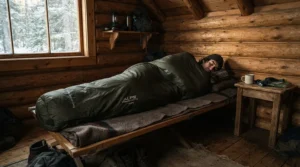
Shoulder girth is the circumference of the bag at the shoulders, and it’s the spec side sleepers should check first. When you lie on your side, your shoulder bunches the insulation underneath you, and a bag that’s too tight fights back with every roll. Most men’s bags run roughly 60–64 inches; 60 feels snug, and 64 feels pleasantly roomy.
Side sleeping is common, too. A 2017 study on sleeping positions is often cited as showing it’s the dominant position, which is why the market has finally started to respond.
| Product | Shoulder / Hip Girth | Foot or Knee Girth | Weight | Fill |
|---|---|---|---|---|
| Big Agnes Sidewinder SL 20 (Long) | 65″ / 59″ | 40″ foot | ~2 lb 8 oz | 650 down + synthetic |
| NEMO Disco 15 (Regular) | 64″ / 59″ | 62″ knee | ~2 lb 11 oz | 650 down |
| Big Agnes Torchlight EXP 20 (Long) | 63″–73″ / 58″–68″ | 39″–49″ foot | ~2 lb 12 oz | 650 down |
| Western Mountaineering Badger MF (6’6″) | 66″ / 57″ | 41″ foot | ~2 lb 13 oz | 850+ down |
| Western Mountaineering Antelope MF (Long) | 63″ / 54″ | 39″ foot | ~2 lb 9 oz | 850+ down |
| Kelty Cosmic Down 20 Long | 64″ / 60″ | Varies by listing | ~2 lb 11 oz | 550 down |
The table shows the trade clearly. The Badger MF wins on shoulders, but the NEMO Disco 15 wins on knees, and the Torchlight EXP 20 is the only one where you decide. Weights are close, so choose on geometry, not grams.
Draft Tube: The Quiet Hero of a Roomy Bag
A draft tube is an insulated strip that runs along the zipper, blocking cold air that would otherwise slip through the teeth. In a snug bag it’s helpful. In a roomy one it’s critical, because more fabric means more seams and more places for air to sneak in.
Side sleepers add a wrinkle: as you roll, the zipper shifts against your body and the draft tube can slide out of position. Look for a tube that is generously filled and shielded from the zipper. The Western Mountaineering Badger MF stiffens its tube to resist jams, and the NEMO Disco 15 builds a snag guard into its tube. The REI Co-op Siesta Hooded 20 runs a full-length tube with an anti-snag strip.
Reviewers consistently note that zipper snags are the most common irritation across this category, including on the Big Agnes Sidewinder SL 20. A zipper that catches in the dark is more than annoying, because the tug can pull the tube out of place. Before you buy, check that a draft tube exists, runs the full zipper length, and has some sort of snag protection.
Roomier Taper: How Much Foot-Box Freedom Is Too Much?
The taper is how quickly a bag narrows from shoulders to feet. A conventional mummy narrows fast, which saves weight and dead air but pins your knees. A roomier taper holds its width longer, giving bent legs somewhere to go.
The numbers show the range. The NEMO Disco 15 holds 62″ at the knee, while the Western Mountaineering Antelope MF drops to 39″ at the foot. The Big Agnes Torchlight EXP 20 lets you choose, from a 39″ foot closed to 49″ open.
There’s a catch. REI cautions that excess air pockets at the foot or shoulders take more body heat to warm, so an overly generous bag can feel colder. Backpacking forum users say the same: more dead space, more chill.
My advice is to buy the least extra room that lets your knees bend comfortably. If you need more, a spoon or expandable design beats simply buying a larger size, because it adds room only where you need it.
Mummy Sleeping Bag for Claustrophobic Sleepers
Claustrophobia in a mummy bag is mostly about three things: the hood, the arms and the sense of being zipped in. Fortunately, each can be addressed. A mummy sleeping bag for claustrophobic sleepers should have a hood you don’t have to cinch, shoulders wide enough to move your arms, and some way to open it up quickly.
The Western Mountaineering Badger MF is marketed at exactly this audience, with a 66″ shoulder girth and a hood that sits open around your face. The Big Agnes Torchlight EXP 20 gives you the option to unzip the side panels on any night you feel hemmed in. The REI Co-op Siesta Hooded 20 opens fully into a quilt, which many claustrophobic sleepers find soothing.
A few tactics help. Practice sleeping in the bag at home before a trip. Leave the hood loose in mild weather. Sleep with the zipper partly open on mild nights. If you feel anxious, a quilt-style or fully openable bag is a better start than forcing a snug mummy.
Choosing a mummy sleeping bag for claustrophobic sleepers is less about heroic tolerance and more about smart design. If a bag looks too snug in the store, it will feel too snug at 2 a.m.
Mummy Sleeping Bag for Tall Hikers
Tall hikers face two problems at once: length and width. A mummy sleeping bag for tall hikers has to be long enough for your feet and wide enough that the shoulders aren’t pinned. Both matter more than usual, because side sleeping with bent knees uses more of the bag’s volume.
Start with the listed “fits up to” height, and then add margin. A 6’7″ backpacker on one forum found a bag listed at 88 inches wouldn’t close, because loft and the top flap ate up length. REI’s guidance says to choose a bag at least two inches longer than you are.
Several bags here have tall-friendly sizes. The Kelty Cosmic Down 20 Long is 84 inches and fits to 6’6″. The Big Agnes Sidewinder SL 20 Long and Big Agnes Torchlight EXP 20 Long also fit to 6’6″. The Western Mountaineering Badger MF goes to 7 feet with a 67″ shoulder.
Expect a weight penalty for length. Remember that your pad needs to be long enough too, or your feet will end up on cold ground. For a mummy sleeping bag for tall hikers, I’d pick the Kelty Cosmic Down 20 Long on a budget and the Western Mountaineering Badger MF for the full splurge.

Mummy vs. Spoon vs. Rectangular: Which Shape Wins for Side Sleepers?
Shape is a trade between warmth efficiency and freedom. Mummies are the most heat-efficient and the most restrictive. Rectangular bags are the most free and the least efficient. Spoon and expandable designs try to split the difference.
| Shape | Warmth Efficiency | Side-Sleep Comfort | Weight / Pack Size | Best For |
|---|---|---|---|---|
| Classic mummy | Highest | Lowest | Lightest | Western Mountaineering Antelope MF for cold sleepers who layer |
| Spoon | High | High | Moderate | NEMO Disco 15 for knee-bending sleepers |
| Expandable mummy | High (closed) | High (open) | Moderate | Big Agnes Torchlight EXP 20 for variable nights |
| Side-opening mummy | High | High | Moderate | Big Agnes Sidewinder SL 20 for rollers |
| Rectangular | Lowest | Highest | Heaviest | REI Co-op Siesta Hooded 20 for car camping |
In practice, the real choice is between spoon, expandable and side-opening mummies if you carry your gear. Rectangular bags are the right call only if weight doesn’t matter. A classic mummy works for side sleepers only when its shoulder girth is generous, as it is on the Western Mountaineering Badger MF.
Practical Guide: Setting Up Your Bag for Side Sleeping
A great bag still needs a good setup. Start with your pad: a pad that’s too narrow leaves your shoulder or hip hanging off the edge. If you’re using a pad-attachment bag like the Big Agnes Torchlight EXP 20, fit it at home first.
Next, sort your pillow. REI notes that side sleepers need a thicker pillow than back sleepers, so stuff a jacket into a pillow case or use an inflatable that fits the hood pocket of the Big Agnes Sidewinder SL 20.
Then manage your temperature. Use the chest vents on the NEMO Disco 15 or the two-way zip on the REI Co-op Siesta Hooded 20 to dump heat. A thin liner adds a bit of warmth and keeps the bag clean.
For care, store the bag loose in a large mesh sack rather than compressed. Wash down bags with gear-specific soap; Big Agnes recommends a down wash for the Torchlight EXP 20.
In the first 30 days, avoid two common mistakes. Don’t cinch the hood tight for the first night, and don’t buy a size up to avoid feeling confined. Test the bag in your living room first.
Real-World Scenarios: Three Buyers, Three Bags
The weekend hiker. A 5’10” side sleeper hikes three-season trails twice a month with a mid-range budget. The NEMO Disco 15 gives knee room and 15°F headroom, or the Big Agnes Sidewinder SL 20 if they roll a lot. Either fits a mid-sized pack.
The tall budget buyer. A 6’5″ hiker is buying a first down bag for fall trips and has about $200 to spend. The Kelty Cosmic Down 20 Long covers length and a 64″ shoulder at a manageable price. They’ll accept extra weight and bulk, and add a liner for chilly nights.
The claustrophobic splurger. A broad-shouldered hiker with a history of feeling trapped in tight bags will camp year-round. The Western Mountaineering Badger MF offers a 66″ shoulder and a hood that stays open, and the Big Agnes Torchlight EXP 20 is a lower-cost alternative with adjustable panels.
The pattern is simple: match the bag to your body first, your climate second and your budget third.
Problem → Solution Guide for Side Sleepers
Problem: the bag twists as you roll. Pair a pad-attachment bag like the Big Agnes Torchlight EXP 20 with a compatible pad, or pick the side-opening Big Agnes Sidewinder SL 20.
Problem: knees feel pinned. Look for a spoon shape, like the NEMO Disco 15, or open the lower panels on the Big Agnes Torchlight EXP 20.
Problem: cold air at the zipper. Check for a full-length draft tube and a snag guard. The Western Mountaineering Badger MF and Kelty Cosmic Down 20 Long both include tubes.
Problem: feeling trapped. Leave the hood loose, vent the zipper, and consider the quilt-style opening of the REI Co-op Siesta Hooded 20.
Problem: cold in a roomy bag. Fill dead space with spare clothes, wear a base layer, and add a liner. A bag that’s too large can often be rescued by simply filling the gaps.
Features That Actually Matter (And Those That Don’t)
Features that matter: shoulder girth, knee and foot girth, a protected draft tube, a hood that works on your side and honest temperature ratings. Pay attention to lab-tested comfort and lower-limit ratings. The comfort rating is aimed at cold sleepers and the limit rating at warm sleepers, so choose based on which you are.
Pillow pockets and pad attachments matter more to side sleepers than to most. Reviewers consistently note that features like these make a bigger difference than a few extra ounces of fill.
Features that matter less: ultra-high fill power if you’re car camping, because savings on weight don’t matter when you’re hauling from a trunk. Exotic shell fabrics are also overrated unless you camp in wet conditions. And a long list of pockets won’t help you sleep.
My rule is simple: spend money on fit and zipper design before fill power. A bag that fits well and has a good draft tube will outperform a premium bag that pinches.
Frequently Asked Questions
❓ Are mummy sleeping bags bad for side sleepers?
❓ How much shoulder girth do side sleepers need?
❓ Will a roomier mummy bag feel colder?
❓ What length mummy bag fits a 6'4' hiker?
❓ Can a quilt or rectangular bag replace a mummy?
Conclusion
The best mummy sleeping bag for side sleepers is the one that gives your shoulders, hips and knees room without wasting warmth. If you want side-opening design and strong value, start with the Big Agnes Sidewinder SL 20. If knee room is your priority, the NEMO Disco 15 is the standout. If you can’t decide on a width, the Big Agnes Torchlight EXP 20 lets you change it nightly.
Claustrophobic or tall? The Western Mountaineering Badger MF is the premium answer, while the Kelty Cosmic Down 20 Long is the budget one. The Western Mountaineering Antelope MF suits cold sleepers who layer, and the REI Co-op Siesta Hooded 20 is the car camper’s pressure valve.
Whatever you choose, check shoulder girth, the draft tube and the taper before you check the fill power. Test the bag at home, and confirm current prices and the latest version before you buy.
✨ Ready for a Better Night’s Sleep Outdoors?
🔍 Click any highlighted bag above to check current pricing and availability, and find the cut that finally lets you sleep on your side. Sweet dreams on the trail!
Recommended for You
- Ultralight Mummy Sleeping Bag: 7 Best Picks For 2026 (Ranked)
- Wide Rectangular Sleeping Bag For Big And Tall: 7 Best Picks 2026
- Rectangular Sleeping Bag For Family Camping: 7 Best Picks (2026)
Disclaimer: This article contains affiliate links. As an Amazon Associate, I earn from qualifying purchases. If you purchase products through these links, we may earn a small commission at no additional cost to you.
✨ Found this helpful? Share it with your friends! 💬🤗
