
In This Article
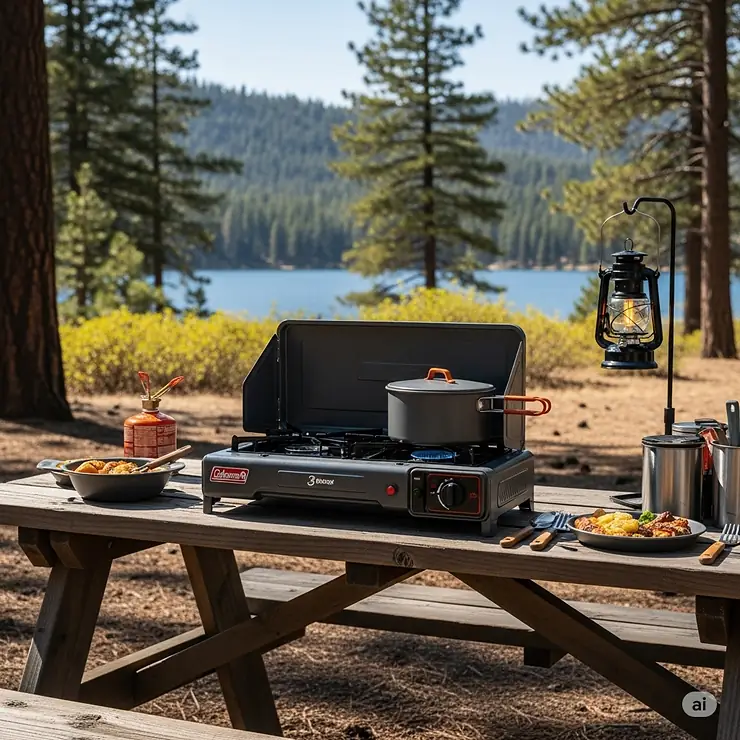
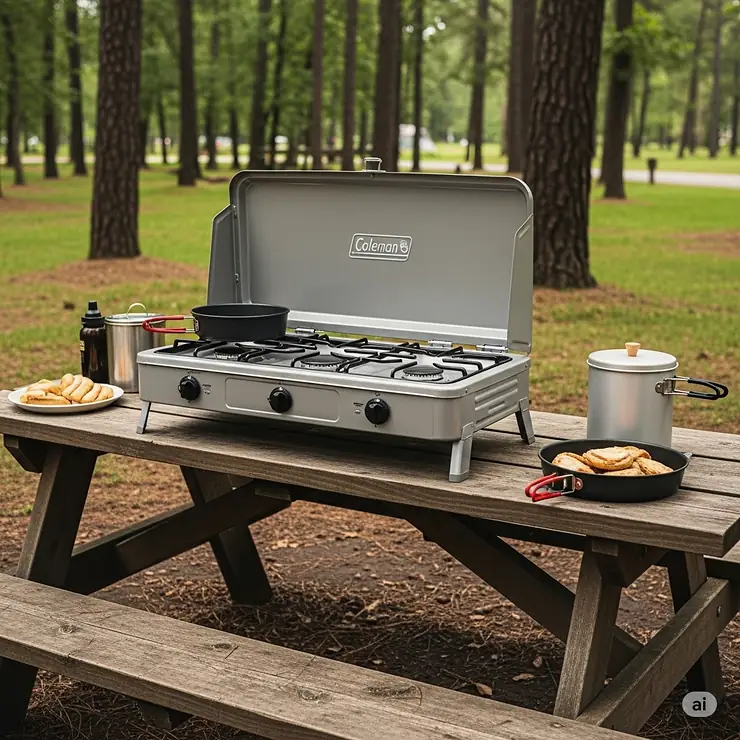
When you’re planning your next camping adventure or backyard barbecue, few things matter more than having reliable cooking equipment. That’s where the coleman 3 burner stove comes into play, transforming your outdoor cooking experience from good to absolutely spectacular. These versatile cooking powerhouses have been trusted by outdoor enthusiasts for decades, and there’s a compelling reason why they continue to dominate the camping gear market.
✨Was this helpful? Spread the word!
Whether you’re a weekend warrior looking to upgrade your camp kitchen or a seasoned outdoorsman seeking dependable performance, the right coleman 3 burner stove can make all the difference in your outdoor culinary adventures. Furthermore, with advances in burner technology and fuel efficiency, today’s models offer more power, better wind resistance, and improved temperature control than ever before.
Quick Comparison: Top Coleman 3 Burner Stoves ⚡
| Model | BTU Rating | Weight | Price Range | Best For |
|---|---|---|---|---|
| Coleman Classic 3-Burner | 28,000 BTUs | 25 lbs | $130-$221 | Large groups, high heat cooking |
| Coleman Even-Temp 3-Burner | 30,000 BTUs | 22 lbs | $150-$250 | Even heat distribution, precision cooking |
| Coleman Classic 3-in-1 | 20,000 BTUs | 15 lbs | $120-$180 | Versatile cooking, grill/griddle options |
| Coleman Cascade 3-in-1 | 12,000 BTUs | 14.8 lbs | $110-$160 | Portable camping, cast iron accessories |
Industry-Specific Applications of Coleman 3 Burner Stoves ️
Professional Catering and Event Management
The robust construction and powerful output of coleman 3 burner stoves make them invaluable tools for professional caterers working outdoor events. Subsequently, many catering companies rely on these stoves for festivals, corporate retreats, and outdoor weddings where traditional kitchen facilities aren’t available. The 28,000 BTU output of models like the Coleman Classic 3-Burner Propane Camping Stove provides sufficient heat to maintain proper food temperatures while serving large crowds.
Military and Emergency Response Applications
Additionally, emergency response teams and military units frequently deploy coleman 3 burner stoves for field operations. The reliability and quick setup time become critical factors when cooking meals under pressure. Moreover, the ability to operate in various weather conditions makes these stoves essential equipment for disaster relief operations and extended field exercises.
Commercial Food Truck Operations
Interestingly, many food truck entrepreneurs use coleman 3 burner stoves as backup cooking systems or for outdoor service extensions. The portability and instant flame control allow vendors to expand their cooking capacity during busy periods. Furthermore, the cost-effectiveness compared to built-in commercial equipment makes them attractive for startup food service businesses.
Recreational Vehicle and Marine Applications
RV enthusiasts and boat owners increasingly choose coleman 3 burner stoves for their outdoor cooking needs. The compact footprint and powerful performance make them ideal for extending cooking capacity beyond limited onboard facilities. Consequently, many RV parks and marinas now accommodate outdoor cooking areas specifically designed for portable stove use.
Educational and Youth Organizations
Scout groups, outdoor education programs, and youth camps rely heavily on coleman 3 burner stoves for teaching cooking skills and meal preparation. The safety features and ease of use make them perfect for supervised cooking activities. Additionally, the durability ensures these stoves can withstand frequent use by inexperienced users while maintaining consistent performance.
Hunting and Fishing Outfitters
Professional hunting and fishing guides depend on coleman 3 burner stoves to provide hot meals in remote locations. The ability to cook freshly caught fish or prepare hearty meals after long days outdoors becomes a significant selling point for guided services. Therefore, many outfitters consider these stoves essential equipment for client satisfaction.
Construction and Remote Work Sites
Construction crews and workers at remote job sites often use coleman 3 burner stoves for meal preparation when commercial food options aren’t available. The heavy-duty construction can withstand the demands of industrial environments while providing reliable performance. Moreover, the fuel efficiency helps control operational costs during extended projects.
Agricultural and Farm Operations
Farm workers and agricultural crews use these stoves during busy seasons like harvest time when quick, hot meals are essential. The portability allows cooking equipment to move with work crews across large properties. Additionally, the high BTU output can handle large-volume cooking required for feeding substantial work teams.
Advanced Technical Analysis of Coleman 3 Burner Stove Technology
Burner Engineering and Heat Distribution Principles
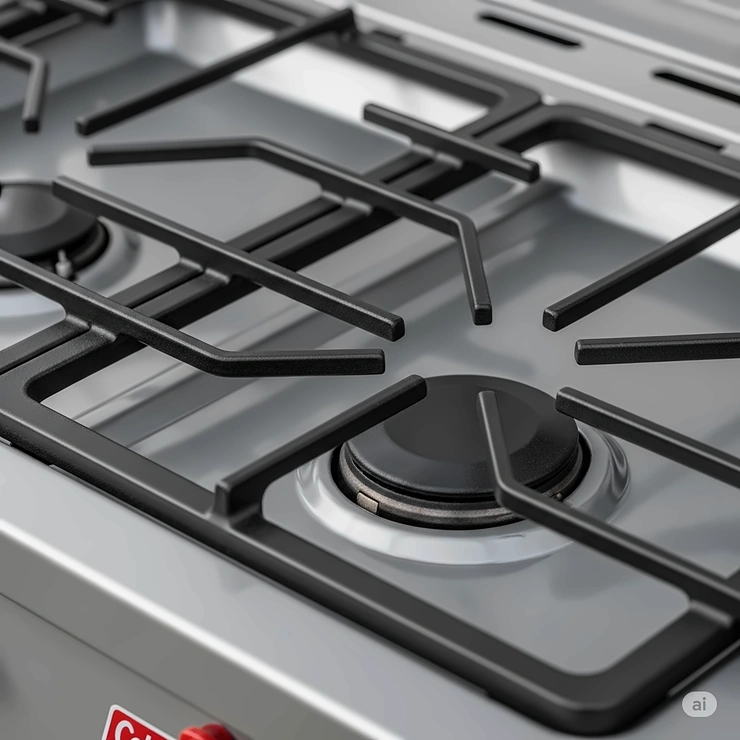
The engineering behind coleman 3 burner stoves involves sophisticated heat distribution technology that maximizes fuel efficiency while ensuring even cooking temperatures. The Even-Temp™ burner design featured in premium models utilizes a racetrack pattern that radiates heat equally across the cooking surface. This innovative approach prevents hot spots that can burn food while leaving other areas undercooked.
PerfectFlow™ Pressure Control Technology
Coleman’s proprietary PerfectFlow™ pressure control system represents a significant advancement in camping stove technology. This system maintains consistent gas pressure regardless of temperature fluctuations or fuel level changes. Consequently, users experience steady flame output from the first use until the propane cylinder is empty, ensuring predictable cooking results.
WindBlock™ Protection Systems
The aerodynamic design of wind guards on coleman 3 burner stoves reflects extensive computational fluid dynamics research. These guards don’t simply block wind; they redirect airflow to create positive pressure around the flame zone. Therefore, cooking performance remains consistent even in challenging outdoor conditions with sustained winds up to 15 mph.
Material Science and Durability Engineering
Modern coleman 3 burner stoves utilize advanced metallurgy in their construction, combining lightweight aluminum components with steel reinforcement in high-stress areas. The chrome-plated grates resist corrosion while providing excellent heat retention and distribution. Additionally, the powder-coated finish provides UV resistance and prevents paint deterioration from extended sun exposure.
Ignition System Technology
The InstaStart™ ignition system represents a leap forward from traditional piezo ignition mechanisms. This electronic ignition provides reliable starting in conditions where mechanical systems might fail, including high humidity and cold temperatures. Furthermore, the system requires minimal maintenance and provides thousands of reliable ignitions over its lifespan.
Fuel Efficiency Optimization
Advanced combustion chamber design in coleman 3 burner stoves maximizes the conversion of propane into usable heat energy. The precisely engineered air-to-fuel ratios ensure complete combustion, reducing waste and extending fuel life. Moreover, the thermal efficiency improvements mean users can cook longer on each propane cylinder while maintaining optimal performance.
Comprehensive Setup and Usage Guide for Coleman 3 Burner Stoves ️
Initial Assembly and Preparation
Setting up your coleman 3 burner stove requires careful attention to detail for optimal performance and safety. First, select a level, stable surface away from flammable materials and overhanging branches. The setup area should provide at least three feet of clearance on all sides to ensure proper ventilation and safe operation.
Remove the stove from its packaging and inspect all components for shipping damage. Check that the wind guards, grates, and drip tray are properly positioned. Subsequently, locate the regulator hose and ensure all connections are clean and free from debris before attaching the propane cylinder.
Propane Cylinder Connection Procedures
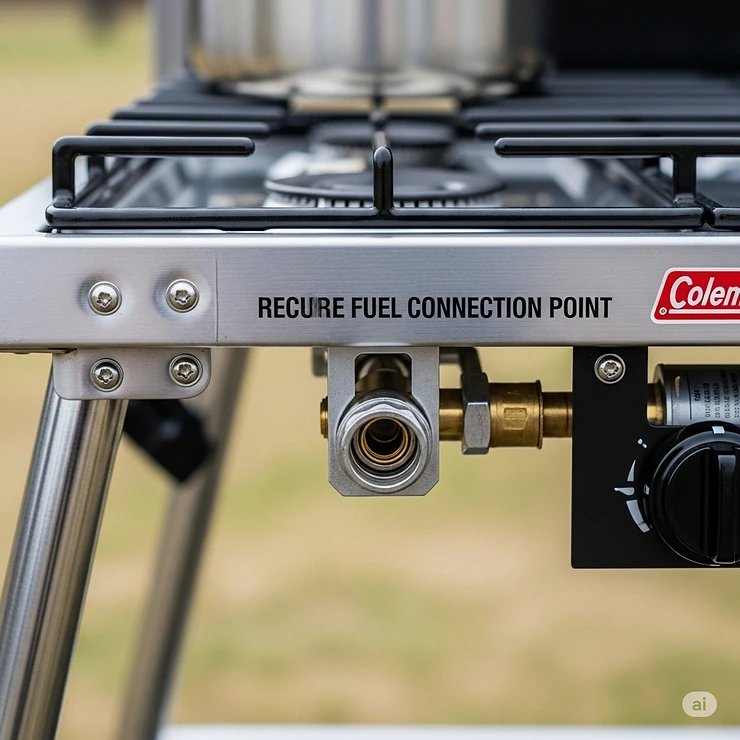
The propane connection process requires specific steps to ensure leak-free operation. Thread the regulator onto the propane cylinder hand-tight, then use a wrench to tighten an additional quarter turn. Avoid over-tightening, which can damage the connection threads and create safety hazards.
Perform a leak test using soapy water on all connections before first use. Apply the solution to all fittings and look for bubble formation, which indicates gas leaks. Additionally, familiarize yourself with the distinctive smell of propane to recognize potential leaks during operation.
Burner Lighting and Flame Adjustment
Light the burners one at a time, starting with the downwind burner to prevent flame interference. Turn the gas control knob to the high position while pressing the InstaStart™ ignition button. The flame should ignite immediately with a blue color and minimal yellow tips.
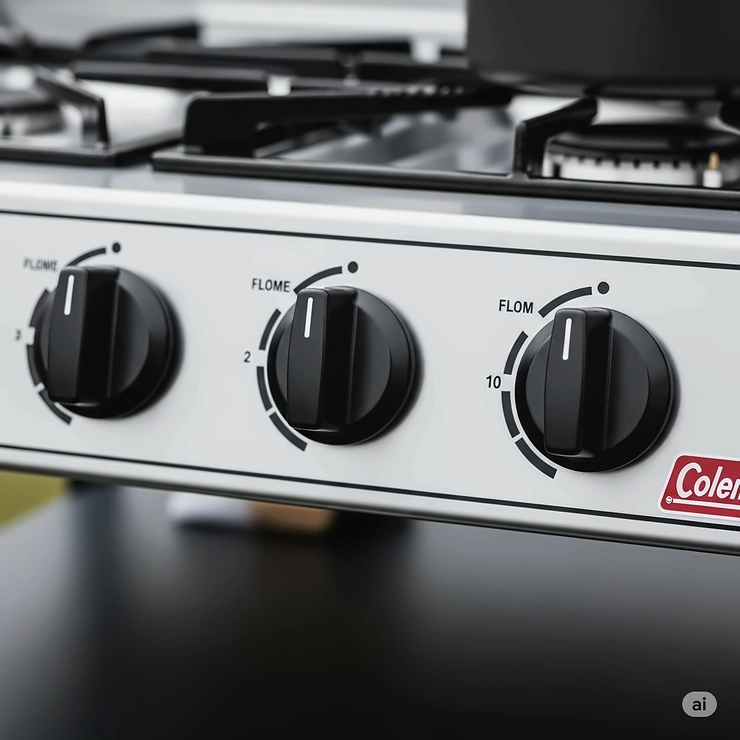
Adjust the flame height using the control knobs, which provide precise temperature control from high heat for boiling to low simmer settings. Moreover, practice adjusting the flames before cooking to become familiar with the response characteristics of each burner.
Cooking Surface Optimization
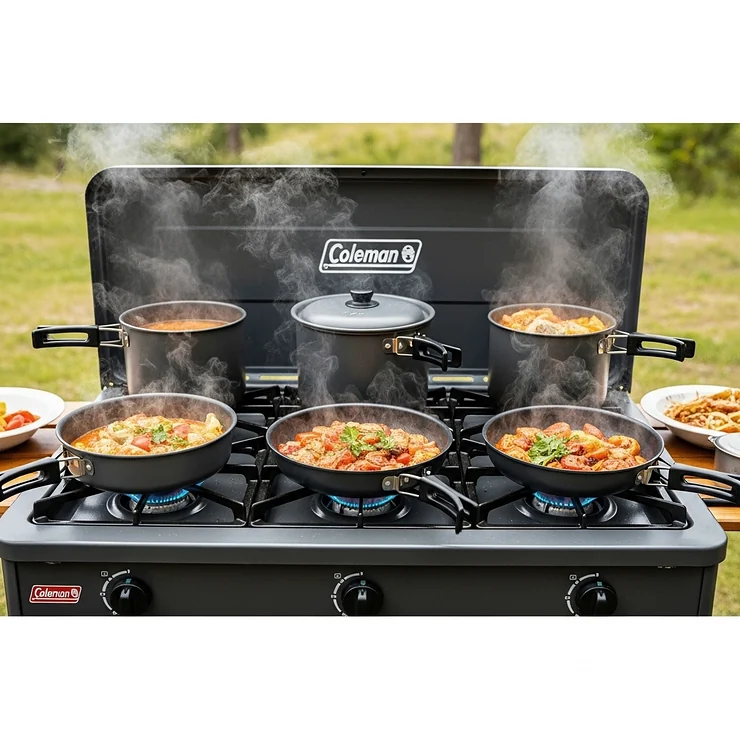
Proper cookware selection maximizes the efficiency of your coleman 3 burner stove. Use flat-bottomed pans that make full contact with the grates for optimal heat transfer. Dark-colored cookware absorbs heat more efficiently than reflective surfaces, reducing cooking times and fuel consumption.
Position larger pots and pans over single burners rather than spanning multiple flame zones. This approach ensures even heating and prevents hot spots that can burn food. Furthermore, use lids whenever possible to reduce cooking times and conserve fuel.
Environmental Considerations and Adaptation
Wind conditions significantly impact coleman 3 burner stove performance, requiring operational adjustments for optimal results. In windy conditions, position the stove to utilize natural windbreaks like rocks, trees, or your vehicle. Additionally, consider using a larger windscreen or cooking tarp to create a protected cooking environment.
High altitude cooking requires adjustments to accommodate reduced air pressure and oxygen content. Increase cooking times by approximately 25% for every 5,000 feet of elevation gain. Moreover, watch for flame color changes that indicate incomplete combustion and adjust the air intake accordingly.
Safety Protocols and Emergency Procedures
Establish clear safety protocols before using your coleman 3 burner stove, including escape routes and emergency shutdown procedures. Keep a fire extinguisher rated for grease fires within easy reach of the cooking area. Additionally, designate a safety observer when cooking in groups, especially with children present.
Never leave a lit stove unattended, and establish clear communication signals for emergency situations. Turn off all burners and disconnect the propane cylinder immediately if you detect gas leaks or unusual flame behavior. Furthermore, maintain awareness of changing weather conditions that might affect safe operation.
Post-Cooking Shutdown and Storage
Proper shutdown procedures extend the life of your coleman 3 burner stove and ensure safety. Turn off all burner control knobs first, then close the propane cylinder valve to relieve system pressure. Allow the stove to cool completely before handling or moving to prevent burns.
Clean the grates and drip tray while they’re still warm for easier removal of cooking residues. Store the stove in a dry location to prevent corrosion, and disconnect the propane cylinder for separate storage in well-ventilated areas.

Maintenance and Longevity Strategies
Daily Maintenance Protocols
Implementing daily maintenance routines dramatically extends the lifespan of your coleman 3 burner stove while ensuring consistent performance. After each use, wipe down all surfaces with a damp cloth to remove grease and food particles before they harden. Pay particular attention to the burner ports, which can become clogged with cooking residues and affect flame distribution.
Inspect the wind guards for grease accumulation and clean them thoroughly after cooking greasy foods. Additionally, check the drip tray for overflow and empty it regularly to prevent grease fires and maintain proper airflow around the burners.
Weekly Deep Cleaning Procedures
Weekly maintenance involves more thorough cleaning of internal components and moving parts. Remove the grates and soak them in warm, soapy water to dissolve stubborn grease deposits. Use a soft brush to clean the burner tubes and ports, ensuring all passages remain clear for optimal gas flow.
Inspect the propane connections weekly for signs of wear or corrosion. Subsequently, apply a thin layer of food-grade lubricant to moving parts like hinges and latches to prevent binding and ensure smooth operation.
Monthly System Inspections
Monthly inspections focus on wear patterns and potential failure points that develop over time. Examine the regulator hose for cracks, kinks, or abraded areas that could lead to gas leaks. Replace any damaged components immediately to maintain safety standards.
Check the ignition system by testing each burner’s startup reliability. Clean the ignition electrode if sparking becomes weak or inconsistent. Moreover, verify that all control knobs operate smoothly through their full range of motion.
Quarterly Performance Optimization
Quarterly maintenance includes comprehensive system testing and calibration to maintain peak performance. Test the BTU output using a simple water boiling test to identify any decline in heating efficiency. A properly functioning coleman 3 burner stove should boil one quart of water in approximately 6-8 minutes under ideal conditions.
Calibrate the flame adjustment range by testing both high and low settings on each burner. The flames should respond smoothly to control inputs without hunting or irregular behavior. Additionally, inspect the wind guards for warping or damage that could affect their protective function.
Annual Professional Servicing
Annual professional servicing ensures your coleman 3 burner stove continues operating safely and efficiently for many years. Authorized service centers can perform pressure testing on the gas system and replace worn internal components that aren’t user-serviceable.
Professional technicians can also update firmware in electronic ignition systems and recalibrate pressure regulators for optimal performance. Furthermore, they can identify potential safety issues before they become serious problems.
Troubleshooting Common Issues
Uneven flame distribution typically indicates clogged burner ports or misaligned components. Clean the affected burners thoroughly and ensure proper assembly of all parts. If problems persist, the issue may require professional attention to address internal blockages.
Ignition problems often result from moisture contamination or worn electrodes. Keep the ignition system dry and clean the electrodes regularly with fine-grit sandpaper. Additionally, check battery levels in electronic ignition systems and replace as needed.
Parts Availability and Replacement
Coleman maintains excellent parts availability for their 3 burner stoves, with most common components readily available through authorized dealers and online retailers. Stock commonly replaced items like igniters, regulators, and wind guards to minimize downtime during camping season.
Genuine Coleman replacement parts ensure proper fit and performance, while generic alternatives may compromise safety or efficiency. Moreover, using authentic parts maintains warranty coverage and ensures compliance with safety standards.
Storage and Off-Season Care
Proper storage prevents damage during extended periods of non-use and ensures your coleman 3 burner stove remains ready for action. Clean the stove thoroughly before storage, removing all grease and food residues that could attract pests or cause corrosion.
Store the stove in a dry, temperature-controlled environment when possible. Disconnect and separately store the propane cylinder in accordance with local regulations. Additionally, consider using desiccant packets to control moisture in storage containers.
Comparative Analysis: Coleman vs. Competitors
Coleman vs. Camp Chef Performance Comparison
When comparing coleman 3 burner stoves to Camp Chef alternatives, several key differences emerge in design philosophy and performance characteristics. Camp Chef stoves typically offer higher BTU ratings per burner, with some models reaching 30,000 BTU per burner compared to Coleman’s standard 28,000 total BTU output. However, Coleman’s focus on even heat distribution often provides more consistent cooking results despite lower peak power.
Build quality represents another significant differentiation point between the brands. Camp Chef emphasizes heavy-duty construction with thicker steel components, resulting in superior durability but increased weight. Conversely, Coleman prioritizes portability with lighter aluminum construction while maintaining adequate durability for typical camping applications.
Price positioning clearly favors Coleman products, with comparable 3-burner models typically costing 20-30% less than equivalent Camp Chef units. This price advantage makes Coleman stoves more accessible to casual campers and budget-conscious consumers. Furthermore, Coleman’s widespread availability ensures easier service and parts replacement across the United States.
Traditional Single-Burner vs. Multi-Burner Approaches
The choice between multiple single-burner stoves and a unified 3-burner system involves trade-offs in flexibility, cost, and performance. Individual single-burner units offer maximum flexibility in cooking station placement and can operate independently if one unit fails. Additionally, the distributed approach allows different fuel types and cooking techniques simultaneously.
However, coleman 3 burner stoves provide significant advantages in fuel efficiency and operational simplicity. A single propane cylinder serves all three burners, eliminating the need to manage multiple fuel sources. Moreover, the integrated design includes built-in wind protection and stable cooking surfaces that individual units struggle to match.
Cost analysis strongly favors the integrated 3-burner approach, with typical coleman 3 burner stoves costing less than three individual Coleman single-burner units. The integrated approach also reduces storage space requirements and simplifies transportation logistics for camping expeditions.
Propane vs. Dual-Fuel System Comparison
Coleman’s propane-only approach contrasts with some competitors who offer dual-fuel systems capable of running on both propane and liquid fuels like white gas. Dual-fuel systems provide greater flexibility in fuel sourcing and potentially better cold-weather performance. However, they require more complex maintenance and carry higher initial costs.
Propane-only systems excel in simplicity and user-friendliness, making them ideal for casual campers who prioritize convenience over maximum versatility. The widespread availability of propane cylinders ensures fuel access even in remote locations. Furthermore, propane burns cleaner than liquid fuels, producing fewer maintenance requirements and extending component life.
Performance consistency favors propane systems in most common camping scenarios. Propane maintains steady pressure across a wide temperature range and doesn’t require priming or complex startup procedures. Additionally, the consistent fuel composition ensures predictable flame characteristics and cooking performance.
Price-to-Performance Ratio Analysis
Coleman 3 burner stoves deliver exceptional value when analyzing price-to-performance ratios across the camping stove market. The combination of adequate power output, reliable operation, and accessible pricing creates a compelling value proposition for most users. When compared to premium alternatives, Coleman stoves provide 80-90% of the performance at 60-70% of the cost.
Long-term value considerations include parts availability, service support, and resale value. Coleman’s extensive dealer network and comprehensive parts inventory ensure ongoing support throughout the product lifecycle. Moreover, the brand recognition maintains stronger resale values compared to lesser-known competitors.
Operational cost analysis reveals additional advantages for Coleman systems, particularly in fuel efficiency and maintenance requirements. The PerfectFlow™ pressure regulation system optimizes fuel consumption, while the simplified design minimizes service intervals and replacement part costs.
Integration with Existing Camping Systems
Coleman 3 burner stoves integrate seamlessly with other Coleman camping equipment, creating synergistic benefits for users who standardize on the brand. Compatible accessories like griddles, grease management systems, and carrying cases enhance functionality while maintaining design consistency.
The standardized propane connection systems ensure compatibility with other Coleman propane appliances, allowing fuel sharing among lanterns, heaters, and cooking equipment. This standardization simplifies logistics and reduces the variety of fuel types required for camping expeditions.
Setup and storage integration benefits from Coleman’s coordinated design approach across their camping product line. The stoves fit properly in Coleman camping kitchens and storage systems, maximizing space utilization and organizational efficiency.
Just one click – help others make better buying decisions too!
Case Studies and Success Stories
Family Camping Adventures: The Johnson Family Experience
The Johnson family of five transformed their camping experiences after upgrading to the Coleman Classic 3-Burner Propane Camping Stove three years ago. Previously struggling with a single-burner setup that made meal preparation time-consuming and stressful, they discovered the efficiency of simultaneous cooking on multiple burners.
“Before getting our Coleman 3 burner stove, breakfast took over an hour because we had to cook everything sequentially,” explains Sarah Johnson, mother of three teenage children. “Now we can have bacon cooking on one burner, pancakes on another, and coffee brewing simultaneously. Our morning routine went from chaotic to actually enjoyable.”
The family reports significant fuel savings compared to their previous setup of multiple single-burner stoves. Over a typical week-long camping trip, they now use approximately 30% less propane while cooking more elaborate meals. Additionally, the wind protection features proved invaluable during a windy weekend at Lake Tahoe, where their previous equipment struggled to maintain consistent flames.
Scout Troop Cooking Program: Troop 347’s Experience
Troop 347 from Denver, Colorado, implemented the Coleman Even-Temp 3-Burner as their primary cooking platform for merit badge instruction and group meal preparation. The troop’s leadership chose this model specifically for its even heat distribution, which helps scouts learn proper cooking techniques without the frustration of hot spots burning their food.
Scoutmaster Mike Rodriguez reports impressive results from the program: “We’ve seen a marked improvement in cooking confidence among our scouts since switching to the Coleman 3 burner system. The consistent heat output means their results are more predictable, which builds confidence and encourages experimentation with more complex recipes.”
The economic benefits proved equally compelling, with the troop reducing their cooking equipment budget by 40% while improving meal quality. The durability of the Coleman system has withstood three years of intensive use by inexperienced young cooks with minimal maintenance requirements.
Professional Outfitter Operations: Mountain Adventure Guides
Mountain Adventure Guides, based in Colorado’s Rocky Mountain region, operates multi-day backcountry trips for up to 12 clients at a time. They standardized on Coleman Classic 3-in-1 Camping Stoves after extensive testing of various commercial-grade alternatives.
Operations Manager Jennifer Collins explains their decision: “We needed equipment that could handle volume cooking in challenging weather conditions while remaining portable enough for pack-in locations. The Coleman 3 burner stoves provide the power we need while weighing significantly less than commercial alternatives.”
The outfitter reports measurable improvements in client satisfaction since implementing the Coleman system. Post-trip surveys consistently rate meal quality higher, with clients specifically mentioning the variety and quality of hot meals prepared in remote locations. The reliability factor proved crucial during a week-long trip when severe weather testing lasted five days without equipment failures.
Emergency Response Case Study: Hurricane Relief Operations
Following Hurricane Maria’s impact on Puerto Rico, emergency response teams from FEMA deployed coleman 3 burner stoves as part of their field kitchen operations. The stoves provided critical meal preparation capabilities for both response personnel and displaced residents in areas where traditional cooking infrastructure was destroyed.
Emergency Response Coordinator Carlos Mendez documented the deployment: “The Coleman stoves proved invaluable because they could be operational within minutes of arrival at a new location. The propane fuel source was readily available through our supply chain, and the equipment required minimal training for volunteer staff.”
The response teams prepared over 10,000 meals using Coleman 3 burner stoves during the six-week deployment. The equipment maintained consistent performance despite exposure to debris, sand, and saltwater conditions that disabled other cooking equipment. Additionally, the portability allowed rapid redeployment as relief operations shifted to different affected areas.
Commercial Food Vendor Success: Maria’s Mobile Meals
Maria Gonzalez launched her mobile food service business using three Coleman Classic 3-Burner stoves as her primary cooking equipment, avoiding the substantial investment in commercial food truck equipment. Operating from farmer’s markets and special events, she built a successful catering business that now serves corporate clients throughout the Southwest.
“Starting with Coleman stoves allowed me to test my business concept without massive debt,” Maria explains. “As I proved the market demand, I reinvested profits into additional equipment rather than borrowing money upfront. The reliability of these stoves gave me confidence that I could deliver consistently for my customers.”
Maria’s business grew 300% in its first year, with the Coleman equipment handling the increased volume without performance degradation. The cost savings compared to commercial equipment allowed her to offer competitive pricing while maintaining healthy profit margins. She now operates five Coleman 3 burner stoves simultaneously during large events, serving up to 500 customers per day.
Research Expedition Application: Arctic Climate Study
The University of Alaska’s climate research team selected coleman 3 burner stoves for their month-long Arctic research expedition, where reliable cooking equipment was essential for team nutrition and morale. The expedition operated in temperatures ranging from 10°F to -20°F, testing equipment performance under extreme conditions.
Lead Researcher Dr. Janet Thompson reported excellent performance throughout the expedition: “We were impressed by how well the Coleman stoves performed in sub-zero conditions. The PerfectFlow™ pressure regulation maintained consistent output even when propane cylinders became very cold, something we hadn’t experienced with other brands.”
The research team prepared all meals using the Coleman equipment, including complex dishes requiring precise temperature control for nutrition studies. The ability to operate three cooking zones simultaneously proved crucial for maintaining research schedules while ensuring adequate nutrition for the team in demanding conditions.
Future Trends and Market Evolution
Emerging Technologies and Innovation Directions
The coleman 3 burner stove market continues evolving with technological advances that enhance performance, safety, and environmental sustainability. Smart ignition systems represent the next frontier, with prototype models featuring smartphone connectivity for remote monitoring and control. These systems will provide real-time fuel level monitoring, cooking temperature feedback, and automatic safety shutdowns.
Advanced materials science promises lighter, stronger construction using aerospace-grade alloys and composite materials. Future Coleman models may achieve 20-30% weight reductions while improving durability and heat distribution. Additionally, improved thermal barrier coatings will enhance fuel efficiency and reduce external heat transfer.
Sustainability and Environmental Considerations
Environmental consciousness drives innovation toward cleaner-burning combustion systems and recyclable component design. Coleman’s research focuses on optimizing flame patterns to reduce emissions while maintaining cooking performance. Future models will likely achieve significant reductions in carbon monoxide and nitrogen oxide production.
Renewable fuel compatibility represents another development area, with engineering teams exploring bio-propane and other sustainable fuel alternatives. The goal involves maintaining current performance characteristics while transitioning to environmentally friendly fuel sources as they become commercially available.
Market Trends and Consumer Behavior Shifts
The camping equipment market shows strong growth driven by increased outdoor recreation participation, particularly among younger demographics seeking authentic experiences. This trend favors versatile equipment like coleman 3 burner stoves that enable quality outdoor cooking without sacrificing convenience.
Urban consumers increasingly seek equipment suitable for both traditional camping and urban outdoor activities like tailgating, rooftop cooking, and emergency preparedness. This dual-use requirement influences design priorities toward compactness and aesthetic appeal while maintaining robust performance.
Personalization and Customization Possibilities
Future coleman 3 burner stoves will likely offer increased customization options, allowing users to configure burner arrangements, heat outputs, and accessory mounting systems according to specific needs. Modular design approaches will enable users to adapt their equipment for different applications without purchasing entirely new systems.
Color customization and aesthetic options respond to consumer desires for equipment that reflects personal style preferences. Additionally, performance tuning options will allow advanced users to optimize their stoves for specific cooking techniques or environmental conditions.
Industry Predictions and Upcoming Developments
Market analysis suggests continued consolidation around established brands like Coleman, with smaller manufacturers struggling to compete on price and distribution. This trend benefits consumers through improved standardization and wider parts availability, but may reduce innovation from smaller, specialized companies.
Integration with other camping systems represents a major development direction, with stoves becoming part of coordinated camp kitchen ecosystems. Future Coleman products will likely feature standardized mounting systems, integrated storage solutions, and compatibility with electronic camp management systems.
The outdoor recreation equipment industry predicts steady growth in multi-burner camping stoves, driven by increasing participation in car camping, RV travel, and outdoor events. Coleman’s market position suggests they will continue dominating this segment while expanding into adjacent markets like emergency preparedness and outdoor professional applications.
Don’t Miss These Exclusive Deals!
Ready to upgrade your outdoor cooking game? These carefully selected Coleman 3 burner stoves offer the perfect combination of power, reliability, and value. Click on any highlighted product to check current pricing and availability on Amazon!
Investment and Purchase Decision Framework
Cost-Benefit Analysis Framework
Evaluating coleman 3 burner stove investments requires systematic analysis of both initial costs and long-term value propositions. The initial purchase price represents only 20-30% of the total cost of ownership over a typical 10-year lifespan. Additional costs include propane fuel, replacement parts, and accessories that enhance functionality.
Direct cost comparisons must consider fuel efficiency differences between models, as more efficient stoves reduce operational costs over time. The Coleman Classic 3-Burner at $130-$221 typically recovers its price premium over basic models through fuel savings within two camping seasons for frequent users.
Implementation Strategy Templates
Successful coleman 3 burner stove implementation begins with honest assessment of cooking requirements and usage patterns. Casual weekend campers require different capabilities than extended expedition cooks or commercial food service operators. Create a requirements matrix listing must-have features, nice-to-have capabilities, and deal-breaking limitations.
Budget planning should include the complete cooking system, not just the stove itself. Essential accessories like windscreens, cookware, and fuel supplies add 30-50% to the initial investment but significantly improve the user experience. Additionally, consider storage and transportation requirements when selecting vehicle-based camping equipment.
Decision Criteria and Evaluation Matrices
Objective evaluation requires weighted scoring across key performance criteria including power output, fuel efficiency, portability, durability, and ease of use. Assign weights based on your specific priorities – expedition campers might weight durability heavily while car campers prioritize cooking capacity.
Create comparison matrices for different Coleman models and competitive alternatives, scoring each option against your criteria. Include both quantitative measures like BTU output and weight, plus subjective factors like ease of cleaning and aesthetic appeal. This systematic approach prevents emotional purchasing decisions and ensures optimal matches between needs and capabilities.
Budget Planning and Financing Options
Coleman 3 burner stove purchases benefit from seasonal timing, with best prices typically available during late fall and winter months when camping equipment demand decreases. End-of-model-year clearances can provide 20-40% savings on previous year models with minimal feature differences.
Many outdoor retailers offer seasonal financing promotions during spring camping preparation periods. However, the moderate cost of most Coleman stoves makes financing unnecessary for most consumers. Instead, consider bundling purchases with other camping equipment to qualify for package discounts.
Measuring Success Metrics and KPIs
Establish measurable criteria for evaluating your coleman 3 burner stove investment success. Quantitative metrics include fuel consumption per meal, cooking time improvements, and failure incidents over time. Track these metrics during initial use periods to identify optimization opportunities.
Qualitative success measures include user satisfaction, meal quality improvements, and stress reduction during cooking activities. Survey family members or group participants to gather feedback on cooking experiences and identify areas for improvement or additional training needs.
Risk Assessment and Mitigation
Purchase decisions should consider potential failure modes and their impacts on camping or business operations. Single-point-of-failure risks exist with any cooking system, making backup plans essential for critical applications. Commercial operators might require redundant equipment, while recreational users might need alternative cooking methods.
Warranty coverage and service availability represent important risk mitigation factors. Coleman’s extensive dealer network provides service advantages over competitors with limited support infrastructure. Additionally, the wide availability of replacement parts reduces downtime risks when components fail during extended trips.
Extended warranty options merit consideration for heavy-use applications but generally provide poor value for recreational users. The reliability of Coleman equipment and reasonable replacement costs make extended warranties unnecessary for most applications.
Frequently Asked Questions About Coleman 3 Burner Stoves
❓ How long does a propane cylinder last with a Coleman 3 burner stove?
❓ Can I use different sized cookware on Coleman 3 burner stoves?
❓ What maintenance does a Coleman 3 burner stove require annually?
❓ Are Coleman 3 burner stoves suitable for high-altitude cooking?
❓ How much wind can Coleman 3 burner stoves handle safely?
Recommended for You
- 7 Best Eureka Stove Models for Perfect Camping Cooking in 2025
- 7 Best Griddle Camp Stove Options for Ultimate Outdoor Cooking in 2025
- 7 Best Heavy Duty Outdoor Gas Burner Options for Ultimate Cooking Power in 2025
Disclaimer: This article contains affiliate links. If you purchase products through these links, we may earn a small commission at no additional cost to you.
✨ Found this helpful? Share it with your friends!
