
In This Article
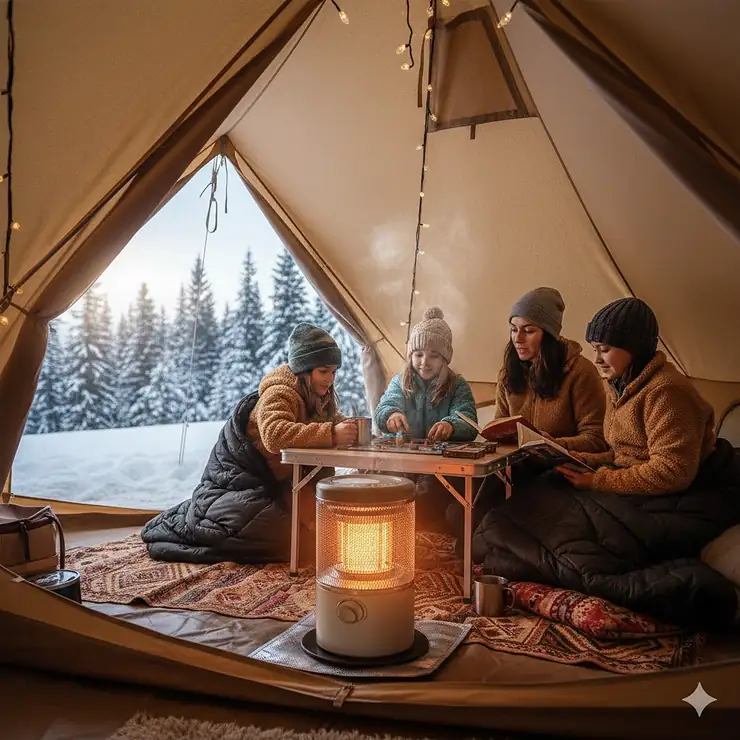
Picture this: you’re nestled in your sleeping bag during a crisp autumn camping trip when the temperature plummets to 25°F. Your breath forms clouds inside the tent, and no amount of layering seems to help. Sound familiar? You’re not alone—millions of campers struggle with freezing nights every year.
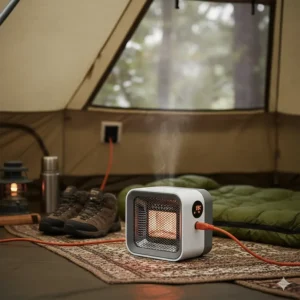
But here’s the good news: the right camping heater can make all the difference between shivering until dawn and enjoying a comfortable night’s sleep. A quality tent heater for camping transforms your outdoor adventure from a test of endurance into an enjoyable experience, even when Mother Nature throws her worst at you.
Whether you’re a seasoned
winter camper or just extending your camping season into shoulder months, understanding which heater suits your needs could be the difference between comfort and misery. In this comprehensive guide, we’ll explore the top tent heaters for camping in 2025, diving deep into safety protocols, BTU requirements, and real-world performance.
What is a tent heater for camping? A tent heater for camping is a portable heating device specifically designed to safely warm enclosed spaces like tents, typically powered by propane, butane, or electricity, featuring critical safety mechanisms such as oxygen depletion sensors and automatic shut-off systems.
Quick Comparison Table
| Heater Model | Type | BTU/Wattage | Coverage | Price Range | Best For |
|---|---|---|---|---|---|
| Mr. Heater Portable Buddy | Propane | 4,000-9,000 BTU | 225 sq ft | $80-$120 | Most campers |
| Mr. Heater Little Buddy | Propane | 3,800 BTU | 95 sq ft | $60-$85 | Solo/small tents |
| Campy Gear Chubby | Propane | 9,000 BTU | 108 sq ft | $50-$75 | Budget option |
| Mr. Heater Big Buddy | Propane | 4,000-18,000 BTU | 450 sq ft | $150-$200 | Large tents |
| Lasko Ceramic 754200 | Electric | 1500W | 300 sq ft | $30-$45 | Sites with power |
| Naturehike 3-in-1 | Butane | 3,750 BTU | 54-108 sq ft | $60-$90 | Backpackers |
| Campy Gear Wiry | Propane | 13,000 BTU | 150 sq ft | $70-$95 | Medium tents |
Just one click – help others make better buying decisions too!
Top 7 Tent Heaters for Camping: Expert Analysis
1. Mr. Heater Portable Buddy – Best Overall
The Mr. Heater Portable Buddy has earned its reputation as the most popular portable propane heater each year, and for good reason. This powerhouse delivers adjustable heat from 4,000 to 9,000 BTU, making it perfect for tents up to 225 square feet.
Key Specifications:
- Heat output: 4,000-9,000 BTU
- Runtime: Up to 5.4 hours on low (1 lb cylinder)
- Coverage: 225 sq ft
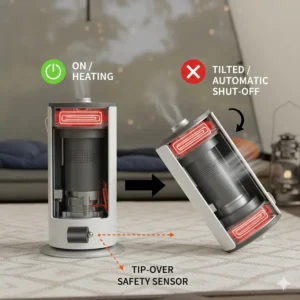
What sets this heater apart is its Oxygen Depletion Sensor (ODS) and accidental tip-over safety shut-off, essential features for enclosed spaces. The integrated Piezo ignition means no matches needed—just rotate the knob and you’re warming up within seconds.
Customer feedback consistently praises its reliability in temperatures down to 15°F. One reviewer mentioned using it for ice fishing trips, noting it kept a 4-person tent comfortable even in sub-zero conditions.
✅ Pros:
- Dual heat settings for versatility
- Excellent safety features
- Can connect to 20 lb propane tank
❌ Cons:
- Creates condensation in poorly ventilated tents
- Slightly bulky for backpacking
Price: $80-$120 | Best for: Family camping, car camping, ice fishing
2. Mr. Heater Little Buddy – Best for Solo Campers
For minimalist campers and solo adventurers, the Mr. Heater Little Buddy delivers 3,800 BTU of heat in a compact package. Weighing just under 6 pounds, it’s incredibly portable yet powerful enough for small tents up to 95 square feet.
Key Specifications:
- Heat output: 3,800 BTU
- Runtime: Up to 5.6 hours (1 lb cylinder)
- Weight: 5.8 lbs
This heater includes the same safety features as its bigger sibling but in a more backpack-friendly size. The single heat setting keeps things simple, though you’ll need to manually light it with a match or lighter.
Campers love its fuel efficiency—one propane canister can last multiple nights on shorter warming sessions. However, the small base makes it slightly wobbly, which is dangerous in an enclosed space, so placement on flat, stable surfaces is critical.
✅ Pros:
- Ultra-portable design
- Fuel-efficient
- Same safety sensors as larger models
❌ Cons:
- Single heat setting only
- Less stable base
- Manual ignition
Price: $60-$85 | Best for: Backpackers, solo tent camping
3. Campy Gear Chubby – Best Budget Option
The Campy Gear Chubby proves you don’t need to spend a fortune for reliable warmth. This 2-in-1 heater and stove combo provides 9,000 BTU of heat and doubles as a cooking surface—talk about versatility!
Key Specifications:
- Heat output: 9,000 BTU
- Weight: 2 lbs
- Dual function: Heater + stove
The 360-degree radiant heating warms you within seconds, and its compatibility with both 110g/230g butane canisters and 1 lb propane cylinders (with adapter) gives you fuel flexibility.
Users appreciate the detachable pot stand that accommodates cookware from 3.9 to 12 inches. One camper noted preparing hot coffee while simultaneously warming their tent during a November trip—that’s efficiency! The collapsible design makes storage a breeze.
✅ Pros:
- Dual functionality (heat + cook)
- Extremely portable
- Budget-friendly
❌ Cons:
- Shorter runtime than dedicated heaters
- Requires manual flame adjustment
- Pot/pan not included
Price: $50-$75 | Best for: Budget-conscious campers, survivalists
4. Mr. Heater Big Buddy – Best for Large Tents
When you need serious heating power, the Mr. Heater Big Buddy delivers with an impressive 4,000 to 18,000 BTU output. This beast can warm tents up to 450 square feet, perfect for group camping or family-sized shelters.
Key Specifications:
- Heat output: 4,000/9,000/18,000 BTU
- Runtime: Up to 11 hours (dual 1 lb cylinders)
- Coverage: 450 sq ft
With three heat settings and dual propane connections, this heater offers maximum flexibility. The swivel regulators let you switch from disposable cylinders to a remote 20 lb tank for extended trips.
While some models no longer include the fan due to recent governmental changes to import tariffs, the radiant heat still performs exceptionally well. Campers using this for deer hunting report maintaining comfortable temperatures even with frequent tent entry/exit.
✅ Pros:
- Triple heat settings
- Dual fuel tanks for longer runtime
- Massive coverage area
❌ Cons:
- Heavy (12+ lbs)
- Higher fuel consumption
- Not suitable for backpacking
Price: $150-$200 | Best for: Large groups, extended trips, base camping
5. Lasko Ceramic 754200 – Best Electric Option
If you’re camping at sites with electrical hookups, the Lasko Ceramic 754200 is your safest bet. This 1500W ceramic heater produces zero emissions, making it ideal for tent use without ventilation concerns.
Key Specifications:
- Wattage: 1500W (High), 900W (Low)
- Coverage: 300 sq ft
- Safety: Overheat protection, cool-touch exterior
The adjustable thermostat with 11 temperature settings ensures you find your perfect comfort level. Three quiet settings (high heat, low heat, fan-only) plus the convenient carry handle make room-to-room transport effortless.
Customers rave about its safety features—the tip-over switch and overheat protection provide peace of mind. One family mentioned using it in their canvas tent at a state park, noting it kept the space toasty without the propane smell.
✅ Pros:
- No carbon monoxide risk
- Quiet operation
- Affordable and readily available
❌ Cons:
- Requires electricity
- Not suitable for off-grid camping
- Cord can be a tripping hazard
Price: $30-$45 | Best for: Campgrounds with hookups, RV camping
6. Naturehike 3-in-1 – Best for Backpackers
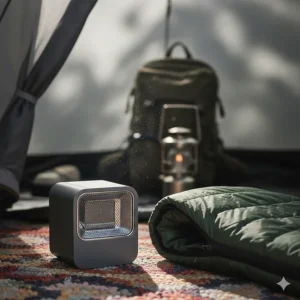
The Naturehike 3-in-1 redefines portable heating with its 3,750 BTU output in an incredibly lightweight package. This butane-powered heater includes a warming shelf and carry handle, perfect for weight-conscious campers.
Key Specifications:
- Heat output: 3,750 BTU
- Runtime: Up to 240 minutes (8 oz butane)
- Coverage: 54-108 sq ft
The cellular porous mesh heating technology can warm an area in just minutes, while the magnetic connection ensures easy fuel canister attachment. The automatic gas shutoff for overpressure adds an essential safety layer.
Ultralight backpackers appreciate that it weighs less than most cookstoves while providing dual functionality. The detachable warming shelf is perfect for drying gloves or keeping beverages warm.
✅ Pros:
- Extremely lightweight
- Tri-functional design
- Efficient cellular heating
❌ Cons:
- Limited to butane fuel
- Shorter runtime
- Smaller coverage area
Price: $60-$90 | Best for: Ultralight camping, mountaineering
7. Campy Gear Wiry – Best Mid-Range Power
Striking the perfect balance between portability and power, the Campy Gear Wiry delivers 13,000 BTU in a manageable package. The 2-in-1 design includes both heater and stove functionality for maximum versatility.
Key Specifications:
- Heat output: 13,000 BTU
- Dual mode: Cook & Heat / Heat Only
- Weight: Approximately 4 lbs
The spark ignition starts this heater in seconds without matches, while the foldable pot stand accommodates various cookware sizes. The sturdy twist knob lets you effortlessly switch between cooking and heating modes.
Users particularly appreciate the durable carrying handle for easy transport. One reviewer mentioned using it throughout a week-long October camping trip, praising its ability to maintain warmth in a 6-person tent during 30°F nights.
✅ Pros:
- Higher BTU than similar models
- Spark ignition convenience
- Solid build quality
❌ Cons:
- Heavier than ultra-portable models
- Fuel consumption at high settings
- Requires 1 lb propane only
Price: $70-$95 | Best for: Car camping, shoulder season trips
✨ Don’t Miss These Exclusive Deals!
Take your camping comfort to the next level with these carefully selected tent heaters for camping. Click on any highlighted item to check current pricing and availability. These tools will help you create authentic warmth your family will appreciate during cold-weather adventures!
How to Choose the Right Tent Heater for Camping
Selecting the perfect tent heater for camping involves more than just picking the highest BTU model. Here’s what matters most:
Understanding BTU Requirements
BTU (British Thermal Unit) measures heating power—one BTU raises one pound of water by 1°F. The formula for calculating your needs is: tent volume (length × width × height) × temperature difference × 0.133 = required BTU/hour.
For example, a 10×10×7 foot tent (700 cubic feet) needing a 30°F temperature increase requires approximately 2,800 BTU. However, a rule of thumb is that 2,500 BTUs of heating power will heat 600 cubic feet of tent space 30 degrees.
Tent Size Matching
Small tents (1-2 person): 3,000-5,000 BTU Medium tents (3-4 person): 5,000-9,000 BTU
Large tents (5+ person): 9,000-18,000 BTU Family/group tents: 18,000+ BTU
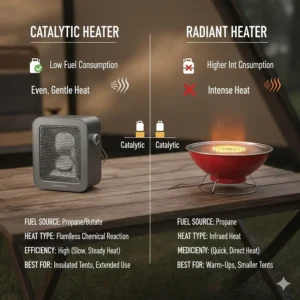
Fuel Type Considerations
Propane heaters offer portability and high heat output but require proper ventilation. They’re ideal for most camping scenarios where you can carry fuel canisters.
Electric heaters provide the safest option with zero emissions, perfect for campgrounds with hookups. However, they’re useless in off-grid locations without a portable power station.
Butane heaters strike a middle ground with lighter weight than propane and decent heat output, though fuel availability can be more limited.
Safety Features to Prioritize
Look for heaters with these non-negotiable safety features:
Oxygen Depletion Sensor (ODS): Automatically shuts off the heater if oxygen levels start to fall, preventing carbon monoxide buildup.
Tip-Over Protection: Cuts power immediately if the heater gets knocked over, preventing fire hazards.
Cool-Touch Exterior: Reduces burn risks, especially important with children or pets present.
Automatic Shut-Off: Provides additional safety layer for malfunction scenarios.
Critical Safety Guidelines for Using Tent Heaters
⚠️ This section could save your life. Carbon monoxide poisoning kills campers every year. Follow these rules without exception.
Ventilation is Non-Negotiable
People die every year from carbon monoxide poisoning from the use of portable camping heaters, lanterns, or stoves inside tents, campers, and vehicles. The U.S. Consumer Product Safety Commission emphasizes this point repeatedly.
Proper ventilation means:
- Opening both a lower and upper vent
- Cracking tent door or window at least 2-4 inches
- Never fully zipping the tent while heater operates
- Ensuring cross-ventilation for air circulation
One experienced camper shared: “I crack one lower corner and prop open a top vent. Yes, some heat escapes, but I’m alive to tell about it.”
Carbon Monoxide Detection
Invest in a battery-operated carbon monoxide detector—it’s cheap insurance. Know the symptoms of carbon monoxide poisoning: headache, dizziness, weakness, nausea, vomiting, sleepiness, and confusion.
If anyone experiences these symptoms while using a heater, immediately:
- Turn off the heater
- Exit the tent
- Get fresh air
- Seek medical attention if symptoms persist
Never Sleep with Heater Running
While Mr. Buddy Heaters are labeled indoor safe and the safety mechanisms are supposed to allow you to sleep with it running, they are not guaranteed to work and it’s not worth the risk. Instead, run your heater before bed and in the morning while awake.
Many campers warm their tent for 30-60 minutes before sleeping, then turn off the heater. A proper sleeping bag handles the rest.
Proper Placement Rules
According to safety experts, 18 inches should be clear on each side and the back of the heater and at least 4 feet should be clear from the heater to the top of the tent.
Additional placement tips:
- Set heater on flat, stable, non-flammable surface
- Keep away from sleeping bags, clothes, tent walls
- Secure propane canister to prevent tipping
- Never place near tent door (trip hazard)
What NOT to Do
❌ Never use outdoor-only heaters inside tents
❌ Don’t modify or remove safety features
❌ Avoid using heaters during snowstorms (ventilation can get blocked)
❌ Never leave children or pets unattended with operating heater
❌ Don’t use damaged or malfunctioning heaters
For comprehensive safety information, visit the CPSC Carbon Monoxide Safety Center.
Propane vs Electric vs Butane: Which Fuel is Right?
Propane Heaters: The Popular Choice
Advantages:
- High heat output (typically 3,000-18,000 BTU)
- Widely available fuel
- Works in any weather
- No electricity required
Disadvantages:
- Requires ventilation (carbon monoxide risk)
- Fuel canisters add weight
- Creates moisture/condensation
- Fuel costs over time
Best for: Off-grid camping, high-output heating needs, versatility
Electric Heaters: The Safe Option
Advantages:
- Zero carbon monoxide emissions
- No fuel storage needed
- Quiet operation
- Precise temperature control
Disadvantages:
- Requires power source
- Limited to campgrounds with hookups
- Lower portability
- Needs portable power station for off-grid use
Best for: RV camping, campgrounds with electricity, family camping at developed sites
Butane Heaters: The Lightweight Alternative
Advantages:
- Lighter than propane options
- Efficient heat production
- Compact fuel canisters
- Good for backpacking
Disadvantages:
- Less common fuel availability
- Performance drops in extreme cold
- Smaller heat output generally
- Still requires ventilation
Best for: Backpacking, ultralight camping, shoulder season trips
Winter Camping Tips: Maximizing Heater Performance
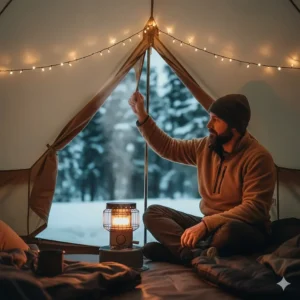
Getting the most from your tent heater for camping requires strategy beyond just turning it on.
Pre-Heating Strategy
Start your heater 30-45 minutes before bedtime to warm the tent thoroughly. This initial blast drives moisture out and creates a comfortable baseline temperature. One winter camping enthusiast shared: “I run mine on high while preparing dinner. By bedtime, the tent’s at 60°F.”
Managing Condensation
Propane heaters produce moisture as a combustion byproduct. Propane heaters create a lot of moisture, and without proper ventilation, condensation builds up everywhere.
Combat condensation by:
- Ensuring adequate ventilation
- Using moisture-absorbing packs (silica gel, DampRid)
- Wiping down tent walls in morning
- Choosing heaters with heat exchangers when possible
Fuel Management
Cold temperatures affect fuel efficiency. Propane pressure drops in extreme cold, reducing output. Keep spare cylinders inside your sleeping bag to maintain temperature. For extended trips, invest in an adapter hose to connect heaters to larger 20 lb propane tanks.
Insulation Matters
Your heater works harder (and burns more fuel) in poorly insulated tents. Consider:
- Four-season tents for serious winter camping
- Ground tarps to prevent heat loss through floor
- Reflective emergency blankets behind heater (maintain safe distance)
- Filling unused tent space with gear to reduce volume
Portable Power Solutions for Electric Heaters
Electric heaters require substantial power—typically 1,500 watts for standard models. If you’re camping off-grid but want electric heat’s safety, portable power stations make it possible.
Power Station Requirements
If you are running a small electric space heater on a battery, we’d recommend at least a 1000W power station coupled with a camping tent heater around 100W to make sure that you can run your portable space heater all night long.
For standard 1,500W heaters, you’ll need:
- Minimum 1,500Wh capacity power station
- Pure sine wave output
- Multiple AC outlets
- Solar panel compatibility for recharging
Low-Wattage Heater Options
To extend battery runtime, consider low-wattage ceramic heaters (200-500W). While they provide less heat, they can run much longer on portable power. Pair with good insulation and proper sleeping gear for comfortable nights.
Tent Heater Maintenance and Storage
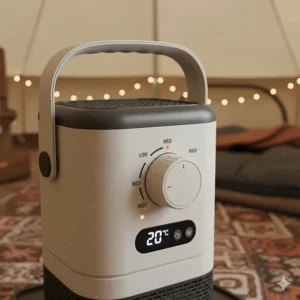
Proper care extends heater lifespan and maintains safety features.
Seasonal Maintenance Checklist
Before each trip:
- Inspect for cracks, damage, rust
- Test ignition system
- Clean heating elements
- Check hoses for leaks (soapy water test)
- Verify safety sensors function
After each trip:
- Clean exterior and heating surfaces
- Dry thoroughly before storage
- Remove fuel canisters
- Store in cool, dry location
Storage Best Practices
Never store propane heaters with fuel attached. Temperature fluctuations can cause leaks or pressure issues. Keep heaters in original boxes or protective cases to prevent damage during off-season.
For propane cylinders, store upright in well-ventilated areas away from heat sources. Check local regulations—some areas restrict propane storage in certain locations.
Common Mistakes to Avoid
Oversizing Your Heater
Bigger isn’t always better. An 18,000 BTU heater in a 2-person tent creates dangerous conditions—excessive carbon monoxide, rapid oxygen depletion, and fuel waste. Match BTU output to tent volume using the formulas provided earlier.
Ignoring Altitude Effects
This is especially important at high altitudes, where the risk of carbon monoxide poisoning is increased. Oxygen sensors may malfunction above 7,000-9,000 feet. Some heaters struggle to maintain pilot lights in thin air.
Neglecting Sleeping Bag Quality
Your heater shouldn’t replace proper cold-weather sleeping gear. A quality sleeping bag rated for expected temperatures ensures safety even if your heater fails. Think of heaters as comfort enhancers, not primary warmth sources.
Blocking Vents
Campers sometimes block tent vents to retain heat—this is extremely dangerous. Proper ventilation saves lives. The slight heat loss is worth the safety benefit.
❓ FAQ: Your Tent Heater Questions Answered
❓ Can you safely use a propane heater in a tent?
❓ How many BTU do I need to heat a 4-person tent?
❓ Are battery powered heaters good for tent camping?
❓ What's the safest type of tent heater?
❓ How long will a 1 lb propane tank last on a tent heater?
Conclusion: Finding Your Perfect Camping Companion
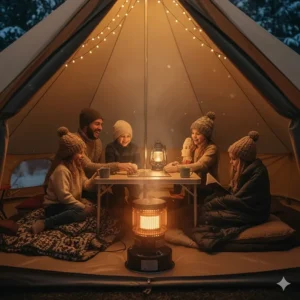
The right tent heater for camping transforms cold-weather adventures from endurance tests into comfortable experiences. Whether you choose the versatile Mr. Heater Portable Buddy for its proven reliability, the budget-friendly Campy Gear Chubby for dual functionality, or the safe Lasko Ceramic for hookup camping, prioritize safety above all else.
Remember these key takeaways:
Match BTU to tent size using the formulas provided
⚠️ Never compromise on safety features—ODS and tip-over protection are essential
Ventilation isn’t optional—it’s the difference between comfort and tragedy
Choose fuel type based on camping style and location
Proper placement prevents fires and maximizes efficiency
Cold-weather camping doesn’t mean suffering through frigid nights. With the right tent heater for camping and proper safety protocols, you’ll stay toasty while enjoying nature’s winter beauty. Just remember: your heater is a tool for comfort, not a replacement for proper cold-weather gear and common sense.
Ready to extend your camping season? Choose your heater wisely, follow safety guidelines religiously, and prepare for countless warm memories under the stars—even when temperatures drop below freezing.
Stay warm, stay safe, and happy camping! ️
Recommended for You
- 7 Best Propane Heater for Camper: Expert Guide 2025
- Top 7 Childrens Camping Equipment: Expert Guide 2025
- Childrens Camping Chair: 7 Best Picks That Kids Love
Disclaimer: This article contains affiliate links. If you purchase products through these links, we may earn a small commission at no additional cost to you.
✨ Found this helpful? Share it with your friends!
