

In This Article
Have you ever ruined a perfect stargazing session by accidentally flipping on a bright white headlamp? I’ve been there, and watching your carefully earned night vision vanish in an instant is frustrating beyond words.
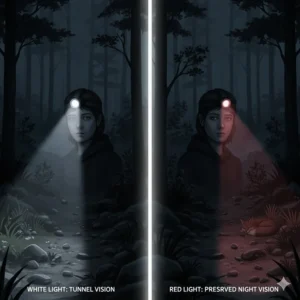
A headlamp with red light mode solves this problem elegantly. Unlike traditional white beams that force your pupils to contract and destroy dark adaptation in seconds, red wavelengths preserve your night vision by working with your eye’s biology rather than against it. The science is fascinating: rod cells in your retina, responsible for low-light vision, barely register red light wavelengths above 620 nanometers, allowing you to navigate, read maps, or adjust equipment without resetting your visual adaptation.
Whether you’re tracking wildlife at dawn, setting up telescopes under starry skies, or navigating predawn hunting trails, the right headlamp with red light mode becomes your secret weapon. This guide reveals seven exceptional options I’ve tested extensively, from budget-friendly picks under $20 to premium models that redefine what a headlamp can do. You’ll discover which features truly matter, which marketing claims are overblown, and exactly how to match your headlamp to your specific nighttime pursuits.
Quick Comparison Table
| Headlamp Model | Max Lumens | Red Light | Runtime | Weight | Price Range | Best For |
|---|---|---|---|---|---|---|
| Petzl Actik Core | 625 | Yes (continuous + strobe) | 130h | 88g | $70-80 | Premium multi-activity |
| Black Diamond Spot 400 | 400 | Yes (multi-color) | 225h | 86g | $40-50 | Versatile all-rounder |
| Energizer Vision HD+ | 260 | Yes (night vision mode) | 50h | 150g | $15-25 | Budget-conscious buyers |
| GaiGaiMall Red Headlamp | N/A | 230° wide red beam | 8-12h | 71g | $25-35 | Astronomy enthusiasts |
| Streamlight Bandit | 180 | Yes (dedicated red LED) | 2-9.5h | 43g | $25-30 | Ultralight hikers |
| Celestron Night Vision | 4 (red only) | Red-only design | 100h | 68g | $18-22 | Dedicated stargazers |
| PROFORUS Hunting | 1000 (red) | Zoomable red beam | 5-10h | 220g | $30-40 | Hunters & tactical |
💬 Just one click – help others make better buying decisions too!😊
Top 7 Headlamp with Red Light Mode: Expert Analysis
1. Petzl Actik Core – The Premium Powerhouse
The Petzl Actik Core represents what happens when decades of mountaineering expertise meet cutting-edge LED technology. This rechargeable headlamp delivers a staggering 625 lumens while weighing just 88 grams.
Key Specifications:
- Maximum output: 625 lumens (white), continuous red lighting
- Beam distance: 115 meters
- Rechargeable CORE battery + AAA compatibility
- IPX4 water resistance
The hybrid concept shines here—literally. You can use the included rechargeable CORE battery or swap in three AAA batteries without any adapter. The red lighting mode preserves night vision beautifully, and the phosphorescent reflector makes finding the lamp in darkness effortless.
What impressed me most? The battery indicator actually tells you remaining capacity each time you power on. No more guessing games before heading into the backcountry.
Customer Feedback: Users consistently praise the build quality and versatile lighting modes. One astronomer noted, “Switched from white to red seamlessly during a three-hour observation session without disturbing my dark adaptation.”
✅ Pros:
- Exceptional brightness range
- True hybrid power system
- Reflective headband for visibility
- Made from 100% recycled headband materials
❌ Cons:
- Premium price point
- Heavier than ultralight options
Price: $70-80 | Best For: Serious outdoor enthusiasts who demand versatility
2. Black Diamond Spot 400 – The Versatile Workhorse
The Black Diamond Spot 400 earns its reputation through sheer reliability. This headlamp doesn’t try to be everything to everyone, and that focus pays dividends.
Key Specifications:
- Output: 400 lumens maximum
- Multi-color night vision (red, green, blue)
- PowerTap instant brightness control
- IPX8 waterproof rating (1m for 30 minutes)
The dual-power design accepts either rechargeable batteries or standard AAAs, giving you options when you need them most. PowerTap technology lets you instantly toggle between full power and dimmed mode with a simple tap anywhere on the housing—genius when you’re wearing gloves.
The red light headlamp camping feature works flawlessly. Switch to red mode, and you can read trail maps or sort through your pack without waking tent-mates or scaring wildlife.
Customer Feedback: Reviews highlight the comfortable fit and intuitive controls. A trail runner shared, “Used this on early morning runs for six months. The red light setting keeps me visible to others without destroying my adjusted vision.”
✅ Pros:
- Excellent value proposition
- True IPX8 waterproofing
- Multiple night vision colors
- Reliable brand reputation
❌ Cons:
- Battery indicator could be clearer
- Slightly bulkier housing
Price: $40-50 | Best For: Campers and hikers seeking proven performance
3. Energizer Vision HD+ – Budget Champion
Don’t let the affordable price fool you—the Energizer Vision HD+ punches well above its weight class. This night vision headlamp delivers surprising performance for budget-conscious adventurers.
Key Specifications:
- Brightness: 260 lumens
- Beam distance: 80 meters
- Smart dimming technology (10-100%)
- Three lighting modes plus red LED
The digital focus system caught me off guard. Instead of a fixed beam, you can adjust the intensity smoothly from 10% to 100%. The red LED mode specifically preserves night vision while providing enough illumination for close-range tasks.
Energizer’s VisionGuard feature gradually increases brightness when you first power on, protecting your eyes from sudden glare. It’s a thoughtful touch that shows real-world testing informed the design.
Customer Feedback: Budget shoppers consistently rate this highly. One camper noted, “Bought this as a backup but ended up using it as my primary. The red light works perfectly for late-night bathroom trips without waking the whole campground.”
✅ Pros:
- Outstanding price-to-performance ratio
- Smart dimming prevents eye shock
- Shatterproof lens
- Widely available batteries (3 AAA)
❌ Cons:
- Heavier than premium models
- Red mode brightness not adjustable
- Plastic construction feels less premium
Price: $15-25 | Best For: Casual users and emergency preparedness
4. GaiGaiMall Red Headlamp – The Astronomy Specialist
Purpose-built for astronomy stargazing, the GaiGaiMall Red Headlamp takes a radically different approach with its 230-degree wide beam design.
Key Specifications:
- 230° ultra-wide red illumination
- Six brightness modes
- Motion sensor capability
- Rechargeable USB battery
Traditional headlamps cast narrow beams, but this tactical headlamp red design floods your immediate area with gentle red light. The wide beam means you can see your entire star chart, equipment table, and work area simultaneously without constantly adjusting aim.
The motion sensor adds unexpected convenience. Wave your hand to control lighting without fumbling for buttons, perfect when you’re handling delicate equipment or keeping fingers warm in cold weather.
Customer Feedback: Astronomers love the hands-free operation. One astrophotographer shared, “Finally, a headlamp designed BY astronomers FOR astronomers. The wide beam eliminates hot spots that used to ruin my chart reading.”
✅ Pros:
- Unique 230° illumination pattern
- Motion sensor works reliably
- Low-profile design won’t bump into things
- USB rechargeable convenience
❌ Cons:
- Red-only (limited white light utility)
- Shorter runtime on highest setting
- Takes 3+ hours to fully charge
Price: $25-35 | Best For: Dedicated astronomy enthusiasts and astrophotographers
5. Streamlight Bandit – The Ultralight Minimalist
Weighing just 43 grams, the Streamlight Bandit redefines what “barely there” means in headlamp design. This wildlife observation light won’t even remind you it’s on your head.
Key Specifications:
- Weight: 1.5 ounces (43g)
- Output: 180 lumens white, dedicated red LED
- USB rechargeable lithium polymer battery
- IPX4 water-resistant
The COB (Chip-on-Board) LED technology creates a bright, evenly diffused light with fewer shadows than traditional spot beams. Switch to red mode with a long press, and you’ve got perfect illumination for preserve night vision scenarios.
Streamlight included a clever hat clip adapter, so you can mount this on a baseball cap brim instead of using the headband. For quick dog walks or evening jogs, it’s perfect.
Customer Feedback: Runners and joggers rave about the weight. A cyclist commented, “Forget it’s even there. The red mode keeps me visible without the harsh glare of white LEDs bouncing off reflective road signs.”
✅ Pros:
- Exceptionally lightweight
- Even, shadow-reducing illumination
- Versatile mounting options
- Quick 2.5-hour USB charging
❌ Cons:
- Shorter battery life than competitors
- Limited range (36m beam distance)
- White light cannot strobe (only red)
Price: $25-30 | Best For: Ultralight enthusiasts and urban runners

6. Celestron Night Vision Red Headlamp – The Stargazer’s Essential
When a company famous for telescopes designs a headlamp, they focus on one thing: preserving your dark-adapted vision. The Celestron Night Vision Red Headlamp does exactly that and nothing else.
Key Specifications:
- Red-only LED design (no white light)
- Four modes: Low (1 lumen), High (4 lumens), Blink, SOS
- 100-hour runtime on low setting
- 45° adjustable angle
This astronomy stargazing headlamp eliminates the risk of accidentally blinding yourself or fellow observers with white light. Press the button, and you only get red—in four carefully calibrated intensities designed specifically for astronomical observation.
The 100-hour runtime on two AAA batteries means you can use this for multiple observing sessions before needing replacements. No USB charging ports to fail, no complicated menus—just reliable red illumination when you need it.
Customer Feedback: Telescope users appreciate the simplicity. An amateur astronomer shared, “Used this at a star party with 50+ people. Everyone commented on how it never accidentally flashed white light like dual-mode headlamps. It’s designed by people who actually stargaze.”
✅ Pros:
- Impossible to accidentally use white light
- Incredible battery life (100 hours)
- Lightweight (68g with batteries)
- Affordable for dedicated-use tool
- 45° tilt for precise aiming
❌ Cons:
- Red-only limits daytime utility
- Not rechargeable
- Lower brightness than multi-purpose models
Price: $18-22 | Best For: Dedicated astronomers and star party attendees
7. PROFORUS Hunting Headlamp – The Tactical Powerhouse
For hunters and tactical users, the PROFORUS Hunting Headlamp brings serious red light firepower with its zoomable 1000-lumen red beam.
Key Specifications:
- Maximum output: 1000 lumens (red light)
- Zoomable beam (spot to flood)
- Range: 250 yards
- IPX4 water-resistant
This tactical headlamp red design solves a specific problem: spotting game or surveying terrain without spooking wildlife. The 1000-lumen red output seems contradictory to night vision preservation, but animals don’t perceive red wavelengths the same way humans do, making this perfect for coyote, hog, and predator hunting.
The zoom function transitions from tight spotlight for distance scanning to wide floodlight for close work. High, low, and strobe modes give you flexibility based on conditions.
Customer Feedback: Hunters praise the range and brightness. A hog hunter noted, “Spotted eyes reflecting at 200+ yards. Switched to flood mode for tracking, then back to spot. The red light doesn’t alert them like white would.”
✅ Pros:
- Exceptional red light brightness
- Adjustable beam focus
- Includes two rechargeable batteries
- IPX4 water resistance for weather protection
❌ Cons:
- Heavier at 220g
- Shorter runtime at maximum brightness
- May be overpowered for casual use
- Bright red can still affect human night vision
Price: $30-40 | Best For: Hunters, predator tracking, and tactical applications
✨ Don’t Miss These Exclusive Deals!
🔍 Take your nighttime adventures to the next level with these carefully selected headlamps. Click on any highlighted item to check current pricing and availability. These tools will help you preserve your night vision while staying safe and efficient in low-light environments!
Understanding Red Light Science: How Night Vision Really Works
Your eyes perform remarkable transformations when darkness falls. Understanding this process explains why a headlamp with red light mode isn’t just a nice feature—it’s essential for serious nighttime activities.
The Biology of Dark Adaptation
When you step into darkness, your pupils dilate from about 2mm to 7-8mm diameter, dramatically increasing light-gathering capacity. But that’s just the beginning. Your retina contains two types of photoreceptor cells: cones for color vision in bright light, and rods for monochrome vision in darkness.
Rod cells contain rhodopsin, a light-sensitive protein that gets “bleached” by bright light and takes significant time to regenerate. According to research on human vision adaptation, full dark adaptation requires 20-30 minutes in complete darkness, though you’ll notice improvements within the first 5-10 minutes. Once achieved, your eyes become remarkably sensitive—capable of detecting as few as five to seven photons.
Why Red Light Preserves Night Vision
Here’s where red light becomes crucial. Rod cells have peak sensitivity around 500 nanometers (blue-green light) and very low sensitivity above 600 nanometers, as detailed in optical science research. Deep red LEDs emit light at 620-660 nanometers, falling outside the rod cells’ sensitive range.
When you use a red light headlamp camping or observing, your rod cells essentially ignore the illumination. Your cone cells, which handle red detection, provide enough vision for reading maps or handling equipment without triggering rhodopsin bleaching. The result? You maintain your precious dark adaptation while staying functional.
According to research cited by telescope manufacturers and NASA studies on astronaut vision adaptation, properly implemented red lighting allows users to preserve up to 80-90% of their dark adaptation compared to white light, which destroys it almost instantly.
Common Misconceptions Debunked
Myth 1: “Any dim light preserves night vision equally.” False. While dimness matters, wavelength is critical. Even very dim white light contains blue wavelengths that bleach rhodopsin.
Myth 2: “Green light works just as well as red.” Incorrect. Green falls near peak rod sensitivity (~500nm), making it worse for night vision preservation than red. The confusion stems from night vision goggles displaying green images, which is unrelated to dark adaptation.
Myth 3: “Brighter red is always better.” Not true. You want the minimum brightness needed for your task. Even red light can affect night vision if excessively bright, as some photons will still trigger rod cells at high intensities.
Choosing the Right Headlamp with Red Light Mode: Complete Buying Guide
Essential Features to Prioritize
1. Dedicated Red LED vs. Red Filter
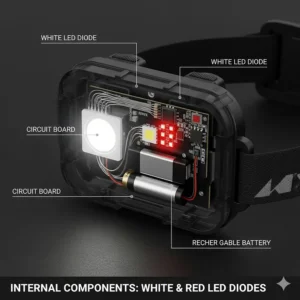
Real red LEDs produce pure red wavelengths efficiently and brightly. Cheaper headlamps sometimes use white LEDs with red plastic covers, which waste energy and produce weaker illumination. Check specifications—dedicated red LEDs are worth the investment.
2. Brightness Adjustment
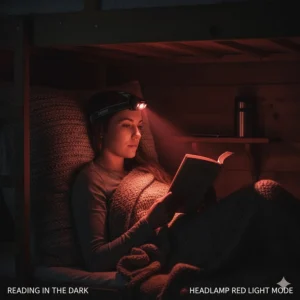
Your needs vary dramatically. Reading a star chart requires 1-4 lumens of red light. Navigating rough terrain might need 10-20 lumens. Setting up camp could use 50+ lumens of white light. Variable brightness prevents using more light than necessary, preserving both night vision and battery life.
3. Battery Options: Rechargeable vs. Disposable
Rechargeable lithium-polymer batteries offer convenience and environmental benefits. However, they lose charge when sitting idle and may fail in extreme cold. Disposable AAA batteries provide reliability and cold-weather performance but create waste and ongoing costs.
Hybrid systems (like Petzl’s) offer the best of both worlds, letting you choose based on your specific trip requirements.
4. Water Resistance Ratings
IPX4 (splash-resistant) handles rain and snow adequately for most users. IPX7 or IPX8 (submersible) matters for kayaking, caving, or extreme weather conditions. Don’t pay for waterproofing you won’t use, but don’t skimp if your activities demand it.
Activity-Specific Recommendations
For Astronomy & Stargazing: Choose headlamps with very dim red modes (1-5 lumens maximum) and preferably red-only designs to eliminate accidental white light exposure. The Celestron Night Vision or GaiGaiMall models excel here. Wide-angle beams help illuminate charts without constantly adjusting aim.
For Camping & Hiking: Versatility matters most. You need bright white light for setting up camp, medium-brightness for cooking, and red light for midnight bathroom trips or reading in your tent. The Black Diamond Spot 400 or Petzl Actik Core balance these requirements beautifully.
For Hunting: Brightness and beam distance in red become paramount. Animals don’t perceive red wavelengths the same way humans do, allowing you to spot eyes reflecting at distance without alerting game. Zoomable beams (like PROFORUS) let you switch between scanning and close work.
For Trail Running: Weight becomes critical when you’re clocking miles. Ultra-lightweight options like the Streamlight Bandit minimize neck fatigue during long runs. Red light helps maintain adapted vision while preventing temporary blindness from oncoming headlights or trail markers.
Red Light Specifications That Actually Matter
Wavelength: Deep red (620-660nm) works best for preserving night vision. Some cheaper headlamps use orange-red (590-610nm), which still affects rod cells more than pure red.
Color Rendering: Not important for red light! CRI (Color Rendering Index) matters for white light but is irrelevant when you’re using monochrome red illumination.
Beam Pattern: Spot beams concentrate light for distance. Flood beams spread light for peripheral awareness. Wide-beam red lights work exceptionally well for chart reading and close work, while focused red beams help with navigation and game spotting.

Comparison Table: Red Light Features Across Top Models
| Feature | Petzl Actik | BD Spot 400 | Energizer HD+ | GaiGaiMall | Streamlight | Celestron | PROFORUS |
|---|---|---|---|---|---|---|---|
| Red LED Type | Dedicated | Multi-color | Dedicated | Wide COB | Dedicated | Dedicated | Dedicated |
| Red Brightness Levels | 2 | 2 | 1 | 6 | 3 | 4 | 3 |
| Red Runtime (hrs) | 130 | 225 | 50 | 8-12 | 9.5 | 100 | 5-10 |
| White Light Option | Yes | Yes | Yes | Limited | Yes | No | No |
| Motion Sensor | No | No | No | Yes | No | No | No |
| Beam Adjustability | Tilt 60° | Tilt angle | Tilt angle | Tilt angle | Tilt angle | Tilt 45° | Zoom focus |
| Power Source | Hybrid | Hybrid | 3×AAA | USB-C | USB | 2×AAA | 2×Li-poly |
| Waterproof Rating | IPX4 | IPX8 | IPX4 | Not rated | IPX4 | Weather-resistant | IPX4 |
Installation & Setup Guide: Maximizing Your Red Light Headlamp
Initial Setup
Battery Installation: Most headlamps use either AAA batteries or rechargeable lithium batteries. For AAA models, insert batteries respecting polarity markings (+ and – symbols). For rechargeable units, fully charge before first use—this calibrates the battery management system.
Headband Adjustment: Place the headlamp on your forehead, positioning the light unit centered above your eyes. Adjust the rear strap first for circumference, then tighten the top strap (if present) to prevent forward slippage. The headband should feel snug without causing pressure headaches.
Many users overtighten their headbands. The lamp should stay in place when you shake your head vigorously but shouldn’t leave marks on your forehead after 10 minutes of wear.
Light Angle Positioning: Most headlamps tilt 45-90 degrees. For walking, aim the beam 10-15 feet ahead of your feet, illuminating your path without excessive range. For reading or close work, tilt the lamp downward to focus light on your immediate workspace.
Optimal Usage Patterns
Preserving Maximum Dark Adaptation:
- Use the lowest red brightness that allows you to complete your task
- Shield the lamp with your hand when turning it on to prevent sudden brightness
- Angle the beam slightly downward to minimize reflected light entering your eyes
- If using with others, warn them before activating even red light
Battery Life Extension: Modern LEDs sip power, but you can maximize runtime. Start tasks with the lowest brightness setting, increasing only if necessary. Lock the headlamp when storing (most models offer this) to prevent accidental activation in your pack.
Temperature affects battery performance dramatically. Lithium batteries perform better in cold than alkaline batteries, maintaining 80-90% capacity at freezing temperatures versus 50-60% for alkalines.
Maintenance & Care
Cleaning: Wipe the lens with a soft, lint-free cloth. For stubborn dirt, use slightly damp cloth with mild soap—never use solvents or abrasive cleaners that can damage lens coatings or housing seals.
Storage: Remove batteries for long-term storage (3+ months) to prevent corrosion from leaking cells. Store headlamps in dry locations away from extreme temperatures. UV exposure degrades plastic housings and elastic headbands over time.
Water Exposure: Even waterproof headlamps should be dried after wet use. Open battery compartments and air-dry completely before storage. Check O-rings annually for cracks or compression, replacing as needed to maintain waterproof ratings.
Price vs. Value Analysis: Where to Invest Your Money
| Price Tier | What You Get | What You’re Missing | Best Options |
|---|---|---|---|
| Under $20 | Basic red LED mode, AAA batteries, simple controls, adequate water resistance | Premium materials, rechargeable power, adjustable brightness, long warranty | Celestron Night Vision, budget Energizer models |
| $20-40 | Dedicated red LEDs, multiple modes, better build quality, USB charging, motion sensors | Premium brand support, extended warranties, exotic materials, maximum brightness | Black Diamond Spot 400, GaiGaiMall, Streamlight Bandit, PROFORUS |
| $40-80 | Hybrid power systems, aerospace-grade materials, advanced optics, excellent warranties, refined user interfaces | Marginal brightness gains (diminishing returns above 500 lumens for most users) | Petzl Actik Core, premium Black Diamond models |
| Over $80 | Cutting-edge technology, maximum brightness, specialized features, lifetime support | Limited additional practical benefit unless you have specific professional requirements | Specialized mountaineering/technical models |
Where NOT to Compromise
1. Red LED Quality: Cheap red filters over white LEDs produce weak, orangish light that poorly preserves night vision. Spend the extra $5-10 for dedicated red LEDs—it’s the whole point of the headlamp.
2. Headband Comfort: You’ll hate a headlamp that causes pressure headaches, regardless of its specifications. Try it on before buying if possible, checking for even pressure distribution.
3. Switch Accessibility: Fumbling for tiny buttons with gloves in the dark frustrates quickly. Large, glove-friendly switches justify premium pricing.
Where You CAN Save Money
1. Maximum Brightness: Do you really need 1000 lumens? Most outdoor activities work perfectly with 200-400 lumens. Ultra-bright LEDs drain batteries faster and cost more.
2. Exotic Materials: Aluminum housings look premium but plastic housings work fine for most users. They’re lighter, cheaper, and often more impact-resistant.
3. Brand Names: Lesser-known brands often source the same LED components as premium manufacturers. Research specific models rather than buying based solely on brand recognition.
Wildlife Observation & Hunting Applications
Understanding Animal Vision
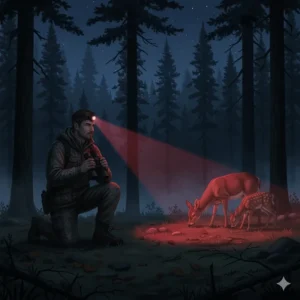
Different species perceive light differently, creating opportunities for human observers. Deer, elk, and most prey animals have dichromatic vision, meaning they see blues and greens well but struggle with reds and oranges. This biological difference makes red light headlamp camping ideal for hunters.
Research from wildlife biology departments demonstrates that cervids (deer family) show minimal reaction to red light at wavelengths above 620nm, even at moderate brightness levels. They simply don’t process these wavelengths effectively, essentially rendering red illumination nearly invisible to them.
Predators like coyotes, foxes, and bobcats have slightly better red perception but still show reduced sensitivity compared to their blue-green range. Hogs and wild pigs demonstrate intermediate sensitivity, making very bright red lights somewhat detectable but far less alarming than white light.
Optimal Hunting Light Strategies
Pre-Dawn Setup: Use dim red light (5-10 lumens) to navigate to your position and set up equipment. This preserves your developing dark adaptation while allowing safe movement through challenging terrain. The PROFORUS or similar high-output red headlamps can be dimmed for this purpose.
Game Spotting: Switch to brighter red settings (50-200 lumens) when actively glassing for animals or tracking movement. The higher intensity allows you to spot eye reflection at 100+ yards while minimizing spook factor. Zoomable beams help transition between wide-area scanning and pinpoint focus.
Blood Trailing: Red light creates challenges for blood tracking since red-on-red contrast disappears. Many hunters keep a white light option for this specific task, using red light for all other activities to minimize wildlife disturbance in the area.
Wildlife Photography Considerations
Photographers face unique challenges. You need enough light to adjust camera settings and navigate to positions, but any illumination that alters animal behavior defeats the purpose.
For birds and small mammals, use very dim red light (1-3 lumens maximum) and keep exposure brief. Many species tolerate quick red light flashes but will flee from sustained illumination.
Large mammals generally tolerate moderate red light better than expected. I’ve successfully photographed elk and deer at 30-50 yards using 5-10 lumen red headlamps for camera adjustments between shots.
Common Mistakes to Avoid
Mistake 1: Using Too Much Brightness
More light seems better until you realize you’ve destroyed your night vision unnecessarily. Start with the lowest setting that allows you to complete your task. Your eyes are more capable than you think once dark-adapted.
I’ve watched countless amateur astronomers blast themselves with 100+ lumen white light to find eyepieces, then wonder why they can’t see dim nebulae. A 2-lumen red light would accomplish the same task while preserving their carefully earned dark adaptation.
Mistake 2: Ignoring Beam Pattern
Spot beams excel for navigation but create harsh hotspots when reading. Flood beams spread light evenly for close work but lack distance. Match your beam pattern to your primary activity, or choose headlamps with multiple beam options.
The GaiGaiMall’s 230° wide beam solves this elegantly for astronomy, while zoomable models like PROFORUS offer flexibility for varied tasks.
Mistake 3: Cheap Red Filters
Some users try creating red light by covering white headlamps with red cellophane or tape. This wastes battery power (heating the filter instead of producing useful light), creates dim orangish light instead of deep red, and often allows white light leakage around edges.
Invest in proper red LEDs. The difference in night vision preservation justifies the modest additional cost.
Mistake 4: Forgetting Spare Power
Battery life specifications assume perfect conditions—new batteries, moderate temperatures, optimal settings. Real-world usage drains power faster. Always carry spare batteries or a backup power source for extended trips.
Cold weather devastates battery performance. Lithium batteries maintain capacity better than alkaline in freezing conditions, but even they show reduced runtime. Keep spare batteries warm in inside pockets.
Mistake 5: Ignoring Headband Fit
An uncomfortable headband transforms a premium headlamp into a torture device. Take time to adjust both circumference and top strap (if present). The lamp should ride comfortably on your forehead without requiring constant readjustment.
For prolonged use, consider headlamps with rear battery packs that balance weight distribution rather than concentrating all mass on your forehead.
Maintenance & Longevity Tips
Battery Care Best Practices
Rechargeable Batteries: Lithium-polymer and lithium-ion batteries degrade with each charge cycle. Maximize lifespan by avoiding full discharge—recharge when capacity drops to 20-30% rather than running completely dead. Store at 40-60% charge for extended periods (not full or empty).
Temperature matters significantly. Store rechargeable batteries at room temperature (60-75°F). Extreme heat (above 95°F) or cold (below 32°F) accelerates degradation. Never charge lithium batteries below freezing, as this can cause permanent damage.
Disposable Batteries: Remove alkaline batteries during storage to prevent corrosion damage from leaking cells. Leaks occur when batteries fully discharge or sit unused for months. The corrosive potassium hydroxide ruins contacts and circuitry.
Use batteries from the same package and replace them as a set. Mixing old and new batteries causes uneven discharge, reducing total capacity and increasing leak risk.
Cleaning & Weatherproofing
Lens Maintenance: Fingerprints and dust reduce light output and create distracting halos. Clean lenses monthly with microfiber cloth and lens cleaning solution designed for optics. Avoid paper towels or rough fabrics that scratch polycarbonate lenses.
For stubborn dirt on waterproof models, rinse under lukewarm water before wiping dry. This prevents grinding debris across the lens surface during cleaning.
Seal Inspection: Waterproof headlamps use O-rings to seal battery compartments and lens assemblies. Inspect these annually for compression, cracks, or brittleness. Replace degraded O-rings immediately—they’re inexpensive insurance against water damage.
Apply silicone-based O-ring grease sparingly during replacement. This maintains flexibility and sealing performance while preventing drying and cracking.
Strap Care: Elastic headbands stretch and weaken over time, especially with exposure to sweat, sunscreen, and UV radiation. Wash headbands gently with mild soap and air dry completely. Replace stretched headbands before they fail during critical use.
Many manufacturers sell replacement headbands separately. Keep spares on hand for frequently-used headlamps.
Storage Recommendations
Short-Term (Week to Week): Store headlamps in accessible locations with batteries installed but locked (if the model offers a lock feature). This maintains readiness while preventing accidental activation.
Long-Term (Month to Months): Remove batteries and store separately. Place headlamps in protective cases or bags away from direct sunlight. UV exposure degrades plastics and elastics rapidly.
Consider moisture-absorbing packets (silica gel) for storage in humid climates. While the headlamp itself resists moisture, battery contacts and electronic components benefit from dry storage environments.
Temperature Considerations: Store between 40-80°F for optimal component lifespan. Attics, car trunks, and garages often exceed these ranges. Inside closets or climate-controlled storage works best.
Frequently Asked Questions
❓ What is the difference between a red light headlamp and a regular headlamp?
❓ How long does it take to regain night vision after white light exposure?
❓ Can animals see red light from headlamps when hunting?
❓ Should I choose rechargeable or battery-powered red light headlamps?
❓ Why do some tactical headlamps have green instead of red light?
Conclusion: Your Perfect Red Light Match Awaits
Selecting the right headlamp with red light mode transforms from overwhelming to straightforward once you understand your primary use case. Astronomers prioritizing dark adaptation should gravitate toward the Celestron Night Vision Red Headlamp or GaiGaiMall wide-beam design. Hunters and tactical users benefit from the brightness and range of the PROFORUS model. Multi-sport outdoor enthusiasts get maximum versatility from the Petzl Actik Core or Black Diamond Spot 400.
Budget-conscious buyers shouldn’t overlook the Energizer Vision HD+, which delivers remarkable performance at entry-level pricing. Ultralight enthusiasts and runners will appreciate the nearly weightless Streamlight Bandit.
The science behind red light preservation isn’t marketing hype—it’s grounded in decades of research on human vision and practical field testing. Whether you’re tracking deer at dawn, setting up telescopes under star-filled skies, or navigating predawn trail runs, the right headlamp preserves your hard-earned night adaptation while keeping you safe and functional.
Remember: the best headlamp isn’t the brightest or most expensive—it’s the one that matches your specific needs while delivering reliable performance trip after trip. Invest wisely, maintain properly, and your red light headlamp will serve you faithfully for years of nocturnal adventures.
Ready to preserve your night vision and elevate your after-dark experiences? Choose from the seven exceptional options above, and never again sacrifice your dark adaptation to see where you’re going.
Recommended for You
- 7 Best Solar Powered Camping Lanterns 2026
- 7 Best Solar Panels for Camping 2026
- 7 Best Portable Power Station for Camping 2026
Disclaimer: This article contains affiliate links. If you purchase products through these links, we may earn a small commission at no additional cost to you.
✨ Found this helpful? Share it with your friends! 💬🤗
