In This Article
A double sleeping bag is a single oversized bag built for two adults, usually 59 to 62 inches wide, so partners share body heat under one shell instead of wrestling two singles zipped together. Most are rectangular, aimed at car camping and vans, and insulated with synthetic fill. Simple idea. Messy execution, which is exactly why this guide exists.

It’s late October, the season when couples discover that cozy and warm are two different animals. Shared body heat is real physics, but it only pays off if the bag is wide enough to avoid cold gaps, long enough to spare your toes, and honestly rated for the nights you’ll actually face. Miss one of those and you’ll spend 3 a.m. negotiating custody of the blanket. 🌙
Here’s the plan. We compare seven real models across budget, mid-range, and premium tiers, including options built for a double sleeping bag for cold weather couples and a double sleeping bag for tall couples. We unpack why synthetic fill dominates this category, and we translate spec-sheet jargon into what it means on a frosty campground. Temperature ratings generally follow the ISO 23537 standard, which is a lab baseline built on a heated mannequin, not a promise. Everything below is analysis built on published specs and aggregated reviewer sentiment, not claims of personal testing. Prices are ranges that shift often, so check current price before you buy.
Quick Comparison: The Best Double Sleeping Bag Options at a Glance
| Product | Listed Rating | Fill | Size / Fits Up To | Best For |
|---|---|---|---|---|
| Kelty Tru.Comfort Doublewide 20 | 20°F | CloudLoft synthetic | Fits to 6’6″ | Couples with different temperature needs |
| TETON Sports Mammoth 0°F | 0°F | SuperLoft Elite fiber fill | 94 x 62 in. | Deep-chill car camping, long sleepers |
| Big Agnes Dream Island 15 | 15°F | FireLine Max synthetic | Fits to 6’6″ | Couples who already own a double pad |
| The North Face Dolomite One Double | 15°F (layers combined) | Heatseeker Eco synthetic | 6′ regular, 6’6″ long | Three-season flexibility |
| Coleman Tandem 3-in-1 45 Big and Tall | 45°F | Coletherm hollow polyester | Fits to 6’4″ | Budget buyers who may split the bag |
| KingCamp XXL Flannel | 32°F and above | Thick flannel quilt design | 87 x 59 in. | Value seekers wanting extra width |
| Forinbuy 0 Degree Flannel Double | Name says 0°F | 3D fiber, 450 GSM | 90 x 59 in. | Cold-weather car campers who accept bulk |
Reading across the table, the Kelty Tru.Comfort Doublewide 20 and The North Face Dolomite One Double offer the most sophisticated temperature control, while the TETON Sports Mammoth 0°F and Forinbuy 0 Degree Flannel Double trade packability for brute warmth and length. Budget buyers should note that the Coleman Tandem 3-in-1 45 Big and Tall and KingCamp XXL Flannel give up cold-weather headroom, with listed ratings of 45°F and 32°F-and-above respectively. One reality check on every number here: brands don’t measure ratings identically, and at least one of these bags lists no lab comfort figure at all, so treat the table as a shortlist, not a verdict.
💬 Just one click — help others make better buying decisions too!😊
Top 7 Double Sleeping Bag Picks: Expert Analysis
1. Kelty Tru.Comfort Doublewide 20 — best for couples with mismatched thermostats
Each sleeper gets a built-in blanket and a foot vent, which turns the classic midnight blanket war into a diplomatic non-event.
The listed 20°F rating rides on roughly 99 to 103 ounces of CloudLoft synthetic fill inside a 75D polyester taffeta shell. In practice that means serious loft and serious bulk: about 9 lb 8 oz, stuffing to roughly 15 by 23 inches, and fitting sleepers up to 6’6″. It’s a trunk bag, not a trail bag. The oversized hood takes two standard home pillows, a detail that sounds trivial until a rolled-up jacket ruins your neck.
Based on the spec comparison, this is the strongest all-rounder for couples with different heat needs, because the blankets and vents let one person vent while the other stays sealed. One caution: a retailer labels the 20°F figure a limit rating with no lab comfort number, and one gear site advises adding five to ten degrees for real comfort. Reviewers consistently praise the roominess and pillow-friendly hood, and one reported staying comfortable near 30°F. A common complaint is packed size, and at least one couple reported shivering near 37°F despite a pad and layers, a reminder that the pad matters as much as the bag.
Pros:
- ✅ Individual blankets and foot vents for each sleeper
- ✅ Hood fits two standard pillows
- ✅ Fits sleepers up to 6’6″
Cons:
- ❌ Heavy and bulky, strictly car camping
- ❌ Real comfort limit sits above the 20°F label
Price: around $200-$220 at the time of research; prices vary. Verdict: worth it if temperature control is your priority.
2. TETON Sports Mammoth 0°F — king-size warmth for deep-chill nights
At 94 by 62 inches, this thing is longer and wider than a queen mattress, which is less a sleeping bag than a portable bedroom.
A soft poly-flannel lining, a tear-resistant taffeta shell, and double-layer construction with draft tubes at the zipper and shoulders do the heavy lifting. A retailer listing names SuperLoft Elite fiber fill, and the whole package weighs about 16.5 lb, arriving with a compression sack. That weight is the honest price of the flannel plush: on paper it means the cold-night entry shock is gentler, but you’ll need real trunk space. The generous length also makes it a natural fit for a double sleeping bag for tall couples.
Looking at the numbers, this is the choice when width and length matter more than portability. Listing data at the time of research showed about 4.7 out of 5 across a couple thousand ratings, and reviewers repeatedly describe it as huge, plush, and warm. The recurring gripe is wrestling it back into the sack. One roundup noted buyers still feeling cold near 20°F, so read the 0°F label as optimistic and pair it with a proper pad.
Pros:
- ✅ Enormous 94 by 62 inch footprint
- ✅ Soft flannel lining feels like home
- ✅ Draft tubes and double-layer build
Cons:
- ❌ About 16.5 lb, vehicle use only
- ❌ Awkward to restuff into the sack
Price: around $150-$220 depending on retailer and temperature version. Verdict: strong value for a roomy, cold-leaning bag.
3. Big Agnes Dream Island 15 — pad sleeve that stops midnight sliding
Instead of insulating the underside, this bag zips onto your pad, so you stay planted and the pad does the ground-insulation job.
The synthetic fill is FireLine Max (about 63 ounces in the 15°F version), the total weight is roughly 7.56 lb, and the compressed size is listed around 10.5 by 11.5 inches, noticeably tidier than the plush flannel giants. It fits up to 6’6″, with hand pockets, a pillow pocket, and double zippers that let the top open like a comforter. The trade-off is built in: with minimal bottom insulation, a weak pad means a cold night, so budget for a double pad or a pair of singles.
Our analysis: this is the most system-minded design here, ideal for couples who already own, or plan to buy, a good double pad. The review pool is small. One retailer listing for the 20°F sibling showed about 4.9 stars across just eight reviews, and one buyer acknowledged it’s big and synthetic but loved the sleeve with a double pad. Availability varies by size and season, with 20°F and 35°F versions also made.
Pros:
- ✅ Pad sleeve prevents sliding off
- ✅ Packs smaller than flannel rivals
- ✅ Top unzips into a comforter
Cons:
- ❌ Needs a good pad purchased separately
- ❌ Small review pool, availability varies
Price: mid-$200s to around $300 range. Verdict: premium value if you want a true sleep system.
4. The North Face Dolomite One Double — three bags in one modular build
Two stacking layers, rated about 50°F and 30°F, combine for a listed 15°F, so one purchase covers summer, shoulder season, and cold snaps.
The synthetic fill is Heatseeker Eco in a 50D polyester taffeta shell with a non-PFC water-repellent finish, plus a fleece-lined mid layer. It weighs 8 lb 13 oz in regular and 9 lb 7 oz in long, with internal lengths of 77 and 83 inches and max heights of 6′ and 6’6″. That makes the long version a smart pick for a double sleeping bag for tall couples, while the zippers opening from the bottom allow venting.
On paper the layering is the story: the hot sleeper can shed the top layer while the cold sleeper stays buried. Reviewers like the adjustable layers and fleece lining, and one couple with opposite temperature preferences praised unzipping one side. The common complaint is packed size, with one reviewer measuring roughly 14 by 20 inches for a stuff sack the listing didn’t fully specify, though others found it less bulky than two singles.
Pros:
- ✅ Layers adapt from summer to 15°F
- ✅ Soft fleece lining and bottom venting
- ✅ Long size fits up to 6’6″
Cons:
- ❌ Pricier than flannel rivals
- ❌ Packed size is unwieldy for some
Price: around $260-$290 range. Verdict: the best long-term value if you camp across seasons.
5. Coleman Tandem 3-in-1 45 Big and Tall — budget flexibility that splits in two
The 3-in-1 design zips apart into two separate bags, so the purchase stays useful even if one partner’s plans change.
It uses Coletherm hollow polyester, fits most people up to 6’4″, and adds a ZipPlow zipper system to avoid snags, a ComfortCuff around the head area, and a detachable sheet. Rated 45°F, it’s machine washable, a huge practical bonus for family-friendly camping. That rating, though, is the honest ceiling: this is a summer and mild-shoulder-season bag, not a late-October frost bag unless you layer heavily.
Our analysis: buy this for flexibility and low risk, not for cold. Roundups consistently praise the versatility of zipping apart, and the washability is a quiet value. Reported complaints include bulk when rolled and a sheet attachment that could be more secure, and the 45°F rating is the main drawback. Price sits in the budget tier, but we couldn’t verify an exact range, so check current price.
Pros:
- ✅ Zips apart into two single bags
- ✅ Machine washable
- ✅ Fits most people up to 6’4″
Cons:
- ❌ 45°F rating limits cold use
- ❌ Bulky when rolled up
Price: budget tier; check current price. Verdict: a safe starter pick for warm-weather couples.
6. KingCamp XXL Flannel — extra width without the premium price
At roughly 87 by 59 inches, this flannel quilt-style bag leans into extra width for sprawlers.
The manufacturer lists a 32°F-and-above rating, extra-thick construction, double-sided anti-snag zippers, a Velcro neckline, and foot zippers for venting. It also zips apart into two bags. The manufacturer claims it suits adults up to 7 feet, yet an independent roundup describes 86.6 by 59 inches as standard for the category, so treat the height claim as generous and test the fit if you’re near 6’4″ or taller.
From an analytical view, this is a value play for couples camping above freezing. Roundups position it as the budget pick, but we couldn’t verify a large pool of review detail, so reviewer sentiment here is thinner than for the others. The foot zippers are a smart touch that helps hot sleepers, and the zip-apart option adds flexibility.
Pros:
- ✅ Foot zippers for easy venting
- ✅ Zips apart into two bags
- ✅ Budget-friendly flannel comfort
Cons:
- ❌ 32°F rating limits real cold use
- ❌ Height claim looks optimistic
Price: under about $150 range. Verdict: solid value for mild-weather trips.
7. Forinbuy 0 Degree Flannel Double — longest rectangular footprint on the list
The 90-inch length is the standout, a real asset for taller couples who hate curling up.
It’s listed at 90 by 59 inches, with a heavy 450 GSM 3D fiber fill and double-sided zippers. One roundup lists it at about 12 lb and calls it serious insulation for cold-weather car campers who can handle the bulk, while advising mild-weather campers to skip it. A caution: the name says 0 degree, yet that same roundup’s table lists 32°F, so don’t count on true 0°F performance.
What that means for you: this is the bag where length and thickness beat portability, and it’s more of a bed-in-a-bag than a trail piece. We couldn’t verify a deep pool of individual reviews, so sentiment here rests on roundup analysis rather than large-sample aggregation. It makes the most sense for couples where one partner needs the extra inches.
Pros:
- ✅ 90-inch length suits taller sleepers
- ✅ Thick 450 GSM fiber fill
- ✅ Double-sided zippers for easy entry
Cons:
- ❌ Name overstates true cold performance
- ❌ Heavy and bulky to pack
Price: check current price; mid-range tier. Verdict: good if length is your priority.
Spec and Price Snapshot
| Product | Weight (as listed) | Price Range | Reviewer Sentiment |
|---|---|---|---|
| Kelty Tru.Comfort Doublewide 20 | 9 lb 8 oz | ~$200-$220 | Roomy, pillow-friendly, bulky |
| TETON Sports Mammoth 0°F | 16.5 lb | ~$150-$220 | Plush and warm, hard to restuff |
| Big Agnes Dream Island 15 | 7.56 lb | Mid-$200s to ~$300 | Few reviews, pad sleeve praised |
| The North Face Dolomite One Double | 8 lb 13 oz / 9 lb 7 oz | ~$260-$290 | Adjustable layers, bulky pack |
| Coleman Tandem 3-in-1 45 Big and Tall | Check listing | Budget tier | Versatile, bulky, 45°F limit |
| KingCamp XXL Flannel | Check listing | Under ~$150 | Value pick, thin review detail |
| Forinbuy 0 Degree Flannel Double | ~12 lb | Check current price | Warm but bulky, rating doubtful |
Across the table, the Big Agnes Dream Island 15 wins on weight and pack size, yet its extra cost lies in the pad you must add. The TETON Sports Mammoth 0°F gives the most space per dollar but carries the most weight. If your priority is a balance of warmth and weight, the Kelty Tru.Comfort Doublewide 20 and The North Face Dolomite One Double sit in the sweet spot.
How to Choose a Double Sleeping Bag: 7 Steps That Actually Matter
The right double sleeping bag matches your coldest realistic night, your combined heights, and how far you carry it. Work through these seven steps in order.
- Set your coldest night, not your average. Choose a rating at least 10 degrees below the lowest temperature you expect, because ratings assume a warm pad and a standard sleeper.
- Read the rating type. ISO ratings include comfort, limit, and extreme figures. A single unspecified number is closer to a limit, so assume less warmth than it sounds.
- Check the width. A true double should be around 59 inches wide or more, and 62 inches gives spreading room.
- Check the length against both heights. Allow roughly six inches of spare bag beyond the taller person.
- Prefer synthetic fill for damp nights. It keeps insulating when wet and is easier to care for.
- Plan the pad. Pair the bag with a pad rated R-5 or higher for cold nights.
- Weigh the extras. Draft tubes, hoods, vents, and zip-apart options matter more than bundled pillows.
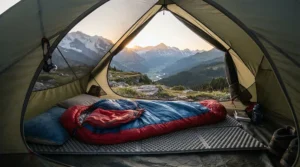
Double Sleeping Bag for Cold Weather Couples: Building a System That Holds Heat
The key fact about a double sleeping bag for cold weather couples is that the bag is only half the system. REI’s gear experts note that its sleeping bags are tested on a surface equivalent to an R-value of about 5.4, a warm pad usually reserved for winter. Most casual campers use something thinner, which means the posted rating may overpromise. REI also notes that pad R-values stack, so layering a foam pad beneath an inflatable one is a cheap upgrade.
Read the Rating Like a Skeptic
Under ISO testing, comfort describes relaxed sleeping, the limit describes sleeping curled up and fighting the cold, and extreme describes a six-hour emergency scenario. If a bag lists one unlabeled number, assume it sits nearer the limit. That’s why we nudge buyers toward the Kelty Tru.Comfort Doublewide 20 or The North Face Dolomite One Double for real cold, where layering and venting help manage temperature.
Make Shared Heat Work
Two bodies warming one air space is a genuine advantage, as long as drafts don’t invade at the seams. Look for shoulder draft tubes like those on the TETON Sports Mammoth 0°F, hoods you can cinch, and a pad that spans the bag’s full width. For a double sleeping bag for cold weather couples, also add dry base layers, a hat, and a hot-water bottle in the footbox before bed. These small moves often matter more than adding another ten degrees to the rating.
Synthetic Fill in a Double Sleeping Bag: Why It Wins for Most Couples
Synthetic fill is polyester insulation designed to trap warm air like down but with a fundamentally different structure. According to REI’s insulation guide, it’s quick-drying and keeps insulating even when wet, something down struggles to do. That matters in a double sleeping bag, because two sleepers produce more moisture, and tent condensation is real.
Where Synthetic Fill Beats Down
Down is lighter, packs smaller, and can last for decades when cared for. But down gets expensive quickly. Take a water-resistant down double from the same brand as the Big Agnes Dream Island 15, the Big Agnes King Solomon Doublewide 20: it lists around 3.95 lb at roughly $500, versus about 6.81 lb at around $300 for the synthetic-fill Big Agnes Dream Island 15 in its 20°F version. You save about $200 and carry about three extra pounds. For car camping, that’s usually a bargain.
| Factor | Synthetic Fill | Down | Edge for a Double Bag |
|---|---|---|---|
| Wet performance | Keeps insulating, dries fast | Loses loft when soaked | Synthetic |
| Weight and pack size | Heavier, bulkier | Lighter, compressible | Down |
| Price | Lower | Considerably higher | Synthetic |
| Care | Simple washing | Needs careful handling | Synthetic |
| Lifespan | Loses loft after years of compression | Can last decades | Down |
The table makes a clear case: synthetic fill wins on cost, resilience, and care, while down wins only on weight and longevity. Since double bags are rarely carried far, the weight penalty barely matters, which is why every pick above relies on synthetic or fiber insulation. The main caution is long-term loft loss, so store the bag loosely rather than compressed.
Double Sleeping Bag for Tall Couples: Sizing That Actually Works
Sizing a double sleeping bag for tall couples comes down to two numbers: length and width. One buying guide suggests that a bag 84 inches long suits a maximum height of about 78 inches, leaving roughly six inches of room for feet and head. Apply that rule to the taller person, not the average.
Length Options That Check Out
- Kelty Tru.Comfort Doublewide 20 and Big Agnes Dream Island 15 fit up to 6’6″.
- The North Face Dolomite One Double in long fits up to 6’6″, while the regular tops out at 6′.
- Coleman Tandem 3-in-1 45 Big and Tall fits most people to 6’4″.
- TETON Sports Mammoth 0°F runs 94 inches long, and Forinbuy 0 Degree Flannel Double runs 90 inches.
- KingCamp XXL Flannel claims adults up to 7 feet, but the stated dimensions suggest testing first.
Width and Pad Pairing
Width matters as much as length. A true double should be at least 59 inches across, and the 62-inch TETON Sports Mammoth 0°F gives broad-shouldered couples breathing room. Don’t forget the pad: if the bag is 90 inches long and the pad is 78, cold feet are guaranteed. For a double sleeping bag for tall couples, choose a long pad and consider a draft wedge or footbox liner. Couples who struggle to find any fit sometimes combine two long singles, but that adds weight and seams.
Double Sleeping Bag vs Two Single Bags: Which Is Warmer?
A double sleeping bag usually wins on shared warmth and simplicity, while two singles win on flexibility and individual temperature control. A double lets body heat pool in one space and avoids the cold seam between two zipped bags. Two singles, though, let each person choose their own rating, and each remains useful on solo trips.
| Factor | Double Sleeping Bag | Two Zipped Singles | Edge |
|---|---|---|---|
| Shared warmth | One large air space | Seam may leak heat | Double |
| Temperature control | Limited, unless blankets or vents | Individual ratings | Singles |
| Packing | One bulky bag | Two smaller bags | Singles |
| Cost | Often lower for two sleepers | Often higher for two quality bags | Double |
| Flexibility | Some zip apart | Fully independent | Singles |
The table reveals a tie that depends on your priorities. If you camp together exclusively and have a car, a double sleeping bag like the Kelty Tru.Comfort Doublewide 20 is simpler and warmer. If one partner runs hot and the other cold, or if you want solo trips, a zip-apart design like the Coleman Tandem 3-in-1 45 Big and Tall or KingCamp XXL Flannel splits the difference. Backpackers should lean toward singles or a double quilt, since a double bag’s weight is punishing on a trail.
Features That Actually Matter (And Those That Don’t)
Features Worth Paying For
- Draft tubes and collars. They block the cold air that slips in as you roll over.
- A cinchable hood. Two heads share one hood, so fit and drawcords decide whether it actually works.
- Quality zippers. Anti-snag designs, like the one in the Coleman Tandem 3-in-1 45 Big and Tall, spare you late-night frustration.
- Venting. Foot zippers or foot vents let hot sleepers regulate without waking the cold one.
- Pad integration. The sleeve on the Big Agnes Dream Island 15 keeps you from sliding off your insulation.
Features That Mostly Don’t
- Bundled pillows. They’re convenient, but rarely better than the pillows you already own.
- Headline temperature numbers with no testing detail. A big “0 degree” claim is only meaningful if the rating method is stated.
- Waterproof marketing. Shell water repellency helps with condensation, but it won’t turn a bag into a bivy.
Strip away the hype, and the winners are thoughtful construction details rather than flashy numbers. A well-built Kelty Tru.Comfort Doublewide 20 with real venting beats a poorly designed bag with a bolder label.

How to Set Up and Maintain Your Double Sleeping Bag
First-Night Setup
- Lay the pad or double pad first, making sure it covers the full width of the bag.
- Fluff the bag for a few minutes before use so the synthetic fill regains loft.
- Put a liner inside if you have one, hooking it to interior loops where available.
- Pre-warm the bag with a hot-water bottle near the footbox.
Common First-30-Day Mistakes
Couples often leave the bag compressed in its stuff sack between trips, which can reduce loft over time. Others skip the pad upgrade and blame the bag when cold creeps up from below. A third mistake is trusting the label rating without layering clothing for the lowest expected temperature.
Maintenance Schedule
After each trip, air the bag fully and spot-clean interior marks. Wash only according to the care label, since the Coleman Tandem 3-in-1 45 Big and Tall is listed as machine washable, but many oversized bags exceed home drum capacity. Store everything loosely in a large cotton sack or hung up. This habit keeps a double sleeping bag lofty for more seasons and protects your investment.
Real-World Scenarios: Which Double Sleeping Bag Fits Your Life
These are hypothetical profiles built to show how the analysis plays out.
Scenario 1: The Weekend Fall Campers
Picture a couple doing four October weekends a year, camping near freezing in a tent, with a budget of around $250. The Kelty Tru.Comfort Doublewide 20 suits them well, since the built-in blankets handle mismatched temperatures and the price falls within budget. They’d want a pad rated R-5 or higher.
Scenario 2: The Tall Van Couple
Now consider a 6’3″ and 5’6″ couple living in a van through chilly months. Length and space matter, and weight doesn’t. The TETON Sports Mammoth 0°F gives 94 inches of room, while The North Face Dolomite One Double in long lets them scale warmth by the season. Budget here might run $150 to $290, depending on how often they swap layers.
Scenario 3: The Budget Summer Couple
Finally, a pair of new campers hitting the lake three times a summer, never below 45°F. The Coleman Tandem 3-in-1 45 Big and Tall or KingCamp XXL Flannel fits their budget, and the zip-apart design keeps options open if one partner stays home.
✨ Don’t Miss These Exclusive Deals!
🔍 Take your couples camping to the next level with these carefully selected bags. Click on any highlighted item to check current pricing and availability. These picks will help you create warm, restful nights your whole trip will thank you for!
Problem and Solution: Fixing the Five Most Common Double Sleeping Bag Complaints
Problem 1: Cold from underneath. Insulation compresses under your body, so the ground steals heat. The fix is a pad with an R-value of 5 or higher, or two stacked pads. The Big Agnes Dream Island 15 makes this explicit with its pad sleeve.
Problem 2: One person’s hot, the other’s cold. Choose a bag with separate zones. The Kelty Tru.Comfort Doublewide 20 uses blankets and vents, and The North Face Dolomite One Double lets you shed a layer on one side.
Problem 3: Wrestling the bag back into the sack. This is the most common complaint about the TETON Sports Mammoth 0°F. Stuff from the bottom rather than rolling, and use the compression sack as designed.
Problem 4: Drafts at the shoulders or center. Look for draft tubes and cinch the hood on cold nights. A liner also reduces airflow along zipper lines.
Problem 5: Overheating in shoulder season. Open foot zippers on the KingCamp XXL Flannel or unzip a side of the Coleman Tandem 3-in-1 45 Big and Tall. Simple venting usually beats swapping bags.
Long-Term Cost and Maintenance: What a Double Sleeping Bag Really Costs Per Night
Value shows up in cost per use, not sticker price. Imagine a bag in the $200-$250 range used about 15 nights a year for five years. That’s 75 nights, working out to roughly $3 to $4 per night, far below almost any campsite fee, let alone lodging. A budget bag in the $100-or-lower range used only a few nights a year may cost more per night than you expect.
Synthetic fill adds one long-term variable: it can lose loft after years of compression, so storage habits affect lifespan. Hanging or loosely storing the bag protects performance. Zip-apart designs like the Coleman Tandem 3-in-1 45 Big and Tall and KingCamp XXL Flannel extend value because they work for solo trips too. The The North Face Dolomite One Double stretches further by covering three seasons, so you avoid buying a second bag.
The takeaway: spend more only if you’ll genuinely use the extra warmth. A premium bag used twice a year is a luxury, while a mid-priced bag used monthly pays for itself quickly.
Cold-Night Safety: What Couples Should Know Before Sleeping Out
A cozy bag can create false confidence. Health agencies including the CDC stress watching for warning signs of hypothermia, and their public guidance urges removing wet clothing immediately and getting warm. Common warning signs listed by public health sources include shivering, exhaustion, confusion, fumbling hands, slurred speech, and drowsiness.
Practical rules for couples: change out of damp clothes before getting into the bag, avoid alcohol before bed since it can mask cold, and keep an eye on each other since confusion is a symptom the affected person may not notice. Never use fuel-burning heaters inside a tent. If a partner shows hypothermia signs, seek medical help right away. And remember that a bag’s rating is a guideline, so a double sleeping bag for cold weather couples should always be paired with layers, a good pad, and a plan to retreat to the car if the forecast turns.
Frequently Asked Questions
❓ How much should I spend on a double sleeping bag?
❓ Can a double sleeping bag work for backpacking?
❓ Does a double sleeping bag need a double sleeping pad?
❓ Can I wash a double sleeping bag in a home machine?
❓ Are sleeping bag liners worth adding to a double sleeping bag?
Conclusion: Choosing Your Double Sleeping Bag
The best double sleeping bag is the one that matches your coldest night, your tallest sleeper, and your carrying distance. Couples with mismatched thermostats should look hardest at the Kelty Tru.Comfort Doublewide 20, while three-season campers get excellent flexibility from The North Face Dolomite One Double. Anyone who wants maximum room and cold-night plushness will find it in the TETON Sports Mammoth 0°F, and pad-focused system builders should consider the Big Agnes Dream Island 15. Tight budgets are served by the Coleman Tandem 3-in-1 45 Big and Tall and KingCamp XXL Flannel, and the Forinbuy 0 Degree Flannel Double suits taller couples who value length, with the caveat that its name outpaces its rating.
For a double sleeping bag for cold weather couples, remember the system: a realistic rating, a pad around R-5, dry layers, and a retreat plan. For a double sleeping bag for tall couples, measure first and leave six inches of spare length. And because synthetic fill handles damp nights and forgiving care so well, it remains the sensible default for most buyers. Pick the bag, build the system, and let the shared warmth do the rest. 🏕️
Recommended for You
- Double Sleeping Bag For Backpacking Couples: 7 Best Picks 2026
- Double Sleeping Bag For Couples Camping: 7 Best Picks 2026
- Budget Mummy Sleeping Bag: 7 Warm Picks Under $150 (2026)
Disclaimer: This article contains affiliate links. As an Amazon Associate, I earn from qualifying purchases. If you purchase products through these links, we may earn a small commission at no additional cost to you.
✨ Found this helpful? Share it with your friends! 💬🤗
