In This Article
A 4 season tent 6 person is a shelter built to handle snow load, hard wind and cold rain all year, with sleeping space for up to six people on paper. Compared with a summer tent, it relies on stronger poles, tougher fabric and fewer mesh panels. You gain storm security and lose airflow, low weight and easy setup. For general background on how tents are classified, Wikipedia’s overview of tents is a decent primer.
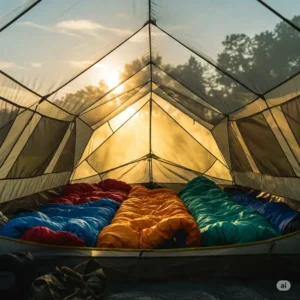
Here’s the part most retail pages skip. “Four season” is marketing shorthand, not a regulated rating. One dome in this guide is labeled 3 season in some listings and 3-4 season in others. A budget cone lists its season as “spring” on one retailer page and “winter” on another. “Six person” is also a ceiling, not a comfort rating, and reviewers keep landing on three or four adults once sleeping pads and gear enter the picture.
So this guide does something unglamorous. I researched seven real tents: a canvas cabin, a mountaineering dome, a bell tent and four budget-to-midrange domes and cones. For each one I’m reporting the specs, what owners and published reviewers keep saying, and where the 4 season claim looks solid or stretched. I haven’t slept in any of them, and I won’t pretend I have. Prices below are ranges, so check current price on the listing before you buy.
Quick Comparison: 4 Season Tent 6 Person Options at a Glance
| Tent | Season Label | Floor / Peak Height | Weight | Price Range | Best For |
|---|---|---|---|---|---|
| Kodiak Canvas Flex-Bow Deluxe 6-Person | 4 season (canvas) | 10 x 10 ft / 6’6″ | About 68 lb | $650-$800 | Durable drive-up family base camp |
| Big Agnes Mad House 6 | 4 season (mountaineering) | 94 sq ft / 68 in | 19-21.5 lb | $750-$1,000 (limited stock) | Storm-proof comfort for four adults |
| White Duck Avalon 16.5′ Bell Tent | 4 season (canvas, stove jack) | 16.5 ft wide / 9’8″ | 100+ lb | $1,300-$1,750 | Heated group camps |
| REI Co-op Base Camp 6 | 3-4 season | 84 sq ft / 74 in | About 20.5 lb | $550-$600 | Windy shoulder seasons, light snow |
| Naturehike KOTA 6-Person | 4 season (maker’s label) | About 212 x 99 in / 81 in | Not verified | Low-to-mid $300s | Stove-friendly budget base camp |
| Moose Country Gear BaseCamp 6 | 4 season (maker’s label) | 120 x 96 in / 66 in | About 9.5 lb listed | $250-$300 | Light storm shelter for 3-4 people |
| Vidalido 12’x10’x8′ Dome | Varies by listing | 12 x 10 ft / about 8 ft | About 15 lb | Under $400 | Mild-winter budget space |
Looking at the table, the Kodiak Canvas Flex-Bow Deluxe 6-Person and Big Agnes Mad House 6 are the only two with a track record of real storm credentials, and they cost accordingly. The REI Co-op Base Camp 6 sits in the middle for wind-heavy trips. The Naturehike KOTA 6-Person, Moose Country Gear BaseCamp 6 and Vidalido 12’x10’x8′ Dome trade proof of performance for price, so they suit cold-but-not-brutal conditions.
💬 Just one click — help others make better buying decisions too!😊
Top 7 4 Season Tent 6 Person Picks: Expert Analysis
Each pick below follows the same logic. First what the specs mean in practice, then who it suits, then what reviewers consistently report.
1. Kodiak Canvas Flex-Bow Deluxe 6-Person — heavy canvas that breathes in winter
Cotton duck canvas is why this tent tops so many 4 season 6 person roundups: it breathes, so your overnight exhale is less likely to turn into ceiling frost.
The footprint is 10 x 10 ft, about 100 sq ft, under a 6’6″ ceiling, with a puncture-resistant vinyl floor and 10 oz Hydra-Shield canvas. One hands-on review puts the weight near 68 lb (other listings claim more), which makes this a drive-up tent, never a carry-in one. It isn’t freestanding, so budget for stakes, a mallet and roughly 15 minutes of solo setup.
Based on the spec comparison, the honest capacity is about four sleeping pads, not six. As for weather, one outdoor reviewer reports heavy rain, snow and wind without a leak. His one caution is to clear snow occasionally during heavy snowfall. Reviewers consistently praise the materials and customer service, and complain about the weight, the bulk and an awning that pools water.
Pros:
- ✅ Breathable canvas limits winter condensation
- ✅ 6’6″ ceiling lets adults stand and dress
- ✅ Lifetime warranty backs the build
Cons:
- ❌ Around 68 lb and bulky to haul
- ❌ Not freestanding; awning can pool water
Expect roughly $650-$800 depending on timing. That’s expensive, but if you’ll use it for a decade, the cost per night gets reasonable.
2. Big Agnes Mad House 6 — true mountaineering-grade storm protection
This is the only pick here that began life as a mountaineering tent rather than a family tent with a winter sticker.
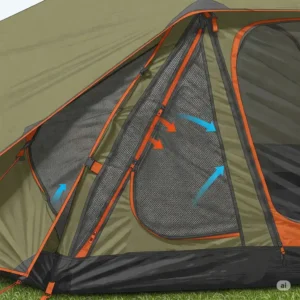
It offers 94 sq ft of floor under a 68-inch peak, six aluminum poles, a full-coverage fly with six vents, two D-shaped doors, two vestibules and a removable divider. Trail weight is about 19 lb 5 oz, or 21 lb 8 oz packed. The low profile is the point: it sheds wind, but most adults will stoop. Retail listings disagree on whether it’s freestanding, so plan to stake and guy it out.
The analysis is simple. At about 15.6 sq ft per person for six, it’s really a four-adult tent, which is also what one reviewer advises for families. A published review rated it very highly overall, with the only real complaints being price, weight and a non-trivial carry.
Availability is the catch. Several major retailers list it as discontinued or out of stock, with closeout pricing around the mid-$700s against a former sticker near $1,000. Confirm stock before you fall in love.
Pros:
- ✅ Six poles and full-coverage fly for severe weather
- ✅ Two rooms with a removable divider
- ✅ Plenty of interior storage pockets
Cons:
- ❌ Very expensive and hard to find new
- ❌ 68-inch peak means no standing room
Expect about $750-$1,000. It’s overkill for casual campers but fair value for anyone who truly camps in storms.
3. White Duck Avalon 16.5′ Bell Tent — stove-ready luxury for cold-weather groups
A bell tent flips the usual logic. Instead of trimming weight, it spends it on volume, a pre-cut stove jack and a ceiling you can walk under.
The listing specs read 16.5 ft across and 9’8″ at the peak, in 10.10 oz DYNADUCK cotton canvas, with four roof vents and bug mesh on doors and windows. Weight varies by listing, from about 100 to 126 lb, so this is a trailer or truck-bed tent. The maker’s retailers say up to eight campers fit, while roundups slot it as a six-person pick, which shows how elastic the headcount is.
On paper the conical shape sheds snow better than a flat roof, and a stove can extend the season, but a bell tent is a staked, heavy shelter rather than a mountaineering one. If you’re pitching on frozen ground, think carefully about anchoring. Family reviewers highlight tall sidewalls and straightforward setup, and the ground tarp is sold separately.
Pros:
- ✅ Standing-height interior with room for cots
- ✅ Stove jack opens up heated camping
- ✅ Heavy canvas feels durable and quiet
Cons:
- ❌ Heaviest tent here, over 100 lb
- ❌ Priciest by a wide margin
Expect roughly $1,300-$1,750 depending on retailer and fabric. It only makes sense if you’ll actually use the stove and the space.
4. REI Co-op Base Camp 6 — best-balanced extended-season dome
The Base Camp 6 is the sensible middle: a crossing-pole dome that handles wind well without charging mountaineering prices.
It offers 84 sq ft of floor, a 74-inch peak, about 20 lb 10 oz of weight, two doors and two vestibules, plus a full-coverage fly. REI’s own listing positions it for most weather, including snow, while some review sites label it 3 season, which is exactly the label problem I flagged earlier. One reviewer found it “luxurious for 2-3, comfortable for 4-5, tight for 6.”
The mesh is the trade-off. It improves airflow in summer but leaves the tent chillier in deep cold. One owner reported 30+ mph gusts and near-blizzard snow driving under the fly. OutdoorGearLab expected the extra poles and thick fly to handle minor snow pileup, but noted it hadn’t tested that. REI’s listing showed about 89% of roughly 197 reviewers recommending it.
Pros:
- ✅ Cross-pole dome resists wind well
- ✅ Two doors and two vestibules
- ✅ Comfortable for four to five
Cons:
- ❌ Mesh-heavy walls feel cold in deep winter
- ❌ Not built for heavy snow loads
Expect roughly $550-$600. It’s good value if your winters are “cold and windy” rather than “buried.”
5. Naturehike KOTA 6-Person — stove-friendly hot tent under $400
This is the budget route into heated winter camping, if you accept a thinner paper trail.
The listing specs show about 212 inches long, 99 wide and 81 tall, so adults can stand. It has a 3000mm+ waterproof rating, aluminum-alloy poles, two doors and a freestanding frame. Some listings advertise a stove-compatible version, so confirm the exact variant before you order. Be aware that the 4 season label here is the maker’s claim, and independent testing is scarce.
My honest read: the 3000mm fabric and aluminum poles suggest more than summer-grade construction, but nothing I found proves it will survive heavy snow loading. Retail listings show a modest review pool, around 57 reviews on one, so the sentiment data is thin. For the price, that’s a gamble you can price in.
Pros:
- ✅ Tall interior and two doors
- ✅ Freestanding frame eases pitching on hard ground
- ✅ Stove-compatible version available
Cons:
- ❌ Limited independent testing
- ❌ 4 season label is the maker’s own
It runs in the low-to-mid $300s. That’s strong value if your winters are moderate.
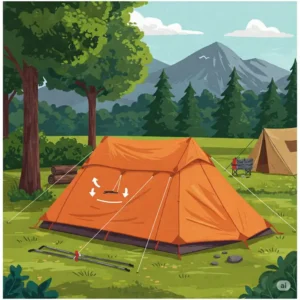
6. Moose Country Gear BaseCamp 6 — lightest storm-ready shell for the money
This one is closer to an expedition-style shell than a family cabin, which explains the weight and the price.
Listings show a 120 x 96 inch floor, a 66-inch height, a 1500mm fly rating, dual doors with cross-ventilation and aluminum poles, at about 9.5 lb carry weight. A shelter that light claiming six berths is a red flag for space, not strength. The 66-inch height and 8-foot width point to three or four adults, and taller campers will crouch.
Owners praise easy setup. One reported little ceiling condensation with the vents open, and another used it through Washington State winter rain and liked it enough to buy a smaller sibling. One snapshot of the listing showed about 4.4 stars from a small pool, roughly 21 ratings.
Pros:
- ✅ Light enough to carry beyond the parking lot
- ✅ Cross-ventilation helps manage condensation
- ✅ Easy setup, per owner reviews
Cons:
- ❌ 66-inch peak limits standing room
- ❌ 1500mm fly rating is modest for sustained rain
Expect roughly $250-$300. It’s a strong value as a four-person winter shelter, not a six-person one.
7. Vidalido 12’x10’x8′ Dome — roomiest budget cone for mild winters
You pick this one for volume and price, not for storm credentials.
The listing shows a 12 x 10 ft footprint, a roughly 8 ft peak, about 15 lb, a 3000mm waterproof rating, metal poles, a double layer with a removable rain topper, 12 stakes and six guylines. Season fields vary wildly across listings, from “spring” to all four seasons, so treat it as 3 season plus, not a snow tent.
Owners say it fits about four sleeping bags comfortably, not six. They also report that fitting the rain topper alone is awkward and that the hook loops stretch with use. On the plus side, one mirrored listing shows around 4.4 stars from 1,200+ ratings.
Pros:
- ✅ Tall, airy interior for the price
- ✅ Removable layer suits summer too
- ✅ Large review pool at a budget price
Cons:
- ❌ Rain topper is awkward to fit solo
- ❌ Hook loops and fabric durability concerns
Listings run from the high-$100s to the mid-$300s, so check current price. It’s good value for mild-winter weekends and not much more.
✨ Don’t Miss These Exclusive Deals!
🔍 Take your winter camping to the next level with these carefully selected tents. Click on any highlighted item to check current pricing and availability. These shelters will help you create the warm, dry base camp your whole crew will love! 🏕️
How to Set Up and Winterize Your 4 Season Tent 6 Person
Setup is where a good tent either earns its price or doesn’t. These steps apply to nearly every model above.
- Pitch on a footprint or ground tarp. A thin floor takes the abuse, and a tarp protects it from ice and rocks.
- Stake before you tension. Place stakes at all anchor points, not just the corners. Canvas tents like the Kodiak Flex-Bow Deluxe and Avalon depend on a full stake-out.
- Use snow-rated anchors. In snow, standard stakes pull out. Bury stakes horizontally, or tie guylines to buried sticks or snow stakes.
- Tension the fly taut. Loose fabric flaps, collects snow and condenses more moisture.
- Crack the vents. Even in deep cold, keep one or two vents open. Moisture from breathing has to go somewhere.
- Plan your first 30 days. Practice pitching at home, check every seam and zipper, and dry the tent fully after each trip.
A tent is a windbreak, not a furnace. Put your money into a warm sleeping bag and an insulated pad, and don’t expect the tent to make up the difference.
Real-World Scenarios: Matching a 6 Person 4 Season Tent to Your Trip
Three buyer profiles show how the choice plays out.
The late-season hunting party. Four friends, truck access, 15-25°F nights, five nights a year. The White Duck Avalon or the Kodiak Flex-Bow Deluxe fits: both are heavy but breathable, and the Avalon adds a stove. If the budget is tight, the Kodiak Flex-Bow Deluxe is the safer buy.
The family of five near the ski area. Moderate snow, three nights, mixed wind. The REI Base Camp 6 handles wind and shoulder-season cold, and its two doors and vestibules help with wet gear. Treat it as a four-to-five person tent, and don’t push it into a blizzard.
The budget-first couple with two kids. Windy shoulder season, a ceiling of about $350, and about a dozen nights a year. The KOTA or Vidalido dome gives you space and a way to add a stove later, but this buyer should accept that proof of storm performance is thin.
Problem → Solution: Fixing Common 4 Season Tent 6 Person Headaches
Condensation on the ceiling. Cause: breath and wet gear in a sealed shell. Solution: crack two vents, keep wet boots in the vestibule, and wipe the ceiling before packing. Breathable canvas like the Kodiak Flex-Bow Deluxe helps.
Snow piling on the roof. Solution: brush it off from inside or out before it compacts, and pitch with the steepest face into the wind. A cone or steep dome such as the Vidalido dome sheds better than a flat roof, but nothing sheds heavy snowfall for you.
Flapping and wind noise. Solution: re-tension guylines, add extra stakes, and orient the low end into the wind. The Mad House 6 with its low profile is the quietest of the group.
Cold floor. Solution: layer a ground tarp, an insulated pad and a foam mat. Heat loss through the ground is the quiet killer, and the tent can’t fix it.
How to Choose a 4 Season Tent 6 Person (6 Steps)
- Divide the headcount. Plan for about two-thirds of the claimed capacity, so a six person tent suits four adults comfortably.
- Match the season claim to your worst night. REI’s camping tent guide explains that true 4 season tents use more poles, heavier fabric and fewer mesh panels, while 3-4 season tents handle stronger winds and light snow. Pick the category that fits the weather you actually expect.
- Check pole count and fly coverage. More crossing poles and a ground-length fly beat a partial fly every time in wind.
- Choose your fabric. Polyester is lighter and cheaper but more prone to condensation. Canvas breathes and lasts but is very heavy.
- Plan for ventilation. You want vents you can open and close, not just permanent mesh.
- Budget the total. Add a footprint, snow stakes and possibly a stove to the sticker price.
Common Mistakes When Buying a 6 Person 4 Season Tent
- Trusting the label. As we’ve seen, the same tent can be 3 season on one site and 4 season on another. Check the poles, fly and mesh instead.
- Buying for the number. “Six person” rarely means six comfortable adults. Six standard pads at roughly 20 x 72 inches take about 60 sq ft before any gear.
- Ignoring weight. A 68 lb canvas tent or 100+ lb bell tent is a vehicle-only purchase.
- Skipping the footprint. A floor that’s damaged in year one defeats the purpose of a durable tent.
- Expecting warmth. A tent keeps wind and snow out. Warmth comes from your sleep system.
4 Season Tent 6 Person vs 3 Season Tent vs Canvas Bell Tent
| Type | Wind & Snow | Ventilation | Weight | Best For |
|---|---|---|---|---|
| 4 season dome | Strongest | Limited, closable | 10-22 lb | Mad House 6, Moose Country BaseCamp |
| 3-4 season extended | Good wind, light snow | Better | 20+ lb | REI Base Camp 6 |
| Canvas cabin or bell | Good, heavy | Excellent | 68-126 lb | Kodiak Flex-Bow Deluxe, Avalon |
| Budget all-season cone | Moderate | Good | 15 lb or less | KOTA, Vidalido dome |
Canvas wall tents have a long history as a four-season choice, partly because they can accommodate a wood stove, as Wikipedia’s wall tent entry notes. In practice, poly domes win on weight and wind, while canvas wins on breathability, durability and stove use. Match the type to how you travel before you shop on price.
Features That Actually Matter (And Those That Don’t)
Matter: pole count and layout, fly coverage to the ground, closable vents, a vestibule for wet gear, a thick floor, and doors you can zip against drifting snow.
Don’t matter: “60-second setup” claims in a winter tent (speed and storm strength rarely coexist), built-in LED lights, the count of interior pockets, and the number printed in the product name. A stove jack only matters if you’ll use a stove, and only with a safe setup.
What to Expect: Real-World Performance of a 6 Person 4 Season Tent
Spec sheets promise a lot. Real use trims it. A six person winter tent will usually sleep three or four adults with gear and room to dress. Peak height is the other reality: the Mad House 6 and Moose Country BaseCamp sit low, while the Avalon, KOTA and Vidalido dome let adults stand.
Condensation is the other surprise. Even true 4 season shells can drip in damp cold if you don’t vent them. And as noted earlier, no tent substitutes for a rated sleeping bag and pad. Think of it as a windbreak, not a furnace.
4 Season Tent 6 Person for Specific Audiences
Families. Prioritize standing room, two doors and vestibules. The REI Base Camp 6 and Kodiak Flex-Bow Deluxe fit best.
Hunters and anglers. Canvas and stove-ready options such as the Avalon and Kodiak Flex-Bow Deluxe shine, provided you have a vehicle.
Scout leaders and groups. Two smaller tents usually beat one large one for warmth and logistics, and you can carry them farther.
Budget first-timers. The KOTA, Moose Country BaseCamp or Vidalido dome let you test winter camping cheaply. Upgrade after you know what you need.
Long-Term Cost & Maintenance for a 6 Person 4 Season Tent
| Tent | Price Range | Rough Cost per Night* | Best For |
|---|---|---|---|
| Kodiak Flex-Bow Deluxe | $650-$800 | $5-$7 | Long-term family base camp |
| Mad House 6 | $750-$1,000 | $6-$8 | Serious storm use |
| Avalon | $1,300-$1,750 | $11-$15 | Heated group camps |
| REI Base Camp 6 | $550-$600 | About $5 | Windy shoulder seasons |
| KOTA | $300-$400 | About $3 | Budget stove camping |
| Moose Country BaseCamp | $250-$300 | $2-$3 | Light storm shelter |
| Vidalido dome | Under $400 | $2-$3 | Mild-winter weekends |
*Illustrative arithmetic assuming about 120 nights of use over the tent’s life. Budget tents may need replacing sooner.
Per night, the premium canvas and mountaineering options look better than their sticker shock suggests, but only if you actually use them often. If you’ll camp ten nights a year or fewer, a cheaper tent may be the smarter spend.
For upkeep, dry the tent fully before storage, since mildew ruins canvas quickly. Clean the zippers, replace bent stakes and check the fly’s coating on polyester models.
Safety Guide: Stoves, Carbon Monoxide and Snow Load
Heat is the biggest hazard in a winter tent. The U.S. Consumer Product Safety Commission warns that fuel-burning portable heaters, lanterns and stoves can cause fatal carbon monoxide poisoning when used in enclosed spaces such as tents. Carbon monoxide has no smell or color, and its early symptoms (headache, dizziness, nausea, drowsiness) are easy to mistake for a cold.
For tents with stove jacks, such as the Avalon and some KOTA variants, follow the stove maker’s clearance and ventilation rules, never leave a fire unattended or burning while you sleep, and consider a battery-powered CO alarm. Never burn charcoal inside a tent. For snow, clear the roof regularly, and don’t assume a mesh-heavy shell can bear a heavy load.
FAQ
❓ Is a 4 season tent 6 person worth it for summer camping?
❓ How much does a 4 season tent 6 person cost?
❓ Can a 4 season tent 6 person fit a wood stove?
❓ Do I need a footprint for a 4 season tent 6 person?
❓ Is canvas better than polyester for a 6 person 4 season tent?
Conclusion
The 4 season tent 6 person market rewards skepticism. The label is loose, the capacity is optimistic, and the real differences hide in pole counts, fly coverage and fabric.
If you can drive to your site, the Kodiak Flex-Bow Deluxe is the safest all-round pick: breathable, durable and widely praised. For true storm security and four adults, the Mad House 6 is the standout, if you can find one. The REI Base Camp 6 is the sensible middle for windy shoulder seasons, and the Avalon is the luxury choice when you want a stove. On a tighter budget, the KOTA, Moose Country BaseCamp and Vidalido dome are fair value for moderate winters, as long as you treat the 4 season label as a claim, not a guarantee.
Whichever you pick, buy for your real headcount and your worst night, then add a footprint and a good sleep system.
Recommended for You
- 10 Best Single Person Backpacking Tent Options For Wilderness Adventures in 2025
- 10 Best Marmot Two Person Tent Options For Adventurous Campers in 2025
- 10 Best Marmot 3 Person Tent Options For Outdoor Adventures in 2025
Disclaimer: This article contains affiliate links. As an Amazon Associate, I earn from qualifying purchases. If you purchase products through these links, we may earn a small commission at no additional cost to you.
✨ Found this helpful? Share it with your friends! 💬🤗
