
In This Article
✨Was this helpful? Spread the word!
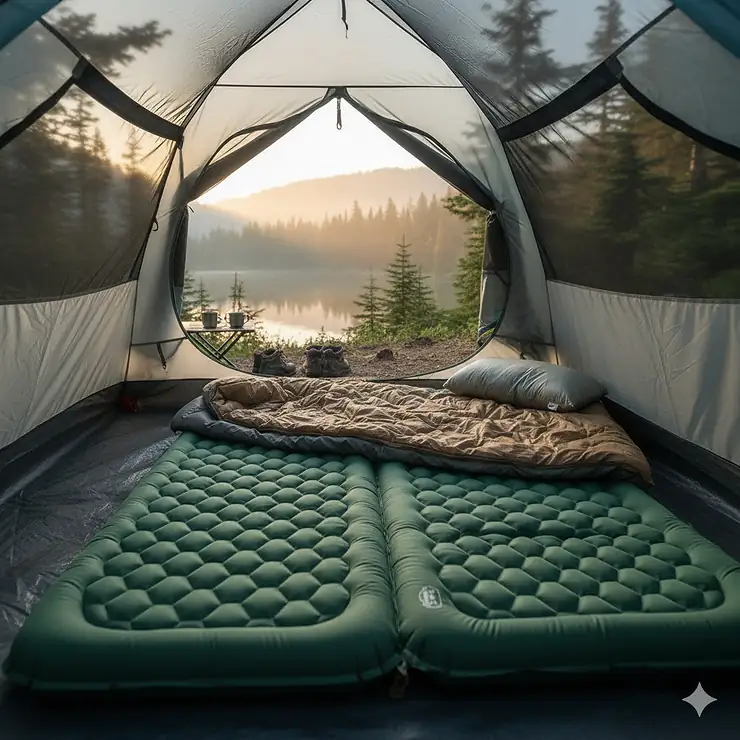
Listen, I’ve been there. Cramped on two separate sleeping pads, feeling that dreaded cold gap between you and your partner, and wondering why anyone thought camping was romantic. But here’s the truth: a quality 2 person camp pad changes everything. ️
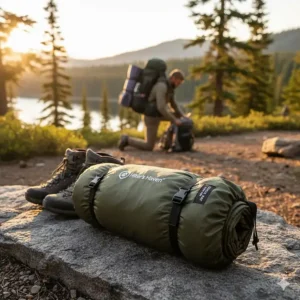
Whether you’re seasoned backpackers or weekend warriors, upgrading to a double sleeping pad transforms your outdoor experience from “I survived” to “when can we go again?” These spacious camping mattresses eliminate the uncomfortable divide, provide superior insulation, and honestly, they make outdoor adventures feel less like roughing it and more like an actual getaway.
A two person camping pad (also called a double camping mattress, couples sleeping pad, or dual camp mat) offers substantially more sleeping surface than strapping two singles together. We’re talking 47-52 inches of width—that’s nearly queen-bed territory! Plus, modern designs incorporate
impressive R-values for cold-weather performance, innovative inflation systems that don’t leave you breathless, and pack sizes that won’t dominate your gear closet.
In this comprehensive guide, I’ll walk you through everything you need to know about selecting the perfect camping pad for 2 people. We’ll dive deep into real products currently available on Amazon, compare specifications and prices, and help you determine which pad suits your specific camping style. Whether you’re car camping in luxury or backpacking to remote alpine lakes, there’s a double camp pad that’ll make your nights under the stars genuinely comfortable.
Quick Comparison Table
| Product | Size (inches) | Thickness | Weight | R-Value | Price Range | Best For |
|---|---|---|---|---|---|---|
| Hikenture Double Sleeping Pad | 79 x 55 | 4″ | 4 lbs | N/A | $70-90 | Budget car camping |
| Klymit Insulated Double V | 73 x 47 | 3″ | 52.8 oz | 4.4 | $140-160 | Value seekers |
| Exped Ultra 3R Duo | Varies | 3″ | 1 lb 13 oz – 2 lbs 9 oz | 2.9 | $180-220 | Ultralight backpackers |
| NEMO Quasar 3D Insulated Double | 72 x 52 | 3.5″ | ~4 lbs | 3.3 | $250-300 | Comfortable backpacking |
| Sea to Summit Comfort Deluxe Double | 79 x 51 | 4″ | 9.8 lbs | 6.5 | $280-350 | Luxury car camping |
| Big Agnes Rapide SL Double Wide | Varies | 3.5″ | 2 lbs 5 oz | 4.8 | $230-270 | 3-season versatility |
| Elegear Double Sleeping Pad | 75 x 54 | 4.7″ | 5+ lbs | N/A | $80-110 | Budget-friendly |
Just one click – help others make better buying decisions too!
Ready to Upgrade Your Camping Sleep System?
✨ Click on any highlighted product name below to check current Amazon pricing and customer reviews. These carefully selected camping pads for two represent the best options across all price ranges and camping styles!
Top 7 2 Person Camp Pad Options: Expert Analysis
1. Hikenture Double Sleeping Pad for Camping
If you’re just dipping your toes into couples camping or need an affordable car camping solution, the Hikenture Double Sleeping Pad deserves serious consideration. I’ve recommended this pad to countless friends who wanted comfort without breaking the bank, and the feedback has been overwhelmingly positive.
Key Specifications:
- Dimensions: 79 x 55 x 4 inches
- Packed size: 15 x 7 inches
- Weight: 4 lbs (64 oz)
- Material: Polyester pongee with TPU lamination
- Price range: $70-90
This pad inflates to a generous 79 by 55 inches—that’s seriously spacious. The 4-inch thickness provides excellent cushioning for side sleepers, and customers consistently report that even heavier individuals don’t bottom out. The TPU lamination makes it waterproof and durable enough for rugged use.
What Customers Say: Buyers praise the incredibly easy inflation system. The included 40L pump sack inflates the entire pad in just 6-8 pumps—no huffing and puffing required. Many customers mention using it successfully in temperatures down to the 40s, though it lacks an official R-value rating. The dual-valve system (one for the pump, one for manual inflation) offers flexibility.
Pros:
✅ Excellent value under $90
✅ Spacious 55-inch width
✅ Fast inflation with pump sack
✅ Supports 600+ lbs capacity
✅ Compact packed size for a double pad
Cons:
❌ No R-value rating for cold weather
❌ Heavier than backpacking-focused options
Bottom line: For car campers, festival-goers, or anyone prioritizing comfort and value, the Hikenture delivers impressive performance at an unbeatable price point.
2. Klymit Insulated Double V Sleeping Pad
The Klymit Insulated Double V represents the sweet spot between backpacking portability and car camping comfort. Its innovative V-chamber design isn’t just for show—it genuinely improves thermal efficiency and minimizes motion transfer between sleepers.
Key Specifications:
- Dimensions: 73 x 47 x 3 inches
- Packed size: 12 x 7 inches
- Weight: 52.8 oz (3.3 lbs)
- R-value: 4.4 (ASTM tested)
- Material: 75D polyester
- Price range: $140-160
That R-value of 4.4 makes this pad suitable for genuine four-season camping. The Klymalite synthetic insulation combined with the V-chamber design traps warm air effectively while preventing cold air circulation. At just over 3 pounds, it bridges the gap between ultralight backpacking pads and heavy car camping mattresses.
What Customers Say: Real-world testers report comfortable sleep in temperatures down to the 30s without additional insulation. Parents particularly appreciate using this with one child, as the dual V-chamber design prevents the dangerous gap issue when co-sleeping. The stuff sack pump system works surprisingly well—users report inflating without a single breath by just scooping air.
Pros:
✅ True 4-season insulation (R 4.4)
✅ V-chambers reduce motion transfer
✅ Lightweight for a double pad
✅ Stuff sack doubles as inflation pump
✅ Mid-range pricing
Cons:
❌ V-pattern ridges less comfortable than flat surfaces
❌ Some durability concerns in customer reviews
Bottom line: For couples who occasionally backpack but mostly car camp, or anyone needing cold-weather performance without excessive weight, Klymit’s design delivers.
3. Exped Ultra 3R Duo Sleeping Pad
When every ounce counts but you refuse to sacrifice comfort, the Exped Ultra 3R Duo enters the conversation. This Swiss-engineered pad represents the pinnacle of ultralight two-person sleeping pads, though you’ll pay a premium for that performance.
Key Specifications:
- Dimensions: Medium (72″ x 41.3-32.3″ tapered), Long Wide (77.6″ x 51.2-40.6″ tapered)
- Thickness: 3 inches (7 cm)
- Weight: Medium 1 lb 13 oz, Long Wide 2 lbs 9 oz
- R-value: 2.9 (ASTM)
- Material: 20D recycled ripstop polyester
- Price range: $180-220
The Ultra 3R’s vertical baffle orientation is engineering genius—fewer end-of-baffle welds means increased pad lifespan. Each half inflates separately, allowing personalized firmness levels and reducing motion transfer. The tapered shape (wider at head, narrower at feet) matches tent floor dimensions perfectly while saving weight.
What Customers Say: Backpackers consistently praise the Schnozzel pump bag system, which efficiently inflates the pad moisture-free. REI reviewers mention the pad is noticeably quieter than Therm-a-Rest options—no potato chip crinkling. The 20D recycled fabric feels premium against skin and has held up well in rocky terrain according to long-term users.
Pros:
✅ Incredibly lightweight for a double
✅ Vertical baffles increase durability
✅ Separate inflation for each side
✅ Quiet, recycled materials
✅ Tapered design saves weight
Cons:
❌ Lower R-value limits cold-weather use
❌ Premium pricing
❌ Some reports of fabric fragility
Bottom line: Serious backpacking couples who split gear weight and prioritize packability will appreciate this pad’s impressive weight-to-comfort ratio, though it’s best reserved for three-season adventures.
4. NEMO Quasar 3D Insulated Double Sleeping Pad
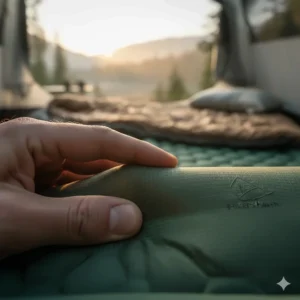
The NEMO Quasar 3D Insulated Double brings body-mapped comfort technology to the couples camping world. That “3D” designation refers to the curved, body-mapped baffles that literally cradle you and your partner through the night—it’s like sleeping in a gentle hug.
Key Specifications:
- Dimensions: 72 x 52 x 3.5 inches
- Weight: Approximately 4 lbs
- R-value: 3.3 (ASTM)
- Material: 30D recycled ripstop polyester with PrimaLoft
- Price range: $250-300
The slightly elevated head baffle serves double duty as a pillow support system, potentially eliminating the need to pack separate camping pillows. The generous 52-inch width provides serious sprawl space—roomier than many of the competition. NEMO’s Laylow zero-profile valve allows micro-adjustments for perfect firmness.
What Customers Say: REI reviewers consistently rate this pad 4+ stars, praising the exceptional comfort for side sleepers. The body-mapped design prevents that annoying roll-off-the-edge feeling. The included Vortex pump sack earns high marks for efficiency—full inflation in less than four bag-fulls. Many note it’s slightly heavier than pure backpacking pads but perfect for short trips or base camping.
Pros:
✅ Superior body-mapped comfort
✅ Spacious 52-inch width
✅ Built-in pillow elevation
✅ 100% recycled materials
✅ Excellent pump sack included
Cons:
❌ Moderate R-value for cold weather
❌ Higher price point
❌ Heavier than ultralight options
Bottom line: For couples who value sleep quality above all else and don’t mind carrying a bit more weight, the Quasar 3D offers camping mattress-level comfort with backpacking-friendly packability.
5. Sea to Summit Comfort Deluxe Double Self-Inflating Pad
When you want to bring home-mattress luxury to the campsite, the Sea to Summit Comfort Deluxe Double stands in a class of its own. This self-inflating foam pad with its plush 4-inch thickness and sky-high R-value practically redefines car camping comfort.
Key Specifications:
- Dimensions: 79 x 51 x 4 inches
- Packed size: 10 x 27 inches
- Weight: 9.8 lbs
- R-value: 6.5 (ASTM)
- Material: 30D stretch knit top, 75D polyester base
- Price range: $280-350
That 6.5 R-value makes this pad genuinely suitable for winter camping—we’re talking serious four-season insulation. The Delta Core technology strategically removes foam weight while maintaining warmth and durability. The stretch-knit top fabric feels luxuriously soft, and vertical sidewalls maximize usable sleeping surface.
What Customers Say: Buyers consistently describe this as “the most comfortable camping mattress” they’ve ever used. The self-inflating feature works, though most users top it off with a few breaths or use a pump sack for full firmness. The multi-function valve (inflation/deflation/fine-tuning) receives mixed reviews—easy to use but can be slow to deflate. Storage recommendation: keep it loosely rolled with valves open at home to maintain foam loft.
Pros:
✅ Exceptional 4-inch foam comfort
✅ Winter-capable 6.5 R-value
✅ Self-inflating convenience
✅ Durable, soft-touch fabrics
✅ PillowLock system included
Cons:
❌ Very heavy at 9.8 lbs
❌ Large packed size
❌ Premium price tag
❌ Difficult to repack tightly
Bottom line: Car campers, van lifers, and anyone establishing a semi-permanent base camp will worship this pad’s uncompromising comfort. Just don’t plan on backpacking with it.
6. Big Agnes Rapide SL Insulated Double Wide Sleeping Pad
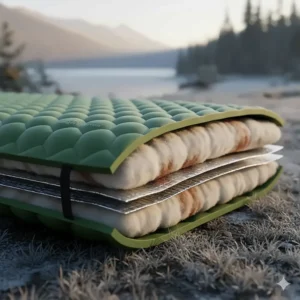
The Big Agnes Rapide SL Insulated Double Wide achieves something remarkable: legitimate three-season warmth without the weight penalty typically associated with insulated double pads. This recently updated design incorporates dual layers of heat-reflective film for impressive thermal performance.
Key Specifications:
- Dimensions: Multiple sizes available
- Thickness: 3.5″ center, 4.25″ outer chambers
- Weight: 2 lbs 5 oz (double wide)
- R-value: 4.8 (ASTM)
- Material: Double ripstop nylon with TPU lamination
- Price range: $230-270
The proprietary offset I-Beam construction reduces weight while delivering multi-directional support. Those oversized 4.25-inch outer chambers create supportive “rails” that cradle you in the center—incredibly effective for preventing the roll-off feeling on uneven terrain. The quilted top surface feels premium and stays quiet during nighttime position changes.
What Customers Say: Testers praise the impressive warmth-to-weight ratio. One CleverHiker analyst used it comfortably in fall conditions down to freezing temps. The included pumphouse sack (made from upcycled pad material) inflates the pad quickly. Some users note getting it back into the original stuff sack requires patience, though upgrading to a slightly larger sack solves this issue. The quiet fabric earns consistent mentions—a stark contrast to crinkly competitors.
Pros:
✅ Excellent R-value (4.8) for three seasons
✅ Lightweight for insulation level
✅ Quiet, quilted comfort
✅ Multiple size options
✅ Improved 2024 design
Cons:
❌ Challenging to repack in original sack
❌ Some reports of cold spots in sub-freezing temps
Bottom line: Three-season backpackers and shoulder-season campers will appreciate this pad’s ability to deliver warmth and comfort without destroying your base weight budget.
7. Elegear Double Sleeping Pad with Built-In Foot Pump
For budget-conscious campers who still demand decent comfort, the Elegear Double Sleeping Pad offers impressive features at an entry-level price. The built-in foot pump distinguishes it from competitors and makes setup genuinely effortless.
Key Specifications:
- Dimensions: Approximately 75 x 54 x 4.7 inches
- Weight: 5+ lbs
- Material: Polyester with TPU coating
- Built-in foot pump and pillow
- Price range: $80-110
The 4.7-inch thickness provides substantial cushioning—among the thickest in this roundup. The integrated foot pump means you’ll never forget your inflation device at home, and setup takes just minutes of foot-pumping. The built-in pillow adds convenience, though experienced campers may prefer their own.
What Customers Say: Amazon reviewers frequently mention this pad’s surprising comfort for the price. Families appreciate the extra width for co-sleeping with children. The foot pump works efficiently, though some note it requires more pumps than advertised. Durability seems decent for occasional use, though this isn’t the pad for weekly adventures or rough terrain.
Pros:
✅ Budget-friendly pricing
✅ Built-in foot pump convenience
✅ Extra-thick 4.7 inches
✅ Integrated pillow
✅ Good for occasional use
Cons:
❌ Heavy and bulky
❌ No R-value testing
❌ Less durable than premium options
Bottom line: Festival campers, fair-weather car campers, and anyone needing an affordable guest mattress will find excellent value here. Just don’t expect backpacking-grade performance or materials.

Understanding R-Values: How Cold Can You Camp?
Here’s something I wish someone had explained to me years ago: R-value isn’t just a random number—it’s your camping comfort insurance policy. ️
The R-value measures thermal resistance, or how well your pad insulates you from the cold ground. According to the ASTM F3340-18 standard, higher numbers mean better insulation. But what does that mean practically?
R-Value Temperature Guide
- R 1-2: Summer only (50°F+ ground temps)
- R 2-3: Spring through fall (40-50°F ground temps)
- R 3-4: Three-season camping (30-40°F ground temps)
- R 4-5: Cold weather capable (20-30°F ground temps)
- R 5+: Winter camping (below 20°F ground temps)
For most camping couples, an R-value between 3.0 and 5.0 provides versatility across camping seasons. Cold sleepers or winter adventurers should target 5.0 or higher. Remember, you can always layer a closed-cell foam pad underneath to boost R-value by approximately 2.0 points.
Pro tip: Your sleeping bag and the pad work together as a system. A high-quality sleeping bag can’t overcome a cold pad, and vice versa. Budget accordingly for both components.
Inflation Systems Compared: From Breath Power to Electric Pumps
Let me save you some frustration. The inflation system matters more than most first-time buyers realize. Nothing ruins the camping vibe like spending 15 minutes huffing into a valve until you’re dizzy.
Pump Sack Systems (Best Option)
Modern pump sacks—like those included with Exped, NEMO, and Big Agnes pads—represent the gold standard. You scoop air, seal the sack, and push it into the pad. Most pads inflate in 3-5 cycles without introducing moisture from your breath (which can promote mold and reduce insulation). These sacks typically weigh 2-3 ounces and double as waterproof stuff sacks.
Built-In Foot Pumps
Integrated foot pumps (found on Elegear and similar budget pads) offer convenience at the cost of added weight. They work well for car camping where weight doesn’t matter. The pump mechanism represents another potential failure point, though quality has improved significantly in recent years.
Manual Inflation Valves
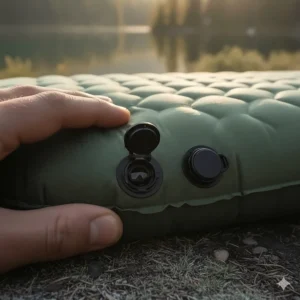
Traditional blow valves require lung power but weigh nothing. Fine for lightweight single pads, but exhausting for large double pads. If your pad has manual-only inflation, seriously consider investing in a battery-powered camping pump for under $20 on Amazon.
Self-Inflating Foam
Self-inflating pads (like the Sea to Summit Comfort Deluxe) use open-cell foam that expands when you open the valve. They partially inflate automatically, then you top off with a few breaths. Convenient but requires proper storage (loosely rolled, valve open) to maintain foam loft.
Weight vs Comfort: Finding Your Perfect Balance
This is where camping philosophy gets personal. Let me break down the weight categories so you can make an informed decision. ⚖️
Ultralight (Under 2.5 lbs)
Examples: Exped Ultra 3R Duo Medium (1 lb 13 oz), Big Agnes Rapide SL Double Wide (2 lbs 5 oz)
These pads sacrifice some insulation and thickness for impressive packability. Perfect for backpackers splitting gear, thru-hikers, or bike-packers where every ounce counts. You’ll notice the weight savings immediately on the trail. Comfort is still good, though not quite mattress-level.
Midweight (2.5-5 lbs)
Examples: Klymit Insulated Double V (3.3 lbs), NEMO Quasar 3D Double (~4 lbs), Hikenture Double (4 lbs)
The sweet spot for most campers. Light enough for short backpacking trips, comfortable enough for extended car camping. These pads balance portability with genuine comfort and often include better insulation than ultralight options.
Heavyweight (5+ lbs)
Examples: Sea to Summit Comfort Deluxe Double (9.8 lbs), Elegear Double (5+ lbs)
Car camping and base camp specialists. When you’re not carrying the pad on your back, why not prioritize maximum comfort? These pads often feature self-inflating foam, extra thickness, and luxurious materials that make them feel like real mattresses.
Decision framework: Planning to backpack more than a mile from your vehicle? Stay under 4 lbs. Strictly car camping? Prioritize comfort over weight. Mixed use? The 3-4 lb range offers the best versatility.
Dimensions Matter: Will It Fit Your Tent and Bodies?
Here’s an embarrassing confession: I once bought a double pad without measuring my tent. Spoiler alert—it didn’t fit. Learn from my mistakes!
Width Considerations
Most double camp pads range from 47 to 52 inches wide. For reference:
- Twin bed: 38 inches
- Full bed: 54 inches
- Queen bed: 60 inches
A 47-inch pad feels cozy (translation: cramped for larger folks), while 52 inches provides genuine space. Measure your tent’s floor width before buying. Many two-person backpacking tents max out at 50-52 inches at the widest point and taper narrower toward the feet.
Length Options
Standard lengths run 72-79 inches. Most 6-foot-tall campers fit comfortably on 72-inch pads. Taller folks (6’2″+) should seek 78-79 inch options. Some manufacturers offer “long” versions specifically for height-challenged tents or tall sleepers.
Tapered vs. Rectangular
Tapered pads (like the Exped Ultra 3R Duo) mirror tent floor shapes—wider at the head, narrower at the feet. This design saves weight and fits tent geometry perfectly. Rectangular pads provide consistent width throughout but may not fit as neatly in tapered tents.
Pro measuring tip: Place your tent’s footprint or ground tarp on the floor, then measure the usable sleeping area. Buy your pad based on these real-world dimensions, not tent manufacturer specs (which are often optimistic).
Packed Size: Storage and Transport Reality Check
Nobody talks about this enough: where will you store this thing at home, and how will you transport it?
Packed Dimensions Decoded
A “12 x 7 inch” packed size sounds abstract until you realize that’s roughly Nalgene-bottle-sized. Most double pads pack down to:
- Ultralight: 7-9 x 4-5 inches (large water bottle)
- Midweight: 12-15 x 6-8 inches (sleeping bag size)
- Heavyweight: 10 x 27+ inches (rolled yoga mat)
Transportation Strategies
Backpacking: Stuff pads vertically in your pack or strap externally if too bulky. Many hikers strap pads to the outside of their pack using compression straps, as they’re not puncture-prone and compress well.
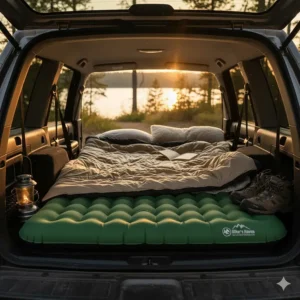
Car camping: Storage is rarely an issue. Throw it in the trunk with your other gear. Some campers keep their double pad permanently in the vehicle during camping season.
Home storage: Self-inflating foam pads should be stored loosely rolled or flat with valves open to maintain loft. Air pads can be rolled tightly. If space is limited, consider pads with smaller packed sizes even if you’re primarily car camping—your gear closet will thank you.
Durability and Longevity: What to Expect
Let’s get real about durability. These pads take serious abuse—sharp rocks, rough ground, UV exposure, repeated inflation/deflation cycles, and temperature extremes. ️
Material Thickness Matters
- 20D fabric: Ultralight but requires careful campsite selection
- 30D fabric: Good balance of weight and durability
- 75D fabric: Rugged and bomber for rough use
Denier (D) measures fabric weight. Higher numbers mean tougher materials but added weight. Most quality double pads use 30-40D top fabrics with 50-75D more rugged bottoms.
Common Failure Points
Valve issues: Usually fixable with replacement parts. Check if your manufacturer sells replacement valves. Big Agnes and Sea to Summit offer excellent replacement part availability.
Seam separation: Higher-quality pads use aviation-grade TPU lamination (like Big Agnes) or RF welding (like Exped) for stronger, more reliable seams than traditional gluing.
Pinhole leaks: The most common issue. Always carry a patch kit (typically included). Most punctures are field-repairable in 10-15 minutes.
Warranty Coverage
- Lifetime warranties: Big Agnes, Sea to Summit, NEMO (against manufacturing defects)
- Limited warranties: Most brands offer 1-3 years
- No questions asked: REI’s return policy covers manufacturer defects within one year
Maintenance tips: After camping, let your pad fully dry before storage. Store with valves open. Periodically check for slow leaks by inflating and leaving overnight. Address small issues before they become pad-ending problems.
Price Ranges and Value Analysis
Understanding where your money goes helps justify the investment. Let’s break down what you get at each price point.
Budget Tier ($70-130)
Examples: Hikenture Double ($70-90), Elegear Double ($80-110)
What you get: Basic functionality, decent thickness, acceptable comfort for occasional use. Materials and construction are serviceable but not premium. Expect shorter lifespans (2-3 years of moderate use).
Best for: Casual campers, festival-goers, guest accommodation, trying camping before committing to expensive gear.
Mid-Range ($140-220)
Examples: Klymit Insulated Double V ($140-160), Exped Ultra 3R Duo ($180-220)
What you get: Quality materials, reliable construction, good warranties, thoughtful features. R-value ratings you can trust. Materials that balance durability and weight. Expected lifespan: 5-7 years of regular use.
Best for: Regular campers, backpackers, anyone wanting reliable performance without premium prices.
Premium Tier ($230-350)
Examples: Big Agnes Rapide SL ($230-270), NEMO Quasar 3D ($250-300), Sea to Summit Comfort Deluxe ($280-350)
What you get: Top-tier materials, innovative designs, comprehensive warranties, refined features, maximum comfort. Recycled/sustainable materials. Expected lifespan: 7-10+ years with proper care.
Best for: Serious campers, those who camp frequently, anyone prioritizing sleep quality, environmentally conscious buyers.
Value sweet spot: For most couples camping 10+ nights annually, the $150-220 range offers the best performance-per-dollar ratio. You’ll appreciate the quality on every trip without overspending.
Cold Weather Camping: Boosting Your Pad’s Warmth
Winter camping with a double pad requires strategy beyond just picking a high R-value. Here are the techniques that actually work. ❄️
Layer with Closed-Cell Foam
Adding a cheap closed-cell foam pad (like a Therm-a-Rest Z Lite Sol) underneath your inflatable pad boosts R-value by approximately 2.0 points. This also provides puncture protection and prevents heat loss from air circulation.
Example: Exped Ultra 3R Duo (R 2.9) + Z Lite Sol (R 2.0) = R ~4.9 system warmth
Insulate Your Tent Floor
Some winter campers use emergency blankets or foam tiles under their entire tent floor. This creates a thermal barrier between ground and tent, reducing the “cold from below” effect.
Position Matters
Camping on snow? Pack it down firmly before setting up. Loose snow has poor insulating properties and creates air pockets that conduct cold efficiently. Hard-packed snow actually insulates better than frozen ground.
Body Heat Sharing
This is where double pads shine in cold weather. Two bodies generate more heat than one, and proper cuddling (or strategic sleeping bag overlap) maximizes warmth retention. Your combined body heat warms the pad more effectively than solo sleeping.
Consider a Vapor Barrier Liner
According to outdoor research, using a vapor barrier liner inside your sleeping bag prevents moisture from your breath and body from reducing insulation effectiveness. This matters more for multi-night winter trips.
Materials and Construction: What Really Makes a Difference
Understanding materials helps you evaluate quality and make informed trade-offs. Not all sleeping pads are created equal.
Face Fabrics
Polyester vs. Nylon: Both work well. Polyester tends to feel softer and quieter but may be slightly heavier. Nylon offers better tear strength and lighter weight but can feel crinkly (especially Therm-a-Rest’s materials).
Ripstop weave: Those small diamond patterns in the fabric? That’s ripstop weaving, which prevents small tears from propagating. Double ripstop (used in Big Agnes pads) takes this further with reinforcement in multiple directions.
Insulation Types
Synthetic (PrimaLoft, Klymalite): Maintains insulating properties when damp. Adds weight but provides reliable warmth. Used in NEMO, Klymit, and others.
Heat-reflective film: Thin metallic layers reflect body heat. Lighter than synthetic but can be noisy (though newer designs minimize this). Used in Big Agnes Rapide SL and others.
Open-cell foam: Found in self-inflating pads. Provides excellent insulation and comfort but adds significant weight. Used in Sea to Summit Comfort Deluxe.
Lamination Technology
TPU (thermoplastic polyurethane): Modern replacement for PVC. More environmentally friendly, lighter, and remains flexible in cold temperatures. Look for “aviation-grade TPU” in premium pads.
Extrusion lamination: Process that bonds fabric layers. More durable than traditional gluing, used by Sea to Summit and others.
Baffle Construction
Vertical baffles: (Exped, Big Agnes Divide) Provide body-mapping support and reduce dead space.
Horizontal baffles: (NEMO Tensor, most Therm-a-Rests) Traditional design, proven effective.
V-chamber: (Klymit) Unique design creates channels that increase warmth while reducing weight.
Setup and Breakdown: Time-Saving Tips
After hundreds of camping trips, these are the techniques that genuinely streamline the process. ⏱️
Inflation Best Practices
- Open valves fully before starting. Sounds obvious, but partial valve opening is the #1 cause of “my pump doesn’t work” complaints.
- Use ambient temperature to your advantage. Inflate pads in sunshine or warm environments. Air expands as it warms, so you’ll need fewer pumps.
- Don’t over-inflate. Firm doesn’t mean rock-hard. Most people over-inflate initially. Ideal firmness allows your body to sink slightly into the pad.
- Let it rest. After initial inflation, wait 5-10 minutes. Air pressure stabilizes, and you can fine-tune firmness.
Deflation Tricks
- Roll from the opposite end of valves. This pushes air toward the valves rather than compressing it internally.
- Knee pressure while rolling. Use body weight to compress the pad evenly.
- For self-inflating pads: Use the flip-valve deflate mode (if equipped). This prevents re-inflation as you roll.
- Don’t obsess over perfect packing. Most pads pack down to “approximately” their stated size. Getting it exactly right wastes time and energy.
Campsite Setup
Ground prep matters: Clear rocks, sticks, and pinecones from your tent site. Even durable pads benefit from a smoother surface.
Use a groundsheet: A simple tarp under your tent protects pads and tent floors from abrasion and punctures. REI recommends footprints sized slightly smaller than tent floors to prevent water pooling.
Inside tent inflation: If possible, inflate pads after placing them in your tent. This ensures they fit properly before you’ve fully settled in for the night.
Caring for Your Investment: Maintenance Guide
A well-maintained double pad lasts years longer than one that’s neglected. These practices take minutes but add years of use.
Post-Trip Care
Dry completely before storage. This is critical. Even slightly damp pads promote mold and mildew growth. Unroll at home, leave inflated with valves open for 24 hours in a well-ventilated area.
Wipe down the exterior. Use a damp cloth to remove dirt, tree sap, and other debris. For stubborn grime, mild soap and water work fine. Avoid harsh chemicals that might degrade fabrics or lamination.
Check for damage. Look for small punctures, abraded areas, or valve issues. Address problems immediately before they worsen.
Long-Term Storage
Air pads: Can be stored rolled or flat. Keeping them loosely rolled in a mesh bag (not compressed in the stuff sack) extends fabric life.
Self-inflating pads: Must be stored loosely rolled or flat with valves open. The foam needs to remain uncompressed to maintain loft.
Avoid heat and UV: Store in cool, dry locations away from direct sunlight. Heat and UV degrade materials over time.
Repairs
Field repairs: Most pads include a patch kit. Clean the area, apply adhesive, place patch, apply pressure for several minutes. Repairs work best on dry pads.
Permanent repairs: For large tears or failed seams, contact the manufacturer. Many offer repair services, and premium brands often cover manufacturing defects under warranty.
Valve replacements: Big Agnes, NEMO, and Sea to Summit sell replacement valves. This $10-15 part can resurrect a pad you might otherwise discard.
When to Replace
Warning signs:
- Frequent re-inflation needed during nights
- Multiple patched areas (structural integrity compromised)
- Delaminating fabric (separating layers)
- Valve issues that can’t be fixed with replacements
- Foam degradation in self-inflating models (won’t fully inflate)
Quality double pads typically last 5-10 years with proper care. Budget models last 2-4 years. Heavy use accelerates wear—weekly campers will replace pads faster than occasional users.
Common Problems and Solutions
Let’s troubleshoot the issues that drive campers crazy. Most have simple fixes.
“My Pad Keeps Deflating”
Diagnosis:
- Submerge inflated pad in water and watch for bubbles (pinpoint leak location)
- Listen for hissing sounds
- Check valve tightness
Solutions:
- Small punctures: Patch kit repair
- Valve issues: Ensure proper closure, replace if faulty
- Seam failure: Contact manufacturer for warranty claim
“It’s Too Firm/Too Soft”
For too firm:
- Release some air
- Let pad warm to ambient temperature (cold air contracts)
- Your body sinks less into firm surfaces—try it for a night before adjusting
For too soft:
- Add more air
- Check for slow leaks
- Self-inflating pads need topping off with breath/pump
“I Feel Every Rock and Root”
Solutions:
- Increase inflation (more air provides better cushioning)
- Clear ground more carefully
- Add a thin foam pad underneath
- Consider a thicker pad (3.5″+ minimum)
“We Roll Toward Each Other/The Center Sags”
Solutions:
- Look for pads with separate inflation chambers (each person controls firmness)
- Try pads with raised side rails (Big Agnes Rapide SL)
- Slightly over-inflate to increase support
- Accept that cuddling is part of double pad life!
“It’s Too Noisy”
Solutions:
- Some noise is unavoidable with air pads
- Look for pads with fabric tops (not bare TPU)
- Therm-a-Rest pads are notoriously noisy; Big Agnes and Exped are quieter
- Use a fitted sheet over the pad
“The Stuff Sack is Impossible”
Solutions:
- Buy a slightly larger stuff sack (adds ounces but saves frustration)
- Practice the deflation technique: roll from valve-opposite end with knee pressure
- Don’t worry about perfect packing—”approximately right” is fine
Environmental Considerations and Sustainability
More manufacturers are prioritizing sustainability. Here’s what to look for if environmental impact matters to you.
Recycled Materials
Exped Ultra 3R Duo: 100% recycled 20D ripstop polyester
NEMO Quasar 3D: Bluesign-approved 100% post-consumer recycled fabrics and PrimaLoft
Big Agnes Rapide SL: Pump sack made from upcycled excess pad material
Carbon Neutrality Claims
Exped: Calculates production/transportation emissions and finances equivalent climate protection projects through myclimate.
PFAS-Free Options
Many modern pads avoid per- and polyfluoroalkyl substances (PFAS)—those “forever chemicals” used as water repellents. Look for PFAS-free claims in product descriptions.
Longevity = Sustainability
The most sustainable choice is often the durable pad that lasts 10 years, not the cheap one you replace every two years. Quality construction reduces lifetime environmental impact through reduced manufacturing, shipping, and disposal.
Repair, Don’t Replace
Taking advantage of manufacturer repair services and warranty programs extends product life. Some brands (like Patagonia’s Worn Wear program) offer repair services even for out-of-warranty products.
Frequently Asked Questions
❓ How do I know if a 2 person camp pad will fit in my tent?
❓ Can you use a 2 person camp pad for backpacking or just car camping?
❓ What's the real difference between R-value ratings of 2.9 and 4.8?
❓ Do double sleeping pads last as long as single pads?
❓ How much does a camping pad for 2 person really weigh compared to two singles?
Conclusion: Choose Your Perfect 2 Person Camp Pad
After analyzing seven top-performing options across different price points and use cases, the “best” 2 person camp pad ultimately depends on your specific camping style, budget, and priorities.
For budget-conscious car campers: The Hikenture Double Sleeping Pad ($70-90) delivers remarkable value. You get 4 inches of cushioning, spacious dimensions, and easy inflation without breaking the bank.
For weight-conscious backpackers: The Exped Ultra 3R Duo ($180-220) represents the pinnacle of ultralight engineering. At under 2 lbs for the medium size, it’s barely heavier than a single ultralight pad.
For year-round versatility: The Klymit Insulated Double V ($140-160) offers legitimate four-season capability with its R 4.4 rating at a reasonable price and manageable weight.
For maximum comfort obsessives: The NEMO Quasar 3D Insulated Double ($250-300) with its body-mapped baffles provides camping mattress-level comfort that side sleepers will worship.
For luxury car campers: The Sea to Summit Comfort Deluxe Double ($280-350) brings home-bed comfort to the campsite with its 6.5 R-value and plush self-inflating foam.
For three-season backpackers: The Big Agnes Rapide SL Insulated Double Wide ($230-270) hits the sweet spot of warmth (R 4.8), weight (2 lbs 5 oz), and comfort.
For occasional campers: The Elegear Double Sleeping Pad ($80-110) with built-in foot pump offers convenience and decent comfort for festival camping or infrequent adventures.
The camping pad market has evolved dramatically. Modern double pads offer thoughtful designs, durable materials, and performance that would have seemed impossible a decade ago. Whether you’re car camping with maximum luxury or fastpacking with ultralight gear, there’s a two person camping pad engineered for your exact needs.
Remember: your sleeping setup directly impacts every aspect of your outdoor experience. A great night’s sleep makes morning coffee taste better, makes hiking feel easier, and makes you actually want to camp more often. Investing in quality sleep gear pays dividends every single trip.
Ready to Transform Your Camping Comfort?
✨ Don’t spend another miserable night on inadequate sleep gear! Click on any highlighted product name to check current Amazon pricing, read detailed customer reviews, and snag today’s best deals. Your back will thank you on the next camping trip! ️
Recommended for You
- Camping Bed Roll: 7 Best Picks for Ultimate Comfort 2025
- Camp Mattresses: 7 Best Picks That Transform Sleep (2025)
- Best Camping Beds 2025: 7 Expert-Tested Picks for Comfort
Disclaimer: This article contains affiliate links. If you purchase products through these links, we may earn a small commission at no additional cost to you.
✨ Found this helpful? Share it with your friends!
