

In This Article
Picture this: you’re miles into the wilderness, your tent is pitched, and suddenly the sky opens up with a downpour that would make Noah nervous. Without proper overhead protection, your carefully planned adventure turns into a soggy nightmare. This is where camping tarps become your best friend in the great outdoors.
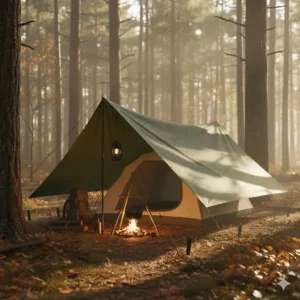
A quality camping tarp is like having insurance for your outdoor adventures. Whether you’re a weekend warrior or a seasoned backpacker, these versatile shelters protect you from rain, wind, and scorching sun. They’re lighter than lugging extra tent components, more adaptable than rigid structures, and frankly, they’re the unsung heroes of backcountry gear. In 2025, innovations in fabric technology and design have made camping tarps tougher, lighter, and more weather-resistant than ever before.
Throughout this guide, we’ll explore the top 7 camping tarps that outdoor enthusiasts swear by, breaking down their features, benefits, and ideal use cases. From ultralight hammock rain flies to heavy-duty basecamp shelters, there’s a perfect tarp waiting for your next adventure. Ready to stay dry and comfortable no matter what Mother Nature throws your way? Let’s dive in.
Quick Comparison Table
| Product Name | Size | Weight | Waterproof Rating | Best For | Price Range |
|---|---|---|---|---|---|
| Wise Owl Outfitters Rain Fly | 11′ x 9′ | 26 oz | 3000mm | Hammock camping | $30-$45 |
| Bearhard Waterproof Tarp | 10×10 ft | 2.0 lbs | 3000mm | Backpacking | $35-$50 |
| AquaQuest Defender Tarp | 10×10 ft | 3.3 lbs | 20,000mm | Heavy-duty use | $85-$120 |
| Gold Armour Rainfly Tarp | 12×10 ft | 2.5 lbs | 5000mm | Versatile camping | $40-$60 |
| Amazon Basics Camping Tarp | 11.3×13.5 ft | 3.0 lbs | Standard PE | Budget camping | $15-$25 |
| FREE SOLDIER Tarp | 10×10.5 ft | 2.2 lbs | 2500mm | General outdoor use | $30-$40 |
| PAHTTO Tarp with Poles | 16×12 ft | 4.5 lbs | 3000mm | Car camping | $70-$90 |
💬 Just one click – help others make better buying decisions too!😊
Top 7 Camping Tarps: Expert Analysis
1. Wise Owl Outfitters Hammock Rain Fly
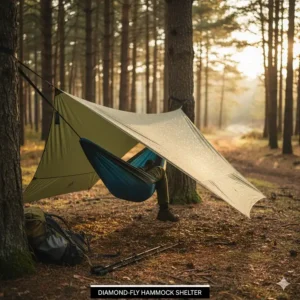
If you’re into hammock camping, the Wise Owl Outfitters Hammock Rain Fly deserves a spot at the top of your gear list. This 11′ x 9′ rain fly combines lightweight portability with serious weather protection, making it a favorite among backpackers and hammock enthusiasts across the USA.
Key Specifications:
- Material: 210T ripstop nylon with taped seams
- Waterproof rating: 3000mm PU coating
- Weight: Just 26 oz (ultralight!)
What sets this tarp apart is its thoughtful design. The taped seams create a waterproof barrier that actually works, unlike cheaper alternatives that leak at the stitching. Customer feedback consistently praises its ability to shed water during heavy downpours, with one reviewer noting it “held up perfectly through a weekend of relentless rain in the Smokies.”
✅ Pros:
- Ultralight and packs incredibly small
- Includes guy lines, stakes, and waterproof carry bag
- Excellent value for the quality
❌ Cons:
- Coverage may be limited for taller users
- Tie-out points could be more numerous
Price Range: $30-$45
2. Bearhard Waterproof Camping Tarp
The Bearhard Waterproof Camping Tarp brings military-grade durability to the civilian camping world. Available in both 10x10ft and 10x12ft sizes, this tarp features an impressive 19 reinforced pull tabs that provide exceptional setup versatility.
Key Specifications:
- Material: 210T polyester taffeta ripstop with PU aluminized coating
- Waterproof rating: 3000mm
- Weight: 2.0 lbs for the 10×10 version
The aluminized coating isn’t just for show—it reflects heat from campfires while blocking harmful UV rays, making this tarp perfect for both rainy and sunny conditions. Bearhard backs this product with a lifetime warranty, demonstrating serious confidence in their construction quality. Users appreciate the reinforced double-stitched edges and the inclusion of a 10ft Oxford ridgeline.
✅ Pros:
- Lifetime warranty backing
- UV protection and heat reflection
- Compact packing size (6″x6″x9″)
❌ Cons:
- Slightly heavier than ultralight alternatives
- Limited color options
Price Range: $35-$50
3. AquaQuest Defender Camping Tarp
When you need bombproof protection, the AquaQuest Defender Camping Tarp stands in a league of its own. With an industry-leading 20,000mm waterproof rating, this heavy-duty tarp has earned a reputation among guides, rescue teams, and serious outdoor enthusiasts who refuse to compromise on shelter quality.
Key Specifications:
- Material: 70D nylon with dual coating
- Waterproof rating: 20,000mm (highest on our list!)
- Weight: 3.3 lbs (10×10 kit version)
The Defender’s secret weapon is its dual-layer waterproof system combined with heat-taped seams—a construction method typically reserved for premium mountaineering gear. The 10×10 kit includes 19 tie-outs, 6 adjustable straps, 6 aluminum stakes, and a stuff sack. One backcountry guide reported using his Defender for “over 200 nights in Pacific Northwest storms without a single leak.”
✅ Pros:
- Unmatched waterproof performance
- Lifetime warranty from trusted brand (since 1994)
- Reinforced webbing tie-outs and ridgelines
❌ Cons:
- Higher price point
- Heavier than ultralight options
Price Range: $85-$120
4. Gold Armour Rainfly Tarp Hammock
The Gold Armour Rainfly Tarp offers premium features at a mid-range price point. With an impressive 5000mm waterproof rating and up to 33 tie-down loops (depending on size), this tarp provides exceptional setup flexibility for various camping configurations.
Key Specifications:
- Material: Ripstop nylon fabric
- Waterproof rating: 5000mm
- Multiple sizes: 8x10ft, 10x10ft, 12x10ft, 14.7x12ft
Customer reviews highlight the tarp’s versatility—it works equally well as a hammock rain fly, tent footprint, emergency shelter, or standalone camping tarp. The included package is comprehensive: guy lines, tensioners, aluminum stakes, and separate stuff sacks for the tarp and accessories. Gold Armour backs their product with a 5-year warranty, and users consistently rate it highly for durability and weather resistance.
✅ Pros:
- Multiple size options for different needs
- 5-year warranty coverage
- Complete accessory package included
❌ Cons:
- Instructions could be more detailed
- Heavier than some ultralight competitors
Price Range: $40-$60
5. Amazon Basics Waterproof Camping Tarp
Budget-conscious campers, rejoice! The Amazon Basics Waterproof Camping Tarp proves you don’t need to spend a fortune for reliable weather protection. This 11.3′ x 13.5′ tarp offers excellent coverage at an unbeatable price point.
Key Specifications:
- Material: Polyethylene with tear-resistant ripstop fabric
- Size: 11.3 x 13.5 feet
- Features: Rust-resistant grommets, reinforced corners
This tarp excels as a tent footprint or car camping shelter where weight isn’t a primary concern. The polyethylene construction with lamination on both sides provides solid waterproofing, though it won’t match the premium materials of higher-priced options. Customer feedback is mixed—some praise its value for occasional use, while others note it’s best suited for short-term camping rather than extended backcountry trips.
✅ Pros:
- Extremely affordable price point
- Large coverage area
- Durable enough for car camping
❌ Cons:
- Heavier and bulkier than nylon alternatives
- Not ideal for backpacking
Price Range: $15-$25
6. FREE SOLDIER Waterproof Portable Tarp
The FREE SOLDIER Waterproof Portable Tarp combines tactical reliability with civilian camping convenience. This 10×10.5ft (118″ × 126″) shelter provides generous coverage for 2-person setups while maintaining reasonable portability.
Key Specifications:
- Material: 210T ripstop polyester fabric
- Waterproof rating: 2500 PU coating
- Weight: Approximately 2.2 lbs
FREE SOLDIER uses heat sealing and melting processes to bond the puncture-resistant fabric, preventing water penetration at critical stress points. The reinforced ridgeline seam ensures the tarp stays secure during continuous stormy weather. While the waterproof rating is lower than some competitors, users report excellent performance in moderate to heavy rain conditions. The tarp folds into a lightweight stuff sack for easy transport.
✅ Pros:
- Military-inspired durability
- Heat-sealed seams for enhanced protection
- Good balance of weight and coverage
❌ Cons:
- Lower waterproof rating than premium options
- Limited tie-out points compared to competitors
Price Range: $30-$40
7. PAHTTO Camping Tarp with Poles
For car campers and families who want quick setup without sacrificing coverage, the PAHTTO Camping Tarp with Poles delivers an impressive 16×12 ft of overhead protection. This complete kit includes adjustable poles, making it ideal for creating standalone shelters.
Key Specifications:
- Material: 210T polyester fabric with silver inner layer
- Waterproof rating: 3000mm water pressure resistance
- Includes: 2 adjustable poles (17″-90″), stakes, guy lines, hammer, storage bag
The standout feature here is the included adjustable poles, which eliminate the need to find suitable trees or support structures. The silver inner layer provides UV protection while the leak-proof taped seams handle heavy rain with ease. At 4.5 lbs, this isn’t a backpacking tarp—but for car camping, group outings, or extended basecamp setups, the convenience factor outweighs the weight penalty.
✅ Pros:
- Complete kit with poles included
- Extra-large coverage for groups
- Fluorescent stakes for nighttime visibility
❌ Cons:
- Too heavy for backpacking
- Bulkier packed size
Price Range: $70-$90
What Are Camping Tarps? Understanding Your Shelter Options
Camping tarps are versatile, lightweight sheets of waterproof material designed to provide portable overhead protection in outdoor environments. Unlike tents with fixed structures, tarps offer flexible shelter solutions that adapt to various camping styles and weather conditions.
At their core, camping tarps serve as multipurpose barriers against rain, wind, sun, and debris. Modern tarps utilize advanced fabrics like ripstop nylon or polyester with specialized coatings that repel water while remaining breathable enough to prevent condensation buildup. According to outdoor recreation experts, tarps have evolved from simple polyethylene sheets to sophisticated shelter systems that rival traditional tents in weather protection.
Material Breakdown: Choosing the Right Fabric
Ripstop Nylon
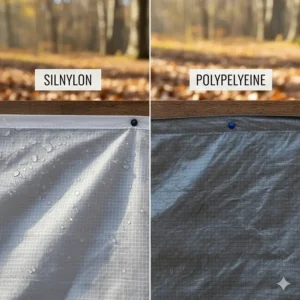
Ripstop nylon dominates the ultralight camping tarp market for good reason. This fabric incorporates reinforcement threads woven in a crosshatch pattern, preventing small tears from spreading. Most quality nylon tarps weigh between 1-3 pounds while offering 2500-5000mm waterproof ratings through polyurethane coatings.
The fabric’s strength-to-weight ratio makes it perfect for backpackers who count every ounce. However, nylon tends to stretch when wet and requires proper tensioning during setup. Premium versions often include silicone treatments that enhance water shedding while adding minimal weight.
Polyester Taffeta
Polyester taffeta provides excellent UV resistance and maintains dimensional stability better than nylon. These tarps resist stretching in wet conditions, making them easier to pitch taut. The 210T (thread count) polyester commonly used in camping tarps balances durability with reasonable weight.
Many manufacturers add PU (polyurethane) coatings to achieve waterproof ratings between 2500-3000mm. For extended sun exposure or tropical climates, polyester’s superior UV resistance prevents degradation that plagues untreated nylon over time.
Polyethylene
Budget camping tarps often utilize polyethylene construction—the same material as construction tarps. While heavier and less packable than fabric alternatives, PE tarps excel in car camping scenarios where weight isn’t critical. They’re virtually waterproof, extremely durable against abrasion, and cost-effective for occasional use.
The trade-off? PE tarps can’t compress like fabric, creating bulky packs unsuitable for backpacking. They also tend to crack in cold temperatures and degrade under prolonged UV exposure.
Waterproof Ratings Explained: Understanding Millimeter Measurements
Decoding the Numbers
Waterproof ratings measure how much water pressure fabric withstands before leaking, expressed in millimeters. A 3000mm rating means the fabric can handle a 3-meter column of water pressing down before moisture penetrates.
For camping tarps, here’s what different ratings mean in practical terms:
- 1000-2000mm: Light rain protection, suitable for dry climates or emergency backup
- 2500-3000mm: Moderate to heavy rain resistance, adequate for most camping conditions
- 5000mm+: Heavy-duty weather protection for extended exposure to severe conditions
- 10,000mm+: Extreme waterproofing for mountaineering and expedition use
Real-World Performance
However, waterproof ratings don’t tell the complete story. Seam construction, fabric durability, and tie-out reinforcement equally impact weather performance. A 3000mm tarp with taped seams often outperforms a 5000mm tarp with poorly sealed stitching during actual rain events.
The National Weather Service notes that moderate rainfall produces about 0.1 to 0.3 inches per hour—well within the capability of any tarp rated 2500mm or higher when properly pitched.
Size and Coverage: Matching Tarps to Your Camping Style
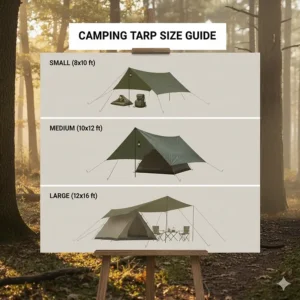
Solo Backpacking (8×10 to 10×10 feet)
Solo adventurers benefit from compact tarps in the 8×10 to 10×10 range. These sizes provide adequate coverage for one person plus gear while minimizing pack weight and setup complexity. A properly pitched 10×10 tarp creates approximately 70-80 square feet of protected space when configured in A-frame or lean-to styles.
Duo Camping (10×12 to 12×12 feet)
Two-person setups demand larger footprints. The 10×12 to 12×12 size range offers sufficient room for dual hammock configurations or provides full coverage over 2-person tents. These dimensions allow for extended overhangs that keep rain from splashing under edges during storms.
Group and Family Camping (14×14 feet and larger)
Car camping families and group basecamps require substantial coverage. Tarps exceeding 14×14 feet create communal spaces protected from elements, perfect for cooking areas or gathering spots. The PAHTTO 16×12 tarp we reviewed exemplifies this category—providing nearly 200 square feet of shelter.
Consider your camping style: backpackers prioritize light weight over size, while car campers can afford larger tarps for enhanced comfort and group accommodation.
Essential Tarp Setup Configurations
The A-Frame Pitch
The classic A-frame creates a simple ridgeline shelter by suspending the tarp’s centerline between two anchor points (trees, poles, or trekking poles). This configuration sheds rain effectively and works well in wooded areas. Stake out the four corners at 45-degree angles for maximum stability.
Lean-To Configuration
For quick weather protection, pitch one edge high and stake the opposite edge low to the ground. This creates a slanted shelter that blocks wind and rain from one direction while providing easy access. Ideal for cooking areas or quick lunch breaks on rainy hikes.
Flying Diamond Setup
Rotate your square tarp 45 degrees and stake one corner low as an entrance while raising the opposite corner high as a peak. The two remaining corners extend as wings, creating an asymmetric shelter with good coverage and ventilation.
Full Ground Coverage
In extreme weather, lay the tarp flat on the ground as a moisture barrier beneath your tent or sleeping system. This protects against ground saturation and adds an extra insulation layer. Always ensure the tarp doesn’t extend beyond your tent’s footprint, preventing water pooling underneath.
The U.S. Forest Service camping safety guidelines emphasize proper shelter setup in checking site contours to avoid water accumulation during rain.
Tie-Out Points and Attachment Systems
Understanding Tie-Out Distribution
The number and placement of tie-out points dramatically affect tarp versatility. Budget tarps offer basic corner grommets (4 points), while premium models feature 19-33 attachment points distributed along edges and ridgelines.
More tie-outs equal greater pitching options. The AquaQuest Defender’s 19 webbing loops allow precise tensioning in high winds, while the Gold Armour’s 33 loops enable creative configurations for various terrain and weather conditions.
Grommet vs. Loop Design
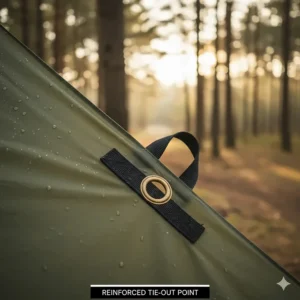
Metal grommets—metal-reinforced holes in the fabric—provide simple, durable attachment points but concentrate stress at specific locations. Sewn webbing loops distribute tension across larger fabric areas, reducing tear risk and increasing longevity.
Premium tarps often combine both: corner grommets for main anchor points and webbing loops along edges for fine-tuning. This hybrid approach balances ease of use with structural integrity.
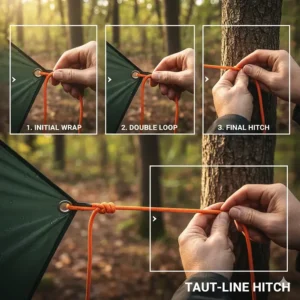
Guy Line Management
Quality tarps include guy lines (cord for securing the tarp), but many campers upgrade to reflective paracord for improved nighttime visibility. The recommended guy line diameter falls between 2-3mm—thin enough to pack compactly yet strong enough to maintain tension.
Line tensioners (small devices that lock cord without knots) simplify adjustments in changing weather. They’re especially valuable when rain loosens initial knots or wind requires retensioning.
Weight Considerations for Different Camping Styles
Ultralight Backpacking (<1.5 lbs)
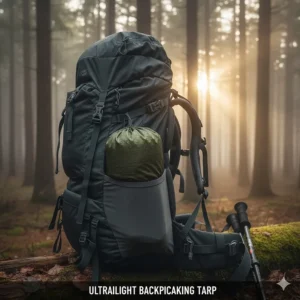
Ultralight enthusiasts obsess over pack weight, counting ounces as carefully as dollars. For this crowd, tarps under 1.5 pounds make the cut. These typically use 20D or 30D silnylon fabrics with minimal tie-outs and no included stakes or guy lines. The Wise Owl Outfitters at 26 oz (1.6 lbs) sits just above this category but offers exceptional value.
Standard Backpacking (1.5-3 lbs)
Most backpackers comfortably carry tarps in the 1.5-3 pound range. This weight class includes complete kits with stakes, guy lines, and stuff sacks without excessive burden. The Bearhard (2.0 lbs) and FREE SOLDIER (2.2 lbs) exemplify this sweet spot of protection versus portability.
Car Camping (3+ lbs)
When vehicles handle transport, weight restrictions vanish. Car camping tarps can incorporate heavier fabrics, larger dimensions, and comprehensive accessory packages. The PAHTTO 16×12 tarp with poles (4.5 lbs) provides family-sized coverage impossible with ultralight materials.
Comparing Camping Tarps vs. Traditional Tents
| Feature | Camping Tarps | Traditional Tents |
|---|---|---|
| Weight | 1-4 lbs typically | 3-8 lbs for similar capacity |
| Setup Flexibility | Highly adaptable to terrain | Fixed configuration |
| Weather Protection | Excellent when properly pitched | Consistent protection |
| Ventilation | Superior airflow | Can be stuffy |
| Bug Protection | Requires separate netting | Built-in mesh typically |
| Cost | $20-$120 average | $100-$500+ average |
Tarps shine in weight savings and versatility but require more skill to pitch effectively. Tents offer foolproof protection with minimal expertise. Many experienced campers use both: tarps for lightweight trips and tents when conditions demand enclosed shelter.
According to outdoor recreation research, tarps have gained popularity among minimalist campers seeking to reduce environmental impact through lighter footprints and simplified gear systems.
UV Protection and Sun Damage Prevention
Why UV Protection Matters
Prolonged sun exposure degrades tarp fabrics through ultraviolet radiation breaking down polymer chains. Untreated nylon can lose 50% of its strength after just one season of intense sun exposure. Polyester naturally resists UV better than nylon, but both benefit from protective coatings.
Aluminized and Reflective Coatings
Tarps with aluminum coatings (like the Bearhard) reflect both UV rays and infrared heat. This dual benefit protects the fabric while creating cooler shelter spaces during hot weather. The reflective surface also enhances visibility from aircraft in emergency situations.
UV Rating Standards
Quality tarps specify UV protection factors (UPF) similar to sunscreen SPF ratings. A UPF 50+ tarp blocks over 98% of UV radiation, providing safe shade for extended periods. This matters for family camping where children play under tarp shelters during daylight hours.
✨ Don’t Miss These Exclusive Deals!
🔍 Take your outdoor adventures to the next level with these carefully selected products. Click on any highlighted item to check current pricing and availability. These tools will help you create authentic camping experiences your family will love!
Maintenance and Care for Longevity
Cleaning Your Camping Tarp
Never machine wash tarps—the agitation damages coatings and seam tape. Instead, hand wash with mild soap and lukewarm water, gently scrubbing dirty areas with a soft brush. Rinse thoroughly to remove all soap residue, which can attract dirt and degrade waterproof coatings.
Set up the clean tarp to air dry completely before storage. Never pack a wet tarp—trapped moisture breeds mold and mildew that destroys fabrics and creates unpleasant odors. A musty tarp is a ruined tarp.
Storage Best Practices
Store tarps loosely folded or hung in cool, dry locations away from direct sunlight. Avoid cramming tarps into tiny stuff sacks for long-term storage—this stresses fabric and coating. For seasonal storage, use breathable cotton bags that prevent moisture accumulation while protecting from dust.
Periodically inspect stored tarps for mold, tears, or coating degradation. Early intervention—treating small tears with seam sealer or replacing damaged guy lines—prevents minor issues from becoming major failures.
Reapplying Waterproof Coatings
Even quality tarps eventually lose waterproofing effectiveness. When water stops beading and starts soaking into fabric, it’s time for retreatment. Spray-on or wash-in DWR (durable water repellent) treatments restore water-shedding capabilities.
Follow product instructions carefully—some treatments require heat activation (tumble drying) while others air cure. Properly applied treatments can restore aging tarps to near-original performance for a fraction of replacement cost.
Budget vs. Premium: Understanding Price Differences
Entry-Level Tarps ($15-$40)
Budget tarps like the Amazon Basics use basic polyethylene or coated nylon with minimal features. They work fine for occasional car camping or emergency backup but lack durability for regular use. Expect basic corner grommets, limited waterproofing, and shorter lifespan.
These tarps make sense for casual campers, festival-goers, or anyone needing temporary weather protection without significant investment. They’re also smart choices for kids’ camping where rough treatment is inevitable.
Mid-Range Options ($40-$70)
The sweet spot for most campers, mid-range tarps like Wise Owl, Bearhard, and Gold Armour balance quality materials with reasonable pricing. Expect 2500-5000mm waterproof ratings, reinforced tie-outs, and comprehensive accessory packages.
These tarps handle regular use across multiple seasons, making them cost-effective for active outdoor enthusiasts. The improved construction and warranties justify the higher initial investment through extended longevity.
Premium Tarps ($80-$120+)
High-end options like the AquaQuest Defender utilize advanced materials and construction techniques. Their 20,000mm waterproof ratings, reinforced seams, and lifetime warranties target serious backcountry users and professional guides who depend on gear performance in extreme conditions.
Premium tarps justify higher costs through superior durability, lighter weight for material strength, and comprehensive manufacturer support. For full-time outdoor professionals or dedicated enthusiasts, these represent smart long-term investments.
Seasonal Considerations: Year-Round Tarp Usage
Summer Camping
Hot weather demands maximum ventilation. Pitch tarps with generous gaps at ground level to encourage airflow while blocking direct sun. Lighter colors reflect heat better than dark fabrics—consider this when selecting summer tarps for desert or exposed terrain camping.
UV protection becomes critical during summer months. As noted by the U.S. Forest Service, proper shade structures significantly reduce heat-related illness risks during outdoor recreation.
Fall and Spring Shoulder Seasons
Unpredictable weather characterizes shoulder seasons. Carry tarps rated for heavy rain even if forecasts look promising—spring and fall storms develop rapidly. Pitch configurations that shed water efficiently while providing wind protection.
Winter Camping
Cold-weather camping presents unique challenges. Snow loads stress tarps differently than rain—pitch steeper angles to prevent accumulation. Avoid tarps with metal components that conduct cold and create frost points. Some winter campers use tarps as windbreaks rather than overhead shelters, protecting tent entrances from harsh winds.
Environmental Impact and Leave No Trace Principles
Quality tarps support Leave No Trace camping ethics by reducing environmental impact several ways:
Minimizing Campsite Modification: Tarps require no ground stakes when rigged between trees, leaving campsites undisturbed. This preserves natural areas for future visitors while protecting fragile ecosystems.
Reducing Gear Consumption: Durable tarps that last multiple seasons reduce manufacturing demand and waste. Choosing quality over disposable options demonstrates environmental responsibility.
Ground Protection: Using tarps as tent footprints prevents ground damage from extended camping while keeping gear cleaner and reducing washing needs.
The Wikipedia article on outdoor recreation emphasizes how minimalist camping approaches like tarp usage align with sustainable tourism principles and wilderness preservation efforts.
Safety Considerations When Using Camping Tarps
Proper Site Selection
Following USDA Forest Service safety guidelines, choose tarp locations carefully. Avoid areas beneath dead trees (“widowmakers”), overhanging cliffs, or natural drainage channels that become rivers during rainstorms. Level ground with slight slope ensures water runoff rather than pooling.
Fire Safety Distance
Never pitch tarps directly over fires or cooking stoves. Sparks and heat can melt synthetic fabrics instantly, creating dangerous situations. Maintain minimum 15-foot separation between fire sources and tarp edges. Position cooking areas upwind of tarps to prevent smoke damage to waterproof coatings.
Wind Management
High winds turn tarps into sails without proper anchoring. Use multiple guy lines with proper tensioning—loose tarps flap destructively while over-tensioned ones tear at stress points. In extreme wind forecasts, consider ground-level configurations or switching to enclosed tent shelter.
Lightning Awareness
Avoid pitching tarps as the highest point in open areas during thunderstorms. Stay away from isolated trees used as anchor points when lightning threatens. If caught in storms, follow standard lightning safety protocols regardless of shelter type.
Frequently Asked Questions
❓ How do I choose the right size camping tarp for my needs?
❓ What's the difference between silnylon and polyester camping tarps?
❓ Can camping tarps replace tents completely?
❓ How often should I reapply waterproofing to my camping tarp?
❓ What's the best camping tarp configuration for rain protection?
Conclusion: Choosing Your Perfect Camping Tarp
After exploring the top camping tarps of 2025, one thing becomes crystal clear: there’s no single “best” tarp for everyone. Your ideal shelter depends on camping style, budget, and specific needs. Solo backpackers chasing ultralight adventures might gravitate toward the Wise Owl Outfitters for its featherweight portability. Serious backcountry travelers who refuse to compromise on weather protection will appreciate the AquaQuest Defender’s bombproof 20,000mm rating. Budget-conscious car campers find excellent value in the Amazon Basics model, while families benefit from the PAHTTO’s generous 16×12 coverage with included poles.
The common thread among quality tarps? They all transform unpredictable outdoor environments into comfortable, protected spaces where memories are made. Whether you’re hammock camping in the Appalachians, car camping with kids in state parks, or pushing into remote wilderness areas, the right tarp becomes your trusted shelter against whatever weather arrives.
Remember that tarp camping involves a learning curve—expect some trial and error with pitching techniques and configuration choices. Start with simple setups on good-weather trips before relying on tarps during challenging conditions. As skills develop, you’ll discover the freedom and versatility that make tarp camping so rewarding for outdoor enthusiasts worldwide.
Ready to upgrade your camping game? Choose the tarp that matches your adventure style, practice your pitching skills in the backyard, and get ready to experience the great outdoors with newfound confidence and protection. Happy camping!
Recommended for You
- 7 Best Camp Bug Spray Options 2025 – Expert Reviews
- 7 Best Blinds for Camper 2025: Ultimate UV Protection Guide
- 15 Best Make Ahead Camping Meals for 2025 | Easy Pre-Made Options
Disclaimer: This article contains affiliate links. If you purchase products through these links, we may earn a small commission at no additional cost to you.
✨ Found this helpful? Share it with your friends! 💬🤗
