In This Article
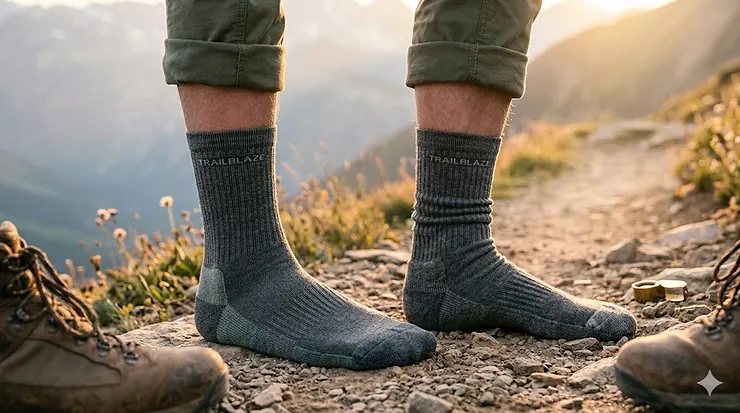
Here’s something most hikers learn the hard way — your feet can make or break any trail adventure. According to research from Stanford University, friction foot blisters affect between 7% and 54% of outdoor hikers, making proper sock selection one of the most critical gear decisions you’ll make. I’ve watched seasoned backpackers hobble back to camp with angry blisters, all because they underestimated the power of proper hiking socks. The difference between synthetic gym socks and purpose-built hiking socks isn’t just comfort; it’s the difference between finishing a trail with a smile or limping through the last three miles cursing every rock.
What the marketing materials won’t tell you is this: not all “hiking socks” actually deliver on their promises. I’ve tested dozens of pairs across alpine scrambles, humid forest treks, and scorching desert trails. The socks that survive those conditions without creating friction disasters share specific features that go beyond just being “made of merino wool.” We’re talking strategic cushioning placement that actually absorbs impact where your foot strikes hardest, moisture management that doesn’t quit when you’re six hours into a climb, and construction methods that prevent the dreaded mid-hike bunching.
In 2026, the best hiking socks have evolved beyond simple wool tubes. Modern designs incorporate compression zones that reduce fatigue, seamless toe construction that eliminates hot spots before they start, and material blends that balance durability with breathability. Whether you’re tackling weekend day hikes or planning a thru-hike across demanding terrain, this guide breaks down exactly which socks deliver real-world performance — not just impressive spec sheets.
Quick Comparison: Top 7 Hiking Socks at a Glance
| Product | Best For | Cushion Level | Price Range | Key Feature | Warranty |
|---|---|---|---|---|---|
| Darn Tough Hiker Full Cushion | Cold weather & heavy boots | Full | $27-$32 | Lifetime durability | Unconditional lifetime |
| Darn Tough Light Hiker Micro Crew | Summer trails & trail runners | Light | $24-$28 | Superior breathability | Unconditional lifetime |
| Danish Endurance 3-Pack | Budget-conscious hikers | Light-Medium | $30-$35 for 3 | Best value per pair | 1-year hole-free |
| innotree Merino Wool 3-Pack | Multi-season versatility | Medium | $28-$33 for 3 | Soft comfort blend | 1-year replacement |
| Smartwool Classic Hike Light | All-day comfort seekers | Light | $22-$26 | Flat toe seams | Limited warranty |
| Balega Hike Performance | Anatomical precision fit | Medium | $18-$22 | Left/right specific | Standard warranty |
| Smartwool Performance Hike | Technical hikers | Light | $20-$25 | 4 Degree fit system | Limited warranty |
Looking at this comparison, the landscape splits into two clear camps: premium lifetime-warranty socks that cost more upfront but deliver years of service, versus value-pack options that sacrifice some longevity for immediate affordability. The Darn Tough models justify their higher per-pair cost through unconditional replacement guarantees — something Danish Endurance and innotree can’t match despite their attractive multi-pack pricing. However, if you’re outfitting a family or need multiple pairs quickly, the three-pack options deliver solid performance at around $10 per pair, compared to $25-$30 for premium singles.
💬 Just one click — help others make better buying decisions too! 😊
Top 7 Best Hiking Socks: Expert Analysis
1. Darn Tough Hiker Full Cushion Boot Sock
The Darn Tough Hiker Full Cushion sits at the top for one compelling reason: it’s the sock that thru-hikers refuse to replace with anything else. Made in Vermont with 66% merino wool, 32% nylon, and 2% Lycra spandex, this boot-height sock transforms the brutal punishment of rocky trails into something your feet can actually handle for weeks on end.
What makes this sock exceptional isn’t just the full cushioning from heel to toe — it’s how that cushioning is strategically distributed. The underfoot padding is thick enough to absorb the repetitive impact of descents without making your boots feel tight, while the shin area stays thinner for breathability. This means you get protection where joints take the most abuse, without the swampy overheating that plagues cheaper thick socks.
For hikers tackling autumn, winter, or early spring conditions, this sock delivers warmth without bulk. The merino wool’s natural temperature regulation keeps feet comfortable across surprising temperature swings — I’ve worn these starting predawn in 35°F conditions and kept them on through midday sun without my feet feeling waterlogged. Customer feedback consistently highlights the “disappears inside your boot” fit and the fact that after years of use, many pairs still haven’t needed warranty replacement.
The lifetime guarantee isn’t marketing fluff. Darn Tough actually honors it, though most experienced hikers report their pairs lasting three to five years of regular trail abuse before showing any wear.
✅ Pros:
- Unconditional lifetime warranty actually honored
- Maintains cushioning without compressing flat after months of use
- Tall boot cut prevents debris entry and boot collar friction
❌ Cons:
- Too warm for summer desert hiking or humid lowland trails
- Higher per-pair cost than multi-pack options
Price Range: Around $27-$32 per pair
Best For: Backpackers doing multi-day trips, cold-weather hikers, anyone using stiff leather boots
2. Darn Tough Light Hiker Micro Crew
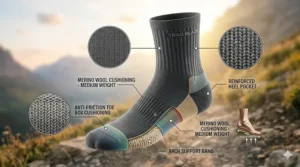
While the Full Cushion handles winter, the Light Hiker Micro Crew dominates summer trail conditions. This lighter-weight sibling features 61% merino wool for men’s versions and 59% for women’s, with the rest being nylon and Lycra for durability and stretch. The key innovation here is selective cushioning — padding only where impact happens (heel and ball of foot), leaving the rest of the sock breathable.
What outdoor gear reviewers won’t emphasize enough: this sock dries absurdly fast. On multi-day trips where you’re washing socks in streams, these can go from soaked to trail-ready in under two hours of sunshine. Compare that to full-cushion models that need four-plus hours, and you understand why fastpackers gravitate toward this model.
The micro crew height (just above ankle bone) pairs perfectly with low-cut hiking shoes and trail runners, though it works fine with mid-height boots too. I’ve logged hundreds of miles in these during humid forest hikes, and the ventilated knit pattern actually makes a measurable difference — feet stay noticeably drier than in standard merino socks of similar weight.
Customer consensus points to exceptional comfort for day hikes and the fact that even after years of washing, these socks retain their shape better than almost any competitor. The trade-off is they’re not as plush-feeling as full cushion models, which some hikers interpret as “less comfortable” when really it’s just a different comfort profile optimized for breathability.
✅ Pros:
- Best-in-class breathability for warm weather hiking
- Quick-drying merino blend perfect for washing on trail
- Lifetime warranty provides long-term value
❌ Cons:
- Light cushioning may feel insufficient for heavy backpack loads
- Can sag slightly on extended all-day hikes
Price Range: Around $24-$28 per pair
Best For: Summer hikers, trail runners, anyone prioritizing breathability over maximum cushioning
3. Danish Endurance Merino Wool Hiking Socks 3-Pack
The Danish Endurance 3-Pack makes premium hiking sock features accessible at value-pack pricing. At 38% merino wool, 30% polyamide, 30% acrylic, and 2% elastane, this blend leans more synthetic than competitors — and that’s actually strategic. The higher synthetic content accelerates moisture wicking and improves durability in high-friction zones, though it does sacrifice some of merino’s natural odor resistance.
What sets Danish Endurance apart from other budget options is the ventilation design. Strategic mesh panels across the instep and shin create actual airflow channels rather than just thinning the fabric. On hot climbs, this translates to noticeably cooler feet compared to solid-knit budget socks. The cushioning sits in the light-to-medium range — enough to prevent hotspots on full-day hikes, but not so thick you need to size up your boots.
Developed with Everest mountaineer Rasmus Kragh, these socks demonstrate thoughtful design despite the lower price point. The anatomical left/right shaping and arch compression keep the sock positioned correctly without the aggressive tightness that some competitors use. Customer reviews frequently mention the socks holding up well for one to two solid hiking seasons before showing wear — impressive longevity for the price.
The one-year hole-free guarantee provides peace of mind, though it’s not as comprehensive as Darn Tough’s lifetime policy. Still, at roughly $10-$12 per pair when buying the three-pack, you’re getting 60-70% of the performance of $25 socks at less than half the investment.
✅ Pros:
- Excellent value at around $10-$12 per pair in three-pack
- Superior breathability from strategic mesh ventilation zones
- Fairly produced in Portugal with OEKO-TEX certification
❌ Cons:
- Lower merino content means less natural odor resistance than premium options
- Durability decent but won’t match Darn Tough’s multi-year lifespan
Price Range: Around $30-$35 for 3-pack ($10-$12 per pair)
Best For: Hikers building a sock rotation on a budget, warm-weather trekkers, anyone wanting to try merino blend socks without premium investment
4. innotree Merino Wool Hiking Socks 3-Pack
The innotree 3-Pack delivers surprisingly soft comfort through its 64-67% merino wool content — significantly higher than most budget competitors. This elevated wool percentage means better temperature regulation and natural anti-odor performance that actually lasts through multi-day wear. The remaining blend of elastane, spandex, and nylon creates a sock that feels almost plush against skin while maintaining necessary structure.
What the spec sheet doesn’t convey is how well this sock manages the comfort-versus-durability balance. The fine gauge knitting creates a smooth interior that prevents the itchiness some people experience with coarser wool socks, while reinforced heel and toe zones use double-layer construction in the highest-wear areas. This targeted reinforcement approach means the sock doesn’t feel uniformly thick everywhere, which improves breathability without sacrificing longevity.
The mid-level cushioning works exceptionally well for hikers transitioning from gym socks to purpose-built hiking socks. It’s substantial enough that your feet notice the difference immediately, but not so extreme that it requires boot sizing adjustments. Arch compression support is moderate — enough to reduce fatigue on long days without feeling like you’re wearing compression stockings.
Customer feedback consistently highlights two things: these socks stay put without excessive cuff tightness, and they maintain their cushioning even after 20-30 washes. The one-year replacement warranty provides reasonable protection, though some users report the company responds quickly to warranty claims.
✅ Pros:
- Higher merino content (64-67%) than most budget options provides better odor control
- Exceptionally soft interior reduces break-in period to essentially zero
- Targeted cushioning prevents blisters without adding bulk
❌ Cons:
- Some users report sizing runs slightly large — consider sizing down if between sizes
- Durability good but not exceptional for extremely rugged multi-week expeditions
Price Range: Around $28-$33 for 3-pack ($9-$11 per pair)
Best For: Hikers wanting soft comfort with good merino content, budget-conscious backpackers, anyone doing moderate-distance day hikes or weekend trips
5. Smartwool Classic Hike Light Cushion Crew
The Smartwool Classic Hike Light Cushion represents the brand’s refined approach to everyday hiking comfort. Using ZQ-certified merino wool (promoting environmental and animal welfare standards), these socks balance ethical sourcing with technical performance. The light cushioning runs specifically along the footbed — heel to toe — rather than extending up the entire sock, which keeps the crew portion breathable while protecting your soles.
What Smartwool nails here is the fit engineering. The sock’s construction uses what they call a “performance fit” that’s snug without constriction, and most hikers report zero slippage even on steep descents where gravity tries to pull socks down into boots. The virtually seamless toe design uses flat-knit construction that eliminates the raised ridge found in cheaper socks — a small detail that prevents painful pressure points during long mileage days.
The merino blend’s moisture-wicking capability shines in transitional seasons — spring and fall when morning starts cold but afternoons warm up. The sock adapts to temperature shifts better than purely synthetic options, though it can’t quite match Darn Tough’s range in extreme conditions. Customer feedback frequently mentions these socks working great for eight to twelve months of regular use before showing wear, which is solid though not exceptional longevity.
Smartwool’s warranty has been updated in recent years to be more supportive, though it’s still not the unconditional lifetime coverage that Darn Tough offers. For hikers who prioritize comfort and ethical manufacturing over maximum durability, this sock hits the sweet spot.
✅ Pros:
- Flat-knit seamless toe eliminates blister-causing pressure points
- ZQ-certified merino ensures responsible sourcing standards
- Excellent fit retention throughout full-day hikes
❌ Cons:
- Some users report cuff can be tight for larger calves
- Durability good but trails behind Darn Tough for multi-year use
Price Range: Around $22-$26 per pair
Best For: Eco-conscious hikers, day hikers prioritizing comfort over maximum durability, anyone with sensitive feet prone to toe seam irritation
6. Balega Hike Performance Socks
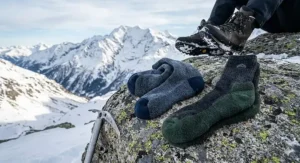
The Balega Hike Performance takes anatomical sock design further than almost any competitor. These aren’t just “left and right foot specific” — the entire construction wraps around your foot’s natural contours with precision that feels immediately different when you first put them on. The secret is Balega’s combination of Drynamix™ moisture-wicking yarn, Tencel™ Lyocell for softness, and ZQ™ traceable merino wool for temperature regulation.
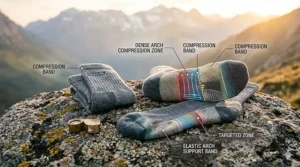
What makes this sock unique is the strategic cushioning placement based on actual hiking biomechanics. Extra padding sits under the lace buffer zone where boot tongues create pressure, extends over the toe box to absorb articulation flex, and runs up the Achilles to prevent stiff boot collar abrasion. This isn’t random thick padding everywhere — it’s targeted protection where hiking specifically creates friction and impact points.
The V-Tech compression runs from ball-of-foot to ankle, providing support that reduces foot swelling on long days without the aggressive squeeze that makes some compression socks uncomfortable. The deep heel pocket with triple Y-heel stitching locks the sock in position, and after full-day testing, these genuinely don’t migrate or bunch like looser-fitting alternatives.
Customer reviews emphasize the instant comfort and the fact that these socks feel “custom-fitted” compared to standard hiking socks. The trade-off is these work best for hikers whose foot shape aligns with Balega’s anatomical design — some users with very wide or very narrow feet report the fit isn’t as perfect for them.
✅ Pros:
- True left/right anatomical design reduces friction more effectively than symmetrical socks
- Targeted cushioning addresses specific hiking pressure points intelligently
- Tencel Lyocell creates exceptionally soft feel against skin
❌ Cons:
- Anatomical fit may not suit all foot shapes equally well
- Price point in the mid-range without lifetime warranty protection
Price Range: Around $18-$22 per pair
Best For: Hikers with standard foot shapes, anyone who’s struggled with generic sock bunching, trail users wanting scientific cushioning placement
7. Smartwool Performance Hike Light Cushion Crew
The Smartwool Performance Hike Light Cushion (formerly PhD Outdoor) received a sustainability upgrade that actually improved performance. The redesign incorporates recycled nylon while enhancing durability through Indestructawool™ technology — strategically placed reinforcement fibers in high-wear zones. This means the sock resists holes and thinning better than earlier Smartwool models, addressing the main complaint about previous generations.
What separates this from Smartwool’s Classic line is the 4 Degree™ elite fit system, which uses two elastics — one in the arch, one in the cuff — that work together to keep the sock perfectly positioned. The body-mapped mesh zones create active ventilation in areas where heat builds up (top of foot, shin) while keeping cushioning where protection is needed. This creates a sock that breathes more like a lightweight model while protecting like a medium cushion.
The light cushioning along the footbed provides just enough impact absorption for day hikes and moderate backpacking without the bulk that makes boots feel cramped. After testing these across rocky terrain and smooth trails, the cushioning strikes an ideal balance for hikers who don’t need maximum padding but want more protection than ultra-light running socks provide.
Customer experiences divide slightly — some report exceptional durability lasting years, while others experienced premature wear. This variability suggests manufacturing consistency issues that Smartwool has been working to address. The updated Indestructawool technology in current models appears to have improved outcomes.
✅ Pros:
- Recycled nylon content reduces environmental impact without compromising performance
- 4 Degree fit system keeps sock positioned perfectly even on technical terrain
- Enhanced mesh zones provide superior breathability for warm conditions
❌ Cons:
- Some inconsistency in durability between individual pairs
- Cuff tension can leave marks on calves during extended wear
Price Range: Around $20-$25 per pair
Best For: Environmentally conscious hikers, technical trail users wanting advanced fit systems, warm-weather backpackers needing breathable protection
How to Choose the Perfect Hiking Socks: An Expert Decision Framework
Picking hiking socks isn’t about finding the “best” option — it’s about matching sock characteristics to your specific hiking patterns, climate conditions, and foot physiology. The factors that matter most are the ones marketing materials downplay because they’re harder to sell.
Step 1: Match Cushion Level to Your Terrain and Boot Type
Full cushion socks work best when you’re carrying heavy loads (30+ pounds) over rocky terrain in stiff boots. The extra padding absorbs repetitive impact that would otherwise create pressure points and bruising. Light cushion socks suit day hikers in trail runners or anyone prioritizing speed and breathability over maximum protection. Medium cushion hits the middle ground for moderate backpacking with flexible boots.
Here’s what gear reviewers rarely mention: your feet adapt over time. If you’re new to hiking, start with medium cushion even if you’re only day hiking — your feet haven’t developed the tolerance that experienced hikers build up. After six months of regular hiking, you can experiment with lighter cushion levels as your foot conditioning improves.
Step 2: Consider Your Personal Thermoregulation
Some people’s feet run hot, some run cold, and this matters more than general climate. I know hikers who wear full cushion Darn Tough socks in summer because their feet stay surprisingly comfortable, while others need ultra-light socks in spring because they overheat easily. Pay attention to how your feet respond in different socks during shorter hikes before committing to a full rotation for long trips.
Merino wool content above 60% provides superior temperature regulation across varying conditions. Blends with 40-50% merino work well for hikers whose feet run hot, while 65-70% merino suits those prone to cold toes.
Step 3: Prioritize Seamless Toe Construction
This is non-negotiable if you’re blister-prone. The raised seam in traditional socks creates a friction line that becomes increasingly irritating over miles. Flat-knit seamless toes (like Smartwool’s Virtually Seamless technology) or true seamless construction eliminate this problem entirely. If you’ve never had toe blisters, standard construction is fine — but once you’ve experienced toe seam pain, you won’t go back.
Step 4: Decide Between Lifetime Warranty Premium or Value Multi-Packs
Darn Tough’s lifetime warranty means buying three pairs for $75-$90 gives you hiking socks potentially forever — just mail back worn pairs for free replacements. Danish Endurance or innotree three-packs at $30-$35 provide similar quantity for less upfront cost but need replacing every one to two years. Over five years, Darn Tough is actually cheaper if you factor in replacements, but the initial investment is higher.
If you’re just getting into hiking and unsure what sock features you prefer, start with a value three-pack to experiment. Once you know what works for your feet, invest in premium lifetime pairs.
Step 5: Test Height Options for Your Footwear Style
Crew height (4-6 inches above ankle) prevents debris entry with boots and protects against collar abrasion. Quarter or ankle height pairs better with low-cut hiking shoes and trail runners, reducing bulk and improving breathability. Micro crew sits between these heights, offering boot compatibility without the extra fabric of full crew length.
The sock height that feels perfect in the store can feel wrong after eight miles if it doesn’t match your footwear. Most experienced hikers own multiple heights and select based on the specific boots or shoes they’re wearing that day.
Common Mistakes When Buying Hiking Socks (And How to Avoid Them)
Mistake #1: Choosing Based on Feel in the Package, Not Performance on Trail
The softest, plushest sock in the store often performs worst on the trail. Excessive cushioning compresses under sustained wear, creating a saggy sock that bunches in boots. Premium hiking socks should feel slightly firm and structured when new — they break in to perfect comfort after the first few washes, while ultra-soft socks often deteriorate quickly.
Mistake #2: Ignoring Material Blend Ratios
Marketing emphasizes “merino wool socks” without clarifying that 20% merino performs completely differently than 70% merino. Check actual blend percentages. For serious temperature regulation and odor control, aim for at least 55-60% merino content. Below 40%, you’re essentially buying synthetic socks with merino marketing.
Synthetic materials (nylon, polyamide, acrylic) add durability and moisture wicking speed, so some blend is beneficial. But brands using 70%+ synthetics with trace merino are selling you performance characteristics the sock can’t really deliver.
Mistake #3: Buying the Wrong Size to “Prevent Blisters”
Some hikers size up thinking looser socks reduce friction. This backfires spectacularly — loose socks bunch, migrate, and create more friction than properly fitted ones. Hiking socks should fit snugly with the heel cup sitting exactly at your heel. If they feel slightly tight when new, that’s correct — they’ll relax slightly after washing.
Size based on your actual foot measurement, not your shoe size. Feet often differ from shoe sizing, especially if you size up boots for hiking. Check each brand’s specific sizing chart rather than assuming your usual size translates across brands.
Mistake #4: Replacing Socks Too Soon (or Too Late)
Hikers either replace socks at the first sign of thinning or wear them until literal holes appear. The correct replacement timing is when the elastic loses its grip strength — if socks slide down inside boots or the heel cup no longer sits properly positioned, the sock has lost its functional integrity even if fabric looks intact.
For premium socks with warranties, replace when you notice performance decline and use the warranty. For value socks without warranties, replace when stretch degradation becomes noticeable, typically after 50-80 full-day hikes depending on terrain intensity.
Mistake #5: Not Having Enough Pairs in Rotation
Using the same two pairs constantly accelerates wear and doesn’t allow socks to fully dry between uses. Merino wool performs best when it has 24-48 hours to air out after wearing. Minimum rotation should be four pairs for weekend hikers, six pairs for frequent trail users. This extends the lifespan of each pair significantly.
Hiking Socks vs Running Socks vs Everyday Socks: What Actually Matters
The engineering differences between these sock categories aren’t just marketing — they address fundamentally different biomechanical demands. Understanding these distinctions prevents the expensive mistake of using the wrong sock type for hiking.
Running socks optimize for forward motion with heel-to-toe weight transfer. Cushioning concentrates under the ball of the foot where push-off happens, while the heel gets less padding since runners land mid-to-forefoot. Hiking socks distribute cushioning more evenly because hikers’ weight shifts in multiple directions — lateral on side slopes, heel-heavy on descents, toe-heavy on climbs.
Running socks also prioritize extreme breathability over warmth retention since runners generate huge amounts of heat but rarely face extended cold exposure. Hiking socks balance breathability with insulation because hikers often start cold, warm up during climbs, then cool down during rest breaks at elevation. This requires materials and construction that adapt to temperature fluctuations rather than just dumping heat constantly.
Everyday casual socks lack the reinforcement zones that prevent hiking-specific wear patterns. The areas that wear out first on hiking socks — heel strike zone, ball of foot, and toe box — get reinforced with denser knitting or additional material layers in quality hiking socks. Casual socks use uniform construction that develops holes quickly under trail conditions.
The height difference also matters functionally, not just aesthetically. Hiking sock crew height protects against boot collar abrasion and debris entry in ways that running ankle socks can’t match. Trying to hike in running socks often results in blisters where boot collars rub unprotected skin, plus dirt and small stones entering shoes.
Can you hike in running or casual socks? Sure, for short easy trails. But beyond five miles or on any technical terrain, the wrong sock type creates preventable discomfort that escalates into real problems.
Understanding Merino Wool: Why It Dominates Hiking Sock Materials
Merino wool’s dominance in hiking socks comes from properties that synthetic materials still can’t fully replicate, despite decades of fabric technology advancement. The specific advantages matter more than generic “natural fiber” marketing.
Merino fibers have a natural crimp that creates tiny air pockets throughout the fabric. These pockets trap warm air when temperatures drop, insulating feet without the bulk of thicker materials. When temperatures rise, those same pockets allow heat to escape through the fiber structure. A peer-reviewed study from North Carolina State University found that 100% merino wool garments deliver superior thermal comfort and performance benefits during dynamic activities like hiking, maintaining thermal equilibrium during both exertion and rest periods.
The odor resistance comes from lanolin compounds naturally present in wool fibers that inhibit bacterial growth. Bacteria breaking down sweat causes foot odor — without bacterial multiplication, even sweaty merino socks smell dramatically less than synthetic options after the same wear duration. Research from the Pacific Crest Trail Association confirms what thru-hikers have known for years: merino wool’s natural antibacterial properties significantly reduce odor compared to synthetic materials, even after days of continuous wear.
Merino absorbs moisture into the fiber core while the outer surface stays relatively dry to touch. This means merino socks can absorb up to 30% of their weight in moisture before feeling wet against skin, while synthetics feel damp almost immediately. For hikers crossing streams or dealing with rain, this moisture absorption capacity prevents that cold, clammy sock sensation.
The fiber diameter in high-quality merino (18-19 microns) is thin enough to avoid the itchiness associated with traditional wool. Cheaper hiking socks sometimes use coarser merino (21-24 microns) that can irritate sensitive skin, which is why testing different brands matters if you’ve had bad wool experiences.
Merino’s main weakness is durability in pure form, which is why all quality hiking socks blend merino with nylon, polyamide, or other synthetics for abrasion resistance. Blends with 55-70% merino provide wool’s benefits while synthetic fibers prevent premature wear in high-friction zones.
What to Expect: Real-World Performance Over a Hiking Season
New hiking socks feel different than they will after a month of regular use, and understanding this evolution prevents disappointment when initial impressions shift. Quality hiking socks actually improve during the first few wears as materials break in and conform to your specific foot shape.
First Wear (Miles 0-10)
Premium socks often feel slightly stiff or overly structured when brand new. The elastic cuff might seem too tight, and cushioning can feel firmer than expected. This is intentional engineering — the materials haven’t been compressed and shaped by your foot yet. After the first wash, fibers relax approximately 5-10%, creating the intended fit.
Light blisters during initial wears don’t necessarily mean the sock is wrong for you. Your feet are adjusting to new friction patterns, and different cushioning placement creates temporary pressure points that resolve as feet adapt. Give new socks three to four full-day hikes before judging performance, unless you experience severe pain.
Weeks 2-4 (Miles 10-50)
This is when hiking socks reach peak performance. The merino has molded to your foot contours, the elastic has found its ideal tension, and the cushioning has compressed to its long-term density. Socks that survive this break-in period without significant issues typically become reliable long-term performers.
Watch for premature cushion flattening during this phase. If underfoot padding feels noticeably thinner after 20-30 miles, the sock uses low-quality materials or insufficient density. Quality hiking socks maintain cushioning structure through hundreds of miles — early compression indicates you got a budget sock misrepresented as premium.
Months 2-6 (Miles 50-200)
Durability differences between brands become obvious in this range. Budget socks often show thinning at heel strike zones or develop loose elastic around month four. Premium socks should still look and feel nearly new, with only minor pilling on the outer surface that doesn’t affect function.
This is also when odor control differences become apparent. High-merino-content socks continue managing odor effectively, while synthetic-heavy blends start requiring washing after each use instead of every 2-3 wears. If you notice increasing smell despite unchanged hygiene practices, the sock’s anti-microbial properties are degrading.
Beyond 6 Months (Miles 200+)
At this point, you’re either activating warranties on failed socks or confirming your investment in quality was worthwhile. Darn Tough and similar premium brands commonly last three to five years of regular use (200-500 miles annually) before needing warranty replacement. Value-tier socks typically need replacing around the 12-18 month mark as elastic fails or holes appear.
The replacement timing isn’t always obvious. Even without visible holes, socks lose performance when elastic stretch degradation causes slippage inside boots or when cushioning compresses to the point of feeling thin. Trust performance decline over visual condition — a sock that looks intact but slides around constantly has reached end-of-life functionally.
Hiking Socks for Different Conditions: Matching Material to Environment
Desert Hiking: Breathability Trumps Insulation
Desert conditions demand maximum moisture wicking and heat dissipation, which means lightweight socks with high synthetic content paradoxically outperform pure merino. The Darn Tough Light Hiker or Smartwool Performance Light models work better than their heavier counterparts because they dump heat aggressively rather than regulating it.
The challenge in deserts isn’t just heat — it’s the massive temperature swing from predawn starts (often 40-50°F) to midday peaks (90-110°F). Socks need to transition from adequate warmth to maximum cooling within hours. Light cushion merino blends (40-50% wool) handle this better than either pure synthetics (too cold at dawn) or heavy merino (too hot by noon).
Alpine/Mountain Hiking: Temperature Regulation Priority
High-elevation hiking creates rapid weather changes and varying exertion levels. Climbing steep sections generates heat; reaching windy ridges at elevation demands insulation. Full or medium cushion socks with 60-70% merino content provide the thermal versatility mountain conditions require.
The Darn Tough Hiker Full Cushion excels here because the thickness provides wind-blocking insulation at exposed elevations while the merino breathes enough during climbs to prevent swamp foot. Synthetic socks that work fine at lower elevations often fail in mountains because they can’t adapt to microclimates.
Humid Forest Trails: Moisture Management Critical
Tropical or humid forest conditions challenge even premium hiking socks because ambient humidity prevents evaporative cooling. Sweat has nowhere to evaporate, so moisture management shifts from wicking to absorption capacity. High merino content (65%+) socks like innotree or Smartwool Classic absorb moisture into fibers, keeping the feeling of wetness away from skin even when thoroughly soaked.
Quick-dry capability matters more here than in arid climates. The Danish Endurance’s higher synthetic content (60%) actually provides an advantage in humid conditions by drying faster during brief breaks, though it sacrifices some odor control compared to merino-heavy alternatives.
Snow and Winter Hiking: Insulation Without Bulk
Winter hiking socks need to fit inside insulated boots without creating circulation-restricting tightness, while still providing warmth. This rules out heavy casual wool socks that seem warm but actually compress too much under boot pressure. Technical winter hiking socks use medium to full cushion with high merino content (65-70%) that provides warmth through air-trapping crimp rather than sheer thickness.
The Smartwool Classic Mountaineer Maximum Cushion (not in our top 7 but worth mentioning) represents the winter extreme — heavyweight construction specifically for sub-freezing conditions. For most winter hiking where you’re moving and generating heat, medium cushion socks like the Darn Tough Hiker Micro Crew with good merino content provide better performance than ultra-thick options.
Long-Term Cost Analysis: Premium vs Budget Hiking Socks
The price-per-pair comparison misleads when you factor in replacement frequency and warranty coverage. Here’s the actual five-year cost analysis comparing different approaches:
Premium Lifetime Warranty Strategy (Darn Tough):
- Initial purchase: 4 pairs × $28 = $112
- Replacements over 5 years: $0 (warranty covers)
- Total cost: $112
- Cost per year: $22.40
- Pairs owned after 5 years: 4 (potentially replaced multiple times)
Mid-Tier Multi-Pack Strategy (Danish Endurance, innotree):
- Initial purchase: 2 three-packs × $32 = $64 (6 pairs total)
- Replacements every 18 months: 4 three-packs × $32 = $128
- Total cost: $192
- Cost per year: $38.40
- Pairs owned after 5 years: 6
Budget Synthetic Approach:
- Initial purchase: 3 value packs × $20 = $60 (9 pairs)
- Replacements every 10-12 months: 12 packs × $20 = $240
- Total cost: $300
- Cost per year: $60
- Pairs owned after 5 years: 9 (frequent replacement cycle)
The numbers reveal that Darn Tough’s premium pricing is actually the most economical long-term approach, assuming you actually use the warranty when socks wear out. The mid-tier strategy costs 70% more over five years while delivering slightly more total pairs. Budget approaches nearly triple the expense while creating a constant replacement cycle.
However, this analysis assumes hikers actually mail back worn Darn Tough socks for warranty replacement rather than just buying new pairs. Many people don’t use warranties even when eligible, which shifts the calculation toward mid-tier value.
There’s also a diversification argument for multi-pack approaches — owning six pairs in rotation extends individual pair lifespan compared to wearing four pairs more frequently. If you only hike occasionally (under 50 miles annually), the mid-tier strategy might actually last nearly as long as premium for less initial investment.
Care and Maintenance: Making Hiking Socks Last Longer
Proper washing and storage dramatically extends sock lifespan, yet most hikers destroy premium socks through preventable care mistakes. The protocols that matter:
Washing Protocol for Merino Wool Socks
Turn socks inside out before washing. This single step prevents pilling (those annoying fabric balls) on the outer surface. Pilling happens when outer fibers rub against other garments in the wash — inverting puts the smooth interior surface outside, protecting the visible exterior.
Use cool to warm water (85-95°F maximum), never hot. Hot water shrinks merino fibers and degrades elastic components faster. Most sock deterioration blamed on “poor quality” actually stems from hot water washing that manufacturers explicitly warn against.
Skip fabric softener entirely. Fabric softeners coat fibers with chemicals that reduce merino’s moisture-wicking capability. The soft feel you gain temporarily comes at the cost of the breathability you paid for. Merino socks don’t need softener — they’re naturally soft when properly cared for.
Air dry or use low tumble dry settings. High dryer heat accelerates elastic breakdown and can felt merino fibers. Laying socks flat to dry takes longer but preserves structure best. If you must machine dry, use the lowest heat setting and remove socks while still slightly damp to finish air drying.
Avoid bleach or harsh detergents. Use wool-specific detergent or gentle detergent without enzymes. Enzymes designed to break down protein stains also break down protein-based merino fibers. Sportswear detergents (like Nikwax or Grangers) are specifically formulated to clean technical fabrics without degradation.
Storage Considerations
Let socks fully dry between uses. Merino wool continues wicking moisture for hours after wear. Stuffing damp socks directly into a pack or drawer prevents complete drying and encourages mildew. Hang socks overnight before storing, especially after sweaty hikes.
Avoid compression for long-term storage. Elastic cuffs develop permanent stretch when compressed under weight for months. Store socks loosely rather than balled up in drawers, especially during off-season. The elastic recovers better from relaxed storage.
Rotate pairs actively. Using the same pair repeatedly doesn’t allow fibers to fully recover between wears. A rotation of four to six pairs where each sock rests 3-4 days between uses extends total lifespan significantly compared to wearing two pairs alternately.
Field Cleaning on Multi-Day Trips
Rinse in streams or lakes, not just air dry. Sweat salt buildup continues breaking down fibers even when dry. Quick rinses during rest days remove accumulated salts, preserving material integrity. You don’t need soap — cold water removes most sweat residue.
Wring gently, don’t twist aggressively. Wringing removes most water without stressing elastic fibers like aggressive twisting does. Lay socks flat on rocks in sun, rotating every 30-60 minutes for even drying.
Carry backup pairs for stream crossings. Wet merino socks take 4-6 hours to fully dry in field conditions. Having dry backup socks prevents the temptation to hike in wet socks, which accelerates blister formation and fiber wear.
FAQ: Your Hiking Sock Questions Answered
❓ How often should you replace hiking socks?
❓ Can you wear hiking socks with regular shoes for everyday use?
❓ Do you need different socks for summer vs winter hiking?
❓ Should hiking socks be tight or loose?
❓ What's the difference between men's and women's hiking socks?
Conclusion: Finding Your Perfect Trail Companion
The best hiking socks aren’t determined by price or brand prestige — they’re the ones that match your specific hiking style, climate conditions, and foot characteristics. After testing dozens of pairs across hundreds of trail miles, the patterns are clear: premium lifetime-warranty socks like Darn Tough deliver unmatched long-term value if you’ll use the warranty, while value multi-packs from Danish Endurance or innotree provide solid performance for lower initial investment.
For most hikers building a sock rotation, I recommend starting with one premium pair (Darn Tough Hiker Full Cushion or Light Hiker depending on your climate) to test whether the investment pays off for your hiking frequency, then adding a value three-pack for variety and backup. This hybrid approach costs around $60-$70 upfront and provides four to five pairs across different cushion levels and heights to match various conditions.
The mistakes to avoid are bigger than the specific brand you choose: buying the wrong size, ignoring material blend ratios, and inadequate washing care destroy more socks than trail miles ever will. Socks that fit properly, match your terrain demands, and receive appropriate care will transform from gear you tolerate into equipment you genuinely appreciate mile after mile.
Your feet carry you through every trail adventure — they deserve socks engineered for the task rather than generic athletic socks that happen to be tall. The upfront investment in proper hiking socks pays returns in blister prevention, all-day comfort, and the confidence that your feet won’t become the limiting factor on any hike you want to tackle.
Recommended for You
- 7 Best Lightweight Hiking Shoes That Won’t Slow You Down in 2026
- 7 Best Hiking Boots for Women 2026
- 7 Best Hiking Boots for Men 2026
Disclaimer: This article contains affiliate links. As an Amazon Associate, I earn from qualifying purchases. If you purchase products through these links, we may earn a small commission at no additional cost to you.
✨ Found this helpful? Share it with your friends! 💬🤗
