
In This Article
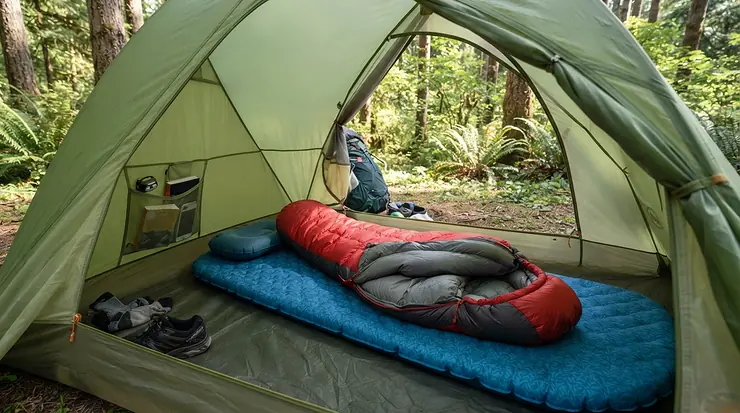
A budget air sleeping pad is an inflatable camping mattress that traps air in baffled chambers to cushion and insulate you from the ground, at a price well below the premium ultralight tier. You give up a few ounces of weight and some packed-size bragging rights. In return you get a sleep surface that makes weekend camping, first backpacking trips, and car camping setups feel civilized.
Here’s the part the glossy ads skip. Your sleeping bag doesn’t keep you warm from underneath, because the insulation compresses under your body. The pad does that job, and its insulation is measured by R-value. The industry now uses the ASTM F3340 R-value standard, which makes cross-brand comparisons far more reliable than they used to be. Higher number, more resistance to heat loss. Simple.
Shopping for a budget air sleeping pad is mostly a game of trade-offs. A cheap pad can be wide, plush, and fast to inflate. It can also be heavy, noisy, or barely insulated. The trick is knowing which compromise suits your trips.
A quick note on sources. I couldn’t verify aggregated Amazon star ratings for every model, so I didn’t invent any. Everything below draws on published specs and on what professional testers and reviewers report. Where data was thin, I say so. Prices are ranges only, so check current pricing before you buy. Ready? Let’s start with the side-by-side.
Quick Comparison Table: Budget Air Sleeping Pad Options at a Glance
| Pad | Type | R-Value | Weight (approx.) | Price Range | Best For |
|---|---|---|---|---|---|
| Klymit Static V2 | Air pad | 1.3 | 17.7 oz | $50-$80 | Summer backpacking on a tight budget |
| Klymit Insulated Static V | Insulated air pad | 4.2-4.4 | 20-25 oz | $85-$100 | Three-season warmth for the money |
| Big Agnes Divide Insulated | Insulated air pad | 4.0 | 23.5 oz | $90-$130 | Comfort-first backpackers and campers |
| Sleepingo Ultralight Sleeping Mat | Air pad | 2.1 (claimed) | 14.6 oz (Large) | Budget tier, check current price | Warm-weather weight savers |
| WANNTS Ultralight | Air pad, built-in foot pump | Not stated | 26.9 oz | Around $30 | Casual campers who want the lowest entry cost |
| Kelty Kush Air Bed | Air bed, USB pump | Not listed | Not listed | $130-$150 | Car camping comfort and couples |
| Therm-a-Rest NeoAir XLite NXT | Premium air pad | 4.5 | 13 oz | $200-$220 | Benchmark for ultralight backpackers |
Looking at the table, the Klymit Insulated Static V and the Big Agnes Divide Insulated are the two that combine genuine three-season R-values with price tags far below the Therm-a-Rest NeoAir XLite NXT. The Klymit Static V2 is the cheapest way into a name-brand air pad, but its 1.3 R-value caps it at warm nights. The Kelty Kush Air Bed sits above the typical $100 line, and I’ve included it as a car camping reference point rather than a bargain.
💬 Just one click — help others make better buying decisions too!😊
Top 7 Budget Air Sleeping Pad Picks: Expert Analysis
1. Klymit Static V2 — cheapest name-brand entry into air pads
The Klymit Static V2 earns its spot by being the pad that makes inflatable comfort affordable. Its signature V-shaped baffles do real work, not just styling.
At 17.7 ounces with a 75D polyester underside and a 30D top, it’s tougher than its price suggests. OutdoorGearLab’s review notes that the V-baffles limit the bouncy, trampoline feel common to air pads, and that the wide cut feels cradling rather than unstable. The catch is the 1.3 R-value. That’s fine for 40-50°F nights and a problem below freezing.
Based on the spec comparison, this pad suits summer campers and anyone who already sleeps warm. Reviewers also note that deflating is slower than inflating, because the narrow channels make rolling tedious. Testers report occasional ground contact at elbows and knees, though side sleeping worked in the field. Treat this as tester sentiment, not a star rating.
Pros:
- ✅ Wide, stable surface that limits bounce
- ✅ Includes a patch kit and stuff sack
- ✅ Packs smaller than a one-liter bottle
Cons:
- ❌ Very low R-value limits it to warm nights
- ❌ Thinner than many competing air pads
Expect to pay in the $50-$80 range. For summer use, the value is hard to argue with.
2. Klymit Insulated Static V — warmest R-value per dollar here
If the Klymit Static V2 is the summer special, the Klymit Insulated Static V is its cold-weather sibling. It keeps the V-baffle layout and adds insulation, pushing the R-value to roughly 4.2-4.4 depending on the version. Klymit’s newer Peak variant is rated 4.2 and weighs about 22 ounces.
That R-value matters. It moves the pad out of “summer only” territory and into true three-season use. One budget roundup notes that it matches the warmth rating of the far pricier Therm-a-Rest NeoAir XLite NXT at under half the cost. The trade is weight, roughly 20-25 ounces versus about 13 for the premium pad. Published reviews describe it as comfortable, with about 2.5 inches of air cushion and raised side rails that help keep you centered.
On paper, this is the budget air sleeping pad to pick if you camp into fall and want warmth without paying ultralight prices. Reviewers flag the valve as imperfect, and some find it less plush than thicker pads.
Pros:
- ✅ Genuine three-season insulation for the price
- ✅ Tough 75D exterior fabric
- ✅ Side rails keep you from rolling off
Cons:
- ❌ Heavier than premium insulated pads
- ❌ Valve design draws occasional criticism
Plan on roughly $85-$100. It’s an air pad under $100 that actually insulates.
3. Big Agnes Divide Insulated — most comfortable pad in this price class
The Big Agnes Divide Insulated is the comfort pick. REI’s member testing gave it a tied-top comfort score among budget pads. The outer chambers are thicker than the center, which cradles you in the middle and keeps you from sliding off.
The specs: R-value 4.0, about 3.25-3.5 inches thick, and 1 pound 7 ounces claimed. CleverHiker measured 23.5 ounces on its scale. The aviation-grade TPU lamination helps durability, and testers reported it surviving sticks and brambles on a trail trip. The most consistent complaint is noise. REI testers called it the loudest pad in their lineup, and one compared the crinkle to sleeping on newspaper. Other reviewers note the vertical baffles may not suit side sleepers, and the stuff sack is tight.
Here’s what to weigh. If you’re a light sleeper, noise may matter more than any spec. If you sleep soundly and want maximum cushion per dollar, this pad is hard to beat. REI also recommends carrying a patch kit with air pads, which brings us to the puncture repair kit section later on.
Pros:
- ✅ Thick, supportive sleep surface
- ✅ Durable TPU lamination
- ✅ Raised outer chambers keep you centered
Cons:
- ❌ Crinkly and loud on restless nights
- ❌ Heavier than premium lightweight pads
Prices ran about $90-$130 depending on retailer and size, so check current price. Strong value at the lower end of that range.
4. Sleepingo Ultralight Sleeping Mat — light enough for warm-weather weight savers
The Sleepingo Ultralight Sleeping Mat targets people who want an air pad that barely registers in the pack. OutdoorGearLab’s comparison data lists the Large at 14.6 ounces with a claimed R-value of 2.1. Other roundups describe it as packing to roughly water-bottle size.
An R-value of 2.1 slots it into shoulder-season territory, a step above the Klymit Static V2‘s 1.3 but well short of the insulated pads. Based on the numbers, it’s a warm-weather or mild-night pad. Pair it with a foam pad for cooler trips, because R-values add when you stack pads.
I should be upfront about the evidence. I couldn’t find detailed, verifiable durability or comfort reports from independent testers. That means the honest read is “promising specs, thin independent track record.” Buyers who care about longevity should lean on the seller’s return window and keep a repair kit handy.
Pros:
- ✅ Lighter than most pads in this price tier
- ✅ Small packed size for its comfort level
- ✅ R-value above the basic Static V
Cons:
- ❌ Limited independent testing data available
- ❌ Not warm enough for cold nights alone
Pricing sits in the budget tier, so verify the current price. Reasonable value if the return policy is friendly.
5. WANNTS Ultralight — lowest entry cost with a built-in foot pump
The WANNTS Ultralight is the “I just need something to put under my sleeping bag” option. OutdoorGearLab lists it at around $30, 26.9 ounces, and 2.5 inches thick, with a built-in foot pump and pillow. No R-value is stated, which is a flag in itself.
That pump is the star. No lung-busting inflation, no extra gear. The weight is the cost. At nearly 27 ounces it’s heavier than most pads here, and it’s the heaviest of the seven, which defeats the “ultralight” name for backpackers. Testers described it as thin and potentially unsuited to side sleepers, while noting that they personally had no durability problems. The page did question long-term durability.
My read on the spec sheet: this is a car camping and backyard pad, not a long-haul backpacking one. With no R-value, assume it offers minimal insulation, and don’t bet cold nights on it.
Pros:
- ✅ Built-in foot pump and pillow
- ✅ Extremely low price for an air pad
- ✅ No separate inflation gear needed
Cons:
- ❌ Heavy for a backpacking pad
- ❌ No stated insulation value, and thin feel
At around $30, it’s cheap enough to treat as a trial run.

6. Kelty Kush Air Bed — best car camping comfort in the budget class
The Kelty Kush Air Bed isn’t a bargain by the under-$100 standard. It earns its place as a car camping reference point. Outside Magazine named it its budget pick for sleeping pads, with about 6 inches of padding and a rechargeable USB pump. The tested size measured 79 by 55.5 inches, which is wide enough for two.
For air pad for car camping comfort, thickness is the whole game. Testers said the six inches kept them off the ground and comfortable down to 30°F nights, and one didn’t need to top it off over a weekend. It inflates in about four minutes with the included pump and packs to roughly laptop size. The complaints are consistent. The topper is loud, the polyester has a “zip-zip” sound when you move, and the surface feels rough against bare skin. That could bother a tent mate.
An R-value isn’t listed, so treat warmth claims cautiously. It’s an air bed, so check the cold-weather rating before relying on it below freezing.
Pros:
- ✅ Six inches of padding for real bed-like comfort
- ✅ Rechargeable USB pump included
- ✅ Packs to about laptop size
Cons:
- ❌ Loud when you shift around
- ❌ Rough fabric against bare skin
Expect around $130-$150. Worth it if you car camp often or sleep as a couple.
7. Therm-a-Rest NeoAir XLite NXT — the premium benchmark to measure budget pads against
Every comparison needs an anchor. The Therm-a-Rest NeoAir XLite NXT is it, with an R-value of 4.5, about 13 ounces in the Regular size, and 3 inches thick. CleverHiker lists it at around $210. OutdoorGearLab’s lead tester reports using one for over 10,000 miles of hiking.
What does the extra money buy? Roughly 10 fewer ounces than the Klymit Insulated Static V or the Big Agnes Divide Insulated, plus a packed size that disappears into a pack. It’s still described as crinkly, though quieter than earlier versions, and fairly expensive. A field repair kit comes with NeoAir pads.
Here’s the honest analysis. If you carry your pad on long trails, those ounces add up and the premium makes sense. If you camp near the car or hike a few weekends a year, the weight savings rarely justify roughly double the price. For most buyers of a budget air sleeping pad, this pad’s main job is to show how much you’re not giving up.
Pros:
- ✅ Excellent warmth-to-weight ratio
- ✅ Proven long-term track record
- ✅ Packs extremely small
Cons:
- ❌ Costs about double the budget insulated pads
- ❌ Still noticeably crinkly
At $200-$220, it’s great value only if weight is your priority.
Air Pad Under $100: What the Budget Really Buys (and Doesn’t)
An air pad under $100 is a real category now, not a compromise bin. REI’s member tests of budget pads found tidy results across about $100 worth of options. The best budget picks included air pads, self-inflating pads, and closed-cell foam, each excelling at something different.
So what does the money buy? Mostly durability and warmth, and less weight savings. Budget air pads tend to use heavier face fabrics, which is why they weigh 18-27 ounces instead of 13. That weight often translates into toughness. The 75D underside on the Klymit pads is the kind of fabric that shrugs off pebbles.
What does it not buy? Quiet, for one. Budget air pads crinkle. Premium pads crinkle too, just less. You also don’t get the fastest valves, the most compact stuff sacks, or the thinnest-possible fabrics.
Two rules of thumb help here. First, decide your lowest overnight temperature before you shop. Second, accept that any air pad under $100 should ship with, or be paired with, a patch kit. Air pads can lose air from a single thorn, so a repair plan is part of the real price.
How to Choose a Budget Air Sleeping Pad (Step by Step)
Here’s the framework I’d use, in order of importance:
- Pin down your coldest night. Match it to R-value. For summer, an R-value of 0-2 works. For spring and fall, aim for 2-4. For colder conditions, aim higher.
- Check the R-value test method. Pads rated to the ASTM standard are comparable across brands. Many budget makers still estimate, so treat unrated claims skeptically.
- Pick thickness for your sleeping position. Side sleepers generally need 3 inches or more, so hips don’t bottom out. Back sleepers can get by with less.
- Weigh the weight. Backpacking? Every ounce counts. Car camping? Ignore it and buy thickness.
- Check the fabric. A 75D bottom handles rough ground better than thin ultralight fabric.
- Decide on inflation. Built-in foot pumps and USB pumps save effort. Lung-inflated pads save weight.
- Confirm the repair path. Make sure a patch kit is included or cheap to add.
Air Pad for Car Camping Comfort: What Actually Matters
Car camping flips the usual rules. Weight and packed size stop mattering, and thickness, width, and noise take over. For air pad for car camping comfort, the key specs are different from backpacking.
Thickness comes first. The Kelty Kush Air Bed‘s six inches is the extreme, but a 3.5-inch pad like the Big Agnes Divide Insulated already delivers a big comfort jump over a 2.5-inch pad. Width is second. Wider pads let you roll and sprawl.
Third is insulation. Car camping often happens in shoulder seasons when ground temperatures drop. A thick air bed with no stated R-value is a gamble. The insulated pads here give you an honest rating to plan around.
Here’s a point worth weighing. A budget air sleeping pad isn’t always the best car camping choice. REI testers named a self-inflating pad, the REI Co-op Trailmade, their best budget pick for car camping, with an R-value of 5.5 and a very low price. If warmth and quiet matter more than packed size, it’s a serious rival. If you want maximum cushion and the ability to dial firmness, air wins.
Value Comparison: Cost Per Night and Total Cost of Ownership
A sticker price tells you little. A value comparison needs to account for use, lifespan, and repair costs. The table below spreads each price range across an illustrative 40 nights of use. These are my own rough calculations, not manufacturer claims.
| Pad | Price Range | Approx. Cost per Night (40 nights) | Value Verdict |
|---|---|---|---|
| WANNTS Ultralight | Around $30 | Under $1 | Cheapest, but heavy and uninsulated |
| Klymit Static V2 | $50-$80 | About $1.25-$2.00 | Best summer value |
| Klymit Insulated Static V | $85-$100 | About $2.10-$2.50 | Best warmth per dollar |
| Big Agnes Divide Insulated | $90-$130 | About $2.25-$3.25 | Best comfort value at the low end |
| Kelty Kush Air Bed | $130-$150 | About $3.25-$3.75 | Car camping comfort pick |
| Therm-a-Rest NeoAir XLite NXT | $200-$220 | About $5.00-$5.50 | Worth it only if weight matters |
The Klymit Insulated Static V delivers the strongest balance, since it adds real three-season warmth for only a few cents more per night than the summer-only Klymit Static V2. The Therm-a-Rest NeoAir XLite NXT costs roughly double per night, which makes sense only if you carry it for miles. Add a few dollars for a puncture repair kit and the numbers barely move, which is why skipping one is a false economy.
Budget Air Sleeping Pad vs Foam and Self-Inflating Pads
How does a budget air sleeping pad stack up against its alternatives? Foam pads can’t pop. Self-inflating pads trade bulk for warmth. Air pads win on comfort-to-packed-size.
| Pad Type | Example | R-Value | Thickness | Durability | Best For |
|---|---|---|---|---|---|
| Budget air pad | Klymit Insulated Static V | 4.2-4.4 | 2.5 in | Good, can leak | Comfort plus packability |
| Closed-cell foam | NEMO Switchback | 2 | 0.9 in | Excellent, can’t pop | Ultra-reliable summer use |
| Closed-cell foam | Exped FlexMat | 1.5 | 0.7 in | Excellent | Layering under air pads |
| Self-inflating | REI Co-op Trailmade | 5.5 | 1.5 in | Good | Warm, quiet car camping |
| Self-inflating | Sea to Summit Camp | 4.2 | 1.5 in | Good, 75D shell | Compact comfort |
The comparison reveals a pattern. Foam is bulletproof but thin. Self-inflating pads offer strong R-values at low prices, but they’re heavier and bulkier. Air pads give the best cushion for the packed size. If puncture anxiety keeps you up, a foam pad under an air pad is a smart combo, since stacking adds R-values and protects the air pad from the ground.
Puncture Repair Kit: A Practical Field and Home Guide
Air pads leak eventually. A puncture repair kit turns a ruined night into a five-minute fix. Many pads include one, and the Klymit Static V2 ships with a patch kit and stuff sack.
Here’s the process, adapted from REI’s pad repair guide:
- Find the leak. Inflate the pad and sponge soapy water over it. Bubbles mark the spot. Dry it and mark it with a pen.
- Prep the surface. Deflate the pad, dry the area, and wipe it with rubbing alcohol. Let it evaporate for a minute or two.
- Apply the patch. For a permanent fix, REI suggests Seam Grip adhesive under a piece of Tenacious Tape. Round the corners to stop peeling.
- Cure and test. Let the adhesive cure overnight, then inflate and check again in the morning for slow leaks.
In the field, instant self-adhesive patches work without a long cure. Big Agnes adds a practical tip: make sure the patch extends beyond the puncture edges. Pack your kit inside the pad’s stuff sack, where you’ll actually find it.

Real-World Scenarios: Which Budget Air Sleeping Pad for Which Sleeper
Specs only help if they match your life. Here are three profiles.
The college student on a shoestring. She camps four weekends a year in warm months, budget under $60. The Klymit Static V2 fits the budget, and the 1.3 R-value is fine for summer nights. Add a patch kit and skip the rest.
The fall weekend backpacker. He hikes September through November with nights near freezing, budget around $100. The Klymit Insulated Static V gives him a 4+ R-value and tough fabric. If he sleeps on his side and can spend a bit more, the Big Agnes Divide Insulated adds cushion.
The car-camping couple. They drive to campgrounds a dozen times a year and want a real bed feel. The Kelty Kush Air Bed suits them, since width and six inches of padding matter more than weight. If the budget is tight, a pair of Big Agnes Divide Insulated pads is a cheaper, more flexible route.
Problem → Solution Guide: Fixing Common Budget Air Pad Frustrations
Budget doesn’t mean trouble-free, but most problems have simple fixes.
- “I’m cold even in my bag.” Check your R-value first. A Klymit Static V2 at 1.3 won’t handle cold nights. Stack a foam pad like the NEMO Switchback under it for a combined R-value of roughly 3.
- “My pad is loud.” Crinkle noise is normal in the Big Agnes Divide Insulated. A fitted sheet or sleeping bag liner over the top muffles it.
- “I keep sliding off.” Choose a pad with side rails, like the Klymit Insulated Static V, or add pillow-lock patches.
- “It deflates overnight.” Do the soapy-water test, then use a puncture repair kit. Slow leaks often hide at valves and seams.
- “My knees hit the ground.” Under-inflation or a thin pad is usually the culprit. Top off the pad, or step up to a thicker model.
Features That Actually Matter (And Those That Don’t)
Marketing loves big numbers. Here’s what deserves your attention.
Features that matter:
- R-value rated to the ASTM standard. Unrated claims are guesses.
- Face fabric thickness. A thicker bottom fabric resists punctures.
- Valve quality. Reviewers of the Klymit Static V2 noted the updated flush valve is sturdier than the old screw-style version.
- Width. A few extra inches change how stable you feel.
Features that mostly don’t:
- Built-in pillows. Convenient, but a stuff-sack pillow works fine.
- Huge thickness claims. Thickness only helps if the pad holds air.
- “Ultralight” labels. Check the actual ounces. The WANNTS Ultralight weighs nearly 27 ounces.
Common Mistakes When Buying a Budget Air Sleeping Pad
Most regrets trace back to a handful of errors. Avoiding them is the cheapest upgrade you can make.
- Ignoring R-value. Buying a summer pad for October is the classic mistake.
- Trusting unrated warmth claims. An air bed with a flashy R-value but no testing is a gamble.
- Skipping the repair kit. A twenty-dollar problem becomes a ruined trip.
- Overbuying weight savings. For car camping, premium ultralight pricing is wasted.
- Forgetting fit. Check length and width, especially if you’re tall or a restless sleeper.
FAQ: Budget Air Sleeping Pad Questions Answered
❓ What is the best budget air sleeping pad for three-season camping?
❓ Can I find a good air pad under $100 with warmth?
❓ How do I make a budget air sleeping pad warmer?
❓ Is a puncture repair kit worth buying separately?
❓ Are budget air pads comfortable enough for car camping?
Conclusion: Pick the Compromise You Can Live With
A budget air sleeping pad is all about choosing your compromise. The Klymit Static V2 gives you a name-brand air pad for summer on a shoestring. The Klymit Insulated Static V adds real three-season warmth. The Big Agnes Divide Insulated puts comfort first, and the Kelty Kush Air Bed turns car camping into something close to a real bed. The Sleepingo Ultralight Sleeping Mat and WANNTS Ultralight fill the cheapest corners, with the caveat that independent data on them is thin. The Therm-a-Rest NeoAir XLite NXT stays the benchmark if weight is everything.
My bottom line. If you camp in cool weather, buy for R-value first. If you car camp, buy for thickness. If you backpack on a budget, accept a few extra ounces. And whichever pad you choose, spend a few dollars on a puncture repair kit, because it protects the value of everything else.
Recommended for You
- Quiet Air Sleeping Pad For Light Sleepers: 7 Best Picks (2026)
- Ultralight Air Pad For Thru-Hiking: 7 Proven Picks Ranked 2026
- Budget Self-Inflating Sleeping Pad: 7 Best Buys In 2026
Disclaimer: This article contains affiliate links. As an Amazon Associate, I earn from qualifying purchases. If you purchase products through these links, we may earn a small commission at no additional cost to you.
✨ Found this helpful? Share it with your friends! 💬🤗
