In This Article
✨Was this helpful? Spread the word!
Setting up the perfect camp kitchen can transform your outdoor adventures from basic survival meals to gourmet experiences under the stars. Whether you’re planning your first family camping trip or you’re a seasoned outdoor enthusiast looking to upgrade your setup, these camp kitchen set up ideas will revolutionize how you approach outdoor cooking.
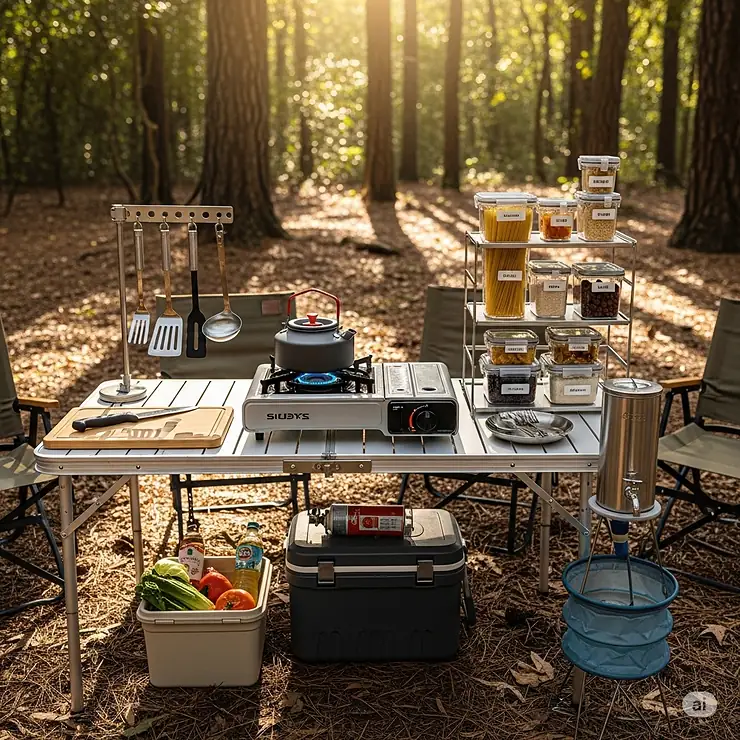
The difference between a chaotic camping meal and a memorable outdoor feast often comes down to organization, smart gear choices, and strategic layout planning. According to REI’s expert advice on camp kitchen setup, proper planning and organization can make outdoor cooking as enjoyable as indoor cooking. After testing dozens of products and interviewing camp cooking experts, I’ve compiled the most effective camp kitchen set up ideas that actually work in real-world conditions.
Essential Camp Kitchen Layout Ideas for Maximum Efficiency ⚡
The Triangle Setup Method
Professional chefs swear by the kitchen triangle concept, and this principle applies perfectly to camp kitchen layout ideas. Position your cooking station, prep area, and cleaning zone in a triangle formation with each point approximately 4-6 feet apart. This arrangement minimizes movement while maximizing efficiency during meal preparation.
Key components for triangle setup:
- Cooking zone: Stove, fuel, heat-resistant surface
- Prep zone: Cutting board, knives, ingredients
- Cleaning zone: Water source, dish basin, towels
Height-Adjustable Work Surfaces
One of the most overlooked camp kitchen set up ideas involves creating multiple work surface heights. Use camping tables with adjustable legs or stack sturdy containers to create raised platforms. This prevents back strain during lengthy cooking sessions and accommodates different family members’ heights.
The GCI Outdoor Master Cook Station ($219.95 on Amazon) exemplifies this concept with its heat-resistant tabletop, integrated sink system, and telescoping lantern pole. Customer reviews consistently praise its stability and organization features, making it a worthwhile investment for serious camp cooks.
Revolutionary Outdoor Cooking Station Ideas
Modular Station Components
Create flexible outdoor cooking station ideas by investing in modular components that adapt to different camping scenarios. Start with a base table, then add specialized accessories based on your meal plans and group size.
Essential modular components:
✅ Lightweight aluminum frame table
✅ Heat-resistant cooking surface
✅ Fold-down prep extensions
✅ Storage compartments with weather protection
✅ Integrated lighting solutions
Multi-Level Cooking Strategy
Transform limited space into a functional outdoor cooking station by thinking vertically. Use hanging organizers, magnetic strips on metal surfaces, and stackable storage solutions to maximize your cooking area’s potential.
The Stanley Adventure Base Camp Cook Set ($98.08) demonstrates excellent multi-level design with its 19-piece nested system. The stainless steel construction and 3-ply frying pan provide restaurant-quality performance while maintaining compact storage when not in use.
Wind Protection Solutions
Nothing ruins outdoor cooking faster than gusty conditions. Implement these wind protection strategies in your outdoor cooking station ideas:
- Deploy three-sided windscreens around cooking areas
- Position your station near natural windbreaks (rocks, trees, vehicles)
- Use weighted tablecloths to prevent ingredient spillage
- Install guy-lines for additional stability in challenging conditions
Professional-Grade Camp Kitchen Organization Systems
The Chuck Box Revolution
Building or purchasing a dedicated chuck box represents one of the most impactful camp kitchen set up ideas for frequent campers. These portable kitchen storage systems keep everything organized and readily accessible.
Chuck box essentials:
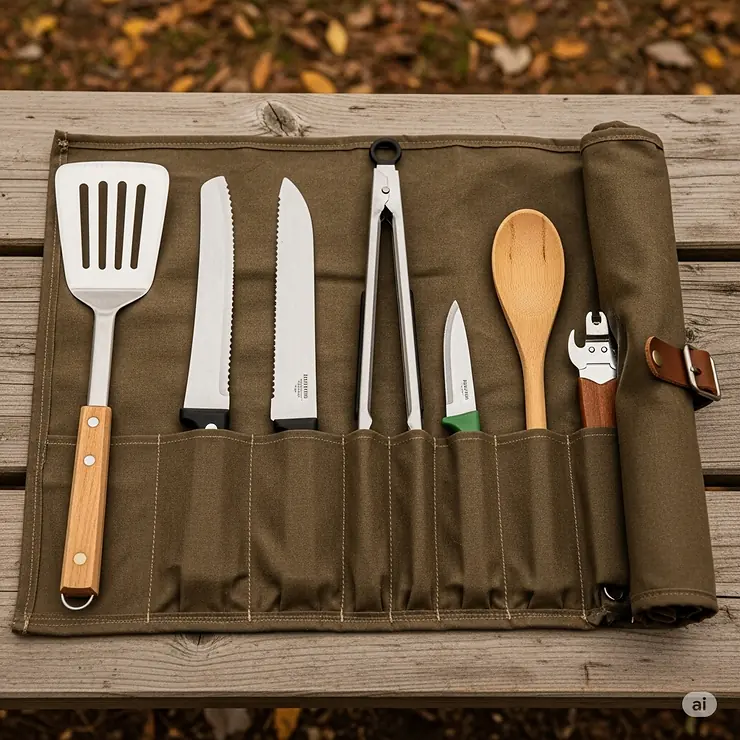
- Dedicated compartments for spices, utensils, and small tools
- Secure latching to prevent spillage during transport
- Weatherproof construction for extended outdoor exposure
- Modular design allowing customization based on group size
Color-Coded Storage Strategy
Implement a color-coding system across all storage containers to eliminate confusion during meal preparation. Assign specific colors to different categories:
- Red containers: Spices and seasonings
- Blue containers: Cooking utensils and tools
- Green containers: Cleaning supplies
- Yellow containers: Emergency and first aid items
Magnetic Organization Solutions
Magnetic strips and containers provide brilliant space-saving solutions for metal camp kitchen surfaces. Attach magnetic knife holders, spice containers, and tool organizers to create instant storage without sacrificing valuable counter space.
Advanced Cookware Selection and Setup Strategies
Multi-Purpose Cookware Systems
Invest in cookware that serves multiple functions to minimize weight and storage requirements. The GSI Outdoors Pinnacle Dualist HS ($119.95) exemplifies this philosophy with its award-winning ultra-compact design for two people.
This system includes a 1.8-liter pot with heat-exchanger technology, strainer lid, insulated mugs, and telescoping utensils—all nesting together in a welded carrying bag that doubles as a sink. Customer reviews consistently highlight its durability and efficient heat distribution.
Cast Iron Mastery
For car camping situations where weight isn’t critical, cast iron cookware elevates your cooking capabilities dramatically. The Lodge Cast Iron Combo Cooker ($28.99-$75) provides exceptional versatility as both a deep skillet and Dutch oven system.
Cast iron advantages:
✅ Superior heat retention and distribution
✅ Natural non-stick surface when properly seasoned
✅ Suitable for stovetop, oven, grill, and campfire use
✅ Improves with age and use
✅ Chemical-free cooking surface
Lightweight Backpacking Solutions
For weight-conscious backpackers, the MSR Quick 2 Cook Set ($129.94) offers premium performance in a compact package. This hard-anodized aluminum system features both non-stick and uncoated cooking surfaces, accommodating everything from delicate eggs to hearty stews.
The innovative strainer lid and pour spout eliminate the frustration of draining pasta water, while the color-coded plates and insulated mugs keep everything organized. After extensive field testing, reviewers consistently rate this as the best overall performer for serious outdoor cooking.
Specialized Cooking Surfaces
Consider adding specialized cooking surfaces to expand your culinary possibilities:
- Griddle plates for pancakes and bacon
- Grill grates for authentic barbecue flavors
- Pizza stones for artisan bread and pizza
- Wok accessories for high-heat stir-frying
Water Management and Cleaning Systems
Integrated Water Solutions
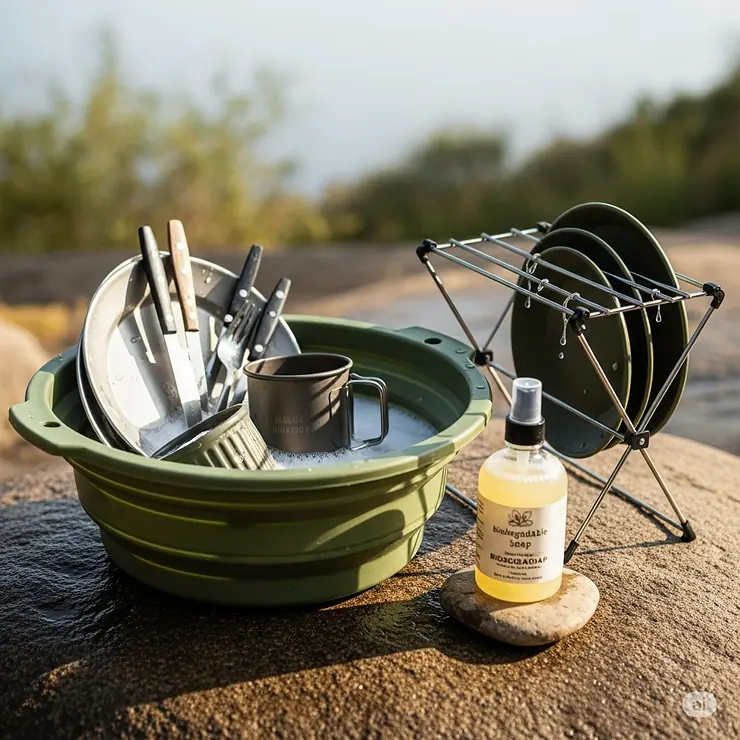
Effective water management forms the backbone of successful camp kitchen set up ideas. Create dedicated stations for clean water storage, grey water collection, and dishwashing operations.
Water system components:
- Collapsible water containers with spigots
- Grey water collection bins with tight-fitting lids
- Portable hand-washing stations
- Biodegradable soap dispensers
Efficient Dishwashing Setup
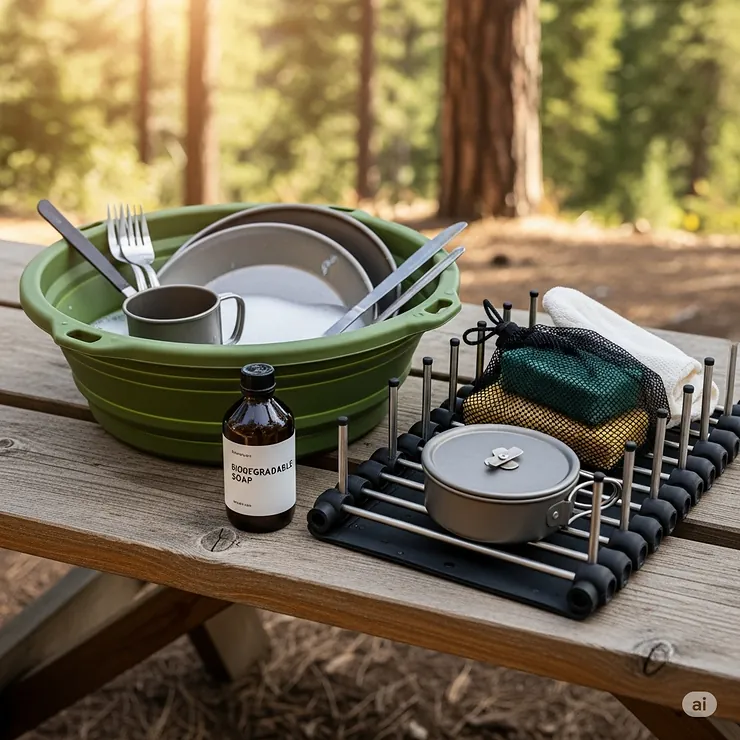
Establish a three-basin dishwashing system even in primitive camping conditions:
- Wash basin: Hot soapy water for initial cleaning
- Rinse basin: Clean water for soap removal
- Sanitize basin: Diluted bleach solution for final sanitization
The CretFine CompactKit Camping Cookware Set ($40-$80) includes a dedicated wash basin system alongside its 26-piece stainless steel cookware collection. The honeycomb non-stick surface and detachable handles make cleaning significantly easier than traditional camp cookware.
Water Conservation Techniques
Implement these water-saving strategies to extend your camping duration:
- Use paper towels for initial food debris removal
- Heat dishwater efficiently using camp stove systems
- Implement grey water recycling for non-consumption uses
- Pre-wash heavily soiled items using minimal water amounts
Just one click – help others make better buying decisions too!
Climate-Specific Setup Adaptations ️
Hot Weather Configurations
Extreme heat requires specific adaptations to your camp kitchen set up ideas:
Heat management strategies:
- Position cooking areas in shaded locations
- Use reflective windscreens to deflect radiant heat
- Schedule cooking during cooler morning and evening hours
- Implement cross-ventilation to promote air circulation
- Store perishables in insulated containers with adequate ice
Cold Weather Considerations
Winter camping demands specialized approaches to maintain cooking functionality:
- Protect fuel canisters from extreme temperature fluctuations
- Use liquid fuel stoves for reliable cold-weather performance
- Implement windbreaks to prevent heat loss
- Preheat cooking surfaces to improve efficiency
- Store batteries and electronic devices in warm locations
Wet Weather Contingencies
Rainy conditions shouldn’t derail your outdoor cooking plans with proper preparation:
✅ Deploy waterproof canopies over cooking areas
✅ Elevate cooking stations above ground moisture
✅ Use non-slip mats to prevent accidents on wet surfaces
✅ Maintain dry fuel and kindling storage
✅ Implement proper drainage around cooking areas
Technology Integration and Modern Conveniences ⚡
Solar Power Solutions
Modern camp kitchen set up ideas increasingly incorporate renewable energy sources:
- Solar panels for device charging and LED lighting
- Portable power stations for electric appliances
- USB-powered fans for improved ventilation
- Rechargeable headlamps for hands-free lighting
Smart Organization Apps
Leverage technology to optimize your camp kitchen organization:
- Inventory management apps track supplies and expiration dates
- Recipe planning software calculates ingredient quantities
- Weather monitoring tools inform cooking schedule decisions
- GPS applications locate nearby supply sources
Communication and Safety Integration
Maintain connectivity for safety while preserving the outdoor experience:
- Emergency communication devices with reliable battery life
- First aid supplies integrated into kitchen organization systems
- Fire safety equipment positioned for immediate access
- Weather monitoring tools for severe condition warnings
Budget-Conscious Setup Strategies
DIY Solutions and Hacks
Create effective camp kitchen solutions without breaking your budget:
Affordable DIY projects:
- Convert plastic storage totes into organized chuck boxes
- Use magnetic strips on vehicle surfaces for tool storage
- Repurpose home kitchen items for camping use
- Build custom windscreens using emergency blankets and PVC
Gradual System Building
Develop your ideal camp kitchen setup incrementally rather than purchasing everything simultaneously:
Phase 1: Basic cooking and eating essentials
Phase 2: Organization and storage improvements
Phase 3: Comfort and convenience upgrades
Phase 4: Specialized equipment for specific cooking styles
Multi-Purpose Investment Strategy
Prioritize purchases that serve multiple functions:
- Tables that convert between cooking and dining configurations
- Cookware systems with integrated storage solutions
- Lighting that provides both task and ambient illumination
- Containers that function for storage, mixing, and serving
Safety and Hygiene Best Practices
Fire Safety Protocols
Implement comprehensive fire safety measures in all camp kitchen set up ideas:
✅ Maintain adequate clearance between cooking equipment and flammable materials
✅ Position fire extinguishers or water sources within immediate reach
✅ Establish designated zones for fuel storage and handling
✅ Create spark arrestor barriers in windy conditions
✅ Implement proper ash and charcoal disposal procedures
Food Safety Management
Prevent foodborne illness through proper food handling techniques recommended by food safety experts:
- Maintain cold chain integrity using quality coolers and ice management
- Implement separate cutting boards for raw and cooked foods
- Monitor internal cooking temperatures using reliable thermometers
- Store leftovers properly or dispose of them safely
- Wash hands frequently using portable washing stations
Wildlife Protection Strategies
Protect both wildlife and your food supplies using guidelines from wildlife management experts:
- Store all food in bear-proof containers or hang properly
- Clean cooking areas immediately after meal preparation
- Dispose of grey water away from camping areas
- Secure garbage in wildlife-proof containers
- Never feed wild animals intentionally or unintentionally
Seasonal Maintenance and Storage Solutions
Off-Season Equipment Care
Proper storage extends the life of your camp kitchen investment:
Cleaning protocols:
- Thoroughly clean and dry all cookware before storage
- Apply protective coatings to metal surfaces prone to corrosion
- Store soft goods in breathable containers to prevent mold
- Inspect and replace worn components annually
Seasonal Preparation Checklists
Create comprehensive checklists for different camping seasons:
Spring preparation:
- Inspect equipment for winter damage
- Replace expired consumables and medicines
- Test all equipment functionality
- Update emergency contact information
Summer readiness:
- Focus on heat management and hydration systems
- Inspect sun protection and ventilation equipment
- Verify cooling system functionality
- Stock up on insect protection supplies
Advanced Cooking Techniques and Recipe Integration ️
One-Pot Meal Mastery
Simplify cooking and cleanup with strategic one-pot meal planning:
One-pot advantages:
- Minimal cleanup requirements
- Efficient fuel usage
- Simplified ingredient management
- Reduced cooking equipment needs
Batch Cooking Strategies
Maximize efficiency through strategic batch cooking:
- Prepare base ingredients that work across multiple meals
- Cook grains and proteins in larger quantities
- Pre-portion ingredients for grab-and-go convenience
- Utilize slow-cooking techniques for hands-off meal preparation
International Cuisine Adaptation
Expand your outdoor cooking repertoire with international flavors:
- Asian-inspired stir-fries using single-burner high-heat techniques
- Mediterranean grain bowls emphasizing fresh ingredients and simple preparation
- Mexican street food adaptations perfect for outdoor cooking
- Indian curry dishes that improve with longer cooking times
Don’t Miss These Exclusive Deals!
Transform your outdoor cooking experience with these carefully selected products. Click on any highlighted item to check current pricing and availability. These tools will help you create memorable camping meals your family will love! ️
Professional Tips from Outdoor Cooking Experts
Temperature Control Mastery
Understanding heat management separates amateur camp cooks from outdoor chefs:
Heat zones for different cooking methods:
- High heat (500°F+): Searing meats, stir-frying vegetables
- Medium heat (350-450°F): Most general cooking applications
- Low heat (200-300°F): Simmering, warming, delicate ingredients
- Very low heat (under 200°F): Keeping food warm, melting
Timing and Coordination Strategies
Coordinate multiple dishes using strategic timing:
- Start longest-cooking items first (rice, beans, tough meats)
- Prepare ingredients while initial items cook
- Add quick-cooking elements in proper sequence
- Use residual heat for warming or final cooking stages
Flavor Enhancement Techniques
Elevate simple camping ingredients with professional techniques:
- Pre-seasoning proteins several hours before cooking
- Building flavor layers through proper browning and deglazing
- Fresh herb integration using foraged or pre-packed options
- Acid balance using citrus, vinegar, or wine for brightness
Regional and Cultural Adaptation Strategies ️
Desert Environment Cooking
Hot, dry climates require specific adaptations:
- Schedule cooking during cooler morning and evening hours
- Implement aggressive sun protection for cooking areas
- Focus on hydration and electrolyte replacement
- Use reflective materials to manage radiant heat
Mountain and High-Altitude Considerations
Elevation changes affect cooking in measurable ways according to Colorado State University Extension research:
High-altitude adjustments:
- Increase liquid quantities due to faster evaporation
- Reduce leavening agents in baked goods
- Extend cooking times for boiled items
- Monitor for altitude sickness symptoms in group members
Coastal and Humid Environment Strategies
High humidity and salt air create unique challenges:
- Protect metal equipment from accelerated corrosion
- Implement enhanced moisture protection for dry goods
- Account for longer drying times for cleaned equipment
- Plan for increased insect activity near water sources
Environmental Impact and Sustainable Practices
Leave No Trace Principles
Integrate environmental responsibility into all camp kitchen set up ideas following the Leave No Trace Center for Outdoor Ethics guidelines:
✅ Plan ahead to minimize waste generation
✅ Travel and camp on durable surfaces to prevent ecosystem damage
✅ Dispose of waste properly including grey water management
✅ Leave what you find and avoid damaging natural features
✅ Minimize campfire impacts through proper fire management
✅ Respect wildlife by maintaining proper food storage
✅ Be considerate of other visitors by minimizing noise and visual impact
Sustainable Gear Choices
Select equipment based on longevity and environmental impact:
- Choose durable materials that last decades rather than seasons
- Prioritize repairable equipment over disposable alternatives
- Select multi-purpose items to reduce overall consumption
- Support manufacturers with demonstrated environmental commitments
Waste Reduction Strategies
Minimize environmental impact through strategic planning:
- Use reusable containers instead of single-use packaging
- Plan portions carefully to reduce food waste
- Compost organic matter when regulations permit
- Pack out all non-organic waste for proper disposal
Troubleshooting Common Camp Kitchen Challenges
Equipment Failure Contingencies
Prepare for equipment failures with redundant systems:
Critical backup items:
- Alternative cooking methods (backup stove, fire-building materials)
- Redundant utensils and basic tools
- Emergency lighting sources
- Water purification alternatives
Weather-Related Problem Solving
Develop strategies for challenging weather conditions:
Rain response protocols:
- Deploy emergency shelters over cooking areas
- Relocate operations to covered areas when available
- Adjust cooking methods to accommodate wet conditions
- Maintain dry emergency supplies
Wind management techniques:
- Anchor lightweight equipment to prevent loss
- Adjust cooking methods to maintain flame stability
- Position windbreaks strategically around cooking areas
- Secure loose items that could become projectiles
Group Dynamics and Coordination
Manage group cooking effectively:
- Assign specific roles and responsibilities
- Establish clear communication protocols
- Plan meals that accommodate dietary restrictions
- Create efficient traffic flow patterns around cooking areas
Technology Integration and Future Trends
Emerging Cooking Technologies
Stay current with developing outdoor cooking innovations:
Recent technological advances:
- Portable induction cooking systems with battery power
- Smart temperature monitoring via smartphone apps
- Solar-powered refrigeration systems
- Lightweight, high-efficiency fuel systems
Digital Planning and Management Tools
Leverage technology for improved planning and execution:
- Meal planning software that calculates quantities and nutrition
- Weather monitoring applications for optimal timing decisions
- Inventory management systems to track supplies and expiration dates
- GPS navigation tools to locate resupply opportunities
Social Media and Community Building
Connect with other outdoor cooking enthusiasts:
- Share successful setups and recipes through photo documentation
- Participate in online communities focused on camp cooking
- Contribute reviews and recommendations based on real experience
- Learn from others’ innovations and adaptations
Comparison Tables for Equipment Selection
Cookware System Comparison
| Product | Weight | Capacity | Price Range | Best For |
|---|---|---|---|---|
| GSI Pinnacle Dualist HS | 1.4 lbs | 2 people | $119-130 | Backpacking couples |
| Stanley Base Camp | 4.7 lbs | 4 people | $98-112 | Car camping families |
| MSR Quick 2 | 1.75 lbs | 2 people | $129 | Premium backpacking |
| Lodge Combo Cooker | 12 lbs | 4+ people | $29-75 | Car camping + home use |
Camping Table Features Matrix
| Feature | GCI Master Station | Outsunny Portable | VEVOR Kitchen Table |
|---|---|---|---|
| Built-in Sink | ✅ | ❌ | Optional |
| Heat-Resistant Surface | ✅ | ✅ | ✅ |
| Storage Compartments | ✅ | ✅ | ✅ |
| Adjustable Height | ❌ | ❌ | ✅ |
| Weight | 35 lbs | 25 lbs | 22 lbs |
| Price Range | $200-250 | $80-120 | $70-110 |
Just one click – help others make better buying decisions too!
Frequently Asked Questions (FAQs) ❓
❓ What size camp kitchen setup do I need for a family of four?
❓ How much should I budget for a complete camp kitchen setup?
❓ Which camp kitchen layout works best for large groups?
❓ What camp kitchen essentials work for both car camping and backpacking?
❓ How do I protect my camp kitchen setup from wildlife?
Conclusion: Mastering Your Camp Kitchen Set Up Ideas
Creating the perfect camp kitchen setup transforms outdoor adventures from mere survival exercises into memorable culinary experiences. Throughout this comprehensive guide, we’ve explored camp kitchen set up ideas that accommodate every camping style, from minimalist backpacking to luxury car camping setups.
The key to successful outdoor cooking lies in strategic planning, quality equipment selection, and systematic organization. Whether you’re implementing the triangle layout method, investing in modular cooking stations, or adapting these outdoor cooking station ideas to specific environmental conditions, remember that the best setup is one that matches your specific needs and camping style.
Start with essential components and gradually build your system based on real-world experience. The GSI Outdoors Pinnacle Dualist HS, Stanley Adventure Base Camp Cook Set, and MSR Quick 2 Cook Set represent excellent starting points for different camping scenarios, while specialized items like the Lodge Cast Iron Combo Cooker add versatility for car camping situations.
Remember that effective camp kitchen set up ideas extend beyond equipment selection to encompass safety protocols, environmental stewardship, and group coordination strategies. By implementing the techniques outlined in this guide, you’ll create outdoor cooking experiences that rival your home kitchen while maintaining the adventure spirit that draws us to the outdoors.
Ready to Transform Your Outdoor Cooking Experience?
Start building your dream camp kitchen setup today with these proven products and techniques. Your taste buds (and fellow campers) will thank you for the upgrade!

Recommended for You:
- 10+ Best Kitchen Kit Camping Solutions for Ultimate Outdoor Cooking in 2025
- 7 Ultimate Portable Camp Kitchen Solutions That Will Transform Your 2025 Camping Adventures
- 7 Best Foldable Camping Kitchen Solutions for Epic Outdoor Adventures in 2025
Disclaimer: This article contains affiliate links. If you purchase products through these links, we may earn a small commission at no additional cost to you.
✨ Found this helpful? Share it with your friends!
