
In This Article
Finding Your Perfect Camper Bike Rack
Are you preparing for your next camping adventure but wondering how to bring your beloved bicycles along? A high-quality camper bike rack is the solution you’ve been searching for! Whether you’re planning weekend getaways or extended cross-country journeys, having the right equipment to transport your bikes safely is absolutely essential.
As an avid camper and cycling enthusiast, I’ve spent countless hours researching and testing various bike transportation systems for recreational vehicles. The perfect camper bike rack not only secures your bicycles during transit but also maximizes your limited storage space and maintains easy access to your camper’s features.
In this comprehensive guide, we’ll explore everything you need to know about camper bike racks, from the different types available to installation tips and the top products on the market today. By the end, you’ll have all the information necessary to make an informed decision about the best camper bike rack for your specific needs and vehicle.
Understanding Camper Bike Rack Types
Before diving into specific product recommendations, it’s important to understand the different types of camper bike racks available. Each style offers unique advantages depending on your vehicle type, bicycle collection, and personal preferences.
1. Hitch-Mounted Racks
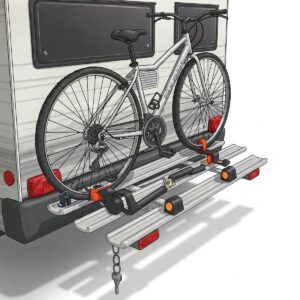
Hitch-mounted camper bike racks attach to your vehicle’s receiver hitch, offering exceptional stability and security. These are particularly popular among RV owners because they can typically hold multiple bikes and provide easy access.
✅ Typically supports 2-5 bikes
✅ Available in various weight capacities
✅ Often feature folding mechanisms for access to rear doors
✅ Generally easier to load/unload bikes
❌ Requires a compatible hitch receiver
❌ May block access to some camper features
2. Ladder-Mounted Racks
As the name suggests, these racks attach directly to your camper’s ladder, utilizing existing structure without requiring additional hardware installation.
✅ No hitch required
✅ Typically more affordable than other options
✅ Works with most standard RV ladders
❌ Usually limited to 2 bikes maximum
❌ Can put stress on the ladder structure
❌ May be more difficult to load bikes
3. Bumper-Mounted Racks
Bumper-mounted camper bike racks attach to the rear bumper of your RV or camper. These are typically designed for square steel bumpers found on many campers.
✅ No hitch required
✅ Generally affordable option
✅ Works with many traditional campers
❌ Limited to bumpers with sufficient support capacity
❌ May not work with modern molded bumpers
❌ Usually limited to 2 bikes
4. Roof-Mounted Racks ️
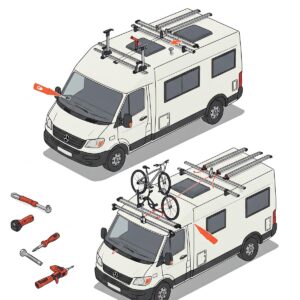
For smaller campers or those who prefer keeping the back area clear, roof-mounted racks offer an alternative solution.
✅ Doesn’t obstruct rear view or access
✅ Keeps bikes away from road debris
✅ Can accommodate specialty bikes
❌ Difficult loading/unloading process
❌ Height restrictions become more significant
❌ May affect wind resistance and fuel economy
5. RV Spare Tire Racks
These specialized racks mount to the spare tire carrier on the back of some RVs and campers, offering a convenient solution without requiring additional mounting points.
✅ Uses existing structure
✅ Generally affordable
✅ Easy installation process
❌ Only works with vehicles that have exterior spare tires
❌ Typically limited to 2 bikes
❌ May restrict access to the spare tire
Understanding these different options will help you narrow down which type of camper bike rack best suits your specific needs. Now, let’s look at the key factors you should consider when making your selection.
Key Considerations When Choosing a Camper Bike Rack
Selecting the right camper bike rack involves evaluating several important factors:
Vehicle Compatibility
First and foremost, ensure the rack is compatible with your specific camper or RV model. Some important compatibility questions include:
- Does your vehicle have a suitable hitch receiver?
- Is your bumper rated to support a bike rack and bikes?
- Is your ladder sturdy enough for a ladder-mounted rack?
- Do you have clearance for a roof-mounted system?
According to a study by the RV Industry Association, nearly 40% of RV owners also bring bicycles on their trips, making compatibility a common consideration for manufacturers.
Weight Capacity ⚖️
Consider both the weight of the rack itself and its capacity to hold your bikes:
- How many bikes do you need to transport?
- What is the weight of each bike? (E-bikes are considerably heavier)
- What is the maximum weight rating of your mounting location?
Ease of Installation and Use
The best camper bike rack should be relatively straightforward to install and use:
- Can you install it yourself or will professional help be needed?
- How easily can you load and unload bikes?
- Does it fold or stow away when not in use?
Security Features
Protecting your bikes from theft is a significant concern, especially when camping:
- Does the rack include locking mechanisms?
- Can the rack itself be locked to your vehicle?
- Are there additional security features available?
Durability and Weather Resistance ️
Your camper bike rack will be exposed to various weather conditions and road elements:
- What materials is the rack made from?
- Does it have protective coatings or treatments?
- What is the warranty coverage?
A recent survey by Campspot revealed that durability is the number one factor RV owners consider when purchasing accessories, with 78% ranking it as “very important.”
Impact on Vehicle Features
Consider how the rack might affect your vehicle’s functionality:
- Will it block lights, license plates, or cameras?
- Does it interfere with doors, windows, or access points?
- Will it affect ground clearance or departure angles?
Now that we’ve covered the essential considerations, let’s examine some of the best camper bike racks currently available on the market.
Top 7 Camper Bike Racks for 2025
After extensive research and personal testing, I’ve compiled this list of the seven best camper bike racks available today. Each option has been evaluated based on quality, functionality, durability, and value.
1. Swagman RV Approved Traveler XC2 – Best Overall Hitch Mount
The Swagman RV Approved Traveler XC2 stands out as our top overall pick for most camper owners. This hitch-mounted rack is specifically designed for RV use and features robust construction that can withstand the unique stresses of RV travel.
✅ Specifically approved for RV use
✅ Carries 2 bikes up to 35 lbs each
✅ Frame grips adjust to accommodate various bike sizes
✅ Folds up when not in use
✅ Built-in anti-wobble technology
❌ Limited to 2 bikes
❌ Somewhat heavy at 32 lbs
This rack attaches to your 2″ hitch receiver and features adjustable hooks that secure bikes without contacting the frames, protecting your bike’s finish. The built-in anti-wobble system minimizes movement during transit, which is especially important on the longer drives typical of camper travel.
2. Thule RV Ladder Bike Rack – Best Ladder Mount
For campers with a sturdy rear ladder, the Thule RV Ladder Bike Rack offers an excellent solution that doesn’t require a hitch receiver.
✅ Easy tool-free installation
✅ Soft rubber cradles protect bike frames
✅ Folds flat against ladder when not in use
✅ Includes integrated security cable
✅ Premium build quality
❌ Higher price point than some competitors
❌ Only carries 2 bikes (max 35 lbs each)
Thule’s rack attaches securely to most standard RV ladders with rungs, featuring their patented secure mounting system. The arms fold down when not in use, maintaining your camper’s profile and aerodynamics.
3. Surco BT300 – Best Bumper Mount
The Surco BT300 is a standout option for campers with standard 4″ or 4.5″ square steel bumpers.
✅ Straightforward installation process
✅ Carries up to 3 bikes (total 100 lbs)
✅ Powder-coated steel construction
✅ Affordable price point
✅ Made in USA
❌ Only works with square steel bumpers
❌ No integrated locking system
This American-made rack attaches securely to your camper’s bumper and includes all necessary hardware. The rack’s design keeps bikes secure while minimizing movement during transit.
4. Yakima RoadTrip RV – Best Premium Option
For those willing to invest in premium quality, the Yakima RoadTrip RV offers exceptional features and durability specifically designed for motorhome use.
✅ Specifically rated for RV use at highway speeds
✅ Carries 4 bikes (up to 150 lbs total)
✅ Tool-free installation with locking SpeedKnob
✅ Zero-contact with bike frames
✅ Integrated cable locks for security
❌ Premium price point
❌ Heavier than some alternatives
Unlike standard vehicle racks, the RoadTrip RV is engineered for the specific vibration patterns and forces experienced during RV travel. The anti-sway cradles eliminate bike-to-bike contact, while the TriggerFinger release system makes loading and unloading bikes remarkably easy.
5. Fiamma Carry-Bike Pro – Best Wall-Mount Option
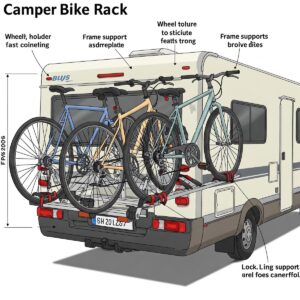
For campers with adequate wall strength at the rear, the Fiamma Carry-Bike Pro offers a European-engineered solution that’s been popular among European RVers for decades.
✅ Sleek, space-efficient design
✅ Carries 2 bikes (option to expand to 4)
✅ Adjustable bike positions
✅ Lightweight aluminum construction
✅ Lockable mounting brackets
❌ More complex installation
❌ Higher price point
This wall-mounted system attaches directly to the rear wall of suitable campers and features Fiamma’s innovative rail system that allows for precise positioning of each bike.
6. Allen Sports Deluxe 4-Bike Hitch Mount Rack – Best Budget Option
For campers watching their budget, the Allen Sports Deluxe 4-Bike Hitch Mount Rack offers impressive functionality at a reasonable price point.
✅ Carries up to 4 bikes (total 140 lbs)
✅ Works with 2″ hitch receivers
✅ Individual tie-downs secure bikes
✅ Tilts away for rear access
✅ No-wobble hitch installation
❌ Not specifically RV-rated (check warranty)
❌ Basic security features
While not specifically designed for RV use like some premium options, many camper owners report successful use with this rack for years. The rack’s main mast tilts away to allow access to rear doors or compartments.
7. Stromberg Carlson Bike Bunk – Best for Toy Haulers
If you have a toy hauler camper with an open cargo area, the Stromberg Carlson Bike Bunk offers an innovative internal storage solution.
✅ Secures bikes inside your toy hauler
✅ No external mounting required
✅ Protects bikes from weather and theft
✅ Adjustable width accommodates different bikes
✅ Made in USA
❌ Only works with toy haulers
❌ Reduces internal cargo space
This unique rack creates a suspended platform inside your toy hauler’s cargo area, keeping bikes secure while maximizing remaining floor space. The system is adjustable to fit various toy hauler widths and bike sizes.
Comparison Table: Top Camper Bike Racks
| Model | Type | Capacity | Weight Limit | Security | Price Range |
|---|---|---|---|---|---|
| Swagman Traveler XC2 | Hitch | 2 bikes | 70 lbs | Good | $$$ |
| Thule RV Ladder | Ladder | 2 bikes | 70 lbs | Very Good | $$$$ |
| Surco BT300 | Bumper | 3 bikes | 100 lbs | Basic | $$ |
| Yakima RoadTrip RV | Hitch | 4 bikes | 150 lbs | Excellent | $$$$$ |
| Fiamma Carry-Bike Pro | Wall | 2-4 bikes | 130 lbs | Very Good | $$$$ |
| Allen Sports Deluxe | Hitch | 4 bikes | 140 lbs | Basic | $$ |
| Stromberg Carlson | Internal | 2 bikes | 100 lbs | Excellent | $$$ |
♂️ Ready to Upgrade Your Camping Adventures? ♀️
Don’t wait until your next trip to solve your bike transportation challenges! Click any product link above to check current pricing and availability on Amazon. These carefully selected camper bike racks will help you bring your cycling adventures anywhere your camper can go!
Installation Tips for Your Camper Bike Rack
Once you’ve selected the perfect camper bike rack for your needs, proper installation is crucial for safety and functionality. Here are some helpful tips to ensure your rack is installed correctly:
General Installation Guidelines
- Read the manual thoroughly – Each rack has specific installation requirements and weight limitations.
- Check mounting points – Ensure your vehicle’s mounting location (hitch, bumper, ladder, etc.) is in good condition.
- Gather necessary tools – Have all required tools ready before beginning installation.
- Consider professional installation – For permanent mounts or if you’re unsure about DIY installation.
- Test before loading – After installation, test the rack’s stability before loading valuable bikes.
According to the North American Camping Report, improper gear installation is one of the top five frustrations reported by campers, so taking your time with this step is worthwhile.
Hitch Mount Installation Tips
- Ensure your hitch receiver is clean and free of debris
- Apply anti-corrosion spray to the hitch receiver before installation
- Use a torque wrench to achieve proper bolt tightness
- Install anti-wobble devices if not built into the rack
- Consider a hitch extender if you need additional clearance
Ladder Mount Installation Tips
- Verify your ladder can support the combined weight of the rack and bikes
- Use protective material between mounting brackets and ladder to prevent scratching
- Test ladder integrity after installation
- Consider additional security straps for extra stability
Bumper Mount Installation Tips
- Verify your bumper type and weight capacity
- Use lock washers to prevent loosening due to vibration
- Check mounting bolts regularly as they may loosen over time
- Consider reinforcing the bumper for heavy bike loads
Wall Mount Installation Tips ️
- Identify wall studs or structural supports
- Use appropriate hardware for your camper’s wall construction
- Apply sealant around any drilled holes to prevent moisture intrusion
- Consider weight distribution on the wall surface
Loading and Securing Bikes on Your Camper Rack
Having the right rack is only half the equation—properly loading and securing your bikes is equally important for safe transportation.
General Loading Tips ♂️
- Load heaviest bikes first – Place the heaviest bikes closest to the vehicle for better stability.
- Alternate handlebar directions – Position bikes with handlebars in alternating directions to minimize interference.
- Remove loose items – Take off water bottles, pumps, and bags before transport.
- Consider removing front wheels – For some rack types, removing front wheels can reduce wind resistance and potential damage.
- Use additional straps – Even with a good rack, extra straps can provide peace of mind on bumpy roads.
Preventing Bike Damage During Transport ️
- Use protective frame pads where bikes might contact each other
- Secure wheels to prevent spinning during transit
- Cover sensitive components (derailleurs, etc.) for long trips
- Consider bike covers for extended storage on the rack
Security Measures to Prevent Theft
- Always use integrated locks if your rack has them
- Add cable locks or chain locks for additional security
- Position the rack to be visible from inside your camper when parked
- Consider removing bikes from the rack during overnight stops
A study by the National Insurance Crime Bureau found that bike theft increases significantly during summer months and in popular camping areas, making security particularly important for campers.
Maintaining Your Camper Bike Rack
Like any outdoor equipment, camper bike racks require regular maintenance to ensure longevity and continued functionality.
Routine Maintenance Checklist ✅
- Regular cleaning – Rinse off road grime, salt, and debris
- Lubrication – Apply appropriate lubricant to moving parts
- Bolt tightening – Check and tighten all bolts and fasteners
- Rust prevention – Apply protective coatings to metal components
- Storage considerations – Remove or cover the rack when not in use for extended periods
Seasonal Maintenance ❄️
- Before camping season – Complete inspection of all components
- During season – Quick checks before each trip
- End of season – Thorough cleaning and protective treatment
- Winter storage – Consider indoor storage in harsh climates
Troubleshooting Common Issues
- Excessive wobbling – Check hitch connection and anti-wobble devices
- Rust formation – Clean affected areas and apply rust converter
- Damaged straps or cradles – Contact manufacturer for replacement parts
- Misalignment – Adjust rack positioning according to manual instructions
According to AAA, properly maintained vehicle accessories can last up to 60% longer than those that receive minimal care, making regular maintenance a worthwhile investment.
Special Considerations for Different Bike Types
Today’s cyclists often have specialized bikes that require careful consideration when choosing a camper bike rack.
Electric Bikes
E-bikes present unique challenges due to their weight and configuration:
- Verify your rack’s weight capacity (many e-bikes weigh 50+ lbs)
- Consider racks specifically designed for e-bikes
- Be mindful of battery placement and protection
- Check if removal of the battery is necessary for transport
The Electric Bike Report notes that e-bike ownership among campers has increased by over 300% in the last five years, making this an increasingly common consideration.
Mountain Bikes ️
Modern mountain bikes have features that may affect rack compatibility:
- Wide handlebars may require special positioning
- Large tires (especially 29ers and fat bikes) may need specialized cradles
- Dropper posts can be damaged if clamped incorrectly
- Full suspension bikes may need specific mounting points
Carbon Fiber Bikes
These lightweight but expensive bikes require extra care:
- Avoid frame-clamping racks that might damage carbon
- Consider wheel-mount options that don’t contact the frame
- Use additional padding at any contact points
- Be extra cautious with securing straps and tension
Kids’ Bikes and Specialty Cycles
Don’t forget about accommodating the whole family:
- Smaller frames may need adapters for certain racks
- Unusual frame designs might require creative mounting solutions
- Consider the total weight when bringing multiple bikes
Legal and Safety Considerations
Before heading out with your new camper bike rack, it’s important to understand the legal requirements and safety best practices.
Legal Requirements
- License plate visibility requirements vary by state
- Rear light visibility is typically required by law
- Width restrictions may apply (usually bikes cannot extend more than 4″ beyond vehicle sides)
- Some states have specific regulations for objects extending beyond the vehicle rear
The American Automobile Association recommends checking local regulations before traveling across state lines, as requirements can vary significantly.
Safety Best Practices
- Regularly check rack security during long trips
- Be aware of increased vehicle length when parking and maneuvering
- Adjust driving habits to account for additional weight and wind resistance
- Consider the impact on fuel economy and plan accordingly
- Be mindful of clearance issues, especially for overhead obstacles
Insurance Considerations
- Check if your insurance covers bikes while in transit
- Some policies require additional coverage for bikes above certain values
- Verify if your rack installation affects any warranty terms
Common Mistakes to Avoid with Camper Bike Racks
Learning from others’ experiences can help you avoid common pitfalls:
Installation Mistakes ❌
- Exceeding weight limits of mounting points
- Failing to use anti-wobble devices
- Incorrect torque on mounting bolts
- Installing on incompatible vehicle components
Usage Mistakes ❌
- Overloading the rack beyond its capacity
- Improper bike positioning leading to damage
- Neglecting to secure bikes adequately
- Forgetting to check rack security during trips
Purchasing Mistakes ❌
- Buying based solely on price without considering compatibility
- Not accounting for future needs (additional bikes, different bike types)
- Overlooking necessary accessories like locks or light kits
- Choosing a rack that limits access to essential vehicle features
♀️ Enhance Your Camping Experience Today! ♂️
Ready to transform your camping adventures with the perfect bike transportation solution? Click through to any of our recommended camper bike racks to check current prices and read verified customer reviews. Your next great biking adventure awaits!
Frequently Asked Questions About Camper Bike Racks
To help address common queries about camper bike racks, I’ve compiled answers to the questions I frequently receive from fellow campers and cyclists.
Can I install a bike rack on any type of camper? ️
Not all campers are suitable for every type of bike rack. The compatibility depends on:
- The structural integrity of mounting points
- The presence of appropriate attachment points (hitch, ladder, etc.)
- Weight distribution considerations
- Manufacturer recommendations and warranties
Always check your camper’s manual for specific guidance on accessories and weight limits.
How much weight can my camper handle on a bike rack? ⚖️
This varies significantly based on:
- The type of mounting point
- Your specific camper’s construction
- The rack design and distribution of weight
- Your camper’s overall weight and balance considerations
For hitch mounts, the receiver typically has a tongue weight rating that must not be exceeded. For ladder mounts, most manufacturers recommend no more than 35-75 pounds total. Bumper mounts vary widely based on bumper construction.
Will a bike rack affect my camper’s fuel economy? ⛽
Yes, bike racks can impact fuel efficiency through:
- Increased wind resistance
- Added weight
- Potential aerodynamic disruption
According to a study by Consumer Reports, external bike racks can reduce fuel economy by 1-5 MPG depending on the vehicle and rack type. Rear-mounted racks typically have less impact than roof-mounted options.
How do I protect my bikes from theft while camping?
Bike security while camping is a common concern. Consider these strategies:
- Use integrated locks if your rack has them
- Add supplemental cable or chain locks
- Remove bikes from the rack when at your campsite if possible
- Position your camper so the rack is visible from inside
- Consider bike covers that also deter casual theft
Can I access my camper’s rear door/compartments with a bike rack installed?
This depends on the rack design:
- Many hitch-mounted racks feature a tilt-away mechanism
- Ladder-mounted racks typically don’t obstruct doors
- Bumper mounts may limit access to some features
- Wall-mounted systems often swing away from the vehicle
Always verify the specific functionality of any rack you’re considering if rear access is important to you.
How do I transport e-bikes on my camper?
E-bikes present special challenges due to their weight and components:
- Choose racks specifically rated for e-bike weight (often 50+ lbs per bike)
- Consider removing batteries during transport to reduce weight and protect them
- Look for racks with reinforced mounting points
- Verify weight distribution doesn’t exceed your vehicle’s limits
Are there bike racks specifically designed for RVs and campers?
Yes, several manufacturers make racks specifically engineered for RV use:
- These typically have reinforced construction
- They’re tested for the unique vibration patterns of larger vehicles
- They often include RV-specific mounting hardware
- They may have extended warranties for RV application
These purpose-built racks generally outperform standard automotive racks when used on campers.
Conclusion: Choosing Your Perfect Camper Bike Rack
Finding the right camper bike rack ultimately comes down to balancing your specific needs, vehicle compatibility, and budget. Throughout this guide, we’ve explored the various types of racks available, important considerations when choosing one, and detailed reviews of the top options on the market today.
Remember that the best rack for you is one that:
- Securely transports your specific bikes
- Properly fits your particular camper
- Meets your usage patterns in terms of frequency and conditions
- Provides the features most important to you, whether that’s security, ease of use, or capacity
By investing in a quality camper bike rack, you’re opening up a world of adventure possibilities. Imagine setting up camp and having immediate access to cycling adventures right from your doorstep—exploring nearby trails, taking scenic rides along coastal roads, or simply biking into town for supplies.
With the right equipment, you can combine the freedom of camping with the exhilaration of cycling, creating memorable experiences that wouldn’t be possible without a reliable way to transport your bikes.
♂️ Ready for Your Next Great Adventure? ♀️
Don’t wait to enhance your camping experience! Click through to our recommended camper bike racks above to find the perfect solution for your adventure needs. From budget-friendly options to premium systems, there’s an ideal rack waiting to join you on your next journey!
More FAQs:
❓ What’s the best way to mount a bike rack on a camper?
❓ Can I put a bike rack on the back of my travel trailer?
❓ Do camper bike racks work with electric bikes?
❓ What type of bike rack is safest for an RV camper?
❓ Are ladder-mounted bike racks good for campers?
Recommended for You:
- Essential Camper Awning Parts: Complete Guide to Repair and Replacement in 2025
- 10 Best Camp Sink Options for Elevated Outdoor Cooking Experience in 2025
- 10 Best Camp Hat Options for Outdoor Adventures in 2025
Disclaimer: This article contains affiliate links. If you purchase products through these links, we may earn a small commission at no additional cost to you.
