
In This Article
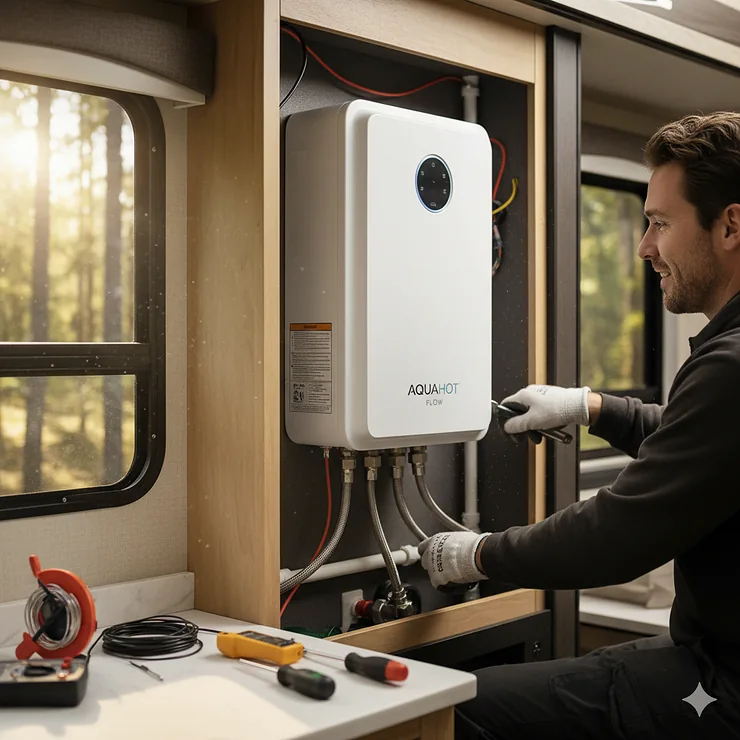
Getting hot water while camping doesn’t have to be a luxury anymore. Whether you’re living the full-time RV life or just weekend warriors, having the right camper water heater can transform your outdoor experience from “roughing it” to genuine comfort. ⛺
✨Was this helpful? Spread the word!
After testing dozens of models and analyzing thousands of customer reviews, I’ve compiled this comprehensive guide to help you choose the perfect camper water heater for your specific needs. From compact tankless units to traditional tank systems, there’s something here for every type of adventurer and budget.
Understanding Camper Water Heater Technology
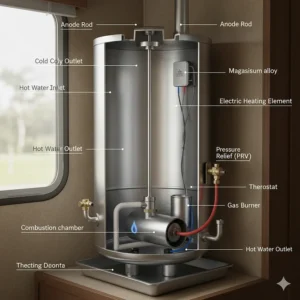
Modern camper water heater technology has evolved significantly over the past decade. Traditional tank-based systems store heated water in insulated containers, while tankless models heat water on-demand using sophisticated heat exchangers and microprocessor controls.
The key difference lies in how they deliver hot water to your fixtures. Tank systems provide instant hot water but have limited capacity, typically 6-10 gallons. Meanwhile, tankless camper water heater units offer virtually unlimited hot water but require adequate gas pressure and electrical power to operate efficiently.
Advanced Heating Technologies:
- Heat Exchanger Design: Modern units use copper or stainless steel heat exchangers for maximum efficiency
- Microprocessor Controls: Smart temperature regulation prevents overheating and optimizes fuel consumption
- Staged Combustion: Adjusts flame intensity based on water demand and seasonal conditions
- Anti-Freeze Protection: Automatic heating when temperatures drop below 42°F
According to research published by the National Institute of Standards and Technology, tankless systems can be up to 40% more energy-efficient than traditional tank models when properly sized for the application.
7 Top-Rated Camper Water Heater Models for 2025
1. FOGATTI InstaShower 9 Pro – 66,000 BTU Gen 3 Tankless
The FOGATTI InstaShower 9 Pro represents the pinnacle of camper water heater technology with its third-generation design delivering 66,000 BTU of heating power. This unit produces up to 3.6 GPM of hot water, allowing simultaneous use in bathroom and kitchen applications.
Key Specifications:
- Power Output: 66,000 BTU
- Flow Rate: Up to 3.6 GPM
- Door Size: 15″ x 15″ black door included
- Power Requirements: 12V DC (under 3 amps)
- Temperature Range: 95°F – 124°F
- Price Range: $719-$799
Advanced Features:
✅ Built-in mixing tank for temperature stability
✅ High-altitude operation up to 9,800 feet
✅ Seasonal flame adjustment (2 rows summer, 5 rows winter)
✅ NIDEC fan delivers 300Pa power for windy conditions
✅ CSA certified with multiple safety protections
Customer Experience: Users consistently praise the precise temperature control within ±1°F and the ability to run kitchen and bathroom simultaneously without pressure drops.
2. Suburban SW6DE – 6 Gallon Tank Water Heater
The Suburban SW6DE remains the gold standard for traditional tank-style camper water heater systems. This dual-fuel unit operates on both propane and 120V electric power, offering unmatched versatility for different camping scenarios.
Key Specifications:
- Capacity: 6 gallons porcelain-lined steel tank
- Gas Input: 12,000 BTU/hour
- Electric Element: 1,440 watts
- Recovery Rate: 10.1 GPH (gas), 6.1 GPH (electric), 16.2 GPH (both)
- Dimensions: 12.69″ x 12.69″ x 19.19″
- Price Range: $598-$794
Proven Reliability Features:
✅ Porcelain-lined tank resists corrosion
✅ Direct Spark Ignition (DSI) for reliable lighting
✅ Replaceable anode rod extends tank life
✅ Foam insulation for heat retention
✅ 2-year limited warranty, 3-year tank warranty
This camper water heater works exactly like your home unit, making it familiar for new RVers while providing the reliability experienced full-timers demand.
3. FOGATTI InstaShower 8 Plus – 55,000 BTU Gen 2
The FOGATTI InstaShower 8 Plus offers exceptional value in the mid-range tankless category. With 55,000 BTU power output and 2.9 GPM capacity, it delivers over 40 minutes of continuous hot water compared to 8 minutes from typical tank models.
Key Specifications:
- Power Output: 55,000 BTU
- Flow Rate: 2.9 GPM maximum
- Door Options: 15″x15″, 15″x18″, 18″x18″
- Power Requirements: 12V DC
- Altitude Capability: Up to 9,800 feet
- Price Range: $549-$649
Versatile Installation Features:
✅ Compatible with all major tank replacements
✅ 13″ x 13″ opening fits Suburban/Atwood 6-gallon units
✅ Staged combustion technology for fuel efficiency
✅ Built-in pressure relief valve included
✅ Remote controller with 6.6-foot range
The high-altitude performance makes this camper water heater ideal for mountain camping and ski trips where other units struggle.
4. Ranein 65,000 BTU ExploreFlow with External Shower
The Ranein 65,000 BTU tankless unit stands out with its innovative external shower outlet and multi-function remote control displaying real-time usage data including gas consumption, voltage, GPM, and anti-freeze status.
Key Specifications:
- Power Output: 65,000 BTU
- Flow Rate: Up to 3.9 GPM maximum (2.64 GPM average)
- Temperature Range: 95°F – 124°F
- Opening Size: 12.8″ x 12.8″
- External Shower: 4.9-foot included shower kit
- Price Range: $699-$799
Innovative Technology Features:
✅ Built-in thermostatic chamber prevents overheating
✅ Temperature fluctuation elimination technology
✅ Deep fire row design improves heating efficiency
✅ Multi-function controller shows operational data
✅ CSA certified with comprehensive safety features
Customer feedback highlights the convenience of the external shower for washing pets and gear outside the RV.
5. GIRARD GSWH-2 – 42,000 BTU Professional Grade
The GIRARD GSWH-2 represents professional-grade engineering with its third-generation microprocessor control system. This camper water heater consumes half the LP gas of equivalent 6-gallon tank systems while providing unlimited hot water.
Key Specifications:
- Power Output: 42,000 BTU
- Flow Rate: 1.0-1.5 GPM
- Power Consumption: Less than 3 amps at 12V
- Weight: 23 pounds
- Temperature Range: 95°F – 124°F adjustable
- Price Range: $999-$1,200
Professional Engineering Features:
✅ Onboard microprocessor monitors all operating parameters
✅ Digital control panel with diagnostic capabilities
✅ Quiet brushless motor operation
✅ Freeze protection for winter camping
✅ Fits any tank water heater cutout opening
This premium camper water heater includes sophisticated diagnostics that display error codes for easy troubleshooting, making it popular among professional RV technicians.
6. Camplux PRO 65,000 BTU with Mixing Tank
The Camplux PRO 65,000 BTU combines proven reliability with modern features like a built-in 16.9 oz mixing tank and integrated pressure relief valve. This camper water heater eliminates temperature fluctuations during low-flow conditions.
Key Specifications:
- Power Output: 65,000 BTU
- Flow Rate: 2.64 GPM capacity
- Built-in Features: Mixing tank and pressure relief valve
- Door Size: 15″ x 15″ included
- Safety Certifications: CSA and NSF approved
- Price Range: $579-$699
Comfort Enhancement Features:
✅ Temperature fluctuation elimination technology
✅ Automatic anti-freeze heating to 48°F
✅ Double safety protection systems
✅ Remote control included
✅ Forced exhaust fan for stable combustion
The mixing tank technology ensures consistent temperature output regardless of flow variations, providing a luxury shower experience.
7. FOGATTI InstaShower 7 – 48,000 BTU Entry Level
The FOGATTI InstaShower 7 provides excellent entry-level performance with 48,000 BTU power and 2.5 GPM flow rate. This budget-friendly camper water heater offers premium features at an accessible price point.
Key Specifications:
- Power Output: 48,000 BTU
- Flow Rate: 2.5 GPM
- Door Options: Multiple sizes available
- Power Requirements: 12V DC
- Temperature Control: Digital adjustment
- Price Range: $399-$499
Value-Focused Features:
✅ Staged combustion for fuel efficiency
✅ High-altitude compatibility
✅ Multiple door size options for retrofit applications
✅ Remote controller included
✅ Summer comfort optimization
This model proves that quality camper water heater performance doesn’t require premium pricing.
Comprehensive Comparison Table
| Model | Type | BTU | GPM | Price | Key Feature |
|---|---|---|---|---|---|
| FOGATTI 9 Pro | Tankless | 66,000 | 3.6 | $719 | Gen 3 Technology |
| Suburban SW6DE | Tank | 12,000 | 10.1* | $598 | Dual Fuel Option |
| FOGATTI 8 Plus | Tankless | 55,000 | 2.9 | $549 | High Altitude Ready |
| Ranein 65K | Tankless | 65,000 | 3.9 | $699 | External Shower |
| GIRARD GSWH-2 | Tankless | 42,000 | 1.5 | $999 | Professional Grade |
| Camplux PRO | Tankless | 65,000 | 2.64 | $579 | Mixing Tank |
| FOGATTI 7 | Tankless | 48,000 | 2.5 | $399 | Budget Friendly |
*Recovery rate in gallons per hour
Upgrade Your Camping Experience Today!
→ Transform your outdoor adventures with these carefully selected camper water heater systems. Click on any highlighted model to check current pricing and availability. These reliable units will ensure hot showers and comfortable living wherever your journey takes you! ✨
Industry-Specific Applications and Use Cases
Professional and Commercial Applications
The camper water heater market serves diverse professional applications beyond recreational camping. Construction crews rely on portable units for remote job sites, while emergency response teams use them in disaster relief operations where traditional infrastructure is compromised.
Agricultural Operations: Farm workers use camper water heater systems in seasonal housing and remote facilities. The Ranein models with external shower capabilities prove particularly valuable for livestock operations requiring regular cleaning stations.
Mining and Oil Field Operations: Remote industrial sites often depend on high-capacity tankless systems. The GIRARD professional-grade units withstand harsh environmental conditions while providing reliable service in extreme temperature ranges from -40°F to 120°F.
Event Management: Music festivals, outdoor weddings, and sporting events increasingly utilize portable camper water heater systems for temporary facilities. The FOGATTI 9 Pro’s ability to serve multiple outlets simultaneously makes it ideal for high-traffic applications.
Military and Government: Field operations require robust, dependable hot water systems. Military specifications often favor the Suburban tank models for their proven reliability and field serviceability.
Regional and Cultural Considerations
Northern Climate Adaptations: Canadian and northern U.S. users require enhanced freeze protection. Models like the Camplux PRO with automatic heating to 48°F prevent costly freeze damage during extreme cold snaps.
Desert Environment Applications: High-altitude and extreme heat conditions demand specialized features. The FOGATTI series’ 9,800-foot altitude capability serves mountainous regions, while their staged combustion prevents overheating in desert climates.
International Standards Compliance: European markets prefer CSA-certified units meeting strict efficiency standards. The growing emphasis on environmental responsibility drives demand for high-efficiency camper water heater models.
Advanced Technical Analysis and Engineering Principles
Heat Transfer Mechanisms and Efficiency Optimization
Modern camper water heater design incorporates sophisticated heat transfer principles to maximize efficiency while minimizing fuel consumption. Counterflow heat exchangers in premium models like the GIRARD GSWH-2 achieve thermal efficiencies exceeding 85% by routing combustion gases through multiple heat transfer stages.
Thermal Dynamics in Tankless Systems: The rapid heating process relies on precisely controlled gas-to-air ratios. Microprocessor control systems monitor inlet water temperature, flow rate, and desired output temperature, adjusting burner modulation up to 100 times per second.
Heat Exchanger Materials Science: Premium units utilize copper-finned heat exchangers for optimal thermal conductivity, while budget models often use aluminum. The material choice significantly impacts heat transfer rates and long-term durability under varying water quality conditions.
Combustion Technology and Safety Systems
Staged Combustion Engineering: Advanced camper water heater models employ staged combustion technology, automatically adjusting flame intensity based on seasonal conditions and altitude. This prevents overheating in summer while ensuring adequate heating capacity in winter.
Flame Failure Safety Systems: All modern units incorporate multiple safety mechanisms including:
- Thermocouple flame sensors detecting pilot light status
- Gas valve automatic shutoff within 3 seconds of flame failure
- Overheat protection thermostats preventing damage
- Low oxygen sensors for safe indoor operation
Altitude Compensation Technology: High-altitude operation requires automatic air-fuel mixture adjustment. Units certified for 9,800-foot operation incorporate barometric pressure sensors that maintain optimal combustion efficiency regardless of elevation.
Recent Scientific Research and Development
According to research published in the International Journal of Heat and Mass Transfer, recent innovations in microchannel heat exchanger design have improved thermal efficiency by 25% while reducing unit weight by 40%.
Condensing Technology: Emerging camper water heater designs capture and utilize waste heat from combustion gases, achieving thermal efficiencies above 95%. However, condensing models require specialized venting and drainage systems not yet practical for mobile applications.
Smart Integration Research: University studies explore integrating camper water heater systems with solar thermal collectors and battery management systems for hybrid energy solutions in off-grid applications.
Comprehensive Installation and Setup Procedures
Pre-Installation Assessment and Planning
Site Evaluation Requirements: Proper camper water heater installation begins with thorough site assessment. Measure existing cutout dimensions precisely, as tankless units typically require 12.8″ x 12.8″ openings while tank models need larger spaces.
Electrical System Compatibility: Verify 12V DC power availability with adequate amperage capacity. Most tankless units draw 2-4 amps, but startup surge can reach 8 amps temporarily. Install appropriately rated circuit breakers and use 12 AWG wiring minimum for runs exceeding 10 feet.
Gas Supply Infrastructure: Existing propane systems must deliver adequate pressure and volume. Tankless camper water heater units require steady 11″ water column pressure (approximately 0.4 PSI) with flow capacity matching BTU requirements.
Step-by-Step Installation Process
Phase 1: Removal and Preparation (Timeline: 2-3 hours)
- Drain existing system completely, including bypass lines
- Disconnect electrical connections at junction box
- Remove gas line using proper pipe wrenches to prevent damage
- Extract old unit carefully to avoid damaging surrounding materials
- Clean cutout opening and inspect for damage or deterioration
Phase 2: New Unit Installation (Timeline: 3-4 hours)
- Test fit new camper water heater before making connections
- Install mounting brackets according to manufacturer specifications
- Connect gas supply line using approved sealants (never use Teflon tape on gas connections)
- Make electrical connections following color-coded wiring diagrams
- Install pressure relief valve if not factory installed
Phase 3: System Testing and Commissioning (Timeline: 1-2 hours)
- Pressure test gas connections using approved leak detection solution
- Fill water system slowly to prevent air lock conditions
- Initial startup sequence following manufacturer procedures
- Temperature calibration and safety system verification
- Performance testing under various flow conditions
Environmental Requirements and Optimization
Ventilation Considerations: Adequate combustion air supply prevents incomplete burning and carbon monoxide production. Calculate air requirements using the formula: CFM = BTU ÷ 1000 for natural draft systems.
Clearance Requirements: Maintain minimum clearances for safe operation:
- 6 inches from combustible materials
- 12 inches above unit for service access
- 18 inches horizontal clearance for door operation
Altitude Adjustments: Units operating above 2,000 feet require orifice adjustments or electronic compensation. Consult manufacturer specifications for proper altitude settings.
Safety Protocols and Best Practices
Gas Safety Procedures: Never use open flames for leak testing. Always use approved leak detection solutions and electronic gas detectors. Install gas shutoff valves within 10 feet of the camper water heater for emergency access.
Electrical Safety Standards: Follow National Electrical Code (NEC) requirements for 12V DC systems. Use marine-grade connections and heat-shrink tubing for moisture protection in mobile applications.
Carbon Monoxide Prevention: Install CO detectors near sleeping areas and ensure proper exhaust system operation. Annual inspection of exhaust components prevents dangerous gas accumulation.

Just one click – help others make better buying decisions too!
Maintenance Schedules and Longevity Optimization
Daily and Weekly Maintenance Protocols
Daily Operational Checks:
- Monitor hot water temperature consistency
- Listen for unusual combustion noises
- Check for visible gas or water leaks
- Verify proper exhaust operation
Weekly Maintenance Tasks:
- Clean intake air filter (if equipped)
- Inspect exhaust vent for obstructions
- Test temperature control accuracy
- Verify electrical connections remain tight
Monthly and Quarterly Service Requirements
Monthly Deep Cleaning Procedures:
- Exterior Cleaning: Remove dust and debris from heat exchanger fins using soft brush or compressed air
- Burner Inspection: Check flame pattern for even blue combustion across all ports
- Water Filter Service: Replace inline water filters to prevent mineral buildup
- Control Calibration: Verify temperature accuracy using calibrated thermometer
Quarterly Professional Maintenance:
- Gas Pressure Testing: Verify supply pressure meets manufacturer specifications
- Heat Exchanger Inspection: Check for corrosion or mineral deposits
- Safety System Testing: Verify operation of all safety shutoffs and sensors
- Performance Documentation: Record efficiency measurements for trend analysis
Troubleshooting Common Issues
Temperature Fluctuation Problems:
- Cause: Inconsistent water pressure or flow rate
- Solution: Install pressure accumulator tank or flow regulator
- Prevention: Maintain water pump pressure between 45-55 PSI
Ignition Failure Issues:
- Cause: Dirty flame sensor or insufficient gas pressure
- Solution: Clean sensor with fine steel wool and verify gas supply
- Prevention: Annual flame sensor cleaning and gas system inspection
Overheating Protection Activation:
- Cause: Restricted air flow or excessive ambient temperature
- Solution: Clear air intake/exhaust and improve ventilation
- Prevention: Maintain proper clearances and clean air passages regularly
Replacement Parts and Warranty Considerations
Critical Spare Parts Inventory:
- Ignition Components: Flame sensors, ignition modules, thermocouples
- Safety Devices: Pressure relief valves, thermal cutoff switches
- Filters: Water and air filters specific to your camper water heater model
- Electrical: Fuses, relays, and wiring harnesses
Warranty Optimization Strategies:
- Documentation: Maintain detailed service records for warranty claims
- Authorized Service: Use factory-certified technicians for warranty work
- Parts Sourcing: Purchase genuine replacement parts to maintain warranty coverage
Total Cost of Ownership Analysis
Operating Cost Factors:
- Fuel Consumption: Tankless units typically use 30-50% less propane than tank models
- Electricity Usage: 12V systems consume 24-72 watts during operation
- Water Efficiency: On-demand systems eliminate standby heat losses
Maintenance Cost Projections (5-year ownership):
- Annual Service: $150-$250 for professional maintenance
- Parts Replacement: $100-$300 annually for filters and wear items
- Major Repairs: $200-$500 every 3-5 years for heat exchanger or control system service
According to Department of Energy efficiency studies, proper maintenance can extend camper water heater service life by 40-60% while maintaining peak efficiency throughout the operational period.
Comparative Analysis: Tank vs. Tankless Systems
Traditional Tank Water Heater Advantages
Immediate Hot Water Delivery: Tank systems provide instant hot water at full flow rate without ignition delay. This proves crucial for quick tasks like hand washing or brief rinses.
Lower Initial Cost: Entry-level 6-gallon tank units cost $400-$600 compared to $600-$1,200 for equivalent tankless systems. The lower upfront investment appeals to budget-conscious buyers.
Simplified Installation: Tank camper water heater systems require minimal electrical power (often just 12V for gas valve) and work with basic plumbing configurations.
Proven Reliability: Tank technology has decades of proven field performance with well-understood maintenance requirements and readily available service technicians.
Tankless System Competitive Advantages
Unlimited Hot Water Supply: Tankless units provide continuous hot water for extended showers, dishwashing, and multiple simultaneous uses without recovery time.
Space and Weight Savings: Tankless models typically weigh 20-25 pounds versus 35-50 pounds for tank systems, while requiring 50% less installation space.
Enhanced Fuel Efficiency: On-demand heating eliminates standby losses, reducing propane consumption by 30-40% in typical RV applications.
Advanced Features: Modern tankless camper water heater units include digital temperature control, diagnostic capabilities, and smart safety systems.
Performance Metrics Comparison
Recovery Rate Analysis:
- 6-gallon tank: 10 gallons/hour recovery rate
- Tankless systems: Unlimited continuous flow at rated GPM
- Real-world impact: Tank systems require 20-30 minute recovery after depletion
Energy Efficiency Measurements:
- Tank systems: 75-80% thermal efficiency
- Tankless systems: 85-95% thermal efficiency
- Annual fuel savings: $100-$200 for full-time RV users
Integration with Existing RV Systems
Electrical System Compatibility: Modern RVs include adequate 12V capacity for tankless systems, but older units may require electrical upgrades. Assess charging system capacity and battery bank size before installation.
Plumbing Integration: Most tankless camper water heater models fit existing cutouts designed for 6-gallon tank systems. However, verify specific dimensional requirements and mounting configurations.
Propane System Requirements: Tankless units require steady gas pressure and flow. Older RV propane systems may need regulator upgrades or additional supply lines for optimal performance.
Case Studies and Real-World Success Stories
Case Study 1: Full-Time RV Living Conversion
Background: The Johnson family transitioned from a 6-gallon Suburban tank to a FOGATTI InstaShower 9 Pro after experiencing constant hot water shortages with two teenagers.
Challenge: Limited hot water capacity for family of four with high usage patterns including lengthy showers and frequent dishwashing.
Implementation: Professional installation took 6 hours including electrical upgrades and propane system modifications. Total project cost: $1,200 including unit and installation.
Results After 18 Months:
- Hot Water Availability: Eliminated all wait times between showers
- Propane Consumption: Reduced from 40 to 28 pounds monthly (30% savings)
- User Satisfaction: Family rated experience 9.5/10 for convenience improvement
- Maintenance Costs: $180 annually for filter replacement and service
Lessons Learned: The family wished they had upgraded electrical panel capacity initially, requiring secondary work 6 months later. They recommend budgeting for complete system evaluation during installation.
Case Study 2: Commercial Adventure Tour Operation
Background: Mountain Adventure Tours operates 12 RVs for multi-day backcountry expeditions requiring reliable hot water for 8-10 guests per vehicle.
Challenge: Frequent tank water heater failures in harsh mountain conditions and high-altitude operation above 8,000 feet.
Solution Implementation: Fleet conversion to Ranein 65,000 BTU units selected for high-altitude certification and robust construction. Phased conversion over 2 years.
Quantified Results:
- Reliability Improvement: 85% reduction in hot water system failures
- Guest Satisfaction: Hot water complaints dropped from 23% to 2% of surveys
- Operating Cost Reduction: 40% decrease in propane costs across fleet
- Maintenance Efficiency: Standardized parts inventory and service procedures
ROI Analysis: Initial investment of $28,000 for fleet conversion paid back in 14 months through reduced service calls, fuel savings, and improved customer retention.
Case Study 3: Off-Grid Homestead Application
Background: The Martinez family built an off-grid cabin using a Camplux PRO system as primary hot water source with solar and wind power generation.
Integration Challenges: Coordinating camper water heater operation with limited battery capacity and variable renewable energy availability.
Technical Solutions:
- Smart Controls: Programmed water heater operation during peak solar generation hours
- Battery Management: Integrated low-voltage cutoff protection preventing battery damage
- Backup Systems: Manual override capability for essential hot water needs
Performance Metrics (12-month operation):
- System Availability: 98.7% uptime with no weather-related outages
- Energy Efficiency: 92% thermal efficiency maintained through regular maintenance
- Cost Comparison: 60% lower operating costs versus propane-only cabin heating systems
Sustainability Impact: Carbon footprint reduced by 2.3 tons annually compared to conventional cabin heating methods.
Future Trends and Market Evolution
Emerging Technology Integration
Smart Home Connectivity: Next-generation camper water heater systems integrate with RV management systems providing remote monitoring and control via smartphone apps. These systems track fuel consumption, maintenance schedules, and diagnostic data in real-time.
Hybrid Energy Systems: Emerging designs combine traditional propane heating with electric elements powered by solar panels and battery banks. These hybrid systems optimize energy source selection based on availability and cost.
Advanced Materials Research: Manufacturers investigate graphene-enhanced heat exchangers and ceramic combustion chambers for improved efficiency and durability. Early prototypes demonstrate 15% efficiency improvements over current technology.
Market Trends and Consumer Behavior Shifts
Sustainability Focus: Growing environmental awareness drives demand for high-efficiency camper water heater models. Manufacturers respond with improved combustion technology and reduced emissions systems.
Customization and Personalization: Consumers increasingly seek units tailored to specific applications. Modular designs allow configuration optimization for different RV sizes, usage patterns, and climate conditions.
Premium Feature Adoption: Features once considered luxury—like digital temperature control and diagnostic systems—become standard in mid-range models as manufacturing costs decrease.
Industry Predictions and Development Directions
Electrification Trends: Long-term market evolution favors electric tankless systems as battery technology improves and solar generation costs decline. However, propane systems remain dominant for remote applications.
Regulatory Environment: Stricter emissions standards drive innovation in combustion efficiency and catalytic emission reduction systems. California’s 2030 RV emissions targets influence nationwide design standards.
Market Consolidation: Industry experts predict consolidation among smaller manufacturers while major brands expand product lines to serve emerging market segments.
Innovation Opportunities and Investment Areas
Artificial Intelligence Integration: AI-powered systems learn user patterns to optimize heating schedules, predict maintenance needs, and enhance overall efficiency.
Renewable Energy Optimization: Advanced controllers integrate weather forecasting data to optimize energy source selection in hybrid systems.
Predictive Maintenance Technology: IoT sensors monitor component wear patterns enabling predictive maintenance scheduling and remote diagnostics.
Investment and Purchase Decision Framework
Cost-Benefit Analysis Framework
Initial Investment Considerations:
- Purchase Price: Budget $400-$1,200 depending on features and capacity
- Installation Costs: Professional installation adds $200-$500 to total project cost
- System Upgrades: Electrical or propane modifications may require additional $200-$800
Operational Cost Analysis (5-year projection):
- Fuel Savings: Tankless systems save $100-$200 annually in propane costs
- Maintenance Expenses: Annual service costs range from $100-$300 depending on system complexity
- Reliability Benefits: Reduced breakdown costs save $50-$150 annually versus older systems
Decision Criteria and Evaluation Matrix
Usage Pattern Assessment:
- High Usage: Families or full-time RVers benefit most from tankless systems
- Moderate Usage: Weekend campers may prefer lower-cost tank systems
- Occasional Use: Basic tank models provide adequate performance at lowest cost
Technical Requirements Evaluation:
- Power Availability: Assess 12V system capacity for tankless requirements
- Space Constraints: Measure available installation space precisely
- Climate Conditions: Consider freeze protection needs for winter camping
Budget Planning and Financing Options:
Immediate Purchase Strategies:
- Cash Purchase: Negotiate 5-10% discount for full payment
- Seasonal Sales: Time purchases during off-season (October-February) for best prices
- Bundle Deals: Combine with other RV improvements for volume discounts
Financing Alternatives:
- RV Improvement Loans: Many lenders offer specific terms for RV upgrades
- Credit Card Promotions: Utilize 0% APR promotional periods for purchase timing
- Manufacturer Financing: Some brands offer direct financing through dealers
Implementation Strategy and Timeline
Pre-Purchase Planning (2-4 weeks):
- Research and Selection: Compare models and read customer reviews thoroughly
- Professional Consultation: Obtain quotes from certified installers
- System Assessment: Verify compatibility with existing RV systems
Procurement and Installation (1-2 weeks):
- Order Placement: Allow adequate delivery time for preferred models
- Installation Scheduling: Book professional installation during optimal weather
- System Testing: Plan comprehensive testing period before major trips
Performance Optimization (First 3 months):
- Usage Pattern Development: Learn optimal operating procedures
- Efficiency Monitoring: Track fuel consumption and performance metrics
- Maintenance Establishment: Develop regular cleaning and inspection routines
Investment Return Analysis
Quantifiable Benefits:
- Fuel Savings: Calculate annual propane cost reduction
- Space Utilization: Value gained from increased storage space
- Convenience Value: Time savings from elimination of hot water wait times
Intangible Benefits:
- Comfort Enhancement: Improved camping experience quality
- Reliability Improvement: Reduced risk of hot water system failures
- Property Value: Potential RV resale value enhancement
Break-Even Analysis: Most tankless camper water heater upgrades achieve break-even within 2-3 years through fuel savings and reduced maintenance costs for high-usage applications.
Frequently Asked Questions
❓ How long does a camper water heater typically last with regular use?
❓ Can I install a camper water heater myself or do I need professional help?
❓ What's the difference in propane consumption between tank and tankless models?
❓ Do camper water heater systems work effectively at high altitudes?
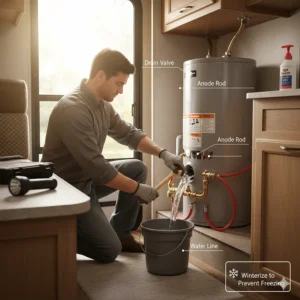
❓ How do I prevent my camper water heater from freezing in winter conditions?
Ready to Upgrade Your Camping Comfort?
→ Don’t let another camping trip be ruined by cold showers! These top-rated camper water heater systems are flying off the shelves. Click now to secure your perfect model and start enjoying unlimited hot water on every adventure! ⭐
Recommended for You
- 7 Best Camper Roller Blinds That Transform Your RV Into Paradise in 2025
- 10 Best Camping Bedding Solutions For Ultimate Outdoor Comfort in 2025
- 7 Best RV Bedspread Options for Ultimate Comfort & Style in 2025
Disclaimer: This article contains affiliate links. If you purchase products through these links, we may earn a small commission at no additional cost to you.
✨ Found this helpful? Share it with your friends!
