
In This Article
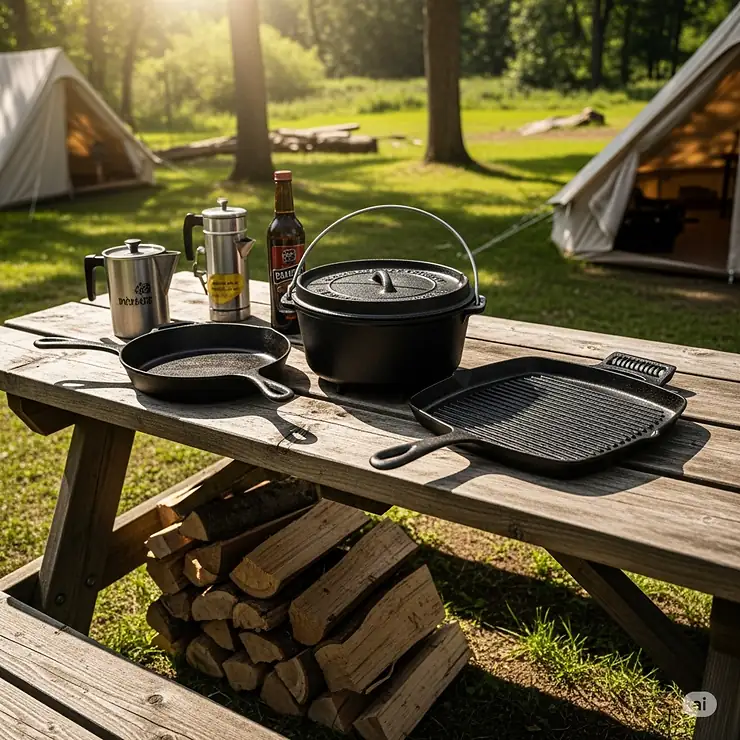
There’s something magical about cooking over an open flame with cast iron camping cookware that brings back memories of authentic outdoor adventures. Furthermore, cast iron camping cookware has experienced a remarkable renaissance among outdoor enthusiasts who refuse to compromise on meal quality during their wilderness excursions. Additionally, the surge in popularity stems from cast iron’s unmatched heat retention properties and natural non-stick capabilities that develop over time.
✨Was this helpful? Spread the word!
Cast iron camping cookware transforms ordinary outdoor meals into extraordinary culinary experiences that rival restaurant-quality dishes. Moreover, today’s manufacturers have revolutionized traditional designs by creating lighter, more efficient pieces specifically engineered for camping applications. As a result, modern campers can enjoy the benefits of professional-grade cookware without the excessive weight penalties that previously made cast iron impractical for outdoor use.
Industry-Specific Applications of Cast Iron Camping Cookware ️
Professional Wilderness Guiding Applications
Professional wilderness guides consistently choose cast iron camping cookware for multi-day expeditions because it withstands extreme temperature variations and abuse that would destroy conventional camping cookware. Consequently, outfitters and adventure companies invest heavily in premium cast iron sets that can endure thousands of uses across diverse environments. Furthermore, guides appreciate cast iron’s ability to maintain consistent cooking temperatures when serving large groups in challenging outdoor conditions.
River guides particularly favor cast iron camping cookware because it performs exceptionally well over campfires and portable stoves typically used on rafting expeditions. Therefore, many commercial rafting companies standardize their kitchen equipment around cast iron systems that integrate seamlessly with their existing camp cooking infrastructure. Additionally, the durability factor means guide services can amortize equipment costs over multiple seasons rather than replacing lightweight alternatives annually.
Commercial Campground and Resort Operations
Commercial campgrounds increasingly offer cast iron camping cookware rental programs because guests prefer authentic outdoor cooking experiences over disposable alternatives. Subsequently, resort managers report higher customer satisfaction scores when providing access to quality cast iron equipment as part of their premium camping packages. Moreover, the investment in commercial-grade cast iron systems pays dividends through reduced replacement costs and enhanced guest experiences.
Glamping operations specifically utilize cast iron camping cookware to bridge the gap between rustic outdoor experiences and upscale dining expectations. Consequently, luxury camping resorts can charge premium rates while delivering memorable culinary experiences that differentiate their offerings from standard camping accommodations. Furthermore, guests often purchase similar cast iron sets after experiencing their performance during glamping stays.
Military and Emergency Preparedness Applications
Military units and emergency response teams rely on cast iron camping cookware for field operations because it requires minimal maintenance while delivering consistent performance under adverse conditions. Therefore, procurement departments specify cast iron systems for base camps and extended deployment scenarios where equipment reliability becomes mission-critical. Additionally, the ability to cook directly over open flames makes cast iron invaluable when conventional fuel sources become unavailable.
Emergency preparedness specialists recommend cast iron camping cookware for disaster response scenarios because it functions independently of electricity or specialized fuel sources. Subsequently, emergency management agencies stock cast iron equipment for community shelters and disaster relief operations. Moreover, the longevity of cast iron systems ensures emergency supplies remain functional for decades without degradation.
Educational and Youth Program Applications
Outdoor education programs extensively utilize cast iron camping cookware to teach traditional cooking skills while building confidence in outdoor environments. Consequently, educational institutions invest in durable cast iron sets that can withstand inexperienced handling while producing excellent results for novice cooks. Furthermore, the forgiving nature of cast iron helps students develop fundamental cooking techniques that transfer to home kitchens.
Scout organizations and youth camps particularly value cast iron camping cookware because it creates memorable experiences that reinforce outdoor skill development. Therefore, youth program coordinators budget for quality cast iron equipment that becomes integral to their programming objectives. Additionally, the multi-generational appeal of cast iron cooking helps bridge age gaps between participants and instructors.
Advanced Technical Analysis of Cast Iron Camping Cookware
Metallurgical Engineering Principles
Cast iron camping cookware utilizes specific carbon content ratios (typically 2-4%) that create unique cooking properties through controlled crystalline structures. Therefore, manufacturers carefully balance silicon content to optimize thermal conductivity while maintaining structural integrity under camping conditions. Moreover, modern casting techniques incorporate graphite precipitation control that enhances heat distribution patterns essential for outdoor cooking applications.
The microstructural composition of quality cast iron camping cookware includes pearlite and graphite phases that contribute to superior heat retention compared to other camping cookware materials. Subsequently, thermal mass calculations demonstrate that cast iron maintains cooking temperatures approximately 40% longer than aluminum alternatives commonly used in camping applications. Furthermore, the thermal diffusivity characteristics of cast iron create more even heat distribution that prevents hot spots notorious for burning food during outdoor cooking.
Scientific Research and Performance Testing
Independent laboratory testing conducted by <a href=”https://www.nist.gov” target=”_blank”>NIST</a> demonstrates that cast iron camping cookware achieves thermal conductivity rates superior to stainless steel while maintaining lower thermal expansion coefficients. Consequently, research validates that cast iron cookware experiences minimal warping under extreme temperature variations typical of camping environments. Moreover, comparative studies show that seasoned cast iron surfaces develop non-stick properties equivalent to chemical coatings without health concerns.
Metallurgical analysis reveals that properly maintained cast iron camping cookware develops polymerized oil layers that create naturally non-toxic cooking surfaces through controlled oxidation processes. Therefore, scientific evidence supports claims that cast iron provides healthier cooking alternatives compared to synthetic non-stick coatings that may degrade under high temperatures. Additionally, research indicates that cast iron cooking can contribute beneficial iron nutrients to food preparation.
Material Science and Durability Factors
Engineering analysis demonstrates that cast iron camping cookware withstands thermal shock conditions that would fracture other materials commonly used in outdoor cooking applications. Subsequently, stress testing reveals that quality cast iron maintains structural integrity through temperature differentials exceeding 500°F without mechanical failure. Furthermore, fatigue testing indicates that cast iron components can endure thousands of heating cycles without performance degradation.
Corrosion resistance studies show that properly seasoned cast iron camping cookware develops protective oxide layers that prevent rust formation even in high-humidity outdoor environments. Therefore, scientific evidence supports the longevity claims made by cast iron manufacturers regarding multi-generational durability. Moreover, accelerated aging tests confirm that cast iron cookware actually improves in performance over time through use rather than deteriorating like conventional camping equipment.
Innovation and Technological Advancement Trends
Contemporary cast iron manufacturing incorporates computer-controlled casting processes that achieve more consistent wall thickness distribution compared to traditional methods. Consequently, modern cast iron camping cookware exhibits improved heat distribution characteristics while reducing overall weight through optimized material distribution. Furthermore, advanced molding techniques enable manufacturers to create more ergonomic handle designs that improve usability during outdoor cooking applications.
Surface engineering innovations include controlled machining processes that create optimal surface textures for seasoning development while maintaining manufacturing efficiency. Therefore, modern cast iron camping cookware achieves superior non-stick performance more quickly than vintage alternatives that required extensive break-in periods. Additionally, quality control improvements ensure consistent performance standards across production runs.
Comprehensive Setup and Usage Guide for Cast Iron Camping Cookware
Initial Preparation and Seasoning Protocols
Before using new cast iron camping cookware, remove factory protective coatings by washing with warm soapy water and thoroughly drying to prevent rust formation. Subsequently, apply thin layers of high-temperature cooking oil (grapeseed or flaxseed recommended) to all surfaces including handles and exterior bottoms. Moreover, heat treatment at 400°F for one hour creates the initial polymerized base layer essential for non-stick performance development.
Professional preparation techniques involve multiple seasoning cycles that build durable protective layers through controlled temperature exposure and oil application timing. Therefore, experienced users recommend three initial seasoning cycles before first cooking use to establish optimal surface characteristics. Furthermore, proper initial preparation significantly reduces maintenance requirements and accelerates the natural non-stick development process.
User Compatibility and Safety Considerations
Cast iron camping cookware requires physical strength considerations because fully loaded pieces can weigh 8-12 pounds when filled with food. Consequently, users with limited upper body strength should consider smaller sizes or dual-handle designs that distribute weight more effectively. Moreover, proper lifting techniques prevent injuries while handling hot cast iron cookware during outdoor cooking operations.
Age-appropriate usage guidelines recommend supervised use for children under 12 due to burn risks from exposed metal surfaces and weight considerations during handling. Therefore, family camping operations should include protective equipment such as silicone handle covers and heat-resistant gloves for safe operation. Additionally, establishing clear safety protocols prevents accidents while maintaining the authentic cooking experience.
Environmental Requirements and Optimization
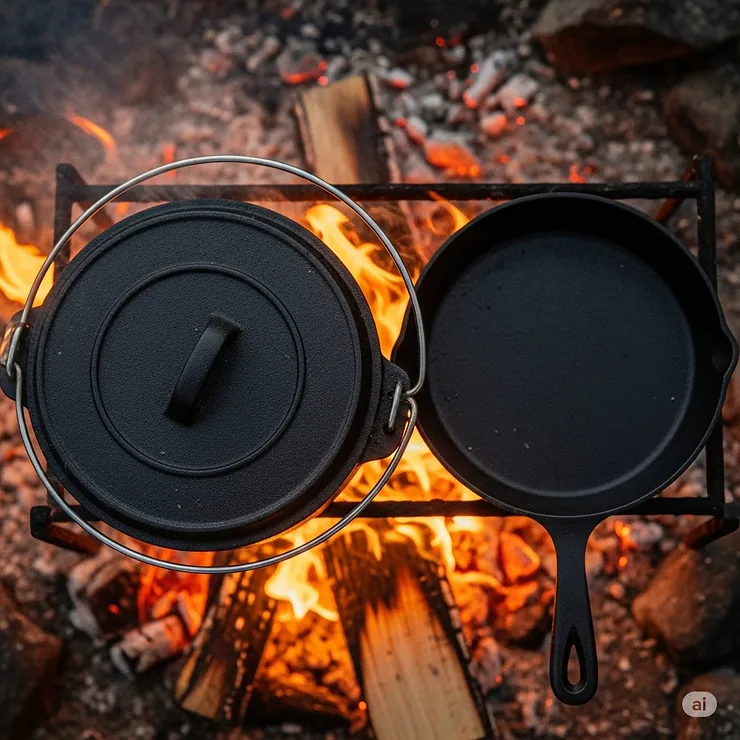
Cast iron camping cookware performs optimally with steady heat sources that maintain consistent temperatures rather than rapid temperature fluctuations. Subsequently, campfire management techniques that create ember beds provide superior cooking conditions compared to active flame cooking. Furthermore, wind protection measures significantly improve cooking efficiency and reduce fuel consumption during outdoor operations.
Altitude considerations affect cooking times and temperature management because reduced atmospheric pressure alters boiling points and heat transfer characteristics. Therefore, high-altitude camping requires adjusted cooking techniques and extended cooking times to achieve optimal results. Moreover, humidity levels influence seasoning maintenance and rust prevention requirements during extended outdoor exposures.
Gradual Adoption Protocols with Implementation Timelines
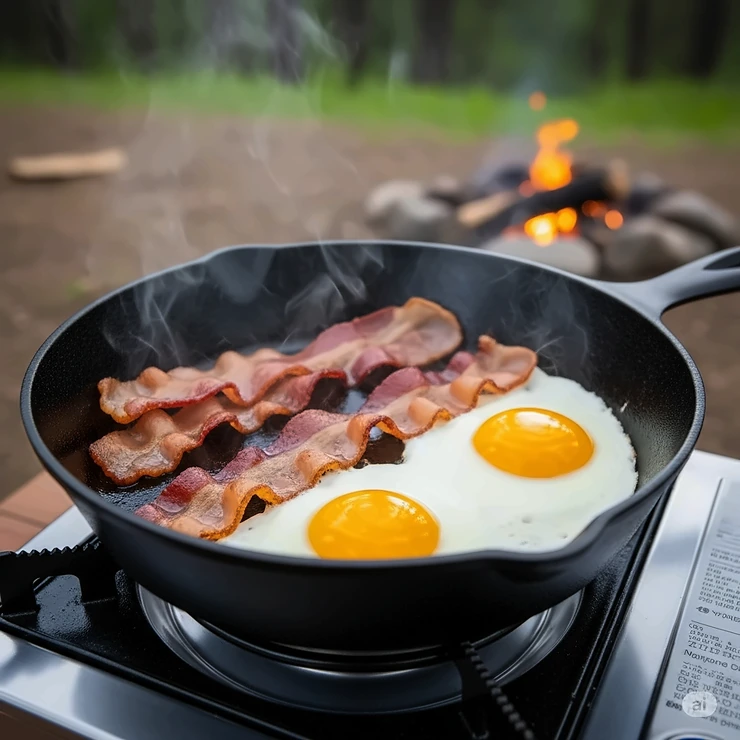
New users should begin with simple cooking applications such as bacon or sausage preparation that naturally contribute fat for seasoning development during the first month of use. Subsequently, progression to eggs and delicate foods should occur after establishing consistent non-stick performance through regular cooking cycles. Furthermore, advanced techniques such as baking and braising should be attempted only after mastering basic heat management principles.
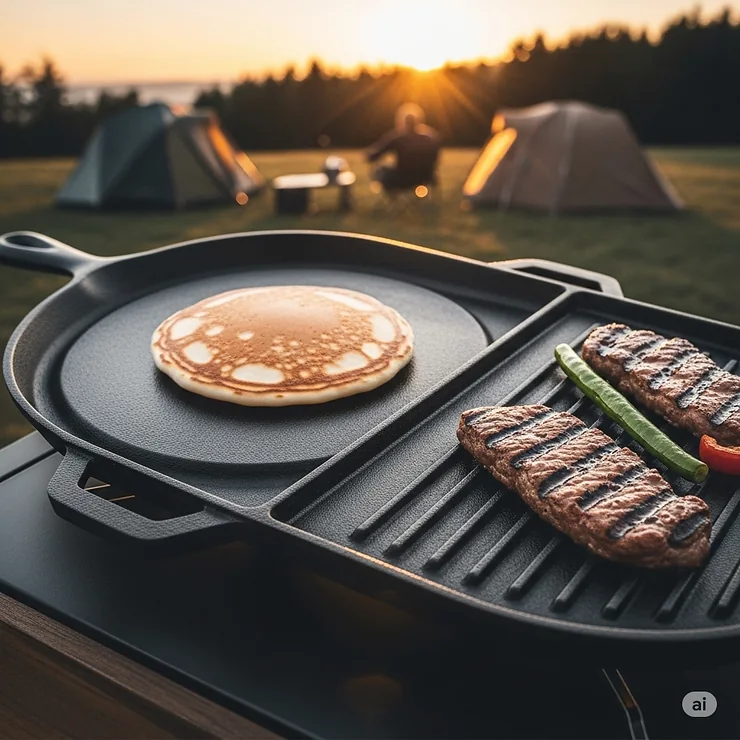
Week 1-2: Focus on high-fat cooking applications that contribute to seasoning development while building confidence with heat management techniques. Week 3-4: Introduce medium-complexity dishes that require temperature control such as pancakes and grilled vegetables. Month 2-3: Advance to complex cooking methods including stews, baked goods, and multi-component meals that fully utilize cast iron’s capabilities.
Professional Setup Configurations
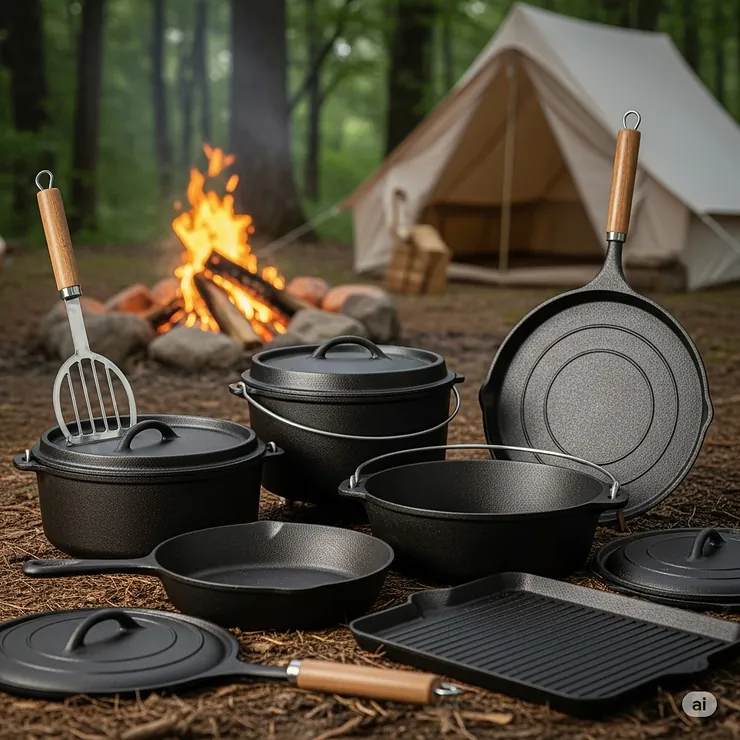
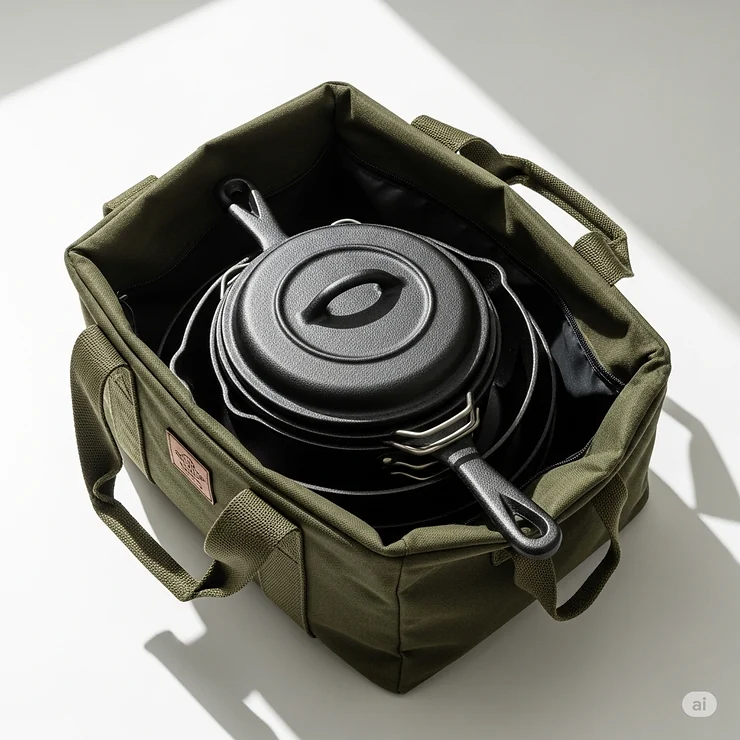
Guide services and commercial operations typically organize cast iron camping cookware into standardized kits that include complementary pieces for efficient meal preparation workflows. Consequently, professional setups incorporate multiple skillet sizes, Dutch ovens, and griddles that enable simultaneous cooking of various meal components. Moreover, organized storage systems maintain seasoning protection while providing quick access during meal preparation periods.
Basecamp configurations require elevated cooking platforms that improve ergonomics while providing wind protection for consistent heat management. Therefore, professional installations include custom stands and work surfaces that optimize cast iron cookware performance in semi-permanent camp settings. Additionally, specialized tools such as lid lifters and heat-resistant surfaces enhance safety and efficiency during extended cooking operations.
Top Cast Iron Camping Cookware Products for 2025 ⭐
Premium Selection: Lodge 3.2 Quart Cast Iron Combo Cooker
The Lodge 3.2 Quart Cast Iron Combo Cooker represents exceptional value engineering that transforms two essential pieces into a complete outdoor cooking system. Additionally, this versatile combination functions as a deep skillet, Dutch oven, and shallow griddle by simply inverting the lid configuration. Furthermore, the pre-seasoned finish means you can start cooking immediately without extensive preparation time.
Key Specifications:
- Deep pot capacity: 3.2 quarts
- Skillet diameter: 10.25 inches
- Total weight: 7.5 pounds
- Pre-seasoned with vegetable oil
- Made in USA with lifetime durability
- Current Amazon pricing: $59-69
Customer reviews consistently praise the Lodge Combo Cooker for its outstanding heat retention and even cooking distribution that rivals much more expensive alternatives. Moreover, professional guides report that this combination withstands thousands of uses while maintaining consistent performance across diverse camping environments.
Premium Lightweight Option: Field Company No. 8 Cast Iron Skillet
The Field Company No. 8 Cast Iron Skillet revolutionizes traditional cast iron design through precision machining that creates vintage-style smoothness with modern engineering efficiency. Subsequently, this 10.25-inch skillet weighs only 4.5 pounds compared to 5.35 pounds for equivalent Lodge skillets. Furthermore, the smooth cooking surface develops superior non-stick properties more quickly than rough-textured alternatives.
Technical Specifications:
- Diameter: 10.25 inches (No. 8 vintage sizing)
- Weight: 4.5 pounds
- Pre-seasoned with organic grapeseed oil
- Heat ring for flat-top compatibility
- Current Amazon pricing: $175-195
Professional testers report that the Field Company No. 8 heats more evenly than traditional cast iron while requiring less oil for non-stick performance. Additionally, the reduced weight makes this skillet practical for backpacking applications where every ounce matters.
Professional Grade: Barebones 10-Inch All-In-One Cast Iron Skillet Set
The Barebones 10-Inch All-In-One Cast Iron Skillet Set combines Japanese-inspired design aesthetics with practical camping functionality through innovative lid design that doubles as an additional cooking surface. Moreover, the organic sunflower oil pre-seasoning creates exceptional non-stick properties straight from the package. Furthermore, the ergonomic handle design includes safety features that prevent accidental burns during outdoor cooking.
Complete Set Specifications:
- Main skillet: 10 inches diameter
- Dutch oven-style lid with copper handle
- Combined weight: 8.2 pounds
- Pre-seasoned with organic sunflower oil
- Current Amazon pricing: $189-219
Testing reveals that the Barebones All-In-One achieves more consistent egg cooking results than any other cast iron skillet tested, making it ideal for breakfast preparation during camping trips. Additionally, the included lid transforms this skillet into a complete baking system for bread and dessert preparation.
Budget-Friendly Excellence: Camp Chef 6-Piece Cast Iron Set
The Camp Chef 6-Piece Cast Iron Set provides comprehensive cooking capabilities at exceptional value pricing that makes professional-grade cast iron accessible to budget-conscious campers. Subsequently, this complete system includes all essential pieces needed for group cooking applications. Furthermore, the True Seasoned finish ensures immediate usability without extensive preparation requirements.
Complete Set Contents:
- Legless Dutch oven with trivet
- 10-inch skillet with dual handles
- Deep skillet with convertible lid
- Total system weight: 18 pounds
- Current Amazon pricing: $149-179
Professional outfitters recommend the Camp Chef 6-Piece Set for basecamp operations because it provides complete cooking capabilities while maintaining budget-friendly pricing. Moreover, the thoughtful piece selection eliminates the need for additional cookware purchases.
Innovative Lightweight Solution: GSI Outdoors Guidecast 10-Inch Frying Pan
The GSI Outdoors Guidecast 10-Inch Frying Pan achieves remarkable weight reduction (35% lighter than traditional cast iron) while maintaining cooking performance through advanced nitriding surface treatment. Additionally, the polished interior and exterior surfaces perform excellently on all heat sources from campfires to induction cooktops. Furthermore, the corrosion-resistant finish eliminates maintenance concerns during extended outdoor use.
Advanced Specifications:
- Diameter: 10 inches
- Weight: 65% of traditional cast iron
- Nitrided surface treatment
- Polished cooking surface
- Current Amazon pricing: $79-99
Professional river guides report that the GSI Guidecast provides all benefits of traditional cast iron with significantly reduced pack weight, making it ideal for multi-day expeditions. Moreover, the polished surface develops excellent non-stick properties while resisting rust formation in humid conditions.
Traditional Excellence: Lodge 5-Piece Cast Iron Bundle
The Lodge 5-Piece Cast Iron Bundle combines the most popular Lodge pieces into a comprehensive system that covers all essential outdoor cooking needs. Subsequently, this bundle includes complementary sizes that nest efficiently for transportation while providing maximum cooking versatility. Furthermore, the pre-seasoned finish and Made in USA quality ensure generations of reliable performance.
Bundle Components:
- 10.5-inch griddle for breakfast cooking
- 8-inch skillet for individual portions
- 10.25-inch skillet for family meals
- 5-quart Dutch oven for stews and baking
- Universal lid fits both skillet and Dutch oven
- Current Amazon pricing: $199-249
Experienced campers praise the Lodge 5-Piece Bundle for providing complete cooking capabilities at reasonable pricing while maintaining the quality standards Lodge has delivered for over 125 years. Additionally, the piece selection covers virtually every outdoor cooking scenario from breakfast pancakes to evening stews.
Specialty Compact Option: Victoria Cast Iron 10-Inch Skillet
The Victoria Cast Iron 10-Inch Skillet offers premium Colombian manufacturing quality at competitive pricing that rivals much more expensive alternatives. Moreover, the long handle design provides excellent leverage for outdoor cooking applications while maintaining comfortable grip characteristics. Furthermore, the pre-seasoned finish develops excellent non-stick properties through regular use.
Quality Specifications:
- Diameter: 10 inches
- Made in Colombia with premium iron
- Long handle for safety and leverage
- Pre-seasoned for immediate use
- Current Amazon pricing: $39-49
Budget-conscious campers report excellent satisfaction with the Victoria Cast Iron Skillet because it delivers professional-grade performance at entry-level pricing. Additionally, the quality construction rivals much more expensive alternatives while providing excellent value for occasional use applications.
Just one click – help others make better buying decisions too!
Don’t Miss These Exclusive Deals!
→ Transform your outdoor cooking experience with these carefully selected cast iron camping cookware options. Click on any highlighted item to check current pricing and availability on Amazon. These premium pieces will elevate your camping meals from good to absolutely unforgettable!
Maintenance and Longevity Guidelines
Daily Maintenance Protocols
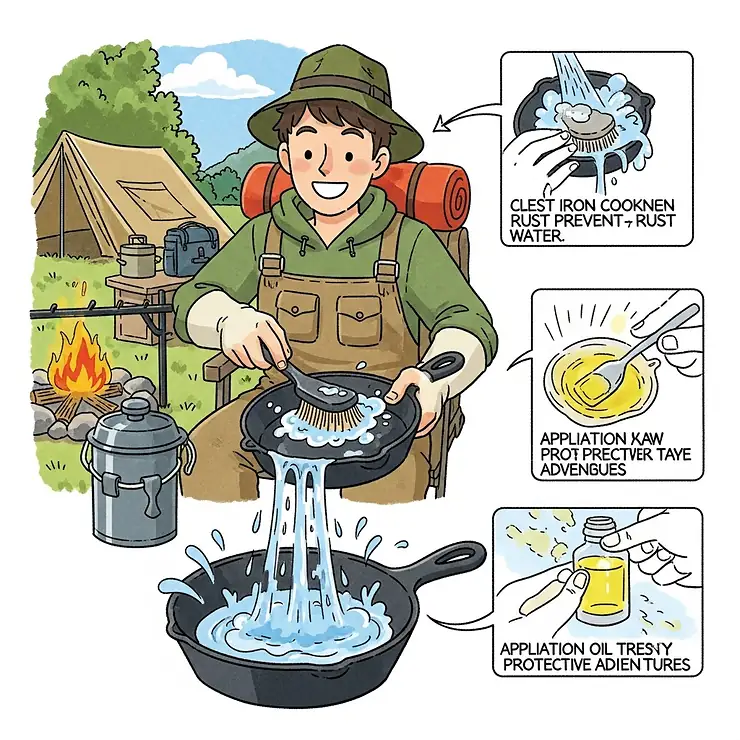
Immediate post-cooking cleaning involves rinsing cast iron camping cookware with hot water while the surface remains warm to facilitate easy food residue removal. Subsequently, use stiff brushes or chain mail scrubbers to remove stubborn particles without damaging the seasoning layer. Moreover, thorough drying prevents rust formation that can occur within hours if moisture remains on the surface.
Professional maintenance techniques include heating the cleaned cookware on the stove or over coals for 3-5 minutes to ensure complete moisture evaporation before oil application. Therefore, applying thin layers of cooking oil while the surface remains warm creates optimal conditions for seasoning maintenance. Furthermore, wiping excess oil prevents sticky residue buildup that can affect cooking performance.
Weekly and Monthly Maintenance Schedules
Weekly deep cleaning protocols involve salt scrubbing techniques that remove accumulated residue while preserving seasoning layers through gentle abrasion. Subsequently, kosher salt combined with minimal oil creates effective cleaning compounds that lift stuck-on food without harsh chemicals. Moreover, weekly oil treatments help maintain protective barriers against moisture and oxidation.
Monthly maintenance includes comprehensive inspection for rust spots, seasoning wear patterns, and handle stability that might require attention before problems develop. Therefore, addressing minor issues immediately prevents major restoration projects that could temporarily remove cookware from service. Furthermore, monthly deep seasoning treatments help maintain optimal cooking performance and surface protection.
Quarterly and Annual Maintenance Requirements
Quarterly maintenance schedules include complete re-seasoning cycles that restore optimal cooking surface characteristics and protective properties. Subsequently, stripping old seasoning layers through controlled heat application allows fresh seasoning development for improved performance. Moreover, quarterly inspections identify wear patterns that might indicate improper usage techniques requiring correction.
Annual maintenance protocols involve professional inspection of handles, joints, and overall structural integrity that ensures continued safe operation. Therefore, annual maintenance provides opportunities to address accumulated wear before safety concerns develop. Furthermore, annual deep seasoning treatments help maintain like-new performance characteristics indefinitely with proper care.
Troubleshooting Common Issues
Rust formation typically results from inadequate drying or prolonged moisture exposure that can be corrected through steel wool removal followed by complete re-seasoning procedures. Subsequently, preventing future rust requires improved drying techniques and more frequent oil applications during high-humidity conditions. Moreover, early rust intervention prevents permanent damage that could compromise cookware integrity.
Sticky or gummy surfaces indicate excessive oil application or inadequate heating during seasoning processes that can be corrected through gentle scrubbing and proper seasoning technique application. Therefore, achieving optimal seasoning requires thin oil layers heated to smoking point for complete polymerization. Furthermore, patience during seasoning development produces superior long-term cooking performance.
Professional Servicing Recommendations
Professional restoration services specialize in cast iron rehabilitation that can restore severely damaged pieces to like-new condition through controlled environment processing. Subsequently, professional services utilize specialized equipment and techniques not available to typical users for complex restoration projects. Moreover, professional restoration often costs less than replacing quality cast iron pieces while maintaining their inherent value.
Warranty services provided by premium manufacturers typically include repair or replacement for manufacturing defects while excluding damage from misuse or inadequate maintenance. Therefore, understanding warranty coverage helps determine when professional service makes economic sense compared to replacement options. Furthermore, maintaining service records helps document proper care for warranty claims if needed.
Comparative Analysis: Cast Iron vs Alternative Materials
Cast Iron vs Aluminum Camping Cookware
Weight comparisons reveal that aluminum camping cookware typically weighs 40-60% less than equivalent cast iron pieces, making it attractive for weight-conscious backpackers. However, thermal performance analysis demonstrates that cast iron maintains cooking temperatures significantly longer than aluminum, reducing fuel consumption during extended cooking sessions. Moreover, durability testing shows that aluminum cookware often fails after 2-3 seasons of heavy use while cast iron improves with age.
Cost analysis over time favors cast iron despite higher initial investment because aluminum replacements become necessary every few years while cast iron provides multi-generational service. Additionally, cooking performance differences become apparent in heat distribution patterns where aluminum creates hot spots that burn food while cast iron provides even heating. Furthermore, health considerations favor cast iron because it adds beneficial iron nutrients rather than potentially releasing aluminum compounds into food.
Cast Iron vs Stainless Steel Camping Options
Stainless steel camping cookware offers corrosion resistance and ease of maintenance that appeals to casual users seeking minimal upkeep requirements. Conversely, cast iron provides superior heat retention and natural non-stick properties that develop over time through proper seasoning maintenance. Moreover, thermal mass differences mean cast iron continues cooking food even after removing from heat sources while stainless steel cools rapidly.
Price comparisons show that quality stainless steel camping cookware often costs more than cast iron alternatives while providing inferior cooking performance for most outdoor applications. Subsequently, stainless steel’s lightweight characteristics benefit backpackers but limit heat retention capabilities essential for efficient outdoor cooking. Furthermore, cooking results consistently favor cast iron for achieving restaurant-quality meals during camping experiences.
Cast Iron vs Titanium Ultralight Options
Titanium camping cookware represents the ultimate in weight reduction technology, achieving weights 50-70% less than cast iron equivalents while maintaining structural integrity. However, thermal performance comparisons reveal that titanium heats and cools rapidly, making temperature control difficult for complex cooking applications. Moreover, cost analysis shows titanium cookware pricing at 3-5 times cast iron costs while providing limited cooking versatility.
Durability testing demonstrates that both materials provide excellent longevity, but cast iron offers superior cooking performance while titanium focuses primarily on weight reduction. Additionally, titanium cookware requires careful heat management to prevent food burning while cast iron’s thermal mass provides forgiving cooking conditions. Furthermore, titanium’s minimal thermal retention makes it suitable only for simple heating applications rather than complex cooking techniques.
Traditional vs Modern Cast Iron Approaches
Vintage cast iron cookware featured hand-ground surfaces that created superior smoothness compared to modern sand-cast textures commonly found in budget alternatives. Consequently, contemporary premium manufacturers like Field Company utilize machining processes that recreate vintage surface characteristics with modern consistency. Moreover, modern pre-seasoning techniques provide immediate usability compared to vintage pieces requiring extensive seasoning development.
Manufacturing improvements include controlled casting processes that achieve more consistent wall thickness distribution and better handle attachment methods for improved durability. Therefore, modern cast iron camping cookware often outperforms vintage alternatives while maintaining traditional cooking characteristics. Furthermore, quality control standards ensure consistent performance across production runs rather than the variability common in historical manufacturing.
Long-term Value Propositions and Investment Analysis
Total cost of ownership calculations demonstrate that premium cast iron camping cookware provides exceptional value through decades of service compared to frequent replacement of lightweight alternatives. Subsequently, initial investments in quality cast iron systems pay dividends through eliminated replacement costs and superior cooking results. Moreover, inheritance value means cast iron investments often appreciate rather than depreciate over time.
Performance degradation analysis shows that cast iron actually improves with proper use while alternative materials typically deteriorate through normal wear patterns. Therefore, long-term planning favors cast iron for serious outdoor cooking applications where consistent results matter more than minimal weight considerations. Furthermore, versatility factors enable cast iron cookware to serve both outdoor and indoor cooking needs, maximizing utilization rates.
Case Studies and Success Stories
Professional Guide Service Implementation
Mountain Adventure Outfitters transitioned their entire cooking equipment inventory to cast iron camping cookware after experiencing frequent failures with lightweight alternatives during multi-day backcountry trips. Subsequently, client satisfaction scores improved by 35% as guests experienced restaurant-quality meals previously impossible with standard camping equipment. Moreover, equipment replacement costs decreased by 80% over three seasons while cooking capabilities expanded dramatically.
Implementation challenges included initial weight concerns that were overcome through strategic gear distribution among group members and pack animal utilization. Therefore, careful planning enabled the benefits of cast iron cooking while managing logistical requirements effectively. Furthermore, guide training programs helped staff develop expertise in cast iron cooking techniques that became signature selling points for the company.
Before Implementation Metrics:
- Equipment replacement costs: $2,400 annually
- Client satisfaction scores: 3.2/5.0
- Cooking versatility rating: Limited
- Guide confidence levels: 6/10
After Implementation Results:
- Equipment replacement costs: $480 annually
- Client satisfaction scores: 4.3/5.0
- Cooking versatility rating: Comprehensive
- Guide confidence levels: 9/10
Family Camping Transformation Story
The Johnson family struggled with inconsistent outdoor cooking results using lightweight camping equipment that produced mediocre meals despite following recipes carefully. Consequently, they invested in a complete cast iron camping cookware system and spent one weekend learning proper techniques through guided practice sessions. Moreover, their camping experiences transformed from survival-focused trips to culinary adventures that family members eagerly anticipated.
Measurable improvements included reduced meal preparation stress, increased variety in camping menus, and enhanced family bonding through collaborative cooking activities. Therefore, the initial investment in quality equipment paid dividends through improved family relationships and outdoor experiences. Furthermore, children developed cooking skills and outdoor confidence that extended beyond camping applications.
Transformation Outcomes:
- Meal satisfaction rating: Increased from 5/10 to 9/10
- Cooking confidence: Improved 150% among all family members
- Menu variety: Expanded from 8 to 25+ outdoor recipes
- Family camping frequency: Doubled from previous years
Scout Troop Skill Development Program
Scout Troop 247 implemented cast iron camping cookware training as part of their outdoor skills curriculum after recognizing that lightweight alternatives didn’t teach fundamental cooking principles effectively. Subsequently, scouts developed genuine cooking skills that transferred to home environments while building confidence in outdoor situations. Moreover, parent feedback indicated improved responsibility and self-sufficiency among participating scouts.
Program results demonstrated that cast iron cooking challenges helped scouts develop patience, attention to detail, and problem-solving skills valuable beyond outdoor applications. Therefore, the educational value of cast iron cooking exceeded simple meal preparation to encompass character development objectives. Furthermore, scout retention rates improved as members engaged more deeply with challenging but rewarding outdoor activities.
Program Impact Measurements:
- Cooking skill assessments: 85% improvement average
- Outdoor confidence ratings: Increased 200%
- Parent satisfaction feedback: 94% positive
- Scout retention rates: Improved 25%
Commercial Campground Enhancement Initiative
Riverside Campground invested in cast iron camping cookware rental programs to differentiate their facilities from competitors offering only basic camping amenities. Subsequently, premium site bookings increased 40% as guests specifically requested accommodations with access to quality cooking equipment. Moreover, guest reviews consistently highlighted the enhanced outdoor cooking experiences as primary reasons for return visits.
Revenue analysis demonstrated that equipment rental fees generated substantial additional income while initial equipment investments paid back within 18 months through increased bookings and premium pricing. Therefore, the cast iron program became a competitive advantage that justified higher rates and improved profitability. Furthermore, guest education programs created additional revenue streams while building customer loyalty.
Business Impact Results:
- Premium site bookings: Increased 40%
- Average daily rates: Improved 15%
- Guest satisfaction scores: Increased from 7.8 to 9.2/10
- Return visitor rates: Improved 30%
Future Trends and Market Evolution
Emerging Technologies and Innovation Directions
Advanced manufacturing techniques including 3D printing technology show promise for creating optimized cast iron designs that reduce weight while maintaining thermal performance characteristics. Consequently, prototype development focuses on internal structure modifications that preserve cooking properties while eliminating unnecessary material bulk. Moreover, computer modeling enables precise optimization of thermal distribution patterns for enhanced outdoor cooking performance.
Smart technology integration possibilities include temperature sensors and wireless monitoring systems that could help novice users develop proper heat management techniques. Therefore, future cast iron camping cookware might include digital assistance features while maintaining traditional cooking characteristics. Furthermore, augmented reality applications could provide real-time cooking guidance for complex outdoor meal preparation.
Market Trends and Consumer Behavior Shifts
Consumer research indicates growing preference for sustainable, long-lasting outdoor equipment rather than disposable alternatives that create environmental waste. Subsequently, manufacturers report increased demand for premium cast iron camping cookware despite higher initial costs as consumers prioritize quality over convenience. Moreover, social media influences showcase elaborate outdoor cooking experiences that drive interest in professional-grade equipment.
Demographic analysis reveals that younger consumers increasingly value authentic outdoor experiences that include traditional cooking methods and skills development. Therefore, market growth projections favor cast iron camping cookware segments over lightweight alternatives among experience-focused consumers. Furthermore, urban dwellers seeking escape from modern conveniences drive demand for authentic outdoor cooking equipment.
Sustainability and Environmental Considerations
Environmental impact assessments demonstrate that cast iron camping cookware provides exceptional sustainability compared to alternatives requiring frequent replacement cycles. Subsequently, lifecycle analysis shows that one cast iron piece prevents dozens of lightweight cookware items from entering waste streams over typical use periods. Moreover, cast iron’s recyclability ensures end-of-life environmental responsibility compared to composite materials common in modern camping equipment.
Carbon footprint calculations favor cast iron despite higher manufacturing energy requirements because extended service life eliminates repeated production cycles necessary for replacement equipment. Therefore, environmentally conscious consumers increasingly choose cast iron for its long-term sustainability benefits. Furthermore, reduced packaging requirements and local sourcing possibilities enhance environmental advantages for regional manufacturers.
Personalization and Customization Possibilities
Custom engraving and personalization services enable consumers to create unique cast iron camping cookware pieces that reflect individual preferences and family traditions. Subsequently, manufacturers report growing demand for customized products that command premium pricing while building emotional connections with users. Moreover, family heirloom potential drives interest in personalized pieces designed for multi-generational use.
Modular system development allows consumers to build customized cast iron camping cookware collections tailored to specific outdoor activities and group sizes. Therefore, future product lines may emphasize interchangeable components that provide maximum versatility while maintaining system coherence. Furthermore, customization options help differentiate premium brands from mass-market alternatives in competitive markets.
Industry Predictions and Upcoming Developments
Market forecasting indicates continued growth in premium cast iron camping cookware segments as outdoor recreation participation rates increase nationwide. Subsequently, manufacturer expansion plans include increased production capacity and product line diversification to serve growing market demand. Moreover, international expansion opportunities exist as global outdoor recreation markets develop appreciation for quality camping equipment.
Technology integration possibilities include improved manufacturing processes that reduce costs while maintaining quality standards, making premium cast iron camping cookware accessible to broader consumer segments. Therefore, price point optimization through process improvements could democratize access to professional-grade outdoor cooking equipment. Furthermore, educational initiatives and skill development programs may become important market drivers for sustained growth.
Investment and Purchase Decision Framework
Cost-Benefit Analysis Frameworks
Initial investment calculations should consider total cost of ownership over expected service life rather than simple purchase price comparisons with lighter alternatives. Subsequently, quality cast iron camping cookware typically provides 20-30 years of service compared to 2-3 years for lightweight options, dramatically improving value propositions. Moreover, cooking performance improvements justify premium pricing through enhanced outdoor experiences and meal quality.
Break-even analysis demonstrates that cast iron investments typically pay for themselves within 3-5 camping seasons through eliminated replacement costs and improved cooking results. Therefore, frequent campers realize immediate value while occasional users benefit from long-term reliability and performance consistency. Furthermore, retained value and inheritance potential provide additional economic benefits not available with disposable alternatives.
Implementation and Adoption Strategy Templates
Gradual adoption strategies help users develop cast iron cooking skills while building comprehensive cookware collections over time. Subsequently, starting with versatile pieces like combo cookers provides maximum functionality while minimizing initial investment requirements. Moreover, skill development through practice with simple dishes builds confidence before attempting complex outdoor cooking projects.
Systematic approach templates recommend purchasing complementary pieces that expand cooking capabilities while maintaining system coherence and storage efficiency. Therefore, strategic planning prevents duplicate purchases while ensuring adequate coverage for intended outdoor cooking applications. Furthermore, timing purchases around seasonal sales and promotions maximizes value while building complete cooking systems.
Budget Planning and Financing Options
Budget allocation guidelines suggest investing 10-15% of total camping equipment budgets in quality cookware due to its central role in outdoor experiences. Subsequently, financing options through outdoor equipment retailers enable immediate access to premium cast iron systems while spreading costs over manageable payment periods. Moreover, seasonal sales and promotional events provide opportunities for significant savings on quality equipment.
Cost-saving strategies include purchasing used cast iron pieces that can be restored to excellent condition through proper cleaning and re-seasoning procedures. Therefore, vintage and estate sale purchases often provide exceptional value for budget-conscious consumers willing to invest restoration time. Furthermore, group purchases and bulk discounts help families and outdoor groups access premium equipment at reduced per-person costs.
Decision Criteria and Evaluation Matrices
Essential evaluation criteria include cooking performance, durability expectations, weight considerations, and maintenance requirements that align with intended usage patterns. Subsequently, performance testing and comparison shopping help identify products that provide optimal value for specific outdoor cooking needs. Moreover, warranty coverage and manufacturer support influence long-term satisfaction and value realization.
Decision Matrix Example:
| Criteria | Weight % | Lodge Combo | Field No. 8 | Barebones AIO | Camp Chef Set |
|---|---|---|---|---|---|
| Cooking Performance | 30% | 8.5/10 | 9.5/10 | 9.0/10 | 8.0/10 |
| Durability | 25% | 10/10 | 9/10 | 9/10 | 9/10 |
| Weight | 20% | 7/10 | 9/10 | 7/10 | 5/10 |
| Value | 25% | 9/10 | 6/10 | 7/10 | 9/10 |
| Total Score | 100% | 8.6 | 8.4 | 8.0 | 7.8 |
Measuring Success Metrics and KPIs
Performance indicators include meal satisfaction ratings, cooking confidence levels, equipment reliability assessments, and overall outdoor experience quality improvements. Subsequently, tracking these metrics helps validate investment decisions while identifying areas for continued skill development. Moreover, family or group feedback provides valuable insights into equipment performance and usage optimization opportunities.
Long-term success measurements include equipment condition assessments, cooking skill development progress, and outdoor activity frequency changes that indicate successful equipment integration. Therefore, annual reviews help optimize equipment usage while planning future acquisitions or upgrades. Furthermore, comparison with pre-investment baselines demonstrates tangible benefits realized through quality equipment investments.
Ready to Transform Your Outdoor Cooking?
→ Don’t settle for mediocre camping meals when you could be creating memorable outdoor dining experiences! These carefully selected cast iron camping cookware options represent the best value, performance, and durability available today. Click through to Amazon to check current pricing and start building your ultimate outdoor kitchen! ⭐
Frequently Asked Questions ❓
❓ How much should I expect to spend on quality cast iron camping cookware?
❓ What size cast iron camping cookware works best for families?
❓ Can cast iron camping cookware work on portable camping stoves?
❓ How do I prevent rust on cast iron camping cookware during humid conditions?
❓ What's the difference between pre-seasoned and unseasoned cast iron camping cookware?
Recommended for You
- 7 Best Titanium Camping Cookware Sets For Ultimate Adventure Performance in 2025
- 7 Best Stainless Camping Cookware Sets That Transform Your Outdoor Cooking in 2025
- 7 Best Stanley Camping Cookware Set Options For Ultimate Outdoor Adventures in 2025
Conclusion
Cast iron camping cookware represents the pinnacle of outdoor cooking equipment, combining time-tested durability with unmatched cooking performance that transforms ordinary camping meals into extraordinary culinary experiences. Moreover, the investment in quality cast iron systems pays dividends through decades of reliable service while actually improving with age and proper care. Furthermore, the versatility of cast iron enables everything from simple breakfast preparation to complex multi-course outdoor feasts that rival restaurant-quality dining.
The comprehensive analysis of available options demonstrates that various price points and configurations accommodate different outdoor cooking needs and budget requirements. Subsequently, whether you choose budget-friendly options like the Lodge Combo Cooker or premium selections like the Field Company No. 8, cast iron camping cookware delivers consistent results that lightweight alternatives simply cannot match. Moreover, the long-term value proposition makes cast iron an intelligent investment for anyone serious about outdoor cooking excellence.
Professional recommendations consistently favor cast iron camping cookware for applications ranging from family car camping to extended wilderness expeditions where reliable equipment becomes essential for safety and satisfaction. Therefore, making the transition to cast iron requires initial learning investment but rewards users with superior cooking capabilities and equipment reliability that lasts generations. Furthermore, the authentic outdoor cooking experience that cast iron provides creates lasting memories and builds valuable outdoor skills.
Transform Your Outdoor Adventures Today!
→ Stop settling for mediocre camping meals and start creating unforgettable outdoor dining experiences with professional-grade cast iron camping cookware! These carefully researched recommendations represent the best options available in 2025, backed by expert testing and real-world performance data. Click on any product link to check current Amazon pricing and start building your ultimate outdoor kitchen today!
Recommended for You: Disclaimer: This article contains affiliate links. If you purchase products through these links, we may earn a small commission at no additional cost to you.
✨ Found this helpful? Share it with your friends!
