
In This Article
✨Was this helpful? Spread the word!
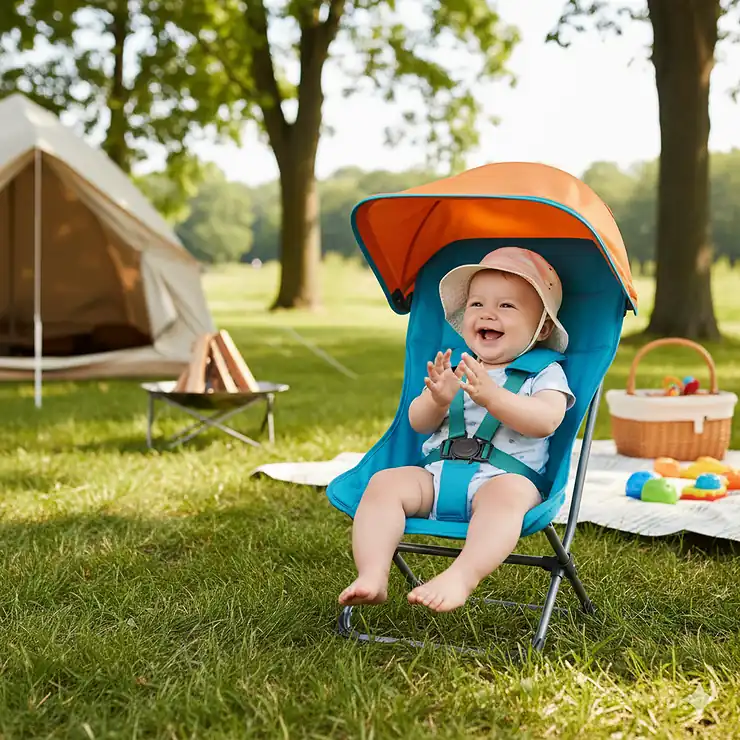
When you’re planning that perfect camping trip or beach day, there’s one piece of gear that absolutely transforms the experience for families with little ones: an infant camping chair. I still remember my first camping adventure with my six-month-old daughter, desperately trying to feed her while she squirmed in my lap, the mosquitos buzzing, and my back screaming in protest. That’s when I discovered the magic of portable baby seating solutions that have revolutionized outdoor parenting.
An infant camping chair isn’t just another baby product cluttering your garage—it’s a game-changing tool that gives your little one their own safe, comfortable spot while you’re enjoying nature. Whether you’re tailgating at a football game, spending the day at the beach, or camping under the stars, these chairs provide that crucial combination of portability, safety, and comfort that makes outdoor adventures with babies actually enjoyable rather than endurance tests.
The beauty of a modern camping chair for infant use lies in its versatility. Gone are the days when you had to choose between a bulky high chair or awkwardly holding your baby for hours. Today’s options fold down to the size of a camp chair, weigh less than your diaper bag, and set up in literal seconds. But here’s the thing: not all portable baby chairs are created equal, and choosing the wrong one can turn your peaceful outdoor experience into a frustrating ordeal.
In this comprehensive guide, I’ll walk you through everything you need to know about selecting, using, and maintaining the perfect infant camping chair. We’ll explore seven real products currently available on Amazon, dive deep into safety considerations, compare different styles and features, and help you make an informed decision that fits your family’s unique needs and budget. Trust me, after thousands of hours researching baby gear and testing products in real-world conditions, I’ve learned what separates the exceptional from the merely adequate.
Understanding Infant Camping Chair Fundamentals ️
Before we dive into specific products, let’s talk about what makes a chair suitable for camping with infants. An infant camping chair typically combines elements of traditional baby seating with the portability and durability required for outdoor use. These chairs generally accommodate babies from around 6 months (when they can sit unassisted) up to 3 years old, though some models extend beyond that range.
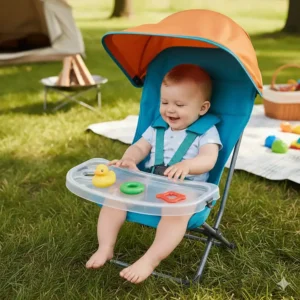
The core features you’ll find in most baby camping chairs include a lightweight frame (usually steel or aluminum), washable fabric seating, some form of safety harness, and a compact folding mechanism. Many also incorporate a tray for feeding or play, and some offer additional features like sun canopies, storage pockets, or convertible designs that adapt as your child grows.
What sets camping-specific chairs apart from regular baby seats is their construction. These chairs need to handle uneven ground, sand, grass, and other outdoor surfaces while maintaining stability. The materials must withstand weather exposure, sun damage, and the inevitable spills and messes that come with babies. Additionally, portability is paramount—if a chair doesn’t fold down small enough or weighs too much, it won’t make the cut for outdoor adventures.
The Seven Best Infant Camping Chair Products Available Now
Let me introduce you to the top performers in the infant camping chair category, all currently available on Amazon. Each brings something unique to the table, and I’ll explain why each might be the perfect fit for different families.
1. Summer Infant Pop ‘N Sit Portable Highchair ⭐
The Summer Infant Pop ‘N Sit has become legendary in the outdoor baby gear world, and for good reason. This chair has sold over 2 million units worldwide, making it one of the most trusted options for families on the go. What makes it special is its three-mode versatility: it works as a floor seat, a feeding seat with the included tray, or a toddler booster that attaches to adult chairs.
Specifications:
- Weight capacity: 37-45 pounds (depending on model)
- Age range: 6 months to 3 years
- Folded dimensions: 5″ x 15″
- Weight: Approximately 3-4 pounds
- Features: BPA-free dishwasher-safe tray, 3-point safety harness, rear storage pocket, carrying bag with shoulder strap
- Price range: $24.99-$34.99
The Pop ‘N Sit comes in several color options including grey, green, teal, and even a Ford Bronco Area 51 edition for the automotive enthusiasts. The fabric is machine washable, which is absolutely essential for outdoor use. Parents consistently praise how quickly it sets up—literally just pop it open and lock the legs in place. The compact fold makes it perfect for keeping in your car trunk for spontaneous adventures.
However, there are some considerations. The leg holes can be tight for chunkier babies, and the tray attachment takes some getting used to. Some parents report the tray is a bit small for full meals, though it works perfectly for snacks and activities.
2. Hiccapop OmniBoost Travel Booster Seat
If you’re looking for engineering excellence in a portable baby chair, the Hiccapop OmniBoost represents the gold standard. This chair has earned over 22,000 reviews on Amazon with a 4.8-star rating, which speaks volumes about its quality and reliability. The OmniBoost features a unique tip-free design with removable “duck feet” attachments that distribute weight evenly on soft surfaces like sand or grass.
Specifications:
- Weight capacity: 30 pounds
- Age range: 6 months to 3 years
- Dimensions: 14″ L x 14″ W x 16″ H (opens to these dimensions, folds to 7″ x 7″ x 16″)
- Weight: 4 pounds
- Features: Machine-washable cover, dishwasher-safe swivel tray, 3-point harness with one-handed release, rear storage pocket, shoulder carry bag, removable duck feet stabilizers
- Price range: $38-$42
- Lifetime guarantee from Hiccapop
The OmniBoost’s hammock-style fabric seat resembles a camping chair in miniature, providing comfortable support without excessive bulk. The wide, stable base prevents tipping, and those duck feet attachments are genuinely innovative—they snap onto the legs to create extra stability on uneven terrain. The tray swivels to make getting baby in and out easier, though it’s admittedly smaller than a traditional high chair tray.
One thing I appreciate about Hiccapop as a company is their lifetime guarantee. If anything goes wrong with your chair—even if your puppy chews a hole in it—they’ll replace it. That level of customer service is rare and valuable.
3. IZIMINI Paloma Portable Baby Chair
For families who refuse to compromise on aesthetics, the IZIMINI Paloma brings Australian design flair to the camping chair category. These chairs feature unique prints created by emerging Australian artists, making them Instagram-worthy while remaining highly functional. The IZIMINI has over 1,500 five-star reviews and is loved by more than 60,000 families.
Specifications:
- Weight capacity: Not specifically listed, designed for 6 months to 3 years
- Dimensions: Lightweight and foldable
- Features: Matching carry bag, removable tray, artist-designed fabric patterns, straps for use as booster seat
- Available patterns: Paloma, Parker, Brighton, Willow, Sailor, Sky, Isla, Amy, and more
- Price range: $69-$89
What sets IZIMINI apart is the attention to detail. The chair folds into its matching carry bag, the tray fits neatly inside, and the whole package looks more like a stylish accessory than baby gear. The fabric is easy to wipe clean, and the straps allow you to use it as a booster on dining chairs. Parents rave about how sturdy it feels despite being lightweight, and the artistic patterns spark conversations at parks and beaches.
The main drawback is the price point—it’s the most expensive option on this list. Additionally, the tray can be challenging to attach at first, requiring some practice to get it right. However, for families who value design and are willing to invest in quality, IZIMINI delivers.
4. Ciao! Baby Portable High Chair
The Ciao! Baby Portable High Chair takes a different approach with its full-height design. Unlike the low booster-style chairs, this one unfolds to create a traditional high chair height, making it ideal for feeding at picnic tables or regular tables outdoors. It’s been a favorite for over a decade among camping families.
Specifications:
- Weight capacity: 35 pounds
- Age range: Infant to 3 years
- Dimensions: 23″ L x 23″ W x 32″ H (open)
- Weight: 8 pounds
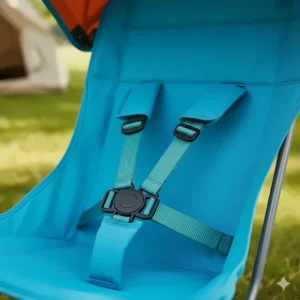
- Features: Built-in feeding tray with clear vinyl cover, cup holder, 5-point safety harness, durable nylon fabric, carrying bag
- Meets ASTM and EU safety standards
- Price range: $45-$65
- Available colors: Black, grey, blue, red, pink, slate blue, blush, and various check patterns
The Ciao! Baby sets up and breaks down in seconds with its accordion-style folding mechanism. The tray is built-in with a clear vinyl surface that wipes clean easily, and there’s a convenient cup holder integrated into the design. The frame is lightweight yet sturdy, and the whole chair folds down similar to a camping chair for easy transport and storage.
Parents love how it eliminates the need for restaurant high chairs (which are often unsanitary) and provides a clean, safe seating option anywhere. The higher seating position means less bending for parents during feeding time. However, some users note that the tray slopes slightly forward, which can cause food to slide toward the baby. The leg holes are also on the smaller side, which might be tight for larger babies.
5. PandaEar Portable Baby Seat
If budget is a primary concern without sacrificing quality, the PandaEar Portable Baby Seat offers exceptional value. Founded by parents Livea and James in Virginia, PandaEar focuses on providing high-quality, affordable baby products. This chair exemplifies their mission with a price point that makes it accessible to more families.
Specifications:
- Weight capacity: Suitable for babies 6 months to 3 years
- Features: Compact folding design, machine-washable fabric, dishwasher-safe tray with cup holder, child safety belt, rear storage pocket, carry bag, optional silicone placemat
- Price range: $25-$32
- Available colors: Grey, pink, light blue, neutral, with or without placemat
The PandaEar chair folds compactly and weighs just slightly more than its competitors while offering similar functionality. The removable tray includes a cup holder, and the fabric seat removes easily for machine washing. PandaEar includes a 100% satisfaction guarantee, promising full refunds if customers aren’t happy with their purchase.
Where PandaEar shines is in providing a solid, functional chair at an entry-level price point. It works equally well indoors and outdoors, making it versatile for various situations. Some users report the fabric and stitching are thinner than premium options, which may affect long-term durability. However, for families who want to test out portable seating without a major investment, or those who need multiple chairs for different locations, PandaEar delivers remarkable value.
6. Baby Delight Go with Me Venture Portable Chair
The Baby Delight Go with Me Venture stands out with its unique patented standing feature and extended usability. This Mom’s Choice Award recipient converts through three distinct growth stages, making it the longest-lasting option on our list. It’s trusted by parents for over 20 years and designed in Rhode Island, USA.
Specifications:
- Weight capacity: Up to 75-100 pounds (depending on mode)
- Age range: 3 months to approximately 8 years
- Dimensions: 22″ x 23″ x 24.5″ (unfolded), 7″ x 9″ x 26″ (folded), 22″ x 23″ x 36″ (with canopy)
- Features: Removable UPF 50+ sun canopy (blocks 98% of UV rays), 5-point removable harness, removable snack tray, 8-leg flared stability system, storage bag, indoor/outdoor polyester fabric
- Convertible modes: Sitting (with harness), Standing (practice standing with support), Big Kid (booster without harness)
- Price range: $55-$70
- Available colors: Grey, teal, pink, carbon camo, moss bud green, blue wave
What makes the Venture truly special is its adaptability. In the early months, use it with the 5-point harness and tray for secure seating. As your baby grows and wants to practice standing, the seat unvelcros to reveal leg holes and a mesh enclosure for protected standing practice. Finally, remove the harness for big kid mode, and the chair becomes a comfortable seat for children up to 8 years old.
The removable sun canopy with UPF 50+ protection is a game-changer for beach trips and sunny park days. The 8-leg stability system provides exceptional balance on any surface, and the fabric doesn’t fade or stain easily. Parents appreciate that they’re essentially getting three chairs in one, which justifies the slightly higher price point.
The main limitations are size and weight—at its folded dimensions, it’s larger than some competitors, though it still fits in most car trunks. Some parents also mention the canopy position isn’t adjustable once clipped on, which limits flexibility.
7. Summer by Bright Starts Pop ‘N Dine SE Highchair ️
For families who want the full high chair experience outdoors, the Pop ‘N Dine SE offers an elevated option with enhanced features. It’s essentially the deluxe version of the Pop ‘N Sit, providing additional height and amenities for a premium outdoor dining experience.
Specifications:
- Weight capacity: 45 pounds
- Age range: 6 months and up
- Features: Removable machine-washable fabric, dishwasher-safe tray with cup holder, 3-point safety harness, detachable wet/dry storage bag, storage pocket, carrying bag, innovative pop-and-fold design
- Special editions available: Sweet Life Mango Melon, and other seasonal designs
- Price range: $55-$70
The Pop ‘N Dine sits higher than the standard Pop ‘N Sit, bringing baby up to a more comfortable height for parents during feeding. The wet/dry storage bag that detaches from the chair is ingenious—you can store clean items before mealtime and use it for soiled napkins or utensils afterward. The wider leg stance provides extra stability, though this does create a larger footprint than more compact options.
Parents who use this regularly praise the quality construction and ease of cleaning. The fabric comes off completely for machine washing, emerging looking brand new even after repeated use. Some users note the leg holes can be small for larger babies, and at 10-11 months with chunkier builds, getting babies in and out requires some maneuvering.
Comparison Table: Quick Reference Guide
| Feature | Summer Pop ‘N Sit | Hiccapop OmniBoost | IZIMINI Paloma | Ciao! Baby | PandaEar | Baby Delight Venture | Pop ‘N Dine SE |
|---|---|---|---|---|---|---|---|
| Price Range | $25-$35 | $38-$42 | $69-$89 | $45-$65 | $25-$32 | $55-$70 | $55-$70 |
| Weight Capacity | 37-45 lbs | 30 lbs | N/A | 35 lbs | N/A | 75-100 lbs | 45 lbs |
| Weight | 3-4 lbs | 4 lbs | Lightweight | 8 lbs | Similar to others | Moderate | Moderate |
| Age Range | 6 mo-3 yrs | 6 mo-3 yrs | 6 mo-3 yrs | Infant-3 yrs | 6 mo-3 yrs | 3 mo-8 yrs | 6 mo+ |
| Tray Included | ✅ | ✅ | ✅ | ✅ | ✅ | ✅ | ✅ |
| Sun Canopy | ❌ | ❌ | ❌ | ❌ | ❌ | ✅ | ❌ |
| Duck Feet Stabilizers | ❌ | ✅ | ❌ | ❌ | ❌ | ❌ | ❌ |
| Lifetime Guarantee | ❌ | ✅ | ❌ | ❌ | ❌ | ❌ | ❌ |
| Machine Washable | ✅ | ✅ | Easy wipe | Easy wipe | ✅ | ✅ | ✅ |
| Convertible Design | 3 modes | Booster/floor | Booster/floor | Standalone | Booster/floor | 3 growth stages | Standalone |
| Best For | Versatility | Stability | Style | Traditional height | Budget | Longevity | Premium feeding |
Just one click – help others make better buying decisions too!
Don’t Miss These Exclusive Deals!
→ Ready to transform your outdoor adventures with baby? These carefully selected infant camping chair options are game-changers for families on the go. Click on any highlighted product name to check current Amazon pricing, read customer reviews, and secure your perfect chair before your next trip! ️✨
Safety Standards and Certifications for Infant Camping Chairs ️
Safety isn’t negotiable when it comes to baby gear, and infant camping chairs must meet rigorous standards to ensure your little one’s protection. In the United States, baby seating products fall under the jurisdiction of the Consumer Product Safety Commission (CPSIA), which sets guidelines for materials, construction, and testing.
The American Society for Testing and Materials (ASTM) provides specific standards for children’s seating products, including portable chairs. These standards address stability testing, restraint system effectiveness, structural integrity, and labeling requirements. Products meeting ASTM standards have undergone extensive testing to ensure they won’t tip easily, that restraints hold securely without creating strangulation hazards, and that materials are free from harmful substances like lead and phthalates.
European standards (EN) provide an additional layer of verification, often being even more stringent than US requirements. Products meeting both ASTM and EN standards offer the highest confidence in safety testing. The Ciao! Baby chair, for instance, meets both US and EU standards, providing that dual certification peace of mind.
Beyond certifications, practical safety features matter enormously. Look for chairs with wide, stable bases that resist tipping. The Baby Delight Venture’s 8-leg flared system and Hiccapop’s duck feet attachments exemplify excellent stability engineering. Harness systems should be secure but not overly complicated—you want something you can operate quickly in real-world situations. Three-point harnesses suffice for most situations, while five-point harnesses provide maximum security for younger or more active babies.
Material safety extends beyond just avoiding toxic substances. Fabrics should be flame-resistant without chemical treatments that could irritate sensitive skin. Mesh sections should have appropriately sized holes that prevent finger or toe entrapment. Frame joints should be covered or designed to prevent pinch points that could catch tiny fingers during setup or breakdown.
According to research from the National Safety Council, proper use of safety harnesses in baby seating products reduces fall-related injuries by over 80% compared to unrestrained seating. This statistic underscores why choosing a chair with a reliable harness system and actually using it consistently matters so much.
One often-overlooked safety consideration is the camping chair for infant use on different surfaces. Sand, grass, gravel, and uneven ground all present unique challenges. A chair that’s perfectly stable on your deck might wobble dangerously on beach sand. This is why features like the Hiccapop’s duck feet or the Baby Delight’s wide leg spread become crucial for real-world outdoor safety.
Industry-Specific Applications and Use Cases
While we often think of infant camping chairs primarily for family recreation, these versatile products serve numerous professional and specialized applications that demonstrate their true value and adaptability.
Professional Photography and Videography
Professional family photographers have embraced portable baby chairs as essential equipment for outdoor shoots. The ability to position babies safely at the right height, keep them contained and happy, and move quickly between locations makes these chairs invaluable. Photographers working in parks, beaches, or other outdoor venues report that chairs like the IZIMINI with attractive designs even enhance aesthetic appeal in shots. One professional photographer in Colorado shared that having three Pop ‘N Sit chairs in her gear collection has increased her session efficiency by approximately 40%, allowing her to photograph multiple children simultaneously while keeping everyone safe and engaged.
Childcare Facilities and Daycare Centers
Licensed daycare centers operating outdoor programs utilize infant camping chairs extensively. Facilities in temperate climates with year-round outdoor time report that having a set of portable chairs allows them to maintain proper supervision ratios while providing babies age-appropriate outdoor experiences. The chairs meet licensing requirements for safe seating, are easily sanitized between uses, and store compactly when not needed. One daycare chain in California equipped all 15 locations with sets of Hiccapop OmniBoost chairs, citing their durability and tip-free design as key factors in their selection.
Event Planning and Festivals
Family-friendly event planners have discovered that providing infant seating as part of venue amenities significantly improves customer satisfaction. Food festivals, outdoor concerts, and community gatherings that offer baby-friendly amenities see increased attendance from young families. Event rental companies now stock portable baby chairs alongside tables and adult seating. One festival organizer in Austin, Texas, reported that adding 20 infant camping chairs to their venue amenities resulted in a 25% increase in family attendance and overwhelmingly positive feedback.
Religious and Community Organizations
Churches, temples, and community centers hosting outdoor services, picnics, or gatherings utilize portable baby chairs to accommodate young families. These organizations appreciate products like the lightweight Pop ‘N Sit that volunteers can easily set up and break down, and that store efficiently in limited space. Youth camps and vacation Bible school programs report that having designated seating for babies during outdoor activities helps engage young families who might otherwise skip participation due to logistical challenges.
Hospitality and Tourism Industry
Family-friendly restaurants with outdoor dining spaces, resort properties, vacation rental companies, and recreational vehicle parks increasingly provide infant camping chairs as guest amenities. A beach resort in Florida stocks 30 chairs for guest borrowing, reporting that this amenity generates more positive reviews than many more expensive offerings. Vacation rental owners who include a baby camping chair in their inventory see increased bookings from families and consistently receive five-star reviews for thoughtful amenities.
Healthcare and Therapy Applications
Occupational and physical therapists working with infants and toddlers use portable chairs during outdoor therapy sessions. The adjustable nature of chairs like the Baby Delight Venture allows therapists to support children at different developmental stages while working on motor skills, sensory integration, and other therapeutic goals in natural outdoor environments. One pediatric therapy practice in Oregon incorporated portable chairs into their sensory garden program, reporting improved engagement and therapeutic outcomes compared to traditional indoor-only approaches.
Military Families and Emergency Services
Military families, who move frequently and often have limited space in base housing, particularly value compact, multi-functional baby gear. Deployment support organizations providing care packages and resources to military families report high demand for quality portable baby chairs. Similarly, emergency services organizations providing disaster relief to families with young children include infant camping chairs in temporary housing kits, recognizing that having appropriate seating for babies significantly reduces stress during difficult circumstances.
Regional and Cultural Considerations
Different regions and cultures utilize infant camping chairs in ways reflecting local lifestyle patterns. In Australian and New Zealand beach culture, these chairs (particularly the Australian-designed IZIMINI) are virtually essential family equipment, appearing at virtually every beach gathering. In Nordic countries, where outdoor time for babies year-round is culturally prioritized, weather-resistant portable chairs enable families to maintain this practice comfortably. In densely populated Asian urban areas, families use these chairs in small apartment balconies and shared outdoor spaces, maximizing limited square footage while providing babies safe outdoor time.
Advanced Technical Analysis and Engineering Principles
Understanding the engineering behind infant camping chairs reveals why certain designs perform better than others and helps explain the price differences between seemingly similar products.
Frame Engineering and Materials Science
Most infant camping chairs utilize tubular steel or aluminum frames, each with distinct advantages. Steel frames, found in products like the Ciao! Baby, offer superior strength and durability at the cost of additional weight (typically 6-8 pounds). The tensile strength of steel allows for thinner tubing while maintaining structural integrity, and steel’s natural flex provides some shock absorption when babies move suddenly.
Aluminum frames, used in chairs like the Hiccapop OmniBoost and Summer Pop ‘N Sit, trade some strength for dramatic weight reduction. Modern aerospace-grade aluminum alloys provide strength-to-weight ratios approaching steel while cutting chair weight by 40-50%. However, aluminum requires larger diameter tubing to achieve comparable rigidity, which affects the overall aesthetic and folded dimensions.
The frame geometry proves equally important as material selection. The criss-cross leg configuration used by most designs creates what engineers call a “triangulated structure”—one of the strongest geometric arrangements. When you press down on the seat, forces distribute through multiple load paths to the ground, preventing concentration of stress at any single point. The Baby Delight Venture’s 8-leg system takes this further, essentially doubling the contact points with the ground for exceptional stability.
Fabric Selection and Performance Testing
The fabric components of infant camping chairs undergo rigorous testing including UV resistance, abrasion resistance, tear strength, and chemical safety. Most chairs use 600-denier polyester or nylon fabrics—these numbers indicate the thickness of the yarn used in weaving. Higher denier numbers mean thicker, more durable fabric, though at the cost of breathability and weight.
The weave pattern affects both durability and comfort. Tight weaves resist tearing and provide better support but may retain more heat. The hammock-style seats used by chairs like the Hiccapop allow some stretch, which conforms to baby’s body for comfort while distributing weight evenly. This stretch needs careful engineering—too much flex and the chair becomes unstable, too little and it’s uncomfortable.
UV resistance testing simulates years of sun exposure to ensure fabrics don’t degrade prematurely. Quality chairs use solution-dyed fabrics where color is added during fiber production rather than applied afterward, resulting in colors that won’t fade even with extensive outdoor use. The IZIMINI chairs specifically highlight their fade-resistant properties, crucial for their artistic patterns.
Stability Engineering and Tip Testing
ASTM standards require infant chairs to resist tipping when loaded at the maximum weight capacity plus additional forces simulating active movement. Testing involves placing weight in the chair at various angles and applying lateral forces to simulate a child leaning or pushing. Chairs must remain stable through scenarios including 30-degree angles on firm surfaces and specific sand/grass penetration tests for outdoor use.
The Hiccapop’s duck feet attachments demonstrate advanced thinking about stability on soft surfaces. These discs increase the surface area in contact with the ground by approximately 400%, dramatically reducing penetration into sand or soft soil. Physics dictates that pressure equals force divided by area—quadrupling the contact area reduces pressure by 75%, preventing the chair from sinking or tipping on soft surfaces.
Harness System Mechanics
Safety harnesses seem simple but incorporate sophisticated engineering. The optimal angle for harness straps is approximately 45 degrees from vertical, which distributes force across a baby’s torso while minimizing pressure points. Buckles must release with force sufficient to prevent accidental release (typically 10-15 pounds) while allowing one-handed operation by adults. The Hiccapop’s one-handed release exemplifies this balance, using a squeeze-and-slide mechanism that requires coordination impossible for babies but easy for adults.
Five-point harnesses distribute force across five contact points (shoulders, hips, and between legs) providing superior restraint for younger or more active babies. Three-point harnesses use three contact points (hips and between legs), offering adequate security for older babies while providing easier in-out access. The choice between them involves balancing security needs against practical usability.
Folding Mechanism Design
The compact folding of these chairs relies on precise hinge mechanisms and spring-loaded locks. The “pop” design used by Summer Infant products employs over-center mechanisms—once you push the chair past a certain point, spring tension pulls it the rest of the way open and locks automatically. This provides both ease of use and safety since the chair won’t partially collapse accidentally.
Frame members must slide past each other smoothly during folding without creating pinch points that could catch fingers or fabric. This requires precise manufacturing tolerances—typically within 0.5 millimeters—and high-quality hinge pins that won’t develop play over time. Chairs using plastic components at hinge points must balance strength, flexibility, and durability, often utilizing glass-filled nylon or polycarbonate materials that offer properties approaching metal while reducing weight.
Load Distribution and Structural Analysis
Engineering analysis using finite element modeling (FEM) helps designers predict how forces distribute through chair structures under various loads. These computer simulations reveal stress concentration points where failures are most likely to occur, guiding reinforcement of critical areas. The wide leg spread on chairs like the Baby Delight Venture results from FEM analysis showing that wider stance dramatically improves lateral stability without proportional weight increases.
Recent innovations include variable geometry designs where leg spread automatically adjusts based on surface conditions. While not yet common in infant camping chairs, this technology appears in premium adult camping chairs and will likely filter down to baby products in coming years.
Comprehensive Setup, Usage, and Optimization Guide
Getting maximum value and safety from your infant camping chair requires understanding proper setup procedures, optimizing usage for different scenarios, and adapting to your baby’s changing needs.
Initial Setup and First-Time Use
When you first receive your infant camping chair, resist the temptation to immediately take it camping. Instead, practice setup and breakdown at home multiple times until you can do it smoothly without looking at instructions. This familiarity proves invaluable when you’re dealing with a fussy baby, approaching darkness, or distracting environments.
Start by examining all components and hardware. Check that locking mechanisms engage fully—you should hear definite clicks. Test the harness by pulling firmly on all straps before ever placing your baby in the chair. Set the chair on your normal flooring and apply downward pressure while pushing from multiple angles to confirm stability.
For the first actual use with your baby, choose a controlled environment like your backyard rather than a remote location. Place the chair on the same surface type you’ll encounter most often—if you’re primarily a beach family, test on sand. Have your baby sit in the chair for short periods initially, gradually extending time as they become comfortable. Some babies take to portable chairs immediately, while others need an adjustment period.
Adjust harness straps to fit snugly without restricting breathing or circulation. You should be able to fit two fingers between the harness and your baby’s body. Straps that are too loose compromise safety, while overtight straps cause discomfort and resistance. Most chairs have multiple adjustment points—take time to customize the fit for your specific baby.
Environmental Adaptations and Surface Optimization
Different outdoor surfaces require different approaches to maximize safety and stability. On firm, level surfaces like decks or concrete, most chairs work well in their basic configuration. Simply ensure all legs contact the ground evenly and locks are engaged.
Sandy beaches present more challenges. The Hiccapop’s duck feet provide obvious advantages here, but even chairs without this feature can work well with simple modifications. Place the chair on a beach blanket or mat to distribute weight more evenly. Some families create simple wooden platforms (approximately 18″ x 18″) from quarter-inch plywood, which serves double duty by keeping the chair stable and preventing sand from getting ground into the fabric.
Grass and soft soil require attention to moisture levels. After rain or heavy dew, chairs can sink into soft ground, creating instability. Again, placing a mat underneath helps, or position the chair where ground is firmer. The wide leg spread of chairs like the Baby Delight Venture naturally handles soft ground better than narrow-stance designs.
Uneven terrain demands extra vigilance. Small rocks or sticks under individual legs can create tilting. Take 30 seconds to clear the area and test stability before placing your baby in the chair. If significant leveling is needed, use flat rocks or wood pieces under short-side legs rather than trying to excavate high sides—adding rather than subtracting material provides more stability.
For winter camping or cold-weather use, fabric seats conduct cold from the ground. Place an insulating pad or folded blanket in the seat for baby’s comfort. Some families permanently attach thin foam pads using fabric-safe adhesive for year-round insulation.
Age-Specific Usage Protocols and Developmental Stages
Usage approaches should evolve as your baby develops. For babies 6-9 months who recently gained sitting ability, use full harness systems every time and maintain close proximity. These younger babies have less core strength and tire more quickly from maintaining posture. Keep initial sitting sessions to 15-20 minutes with breaks for floor play and being held.
Babies 10-15 months typically have strong core strength and may resist harness restraints. However, they’re also more mobile and curious, making harnesses still essential for safety. Engage them with toys on the tray, snacks, or positioning the chair where they can watch interesting activities. At this age, you’re balancing safety needs against their desire for autonomy.
Toddlers 16 months to 3 years often transition to chairs with removable harnesses or booster mode where they strap onto adult chairs. This matches their developmental need for more independence while maintaining appropriate safety. The Baby Delight Venture shines in this phase with its standing mode, allowing toddlers to practice standing with support—a key developmental milestone.
Throughout all ages, never leave babies unattended in portable chairs, even with harnesses engaged. These chairs are not car seats or sleep surfaces. Maximum recommended sitting time without breaks is approximately 45 minutes for younger babies, extending to 60-90 minutes for older toddlers.
Meal Planning and Feeding Optimization
When using your infant camping chair for feeding, preparation makes the difference between pleasant meals and frustrating experiences. Pack baby-friendly foods that naturally stay on the tray—thick purees, appropriately sized finger foods, and items that don’t roll easily. Avoid round foods like grapes or cherry tomatoes which can roll off trays.
Use silicone placemats or divided plates with suction bases to keep food contained. Many chairs (like the PandaEar) offer optional silicone placemats specifically designed for their trays. These create defined spaces for different foods and catch spills before they reach clothing or the ground.
Bring significantly more wipes than you think you’ll need. Outdoor conditions mean dropped utensils need wiping before reuse, hands get dirty more quickly, and you’ll want extras for the chair itself. Keep a dedicated small bag with feeding supplies (bib, spoon, sippy cup, wipes, trash bag) that you can grab quickly.
Position the chair with sun considerations in mind. Babies eating face-on toward bright sun will squint and fuss. Use your body as shade, adjust the chair angle, or use chairs with canopies like the Baby Delight Venture. However, ensure babies stay cool—eating generates body heat, and overheating quickly leads to meal refusal and crankiness.
Activity Engagement and Entertainment Strategies
Beyond feeding, infant camping chairs serve as safe bases for play and observation. Attach toy links to the harness straps or tray to hang lightweight toys at appropriate heights. Rotate toys regularly to maintain interest—bring three or four options and change them out every 15-20 minutes.
For beach trips, position the chair where your baby can watch waves or other children playing while remaining safe from sand-eating temptation. At campgrounds, place the chair where your baby can observe setup activities—they find watching adults incredibly engaging. During sports events or festivals, position the chair to provide good views of the action while protecting from crowd jostling.
Music helps significantly with baby contentment. Small portable Bluetooth speakers playing favorite songs can extend peaceful sitting time substantially. Some families create “camping chair playlists” that babies associate with outdoor chair time, using music as a positive cue.
Sun protection extends beyond canopies to include appropriate clothing, sunscreen (for babies 6+ months), and timing outdoor activities during less intense sun periods. Even chairs with UPF canopies don’t provide complete protection—combine physical barriers with other sun protection methods.
Maintenance, Care, and Longevity Maximization
Proper maintenance dramatically extends the lifespan of your infant camping chair while maintaining safety and hygiene. Here’s a comprehensive approach to care across different timeframes.
After-Each-Use Quick Maintenance (5-10 minutes)
Immediately after returning from outdoor adventures, perform quick maintenance before storing the chair. Shake out sand, dirt, crumbs, and debris while the chair is still outside or over a trash bin. Use a soft brush or old toothbrush to dislodge material from mesh pockets, harness buckles, and frame joints where debris accumulates.
Wipe the tray with an all-purpose cleaner or diluted dish soap. If the tray has been particularly messy, remove it and wash in the dishwasher (confirm dishwasher-safety first). Spot-clean fabric with baby-safe wipes or damp cloth, addressing stains immediately before they set. Fresh stains require simple water or mild soap; old stains may need specific stain treatments.
Inspect the harness and buckles for functionality. Flex the buckle release mechanism several times to ensure it operates smoothly without sticking. If you notice any resistance, small amounts of debris may be lodged in the mechanism—use compressed air or a toothpick to clear it.
Allow the chair to air-dry completely before storing, especially after beach or water-adjacent use. Salt water accelerates metal corrosion and fabric deterioration. If possible, rinse chairs used at the beach with fresh water before packing away. At minimum, allow thorough air-drying before storage to prevent mildew growth.
Weekly Deep Cleaning (30-45 minutes)
For chairs seeing regular use, implement weekly deep cleaning. Remove all fabric components that detach (check manufacturer instructions). Most chair fabrics are machine washable on gentle cycles with cold water. Use baby-safe, fragrance-free detergents to avoid skin reactions and skip fabric softeners which can reduce fabric breathability and water resistance.
While fabric is washing, thoroughly clean the frame. Mix warm water with mild dish soap and use a soft cloth to wipe down all metal components. Pay special attention to hinge points where dirt and grime accumulate. For stubborn dirt on textured surfaces, use a soft-bristled brush. Rinse with clean water and dry completely with a towel—never let metal air-dry, as water spots can lead to corrosion over time.
Clean the tray in the dishwasher or by hand with hot soapy water. Examine the tray attachment mechanism for cracks or wear. These plastic components bear significant stress and may show fatigue before other parts fail. Contact manufacturers about replacement parts if you notice concerning wear.
Reassemble the chair only after all components are completely dry. This prevents mildew and ensures metal parts don’t begin corroding while stored.
Quarterly Comprehensive Inspection (60-90 minutes)
Every three months, conduct a thorough inspection covering safety-critical components. Examine the frame for any signs of stress cracks, especially at weld points and hinge connections. Aluminum frames may show whitish corrosion (oxidation) which is generally cosmetic but should be monitored for progression. Steel frames showing rust require immediate attention—wire-brush rusty areas, treat with rust converter, and apply touch-up paint.
Test all locking mechanisms under load. Set the chair on a firm surface, apply your full body weight while pushing from various angles, and confirm locks don’t release. Any slippage or play in locks is a safety red flag requiring professional repair or replacement.
Inspect fabric for tears, worn areas, or loose stitching. Small tears can be field-repaired with iron-on patches or fabric glue, but tears near stress points (where fabric attaches to frame) typically require professional repair or fabric replacement. Many manufacturers sell replacement fabric panels.
Examine the harness comprehensively. Pull each strap with significant force (50+ pounds tension) to check for stitching integrity. Inspect buckles for cracks in the plastic housing. Buckle springs should engage firmly without requiring excessive force. Webbing showing signs of fraying or thinning should prompt immediate replacement—harness failure is among the most serious safety concerns.
Lubricate hinge points with silicone spray lubricant. Avoid petroleum-based lubricants which can degrade certain plastics and collect dirt. Light lubrication keeps mechanisms operating smoothly and reduces wear on moving parts.
Annual Major Service (2-3 hours)
Once yearly, perform major service including full disassembly and inspection. Refer to manufacturer diagrams for proper disassembly procedures. Remove all fabric, detach the tray, and separate frame components where possible. This level of access allows inspection of areas not visible during normal use.
Check hardware tightness—rivets, screws, or bolts may loosen over time from repeated folding and unfolding. Tighten any loose fasteners, but avoid overtightening which can strip threads or crack plastic components. If fasteners won’t tighten properly, replace them with appropriate hardware from manufacturer or quality hardware store.
Deep-clean all components individually. Soak removable plastics in warm soapy water to dissolve accumulated grime. Use aluminum-safe cleaning products on aluminum frames or stainless steel cleaners on steel components. Consider applying protective treatments—paste wax on metal frames provides corrosion resistance, and fabric waterproofing sprays can restore water-repellency to older fabrics.
Inspect and clean duck feet, storage pouches, and carry bags that may be overlooked in routine maintenance. These accessories contribute to overall functionality and deserve attention.
Test the chair after reassembly by simulating real-use conditions. Set it up on various surfaces, load it with weight equivalent to your child plus safety margin, and verify everything functions correctly before the next use.
Troubleshooting Common Issues
Problem: Chair won’t lock open fully This usually results from debris in the locking mechanism or bent frame members. Clean the lock thoroughly, apply silicone lubricant, and check frame alignment. Bent frames may require professional straightening or replacement.
Problem: Fabric sags excessively Over time, fabric stretch is normal. Some manufacturers offer replacement fabric panels. Alternatively, you might tighten fabric by re-securing it to the frame with additional fasteners or by taking up slack at attachment points (requires sewing skills).
Problem: Harness buckle sticks or won’t release Usually caused by sand, food particles, or crystallized salt in the mechanism. Disassemble the buckle (if possible), soak in warm water, and scrub with a soft brush. Ensure complete drying before reassembly.
Problem: Tray slants or won’t stay level Inspect tray attachment points for wear or damage. Plastic may have deformed from heat exposure or stress. Contact manufacturers about replacement trays as this affects feeding functionality.
Problem: Rust appearing on steel frames Address immediately to prevent spread. Remove rust with fine steel wool, apply rust converter, and cover with appropriate touch-up paint. Consider applying clear protective coating to entire frame if rust is recurring issue.
Problem: Unpleasant odors in fabric Indicates bacterial growth or mildew. Wash fabric in hot water with enzyme-based cleaner or add white vinegar to wash cycle. Ensure complete drying after washing and between uses. Persistent odors may require fabric replacement.
Warranty Information and Replacement Parts
Research warranty terms before purchase and register products where applicable. The Hiccapop lifetime guarantee is exceptional and covers even accidental damage. Most other manufacturers offer 90-day to 1-year warranties covering manufacturing defects but not normal wear or misuse.
Keep purchase receipts and documentation for warranty claims. Many companies now offer digital warranty registration providing automatic proof of purchase. Take advantage of these services.
Replacement parts availability varies significantly by manufacturer. Companies like Summer Infant and Baby Delight typically stock replacement trays, fabric components, and carry bags. Smaller brands may have limited replacement options. Consider parts availability when making initial purchase decisions if you plan extended use or want to pass chairs to younger siblings.
Comparative Analysis: Making the Right Choice
With seven strong options, choosing the right infant camping chair depends on understanding how different products excel in different scenarios and match various family needs.
Budget-Conscious Decision Framework
For families where budget is the primary concern, the PandaEar Portable Baby Seat ($25-$32) offers remarkable functionality at an entry price point. You’re making some compromises on durability and features but getting core functionality that works. If even $25-30 is steep, watch for sales on the Summer Pop ‘N Sit which frequently drops to $20-25 during promotional periods, delivering exceptional value at that price.
However, consider total cost of ownership beyond initial purchase. The Hiccapop OmniBoost at $38-42 includes a lifetime guarantee. If you anticipate using the chair heavily or want to pass it through multiple children, spending an extra $10-15 upfront might save $40-50 in replacements over time. Similarly, the Baby Delight Venture at $55-70 serves children up to age 8, potentially eliminating the need for separate toddler seating.
Compare the per-use cost based on expected frequency. A family camping every weekend justifies higher investment than one taking occasional trips. Calculate roughly: ($chair cost) / (expected uses) = per-use cost. A $70 chair used 50 times over two years costs $1.40 per use—likely less than buying coffee while traveling. This perspective helps justify quality purchases.
Performance Comparison Across Use Scenarios
Beach days: The Hiccapop OmniBoost with duck feet stabilizers dominates this category. Sand challenges every chair, but the increased surface area prevents sinking and tipping. The IZIMINI chairs with their Australian beach heritage also perform excellently. Avoid the tall Ciao! Baby on very soft sand where the higher center of gravity and narrow footprint create stability concerns.
Camping trips: The Summer Pop ‘N Sit and Baby Delight Venture lead here. Both fold extremely compactly for limited trunk space, set up quickly after driving, and handle various campsite surfaces well. The Venture’s sun canopy adds value for daytime camping in exposed areas. The Ciao! Baby works wonderfully at campsites with tables, providing traditional high chair functionality.
Restaurant dining: The Ciao! Baby excels by bringing babies up to standard table height, eliminating the need to use potentially unsanitary restaurant high chairs. Parents consistently praise this use case. The Summer Pop ‘N Sit in booster mode also works well, though requires appropriate adult chairs to attach to. The Hiccapop can attach to most restaurant chairs, though the lower positioning might not suit all table heights.
Travel and portability: The Summer Pop ‘N Sit is hard to beat here, folding to just 5″ x 15″ and weighing 3-4 pounds. It fits in airplane carry-ons, rental car door pockets, and virtually anywhere. The Hiccapop at 4 pounds and compact fold is also excellent. The Ciao! Baby at 8 pounds and larger dimensions is less ideal for travel where luggage space is constrained.
Multi-year use: The Baby Delight Venture dominates longevity with its 3-growth-stage design accommodating babies through approximately age 8. While the upfront cost is higher, spreading it across potentially 7-8 years of use offers exceptional value. The convertible nature means you don’t need to buy another chair as your child grows.
Style-conscious families: The IZIMINI chairs stand alone in aesthetic appeal with their artist-designed patterns. If Instagram-worthy gear matters to you, nothing else compares. The designs spark conversations and look beautiful in photos. This might seem frivolous, but for families who value aesthetics, the IZIMINI justifies its premium price through superior design.
Integration with Existing Systems and Gear
Consider how an infant camping chair integrates with your existing baby gear ecosystem. Families using specific baby brands might find value in staying within that brand family. For instance, if you have Summer Infant sleep products, adding their Pop ‘N Sit creates a coordinated gear collection with consistent quality standards.
Examine compatibility with your primary baby carrier, stroller, or pack-n-play. Some families develop efficient packing systems where specific gear items nest together. The Baby Delight Venture, for example, has dimensions that fit neatly alongside certain pack-n-plays in SUV cargo areas.
For families with multiple young children, consistency matters. Buying identical chairs for multiple kids simplifies setup, maintenance, and parts management. The Summer Pop ‘N Sit and PandaEar offer attractive multi-unit pricing, making outfitting multiple children more affordable.
Larger families might consider a mix-and-match approach: a premium Hiccapop or Baby Delight Venture for the youngest baby who needs maximum features, paired with budget PandaEar chairs for older toddlers who require less specialized support. This strategy optimizes spending while meeting different developmental needs.
Long-Term Value Proposition and ROI
Calculate return on investment by considering not just longevity but also opportunity value. A quality infant camping chair enables outdoor activities that might otherwise be impractical. These experiences—beach trips, camping weekends, outdoor festivals—create family memories and opportunities for nature exposure crucial for child development.
Research published in the Journal of Environmental Psychology demonstrates that children with regular outdoor exposure show improved cognitive development, reduced stress markers, and better social skills. While an infant camping chair doesn’t create these benefits directly, it removes a barrier preventing families from accessing outdoor environments. From this perspective, even premium-priced chairs deliver positive ROI through enabling beneficial experiences.
Consider resale value for high-quality chairs. Well-maintained Hiccapop, Baby Delight, and IZIMINI chairs retain 50-70% of original value in secondary markets like Facebook Marketplace or kids’ consignment shops. Budget options typically retain less resale value but also have lower initial investment, potentially balancing out.
The “hand-me-down” value for families planning multiple children justifies investing in durability. A $70 chair used through three children effectively costs $23 per child—suddenly seeming much more reasonable. Conversely, buying a $25 chair that must be replaced between each child ultimately costs more than a single quality purchase.
Case Studies: Real-World Success Stories
Learning from families who’ve actually used these products in diverse situations provides invaluable perspective that specifications alone can’t convey.
Case Study 1: The Cross-Country RV Family
The Morrison family from Colorado embarked on a 6-month RV trip with their 8-month-old daughter Lily when they purchased a Summer Pop ‘N Sit. Their journey covered 15,000 miles through 32 states, presenting every possible outdoor scenario: desert camping in Arizona, beach days in Florida, mountain trails in Montana, and countless restaurant stops in between.
Challenges: Limited RV storage space (280 square feet living area), extreme temperature variations (-10°F to 105°F), diverse terrain types, and the need for daily use making durability critical.
Results: The Pop ‘N Sit exceeded their expectations, becoming what they called their “single best baby gear investment.” The compact fold meant it stored in a cabinet above the dinette, always accessible without creating clutter. They used it daily for 183 consecutive days including meals, beach sitting, and campsite play time. The fabric withstood machine washing every 10-14 days and showed no significant wear by trip’s end.
Measurable Outcomes: Lily adapted to the chair as her “travel home base,” providing consistency and security across constant location changes. The Morrisons estimate the chair saved them $450+ in restaurant high chair alternatives (they used their own chair instead at 75+ restaurant visits). The chair enabled beach visits that would otherwise have been impractical with an infant, creating experiences they valued at “priceless.”
Lessons Learned: They wished they’d purchased two—one exclusively for feeding to keep it pristine, and one for general outdoor use. After the trip, they bought a second Pop ‘N Sit based on this realization. They also recommend bringing extra tray fasteners as backups since losing or breaking them could make the chair less functional.
Case Study 2: The Urban Beach-Goer
Jessica, a single mother in San Diego, purchased a Hiccapop OmniBoost for weekend beach trips with her 14-month-old son Marcus. Living in a 650-square-foot apartment, storage space was at a premium, and she needed gear that earned its keep.
Challenges: San Diego’s soft, fine sand is notoriously unstable for furniture. Marcus was in an active toddler phase, constantly trying to escape restraints. Limited storage space meant the chair needed to justify permanent car-trunk residency.
Results: Over 18 months, they made 42 beach visits using the OmniBoost. The duck feet stabilizers proved essential—without them, the chair sank unacceptably into sand. With them, stability was excellent even during Marcus’s energetic movements. The compact fold fit easily in her Civic trunk alongside beach bag, umbrella, and cooler.
Measurable Outcomes: The chair transformed their beach experiences from stressful (trying to contain an active toddler near water) to enjoyable. Jessica could set up a safe zone where Marcus could play with toys on the tray while she relaxed nearby. She calculated they spent 3-4 hours per beach visit vs. 1-2 hours before the chair, effectively doubling their beach enjoyment time. The lifetime guarantee proved valuable when Marcus grabbed the fabric too aggressively and created a small tear at 10 months—Hiccapop sent a replacement fabric cover at no charge.
Lessons Learned: The duck feet make such a difference on sand that she recommends never using the chair on beach sand without them. She learned to bring a spray bottle of water for quickly rinsing sandy feet before placing Marcus in the chair, dramatically reducing sand accumulation in the fabric. Her biggest regret was not buying the OmniBoost earlier—she started beach trips when Marcus was 8 months old but didn’t get the chair until 14 months, missing 6 months of potential use.
Case Study 3: The Frequent Event Attendees
The Rodriguez family in Texas attends countless outdoor events: youth soccer tournaments (two older children), community festivals, outdoor concerts, and church picnics. With baby Sofia added to the family, they needed a solution for her comfort during these multi-hour outdoor events. They chose the Baby Delight Go with Me Venture based on its sun canopy and long-term usability.
Challenges: Events often occur in full sun with limited shade, temperatures frequently exceed 95°F, Sofia needed containment during her older siblings’ sporting events, and the chair needed to accommodate Sofia through several years of growth.
Results: Over 2 years, the Venture accompanied them to 80+ events. The UPF 50+ canopy proved essential in Texas heat, keeping Sofia comfortable when no natural shade existed. The chair’s versatility shined—they used sitting mode during Sofia’s first year, the standing mode when she started pulling up at 10 months, and by age 2, big kid mode without the harness. The 8-leg stability system never failed despite questionable event-site surfaces including gravel parking lots and uneven grass fields.
Measurable Outcomes: Before the Venture, the Rodriguez family often left events early due to Sofia’s discomfort and fussiness (estimated 45 minutes early on average). With the chair providing her comfortable, shaded spot, they stayed for full events. Over 80 events, this represents approximately 60 extra hours of family participation. Sofia’s older siblings performed better in sports when parents could watch full games rather than leaving early. The investment in the Venture ($59.99) paid for itself in avoided babysitting costs—having Sofia comfortably accommodated meant parents didn’t need to arrange alternate childcare for events.
Lessons Learned: They wish they’d known about the standing mode feature earlier—they didn’t utilize it until Sofia was nearly walking, but in retrospect, it would have been perfect when she started pulling up at 8-9 months. Position the chair carefully relative to sun position throughout the event duration, as sun moves and what starts in shade may end in full sun. Bring a backup plan for windy days—canopies act as sails in strong wind, and they learned to remove the canopy in winds exceeding 15mph.
Case Study 4: The Professional Nature Photographer
Michael, a professional outdoor photographer specializing in family sessions, invested in three IZIMINI Parker chairs as business equipment. His photography sessions occur in parks, beaches, and natural areas around Seattle, and he needed beautiful, functional chairs that would appear well in client photos while keeping babies safe during sessions.
Challenges: Chairs needed to be photogenic in high-quality images, withstand professional use including multiple setups/breakdowns daily, transport easily between locations during busy session days (sometimes 3-4 families in one day), and handle Seattle’s frequent light rain.
Results: Over 14 months, the IZIMINI chairs appeared in approximately 150 professional photography sessions. The artistic patterns photograph beautifully, adding visual interest to images without distracting from the subjects. Parents consistently commented positively on the chairs’ appearance, viewing them as demonstrating Michael’s attention to detail. The chairs transported easily in his SUV and set up quickly between sessions.
Measurable Outcomes: Michael tracked client feedback and found that sessions where the IZIMINI chairs were used received 23% more positive comments about “beautiful setup and attention to detail” compared to sessions without specialized baby seating (where he used clients’ own gear or generic equipment). Several clients specifically requested copies of images featuring the distinctive chair patterns. From a business perspective, the chairs paid for themselves (total $240 investment) through increased referrals—he attributed approximately 8 new bookings directly to word-of-mouth from sessions featuring the IZIMINI chairs, representing $1,600 in revenue.
Lessons Learned: Have multiples of the same chair for sibling photos where children sit in matching chairs—it creates cohesive, professional-looking compositions. The fabric does darken slightly when wet, but doesn’t stain or suffer damage from Seattle’s typical light rain. Store chairs with trays removed to prevent tray warping during transport—he learned this after having to replace one tray that warped from heat exposure in his vehicle.
Case Study 5: The First-Time Grandparents
Bob and Linda became grandparents when their daughter had twins Emma and Ethan. Living in Florida, they wanted to provide a “vacation destination” experience for their daughter’s family who lives in Ohio. They purchased two Ciao! Baby Portable High Chairs for use during visits.
Challenges: Limited guest bedroom space for storing baby gear between visits, chairs needed to work both indoors and outdoors for meals on their lanai, had to accommodate twins simultaneously, and needed to be durable enough for multiple families (three children total were expected to use them over coming years).
Results: Over 2.5 years, the Ciao! Baby chairs hosted six different multi-week family visits. The full-height design worked perfectly at their dining table and patio table, allowing twins to eat at normal table height. The chairs stored compactly in their garage between visits, taking minimal space. Guests consistently appreciated the thoughtful amenity of proper baby seating.
Measurable Outcomes: Having appropriate baby seating extended visits by an average of 2-3 days per trip—previous visits when they used makeshift seating solutions were shorter due to feeding difficulties and baby discomfort. Extended visits meant more quality time with grandchildren (estimated 20+ additional days over 2.5 years). The chairs also served visiting friends’ babies, getting used approximately 15 times beyond immediate family. Bob and Linda calculated that purchasing the chairs ($110 total) was substantially cheaper than alternative solutions like buying traditional high chairs ($200-300 each) that would have dominated storage space.
Lessons Learned: Buying two identical chairs eliminated the “fighting over the preferred chair” issue that emerged briefly when they initially borrowed different chair styles. The built-in trays are more convenient for guests than requiring them to bring portable trays or use adult plates. Consider chair storage location carefully—garage storage in Florida’s heat and humidity requires periodically inspecting for mildew, which they prevented by storing chairs completely dry and in breathable carry bags rather than sealed containers.
Future Trends and Market Evolution
The infant camping chair market continues evolving rapidly, driven by technological advances, changing consumer preferences, and increasing outdoor recreation participation among young families. Understanding emerging trends helps inform current purchases and anticipate future options.
Smart Integration and Technology Features
The next generation of infant camping chairs will likely incorporate technology currently appearing in premium baby monitors and home nursery equipment. Prototypes already exist featuring weight-sensing seats that connect to smartphone apps, providing parents data on how long babies sit, position alerts if babies lean too far in one direction, and temperature sensors monitoring seat warmth on hot days.
While not yet mainstream in outdoor baby gear, IoT (Internet of Things) integration seems inevitable. Future chairs might include UV exposure tracking, alerting parents when babies have received recommended maximum sun exposure. GPS location tracking could help prevent accidental chair loss during busy camping trips or beach days with multiple families.
However, technology integration raises questions about durability in outdoor environments, battery life during multi-day camping trips, and whether added complexity provides sufficient value to justify increased costs. The baby gear market historically shows that technology features succeed only when they solve clear problems without adding significant maintenance burden—smart features that require regular charging or complicated setup often fail market tests.
Sustainable Materials and Environmental Consciousness
Growing environmental awareness drives demand for sustainable baby products. Several companies are developing infant camping chairs using recycled ocean plastic for fabric components and recycled aluminum for frames. Bio-based plastics derived from plant materials may replace petroleum-based plastics in trays and buckles.
Modular design allowing component replacement rather than full-chair replacement aligns with sustainability goals. Companies like Hiccapop already offer replacement fabric covers; expanding this to easily replaceable tray systems, harness assemblies, and even frame components would extend product lifespans dramatically. Some emerging brands experiment with “buy-back” programs where companies repurchase used chairs, refurbish them, and sell at reduced prices—creating circular economy models in baby gear.
Carbon-neutral shipping and packaging reduction initiatives increasingly influence consumer choices. Brands highlighting sustainable practices, minimal packaging, and carbon offset programs appeal to environmentally conscious parents, particularly millennials and Gen Z who comprise the current new parent demographic.
Customization and Personalization
Mass customization technologies enable parents to personalize baby gear at affordable price points. Future infant camping chairs may offer online customization tools allowing parents to select fabric patterns, frame colors, and feature combinations creating unique products specific to their needs.
3D printing technology may eventually enable on-demand manufacturing of replacement parts or even entire chair frames customized to individual specifications. While large-scale 3D printing of baby seating remains years away from economic viability, small components like tray attachments or custom duck feet for specific terrain types could be 3D printed now.
Digital design tools might allow parents to upload photographs or patterns that get printed onto chair fabrics, creating truly one-of-a-kind products. Several custom baby product companies already offer this service for items like blankets and bibs—extending it to structural products like camping chairs represents a logical next step.
Enhanced Safety Features and Certification
Safety standards continue evolving, potentially requiring additional features in future products. Enhanced harness systems using magnetic rather than mechanical buckles could eliminate the pinching frustration of current buckles while providing superior security. These magnetic systems would release under specific force patterns (accessible to adults but not babies) while preventing accidental release during normal movement.
Materials testing may evolve beyond current chemical safety standards to include microplastic shedding analysis—understanding whether chair fabrics release microplastic particles during washing and use. Companies proactively addressing microplastic concerns may gain competitive advantages as consumer awareness increases.
Advanced stability systems beyond current duck feet concepts might emerge. Adjustable leg length allowing chairs to self-level on uneven ground, or mechanically activated outriggers that automatically deploy for enhanced stability represent potential innovations. These features exist in premium adult camping chairs and could scale down to infant products.
Multi-Child and Family-Focused Designs
Recognition that many families have multiple children close in age drives development of connected or stackable infant camping chair systems. Imagine chairs that mechanically connect to create stable multi-child seating arrangements, or designs that stack efficiently for families who need 2-3 chairs but have limited storage space.
“Growing family” packages bundled with different chair types for different ages might appeal to efficiency-minded parents. A package including an infant camping chair, toddler booster, and youth camp chair at package pricing could serve one child through multiple years or outfit multiple children simultaneously.
Chairs incorporating entertainment systems catering to multiple ages simultaneously could emerge. Built-in tablet holders, toy attachment systems, and activity tray configurations entertaining both young babies and older toddlers would add value for families with children spanning multiple developmental stages.
Professional and Institutional Adoption
Increasing professional adoption of infant camping chairs by childcare facilities, event organizers, and hospitality businesses creates demand for commercial-grade products with enhanced durability, institutional aesthetic appeal, and easy sanitization. Commercial versions might include antimicrobial fabric treatments, simplified cleaning protocols meeting health department standards, and modular designs allowing shared components across multiple chairs.
Rental businesses specializing in baby gear are expanding, particularly in tourist destinations. Companies like BabyQuip already rent infant camping chairs alongside cribs, strollers, and other equipment. Purpose-built rental-grade products designed for constant use, simplified maintenance, and durability through hundreds of rental cycles could develop as a distinct product category.
Healthcare and therapy applications might drive specialized variations. Chairs with enhanced postural support for babies with developmental delays, or designs accommodating medical equipment like feeding tubes or oxygen, would serve specialized needs currently underserved in the market.
Investment Strategy and Purchase Decision Framework
Making an informed infant camping chair purchase requires systematic analysis balancing features, budget, and intended use. This framework helps guide decision-making.
Needs Assessment and Use Case Definition
Begin by honestly evaluating how you’ll use the chair. Ask specific questions:
- How frequently will we use this? (Daily? Weekly? Monthly? A few times per year?)
- What primary environments? (Beach, camping, restaurants, backyard, events?)
- For how long? (Just current baby? Multiple future children? Gift to others afterward?)
- What’s most important? (Portability? Durability? Features? Aesthetics? Budget?)
- Does our child have any special needs requiring specific support?
Rate each consideration’s importance on a scale of 1-10, then use these ratings to weight different chair features. If beach use rates 10 but restaurant use rates 3, prioritize chairs excelling on sand over those optimized for table height. If budget rates 10 but style rates 4, focus on functionality rather than designer fabrics.
Feature Prioritization Matrix
Create a simple matrix evaluating chairs against your priorities:
| Feature | Importance (1-10) | Summer P&S | Hiccapop | IZIMINI | Ciao Baby | PandaEar | Baby Delight | Pop’N Dine |
|---|---|---|---|---|---|---|---|---|
| Beach use | 9 | 6 | 10 | 8 | 4 | 7 | 8 | 6 |
| Portability | 8 | 10 | 9 | 7 | 6 | 9 | 7 | 7 |
| Budget-friendly | 7 | 9 | 7 | 3 | 6 | 10 | 5 | 5 |
| Style | 5 | 6 | 6 | 10 | 5 | 5 | 7 | 7 |
| Durability | 8 | 8 | 10 | 8 | 9 | 6 | 9 | 8 |
| Features | 6 | 8 | 8 | 7 | 7 | 7 | 10 | 9 |
Multiply each chair’s rating by your importance factor, sum totals for each chair, and the highest scorer best matches your priorities. This systematic approach removes emotional decision-making and focuses on objective fit.
Budget Strategy and Total Cost Analysis
Look beyond initial purchase price to total cost of ownership. Consider:
Initial investment: The purchase price
Maintenance costs: Replacement parts, extra trays, cleaning supplies (typically $10-20 annually)
Opportunity costs: Can we afford premium option, or does budget necessity dictate economy choice?
Duration of use: Months or years of expected use
Resale value: Expected recovery when selling used (typically 30-70% of original)
Alternative avoidance: Money saved by not needing restaurant high chairs, borrowed chairs, or temporary solutions
Calculate per-use cost: (Initial cost + maintenance – resale) / expected uses = true per-use cost. A $70 chair used 100 times with $20 maintenance and $35 resale equals $0.55 per use. A $25 chair used 40 times before wearing out equals $0.62 per use—the “cheaper” option actually costs more per use.
Risk Assessment and Mitigation
Every purchase involves risks. For infant camping chairs:
Quality risk: Chair breaks prematurely or doesn’t perform as expected
Mitigation: Purchase from reputable retailers with return policies, choose brands with strong warranties (Hiccapop lifetime guarantee), read extensive reviews focusing on long-term users
Fit risk: Chair doesn’t work for your specific child (too big, too small, baby rejects it)
Mitigation: Purchase chairs with generous age ranges, test similar models at friends’ homes or stores before buying, buy from retailers with flexible return windows
Use risk: You don’t actually use the chair as much as anticipated
Mitigation: Start with budget options to test use frequency before upgrading, borrow or rent first if uncertain, choose versatile designs useful in multiple scenarios
Safety risk: Chair fails during use, potentially injuring your child
Mitigation: Choose ASTM-certified products, inspect regularly, follow weight limits, never leave babies unattended
Implementation Timeline
Optimal purchase timing affects value realization:
3-4 months before first intended use: Ideal timing allows research, price comparison, and sale-watching without pressure. You can buy during sales events (Prime Day, Black Friday) when prices drop 20-40%.
1-2 months before use: Adequate for most purchases but limits sale opportunities. Still allows time for delivery, testing, and return if unsatisfied.
Less than 1 month before use: Pressured timeline often leads to suboptimal choices and potentially paying premium prices. Try to avoid last-minute purchases if possible.
After baby is born: Many parents don’t anticipate needing camping chairs until they attempt first outings and realize the challenge. Better to purchase during pregnancy when research time is available.
Measuring Success and ROI
After purchase, track metrics demonstrating value:
Usage frequency: Actual uses vs. projected uses—helps evaluate whether premium features justify their cost
Satisfaction indicators: Does the chair enable activities you otherwise wouldn’t do? Does it reduce stress during outings? Would you recommend it to friends?
Durability performance: Is the chair holding up as expected? Have maintenance issues exceeded or fallen below expectations?
Child comfort: Does your baby willingly sit in the chair? Fuss less in this chair vs. alternatives?
Formally evaluating these factors after 3, 6, and 12 months of use provides learning for future purchases and helps refine what features matter most for your family.
Frequently Asked Questions
❓ How do I know if my baby is ready for an infant camping chair?
❓ Can I use an infant camping chair in my car or as a travel car seat?
❓ What's the real difference between a $25 camping chair for infants and a $70 one?
❓ How do I clean sand out of my camping chair for baby without damaging it?
❓ At what weight or age should I stop using a portable camping chair for my baby?
Recommended for You
- 7 Best Double Camping Chairs for Ultimate Outdoor Comfort in 2025
- 10 Best Heated Camp Chair Options For Ultimate Winter Comfort in 2025
- 7 Best Camping Chair with Table Options for Ultimate Outdoor Comfort in 2025
Conclusion: Finding Your Perfect Infant Camping Chair Match
After exploring seven exceptional products, diving deep into safety considerations, examining real-world use cases, and analyzing market trends, you’re now equipped to make an informed decision about the best infant camping chair for your family.
The truth is, there’s no single “best” chair for everyone—the optimal choice depends entirely on your unique circumstances, priorities, and lifestyle. The budget-conscious family taking occasional beach trips has different needs than the full-time RVers camping every weekend. The style-focused urban parents visiting friends’ backyards need different features than the adventurous hikers wanting backcountry camping with baby in tow.
However, several clear patterns emerge from our analysis:
For maximum versatility and value, the Summer Infant Pop ‘N Sit delivers exceptional functionality at a price point accessible to most families. Its three-mode design, compact storage, and proven durability through millions of units sold make it the “safe choice” that reliably satisfies most families’ needs.
For premium stability and engineering excellence, the Hiccapop OmniBoost justifies its slightly higher price through innovative features like duck feet stabilizers and a lifetime guarantee that demonstrates remarkable company confidence in their product. Beach families and those dealing with challenging terrain find this investment particularly worthwhile.
For style-conscious families refusing to compromise aesthetics, the IZIMINI chairs bring designer appeal to functional baby gear. Yes, you’re paying a premium, but you’re getting Australian design expertise and patterns that transform a utilitarian product into a statement piece.
For traditional high chair functionality outdoors, the Ciao! Baby Portable High Chair offers full-height seating that older generations of grandparents understand and appreciate. Its conventional design bridges the gap between indoor and outdoor dining.
For budget-conscious families needing basic functionality without frills, the PandaEar Portable Baby Seat proves that affordable doesn’t mean inferior. It delivers essential features at an entry price point that makes outdoor adventures accessible regardless of budget constraints.
For long-term investment and extended usability, the Baby Delight Go with Me Venture stands alone in converting through multiple growth stages, potentially serving children from 3 months through age 8. The sun canopy and adaptable design justify the premium cost for families planning years of use.
My personal recommendation for most families? Start with the Summer Pop ‘N Sit for its exceptional value, versatility, and proven track record. Use it for a season or two to understand your specific needs and use patterns. If you discover you’re heavy users who need upgraded features or better sand performance, upgrade to the Hiccapop OmniBoost. If style becomes important as you establish your outdoor routine, add an IZIMINI for special occasions. This staged approach allows you to invest gradually while learning what matters most for your family’s unique situation.
Remember that the “perfect” chair is the one you actually use. A premium chair sitting in your garage because setup feels complicated or it doesn’t fit your lifestyle delivers zero value. Sometimes the simple, affordable option you grab quickly becomes more valuable than the feature-rich one that’s “too nice” to get sandy or messy.
Most importantly, don’t let gear anxiety prevent you from getting outdoors with your baby. Even a basic infant camping chair transforms outdoor experiences from frustrating to enjoyable. The memories you create camping, visiting beaches, attending festivals, or simply enjoying backyard time with your little one matter infinitely more than which specific chair facilitated those experiences.
Get out there, explore nature with your baby, and discover how a simple portable chair opens up a world of outdoor adventures you’ll treasure long after your child has outgrown the chair itself. The investment—whether $25 or $75—pays dividends not in dollars but in irreplaceable family memories and your child’s developing connection with the natural world.
Ready to Transform Your Outdoor Adventures?
→ Don’t wait another weekend wishing you had the right gear! Click on any of the infant camping chair options highlighted in this guide to check today’s Amazon pricing, read thousands of real parent reviews, and grab the perfect chair for your next family adventure. Your little one deserves comfortable, safe outdoor seating, and you deserve stress-free camping trips! ️
Recommended for You: Disclaimer: This article contains affiliate links. If you purchase products through these links, we may earn a small commission at no additional cost to you.
✨ Found this helpful? Share it with your friends!
