

In This Article
There’s a specific kind of stubbornness that only overgrown trail brush understands. You can have trekking poles, a $400 backpack, and boots rated for anything the terrain throws at you — and none of it matters when a wall of blackberry canes and sapling growth decides your campsite isn’t worth reaching. That’s the moment a machete for camping stops being a “nice to have” and starts feeling like the only tool that actually respects the job in front of you.
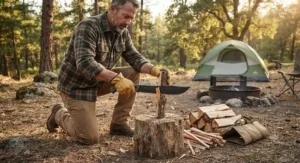
So what is a machete for camping? It’s a long, single-edged blade — typically 12 to 24 inches — designed to chop, slash, and clear vegetation, process small wood, and handle general camp chores that a pocket knife simply can’t touch. Unlike a machete‘s cousin the hatchet, it trades concentrated chopping force for reach and slicing speed, which matters enormously once you’re standing in front of five feet of thorny undergrowth instead of a single log.
This guide skips the marketing fluff you’d find on a product listing. We researched real machetes, real specs, and real aggregated review sentiment from outdoorsmen who’ve actually swung these blades through Georgia kudzu and Appalachian rhododendron thickets. You’ll get honest analysis on blade length, handle grip, sheath carry, and which of these seven tools deserves a spot on your pack — whether you’re a weekend car-camper or someone who treats bushcraft as a second job.
Quick Comparison Table
Before we get into the weeds (pun very much intended), here’s the fast version for anyone who wants the gist without the full deep-dive.
| Machete | Blade Length | Steel | Price Range | Best For |
|---|---|---|---|---|
| Tramontina 18-Inch Bolo Machete | 18″ | Carbon steel | Under $30 | Budget brush clearing |
| Cold Steel Latin Machete | 18″ | 1055 carbon | $25–$40 | All-around camp chores |
| Ka-Bar Cutlass Machete | 12″ | 1075/SK5 | $45–$65 | Compact pack carry |
| Ontario Knife 18″ Military Machete | 18″ | 1095 carbon | $35–$50 | Heavy-duty vegetation |
| Condor Bushcraft Parang | 11.5″ | 1075 high carbon | $70–$90 | Bushcraft wood processing |
| Condor Golok | 12″ | 1075 high carbon | $90–$120 | Chopping-heavy bushcraft |
| ESEE Expat Machete | 15″ | 1095 high carbon | $150–$220 | Premium, USA-made durability |
Look at the spread here for a second: the price gap between the Tramontina and the ESEE Expat is nearly 700%, yet both will chop through a sapling. The difference lives in steel quality, edge retention, fit and finish, and how the tool feels after your fiftieth swing rather than your fifth. Budget blades from Brazil (Tramontina, and similarly Imacasa or Condor’s lower tiers) dominate the entry-level space because Latin American manufacturers have been mass-producing working machetes for generations — this isn’t a new market for them, it’s their bread and butter.
💬 Ready to see which one matches your camp style? Keep reading — the breakdown below gets specific.
💬 Just one click — help others make better buying decisions too!😊
Top 7 Machete for Camping: Expert Analysis
This camping machete review section covers real products across budget, mid-range, and premium tiers, each evaluated on blade geometry, handle ergonomics, and aggregated owner feedback.
1. Tramontina 18-Inch Bolo Machete — best value for pure brush clearing
The Tramontina 18-Inch Bolo Machete has built a cult following among trail crews and land clearers for one simple reason: it costs less than a decent dinner out and it just keeps working. The bolo-style belly-heavy blade puts extra weight toward the tip, which means momentum does more of the work than your shoulder does. Made from Brazilian carbon steel with a full polymer handle, this thing was never designed to be pretty — it was designed to survive a summer of clearing invasive honeysuckle and come back for more the following year.
Based on the spec comparison against other sub-$30 machetes, the Tramontina’s straight profile and thinner stock give it a slicing advantage over thicker chopping-focused blades, which is exactly what you want when the job is clearing a campsite perimeter rather than felling anything substantial. What most buyers overlook about this model is that the factory edge arrives fairly dull — plan on ten minutes with a file before its first outing, and it rewards that investment generously.
Reviewers consistently report that the stock edge holds up surprisingly well against soft vegetation, though several mention the polymer handle can feel slick when wet, which lines up with what you’d expect from a budget polymer grip lacking any texture pattern. A common complaint in user reviews is that the included sheath is thin and wears through faster than the blade does.
Pros:
- ✅ Extremely low cost for genuine full-size chopping capability
- ✅ Belly-heavy bolo profile adds momentum without added weight
- ✅ Widely available with a large secondhand and modification community
Cons:
- ❌ Factory edge needs sharpening before first real use
- ❌ Included sheath is the weakest part of the package
At around $20–$30, the value here is almost unfair — this is the machete you buy three of so you never worry about losing one on a trail.
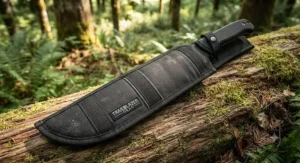
2. Cold Steel Latin Machete — most balanced all-around camp tool
The Cold Steel Latin Machete takes the traditional Latin American profile — thin, straight, slightly upswept toward the tip — and pairs it with 1055 carbon steel that splits the difference between “cheap and soft” and “expensive and brittle.” Here’s what to weigh: 1055 isn’t a premium steel by knife-nerd standards, but for a blade this long and this thin, flexibility actually matters more than raw hardness, since a too-hard blade this thin would be prone to chipping on unexpected rocks or roots hidden in brush.
On paper this means the Latin Machete should feel lively in the hand, and aggregated owner feedback backs that up — multiple sources note it “chops like a mini hatchet” while still slashing vegetation like a proper machete, a combination that’s harder to pull off than it sounds. The polypropylene handle uses a down-turned shape that naturally locks into your palm during chopping strokes, reducing the chance of the blade twisting mid-swing.
What the spec sheet won’t tell you, but reviewers note, is that this machete develops a noticeable patina if you skip the post-use wipe-down, since 1055 carbon steel isn’t stainless. That’s a maintenance tax, not a defect — same steel family that makes it tough also makes it reactive.
Pros:
- ✅ Convex-leaning grind chops surprisingly well for its thickness
- ✅ Down-turned handle resists twisting during hard swings
- ✅ Comes with a usable Cor-Ex sheath out of the box
Cons:
- ❌ Carbon steel requires active rust prevention
- ❌ Cold Steel’s quality control has a mixed reputation batch to batch
3. Ka-Bar Cutlass Machete — most packable for backpackers
Not every camper wants an 18-inch blade swinging off their pack. The Ka-Bar Cutlass Machete answers that with a 12-inch cutlass-style blade — think pirate movie proportions shrunk into something actually practical — built from SK5 steel with a TPR handle. The shorter length trades some reach for a genuinely useful advantage: control. This is a machete you can use one-handed for fine tasks like trimming tent-stake holes or batoning kindling without feeling like you’re wielding a weapon at a garden party.
Based on the spec comparison, the drop-point blade shape gives this model more precision-slicing capability than the straight-bladed competitors on this list, which matters if you’re using your machete for food prep or carving as much as clearing brush. Reviewers consistently note the balance point sits close to the handle, making it noticeably less fatiguing over long sessions than longer, tip-heavy alternatives — a real advantage on multi-day trips where your forearm has other jobs to do.
A common theme in aggregated feedback is that the Cutlass’s shorter length means it struggles with genuinely thick brush compared to 18-inch options; it’s a finesse tool first, a heavy clearing tool second.
Pros:
- ✅ Compact size fits easily into a backpack side pocket
- ✅ Excellent balance reduces hand and wrist fatigue
- ✅ SK5 steel takes and holds a fine edge well
Cons:
- ❌ Shorter reach struggles against thick, established brush
- ❌ Higher price than similarly sized budget alternatives
4. Ontario Knife 18″ Military Machete — best for heavy-duty vegetation
There’s a reason the Ontario Knife 18″ Military Machete carried actual military contracts for decades — it’s built to a standard, not a price point trimmed for retail margins. The 1095 carbon steel blade runs thicker through the spine than most of its price-tier competitors, and that extra mass shows up exactly where you’d want it: chopping through green wood and stubborn vines that would deflect a thinner blade.
What most buyers overlook about this model is that its wider blade profile isn’t just about durability — it changes the balance point further from the handle, giving genuinely more chopping force per swing at the cost of some slashing agility. Here’s what to weigh: if your camping trips involve actual land management (clearing a fire ring perimeter, cutting deadfall for kindling, hacking through a blowdown across a trail), that trade-off works entirely in your favor.
Aggregated reviews consistently praise its toughness — several longtime users report decades of service with only occasional resharpening — while a recurring complaint centers on the stock handle material feeling utilitarian rather than comfortable during extended use, which tracks with its no-frills military-surplus heritage.
Pros:
- ✅ Thicker spine delivers genuine chopping power beyond its price class
- ✅ Proven military-grade durability record over decades
- ✅ Wide blade profile handles green wood confidently
Cons:
- ❌ Handle ergonomics feel dated compared to modern designs
- ❌ Heavier than slashing-focused alternatives, tiring on long clearing jobs
✨ Don’t Miss These Exclusive Deals!
🔍 Take your camping setup to the next level with these carefully selected tools. Click on any highlighted item to check current pricing and availability — these blades will help you build a genuinely capable outdoor kit.
5. Condor Bushcraft Parang — best for wood-processing bushcraft work
The Condor Bushcraft Parang occupies a different category entirely from the straight Latin-style blades above. Parangs originated as Southeast Asian jungle tools designed for chopping dense wood, and Condor’s take on the formula — a shorter 11.5-inch blade with a convex grind and forward-curving profile — hits notably harder per inch than anything else on this list. The molded polypropylene handle includes a thumb rail specifically so you can choke up for controlled carving without your hand sliding forward onto the blade.
Based on the spec comparison, the convex grind (rather than the flat or hollow grinds common on cheaper machetes) is the real story here — convex edges distribute force through more steel behind the cutting edge, which translates directly into better performance on wood versus soft vegetation. Reviewers consistently note that this parang “chops like a mini hatchet,” a phrase that shows up often enough in aggregated feedback to be more than coincidence.
What the spec sheet won’t tell you is that this design trade-off makes the Parang noticeably worse than a straight machete at pure grass and vine slashing — it’s a wood-processing specialist wearing a machete’s clothing, and buyers expecting all-around brush-clearing performance sometimes come away disappointed.
Pros:
- ✅ Convex grind delivers hatchet-like chopping performance
- ✅ Thumb rail enables safe, controlled carving grip
- ✅ Included ballistic nylon sheath rides comfortably on the hip
Cons:
- ❌ Less effective than straight blades on tall grass and vines
- ❌ Shorter reach limits use for clearing wider paths
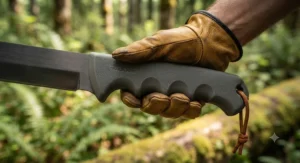
6. Condor Golok — best premium all-rounder for serious bushcraft
If the Parang is a wood specialist, the Condor Golok is the generalist that took its notes and applied them broadly. The blade runs roughly 6mm thick near the handle and tapers to 2–3mm toward the tip, a geometry that essentially builds an axe-like wedge into a machete-length tool. Full-tang construction through an American hickory handle means there’s no weak point where blade meets grip — a detail that matters enormously once you’re batoning through seasoned oak rather than green sapling wood.
Here’s what to weigh: at $90–$120, the Golok costs three to four times what a Tramontina runs, and honestly, the price difference shows up mostly in edge geometry and steel consistency rather than in any single dramatic feature. The 1075 high-carbon steel isn’t exotic, but Condor’s heat treatment and the blade’s variable thickness profile let it split firewood-sized rounds that would simply bounce off a thinner blade. Aggregated owner sentiment is close to unanimous that this model “replaces both a hatchet and a belt knife” for typical camp use — a claim that shows up across independent reviewers rather than a single outlier.
A recurring theme in reviews: the weight (noticeably heavier than the other entries here) makes it a poor grab-and-go option for anyone prioritizing pack weight over chopping capability.
Pros:
- ✅ Variable blade thickness delivers genuine axe-like chopping power
- ✅ Full-tang hickory handle construction built for heavy abuse
- ✅ Versatile enough to replace multiple camp tools
Cons:
- ❌ Noticeably heavier than slashing-oriented alternatives
- ❌ Premium price for a carbon steel that isn’t exotic
7. ESEE Expat Machete — best premium, USA-made durability
The ESEE Expat Machete sits at the top of this list for a reason that has nothing to do with marketing gloss: it’s made in the USA from 1095 high-carbon steel with a thickness profile closer to a short sword than a traditional flexible machete blade. At roughly 15 inches of cutting edge and a full-tang, canvas Micarta handle construction, this tool trades some of a machete’s classic whip-thin flex for stiffness that holds up to genuinely hard use — chopping, batoning, even light prying in situations where a thinner blade would bend.
Based on the spec comparison against every other entry here, the Expat’s blade stock thickness is the standout number — it’s built more like ESEE’s larger fixed-blade knives than a conventional machete, which explains both its premium price and its reputation among reviewers as “part large knife, part machete, 100% powerhouse.” What most buyers overlook is that this stiffness comes at a real cost in slashing agility; if your primary need is whipping through tall grass, this isn’t the efficient choice, but if you need one tool that chops, battons, and survives abuse indefinitely, the trade-off makes sense.
Reviewers consistently report high satisfaction with long-term durability and ESEE’s lifetime warranty against blade or handle breakage, while a common complaint in aggregated feedback concerns the included Kydex sheath, which several owners note becomes brittle in freezing conditions and can deform in extreme heat.
Pros:
- ✅ Thick, full-tang 1095 steel built for genuinely hard abuse
- ✅ Made in the USA with a lifetime breakage warranty
- ✅ Micarta handle stays grippy wet or dry
Cons:
- ❌ Premium price point well above typical camping machetes
- ❌ Kydex sheath has climate-related durability complaints
Practical Usage Guide: Getting the Most From Your Machete
Buying the right blade is only half the equation — how you set it up and maintain it determines whether it lasts one season or twenty. Fresh out of the box, almost every machete on this list (aside from the premium ESEE) ships with a mediocre factory edge. Spend fifteen minutes with a flat file or a puck stone establishing a consistent 20–25 degree bevel before your first trip; this single step does more for cutting performance than any amount of brand reputation.
During your first thirty days of ownership, resist the urge to baton through dry hardwood with a thin-bladed model like the Tramontina or Cold Steel Latin — that’s a job for the Golok or Expat, whose thicker stock was built for it. A common rookie mistake is choking up too far on the handle during chopping strokes, which robs you of the leverage that makes a long blade effective in the first place; let the tool’s length do the work and keep your grip near the base of the handle for full-power swings.
Maintenance is refreshingly simple: wipe the blade dry after every use (carbon steel will rust within hours in humid conditions if left wet), apply a light coat of mineral oil or a dedicated rust inhibitor before storage, and check the handle attachment points periodically for looseness, especially on riveted polymer grips that see repeated impact vibration.
Real-World Scenarios: Which Machete Fits Your Trip
Picture three different campers standing at a trailhead. The first is a college student on a budget, doing a single overnight trip with friends and mostly needing to clear a small tent pad — for them, the Tramontina or Cold Steel Latin makes complete sense; spending more would just be money left on the table for a task that doesn’t demand it.
The second is a weekend bushcrafter who camps twice a month, processes their own firewood, and wants one tool that handles both carving and chopping duties. The Condor Bushcraft Parang or the Golok fits this profile precisely, since both were engineered around wood-processing performance rather than pure vegetation slashing.
The third is someone heading into a multi-day backcountry trip where gear failure isn’t an inconvenience, it’s a real problem. For them, the ESEE Expat’s near-indestructible construction and lifetime warranty justify the premium price — this is the buyer who’s paying for reliability under conditions where a broken tool three days from the trailhead genuinely matters.
Blade Length Machete: How to Choose the Right Size
Blade length is the single biggest factor separating machete performance categories, and picking the right one comes down to matching length to your actual task:
- Under 12 inches — best for detail work, food prep, and light trimming; sacrifices reach for control.
- 12–15 inches — the sweet spot for most campers; balances chopping power with manageable weight.
- 16–18 inches — ideal for serious brush clearing and trail maintenance where reach matters more than finesse.
- Over 18 inches — specialized for dense jungle-style vegetation; often unwieldy for typical North American camping conditions.
- Consider blade thickness alongside length — a thin 18-inch blade slashes vegetation efficiently, while a thick 12-inch blade chops wood like a hatchet.
- Match length to storage and carry — longer blades need correspondingly larger sheaths, which affects pack fit and hip clearance while hiking.
- When in doubt, size down — a shorter blade you actually bring on every trip beats a longer one that stays home because it’s inconvenient to carry.
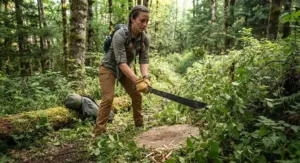
Handle Grip Machete: Comfort That Actually Matters
It’s tempting to fixate entirely on steel and blade geometry, but handle grip machete comfort determines whether you can actually use the tool for more than ten minutes without your palm rebelling. Polypropylene and TPR handles, found on the Tramontina, Cold Steel Latin, and Ka-Bar Cutlass, resist water absorption and stay grippy when wet, though cheaper versions can feel slick without added texture.
Wood handles — hickory on the Golok being the standout example here — offer superior shock absorption during hard chopping, since wood naturally dampens vibration better than rigid polymer. The trade-off is moisture sensitivity; an untreated wood handle left wet repeatedly can swell, crack, or loosen over time, which is why premium wood-handled tools typically ship with some form of sealant already applied.
Micarta, used on the ESEE Expat, splits the difference nicely: it’s dense enough to resist impact damage like wood, but immune to moisture absorption like polymer. That versatility is part of why premium blade makers gravitate toward it despite the added manufacturing cost. Whatever material you choose, a contoured grip with some form of palm swell or thumb rail meaningfully reduces blister risk during long clearing sessions — a detail worth testing in-hand before committing to a purchase where possible.
Sheath Carry Machete: Carrying and Storage Done Right
A machete without a decent sheath is a liability waiting to happen, and sheath carry machete quality varies wildly across this list. Nylon sheaths (common on budget and mid-tier models) are lightweight and dry quickly but wear through faster with repeated blade contact — several reviewers across multiple products in this guide specifically flagged thin sheath material as the first component to fail. Leather sheaths offer better long-term durability and a traditional look but require occasional conditioning to prevent cracking, particularly in humid climates where mildew becomes a real concern.
Kydex sheaths, as found with the ESEE Expat, provide the most secure retention and the fastest draw, but as noted earlier, extreme temperature swings can cause brittleness or warping — something to consider if you’re camping in genuinely cold conditions. For actual carry, cross-body or horizontal hip carry generally beats vertical drop-leg carry for machetes specifically, since the long blade profile makes vertical carry prone to snagging on brush during exactly the kind of bushwhacking you bought the tool for in the first place.
Trail Clearing Machete: What Actually Works in the Field
There’s a meaningful difference between a machete built for occasional camp chores and a genuine trail clearing tool used repeatedly across a season. Professional trail crews, per Forest Service handtool guidance, categorize brushing tools by task rather than brand loyalty — and that same logic applies to choosing a camping machete. For light, repeated brushing of soft vegetation, longer and thinner blades like the Tramontina or Cold Steel Latin cut more efficiently per swing because they generate more edge speed for less arm fatigue.
For woody, established growth — saplings, thick vines, blackberry canes with real diameter — the wedge-shaped, thicker blades (Golok, Parang, Expat) genuinely outperform thin ones, since a thin blade tends to deflect or bind rather than bite cleanly through denser material. This mirrors guidance from trail maintenance professionals, who note that heavier bank blades and brush hooks handle thick undergrowth better than lighter slashing tools, a principle that scales down neatly to machete selection for camping use.
What to expect in real-world performance: even a well-chosen machete tires your forearm faster than expected on your first extended clearing session. Aggregated reviews across nearly every product in this guide mention a “learning curve” period where technique — short, controlled swings rather than wild overhead hacking — dramatically improves both safety and cutting efficiency within the first few outings.
Bushcraft Machete Essentials: Beyond Basic Camping
Bushcraft machete use extends meaningfully past clearing a tent site — it covers shelter-building material prep, feather-sticking for fire starting, batoning kindling to size, and even basic food preparation in a pinch. This is where geometry really separates the pack: a convex-ground blade like the Condor Bushcraft Parang or Golok handles carving and batoning with genuine control, while a thin, flexible slasher like the Tramontina flexes unpredictably under batoning stress and simply isn’t built for that job.
For bushcrafters specifically, a secondary consideration matters more than for casual campers: resharpening in the field. Carbon steel blades (nearly everything on this list except stainless novelty machetes) sharpen quickly with basic tools — a pocket stone or even a smooth river rock in an emergency — compared to harder stainless alternatives that resist a quick field touch-up. That field-serviceability is a genuine, if underrated, advantage of sticking with traditional carbon steel for anyone spending extended time off-grid.
Common Mistakes When Buying a Machete for Camping
The most frequent mistake is buying based on length alone, assuming bigger automatically means more capable — in practice, an oversized blade you find unwieldy gets left at home, while a well-matched 12–15 inch model actually comes along on every trip. A second common error is ignoring steel type entirely; stainless “survival” machetes sold with dramatic marketing often use soft stainless alloys that hold an edge poorly compared to basic carbon steel, despite costing more.
A third mistake involves overlooking the sheath as an afterthought, only to discover during the first outing that a flimsy nylon sheath doesn’t securely retain the blade during a hike. Finally, many first-time buyers skip test-swinging or at least researching handle ergonomics, then discover after extended use that a handle shape doesn’t suit their hand size or grip style — a detail that’s genuinely hard to judge from a product photo alone.
Machete for Camping vs Hatchet: Which Wins in the Backcountry
| Factor | Machete | Hatchet |
|---|---|---|
| Reach for brush clearing | Excellent | Poor |
| Wood-splitting power | Moderate (thick models only) | Excellent |
| Weight for packing | Light to moderate | Moderate to heavy |
| Versatility for camp chores | High | Moderate |
| Learning curve | Low to moderate | Low |
Looking at the comparison above, a machete clearly wins for anyone whose primary task involves clearing paths, vines, or grass, since the reach and slashing motion simply outperform a hatchet’s short-handled chopping action for that job. A hatchet still wins decisively for splitting seasoned firewood into kindling, where its concentrated wedge and swing mechanics deliver force a thin machete blade can’t match safely. Thicker chopping-focused machetes like the Golok or Expat blur this line considerably, effectively replacing a hatchet for most campers while retaining a machete’s clearing versatility — which is precisely why reviewers keep describing them as “replacing two tools with one.”
Long-Term Cost & Maintenance
Total cost of ownership tells a different story than sticker price alone. A $25 Tramontina that needs sharpening every outing and a new sheath within two seasons might cost more over five years of regular use than a $100 Golok that holds its edge longer and ships with a genuinely durable sheath from day one. That said, for occasional campers taking one or two trips a year, the cheaper option’s lower absolute cost still wins on pure economics, since the wear-and-tear math only favors the premium option under heavy, repeated use.
Ongoing maintenance costs are modest across the board: a basic file or puck sharpening stone (under $15), occasional mineral oil for carbon steel blades, and eventual sheath replacement if you carry hard. Premium options like the ESEE Expat largely eliminate the sheath-replacement cost thanks to more durable Kydex construction, though that upfront premium takes years of use to fully offset against a budget alternative’s lower purchase price.
Safety, Regulations & Compliance Guide
Machete legality varies by location, but in most US states, machetes are legal tools for legitimate purposes like camping, gardening, and land clearing, with some jurisdictions restricting blade length or public carry methods — always check your specific state and any land-management agency rules (national forests, state parks) before bringing one along, since regulations can differ meaningfully between recreational land types.
On handling safety, occupational safety guidance for edged hand tools emphasizes that most injuries stem from poor tool condition — dull edges, damaged handles — rather than the tool itself, a principle that applies directly to recreational machete use. Keep your blade sharp (a sharp edge requires less force and behaves more predictably than a dull one), always cut away from your body and any bystanders, and never carry an unsheathed machete while hiking, even for short distances between camp tasks.
Frequently Asked Questions
❓ What length machete is best for camping?
❓ Is carbon steel or stainless steel better for a camping machete?
❓ Can I use a machete instead of a hatchet while camping?
❓ How do I stop my machete from rusting?
❓ Is it legal to carry a machete while camping in the US?
Conclusion
Picking the right machete for camping really comes down to being honest about what you’ll actually use it for. If your trips mostly involve light brush clearing on a budget, the Tramontina 18-Inch Bolo Machete or Cold Steel Latin Machete deliver genuine capability without overspending. If you’re processing wood and camping often enough that durability starts to matter more than upfront cost, the Condor Bushcraft Parang or Condor Golok justify their premium through geometry that actually performs. And if reliability under real backcountry stress is non-negotiable, the ESEE Expat Machete earns its price tag through steel thickness and a warranty that backs it up.
Whichever you choose, remember that a machete rewards proper setup and maintenance more than almost any other camp tool — a cheap blade kept sharp will outperform an expensive one left to rust in a drawer. Match blade length and grind to your actual tasks, take care of the edge, and you’ll have a tool that earns its spot in your pack trip after trip.
✨ Ready to gear up? Compare current prices on today’s top pick and get your next camping trip covered! ✨
Recommended for You
- Swiss Army Knife for Camping: 7 Best Picks for 2026
- Camp kitchen knife: 7 Best Picks for 2026
- Best Camping Shovel Guide 2026: 7 Picks That Actually Hold Up
Disclaimer: This article contains affiliate links. As an Amazon Associate, I earn from qualifying purchases. If you purchase products through these links, we may earn a small commission at no additional cost to you.
✨ Found this helpful? Share it with your friends! 💬🤗
