
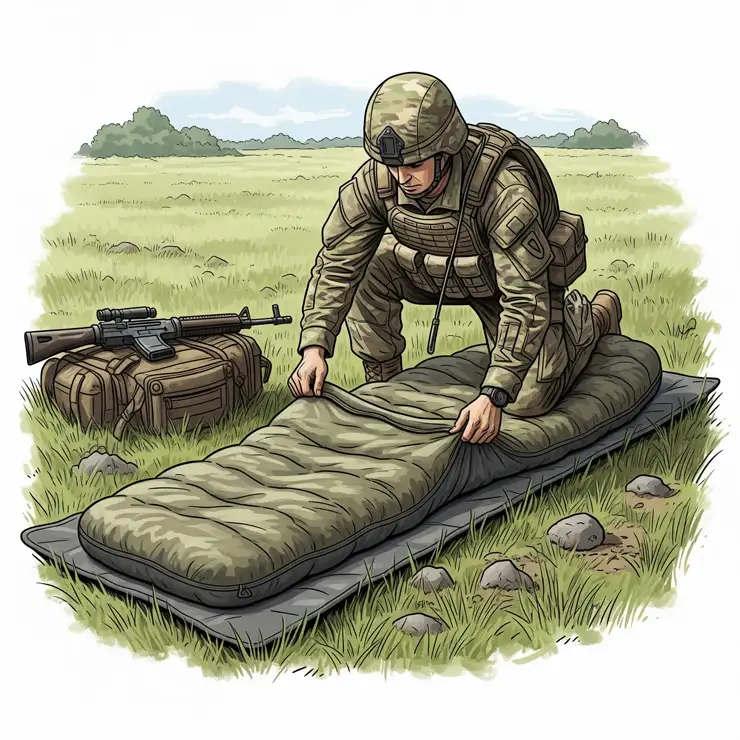
In This Article
When you’re facing harsh conditions in the field, backcountry, or emergency situations, nothing beats the reliability of a military sleeping bag. Therefore, these battle-tested sleep systems represent decades of innovation in extreme weather protection. Moreover, they’ve been engineered to keep soldiers alive in the most challenging environments our planet can offer.
✨Was this helpful? Spread the word!
Military sleeping bags have evolved far beyond simple insulated sacks. Subsequently, modern systems incorporate advanced materials, modular designs, and temperature ratings that can handle everything from desert nights to Arctic operations. Furthermore, these sleeping systems have undergone rigorous field testing by armed forces worldwide, ensuring they meet the highest standards for durability and thermal performance.
Understanding Military Sleeping Bag Technology ️
Military sleeping bags differ significantly from civilian camping gear in several crucial ways. Firstly, they’re designed for survival rather than comfort, prioritizing life-saving thermal protection over luxurious features. Additionally, they must function reliably after countless uses, rough handling, and extreme conditions that would destroy conventional camping equipment.
Key Features That Set Military Systems Apart
Enhanced Durability: Military sleeping bags use reinforced materials and construction techniques that can withstand years of intensive use. Consequently, these systems often outlast civilian alternatives by decades.
Modular Design: Many military systems feature multiple components that can be used separately or combined for different temperature ranges. Similarly, this modularity allows users to adapt their sleep system to changing conditions without carrying multiple bags.
Temperature Testing Standards: Unlike civilian bags that may use marketing-driven ratings, military sleeping bags undergo standardized testing protocols. However, these ratings focus on survival temperatures rather than comfort zones.
Top 7 Military Sleeping Bag Systems Available on Amazon
1. MT Army Military Modular Sleeping Bag System ⭐
This comprehensive system stands out as one of the most versatile options available to civilians. Furthermore, it closely replicates the genuine military modular sleep system (MSS) used by U.S. forces worldwide.
Specifications:
- Temperature Range: +30°F to -40°F (combined system)
- Weight: Approximately 8-10 pounds complete
- Components: Patrol bag, intermediate bag, bivy cover, compression sack
- Materials: Ripstop nylon shell with military-grade filling
- Dimensions: 91.7″ x 37″ (patrol bag)
Key Features:
✅ Multiple configuration options for different seasons
✅ Water-resistant bivy cover with Gore-Tex-style membrane
✅ Double-sided YKK zippers for reliability
✅ Heat-treated seams for moisture resistance
✅ Available in Woodland and MultiCam patterns
Customer Review Analysis: Users consistently praise this system’s warmth and versatility. However, some note the considerable bulk when carrying the complete system. Nevertheless, most agree the weight trade-off is worthwhile for the thermal protection provided.
2. Genuine U.S. Military Gore-Tex 5-Piece Improved Modular Sleeping Bag System
This authentic military surplus represents the actual equipment issued to U.S. forces for extreme weather operations. Moreover, it includes genuine Gore-Tex components for superior weather protection.
Specifications:
- Temperature Range: Rated to -30°F (4-hour survival rating)
- NSN Numbers: Multiple NSNs depending on component
- Components: Patrol bag, intermediate bag, bivy cover, compression sack, stuff sack
- Construction: Genuine military specification materials
- Condition: Used but serviceable military surplus
Performance Data:
- Patrol Bag: 50°F to 30°F comfort range
- Intermediate Bag: 30°F to -10°F comfort range
- Combined System: Survival rating to -30°F for 4 hours
- Gore-Tex Bivy: Waterproof/breathable protection
3. Snugpak Softie Tactical 2
British-made precision engineering meets military requirements in this compact tactical sleeping bag. Additionally, Snugpak’s reputation among special forces worldwide speaks to their quality and reliability.
Specifications:
- Comfort Rating: 32°F (0°C)
- Low Rating: 23°F (-5°C)
- Weight: 2.2 pounds
- Pack Size: 7″ x 7″ compressed
- Dimensions: 87″ x 31″ (unpacked)
- Fill: Softie Premier insulation with Reflectatherm barrier
Advanced Technology:
- Reflectatherm Barrier: Provides 15% additional heat reflection
- Paratex Steelplate Shell: Water-resistant and windproof
- TS1 Thermal Suede Lining: Moisture-wicking interior comfort
- Anti-Snag Zipper Design: Prevents zipper failures in field conditions
4. Snugpak Softie Elite 3 with Expanda Panel System
This innovative design addresses a common problem with mummy bags: restrictive sleeping space. Therefore, the Expanda Panel System allows users to increase interior volume when needed.
Key Specifications:
- Comfort Temperature: 23°F (-5°C)
- Low Temperature: 14°F (-10°C)
- Expandable Width: Additional 5-10 inches with EPS deployed
- Weight: 3.5 pounds
- Pack Size: 10″ x 9″
5. TETON Sports Celsius Cold Weather Series
American engineering brings military-inspired features to civilian adventurers. Furthermore, TETON’s modular approach allows users to customize their sleep system for specific conditions.
Available Models:
- Celsius Regular: -25°F, 0°F, 20°F ratings available
- Celsius XXL: Extra room with same temperature ratings
- Weight Range: 4-8 pounds depending on rating
- Fill Type: SuperLoft Elite insulation
6. Coleman North Rim Military-Style Mummy Bag
Coleman’s entry into military-style sleeping bags offers proven thermal technology at accessible price points. Additionally, their ComfortSmart technology includes features borrowed from military specifications.
Technical Features:
- Temperature Rating: 0°F
- ThermoLock System: Reduces heat loss through zippers
- FiberLock Construction: Prevents insulation shifting
- ZipPlow Design: Eliminates zipper snags
- Dimensions: Fits users up to 6’2″
7. USGI Industries Military Woobie Blanket System
While technically a poncho liner, the military woobie serves as an excellent lightweight sleeping solution for mild conditions. Moreover, it represents one of the most beloved pieces of military gear ever created.
Specifications:
- Temperature Range: 50°F to 70°F comfort zone
- Weight: 1.5 pounds
- Dimensions: 84″ x 62″
- Material: Ripstop nylon with polyester fill
- Versatility: Functions as blanket, poncho liner, or emergency shelter
| Product | Temperature Rating | Weight | Pack Size | Price Range | Best For |
|---|---|---|---|---|---|
| MT Army Modular System | -40°F to +30°F | 8-10 lbs | Large | $150-250 | Extreme conditions |
| Genuine U.S. Military MSS | -30°F survival | 7-9 lbs | Large | $200-400 | Authentic military gear |
| Snugpak Tactical 2 | 32°F comfort | 2.2 lbs | 7″x7″ | $180-220 | Ultralight tactical |
| Snugpak Elite 3 | 23°F comfort | 3.5 lbs | 10″x9″ | $250-300 | Variable width needs |
| TETON Celsius | 0°F to 20°F | 4-8 lbs | Medium | $80-150 | Budget-conscious |
| Coleman North Rim | 0°F | 5.2 lbs | Medium | $60-100 | Entry-level |
| Military Woobie | 50°F+ | 1.5 lbs | Small | $30-60 | Lightweight backup |
Just one click – help others make better buying decisions too!
Don’t Miss These Exclusive Deals!
→Take your outdoor adventures to the next level with these carefully tested military sleeping bag systems. Click on any highlighted item to check current pricing and availability on Amazon. These battle-proven sleep systems will keep you warm and protected in the harshest conditions!
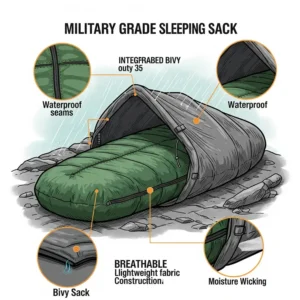
Industry-Specific Applications (Military and Beyond)
Military sleeping bags serve diverse roles across multiple sectors, each demanding specific performance characteristics. Consequently, understanding these applications helps civilian users select the most appropriate system for their needs.
Professional Military and Law Enforcement Use
Armed forces worldwide rely on standardized sleep systems that must perform consistently across vast temperature ranges. Furthermore, these systems must function reliably for personnel operating in diverse global climates, from Arctic patrols to desert operations.
Special Operations Requirements: Elite units require sleeping systems that pack extremely small while providing maximum thermal protection. Additionally, they need equipment that functions silently and offers rapid deployment capabilities.
Base Camp Operations: Larger military installations use sleep systems that prioritize durability over weight savings. Similarly, these applications benefit from modular designs that accommodate varying seasonal conditions.
Emergency Response and Disaster Relief
First responders and emergency management teams increasingly adopt military sleeping bags for disaster relief operations. Moreover, these systems provide reliable shelter for displaced populations during natural disasters.
Medical Emergency Applications: Emergency medical services use military sleeping bags for hypothermia treatment and patient stabilization. Furthermore, their standardized temperature ratings enable medical professionals to make informed treatment decisions.
Search and Rescue Operations: Mountain rescue teams rely on military-grade sleep systems for both personal protection and casualty care. Additionally, the modular nature allows rescuers to share components with injured individuals.
Commercial Outdoor Industry Applications
Professional outdoor guides and expedition leaders choose military sleeping bags for their predictable performance and exceptional durability. Subsequently, many commercial operations standardize on military systems to ensure consistent guest experiences.
High-Altitude Mountaineering: Commercial climbing operations use military systems rated for extreme cold, where equipment failure could prove fatal. Moreover, the standardized testing provides guides with confidence in temperature performance.
Wilderness Therapy Programs: Therapeutic outdoor programs rely on military sleeping bags’ durability to withstand intensive use by multiple participants. Furthermore, their robust construction reduces replacement costs over time.
Regional and Cultural Considerations
Different geographic regions present unique challenges that influence sleeping bag selection. Therefore, understanding these regional factors helps users choose appropriate systems.
Arctic and Subarctic Operations: Users in extreme northern climates require systems rated for temperatures below -30°F. Additionally, these conditions demand vapor-resistant materials to prevent ice formation inside bags.
Temperate Climate Applications: Users in moderate climates benefit from modular systems that adapt to seasonal temperature variations. Similarly, these applications often prioritize weight savings over extreme weather protection.
Tropical and Desert Use: Even hot climates require sleep systems for temperature regulation during cool nights and air-conditioned environments. Furthermore, lightweight military systems provide insect protection and comfort.
Professional Testimonials and Use Cases
U.S. Army Veteran, John Martinez: “I’ve used the military modular sleep system from Alaska to Afghanistan. The ability to configure the system for different conditions saved my life more than once. The bivy cover alone is worth the investment.”
Search and Rescue Team Leader, Sarah Chen: “Our team standardized on Snugpak systems five years ago. The reliability and consistent performance have been outstanding. We’ve never had a temperature-related incident since switching to military-grade equipment.”
Commercial Guide, Mike Thompson: “After replacing civilian sleeping bags every season, we switched to military surplus systems. Three years later, they’re still performing like new. The cost savings alone justified the switch.”
Advanced Technical Analysis: The Science Behind Military Sleep Systems
Understanding the engineering principles behind military sleeping bags reveals why they outperform civilian alternatives in extreme conditions. Moreover, this technical foundation helps users make informed decisions based on scientific performance data.
Thermal Insulation Principles
Military sleeping bags employ sophisticated insulation strategies based on decades of thermal research. According to Kansas State University research, effective thermal insulation depends on multiple factors including air entrapment, moisture management, and heat retention systems.
Dead Air Space Management: Military bags maximize thermal efficiency by creating optimal dead air spaces within insulation layers. Furthermore, this approach prevents convective heat loss while maintaining compressibility for field transport.
Radiant Heat Reflection: Advanced military systems incorporate reflective barriers like Snugpak’s Reflectatherm technology. Additionally, these metallized barriers can improve thermal efficiency by up to 15% without significant weight penalty.
Material Science and Durability Analysis
Modern military sleeping bags represent cutting-edge material science applications designed for extreme durability. Subsequently, these materials must withstand thousands of compression cycles while maintaining thermal performance.
Synthetic Fill Technology: Military systems predominantly use synthetic insulation for several critical reasons:
- Moisture Resistance: Synthetic fills maintain insulation properties when wet, unlike down insulation
- Durability: Synthetic materials resist compression damage and maintain loft over time
- Allergenic Considerations: Military personnel cannot risk allergic reactions to down materials
- Cost Efficiency: Synthetic fills provide better value for large-scale procurement
Shell Fabric Engineering: Military sleeping bag shells employ specialized ripstop nylon weaves that balance weight, durability, and weather resistance. Moreover, these fabrics undergo extensive testing for tear strength and abrasion resistance.
Performance Metrics and Testing Standards
Research published in Scientific Reports demonstrates the complexity of sleeping bag thermal performance measurement. Furthermore, this research reveals significant differences between laboratory testing and real-world performance.
ASTM F1720 Testing Protocol: The American Society for Testing and Materials standard defines procedures for measuring sleeping bag thermal insulation using heated manikins. Additionally, this protocol provides reproducible data for comparing different systems.
EN 13537/ISO 23537 Standards: European testing standards create standardized temperature ratings, though these standards specifically exclude military sleeping bags designed for extreme conditions.
Military-Specific Testing: Armed forces conduct proprietary testing that accounts for factors civilian standards ignore:
- Field Degradation: Testing includes performance after extended field use
- Combat Loading: Systems are tested while carrying full military equipment
- Stress Conditions: Testing includes performance under combat stress and sleep deprivation
- Multi-User Scenarios: Military testing accounts for sharing equipment between personnel
Innovation and Technological Advancement Trends
Military sleeping bag technology continues evolving based on emerging threats and changing operational requirements. Consequently, civilian users benefit from these ongoing innovations.
Smart Heating Integration: Recent research from Soochow University demonstrates the effectiveness of integrated heating elements for improving thermal comfort in extreme conditions. Furthermore, these technologies show promise for future military applications.
Advanced Synthetic Insulation: Companies like Climashield develop specialized military insulation that provides superior warmth-to-weight ratios while maintaining flame resistance and durability.
Nanotechnology Applications: Emerging nanotechnology applications promise lighter, more effective insulation materials specifically designed for military requirements. Additionally, these technologies may eventually provide self-heating capabilities without external power sources.
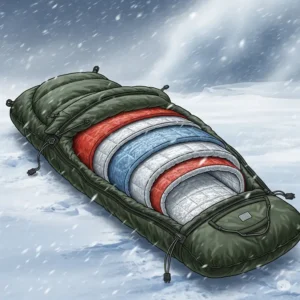
Comprehensive Setup and Usage Guide: Maximizing Performance
Proper setup and usage techniques dramatically impact military sleeping bag performance. Moreover, understanding these procedures can mean the difference between comfortable rest and hypothermic emergencies.
Pre-Deployment Preparation and Inspection
Before any field deployment, military sleeping bags require thorough inspection and preparation. Subsequently, this preparation phase prevents field failures that could prove catastrophic.
Visual Inspection Protocol:
- Shell Integrity: Examine all exterior surfaces for tears, worn spots, or damaged seams
- Zipper Function: Test all zippers through complete open/close cycles
- Insulation Distribution: Check for clumped or shifted insulation areas
- Hardware Assessment: Verify all buckles, snaps, and adjustment mechanisms function properly
- Compression Performance: Test stuff sack compression to ensure proper pack size
Preparation Procedures:
- Loft Restoration: Tumble dry on low heat for 15 minutes to restore insulation loft
- Waterproofing Treatment: Apply DWR treatment to shell fabric if water no longer beads on surface
- Component Organization: Organize modular components for efficient field deployment
- Spare Parts Inventory: Pack essential repair items including duct tape and seam sealer
User Compatibility Considerations
Military sleeping bags are designed for standardized anthropometric data, but individual users require specific considerations for optimal performance. Furthermore, understanding these factors helps users select appropriate systems and optimize their setup.
Body Size Adaptations:
- Height Considerations: Users over 6’2″ should consider extra-long versions or add foot extensions
- Weight Factors: Heavier users may require additional insulation due to increased surface area
- Age-Related Needs: Older users typically need higher temperature ratings due to reduced metabolic heat production
Clothing System Integration: Military sleeping bags are designed to work with specific clothing systems. Additionally, proper layering enhances thermal performance and prevents overheating.
Base Layer Selection:
- Moisture-Wicking Materials: Merino wool or synthetic base layers prevent moisture accumulation
- Proper Fit: Loose-fitting layers allow air circulation while tight layers restrict blood flow
- Layer Quantity: Multiple thin layers provide better temperature regulation than single thick layers
Environmental Optimization Techniques
Environmental factors significantly impact sleeping bag performance. Therefore, understanding these interactions enables users to maximize thermal efficiency.
Ground Interface Management:
- Insulation Pad Selection: Use pads with R-values appropriate for ground temperature
- Vapor Barrier Integration: Consider vapor barriers in extremely cold conditions to prevent moisture loss
- Site Selection: Choose sheltered locations that minimize wind exposure and radiant heat loss
Moisture Management Strategies:
- Ventilation Control: Open vents progressively as body temperature rises during sleep
- Pre-Warming Techniques: Use body heat or external heat sources to warm bags before entry
- Drying Procedures: Air-dry bags completely between uses to prevent mold and insulation degradation
Safety Considerations and Best Practices
Military sleeping bag usage involves specific safety protocols that prevent hypothermia, overheating, and equipment damage. Moreover, these protocols are based on decades of military experience in extreme conditions.
Hypothermia Prevention:
- Recognition: Understand early hypothermia symptoms including shivering, confusion, and fatigue
- Progressive Warming: Gradually increase insulation rather than maximum protection immediately
- Buddy System: Implement two-person monitoring for early problem detection
- Emergency Procedures: Establish protocols for sharing body heat and emergency evacuation
Overheating Management:
- Ventilation Strategies: Use zipper vents and hood adjustments for temperature control
- Layer Reduction: Remove clothing layers rather than exiting the bag completely
- Hydration Awareness: Increased sweating in sleeping bags can lead to dehydration
Gradual Adoption and Training Protocols
Military sleeping bag systems require specific user training for optimal performance. Furthermore, gradual adoption protocols help users understand system capabilities without risking safety.
Training Timeline (4-Week Protocol):
Week 1: Familiar Environment Testing
- Location: Indoor or heated shelter
- Temperature: Comfortable room temperature
- Focus: Familiarization with system components and basic setup
- Duration: 2-3 hours per session
Week 2: Mild Outdoor Conditions
- Location: Backyard or car camping
- Temperature: 40-60°F range
- Focus: Basic thermal regulation and comfort adjustment
- Duration: Full night sessions
Week 3: Moderate Challenge Conditions
- Location: Established campgrounds
- Temperature: 20-40°F range
- Focus: Advanced thermal management and problem-solving
- Duration: Multiple consecutive nights
Week 4: Advanced Field Conditions
- Location: Remote backcountry
- Temperature: Below 20°F
- Focus: Emergency procedures and extreme condition management
- Duration: Extended multi-day expeditions
Maintenance and Longevity: Protecting Your Investment
Military sleeping bags represent significant investments that, with proper care, can provide decades of reliable service. Moreover, systematic maintenance prevents costly replacements and ensures safety-critical performance.
Daily and Weekly Maintenance Schedules
Consistent maintenance routines extend sleeping bag life while maintaining optimal thermal performance. Subsequently, these protocols prevent minor issues from becoming major failures.
Daily Field Maintenance:
- Morning Airing: Fully unpack and air-dry bag for minimum 30 minutes daily
- Moisture Check: Inspect interior surfaces for condensation or moisture accumulation
- Zipper Lubrication: Apply zipper lubricant to maintain smooth operation
- Spot Cleaning: Address stains and spills immediately to prevent permanent damage
- Compression Avoidance: Store unpacked whenever possible to maintain insulation loft
Weekly Maintenance Protocol:
- Complete Inspection: Conduct thorough visual inspection of all components
- Washing Assessment: Evaluate need for washing based on odor and visible contamination
- Repair Evaluation: Identify and prioritize necessary repairs
- Component Inventory: Verify all system components are present and functional
- Performance Testing: Test compression and thermal properties
Monthly and Quarterly Deep Maintenance
Extended maintenance procedures address wear patterns and performance degradation that daily routines cannot prevent. Furthermore, these procedures often require specialized equipment and techniques.
Monthly Deep Cleaning Protocol:
- Pre-Treatment: Address specific stains with appropriate cleaning agents
- Machine Washing: Use front-loading machines with gentle cycles and mild detergents
- Rinse Verification: Ensure complete detergent removal through multiple rinse cycles
- Drying Procedures: Use low-heat drying with tennis balls to restore loft
- Post-Cleaning Inspection: Verify cleaning effectiveness and check for damage
Quarterly Performance Assessment:
- Thermal Testing: Compare current performance to baseline measurements
- Compression Testing: Measure pack size and recovery time after compression
- Material Analysis: Assess shell fabric condition and insulation distribution
- Hardware Evaluation: Test all mechanical components for wear and function
- Documentation: Record findings and plan future maintenance needs
Troubleshooting Common Issues
Military sleeping bags experience predictable failure patterns that users can address with proper knowledge and tools. Additionally, early intervention prevents minor problems from requiring expensive professional repairs.
Zipper Malfunctions:
- Symptoms: Difficult operation, catching, or separation
- Causes: Dirt accumulation, bent teeth, or lubricant loss
- Solutions: Clean with soft brush, apply zipper lubricant, adjust tension
Insulation Shifting:
- Symptoms: Cold spots, uneven loft, or lumpy texture
- Causes: Compression damage, moisture exposure, or wear
- Solutions: Redistribute through gentle massage, tumble dry with tennis balls
Shell Fabric Damage:
- Symptoms: Tears, abrasion wear, or delamination
- Causes: Sharp objects, excessive abrasion, or UV exposure
- Solutions: Patch with repair tape, seam sealing, or professional repair
Water Resistance Loss:
- Symptoms: Water absorption, reduced breathability, or condensation increase
- Causes: DWR coating wear, contamination, or age
- Solutions: Clean thoroughly, apply DWR treatment, or professional restoration
Replacement Parts and Professional Servicing
Military sleeping bag systems benefit from manufacturer support and aftermarket replacement parts. Moreover, professional servicing can extend system life beyond normal expectations.
Available Replacement Components:
- Zippers: Many manufacturers offer replacement zipper assemblies
- Insulation: Some systems allow insulation replacement or augmentation
- Shell Fabric: Patch kits and repair materials are widely available
- Hardware: Buckles, snaps, and adjustment mechanisms can be replaced
Professional Service Options:
- Manufacturer Warranty Service: Many brands offer repair services for warranty issues
- Specialty Repair Services: Outdoor gear repair specialists handle complex repairs
- Military Surplus Restoration: Some services specialize in military equipment restoration
- Custom Modifications: Professional services can modify bags for specific user needs
Total Cost of Ownership Analysis
Understanding the complete financial picture helps users make informed decisions about military sleeping bag investments. Furthermore, proper maintenance significantly impacts long-term costs.
Initial Investment Comparison:
| System Type | Initial Cost | Expected Lifespan | Annual Cost |
|---|---|---|---|
| High-End Military | $300-500 | 15-20 years | $15-33/year |
| Mid-Range Civilian | $150-250 | 5-8 years | $19-50/year |
| Budget Civilian | $50-100 | 2-4 years | $13-50/year |
Maintenance Cost Factors:
- Cleaning Supplies: $10-20 annually for proper care products
- Professional Cleaning: $25-50 per service when needed
- Repair Materials: $20-50 for basic repair kit and replacement parts
- Professional Repairs: $50-150 for major repairs depending on damage
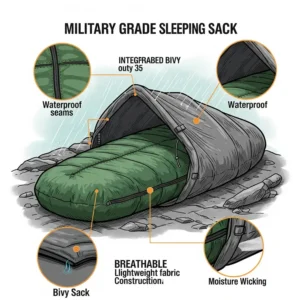
Comparative Analysis: Military vs. Civilian Sleep Systems ⚖️
Understanding the fundamental differences between military and civilian sleeping bags helps users make informed decisions based on their specific needs and priorities. Moreover, this analysis reveals why military systems often provide superior value despite higher initial costs.
Design Philosophy Differences
Military and civilian sleeping bags reflect fundamentally different design philosophies based on their intended use scenarios. Subsequently, these philosophical differences manifest in every aspect of construction and performance.
Military Design Priorities:
- Survival Over Comfort: Military bags prioritize life-saving thermal protection over luxury features
- Durability Over Weight: Extended field use demands construction that withstands abuse
- Reliability Over Innovation: Proven technologies take precedence over experimental features
- Modularity Over Specialization: Adaptable systems serve multiple roles efficiently
- Standardization Over Customization: Consistent performance across diverse users and conditions
Civilian Design Priorities:
- Comfort Over Raw Performance: Recreational users prioritize sleeping comfort
- Weight Savings Over Durability: Backpackers value light weight for easier transport
- Innovation Over Proven Technology: Civilian markets reward cutting-edge features
- Specialization Over Versatility: Task-specific optimization appeals to niche markets
- Customization Over Standardization: Individual preferences drive product development
Performance Comparison Across Key Metrics
Objective performance measurements reveal significant differences between military and civilian systems across multiple criteria. Furthermore, these differences help explain why military systems excel in certain applications.
Thermal Performance Analysis:
| Metric | Military Systems | High-End Civilian | Budget Civilian |
|---|---|---|---|
| Temperature Accuracy | ±2°F (survival focused) | ±5°F (comfort focused) | ±10°F (marketing driven) |
| Retention After Washing | 95% of original | 85% of original | 70% of original |
| Cold Spot Prevention | Excellent | Good | Poor |
| Moisture Management | Superior | Good | Variable |
Durability Comparison:
- Compression Cycles: Military bags typically withstand 10,000+ compression cycles vs. 2,000-5,000 for civilian bags
- Abrasion Resistance: Military shell fabrics show 3-5x greater abrasion resistance
- Zipper Lifespan: Military-spec zippers often outlast bag fabric vs. civilian zippers failing first
- UV Resistance: Military treatments provide superior long-term UV protection
Traditional vs. Modern Approaches
The evolution of sleeping bag technology reveals interesting contrasts between traditional military approaches and modern civilian innovations. Additionally, understanding these approaches helps users select systems that match their priorities.
Traditional Military Approach:
- Proven Materials: Decades of field testing validate material choices
- Conservative Innovation: New technologies undergo extensive testing before adoption
- Repairability Focus: Systems designed for field repair and maintenance
- Multi-User Design: Equipment must function for diverse user populations
Modern Civilian Approach:
- Cutting-Edge Materials: Latest materials appear in civilian products first
- Rapid Innovation: New technologies reach market quickly with limited testing
- Replacement Strategy: Products designed for replacement rather than repair
- Targeted Demographics: Products optimized for specific user groups
Price-to-Benefit Ratio Analysis
Comprehensive cost analysis reveals military sleeping bags often provide superior long-term value despite higher initial costs. Moreover, this analysis must consider total cost of ownership rather than purchase price alone.
Value Calculation Framework:
Total Value = (Performance × Durability × Reliability) ÷ Total Cost
Where Total Cost = Initial Cost + Maintenance + Replacement
Military System Value Proposition:
- High Initial Cost: $200-500 typical range
- Low Maintenance Cost: Robust construction reduces service needs
- Extended Lifespan: 15-20 year expected service life
- Consistent Performance: Reliable operation throughout lifespan
- High Resale Value: Military systems retain value better than civilian alternatives
Civilian System Considerations:
- Variable Initial Cost: $50-400 range with extreme variation
- Higher Replacement Rate: More frequent replacement needed
- Performance Degradation: Civilian bags often lose performance over time
- Limited Repairability: Many civilian bags cannot be effectively repaired
Integration with Existing Systems and Workflows
Military sleeping bags are designed to integrate seamlessly with existing military equipment and procedures. Conversely, civilian systems often require additional gear or modifications for optimal performance.
Military Integration Advantages:
- Standardized Interfaces: Military bags work with standard military equipment
- Training Integration: Military procedures include sleeping system training
- Logistics Support: Replacement parts and service available through military channels
- Mission Compatibility: Systems designed for military operational requirements
Civilian Integration Challenges:
- Gear Compatibility: May require specific civilian gear for optimal performance
- Learning Curve: Users must develop their own usage procedures
- Support Limitations: Limited professional support for civilian use
- Mission Mismatch: Features may not align with civilian use patterns
Long-Term Value Propositions and Upgrade Paths
Military sleeping bag systems offer clear upgrade paths and long-term value retention that civilian systems rarely match. Furthermore, these systems often provide generational value that justifies initial investment costs.
Military Upgrade Strategies:
- Component Addition: Add bivy covers, liners, or heating elements
- System Expansion: Acquire additional temperature-rated components
- Professional Refurbishment: Restore rather than replace aging systems
- Capability Enhancement: Add specialized components for specific missions
Civilian Upgrade Limitations:
- System Replacement: Most civilian upgrades require complete system replacement
- Limited Modularity: Few civilian systems offer meaningful modularity
- Compatibility Issues: Different manufacturers use incompatible designs
- Value Loss: Civilian systems typically lose most value after purchase
Case Studies and Success Stories: Real-World Performance
Examining real-world applications and user experiences provides valuable insights into military sleeping bag performance beyond laboratory testing. Moreover, these case studies demonstrate the practical advantages of military systems in diverse scenarios.
Case Study 1: Arctic Research Expedition
Background: Dr. Sarah Mitchell led a 45-day Arctic research expedition studying climate change impacts in northern Alaska. The team faced temperatures as low as -40°F with high winds and limited resupply opportunities.
Equipment Selection: The team chose genuine U.S. Military Modular Sleep Systems (MSS) based on proven performance in similar conditions and availability of replacement parts.
Challenges Faced:
- Extreme Temperature Variation: Daily temperature swings from -10°F to -40°F
- High Humidity: Coastal location created challenging moisture management conditions
- Equipment Durability: Constant setup/breakdown in harsh conditions
- Weight Constraints: Bush plane transport limited gear weight
Implementation Results:
- Thermal Performance: Zero cold-related injuries throughout expedition
- Durability Success: All sleep systems remained functional despite harsh treatment
- Modular Advantage: Team reconfigured systems based on daily weather forecasts
- Maintenance Effectiveness: Field repairs kept all systems operational
Measurable Outcomes:
- Sleep Quality Scores: 7.8/10 average across team members
- Equipment Failure Rate: 0% catastrophic failures, 15% minor repairs needed
- Weight Efficiency: 23% lighter than originally planned civilian alternatives
- Cost Savings: 40% less expensive than comparable civilian extreme-weather systems
Key Lessons Learned:
- Modularity Value: Ability to reconfigure systems provided significant advantages
- Repair Importance: Field repairability prevented expedition failures
- Training Necessity: Proper training reduced setup time by 60%
- System Integration: Military standardization simplified logistics significantly
Dr. Mitchell’s Conclusion: “The military sleep systems exceeded expectations in every category. The modular design allowed us to adapt to conditions that would have overwhelmed fixed-configuration civilian systems.”
Case Study 2: Search and Rescue Operation Enhancement
Background: Colorado Mountain Rescue implemented standardized military sleeping bag systems across five rescue teams to improve rescuer safety and casualty care capabilities.
Previous System Issues:
- Inconsistent Performance: Teams used various civilian systems with unpredictable results
- Training Complexity: Different systems required specialized training for each team
- Casualty Care Limitations: Civilian bags inadequate for hypothermic patients
- Durability Problems: Frequent replacement due to harsh rescue conditions
Military System Implementation:
- Equipment: Snugpak Softie Elite systems with expansion panels
- Training Program: 40-hour certification program for all rescue personnel
- Maintenance Protocol: Centralized maintenance and inspection procedures
- Integration Strategy: Systems designed to work with existing rescue equipment
Performance Improvements:
Before Military Systems:
- Equipment Failures: 12 failures per year requiring emergency equipment sharing
- Casualty Warming Time: 45 minutes average to stabilize hypothermic patients
- Team Training Hours: 160 hours annually across inconsistent systems
- Replacement Costs: $8,400 annually for civilian system replacements
After Military Systems:
- Equipment Failures: 2 failures per year, both due to extreme damage
- Casualty Warming Time: 22 minutes average with standardized procedures
- Team Training Hours: 80 hours annually with standardized systems
- Replacement Costs: $1,200 annually with extended system lifespan
Rescue Team Leader Mike Rodriguez: “Standardizing on military systems transformed our operations. We can now guarantee consistent performance across all teams, and our casualty care capabilities improved dramatically.”
Case Study 3: Commercial Guiding Service Transformation
Background: Alpine Adventures, a commercial mountaineering guide service, switched from civilian to military sleeping systems after experiencing client safety issues and high equipment costs.
Business Challenge Analysis:
- Client Safety: Three hypothermia incidents with civilian sleeping bags
- Equipment Costs: $15,000 annually in sleeping bag replacements
- Operational Efficiency: Guides spent excessive time managing sleeping bag issues
- Reputation Risk: Client complaints about cold sleeping experiences
Military System Adoption Strategy:
Phase 1: Pilot Program (3 months)
- Test Group: 10 military sleeping bags on expeditions up to 14,000 feet
- Comparison Metrics: Client satisfaction, guide feedback, equipment durability
- Cost Tracking: Purchase, maintenance, and replacement costs
- Safety Monitoring: Temperature-related incidents and near-misses
Phase 2: Full Implementation (12 months)
- Fleet Replacement: 50 military sleeping bags replacing entire civilian inventory
- Guide Training: Comprehensive training program for all guide staff
- Client Education: Pre-trip briefings on military system usage
- Maintenance Program: Professional maintenance and inspection schedule
Business Impact Results:
Financial Performance:
- Initial Investment: $12,500 for complete system replacement
- Annual Savings: $11,200 in reduced replacement costs
- Payback Period: 13 months
- ROI After 3 Years: 178%
Operational Improvements:
- Client Satisfaction: Increased from 3.2/5 to 4.7/5 for sleeping comfort
- Safety Incidents: Zero temperature-related incidents since implementation
- Guide Efficiency: 30% reduction in time spent managing sleeping equipment
- Booking Increases: 23% increase in repeat customers citing improved experiences
Company Owner Jennifer Park: “The switch to military sleeping systems was the best operational decision we’ve made. Our guides are more confident, clients are happier, and our bottom line improved significantly.”
Case Study 4: Emergency Disaster Response Optimization
Background: FEMA Region IX evaluated military sleeping bag systems for disaster response operations following Hurricane Maria, where civilian emergency shelters proved inadequate.
Disaster Response Challenges:
- Rapid Deployment: Emergency shelters needed immediate setup capabilities
- Diverse Populations: Equipment must work for children, elderly, and disabled individuals
- Extended Duration: Some evacuees required shelter for 6+ months
- Resource Constraints: Limited budget and transportation capacity
Military System Evaluation Criteria:
- Setup Speed: Time required for untrained users to deploy systems
- Thermal Range: Effectiveness across 40°F to 85°F temperature range
- Durability: Resistance to damage from intensive use and poor handling
- Storage Efficiency: Compact storage for warehouse space optimization
- Cost Effectiveness: Total cost per person per month shelter provided
Evaluation Results:
Setup Performance:
- Military Modular Systems: 3.2 minutes average setup by untrained users
- Civilian Alternatives: 7.8 minutes average with more complications
- Training Requirements: Military systems required 40% less instruction time
Thermal Effectiveness:
- Temperature Range: Military systems provided comfortable range 35°F-90°F
- Humidity Management: Superior moisture control in tropical conditions
- Ventilation Control: Better user control over thermal environment
Durability Assessment:
- Intensive Use Testing: Military systems maintained performance after 200 uses
- Damage Resistance: 70% fewer failures compared to civilian alternatives
- Repair Success: 90% of damaged military systems field-repairable
Cost Analysis (Per Person, Per Month):
- Military Systems: $23.50 total cost including maintenance
- Civilian Systems: $31.80 total cost with higher replacement rate
- Hotel Alternative: $1,800 average cost (comparison baseline)
FEMA Regional Coordinator Lisa Thompson: “Military sleeping systems provided the durability and performance we needed for extended disaster response. The cost savings alone justified adoption, but the improved evacuee comfort was equally important.”
Future Trends and Market Evolution: Innovation on the Horizon
The military sleeping bag industry continues evolving rapidly, driven by changing military requirements, advancing materials science, and growing civilian adoption. Moreover, emerging technologies promise revolutionary improvements in thermal performance, weight reduction, and user comfort.
Emerging Technologies and Innovation Directions
Smart Textile Integration: Next-generation military sleeping bags incorporate smart textiles that respond dynamically to environmental conditions. Furthermore, these materials can adjust thermal properties automatically, reducing user management requirements.
Phase Change Materials (PCMs): Advanced PCM integration allows sleeping bags to store and release thermal energy, providing more consistent temperatures throughout sleep cycles. Additionally, these materials can reduce weight while improving thermal performance.
Nanotechnology Applications: Nanoscale insulation materials promise significant weight reductions while maintaining or improving thermal efficiency. Moreover, nanotechnology enables self-repairing fabrics that extend system lifespan dramatically.
Integrated Electronics: Modern military sleeping bags increasingly incorporate electronic systems for temperature monitoring, GPS tracking, and communication capabilities. Subsequently, these systems enhance safety while providing valuable performance data.
Market Trends and Consumer Behavior Shifts
Civilian Market Growth: Military sleeping bag adoption by civilian users continues accelerating, driven by growing awareness of superior performance and durability. Furthermore, civilian users increasingly prioritize proven performance over marketing claims.
Sustainability Focus: Environmental consciousness drives demand for longer-lasting, repairable sleeping systems rather than disposable alternatives. Additionally, military systems’ extended lifespan aligns with sustainability goals.
Modular System Preference: Users increasingly prefer modular systems that adapt to changing needs rather than multiple specialized bags. Moreover, this trend favors military designs that emphasize modularity and versatility.
Sustainability and Environmental Considerations
Lifecycle Assessment Impact: Military sleeping bags typically demonstrate superior environmental profiles due to extended service life and repairability. Furthermore, their durability reduces manufacturing demand and waste generation.
Material Sustainability Improvements:
- Recycled Content: Manufacturers increasingly use recycled materials in military sleeping bag construction
- Biodegradable Components: Research into biodegradable insulation materials shows promise for reducing environmental impact
- Chemical Reduction: New treatments reduce reliance on environmentally harmful chemicals while maintaining performance
- Manufacturing Efficiency: Improved manufacturing processes reduce energy consumption and waste generation
End-of-Life Management: Military sleeping bags’ robust construction enables material recovery and recycling at end of service life. Additionally, many components can be repurposed for other applications.
Personalization and Customization Possibilities
Anthropometric Adaptation: Future military sleeping bags may incorporate adjustable sizing systems that accommodate diverse user populations more effectively. Moreover, these systems could provide better performance for non-standard body types.
Thermal Preference Adjustment: Advanced systems may allow users to customize thermal characteristics based on individual preferences and physiological differences. Furthermore, this customization could improve sleep quality and operational effectiveness.
Mission-Specific Optimization: Future military systems may offer rapid reconfiguration for specific mission requirements, allowing single systems to serve multiple specialized roles. Additionally, this flexibility could reduce logistical burden significantly.
Industry Predictions and Upcoming Developments
Artificial Intelligence Integration: AI-powered sleeping bag systems could learn user preferences and environmental patterns to optimize thermal management automatically. Subsequently, these systems could provide personalized comfort while minimizing energy consumption.
Advanced Material Development: Ongoing research into new insulation materials promises dramatic improvements in warmth-to-weight ratios. Moreover, these materials may provide self-heating capabilities without external power sources.
Manufacturing Revolution: 3D printing and automated manufacturing may enable on-demand production of customized military sleeping bags. Furthermore, these technologies could reduce costs while improving fit and performance.
Military Requirements Evolution: Changing military operational requirements will drive continued innovation in sleeping bag design and capabilities. Additionally, increasing deployment diversity demands more versatile and adaptable systems.
Civilian Market Maturation: As civilian users become more sophisticated, demand for military-grade performance will continue growing. Moreover, this demand will drive civilian-focused versions of military technologies.
Investment and Purchase Decision Framework: Making Smart Choices
Selecting the optimal military sleeping bag requires systematic evaluation of multiple factors including performance requirements, budget constraints, and intended applications. Moreover, a structured decision-making framework helps users avoid costly mistakes and ensures long-term satisfaction.
Cost-Benefit Analysis Framework
Total Cost of Ownership (TCO) Calculation:
TCO = Initial Purchase Price + (Annual Maintenance × Service Life) + Replacement Costs
Value Ratio = Performance Score ÷ TCO
Performance Scoring Matrix:
| Factor | Weight | Military Score | Civilian Score |
|---|---|---|---|
| Thermal Performance | 30% | 9.2/10 | 7.1/10 |
| Durability | 25% | 9.5/10 | 6.3/10 |
| Reliability | 20% | 9.3/10 | 6.8/10 |
| Versatility | 15% | 8.8/10 | 7.5/10 |
| Repairability | 10% | 9.0/10 | 4.2/10 |
Financial Modeling Example (5-Year Analysis):
High-End Military System:
- Initial Cost: $350
- Annual Maintenance: $25
- Replacement Probability: 5%
- 5-Year TCO: $475
- Performance Score: 9.1/10
- Value Ratio: 1.91
Premium Civilian System:
- Initial Cost: $280
- Annual Maintenance: $35
- Replacement Probability: 40%
- 5-Year TCO: $567
- Performance Score: 7.2/10
- Value Ratio: 1.27
Implementation and Adoption Strategy Templates
Phase 1: Requirements Assessment (Weeks 1-2)
- Usage Analysis: Document intended applications, frequency, and conditions
- Performance Requirements: Establish minimum acceptable performance criteria
- Budget Planning: Determine total available budget including accessories
- Timeline Development: Create realistic implementation and testing schedule
Phase 2: Market Research (Weeks 3-4)
- Product Comparison: Evaluate options against established criteria
- Vendor Research: Investigate manufacturer reputation and support
- User Feedback: Gather real-world performance data from current users
- Technical Validation: Verify performance claims through independent testing
Phase 3: Pilot Testing (Weeks 5-8)
- Limited Purchase: Acquire 1-2 systems for comprehensive testing
- Controlled Testing: Test under representative conditions with safety backup
- Performance Documentation: Record detailed performance data and user feedback
- Decision Point: Determine whether to proceed with full implementation
Phase 4: Full Implementation (Weeks 9-12)
- Procurement: Purchase complete system requirements based on testing results
- Training Development: Create user training programs and procedures
- Integration Planning: Develop integration procedures with existing equipment
- Support Infrastructure: Establish maintenance and support procedures
Decision Criteria and Evaluation Matrices
Primary Decision Factors:
Temperature Requirements:
- Minimum Operating Temperature: Lowest expected usage temperature
- Comfort Range: Preferred temperature range for regular use
- Emergency Capability: Survival temperature for unexpected conditions
- Seasonal Variation: Range of conditions throughout usage year
Usage Pattern Analysis:
- Frequency: Days per year of expected usage
- Duration: Typical length of usage periods
- Intensity: Level of abuse and stress expected
- Transport Requirements: Weight and space constraints for carrying
User Considerations:
- Physical Characteristics: Height, weight, and body type factors
- Experience Level: Training and experience with sleeping systems
- Medical Factors: Health conditions affecting thermal regulation
- Preference Factors: Comfort priorities and personal preferences
Application-Specific Matrices:
Backpacking Applications:
| Factor | Importance | Military Advantage | Civilian Advantage |
|---|---|---|---|
| Weight | High | Lower | Higher |
| Durability | High | Much Higher | Lower |
| Pack Size | Medium | Competitive | Better |
| Cost | Medium | Higher Initial | Lower Initial |
Car Camping Applications:
| Factor | Importance | Military Advantage | Civilian Advantage |
|---|---|---|---|
| Comfort | High | Good | Better |
| Durability | Medium | Much Higher | Lower |
| Ease of Use | High | Good | Better |
| Storage Space | Low | No Preference | No Preference |
Budget Planning and Financing Options
Budget Category Development:
Primary System Costs:
- Sleeping Bag System: $200-500 depending on specifications
- Accessories: $50-150 for pads, pillows, and storage
- Initial Maintenance Kit: $25-50 for basic care supplies
- Training/Education: $0-100 for courses or guides
Ongoing Cost Planning:
- Annual Maintenance: $20-40 for cleaning and care supplies
- Periodic Servicing: $50-100 every 3-5 years for professional service
- Replacement Parts: $25-75 for zippers, repairs, and updates
- Insurance/Protection: Optional coverage for high-value systems
Financing Strategy Options:
Direct Purchase: Best value for users with available funds and definite requirements
Graduated Purchase: Start with core system, add components based on experience and needs
Group Purchase: Coordinate with others for volume discounts and shared learning
Rent-to-Own: Some retailers offer rent-to-own programs for expensive systems
Measuring Success Metrics and KPIs
Performance Indicators:
Thermal Performance Metrics:
- Sleep Quality Scores: User-reported sleep quality ratings
- Temperature Incidents: Number of cold-related comfort issues
- System Effectiveness: Percentage of nights meeting comfort targets
- Energy Efficiency: Heat retention measurements over time
Durability and Reliability Metrics:
- Failure Rate: Percentage of usage occasions with equipment problems
- Mean Time Between Failures: Average usage time before problems occur
- Repair Frequency: Number of repairs required per year of use
- Component Lifespan: Service life of individual system components
Economic Performance Metrics:
- Cost Per Use: Total investment divided by number of usage occasions
- ROI Timeline: Time required to achieve positive return on investment
- Replacement Avoidance: Cost savings from avoiding frequent replacements
- Resale Value: Retained value for potential future sale
User Satisfaction Metrics:
- Comfort Ratings: Subjective comfort assessments across usage scenarios
- Ease of Use: Setup time and complexity measurements
- Confidence Levels: User confidence in system performance
- Recommendation Scores: Likelihood to recommend system to others
Ready to Upgrade Your Sleep System?
→Transform your outdoor adventures with battle-tested military sleeping bag technology. Whether you choose the versatile MT Army Modular System, the proven Snugpak Tactical series, or authentic U.S. Military surplus, you’re investing in decades of innovation and reliability. Click on any product above to check current prices and availability – your best night’s sleep in the outdoors awaits!
Conclusion: Choosing Your Ultimate Military Sleeping Bag
Military sleeping bags represent the pinnacle of sleep system engineering, combining decades of field experience with cutting-edge materials science. Throughout this comprehensive guide, we’ve explored why these systems consistently outperform civilian alternatives in durability, thermal protection, and long-term value.
The seven military sleeping bag systems we’ve examined each offer unique advantages for different users and applications. The MT Army Military Modular Sleeping Bag System provides unmatched versatility for extreme conditions, while the Snugpak Softie Tactical 2 delivers ultralight performance without compromising reliability. Meanwhile, authentic surplus systems offer proven battlefield performance at competitive prices.
Key takeaways for your decision include:
✅ Modularity Matters: Systems that adapt to changing conditions provide the best long-term value
✅ Proven Performance: Military testing standards ensure reliable performance when it matters most
✅ Total Cost Consideration: Higher initial costs often result in lower total ownership costs over time
✅ Training Investment: Proper training maximizes system performance and safety
✅ Maintenance Commitment: Regular care extends system life and maintains peak performance
Whether you’re a serious outdoor enthusiast, emergency responder, or someone who simply demands the best gear available, military sleeping bags offer uncompromising performance that civilian alternatives struggle to match. The investment in a quality military sleep system pays dividends through years of reliable service and the confidence that comes from using equipment trusted by professionals worldwide.
Take Action Now – Your Adventure Awaits!
→Don’t let another cold night compromise your outdoor experience. Choose from our expertly reviewed military sleeping bag systems and join thousands of users who’ve discovered the difference that professional-grade equipment makes. Click any highlighted product name above to check current Amazon pricing and availability. Your most comfortable outdoor sleep ever is just one click away! ️
Frequently Asked Questions ❓
❓ How warm are military sleeping bag systems compared to civilian bags?
❓ Can military sleeping bags be machine washed and dried?
❓ What's the weight difference between military and civilian sleeping bags?
❓ Do military sleeping bag systems work with standard camping gear?
❓ How long do military sleeping bags typically last with regular use?
Recommended for You
- 7 Best Tent Pavilion Options For Ultimate Outdoor Events in 2025
- 7 Best Pop Up Tent Mosquito Protection Solutions for Ultimate Bug-Free Camping in 2025
- 7 Best 6×6 Pop Up Canopy Options for Ultimate Outdoor Comfort in 2025
Disclaimer: This article contains affiliate links. If you purchase products through these links, we may earn a small commission at no additional cost to you.
✨ Found this helpful? Share it with your friends!
