
In This Article
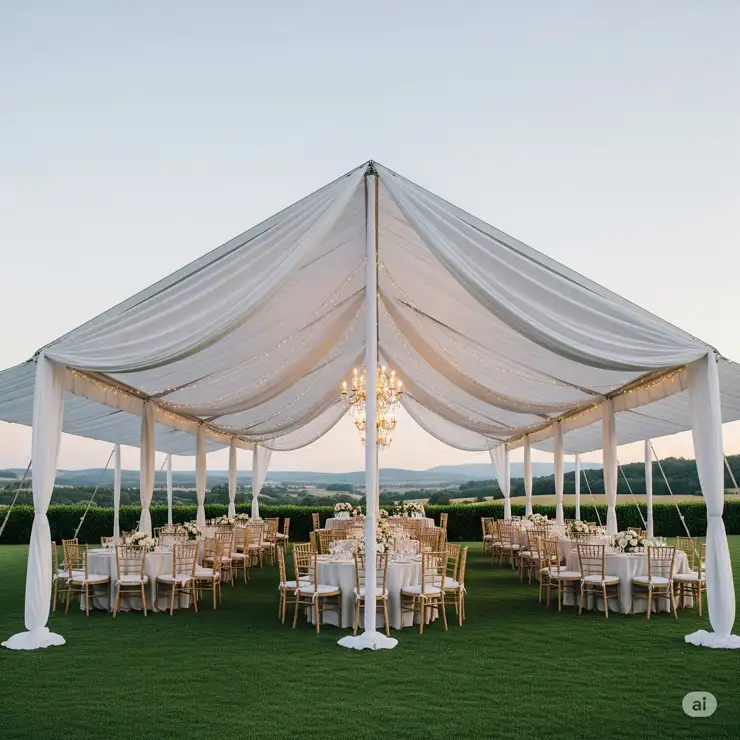
A tent pavilion is a freestanding, fabric-roofed shelter held up by a steel or aluminum frame, built to deliver instant shade and rain cover without walls, floors, or a permanent foundation. Think pop-up canopy meets backyard gazebo: portable, fast to erect, and sized for everything from a camp kitchen to a graduation party. That’s the whole idea of a tent pavilion, and it’s why they show up at every farmers’ market, tailgate, and soccer sideline in America.
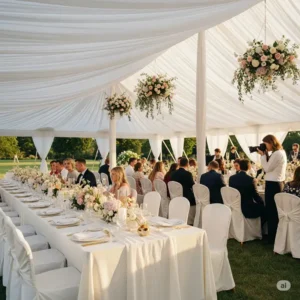
The category has grown up, though. Today’s options run from budget pop-ups you can wrestle open solo, to commercial frames with hexagonal steel legs and center-pole cranks, to a 22-foot stretch-fabric shade that packs into a backpack. The word pavilion itself traces back to the Latin for “butterfly,” a nod to how peaked fabric resembles folded wings. Lovely image. Whether yours stays on the ground in a gust is a more practical question, and we’ll get to it.
Here’s the catch when shopping for a tent pavilion in 2026: every listing says “heavy-duty” and “waterproof.” Those words mean wildly different things depending on frame gauge, fabric weight, coating, and seam construction.
This guide does three things. It compares seven real, widely sold models across budget, mid-range, and premium tiers using published specs and independent testing reports. It translates each spec into what it means on a lawn, in a parking lot, or at a campsite. And it walks you through setup, anchoring, and the mistakes that send canopies cartwheeling. Prices are ranges, not quotes. They shift constantly, so check current price before you buy.
Quick Comparison: Best Tent Pavilion Options at a Glance
| Tent Pavilion | Footprint | Price Range | Best For |
|---|---|---|---|
| Best Choice Products 10×10 Pop-Up Canopy | 10×10 ft | Under $200 | Casual backyard and tailgate use |
| Crown Shades 10×10 Pop-Up Canopy | 10×10 ft (8×8 and 12×12 also sold) | $120-$180 range | Value shoppers who want quick setup |
| Coleman Oasis 10×10 Canopy | 10×10 ft (13×13 also sold) | $150-$230 range | Backyard hosts who want extra eave shade |
| Eurmax USA 10×10 Standard Pop-Up Canopy | 10×10 ft (5 sizes) | $230-$300 range | Weekly vendors and heavy users |
| ABCCanopy 10×10 S2 Premium Pop-Up Canopy | 10×10 ft (5 sizes) | Premium tier, check current price | Events, trade shows, rough weather |
| Coleman Back Home 10.5×9 Screen Canopy Tent | 10.5×9 ft | $225-$325 range | Buggy campsites and screened dining |
| Neso Party Tent | 11×22 ft | $250-$350 range | Big groups and long walks to the beach |
Looking at the comparison above, the Crown Shades 10×10 Pop-Up Canopy and Best Choice Products 10×10 Pop-Up Canopy carry the budget tier, while the Eurmax USA 10×10 Standard Pop-Up Canopy is where the price jump buys real frame durability. The Neso Party Tent is the outlier: more than double the shaded area in a pack you can carry like a rucksack. If bugs are your enemy rather than sun, the Coleman Back Home 10.5×9 Screen Canopy Tent is the only entry here with built-in screens.
💬 Just one click — help others make better buying decisions too!😊
Top 7 Tent Pavilion Picks: Expert Analysis
Each pick below is analyzed from published specs and independent testing reports, not hands-on ownership, so treat the review notes as aggregated themes and confirm against the live listing.
1. Best Choice Products 10×10 Pop-Up Canopy — lightest 10×10 in this lineup
Lightness is the sales pitch. At roughly 32 pounds in published testing, the Best Choice Products 10×10 Pop-Up Canopy is the easiest 10×10 here to heave into a trunk, and its roller bag (about 48.5 inches long) handles the rest. It stands roughly 8 to 8.5 feet tall, so most adults clear the eaves.
The rust-resistant steel frame is sturdy but not commercial-grade, which makes this tent pavilion better suited to birthdays than weekly market stalls. The canopy attaches at both the top and bottom of each leg, stretching the shaded footprint slightly past the frame. That matters when the sun drops low. A pushpin release locks the legs, and the spec sheet won’t mention what it costs you if you rush: pinched fingers.
Reviewer sentiment in published roundups splits predictably. Fans cite one-person setup, solid shade, and a durable-feeling frame. Critics report fabric that can tear after limited use, color fading in strong sun, and slow customer service. One testing report noted a chemical smell on first unpacking.
Pros:
- ✅ Lightest 10×10 here, easy for one person
- ✅ Extended canopy coverage past the legs
- ✅ Roller bag, stakes, and tie-downs included
Cons:
- ❌ Pushpin release can pinch fingers
- ❌ Fabric durability complaints in owner reports
Price: under $200 range; check current price. Verdict: strong value for occasional hosts, but spend more if you’ll set it up weekly.

2. Crown Shades 10×10 Pop-Up Canopy — one-push setup at a friendly price
The Crown Shades 10×10 Pop-Up Canopy earns its spot by making setup almost boring, which is the highest compliment a pop-up can get. Its patented center-lock mechanism lets two people open the frame with one push, and published testing clocked setup at around ten minutes with two people.
Specs, decoded: the 150D silver-coated canopy carries a UPF 50+ rating, so the shade genuinely cuts sun exposure. Weight lands near 37 pounds, light enough to roll in the included wheeled bag. Eaves sit about 6 feet 2 inches high, with the apex near 9 feet 4 inches, so taller guests will duck near the edges but stand comfortably in the middle. Sandbags in the package make it usable on pavement, where stakes are useless.
Here’s what to weigh. One outdoor-publication tester named it the best budget pick but said it doesn’t feel like the sturdiest frame and wouldn’t recommend it in high winds. A separate review analysis of top-selling Amazon canopies noted occasional defective parts on arrival, such as faulty locking mechanisms, so inspect it right out of the box.
Pros:
- ✅ Genuinely easy one-push frame opening
- ✅ UPF 50+ silver-coated canopy
- ✅ Sandbags included for hard surfaces
Cons:
- ❌ Frame feels less sturdy than pricier options
- ❌ Not advised for high-wind conditions
Price: $120-$180 range; check current price. Verdict: the smart budget buy for casual, fair-weather tent pavilion duty.
3. Coleman Oasis 10×10 Canopy — overhanging eaves for extra shade
Where most budget pop-ups look like a rental-yard afterthought, the Coleman Oasis 10×10 Canopy looks like something you’d actually choose for the patio. It’s also practical: overhanging eaves push the shade line beyond the frame, and a single “peak push” opens the roof once the legs are extended.
Published specs show a UPF 50+ canopy, a roughly 8-foot-8-inch peak, and a weight just under 38 pounds, with a rolling bag for transport. Setup took about ten minutes with two people in outdoor-publication testing. Coleman also sells a larger 13×13 version, handy if 10×10 feels like a phone booth for your crowd.
The catch is anchoring. Testers flagged that the posts offer no dedicated anchor points, so you’ll improvise: loop tie-downs or sandbags around the legs, and never trust it unsecured. We couldn’t verify a large body of customer reviews for this exact model in our research, so read the live review page before committing and scan for wind-related complaints.
This tent pavilion suits backyard cookouts, a deck, a pool party, any scene where looks and shade both matter.
Pros:
- ✅ Overhanging eaves add real shade
- ✅ Simple one-peak-push roof setup
- ✅ Larger 13×13 size available
Cons:
- ❌ No built-in anchor points on posts
- ❌ Ten-minute setup still wants two people
Price: $150-$230 range; check current price. Verdict: best-looking mid-range choice for hosts.
4. Eurmax USA 10×10 Standard Pop-Up Canopy — commercial frame built for frequent use
Heavy, overbuilt, and proud of it: the Eurmax USA 10×10 Standard Pop-Up Canopy weighs about 61 pounds, roughly double the lightweights above. That mass is the point. Thick steel legs and thumb-button corner sliders keep fingers clear of pinch points, and one outdoor-publication tester ranked it the easiest design to set up and take down of the canopies they handled.
The fabric is 500D polyester with CPAI-84 fire-retardant certification, a standard commonly cited for event tents, plus sealed stitching for water resistance. Eaves sit near 7 feet, the peak near 11 feet, and testers cited up to 100 square feet of shade. It’s sold in five sizes, and removable walls are available.
Let’s be honest about trade-offs. Setup runs 15 to 25 minutes with two people. One tester suggested that the window-wall version may need custom anchoring in wind, and walls can make the space feel enclosed. A review analysis of Amazon’s top sellers repeatedly highlighted sturdiness and straightforward assembly for Eurmax models.
If you vend at markets weekly, this tent pavilion’s weight is a feature, not a flaw.
Pros:
- ✅ Industrial-grade steel frame and fabric
- ✅ Thumb-button sliders protect fingers
- ✅ CPAI-84 fire-retardant canopy
Cons:
- ❌ Heavy at around 61 pounds
- ❌ Longer first-time setup
Price: $230-$300 range; check current price. Verdict: best long-term value for frequent users.
5. ABCCanopy 10×10 S2 Premium Pop-Up Canopy — hexagonal legs and center-pole crank
The ABCCanopy 10×10 S2 Premium Pop-Up Canopy is the over-engineer’s dream. Instead of ordinary tubing, it uses hexagon-shaped steel legs, and a center pole with a crank adds tension and stability when the breeze picks up. Push-button releases adjust the legs to three heights without pinching.
The canopy is silver-coated 300D polyester designed to be waterproof and UV-blocking, and the package includes tie-downs, sandbags, heavy-duty stakes, and a roller bag with a storage pocket. In published testing it kept a heavy downpour fully out, and the tester could feel a temperature difference beneath it. Translation: this tent pavilion stays cooler, not just drier.
What’s the drawback? Price. Testers called it the main complaint, and it sits at the upper end of the category. A review analysis of ABCCanopy products also noted that repacking everything, especially sidewalls, into the bag can be a puzzle. If you’d use it a few times a summer, you’re paying for durability you won’t need.
Event hosts, trade-show exhibitors, and anyone in a rainy or breezy region will get their money’s worth.
Pros:
- ✅ Hexagonal steel legs add rigidity
- ✅ Center-pole crank boosts stability
- ✅ Full anchoring kit included
Cons:
- ❌ Premium price versus rivals
- ❌ Repacking can be fiddly
Price: premium tier; check current price. Verdict: pay once, use for years, if you’re a heavy user.

6. Coleman Back Home 10.5×9 Screen Canopy Tent — built-in bug screens, two doors
Mosquitoes don’t care about your picnic. The Coleman Back Home 10.5×9 Screen Canopy Tent solves that with full mesh walls and two entrances, turning shade into a bug-free dining room. The conical roof also gives more headroom at the center than flat-topped pop-ups.
Published specs list a 9-foot peak, UPF 50+ shade, and about 48.5 pounds, with a wheeled carry bag and shoulder strap. Steel posts feel sturdy to testers, and extra guy lines add stability. The price of that stability: staking those lines out takes extra time. Setup ran 15 to 25 minutes with two people, and a tester warned the screen can tear if you rush set-up or take-down.
The honest read is that this is a campsite and porch tent pavilion rather than a vending booth. It shines where bugs, sun, and wind arrive together, and it’s overkill if you just need shade at a ball game.
Pros:
- ✅ Full mesh walls block insects
- ✅ Two doors and generous headroom
- ✅ Steel posts plus extra guy lines
Cons:
- ❌ Mesh can tear if handled roughly
- ❌ Slower setup than open canopies
Price: $225-$325 range; check current price. Verdict: worth it in bug season, a luxury otherwise.
7. Neso Party Tent — huge shade that carries like a backpack
Picture 11 by 22 feet of shade, weighing under 24 pounds. That’s the Neso Party Tent, and it’s why one outdoor publication named it the best overall canopy in its testing. Rust-resistant aluminum poles hold a stretchy nylon and Lycra canopy with a UPF 50+ rating, and the whole kit packs into a backpack.
Anchoring is the clever part. Instead of ordinary stakes, testers praised its screw-in ground anchors and found you can also use sandbags, or both. Set it up on a beach, a lawn, or a driveway. Peak height is about 8 feet, and two people need roughly 10 to 15 minutes.
Now the caveat: stretch fabric can pool water in a downpour. That makes it a sun-and-light-shower tent pavilion, not a storm shelter. It also costs more than basic pop-ups. We couldn’t verify a deep pool of customer reviews for this specific model, so check live feedback on pooling and stake performance.
Pros:
- ✅ Enormous 11×22 ft coverage
- ✅ Backpack-friendly weight
- ✅ Screw-in anchors grip firmly
Cons:
- ❌ Water can pool on the canopy
- ❌ Higher price than basic pop-ups
Price: $250-$350 range; check current price. Verdict: unbeatable for big groups who carry gear.
| Tent Pavilion | Published Weight | Peak Height | Shade Fabric | Best For |
|---|---|---|---|---|
| Best Choice Products 10×10 Pop-Up Canopy | About 32 lb | 8-8.5 ft | UV-resistant polyester | Casual weekend use |
| Crown Shades 10×10 Pop-Up Canopy | About 37 lb | About 9 ft 4 in | UPF 50+ 150D silver-coated | Budget buyers who set up often |
| Coleman Oasis 10×10 Canopy | About 38 lb | 8 ft 8 in | UPF 50+ | Backyard hosts |
| Eurmax USA 10×10 Standard Pop-Up Canopy | About 61 lb | About 11 ft | 500D polyester, CPAI-84 | Weekly vendors |
| ABCCanopy 10×10 S2 Premium Pop-Up Canopy | Heavy steel build; see listing | Not stated | 300D silver-coated PU polyester | Events and rough weather |
| Coleman Back Home 10.5×9 Screen Canopy Tent | About 49 lb | 9 ft | UPF 50+ | Bug-heavy camps |
| Neso Party Tent | About 23.5 lb | 8 ft | UPF 50+ stretch nylon/Lycra | Beaches and big parties |
Weight and durability trade off almost perfectly: the Eurmax USA 10×10 Standard Pop-Up Canopy weighs nearly double the Best Choice Products 10×10 Pop-Up Canopy, and that extra steel is what you feel in wind. The Neso Party Tent breaks the pattern by delivering the largest coverage at the lowest weight, at the cost of rain performance. Choose by where you’ll carry it and how often you’ll set it up, not by sticker price alone.
✨ Don’t Miss These Exclusive Deals!
🔍 Take your next outdoor gathering to the next level with these carefully selected shade shelters. Click on any highlighted product to check current pricing and availability. The right tent pavilion will help you create the relaxed, sun-safe afternoons your family and friends will love!
How to Choose a Tent Pavilion: 7 Steps That Actually Matter
Choosing a tent pavilion comes down to seven decisions, in this order:
- Define the job. Shade for a Saturday cookout, bug-proof dining, or a vendor booth each point to a different frame and fabric. Everything else follows from this.
- Match size to headcount. A 10×10 covers 100 square feet, which testers say fits a few chairs plus tables or roughly ten people standing. Planning a crowd? Step up to 10×15 or the 11×22 Neso Party Tent.
- Inspect the frame. Steel is heavier and sturdier; aluminum is lighter but gives less in wind. Hexagonal or thick legs, like those on the ABCCanopy 10×10 S2 Premium Pop-Up Canopy, resist racking better.
- Read the fabric spec. Denier (a thickness measure), coating, and UPF rating matter more than “waterproof” marketing. Sealed seams keep rain out, and event use may require flame-retardant certification.
- Weigh setup against portability. Heavy frames are sturdier but need two people. If you’re solo, favor the lighter Best Choice Products 10×10 Pop-Up Canopy.
- Plan your anchoring. Stakes work on grass; sandbags or weights are mandatory on concrete. Check that the legs have real anchor points.
- Decide on walls or screens. They add privacy and bug protection, but walls also catch wind.
For broader context, Bob Vila’s canopy testing explains how frame material, leg style, and fabric type change durability and weight.

Features That Actually Matter (And Those That Don’t)
Marketing loves to shout. Here’s how to filter the noise when comparing any tent pavilion.
Features worth paying for: a sturdy frame and a thick, coated canopy, since those two decide how many seasons it survives. Taped or heat-sealed seams keep drizzle from becoming a puddle on your table. Fast, finger-safe release mechanisms, like the thumb-button sliders on the Eurmax USA 10×10 Standard Pop-Up Canopy, save skin and patience. Real anchor points on the legs, which the Coleman Oasis 10×10 Canopy lacks, matter more than most buyers realize. And a roller bag turns a 60-pound frame from a back-breaker into a tolerable chore.
Features to shrug off: color count (22 options won’t improve wind performance), vague claims like “windproof,” and UV percentages that differ by fractions. When two fabrics both block roughly 99 percent of UV, the difference is academic. Likewise, don’t overpay for sidewalls you’ll rarely use.
What the spec sheet won’t tell you, but reviewers repeat: instructions are often generic. Budget ten minutes to watch a setup video, and you’ll avoid the “why won’t it collapse” moment that trips up first-time users.
Tent Pavilion vs Gazebo vs Beach Umbrella: What’s the Real Difference?
A tent pavilion occupies the middle ground between a beach umbrella and a hard-top gazebo. An umbrella is the lightest and fastest option but shades one or two people and catches wind like a sail. A gazebo is permanent or semi-permanent, wind-tolerant when anchored, and costs the most in money and labor. A pop-up pavilion tent gives you real group coverage in minutes, then folds into a car trunk.
| Feature | Tent Pavilion (pop-up frame) | Hard-Top Gazebo | Beach Umbrella |
|---|---|---|---|
| Setup time | Roughly 10-30 minutes | Hours of assembly | Minutes |
| Portability | Trunk-friendly | Mostly stationary | Very portable |
| Group size | 4-10+ people | 6-12+ people | 1-3 people |
| Wind tolerance | Low to moderate, needs anchoring | Higher when anchored | Low |
| Cost level | Low to mid | Mid to high | Lowest |
| Best for | Events, camping, markets | Permanent patio | Solo beach days |
The takeaway: a tent pavilion trades permanence for flexibility. If you only need shade a few times a year, it beats a gazebo on cost and storage. If you want a fixture that handles storms and sits year-round, spend on a hard-top. And for a solo beach day, an umbrella is simpler than hauling 40 pounds of frame.
How to Set Up and Anchor a Tent Pavilion: A Practical First-30-Days Guide
Setup skill is the cheapest upgrade you’ll ever make. Here’s a schedule that works for nearly any frame.
Day one: practice at home. Open it in the driveway before your first event. Several testing reports note generic instructions, so figure out the center pole, sliders, and height pins now rather than in a park with an audience.
Setup order. Clear the ground, stand the frame, attach the canopy with its hook-and-loop straps, then extend each leg evenly so nothing binds. Check for obstructions before pushing; forcing a leg can bend the frame permanently. With the Best Choice Products 10×10 Pop-Up Canopy, remember to unhook the lower canopy attachment before collapsing, or the legs won’t fully retract.
Anchor immediately. On grass, drive stakes and angle them slightly away from the tent so tension keeps them seated. On pavement, use weights on every leg. One Colorado fire district’s special-event policy, for example, calls for 40-pound weights per leg on canopies up to 20×20 feet.
Maintenance schedule. Dry the canopy fully before packing to prevent mildew. Wipe the frame and lightly lubricate sliders each season. Fold neatly to avoid creases that crack coatings.
First-30-day mistakes. Hanging kids from the frame, skipping weights “just for an hour,” and storing the fabric damp are the big three.
Real-World Scenarios: Which Tent Pavilion Fits Your Life?
Picture four buyers. Their needs point to four different winners.
The weekend vendor. She sets up at craft fairs three Saturdays a month, hauls gear in a hatchback, and needs walls for wind. A sturdy, commercial-style frame like the Eurmax USA 10×10 Standard Pop-Up Canopy pays off, as the steel weight is a benefit when gusts cross a parking lot.
The backyard host. He throws a handful of cookouts each summer on a lawn and wants good looks without a heavy bill. The Coleman Oasis 10×10 Canopy or Crown Shades 10×10 Pop-Up Canopy fits, with sandbags added for safety.
The mosquito-country camper. Their campsite sits near water, and dinner means swatting. The Coleman Back Home 10.5×9 Screen Canopy Tent gives a bug-free kitchen and two exits.
The beach crew. Eight friends carry gear 400 yards across sand. The Neso Party Tent puts a huge shade over everyone, weighs under 24 pounds, and anchors with screw-in stakes.
Match your profile first. Budget second. Brand last.
Common Tent Pavilion Problems and How to Fix Them
Problem: water pools on the roof. Stretch fabrics like the Neso Party Tent and flat-topped frames can collect rain. Solution: lower one corner to create slope, and take it down in steady downpours.
Problem: the frame lifts in wind. Solution: weight every leg, add guy lines, and remove sidewalls in gusts. Walls turn a tent pavilion into a sail.
Problem: pinched fingers. Pushpin releases are the usual culprit. Solution: keep hands on the outside of the legs, or choose thumb-button sliders like those on the Eurmax USA 10×10 Standard Pop-Up Canopy.
Problem: canopy fading or tearing. Sun and repeated folding wear coatings. Solution: store it dry, wipe off dust, and use waterproofing spray on polyester annually.
Problem: no anchor points. The Coleman Oasis 10×10 Canopy is the example. Solution: strap sandbags around the legs or buy leg-mounted weights.
Problem: stuffing everything back in the bag. Solution: fold the canopy flat first, then pack frame and walls in layers.

Common Mistakes When Buying a Tent Pavilion
Most regrets trace back to five errors. First, buying on “waterproof” claims alone, since coatings and seams vary. Second, ignoring weight: a 61-pound frame is wonderful at a vending spot and miserable on a long carry. Third, undersizing, because a 10×10 shrinks fast once chairs and a cooler arrive. Fourth, skipping anchors, which is how canopies become airborne hazards. Fifth, assuming any pop-up handles any weather; a lightweight model like the Best Choice Products 10×10 Pop-Up Canopy suits fair days, not storms.
One more: buying the cheapest model for heavy use. If you’ll set up every weekend, the cost per use of a tougher frame usually wins.
Tent Pavilion Safety, Wind Limits, and Local Rules
Wind is the real danger. An unsecured tent pavilion can become a flying hazard, and many manufacturers and event guides advise taking canopies down once gusts climb past roughly 25 to 30 mph. Anchoring only reduces risk; it doesn’t eliminate it.
Some jurisdictions set rules. A Colorado fire district’s tent and canopy policy requires specific weights per leg for canopies up to 20×20 feet and asks for engineered designs on large structures. Rules like these vary by location, so call your local fire marshal or park office before hosting a public event.
Fire safety matters too. Look for flame-retardant certification such as CPAI-84, which appears on the Eurmax USA 10×10 Standard Pop-Up Canopy. Keep grills and heaters well clear of any fabric, and check the label before buying for commercial use.
Tent Pavilion for Specific Audiences
Vendors and market sellers: prioritize frame strength, walls, and wind rating. Think Eurmax USA 10×10 Standard Pop-Up Canopy or ABCCanopy 10×10 S2 Premium Pop-Up Canopy.
Families with kids: shade is health protection. The CDC’s sun-safety guidance notes UV rays can damage skin in as little as 15 minutes and recommends shade alongside clothing and sunscreen. Pick a UPF-rated canopy, but keep sunscreen handy, because shade alone doesn’t block reflected UV.
Campers: weigh packed size against bug screens. The Coleman Back Home 10.5×9 Screen Canopy Tent suits car camping; the Neso Party Tent suits long carries.
Beginners and seniors: choose light frames with finger-safe releases and a roller bag. The Crown Shades 10×10 Pop-Up Canopy keeps setup simple.
Beach-goers: favor sandbag-friendly or screw-in anchoring, since regular stakes pull out of loose sand.
Long-Term Cost and Maintenance of a Tent Pavilion
Sticker price is only the opening bid. A tent pavilion’s true cost is price divided by the number of times you use it, plus replacement fabric and repairs.
| Tier | Typical Price Range | Example Models | Fit |
|---|---|---|---|
| Budget | Roughly $100-$200 | Best Choice Products 10×10 Pop-Up Canopy, Crown Shades 10×10 Pop-Up Canopy | A few uses per season |
| Mid-range | Roughly $150-$300 | Coleman Oasis 10×10 Canopy, Eurmax USA 10×10 Standard Pop-Up Canopy | Regular use, multiple seasons |
| Premium | Roughly $225-$350+ | ABCCanopy 10×10 S2 Premium Pop-Up Canopy, Neso Party Tent, Coleman Back Home 10.5×9 Screen Canopy Tent | Frequent events or specialized needs |
Here’s an illustrative example: a canopy in the $150 range used 20 times a season for three seasons works out to roughly $2.50 per use, before accessories. A cheaper model that tears after one summer can cost more per use than a sturdier one that survives five.
Budget for sandbags or leg weights, spare stakes, and waterproofing spray. Replacement canopies are sometimes hard to source for budget models, as some owner reports note, so check parts availability. Treat the frame as the long-term asset and the fabric as the consumable.
FAQ
❓ How much does a tent pavilion cost?
❓ How many people fit under a 10x10 tent pavilion?
❓ Is a tent pavilion allowed at parks and public events?
❓ How long does a tent pavilion last?
❓ Can a tent pavilion stay up in the rain?
Conclusion
The best tent pavilion is the one that matches how you actually live. For casual, fair-weather hosts, the Crown Shades 10×10 Pop-Up Canopy and Best Choice Products 10×10 Pop-Up Canopy deliver easy shade at friendly prices. Frequent users should step up to the Eurmax USA 10×10 Standard Pop-Up Canopy or the ABCCanopy 10×10 S2 Premium Pop-Up Canopy, where frame strength earns its keep. The Coleman Oasis 10×10 Canopy wins on looks, the Coleman Back Home 10.5×9 Screen Canopy Tent wins on bugs, and the Neso Party Tent wins on sheer coverage per pound.
Whatever you buy, anchor it, watch the forecast, and take it down when the wind picks up. A tent pavilion is a sail with legs, and respect for that fact is the real secret to keeping it for years. Compare current listings, read recent reviews on the exact model you want, and pick the one that fits your budget, your trunk, and your weather.
✨ Ready to upgrade your outdoor shade? 🔍 Click any highlighted product above to check current pricing and availability, then pick the tent pavilion that turns your next gathering into the one everyone remembers! 🌞
Recommended for You
- 7 Best Pop Up Tent Mosquito Protection Solutions for Ultimate Bug-Free Camping in 2025
- 7 Best 6×6 Pop Up Canopy Options for Ultimate Outdoor Comfort in 2025
- 7 Best 20×20 Pop Up Tent Options That Actually Work – Ultimate 2025 Guide
Disclaimer: This article contains affiliate links. As an Amazon Associate, I earn from qualifying purchases. If you purchase products through these links, we may earn a small commission at no additional cost to you.
✨ Found this helpful? Share it with your friends! 💬🤗
