In This Article
What is a sleeping bag for scout camping kids? It’s a youth-sized, machine-washable bag rated for the overnight lows of troop campouts, usually 30–50°F for three-season trips. It should fit a growing child up to about 5 feet tall, pack small enough for a duffel or pack, and survive repeated stuffing, dirt, and morning dew.

Here’s the thing nobody tells new scout parents: the first campout is rarely where a sleeping bag fails. The failure comes at 2 a.m., when a seven-year-old discovers that “summer weight” meant “decorative.” Or on Sunday morning, when a bag that fit perfectly in the store refuses to go back into its sack. Or at pack-up, when the zipper chews through a liner and a good bag becomes a wearable blanket.
The official gear lists don’t help much on this point. Scouting America’s own guidance treats the sleeping bag, pad, and ground cloth as personal gear. The Scout Shop’s new-to-Scouting guide says the same, and adds that encouraging kids to pack and carry their own gear prepares them for Scouts BSA. What none of it tells you is which bag. Troop gear lists I reviewed ranged from a basic 40°F machine-washable bag for car camping to synthetic bags rated at +15–20°F for colder outings. That’s a big spread, and it’s exactly why this guide exists.
I researched seven real, widely sold options across budget, mid-range, and premium tiers. I compared their published specs against the aggregated sentiment in retailer reviews and editorial roundups. I haven’t hands-on tested any of them, and nothing below claims otherwise. What you’ll get is honest analysis: what each spec means at 5 a.m. in a damp field, and who should buy what. We’ll also cover each of these in depth: kids sleeping bag with carrying case, kids sleeping bag for summer camp, durable outdoor fabric, packable design, and group camping gear.
Quick Comparison: Sleeping Bag for Scout Camping Kids at a Glance
| Product | Rated Temp | Size / Fit | Weight | Price Range | Best For |
|---|---|---|---|---|---|
| Wakeman Outdoors Kids Lightweight | Not verified; treat as warm-weather | 66″ x 26″ | 2.3 lb | Around $15–$25 | Wakeman Outdoors Kids Lightweight: first-timers on a tight budget |
| Coleman Kids 45°F | 45°F | Kids up to 5’5″ | Check label | Around $30–$40 | Coleman Kids 45°F: summer and early-fall troop trips |
| Wenzel Moose Youth | 40–50°F | 66″ x 26″ | Check label | Around $30 | Wenzel Moose Youth: rough-and-tumble younger scouts |
| Kelty Kids Mistral | 30°F or 40°F by version | Kids’ sizing | Check label | Roughly $40–$65 | Kelty Kids Mistral: all-around value |
| TETON Sports Celsius Junior | 20°F | Kids up to 5 ft | Check label | Around $60 | TETON Sports Celsius Junior: spring and fall tent camping |
| REI Co-op Kindercone 25 | 25°F | Up to 5 ft, adjustable length | 3 lb 3 oz | Around $70 | REI Co-op Kindercone 25: growing kids, car camping |
| Marmot Trestles Elite Eco 30 (Kids) | 30°F | Kids’ sizing | Check label | $100–$150 range | Marmot Trestles Elite Eco 30: families who camp year-round |
Looking at the table, the Wakeman Outdoors Kids Lightweight and Coleman Kids 45°F win on sheer affordability. Both are best for dry, mild weather. The jump to the TETON Sports Celsius Junior and REI Co-op Kindercone 25 is where you pay for real cold-weather margin, which matters if your troop camps past October. The Marmot Trestles Elite Eco 30 sits at the top of the price ladder, and the premium only makes sense if the bag will see heavy rotation across seasons or hand down to siblings. Prices shift constantly, so check current price before you buy.
💬 Just one click — help other scout families make better buying decisions too!😊
Top 7 Sleeping Bag for Scout Camping Kids: Expert Analysis
1. Wakeman Outdoors Kids Lightweight Sleeping Bag — carry bag with compression straps included
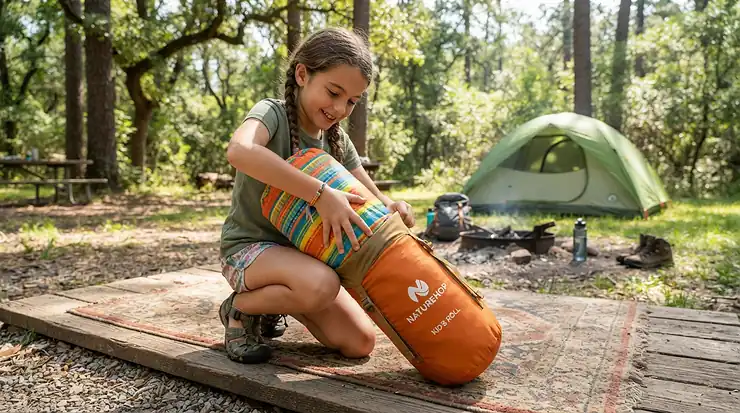
The standout feature here is the bundled carrying bag with compression straps. It’s a small thing that turns “where does this go?” into a solved problem. The bag measures about 66″ x 26″ and weighs roughly 2.3 pounds. The fill is around 250 g/m² of hollow fiber under a 190T polyester shell, and the dual zippers have an anti-snag runner plus an extra closure strap.
In practice, that weight means a ten-year-old can carry it unassisted. The anti-snag zipper matters more than it sounds: a snagging zipper is the number-one reason kids abandon a bag mid-night and sleep on top of it. One caution: the listings I found don’t state a temperature rating. So treat this as a warm-weather, sleepover-to-summer-camp bag rather than a shoulder-season bag.
This is the pick for a Cub Scout’s first campout, or a family that wants to test the hobby before investing. Retailer reviewers consistently mention that the straps make storage easy, and the listing carries a solid average from a modest pool of ratings (not a huge sample, so weigh it accordingly).
Pros:
- ✅ Carry bag and straps included
- ✅ Light enough for kids to carry
- ✅ Anti-snag dual zippers
Cons:
- ❌ No verified temperature rating listed
- ❌ Not a cold-weather option
Price range: around $15–$25. Verdict: strong value for mild weather, but don’t ask it to do a fall job.
2. Coleman Kids 45°F Sleeping Bag — easiest to wash after a muddy weekend
The Coleman Kids 45°F earns its slot through boring excellence. It fits children up to roughly 5’5″, which means a scout can keep using it through a good chunk of puberty. It’s machine washable, and reviewers like that the interior fabric isn’t very absorbent, so it dries without drama. There’s an inside pocket for a flashlight or small items.
What does “45°F” mean for a real kid? Think summer camp, June through August, and early September campouts, with a pad underneath. The sibling Coleman Kids 50°F adds a glow-in-the-dark design, ThermoTech insulation, and a snag-resistant zipper system, but it’s built for even warmer nights.
Reviewers on the maker’s site praise the quality overall. A recurring complaint across Coleman kids’ listings is the stuff sack: it can be a wrestling match to get the bag back in. One reviewer on a camo version also reported stitching problems, so inspect the seams the day it arrives.
Pros:
- ✅ Roomy fit for taller kids
- ✅ Machine washable and quick to dry
- ✅ Interior pocket for small items
Cons:
- ❌ Stuff sack is a tight squeeze
- ❌ Too light for freezing nights
Price range: around $30–$40. Verdict: the safest default for warm-season troop trips.
3. Wenzel Moose Youth Sleeping Bag — built for roughhousing, with a long warranty
The Wenzel Moose Youth is 66″ x 26″ with quilt-through construction, which means the insulation is stitched in place rather than free-floating. Translation: no bunching, no cold spots after a week of being rolled and unrolled. The shell and liner are 190T polyester, the main zipper runs both ways for venting, and the whole bag unzips flat to double as a blanket. One roundup also reports a ten-year warranty, which is unusual at this price.
That construction makes the Wenzel Moose Youth a good fit for younger scouts who treat gear like a chew toy. The 40–50°F rating means summer and mild-weather use. Retailer reviewers describe it as snuggly and say it held up for a couple of years, with one parent suspecting their child would outgrow it before wearing it out. A practical tip surfaced in reviews: fold the bag in half before rolling so both straps reach.
Pros:
- ✅ Quilted construction resists cold spots
- ✅ Unzips flat to serve as a blanket
- ✅ Warranty reported by reviewers
Cons:
- ❌ Only rated for mild weather
- ❌ Rolling takes a fold-then-roll trick
Price range: around $30. Verdict: sturdy, cheerful, and sensible for ages 5–9.
4. Kelty Kids Mistral — the best value for kids who keep growing
Editorial testers picked the Kelty Kids Mistral as a best-value choice, citing comfort and premium features at a fair price. They liked it most for kids aged eight and older and described it as durable enough to carry a child from toddler to late tween. A separate roundup notes two side zippers for regulating temperature.
A quick honesty note: some sources cite a 30°F version and others list a 40°F rating for the Mistral line, so confirm the exact rating on the listing you’re buying. Why do two zippers matter? Kids overheat as easily as they chill, and venting at the shoulders without fully unzipping is a real quality-of-sleep feature. One list describes a soft taffeta lining and synthetic fill, which is the friendly, low-maintenance combination a scout needs.
I’d point this one toward families who want one bag across several seasons without splurging. Review sentiment I found was positive on comfort, though I couldn’t verify a large, current review pool.
Pros:
- ✅ Two zippers for easy venting
- ✅ Soft lining kids tolerate
- ✅ Reported to last for years
Cons:
- ❌ Rating varies by version
- ❌ Fewer fun prints than rivals
Price range: roughly $40–$65. Verdict: the grown-up choice that still fits a kid.
5. TETON Sports Celsius Junior — the warmest budget pick for chilly troop trips
The TETON Sports Celsius Junior is a scaled-down camping bag rather than a novelty sleepover sack. It carries a 20°F rating, fits kids up to about 5 feet, and uses a mummy-style hood to keep heat around the head. The fill is hollow fiber, with a taffeta-type lining. Several roundups called it a top overall pick; one describes it as thick, warm, and comfortable.
Here’s the analysis part. A mummy hood is worth about a layer of clothing at night because kids lose a lot of heat from their heads, especially when they wriggle out of a hat. Meanwhile, the 20°F label should be read the way experienced campers read all kids’ ratings: as a hopeful number, not a laboratory guarantee (more on this in the temperature section).
If your troop camps in April or October, or you live somewhere with real overnight dips, this is the budget-friendly bag to evaluate first. It’s heavier and bulkier than the summer-weight options, so it’s a car-camping bag rather than a long-trek one.
Pros:
- ✅ Cold-weather rating at a modest price
- ✅ Mummy hood holds heat around the head
- ✅ Sized for kids up to about 5 feet
Cons:
- ❌ Bulkier than summer-weight bags
- ❌ Rating is manufacturer-set
Price range: around $60. Verdict: best bang for warmth, if you accept the bulk.
6. REI Co-op Kindercone 25 — adjusts its length as your scout grows
The REI Co-op Kindercone 25 has a genuinely clever trick: its attached stuff sack cinches down to shorten the bag, so a small child isn’t heating a huge empty footbox. It fits kids up to about 5 feet, weighs 3 lb 3 oz, and uses overlapping “shingle” insulation layers to avoid cold spots. The shell and lining are recycled polyester. One note: this bag is sold primarily through REI, so check availability if you’re shopping elsewhere.
The reviews are revealing. One parent says their son used it from age three through age twelve and was never cold. Another reported kids in the mid-20s staying warm with base layers, hats, and an extra fleece blanket. On the flip side, several reviewers (and REI’s own responses) stress that it’s heavy and bulky for backpacking. Another points out that kids slide off sleeping pads inside it.
That makes the REI Co-op Kindercone 25 a campground champion and a trail disappointment. If your troop hauls gear by vehicle, it’s superb. If scouts carry everything on their backs, look elsewhere.
Pros:
- ✅ Length adjusts as the child grows
- ✅ Warm, with no-gap insulation layout
- ✅ Reviewers report multi-year use
Cons:
- ❌ Heavy and bulky for backpacking
- ❌ Slips off sleeping pads
Price range: around $70. Verdict: the longest-lived option for car-camping families.
7. Marmot Trestles Elite Eco 30 (Kids) — the all-seasons premium step-up
The Marmot Trestles Elite Eco 30 is the premium-leaning entry on this list, and I’ll be upfront: the details I could verify are limited. Sources place it at 30°F and describe it as a versatile system for everything from campgrounds to sleepovers, in a mid-range price bracket of roughly $100–$150. I couldn’t find enough verified review data to summarize owner sentiment, so confirm weight, fill, and sizing on the spec sheet before buying.
Why include it? Because the logic of a premium bag deserves honest treatment. A bag at this tier is about cost per night. If a scout camps twenty nights a year for four years, a bag costing three times as much as a budget option works out to a modest per-night premium. That premium buys, typically, better liners, tougher zippers, and a more credible warmth rating.
For a one-year hobby, it’s overkill. For a committed Eagle-track family handing the bag down to a younger sibling, the math starts to make sense.
Pros:
- ✅ Cold-weather-capable 30°F rating
- ✅ Positioned for campground-to-sleepover use
- ✅ Premium tier suits hand-me-down plans
Cons:
- ❌ Highest price on this list
- ❌ Limited verified review data
Price range: $100–$150 range. Verdict: smart only if you’ll use it hard and often.
| Product | Warmth Tier | Pack Friendliness | Durability Notes | Best For |
|---|---|---|---|---|
| Wakeman Outdoors Kids Lightweight | Light | High (strap carry bag) | Basic polyester | First campout |
| Coleman Kids 45°F | Light-mid | Medium | Washable, mixed stitching reports | Summer camp |
| Wenzel Moose Youth | Light-mid | Medium | Quilted, long warranty reported | Younger scouts |
| Kelty Kids Mistral | Mid | Medium | Reported to last for years | Value seekers |
| TETON Sports Celsius Junior | Warm | Low-medium | Thick fill | Cold-shoulder seasons |
| REI Co-op Kindercone 25 | Warm | Low (bulky) | Long-lived per reviewers | Car campers |
| Marmot Trestles Elite Eco 30 | Mid-warm | Check spec sheet | Premium tier | Year-round campers |
The pattern is clear: warmth and packability pull in opposite directions at this price. The Wakeman Outdoors Kids Lightweight is the easiest to carry but the least capable in the cold. The REI Co-op Kindercone 25 and TETON Sports Celsius Junior are the opposite. If your scout needs one bag for both a June camp and an October outing, the Kelty Kids Mistral or Marmot Trestles Elite Eco 30 sit closest to the middle.
✨ Don’t Miss These Exclusive Deals!
🔍 Take your scout camping to the next level with these carefully selected bags. Click on any highlighted product to check current pricing and availability. These picks will help you build a comfortable, reliable sleep setup your whole troop will envy!
Real-World Scenarios: Matching the Bag to the Scout
Let’s turn specs into people. Three profiles, three budgets, three environments.
Scenario one: the first-year Cub Scout. A seven-year-old attends two overnight pack events each summer and a backyard sleepover or two. Total nights per year: maybe five. Warmth demands are low, and the biggest risks are lost gear and a bag too awkward to repack. The Wakeman Outdoors Kids Lightweight with its strap-equipped carry bag is the sensible match. A step up to the Wenzel Moose Youth adds quilted durability if the child is rough on gear.
Scenario two: the Scouts BSA patrol member in the Midwest. A twelve-year-old camps monthly, including April and October trips where overnight lows can flirt with freezing. A pad and layers matter, but the bag needs real margin. The TETON Sports Celsius Junior gives you cold-weather capability at a moderate price, and the troop is probably car-camping anyway.
Scenario three: the growing scout with a sibling in line. A nine-year-old camps year-round, and a younger brother will inherit the bag. Here the REI Co-op Kindercone 25 or Marmot Trestles Elite Eco 30 pays back through years of hand-me-down use. Divide the price by realistic nights across both children, and the premium shrinks fast.
Notice what each scenario shares: the right answer depends on nights per year, lowest overnight temperature, and whether the bag is carried or driven. Answer those three questions before you open a single product page.
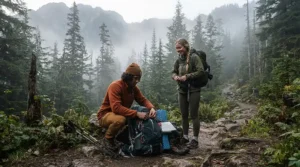
Practical Usage Guide: Your Scout’s First 30 Days With the Bag
Most sleeping-bag trouble is avoidable with a little setup. Treat the first month as a break-in period.
Before the first trip. Unpack the bag, check zippers and seams, and fluff it for a day. Do a living-room test run: have your child get in, zip up, and then get out alone. If they can’t operate the zipper in the dark, practice until they can. Also practice repacking, because a bag that goes back in the sack at home in thirty seconds will take ten minutes at camp, with an audience.
At camp. Always use a sleeping pad under the bag. Insulation underneath compresses and offers almost nothing, so the ground steals heat through the bottom. Add a ground cloth under the tent floor and keep the bag off damp surfaces until bedtime. Scouting America’s packing lists consistently pair a sleeping bag with a pad and ground cloth for exactly this reason.
Morning routine. Unzip fully and air the bag for ten minutes in any sun or breeze, then roll from the foot end. Rolling from the foot pushes air out the hood end. Avoid sitting on the stuffed bag.
Weekly and monthly. After each trip, shake out debris and spot-clean. Wash machine-washable bags on a gentle cycle with zippers closed, then dry loose rather than compressed. Store uncompressed in a breathable sack, not its tiny stuff sack, so the insulation keeps its loft.
Common mistakes in the first 30 days: skipping the pad, packing the bag while damp, and letting a child sleep in the day’s sweaty clothes. Dry base layers beat a warmer bag every time.
Problem → Solution Guide: Fixing Common Kid Sleeping Bag Headaches
Problem: “I’m cold!” at 1 a.m. Check the pad first, then the rating gap. Reviewers of the REI Co-op Kindercone 25 reported success adding a hat, socks, and a fleece blanket inside the bag. A hat solves more cold-night complaints than any gear upgrade.
Problem: the child slides off the pad. This is a frequently reported complaint with the REI Co-op Kindercone 25 and many kids’ bags. Try a non-slip pad cover, or a pad with a textured surface, and consider tucking the pad into a fitted sheet-style cover.
Problem: the stuff sack won’t close. Several Coleman Kids 45°F reviewers noted a tight sack. Fold the bag in half lengthwise, then roll tightly and press air out as you go. Or skip the original sack and use a slightly larger compression bag.
Problem: the zipper snags. Pull fabric away from the track before zipping and use the zipper-guard flaps, like those on the Wakeman Outdoors Kids Lightweight. If the child fights the zipper nightly, that bag is wrong for them regardless of its rating.
Problem: the bag is too long. Cinch it with an adjustable stuff sack like the REI Co-op Kindercone 25, or fold the footbox back under and tie it off.
How to Choose a Sleeping Bag for Scout Camping Kids
Picking well takes six decisions, and each one narrows your list quickly.
- Decide the coldest night you’ll face. Look at your troop’s calendar and the lowest historical temperatures at your campsite. Choose a bag rated well below that number, since kids’ ratings are typically optimistic.
- Match insulation to your environment. Synthetic fill keeps working when damp, which matters for scouts who find every puddle. Down is lighter but costs more and needs careful care.
- Check the fit. Too long wastes warmth. Too short cramps growth. An adjustable length, like the REI Co-op Kindercone 25 offers, is worth real money for rapidly growing kids.
- Prioritize zipper quality. A snag-free, two-way zipper is the difference between a bag a child uses independently and one that needs a parent every night.
- Weigh packability against warmth. Decide whether the bag is carried or driven. The lightest options sacrifice cold performance.
- Insist on washability. Troop gear lists repeatedly call for machine-washable bags, and for good reason: kids are messy.
Kids Sleeping Bag With Carrying Case: What Actually Works
A kids sleeping bag with carrying case sounds like a throwaway feature until you watch a nine-year-old try to repack without one. The best versions pair a case with a way to compress. The Wakeman Outdoors Kids Lightweight includes a carry bag with compression straps, with the bag measuring about 7 inches across by 14 inches tall when packed.
What makes a carrying case good? It should open wide enough to accept a bag without a fight, include a handle or strap a child can grip, and be a few inches larger than the packed bag. Reviewers of a few Coleman models describe the opposite: cases so snug they become a daily test of patience. An inexpensive replacement compression sack often fixes this.
Also consider the case’s afterlife. A kids sleeping bag with carrying case that doubles as a backpack-style carrier, as one generic listing advertises, keeps hands free for a flashlight and pillow. Still, backpack-style cases are only as good as their stitching, so check straps before trusting them on a long walk from the parking lot.
Kids Sleeping Bag for Summer Camp: Warm Nights, Hot Cabins
A kids sleeping bag for summer camp has opposite problems from a fall bag. The risk isn’t freezing. It’s overheating in a stuffy cabin or tent, then freezing at 5 a.m. when a cool front rolls through.
Look for ratings around 40–50°F, like the Coleman Kids 45°F and Wenzel Moose Youth. Bags that unzip fully to serve as blankets, like the Wenzel Moose Youth, handle the warm half of the night gracefully. Two-way zippers, such as those on the Kelty Kids Mistral, let a child vent at the foot or shoulder without a fuss.
Also consider labeling. At a kids sleeping bag for summer camp scale, with dozens of near-identical bags in one cabin, a name tag sewn into the hood or a distinctive print is cheap insurance. Pair the bag with a lightweight liner if the weeklong stay stretches the washing schedule, since a liner is easier to launder than a full bag.
Durable Outdoor Fabric: What Survives a Scout’s Weekend
The phrase durable outdoor fabric shows up on nearly every listing, so here’s how to read it. Fabric weight is usually described with a “T” number, like the 190T polyester on the Wenzel Moose Youth and Wakeman Outdoors Kids Lightweight. Higher numbers generally mean a tighter weave, but they’re not a guarantee of toughness.
More important than the shell is how it’s built. Quilt-through stitching, used on the Wenzel Moose Youth, keeps fill from migrating. Ripstop nylon, found on some premium bags, stops a small snag from becoming a tear. And the bottom panel matters: Coleman’s adult 25°F bag, for instance, uses a tough tarpaulin-style base, which suggests what to look for in a kids’ bag that will touch dirt.
Durable outdoor fabric also means practical washability. Troop gear lists specifically recommend machine-washable bags with cotton or soft liners. Some brands mention PFAS-free water-repellent finishes, which Coleman says applies to its kids’ 50°F bag, a detail health-conscious parents may care about. Check the care tag before the first wash.

Packable Design: Weight, Bulk and the Stuff Sack Fight
Packable design is a spectrum, and every point on it costs something. At one end sit lightweight summer bags like the Wakeman Outdoors Kids Lightweight at roughly 2.3 pounds. At the other, the REI Co-op Kindercone 25 weighs about 3 pounds 3 ounces, and reviewers say it takes up most of a small pack even when compressed.
REI itself acknowledges that its Kinder bags are simple, price-friendly bags not intended for technical backpacking, and it points buyers to other models for trail use. That candor is a useful lesson: for ordinary troop car-camping, bulk is irrelevant. For a scout carrying their own gear, every pound is felt.
Practical packable design also depends on technique. Roll from the foot, push air out, and compress only for transport. Don’t store a bag compressed, since long-term squishing damages loft. If your scout has a 30-liter pack, test-fit the bag at home first.
Group Camping Gear: Planning a Whole Patrol or Pack
Group camping gear involves more than buying one bag. Troops and packs deal with uniform expectations, shared hauling, and a wide range of budgets.
Start with a baseline. Many troops recommend a simple 40°F machine-washable bag for car camping, and suggest keeping a warmer synthetic bag for cold outings. Some troop gear lists ask scouts to own both a 0°F and a 40°F bag, which is a lot for a growing child. A realistic alternative is a mid-range bag, like the Kelty Kids Mistral, paired with layers and a liner.
Leaders can help families by pooling knowledge and encouraging hand-me-downs. Troop gear closets, rentals, and swap days also reduce pressure. One troop explicitly tells parents that cost should never be an obstacle and invites families to talk to adult leaders.
For group camping gear shopping, standardizing bag type isn’t necessary, but sharing a checklist is: sleeping bag, pad, ground cloth, and a labeled stuff sack for each scout.
Temperature Ratings and Safety Guide for Kids’ Bags
Temperature ratings are the most misunderstood number on any listing. In adult bags, the EN 13537 test and its ISO 23537 successor use heated manikins in a cold chamber. An explainer from Switchback Travel notes that many U.S. manufacturers have adopted the ISO or EN methods, while non-rated bags rely on in-house ratings with fewer checks. Several kids’ bag reviewers observe that the adult standard doesn’t apply to children’s sizes, so manufacturers use their own testing.
What does that mean for you? Build a buffer. A common rule of thumb is to choose a comfort rating about 10 degrees below the lowest temperature you expect. Also remember what the test assumes. As Sea to Summit’s guide explains, the manikin wears heavy thermal layers and doesn’t move, so a restless child in thin pajamas on a thin pad may feel colder than the label suggests.
On safety, never let a child sleep with a bag cinched over their face, and avoid heating sources near synthetic fill. Watch for signs of cold: shivering, curling up tightly, or whining. If a child is cold, add layers and a hat before adding blankets. When in doubt, bring them to a warm vehicle or leader-supervised shelter.
Kids Sleeping Bag vs Blankets and Adult Bags
Scouting America’s packing guidance lists “sleeping bag, or two or three blankets” as acceptable, so blankets are a legitimate starting point. One troop even suggests a blanket roll until a scout acquires a proper bag. But how do they compare?
| Option | Warmth | Packability | Cost | Best For |
|---|---|---|---|---|
| Blanket roll | Variable, drafty | Poor | Free | One-off backyard test |
| Adult bag | Too roomy, loses heat | Bulky | Moderate | Teens near adult height |
| Coleman Kids 45°F | Good for mild nights | Medium | Low | Summer troop trips |
| TETON Sports Celsius Junior | Strong | Low-medium | Moderate | Cold-shoulder seasons |
The difference comes down to fit. Kids’ bags are sized so a small body can heat the interior, while an oversized adult bag leaves air gaps that waste warmth. Blankets slide off and let drafts in. For anything beyond a backyard trial, a kids’ bag is a better investment, and the Coleman Kids 45°F‘s fit for kids up to about 5’5″ gives teens an easy bridge before adult sizing.
Long-Term Cost & Maintenance
The sticker price isn’t the whole story. Think in cost per night over the bag’s lifespan.
A budget bag like the Wakeman Outdoors Kids Lightweight, around $15–$25, may serve five to ten nights a year for a couple of seasons. A mid-range option such as the Kelty Kids Mistral might cover three to four years of use. A premium choice like the Marmot Trestles Elite Eco 30 costs more up front but can pass to a younger sibling. Reviewers report real longevity from the REI Co-op Kindercone 25, including one family using a single bag across nine years of a child’s growth.
Maintenance extends all of this. Wash only when needed, using a gentle cycle with zippers closed. Dry loosely and store uncompressed. Repair small tears early with patches. A bag that’s cleaned and stored well can last years longer than one stuffed into a damp garage corner.
Finally, factor in what a bad choice costs: a miserable campout, a child who dreads the next trip, or a replacement bag within a season. A few extra dollars for a better-matched bag is often the cheapest insurance.
FAQ
❓ What size sleeping bag does a scout need?
❓ Is a mummy bag or rectangular bag better for scouts?
❓ How warm should a scout's sleeping bag be?
❓ Can scouts use a sleeping bag liner instead of a blanket?
❓ Do kids need a sleeping pad with their bag?
Conclusion
Choosing a sleeping bag for scout camping kids comes down to four honest questions. How cold will the nights get? How often will your child camp? Will the bag be carried or driven? And how fast is your child growing?
For first-timers and warm-weather trips, the Wakeman Outdoors Kids Lightweight, Coleman Kids 45°F, and Wenzel Moose Youth are sensible, affordable choices. For cooler shoulder seasons, the TETON Sports Celsius Junior and Kelty Kids Mistral offer more margin. For families planning years of use, the REI Co-op Kindercone 25 and Marmot Trestles Elite Eco 30 justify their higher prices when spread over many nights and potentially a sibling. The SectionHiker kids’ sleeping bag guide offers further reading on growth and sleeping pad attachment, two issues worth thinking about before you buy.
Whatever you choose, pair the bag with a pad, a hat, and dry base layers. Those three things do more for a scout’s night than any rating number. Prices change often, so check current price and availability before you buy.
Recommended for You
- Sleeping Bag For Toddlers Camping: 7 Safe, Cozy Picks (2026)
- Double Sleeping Bag: 7 Best Cozy Picks For Couples (2026)
- Double Sleeping Bag For Backpacking Couples: 7 Best Picks 2026
Disclaimer: This article contains affiliate links. As an Amazon Associate, I earn from qualifying purchases. If you purchase products through these links, we may earn a small commission at no additional cost to you.
✨ Found this helpful? Share it with your friends! 💬🤗
