In This Article
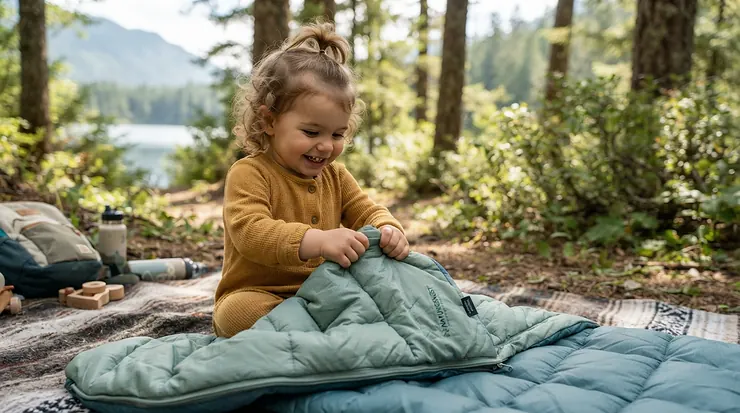
A sleeping bag for toddlers camping is a small, insulated sleep system sized for children roughly 18 to 36 months old. It has a snug torso, short length, kid-friendly zippers and a warmth rating matched to real campsite nights. Unlike a shrunken adult bag, it avoids loose hoods, drawstrings and the cold dead air that swallows a tiny body.
Here’s the thing about toddlers in tents. They roll, they kick, they unzip, and they treat a blanket like a personal enemy. Adult-style bags fail them in three ways: too long, too loose, and too fiddly.
One honest note before we dive in. I haven’t put a toddler to bed in any of these bags, so this guide leans on manufacturer specs, retailer listings and the patterns that repeat across parent reviews. It also reflects the American Academy of Pediatrics’ safe-sleep guidance, which matters most for anyone shopping for a sleeping bag for infants camping.
You’ll find seven real products below. They span budget, mid-range and premium, and I’m upfront about which ones truly fit a toddler and which suit older siblings. We’ll also cover snug fit for warmth, child-safe materials, easy-clean fabric and the glow in the dark kids sleeping bag trend. Prices were checked in October 2026 and may vary.
Quick Comparison: 7 Toddler Sleeping Bag Picks at a Glance
| Product | Insulation / Rating | Size Fit | Price Range | Best For |
|---|---|---|---|---|
| Morrison Outdoors Big Mo 20 | 650-fill down, 20°F | 18–36 months | $170–$190 range | Cold fall and winter nights |
| Morrison Outdoors Big Mo 40 | Synthetic, 40°F | About 18 months–4 years | Check current price | Mild weather, easy washing |
| Morrison Outdoors Little Mo 20 | Down, 20°F | 6–18 months | $150–$170 range | Infant camping with a safe-sleep setup |
| REI Co-op Kindercone 25 | Synthetic, 25°F | Kids up to 5 ft, adjustable length | $60–$80 range | Budget car-camping warmth |
| Baby Deedee Sleep Nest Travel | TOG 3.5 wearable bag | Sizes for 6–36 months | $40–$55 range | Cool (not cold) nights, layering |
| Coleman Kids 45 Glow-in-the-Dark | Synthetic, 45°F | Older kids, up to about 5 ft | $15–$30 range | Summer trips, glow-loving big siblings |
| AceCamp Kids Glow Mummy 30F | Polyester, 30°F | Kids under 160 cm | $60–$70 range | Chilly nights for bigger kids |
Looking at the comparison above, the Big Mo 20 and Big Mo 40 are the only two bags here designed for true toddlers, which is why they anchor this list. The Kindercone 25 is the value play if you’ll use its length-adjusting stuff sack, while the Sleep Nest Travel is the cheapest way to get a wearable, blanket-free setup. The two glow bags are really for older kids, so don’t buy them hoping a two-year-old will “grow into” them on a cold night.
💬 Just one click — help others make better buying decisions too!😊
Top 7 Sleeping Bags for Toddlers Camping: Expert Analysis
1. Morrison Outdoors Big Mo 20 — warmest down bag built for toddlers
The Big Mo 20 wins on warmth-to-weight: 650-fill-power down in a bag that weighs roughly 12 ounces, depending on the production year. Morrison rates it for 20–60°F. Thick internal baffles keep the down from migrating to the edges, which is how cold spots form on a wriggler.
The sleeves have adjustable cuffs, so they stay on a kid who kicks off every blanket and still allow s’mores-roasting freedom. A two-way zipper lets you vent the foot end on milder nights, and a fleece collar with a zip flap keeps cold metal off little chins.
Based on the spec comparison, this is a bag for families who camp into the shoulder seasons, not a one-August-weekend purchase. Morrison’s own guidance says it’s meant for roughly 18–36 months and warns that younger children can slip down inside it. It also says kids shouldn’t walk around in it, so treat it as sleep-only gear.
Reviewers on retail listings describe toddlers staying warm through winter camping and being unable to wriggle out. The recurring complaint is price.
Pros:
- ✅ Exceptional warmth for its weight
- ✅ Sleeves and cuffs stay put overnight
- ✅ Two-way zipper helps with temperature control
Cons:
- ❌ Highest price tier among toddler bags
- ❌ Down needs gentler washing and drying
Price: around the $170–$190 range, and Morrison offers a trade-in program, which softens the sting. Verdict: worth it if cold nights are in your plans.
2. Morrison Outdoors Big Mo 40 — the forgiving synthetic sibling
If the Big Mo 20 is the winter coat, the Big Mo 40 is the fleece. Its synthetic fill is rated 40–60°F, and it weighs about 1 lb 3 oz. That’s heavier than the down version, but synthetic insulation forgives mistakes: it dries faster, holds its shape better and survives minor laundry errors.
The sleeves can be worn open or closed, which makes this the flexible choice for climates where a night swings from 58°F at bedtime to 42°F at dawn. Open cuffs let a toddler use their hands for a book or a stuffed animal, then you fold them over when the temperature drops.
Here’s what to weigh: the 40°F rating is the lowest comfortable use, not a target. Give yourself a buffer by adding a layer or choosing the Big Mo 20 if forecasts flirt with freezing. Reviewers generally rank the Big Mo line at the top of toddler options, with sizing at about 18 months to 4 years being the typical recommendation.
I couldn’t verify a reliable current price for this model, so check the listing before you decide.
Pros:
- ✅ Synthetic fill tolerates damp and laundry
- ✅ Sleeves can be opened or closed
- ✅ Fits a wide toddler-to-preschool window
Cons:
- ❌ Not warm enough for near-freezing nights
- ❌ Heavier than the down alternative
Value verdict: the sweet spot for three-season parents who prize low-maintenance care. Check current price.
3. Morrison Outdoors Little Mo 20 — the infant-focused design with no hood or drawstrings
The Little Mo 20 targets babies roughly 6–18 months and weighs under half a pound. Its standout is a design built around infant safe-sleep concerns: no hood, no drawstrings and a snug, soft collar to keep a baby from slipping down inside.
A one-way, bottom-up zipper allows diaper changes without removing the bag, and it keeps a baby from unzipping themselves. Fleece guards keep zipper metal away from the chin, while adjustable cuffs let a thumb-sucker keep their hands free.
Be clear-eyed about what this does and doesn’t solve. The maker states that it meets AAP-recommended requirements for safe infant sleep. That is a manufacturer claim, and there are no federal safety regulations specific to infant sleep sacks. A wearable bag is only one part of a safe setup, which still means a firm, flat sleep surface in your tent. We’ll return to that in the infant section below.
Verified reviews were thin for this model, so I’d rather say that plainly than guess.
Pros:
- ✅ No hood or drawstrings by design
- ✅ Bottom-up zipper handles diaper changes
- ✅ Weighs almost nothing in your gear bin
Cons:
- ❌ Short usable life as a baby grows
- ❌ Down insulation raises overheating watch-outs
Price: around the $150–$170 range. Verdict: a specialist buy for infant camping, not a general-purpose one.
4. REI Co-op Kindercone 25 — the budget-friendly bag that grows with your kid
The Kindercone 25 is a synthetic bag rated to 25°F, made with recycled polyester and a non-fluorinated water-repellent finish. It’s designed for kids up to 5 feet tall, which sounds unwieldy for a toddler until you meet the clever part. The attached stuff sack doubles as a length adjuster, so you can cinch the foot end for a custom fit.
That adjuster is the heart of snug fit for warmth. A bag that’s too long forces a small body to heat a lot of empty air, and shortening it improves thermal efficiency. One reviewer reported using it for car camping with a roughly 40-inch child who was nearly three.
Reviewers consistently describe it as warm for kids, including in cool mountain climates. Two complaints repeat: it’s heavy and bulky at about 3 lb 3 oz, and kids slide off their pads during the night. So it’s a car-camping bag, not a backpacking bag.
Pros:
- ✅ Length adjuster improves fit and warmth
- ✅ Rated colder than most toddler-priced options
- ✅ Grows with your child for years
Cons:
- ❌ Heavy and bulky for its size
- ❌ Not designed with toddlers specifically
Price: in the $60–$80 range. Verdict: excellent long-term value if you’ll use the adjuster.
5. Baby Deedee Sleep Nest Travel — the wearable bag with a camping-friendly zipper
The Sleep Nest Travel is a wearable blanket rather than a classic sleeping bag, rated TOG 3.5, the highest in the typical baby-sleep-bag range. In practice, that’s suited to cool nights, with one reviewing family placing it below roughly 65°F. A zipper runs all the way down the front, and the sleeves are removable, so you can adjust coverage as temperatures shift.
What this means for you: it works best as a layering piece. Add a snug base layer and a pad with decent insulation underneath, and it handles cool summer or early-fall nights. It won’t carry you through frost. Reviewers who’ve used it for camping praise how easily they could slip a sleeping child in using the full-length zipper, and they like the affordability.
Sizing runs by age (6–18 months in medium, 18–36 months in large), and sizing matters because an oversized sleep sack lets a child slip down inside. Pick the size closest to your child’s age and weight guidance.
Pros:
- ✅ Full-length front zipper simplifies bedtime
- ✅ Removable sleeves extend the temperature range
- ✅ Most affordable wearable option here
Cons:
- ❌ TOG 3.5 limits cold-weather use
- ❌ Needs layering on borderline nights
Price: around the $40–$55 range. Verdict: the smartest low-cost pick for mild camping.
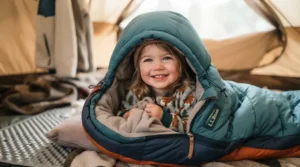
6. Coleman Kids 45 Glow-in-the-Dark — the bargain glow pick for bigger kids
The Coleman Kids 45 is rated to 45°F and uses ThermoTech synthetic insulation with a ComfortCuff, a ZipPlow snag-free zipper and an interior flashlight pocket. It’s machine washable, and two bags can be zipped together. The glow-in-the-dark design is the headline for kids who dislike the dark.
Be honest about the fit: the listings I found target older children, with one deal post suggesting ages six and up and heights up to about five feet. A parent-reviewer thought roughly ages 3–8 was workable. A two-year-old will swim in it, which creates exactly the slipping-down risk toddler-specific bags avoid.
Reviewers like the easy-to-use zipper and the way it rolls into its carry bag, though a few dislike the tie strings and find the silky shell somewhat bulky. One retailer listing I came across flagged PFAS content for a Coleman youth glow bag. I couldn’t confirm it from the manufacturer, so verify the specific model if that matters to you.
Pros:
- ✅ Very low price for a glow design
- ✅ Machine washable
- ✅ Zips to a second bag for siblings
Cons:
- ❌ Oversized for true toddlers
- ❌ Only suited to mild nights
Price: in the $15–$30 range. Verdict: a fine summer bag for a preschooler or older sibling.
7. AceCamp Kids Glow Mummy 30F — the warmer glow bag with a compression sack
The AceCamp Kids Glow Mummy 30F is a mummy-style bag rated to 30°F, with a water-resistant 190T polyester shell, a contoured hood and a compression sack. It’s built for children under about 160 cm (roughly 5 ft 3 in).
Plenty of room above their head means plenty of cold air for a toddler to heat. That’s why I’d consider this a “grow-into” bag for kids three and up, not a bag for a two-year-old’s first campout. Cinch the hood carefully and avoid hood drawstrings near young children.
Glow performance is modest: the product description says the fabric glows under strong direct light and shows faint stars in weaker light. A parent reviewer said the stars comfort their kids without being bright enough to disturb sleep. Another noted their son uses the bag at home more than camping, which hints at the real-world value of a nightlight-style design.
Pros:
- ✅ Rated warmer than most glow bags
- ✅ Compression sack for easier packing
- ✅ Water-resistant shell
Cons:
- ❌ Too large for most toddlers
- ❌ Few detailed verified reviews
Price: around the $60–$70 range. Verdict: decent for older kids, but mid-priced for what it is.
✨ Don’t Miss These Exclusive Deals!
🔍 Take your family camping adventures to the next level with these carefully selected bags. Click on any highlighted item to check current pricing and availability. These picks will help you create cozy, safe campsite nights your whole family will love!
Setup Guide: Your Toddler’s Camp Sleep System in 6 Steps
Buying the bag is half the job. Here’s the practical routine that Amazon listings don’t give you.
- Do a living-room dress rehearsal. Zip your toddler in for a nap a week before the trip. You’ll learn whether the zipper pull frustrates them, whether sleeves bother them and whether the bag is too long.
- Put a real pad underneath. A bag’s underside compresses under body weight and insulates poorly, so the pad does the heavy lifting. REI notes that pad R-values run from 1.0 for warm weather to 5.5+ for extreme cold.
- Dress for the rating, not the forecast. A snug base layer works better than a loose fleece onesie. The CPSC says snug-fitting cotton sleepwear is a safer choice than loose garments.
- Vent before you bundle. Open the zipper a few inches before bed. A toddler who starts warm will sweat and wake cold.
- Check at bedtime and again before you sleep. Touch the back of the neck, not the hands. Hands run cold even when the body is warm.
- Air the bag every morning. Unzip it fully and hang it from the tent loop or a nearby chair for ten minutes. Trapped moisture is the enemy of insulation.
The common first-month mistake? Over-layering. Parents see 38°F on the forecast, pile on a puffy jacket inside the bag and then wonder why their toddler is sweaty and grumpy at 2 a.m.

Real-World Scenarios: Three Families, Three Bags
These are illustrative profiles, not reviews, but they show how the products map to real use.
Scenario A: The shoulder-season family. Imagine a family camping in October with a 2½-year-old, where overnight lows drop to the high 30s. The Big Mo 20 is the logical choice, with an insulated pad and a snug base layer. The price stings, but this is the only bag here built for those nights.
Scenario B: The summer car-camper with two kids. Picture a three-year-old and a seven-year-old at a campground where nights hover around 55–65°F. The Sleep Nest Travel works for the toddler, with sleeves removed if it’s warm. The Coleman Kids 45 suits the older child, and its glow design makes the dark tent less intimidating. Total spend stays modest.
Scenario C: The first-time infant camper. Consider a family with a nine-month-old taking a short trip with a campground bathhouse. They’d bring a portable play yard rated for sleep and put the baby in a Little Mo 20 or the medium Sleep Nest Travel, depending on the forecast. The bag supplements a safe sleep surface; it never replaces it.
Problem → Solution: 5 Camp-Night Headaches
- They escape the bag at midnight. Sleeved designs like the Big Mo 20 and Big Mo 40 are harder to kick off. The Little Mo 20‘s one-way, bottom-up zipper also keeps a baby from unzipping it.
- They keep sliding off the pad. The Kindercone 25 drew complaints about exactly this. A rubberized grip liner under the pad helps, or you can skip slippery surfaces.
- Cold toes. Check that the foot end is enclosed and snug. The Kindercone 25‘s adjuster shortens the dead space that cold feet struggle to heat.
- Overheating. Open the zipper and drop a layer. Morrison’s guidance says to remove a child from the bag if they seem too warm.
- Sticky messes. Spills are inevitable. Keep reading, because easy-clean fabric deserves its own section below.
How to Choose a Sleeping Bag for Toddlers Camping
Here’s a seven-step process that turns a confusing market into a short checklist.
- Start with the coldest night you’ll realistically face. Don’t shop for the average. A bag rated for 40°F is a poor match for a trip where lows may hit 35°F.
- Understand what the rating means. Many adult bags are tested to ISO 23537, which reports comfort, limit and extreme ratings, as Rab’s explanation of sleeping bag temperature ratings lays out. Children’s bags often use looser labels, so treat their numbers as guidelines and add a buffer.
- Match insulation to your habits. Down is lighter and warmer for its weight; synthetic is more forgiving when wet or laundered.
- Check the age range, not just height. Toddler-specific bags are cut for narrower shoulders and shorter lengths.
- Look for toddler-friendly features. Sleeves, protected zippers, no drawstrings and a two-way zip all matter.
- Plan the pad. A great bag over a poor pad still leaves a cold kid.
- Weigh the lifespan. A cheaper adjustable bag like the Kindercone 25 may outlast a specialized toddler bag, while the Big Mo 20 buys better warmth now.
Snug Fit for Warmth: Why Size Beats the Temperature Rating
A bag works by trapping warm air your body has heated. Give a toddler too much room, and they spend the night heating empty space instead of sleeping.
That’s why a snug fit for warmth beats an extra ten degrees of rating. The Kindercone 25‘s length adjuster is a practical solution, since a cinched foot end narrows the air pocket. The Big Mo 20 relies on a close, sleeved cut, and Morrison notes its newer version tightened the sizing.
Snug doesn’t mean tight. A child should be able to bend their knees and roll without the bag binding. If they can wriggle all the way down inside, it’s too big, and Morrison warns specifically that younger children can slip down and suffocate. If the bag compresses their shoulders, it’s too small.
Treat the fit test as a bedtime ritual: zip them in, check that their head is clear, and make sure there’s no slack around the chest.
Child-Safe Materials: What to Check Before You Buy
Child-safe materials are about more than a “non-toxic” claim on a listing. Here’s a practical filter.
Flammability rules. The CPSC children’s sleepwear regulations require sleepwear above 9 months to be flame-resistant or snug-fitting. Wearable sleep sacks can fall under these rules, while camping sleeping bags are a grayer area. Ask the brand if the product has compliance documentation.
Chemical screening. OEKO-TEX Standard 100 certification, ideally at the finished-product level, signals tested-for-harmful-substances fabrics. Verify certificates directly on the OEKO-TEX site.
PFAS and water-repellent finishes. Water-repellent treatments are common. The Kindercone 25 uses a non-fluorinated finish, while one listing I found flagged PFAS for a Coleman glow bag. Ask before assuming.
Cords and hoods. For infants and toddlers, avoid drawstrings, as the Little Mo 20‘s design does.
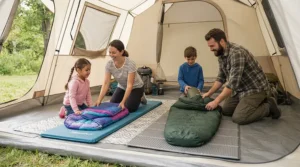
Easy-Clean Fabric: Surviving Mud, Milk and Marshmallows
Toddlers are walking spill machines, so easy-clean fabric is a practical feature, not a luxury.
Synthetic bags are generally more forgiving in the wash than down. The Coleman Kids 45 is listed as machine washable, and the Sleep Nest Travel type of wearable is designed for regular laundering per its care label. Down bags like the Big Mo 20 need gentler care, such as a down-specific wash and a careful dry.
The universal rules: check the care label first, close zippers, avoid agitator machines and wash infrequently to protect insulation. A zip-in cotton sheet liner is an inexpensive trick, since you wash the liner instead of the bag. Spot-clean small messes immediately with a damp cloth.
Glow in the Dark Kids Sleeping Bag: Fun Feature or Gimmick?
A glow in the dark kids sleeping bag gives fear-of-the-dark kids a built-in nightlight, and it’s a nice bit of campsite magic. Both the Coleman Kids 45 and the AceCamp Kids Glow Mummy 30F use this design.
The reality is more modest. Glow fabrics need a light source to “charge,” so a flashlight before bed helps. The brightness fades through the night, and reviewers describe it as comforting rather than dramatic. For a toddler, I’d weigh it as a bonus rather than a buying reason, because warmth, fit and safety come first.
One safety angle: glow designs on older-kid bags are tempting for toddlers, but oversized bags carry the slip-down risk discussed above. If your toddler adores glow, consider a glow-in-the-dark star sticker on the tent ceiling instead.
Sleeping Bag for Infants Camping: What Safe-Sleep Guidance Says
A sleeping bag for infants camping needs extra care. The AAP’s updated safe-sleep policy emphasizes placing babies on their back, alone, on a firm, flat surface with no loose bedding. Wearable blankets are the recommended way to keep infants warm.
For camping, that suggests a portable play yard or similar approved sleep surface in the tent, with the baby in a wearable bag like the Little Mo 20 or the Sleep Nest Travel. Avoid weighted sleep products, which the AAP and CDC advise against for infants. Skip hats indoors and avoid soft pads or pillows in the sleep space.
Sizing matters: an oversized sack lets a baby slip inside. Overheating is also a concern, so dress lightly under the bag. When in doubt, talk to your pediatrician before your first trip.
Toddler Bag vs Sleep Sack vs a Bigger Sleeping Bag for Kids
| Option | Warmth Control | Safety Fit | Pack Size | Best For |
|---|---|---|---|---|
| Toddler-specific bag | Strong, with sleeves and zips | Cut for small bodies | Small to moderate | Big Mo 20 and Big Mo 40 |
| Wearable sleep sack | Moderate, TOG-based | Designed to stay on body | Very small | Sleep Nest Travel |
| Standard sleeping bag for kids | Strong, but roomy | Slip-down risk for toddlers | Larger | Kindercone 25 with its adjuster |
| Loose blankets | Weak, easily kicked off | Not recommended for infants | Bulky | Older kids only |
The table shows why toddler-specific bags and sleep sacks win for little ones: they stay on the body and fit the frame. A standard sleeping bag for kids can work for preschoolers if you cinch it down, but a loose blanket is the weakest camping option. For toddlers at the awkward in-between stage, the Kindercone 25 is the best “bigger bag” compromise.
Long-Term Cost & Value
Spread across nights of use, cost per night shifts the picture.
| Product | Price Range | Est. Cost per Night (20 nights) | Value Note |
|---|---|---|---|
| Big Mo 20 | $170–$190 | About $8.50–$9.50 | Trade-in program available |
| Kindercone 25 | $60–$80 | About $3–$4 | Grows with your kid |
| Sleep Nest Travel | $40–$55 | About $2–$2.75 | Short size window |
| Coleman Kids 45 | $15–$30 | Under $1.50 | Older kids only |
The numbers show the Coleman Kids 45 is cheapest per night, but only if your child fits it. The Kindercone 25 may deliver the best long-term return, since a child can use it for years. The Big Mo 20 costs most per night, though warmth on cold trips and the trade-in option offset some of that. Prices are estimates, so check current prices.
Frequently Asked Questions
❓ Can a 2-year-old sleep in a sleeping bag while camping?
❓ What temperature rating should a toddler sleeping bag have for fall camping?
❓ Are glow in the dark sleeping bags safe for toddlers?
❓ How do you wash a toddler sleeping bag after camping?
❓ Does my toddler need a sleeping pad in a tent?
Conclusion
Choosing a sleeping bag for toddlers camping comes down to four questions: how cold will it get, how well does it fit, is it made from child-safe materials, and can you clean it without drama?
If cold nights are on the calendar, the Big Mo 20 is the most toddler-specific warmth you can buy, and the Big Mo 40 is its easier-care sibling for milder trips. For value and longevity, the Kindercone 25 is hard to beat if you’ll use the length adjuster. The Sleep Nest Travel is the budget route to a wearable, blanket-free setup, and the Little Mo 20 is a specialist option for infant camping within safe-sleep guidance. The Coleman Kids 45 and AceCamp Kids Glow Mummy 30F make better sense for older kids who love a glow in the dark kids sleeping bag.
Whatever you pick, prioritize snug fit for warmth, check the age range and test the setup at home first. Then pack the marshmallows.
✨ Ready to gear up?
🌲 Click through to check current pricing and availability on the picks above, and give your little camper a cozy, safe night under the stars!
Recommended for You
- Double Sleeping Bag: 7 Best Cozy Picks For Couples (2026)
- Double Sleeping Bag For Backpacking Couples: 7 Best Picks 2026
- Double Sleeping Bag For Couples Camping: 7 Best Picks 2026
Disclaimer: This article contains affiliate links. As an Amazon Associate, I earn from qualifying purchases. If you purchase products through these links, we may earn a small commission at no additional cost to you.
✨ Found this helpful? Share it with your friends! 💬🤗
