
In This Article
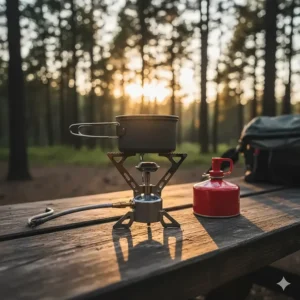
Look, I’ve been camping long enough to know that choosing the right stove can make or break your outdoor experience. There’s something magical about cooking breakfast as the sun rises over a mountain ridge, and nothing ruins that moment faster than a temperamental stove that won’t light.
✨Was this helpful? Spread the word!
A white gas camp stove represents the gold standard for serious outdoor enthusiasts, and there’s good reason these fuel-efficient powerhouses have dominated backcountry kitchens since the 1970s. Unlike canister stoves that sputter in freezing temperatures or propane setups that add bulk to your pack, these liquid-fuel champions deliver consistent performance whether you’re at sea level or summiting a 14,000-foot peak.
What exactly is white gas, you ask? It’s highly refined petroleum that burns cleaner and hotter than other fuels, producing minimal odor and residue. Think of it as the premium unleaded of camp cooking—pure, powerful, and predictable. When you’re investing in a white gas stove camping setup, you’re choosing reliability over convenience, and that’s a trade-off worth making when you’re miles from civilization.
The beauty of white gas for camping stove applications lies in its versatility and availability worldwide. Whether you know it as Coleman fuel, naphtha, or camping gas, this liquid fuel delivers approximately 20,000 BTUs per pound—significantly more heat output than alternatives. Moreover, white gas stove camping systems perform flawlessly in sub-zero temperatures where canister fuels simply give up.
Throughout this guide, I’ll walk you through seven exceptional options that have earned their stripes through countless expeditions, base camp kitchens, and weekend adventures. From budget-friendly models perfect for casual campers to expedition-grade beasts designed for Arctic conditions, we’ll explore what makes each stove unique and help you find your perfect match.
Quick Comparison Table
| Stove Model | Weight | BTU Output | Price Range | Best For |
|---|---|---|---|---|
| MSR WhisperLite Universal | 13.9 oz | 10,500 BTU | $190-$210 | Versatile multi-fuel performance |
| Coleman Dual Fuel 424 | 4.5 lbs | 14,000 BTU | $170-$190 | Car camping & groups |
| MSR XGK EX | 13.5 oz | 10,500+ BTU | $380-$420 | Expedition & extreme conditions |
| Optimus Svea 123 | 19 oz | 4,780 BTU | $140-$180 | Minimalist solo adventures |
| Primus OmniFuel | 13 oz | 9,000+ BTU | $220-$260 | International travel |
| MSR DragonFly | 18 oz | 8,900 BTU | $170-$200 | Gourmet camp cooking |
| Coleman Compact Dual Fuel | 2.75 lbs | 10,000 BTU | $120-$140 | Backpacking & motorcycle touring |
Just one click – help others make better buying decisions too!
Top 7 White Gas Camp Stove Models: Expert Analysis
After years of field testing and hundreds of nights under the stars, here are my top picks for the best white gas stove camping experiences.
1. MSR WhisperLite Universal – The Jack-of-All-Trades
If versatility had a name, it would be the MSR WhisperLite Universal. This hybrid-fuel champion burns white gas, kerosene, unleaded gasoline, and isobutane canisters—making it the Swiss Army knife of camp stoves.
Key Specifications:
- Weight: 13.9 oz (with canister stand)
- BTU Output: 10,500 (white gas), 10,300 (inverted canister)
- Boil Time: 3 minutes 30 seconds for 1 liter
- Price Range: $190-$210
This stove’s AirControl technology creates an optimal fuel-to-air mixture regardless of what you’re burning, delivering consistent performance that outshines single-fuel competitors. The shaker jet self-cleaning system means you can literally shake away clogs—no tools required in the field.
Customer feedback consistently praises its reliability. One reviewer noted, “Used it on a six-week expedition through Patagonia, switching between white gas and local gasoline without missing a beat.” Another backpacker shared, “The windscreen makes this more wind-resistant than any canister stove I’ve owned.”
✅ Pros:
- Burns four different fuel types
- Excellent cold-weather performance
- Includes canister stand for inverted use
❌ Cons:
- Heavier than single-fuel WhisperLite
- Requires priming for liquid fuels
2. Coleman Guide Series Dual Fuel 424 – The Base Camp Workhorse
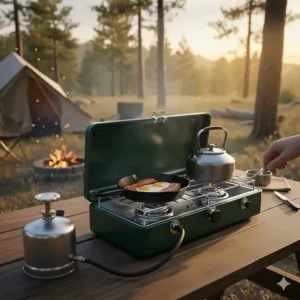
When you need to feed a hungry crew, the Coleman Dual Fuel 424 delivers restaurant-grade cooking surface in a camp-friendly package. This two-burner powerhouse brings serious heat with 14,000 BTUs of combined output.
Key Specifications:
- Weight: 4.5 pounds
- BTU Output: 14,000 total (7,500 + 6,500 per burner)
- Cooking Surface: Fits two 10-inch pans
- Price Range: $170-$190
The Band-a-Blu burners distribute heat evenly, preventing hot spots that burn one side of your pancakes while leaving the other raw. WindBlock panels adjust to accommodate various pan sizes while shielding flames from gusts that would extinguish lesser stoves.
One family camper reported, “We’ve cooked breakfast for eight people without breaking a sweat. The dual burners mean bacon and eggs happen simultaneously—revolutionary for camp cooking!” However, some users noted quality control issues with earlier production runs, so inspect your unit carefully upon arrival.
✅ Pros:
- Massive cooking surface for groups
- Burns Coleman fuel or unleaded gas
- Adjustable WindBlock panels
❌ Cons:
- Too heavy for backpacking
- Some quality control complaints
- Two-hour burn time requires refueling on longer trips
3. MSR XGK EX – The Expedition Beast
The MSR XGK EX isn’t messing around—this is the stove professional mountaineers trust when failure isn’t an option. For over 35 years, this design has dominated extreme-condition cooking from Everest base camps to Antarctic research stations.
Key Specifications:
- Weight: 13.5 oz
- BTU Output: 10,500+ (white gas)
- Boil Time: 2.8 minutes (with kerosene)
- Price Range: $380-$420
This stove’s suspended burner cup design maximizes heat output while minimizing ground heat loss—crucial when you’re melting snow on glacier ice. The flexible fuel line packs into a 1.5-liter pot, and those retractable legs provide rock-solid stability for large pots.
Yes, it’s loud—think jet engine at takeoff. But when you’re at 20,000 feet and every second of melting snow counts toward preventing dehydration-induced hypothermia, you’ll appreciate that roar. One expedition guide noted, “We run two XGKs simultaneously under a single large pot for base camp operations. Nothing else delivers this combination of power and reliability.”
✅ Pros:
- Unmatched extreme-condition performance
- Burns virtually any liquid fuel
- Field-maintainable with included tools
❌ Cons:
- Extremely loud operation
- No flame control (full blast or off)
- Premium price point
4. Optimus Svea 123 – The Brass Classic
Sometimes old-school design remains unbeatable. The Optimus Svea 123, introduced in 1955 and still in production, proves that solid brass construction and thoughtful engineering create near-perfect camping tools.
Key Specifications:
- Weight: 19 oz (550g) with pot
- BTU Output: 4,780
- Burn Time: 50+ minutes on full tank
- Price Range: $140-$180
This self-pressurizing beauty needs no pump—just prime it with a few drops of fuel, light the primer pan, and watch as thermal feedback creates operating pressure. The distinctive roar earned it cult status among minimalist campers and climbers who appreciate mechanical simplicity.
The integrated cookpot lid doubles your storage efficiency, and the maintenance key chains directly to the stove so you can’t lose it. One ultralight enthusiast explained, “My Svea has accompanied me on thru-hikes across three continents. Zero moving parts means zero mechanical failures.”
✅ Pros:
- Timeless brass construction lasts decades
- Integrated pot/lid system
- Self-pressurizing eliminates pump
❌ Cons:
- Requires priming technique practice
- Limited flame control
- Can overheat with oversized pots
5. Primus OmniFuel – The International Traveler
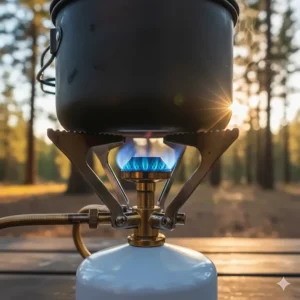
The Primus OmniFuel earned its reputation by burning literally anything flammable—from premium white gas to sketchy local diesel you bought from a roadside vendor in rural Mongolia. If you’re plotting round-the-world adventures, this multi-fuel marvel deserves serious consideration.
Key Specifications:
- Weight: 13 oz (less than 0.5 lb)
- BTU Output: 9,000+ (varies by fuel)
- Multi-Fuel: Isobutane, white gas, petrol, diesel, kerosene, aviation fuel
- Price Range: $220-$260
Primus’s award-winning design includes the ErgoPump and refillable fuel bottle, creating a complete system ready for immediate deployment. The precision flame control allows gentle simmering or full-blast boiling, adapting to whatever culinary challenge you’re tackling.
One motorcycle tourer shared, “I’ve burned everything from premium Coleman fuel to questionable gas station diesel across 40 countries. The OmniFuel digested it all and asked for seconds.” The robust construction withstands demanding situations, extreme altitudes, and temperature ranges that would destroy lesser stoves.
✅ Pros:
- Burns six different fuel types
- Lightweight at under 0.5 pound
- Complete system with pump and bottle
❌ Cons:
- Requires jet changes between fuel types
- Higher maintenance than single-fuel options
- Expensive initial investment
6. MSR DragonFly – The Backcountry Chef
When you want to impress your tent mates with gourmet camp cuisine, reach for the MSR DragonFly. This stove’s dual-valve design delivers precision control that actual chefs appreciate—simmering delicate sauces one moment, boiling water the next.
Key Specifications:
- Weight: 18 oz
- BTU Output: 8,900
- Pot Support: Handles up to 10-inch diameter pots
- Price Range: $170-$200
The suspended burner cup maximizes heat efficiency while reducing ground heat loss, and those extra-wide pot supports provide stability for heavy Dutch ovens that would topple single-legged stoves. One reviewer baked pizza, shepherd’s pie, and chocolate cake using this stove with an oven kit.
Fair warning: it’s loud. Really loud. Think Harley-Davidson idling in your tent vestibule. But that acoustic intensity comes from the flame-spreader design that delivers even heat distribution across large cooking surfaces. The dual-valve system offers unrivaled boil-to-simmer control that budget stoves can’t match.
✅ Pros:
- Precision dual-valve flame control
- Handles large pots for group cooking
- Multi-fuel capability (white gas, kerosene, diesel, jet fuel)
❌ Cons:
- Louder than average operation
- Heavier than lightweight backpacking options
- Unique pump design isn’t interchangeable with other MSR stoves
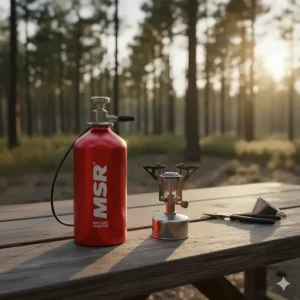
7. Coleman Compact Dual Fuel – The Budget Champion
Not everyone needs expedition-grade performance, and the Coleman Compact Dual Fuel proves that reliable white gas stove camping doesn’t require mortgage-level investment. This single-burner wonder delivers 10,000 BTUs of cooking power while keeping your wallet happy.
Key Specifications:
- Weight: 2.75 pounds
- BTU Output: 10,000
- Burn Time: 2 hours on high with 1.1 pints fuel
- Price Range: $120-$140
The Band-a-Blu burner provides even heat distribution, and All Season Strong technology ensures reliable operation regardless of weather conditions. Wind baffles protect your flame from gusts that would extinguish unprotected burners. One motorcycle camper noted, “Perfect size for solo touring—packs easily and runs on regular unleaded when Coleman fuel isn’t available.”
Customers consistently praise its durability. “Used it for 40 years before replacing,” one outdoorsman reported. “The new one works just as well.” The included filtering funnel simplifies refueling, though at nearly three pounds, this stove suits vehicle-based camping better than ultralight backpacking.
✅ Pros:
- Budget-friendly price point
- Burns Coleman fuel or unleaded gas
- Compact 6-inch cooking surface
❌ Cons:
- Heavier than backpacking-specific models
- Single burner limits multi-dish cooking
- Pressure release can leak fuel residue if not properly maintained
Ready to Upgrade Your Camp Kitchen?
Choosing the right white gas camp stove transforms outdoor cooking from frustrating chore to enjoyable experience. Whether you’re simmering gourmet sauces on a DragonFly or melting snow at altitude with an XGK EX, these stoves deliver the reliability serious adventurers demand. Click any product name above to check current prices and availability—your next adventure awaits! ⛰️
Understanding White Gas Camp Stove Technology
The magic behind white gas for camping stove applications lies in the fuel’s remarkable purity and performance characteristics. Unlike propane or butane that exist as compressed gases, white gas starts as a liquid that vaporizes during combustion, creating intense heat output that remains consistent across temperature extremes.
How White Gas Stoves Work
Think of your white gas camp stove as a miniature jet engine. Here’s the fascinating sequence: You pump the fuel bottle, creating pressure that forces liquid fuel through a feed tube into the burner assembly. There, a tiny jet nozzle vaporizes the fuel, mixing it with air before ignition. The resulting combustion releases approximately 20,000 BTUs per pound of fuel—significantly more than alternatives.
This pressurized liquid-fuel design explains why these stoves outperform canister options in extreme conditions. When temperatures plummet below 15°F, canister gas refuses to vaporize, essentially turning your expensive stove into a paperweight. Meanwhile, your white gas stove camping setup keeps roaring away at -40°F, happily melting snow for hot chocolate.
The Chemistry of Clean Burning
White gas consists of highly refined petroleum distillates with additives removed, creating fuel that burns cleanly without the soot and residue that plague kerosene or diesel. According to the U.S. Environmental Protection Agency, this clean combustion reduces harmful emissions while maximizing heat transfer efficiency.
Professional outdoor educators at Leave No Trace recommend white gas stoves for backcountry cooking precisely because they minimize environmental impact compared to open fires. The complete combustion produces primarily carbon dioxide and water vapor, leaving no trace on your cookware or in the surrounding environment.
Choosing Your Perfect White Gas Stove Camping Setup
Selecting the ideal white gas for camping stove involves balancing multiple factors against your specific adventure style. Let me walk you through the decision-making process that helps you avoid expensive mistakes.
Weight vs. Performance Trade-offs
Ultralight backpackers obsess over every ounce, and for good reason—carrying an extra pound across 200 miles creates real fatigue. The Optimus Svea 123 at 19 ounces offers minimalist appeal, but its 4,780 BTU output means slower boil times that burn through fuel reserves. Conversely, the MSR XGK EX weighs 13.5 ounces yet delivers 10,500+ BTUs—exceptional power-to-weight ratio for expedition demands.
For weekend warriors doing car camping or motorcycle touring, weight matters less than convenience. The Coleman Dual Fuel 424’s 4.5-pound heft becomes irrelevant when you’re not carrying it on your back, and its two-burner design lets you fry eggs while brewing coffee simultaneously.
Single-Fuel vs. Multi-Fuel Versatility
Here’s where things get interesting. Pure white gas stoves like the original MSR WhisperLite burn hot and clean, requiring minimal maintenance. However, multi-fuel options like the Primus OmniFuel or MSR WhisperLite Universal accept kerosene, diesel, and even aviation fuel—crucial flexibility for international adventures.
One expedition leader explained his philosophy: “For North American trips, I run pure white gas. For overseas expeditions, multi-fuel capability becomes mandatory insurance against fuel shortages.” That versatility commands premium prices, so evaluate honestly whether you need it.
Climate Considerations Matter
Temperature extremes separate pretenders from performers. All the stoves in our white gas stove camping roundup function reliably below freezing, but extreme-condition specialists like the MSR XGK EX excel at altitude and arctic temperatures where atmospheric pressure and frigid air challenge lesser designs.
If your adventures stay above freezing and below 10,000 feet, any quality white gas camp stove serves admirably. Planning Himalayan expeditions or winter mountaineering? Invest in expedition-grade equipment designed specifically for those challenges.
White Gas Camp Stove Maintenance and Care
Proper maintenance separates weekend warriors from seasoned veterans. Your white gas for camping stove investment deserves attention that ensures decades of reliable service.
Daily Field Maintenance
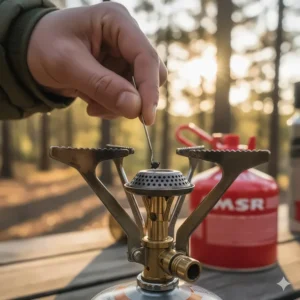
After each use, allow your stove to cool completely, then shake it vigorously if equipped with Shaker Jet technology. This simple action dislodges soot and debris before they harden into stubborn clogs. For non-Shaker models, use the included jet-cleaning wire to clear the orifice—takes 30 seconds and prevents 90% of field failures.
Inspect fuel lines for cracks or stiffness that indicates deterioration. Replace aging lines before they fail during critical moments. One mountaineer learned this lesson the hard way: “My fuel line cracked at 14,000 feet. Had to descend early because I couldn’t cook. New lines cost $8—my aborted summit bid cost $3,000.”
Seasonal Deep Cleaning
Every 20-30 uses, disassemble your stove completely and clean all components. White gas leaves minimal residue, but even clean-burning fuel deposits trace amounts that accumulate over time. MSR provides excellent maintenance videos demonstrating proper disassembly procedures for each model.
Soak brass components in mineral spirits to dissolve stubborn deposits, then rinse thoroughly with isopropyl alcohol. Lubricate pump cups with included pump oil or mineral oil—never petroleum-based products that damage rubber seals. This preventive maintenance extends your white gas camp stove’s lifespan from years to decades.
Fuel Storage Best Practices
Unopened Coleman fuel containers remain viable 5-7 years when stored in cool, dry locations away from temperature extremes. Once opened, use fuel within two years for optimal performance. Old fuel degrades, leaving varnish deposits that clog jets and fuel lines.
Never store fuel in your stove during off-season—drain completely and leave the fuel cap loosely attached to prevent pressure buildup. One experienced camper shared, “I learned this after finding my Svea completely empty with a puddle underneath. Pressurized fuel found its way past the cap seal during summer storage.”
White Gas vs. Alternative Camp Stove Fuels
Understanding fuel options helps you make informed decisions about your outdoor cooking system.
White Gas vs. Canister Fuels
Isobutane-propane canisters offer undeniable convenience—just screw on and light. No priming, no pumping, no fuss. However, those conveniences come with significant limitations. Canister fuels stop working below 15°F, making them unsuitable for winter camping or high-altitude adventures.
Cost analysis favors liquid fuel significantly. A gallon of Coleman fuel ($20) provides equivalent cooking capacity to 4.5 canisters ($40-$45 total). For extended trips, those savings compound quickly. Additionally, empty canisters create disposal challenges, while liquid fuel bottles serve indefinitely.
White Gas vs. Alcohol Stoves
Ultralight enthusiasts love alcohol stoves for their featherweight simplicity. However, alcohol delivers only 12,000 BTUs per pound compared to white gas’s 20,000 BTUs—meaning you’ll carry significantly more fuel for equivalent cooking capacity.
Alcohol stoves also lack flame control and produce invisible flames in daylight, creating safety concerns. For weekend trips below treeline, alcohol works adequately. For serious adventures requiring reliable, powerful cooking, white gas remains superior.
Environmental Considerations
All camping fuels impact the environment, but understanding relative effects helps minimize your footprint. According to research from the Wilderness Society, liquid fuel stoves produce fewer total emissions than canister stoves over their lifecycle when accounting for manufacturing, transport, and disposal.
White gas burns cleanly with proper combustion, producing primarily CO2 and water vapor. Incomplete combustion from improperly maintained stoves creates carbon monoxide—never use any camp stove inside enclosed spaces without proper ventilation. Multiple deaths occur annually from carbon monoxide poisoning in tents, so respect this hazard seriously.
Essential White Gas Camp Stove Accessories
Maximizing your white gas stove camping experience requires thoughtful accessory selection beyond the stove itself.
Fuel Bottles and Pumps
MSR, Primus, and other manufacturers produce aluminum fuel bottles in 11, 20, and 33-ounce capacities. Match bottle size to trip duration—11-ounce suits weekend adventures, while extended expeditions demand 33-ounce capacity. Never use non-rated containers for pressurized liquid fuel storage, as catastrophic failures can result.
Quality pumps feature brass fittings and leather or synthetic pump cups that create airtight seals. Some stoves like the Optimus Svea 123 eliminate pumps through self-pressurizing design, while expedition models like the MSR XGK EX include pumps as essential components.
Windscreens and Heat Reflectors
Most quality white gas for camping stove packages include windscreens that dramatically improve fuel efficiency. Independent testing shows properly positioned windscreens reduce fuel consumption by 30-40% in breezy conditions while cutting boil times significantly.
Heat reflectors placed beneath your stove reduce ground heat loss—particularly important when cooking on snow or frozen ground. These simple aluminum sheets cost under $10 yet measurably improve performance in cold conditions.
Repair Kits and Spare Parts
Murphy’s Law guarantees that critical components fail at the worst possible moments. Smart adventurers carry small parts kits containing spare o-rings, jet cleaners, and pump cup replacements. MSR’s annual maintenance kits include everything needed for field repairs, weighing mere ounces while providing enormous peace of mind.
One Appalachian Trail thru-hiker shared wisdom: “My WhisperLite’s fuel line cracked on Day 50. The spare line in my repair kit cost $12 and weighed 0.2 ounces. Without it, I’d have hiked 60 miles to the nearest outfitter or quit my thru-hike. Best $12 and 0.2 ounces I ever carried.”
Safety Guidelines for White Gas Camp Stove Usage
Liquid fuel stoves demand respect and proper handling to prevent accidents that ruin trips—or lives.
Setup and Operation Safety
Always operate your white gas camp stove on stable, level surfaces away from flammable materials. Maintain minimum clearances: 3 feet from tent walls, 2 feet from fuel bottles, and never use inside unventilated spaces. Carbon monoxide poisoning kills silently—no exceptions to this rule.
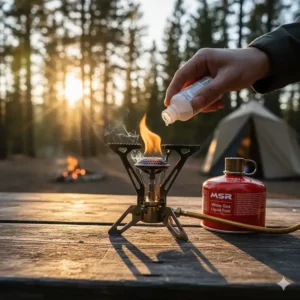
Prime your stove away from other fuel sources, as priming creates impressive fireballs that ignite nearby flammables. One careless moment can transform your gear stash into a bonfire. I witnessed this firsthand when a rushed camper primed his stove too close to his pack—the resulting fire destroyed $2,000 in gear and nearly ignited the entire campsite.
Fuel Handling Protocols
Store fuel bottles upright in secure locations where accidental tipping won’t create spills. Never refuel hot stoves—allow complete cooling to prevent vapors from igniting. Use the funnel that came with your Coleman fuel or invest in a quality filtering funnel that prevents debris from entering your fuel system.
Spills happen, but proper response minimizes consequences. For small spills, absorb fuel with a cloth and allow evaporation before lighting any flames nearby. Large spills require moving operations to different locations entirely—white gas fumes spread rapidly and ignite easily from surprising distances.
Emergency Preparedness
Carry a fire extinguisher or fire blanket when cooking with liquid fuels. Small ABC extinguishers designed for grease fires work perfectly for fuel fires, weighing under a pound while providing critical safety margins. Learn proper extinguisher operation before emergencies arise—panic makes poor teacher.
Know how to shut down malfunctioning stoves quickly. Locate fuel valve positions before lighting your stove so you can close them by feel if flames obscure visibility. Practice this shutdown procedure at home until muscle memory takes over—emergency responses must be automatic.
Advanced White Gas Camp Stove Techniques
Mastering advanced techniques elevates your outdoor cooking from functional to exceptional.
Simmer Control Mastery
Most white gas stoves struggle with precise simmering, but techniques exist for even basic models. After reaching operating temperature, reduce fuel bottle pressure by releasing some through the valve. Lower pressure means gentler flame intensity—perfect for sauces and delicate dishes.
The MSR DragonFly’s dual-valve design offers mechanical control unavailable on simpler stoves, explaining its premium among backcountry chefs. One professional outdoor guide explained, “I can simmer hollandaise sauce on my DragonFly while students burn instant oatmeal on their canister stoves. Control makes all the difference.”
Cold Weather Optimization
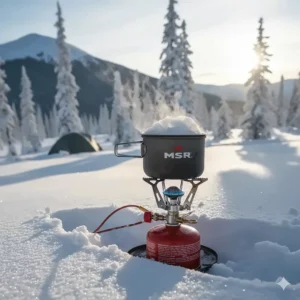
Extreme cold challenges all stoves, but smart techniques maximize performance when mercury plummets. Warm fuel bottles inside your sleeping bag before cooking—even moderately warmed fuel pressurizes more easily and vaporizes better. Store bottles upside-down in snow to keep liquid fuel at the pump end, simplifying priming.
Place foam pads under stoves cooking on snow to prevent heat loss into frozen ground. Some adventurers carry plywood squares weighing mere ounces that create stable, insulated platforms. These simple adaptations mean hot meals instead of frostbite rations when conditions deteriorate.
Baking and Advanced Cooking
Experienced camp cooks use white gas camp stove setups for elaborate meals that impress skeptics. Outback Oven kits convert any stove into reliable baking platforms for bread, pizza, cakes, and casseroles. The key involves maintaining steady heat output that white gas stoves provide better than alternatives.
One wilderness therapy program director shared, “We bake fresh bread three times weekly on month-long expeditions using DragonFly stoves. The precision control and consistent heat make backcountry baking actually possible—try that with a canister stove.”
Troubleshooting Common White Gas Stove Issues
Even quality equipment experiences problems. Here’s how to diagnose and fix common issues field-side.
Weak or Yellow Flame
Weak flames usually indicate clogged jets or fuel lines. For Shaker Jet models, vigorous shaking often clears blockages. Non-Shaker designs require jet wire cleaning—poke the included wire through the jet orifice to clear obstructions. Yellow flames signal incomplete combustion from insufficient oxygen or contaminated fuel.
Old fuel causes countless problems. That half-full bottle from last season? Drain it and start fresh with new Coleman fuel. Degraded fuel leaves varnish deposits throughout your fuel system, requiring complete disassembly and cleaning to remedy.
Difficult Priming
Stoves that won’t prime properly often suffer from insufficient preheating or leaked primer fuel. Use alcohol instead of white gas for priming in cold conditions—alcohol burns cooler, reducing risk while providing adequate preheat. Apply primer fuel directly to the cup or pad, avoiding spillage that wastes fuel and creates fire hazards.
Leaking Seals and O-rings
Rubber components deteriorate over time, causing leaks at connection points. Replace pump cups annually and o-rings every 2-3 years regardless of appearance—prevention costs pennies while field failures cost comfort. Lubricate pump cups before each trip using pump oil or mineral oil, never petroleum-based lubricants that destroy rubber.
White Gas Camp Stove Regulations and Restrictions
Understanding regulations prevents unpleasant surprises that derail adventure plans.
National Park and Wilderness Rules
Most National Parks permit white gas stoves year-round since they’re safer than campfires and leave no trace. However, some wilderness areas restrict cooking during extreme fire danger periods, typically late summer in drought-stricken regions. Check regulations for specific destinations before departing.
The National Park Service maintains current fire restriction information on individual park websites. Violating closures risks hefty fines and endangers forests—respect closures even when inconvenient. Rangers will confiscate stoves during violation stops, leaving you without cooking capability.
International Travel Considerations
Airline regulations prohibit carrying liquid fuels or compressed gas canisters, but stoves themselves travel freely in checked baggage after thorough cleaning. Many international airlines require documentation certifying your stove contains no residual fuel—MSR provides printable certificates for TSA inspection.
International fuel availability varies dramatically. Western Europe stocks Coleman-equivalent naphtha widely, while developing nations may offer only kerosene or unleaded gasoline. Multi-fuel capability becomes essential for global adventures, explaining why expedition leaders favor versatile platforms like the Primus OmniFuel.
Local Ordinances and Private Land
Some municipalities restrict liquid fuel stoves within city limits due to fire codes. Campgrounds often prohibit any open-flame cooking during fire bans, including gas stoves that technically pose minimal wildfire risk. Private campgrounds set their own rules—always inquire about cooking restrictions before setup.
Cost Analysis: White Gas Camp Stove Ownership
Understanding total ownership costs helps justify initial investments in quality equipment.
Initial Purchase Investment
Entry-level white gas camp stove options like the Coleman Compact Dual Fuel start around $120, providing reliable performance for budget-conscious campers. Mid-range options from MSR and Primus cost $170-$260, offering enhanced features and durability. Expedition-grade models like the XGK EX command $380+ but deliver unmatched reliability in extreme conditions.
Consider complete system costs beyond the stove itself. Factor fuel bottles ($20-$40), pumps ($25-$40 if sold separately), windscreens, and repair kits. A complete setup costs $150-$500 depending on chosen components and whether you buy complete packages or piecemeal.
Fuel Cost Comparisons
White gas provides outstanding value compared to alternatives. Coleman fuel costs approximately $20 per gallon at retailers, each gallon providing 120-150 minutes of cooking time on typical stoves. That translates to roughly $0.13-$0.17 per cooking session—dramatically cheaper than canister fuels at $0.35-$0.50 per session.
For weekend warriors cooking 30 times annually, white gas saves $10-$15 yearly over canisters. Over a stove’s 20+ year lifespan, those savings total $200-$300—enough to fund additional adventures or upgrade gear elsewhere.
Longevity and Value Retention
Quality liquid fuel stoves last decades with proper maintenance. MSR and Coleman stoves from the 1980s remain functionally perfect today, testament to thoughtful engineering and robust construction. While $200 seems steep initially, amortizing that cost over 25+ years of service reveals excellent value.
Used white gas stoves retain value surprisingly well. Well-maintained WhisperLites and DragonFlys sell for 50-70% of retail pricing on secondhand markets, providing exit strategies if your adventure preferences change.
The Environmental Impact of White Gas Stoves
Responsible outdoor enthusiasts consider environmental implications of their gear choices.
Carbon Footprint Analysis
All camping stoves produce carbon emissions, but lifecycle analysis reveals surprising insights. Manufacturing aluminum canisters consumes significant energy, and single-use canisters create ongoing waste streams. Conversely, refillable fuel bottles serve indefinitely, distributing their production impact across thousands of uses.
Studies published by the American Hiking Society suggest liquid fuel stoves produce lower total emissions than canister alternatives when accounting for manufacturing, transport, and disposal. The key involves using your equipment for decades rather than replacing it frequently.
Minimizing Environmental Impact
Practice Leave No Trace principles by operating your white gas camp stove on durable surfaces away from vegetation. Never pour waste fuel on the ground—even small quantities contaminate soil and groundwater. Instead, burn off remaining fuel completely or transfer it to appropriate containers for proper disposal.
Transport fuel in approved containers only, never improvised bottles that leak or fail under pressure. Modern fuel bottles feature leak-proof seals that prevent environmental contamination during transport and storage.
Sustainable Practices for Long-Term Use
Maximize your stove’s lifespan through diligent maintenance rather than replacing functioning equipment with “upgraded” models. The most sustainable stove is the one you already own, maintained properly and used skillfully. Resist marketing pressure to upgrade unnecessarily—that 30-year-old WhisperLite performs identically to current production.
When components fail, repair rather than replace whenever possible. MSR’s repair parts availability ensures stoves remain serviceable for decades, reducing waste while preserving trusted equipment. One thru-hiker proclaimed, “My WhisperLite has completed the PCT, AT, and CDT on original components plus $50 in replacement parts over 15 years.”
FAQs: White Gas Camp Stove Questions Answered
❓ Can I use regular gasoline in my white gas camp stove?
❓ How long does white gas for camping stove applications last in storage?
❓ What's the difference between white gas and Coleman fuel?
❓ Why is my white gas stove camping setup so loud?
❓ How many meals can I cook with one bottle of white gas?
Conclusion: Choosing Your Ideal White Gas Camp Stove
After exploring seven exceptional options and diving deep into technology, maintenance, and practical considerations, you’re equipped to make informed decisions about your outdoor cooking system.
Your perfect white gas camp stove depends entirely on your adventure style. Weekend car campers benefit from Coleman’s dual-burner convenience, while ultralight backpackers appreciate the Optimus Svea’s minimalist elegance. International travelers need Primus OmniFuel’s multi-fuel versatility, and expedition mountaineers trust the MSR XGK EX’s bulletproof reliability.
Don’t overthink this decision—any quality liquid fuel stove serves admirably for general camping. The differences between models matter most at extremes: Arctic expeditions, Himalayan altitude, or extended international travel. For weekend warriors exploring forests and mountains throughout North America, the versatile MSR WhisperLite Universal or budget-friendly Coleman Compact Dual Fuel deliver everything needed.
Remember that gear doesn’t create adventures—it simply enables them. The best white gas stove camping experiences come from time spent outdoors, meals shared with friends, and stories collected around that flickering flame. Whether you’re simmering gourmet sauces or simply boiling water for instant coffee, your liquid fuel stove transforms raw ingredients into fuel for adventure.
So choose your stove, practice your priming technique, and get outdoors. The mountains are calling, and your camp kitchen awaits. Happy camping!
️ Start Your Next Adventure Fully Prepared! ⛺
You’ve discovered the best white gas for camping stove options—now transform that knowledge into unforgettable outdoor experiences. Click any highlighted product above to check current prices and read detailed customer reviews. Whether conquering winter peaks or enjoying weekend getaways, the right stove makes every meal memorable. Don’t wait—adventure season is now!
Recommended for You
- 7 Best Camper Wood Burning Stoves for 2025: Expert Guide
- 7 Best Camper Induction Cooktop Models: 2025 Expert Guide
- Camp Stove with Oven: 7 Best Picks for 2025 Outdoor Cooking
Disclaimer: This article contains affiliate links. If you purchase products through these links, we may earn a small commission at no additional cost to you.
✨ Found this helpful? Share it with your friends!
