
In This Article
Picture this: you’re three miles into a gorgeous ridge hike when that innocent “I’ll just use sunscreen” decision from the morning starts haunting you. Your neck is burning, sweat’s dripping into your eyes, and you’re calculating how much trail you can cover before resembling a lobster. Been there? You’re not alone. I’ve watched countless hikers squint their way through stunning vistas because they underestimated how relentless the sun becomes at elevation.

Here’s what most people miss about sun protection on trails: sunscreen alone isn’t enough. According to research on sun protective clothing, fabric with UPF 50+ blocks 98% of UV radiation continuously, while sunscreen effectiveness drops significantly with sweat, friction from pack straps, and incomplete application. The difference? A quality sun hat for hiking works the moment you put it on and doesn’t require reapplication every two hours when you’re miles from the trailhead.
What makes a hiking hat different from your average beach bucket? Ventilation that actually works when you’re climbing, a brim that stays put in mountain winds, packability that doesn’t leave you with a crumpled mess at camp, and neck coverage that protects those often-forgotten burn zones. After testing dozens of options across alpine scrambles, desert canyons, and humid forest trails, I’ve narrowed it down to seven sun hats for hiking that genuinely deliver on their promises—from budget-friendly workhorses to premium options that justify every dollar.
Quick Comparison Table
| Hat Model | Brim Width | Neck Coverage | Weight | Packable | Best For | Price Range |
|---|---|---|---|---|---|---|
| Sunday Afternoons Ultra Adventure | 3.5″ | 6″ cape | 3.5 oz | Yes | All-around performance | $40-$50 |
| Columbia Bora Bora Booney II | 3″ | No | 3.2 oz | Moderate | Budget buyers | $25-$35 |
| MISSION Cooling Bucket | 3″ | No | 4 oz | Yes | Hot weather | $20-$30 |
| Outdoor Research Sombriolet | 3″ | No | 3.7 oz | Yes | Packability focus | $35-$45 |
| Tilley LTM6 Airflo | 3.5″/2.5″ | No | 3 oz | Moderate | Durability seekers | $75-$95 |
| Home Prefer Neck Flap | 3.5″ | 7″ flap | 3.5 oz | Yes | Value option | $15-$25 |
| TOP-EX Cooling Neck Flap | 3.5″ | 6″ flap | 4 oz | Yes | Big heads, hot trails | $28-$38 |
Looking at this comparison, three patterns emerge immediately. First, neck coverage varies wildly—the models with dedicated flaps or capes provide 6-7 inches of protection versus zero on traditional booney styles, which matters significantly on exposed ridgelines where reflected UV from rocks intensifies burn risk. Second, weight differences of even half an ounce become noticeable on multi-day treks when every gram counts. Third, that $70 price gap between the Tilley and Home Prefer raises an important question: are you paying for genuine performance upgrades or just brand prestige? The answer depends entirely on how you hike—weekend warriors crushing day hikes get different value propositions than thru-hikers logging 20-mile days.
💬 Just one click — help others make better buying decisions too! 😊
Top 7 Sun Hats for Hiking — Expert Analysis
1. Sunday Afternoons Ultra Adventure Hat
The Sunday Afternoons Ultra Adventure Hat has earned its reputation as the go-to choice for serious hikers, and after putting it through everything from humid East Coast trails to bone-dry Western deserts, I understand why. This isn’t just marketing hype—the design actually solves real problems.
The 3.5-inch Reverse Split Brim and 6-inch neck cape deliver comprehensive coverage that outperforms traditional booney hats by protecting those often-forgotten zones: the back of your neck, ears, and that vulnerable spot where your jaw meets your throat. The UPF 50+ fabric blocks 98% of UV radiation, which becomes critical above treeline where UV exposure increases roughly 10% per 1,000 feet of elevation gain. What really separates this model is the internal sizing system—you can dial in the fit without that awkward drawstring bunching that plagues cheaper options.
In practice, this hat shines on all-day epics where other models start showing their limitations. The side mesh panels actually ventilate (not just decorative holes), the moisture-wicking sweatband handles serious output without that swampy feeling, and the Sunglass Lock feature is genuinely useful when you need to stash shades on your head during shaded sections. Customer feedback consistently praises the adjustable chin strap that keeps the hat secure in wind without feeling restrictive—a surprisingly rare combination.
Who needs this? Anyone logging 10+ mile days, thru-hikers who can’t afford sun damage over months on trail, and hikers with sun sensitivity who need reliable protection without constant reapplication. It’s also ideal for those who’ve learned the hard way that cheap hats fall apart after one season.
✅ Comprehensive neck cape coverage
✅ Stays secure in wind without tightness
✅ Packable and shape-retaining
❌ Runs large—consider sizing down
❌ Premium pricing (but justified for serious users)
In the $40-$50 range, this hat delivers value that cheaper options simply can’t match over the long term. If you hike frequently enough that sun protection is a regular concern rather than an occasional afterthought, the investment pays off in durability and consistent performance.
2. Columbia Bora Bora Booney II
The Columbia Bora Bora Booney II occupies an interesting niche: it’s the hat you recommend to friends who are just getting serious about hiking and need something better than a baseball cap but aren’t ready to invest in premium options. After testing this on dozens of day hikes, I can tell you exactly where it excels and where corners were cut to hit that budget price point.
The 3-inch brim with Omni-Shade UPF 50 fabric provides legitimate sun protection—Columbia didn’t skimp on the UV-blocking technology despite the affordable price. The crown mesh ventilation panels are genuinely large (not token holes), which makes this one of the best-breathing hats in this roundup when you’re climbing in full sun. The adjustable drawcord and toggle let you customize the fit, and at 3.2 ounces, it won’t add noticeable weight to your pack.
Here’s the reality check: this hat fits large. Like, noticeably large. Even with the drawcord cinched, testers with smaller heads (under 22 inches) found it swimming. The one-size-fits-all approach means it’s really optimized for folks with larger heads—if you normally wear a size 7½ hat or bigger, this is your goldmine. The mesh panels, while great for airflow, aren’t UPF-rated, so if you’re balding or thinning on top, you’ll need sunscreen on your scalp. Also, several long-term users report the hat stretches after getting wet, so that already loose fit becomes even looser.
Customer consensus? “Great breathability, questionable fit.” Most issues trace back to sizing rather than core functionality. For budget-conscious hikers with larger heads who prioritize ventilation on hot-weather trails, this represents excellent value. For everyone else, the fit issues may outweigh the savings.
✅ Excellent ventilation for hot conditions
✅ Budget-friendly without sacrificing UPF rating
✅ Lightweight and comfortable when sized right
❌ Runs very large—small heads struggle
❌ Mesh panels aren’t UV-rated (scalp burn risk)
Around $25-$35, this hat punches above its weight class if it fits your head properly. Just be realistic about the sizing limitations before ordering—this is one case where trying before buying really matters.
3. MISSION Cooling Bucket Hat
The MISSION Cooling Bucket Hat brings technology usually reserved for athletic wear to the hiking world, and the result is genuinely impressive for hot-weather trekking. The HydroActive cooling technology isn’t gimmicky—it actually works through a simple wet-wring-wave activation that drops fabric temperature up to 30 degrees below average body temp.
Here’s how it performs in real conditions: you wet the hat at a stream crossing or with water from your bottle, wring out excess moisture, give it a few waves to activate the cooling effect, and wear it. For the next 1-2 hours, the evaporative cooling provides noticeable relief that goes beyond just “wearing a wet hat.” The fabric stays cool longer and doesn’t get that clammy, uncomfortable feeling that happens with regular cotton when damp. The 3-inch brim with UPF 50 protection blocks 98% of UV rays, and the adjustable chin strap keeps it secure on windy ridges.
What makes this practical for hiking is the machine-washable, chemical-free cooling technology that never washes out. You can activate and reactivate it throughout a multi-day trip without performance degradation. The foldable, packable design with quilted brim stitching means it recovers its shape after being stuffed in a pack—something cheaper bucket hats fail at miserably.
The trade-off? This hat excels in hot, dry conditions where evaporative cooling works best. In humid environments, the cooling effect diminishes significantly because sweat doesn’t evaporate efficiently. It also lacks neck coverage, which is fine for tree-covered trails but problematic on exposed alpine routes. Customer reviews consistently mention the cooling relief on desert hikes and summer peak attempts, but note it’s less impressive in the Southeast’s humidity.
Best for: desert hikers, summer peak baggers, anyone who runs hot and needs temperature management beyond passive shade. Not ideal for: humid climates, cold-weather hiking, situations requiring maximum neck protection.
✅ Genuinely effective cooling technology
✅ Machine washable, reusable without degradation
✅ Packable and travel-friendly
❌ Less effective in humid conditions
❌ No neck flap for comprehensive coverage
In the $20-$30 range, this represents killer value for the specific use case of hot, dry hiking conditions where traditional hats leave you overheating.
4. Outdoor Research Sombriolet Sun Hat
The Outdoor Research Sombriolet Sun Hat has been a staple in the hiking community for years, and its longevity isn’t accidental—this hat nails the fundamentals that matter most on multi-day treks. The foam-stiffened brim floats if dropped in water (surprisingly useful for water crossings and kayaking approaches), and the 3-inch brim with piping along the edge provides wind resistance that prevents that annoying brim-flip in mountain gusts.
What really distinguishes the Sombriolet is the ventilation system: strategically placed crown vents combined with mesh lining create genuine airflow that keeps your head cooler than solid-crown alternatives. The TransAction headband wicks moisture effectively enough that sweat doesn’t drip into your eyes during steep climbs—a small detail that becomes significant when you’re scrambling on exposed rock. UPF 50+ SolarShield fabric delivers reliable protection, and the one-handed drawcord adjustment lets you tighten the fit without removing your pack.
Here’s what extended testing reveals: this hat handles abuse remarkably well. Pack it down repeatedly, sit on it accidentally, wash it dozens of times—it bounces back and maintains shape better than anything else in this price range. Multiple testers with large heads (7¾ or bigger) found the XL size accommodated them perfectly, which is rarer than it should be. The removable chin cord is genuinely useful—attach it for windy conditions, remove it for casual trail walking.
The limitation? The brim, while functional, isn’t as wide as purpose-built desert hats. If you’re hiking in intense sun for hours with minimal shade, you might want more coverage. Also, sizing runs slightly small—many people who normally wear medium found they needed large.
Customer consensus centers on reliability: “Not the coolest-looking hat, but it just works.” Long-term users appreciate that it performs consistently season after season without degradation, making the mid-range price point a solid investment.
✅ Floats in water—practical for crossings
✅ Durable, maintains shape through abuse
✅ Excellent ventilation system
❌ Sizing runs small
❌ Brim could be wider for extreme sun
Around $35-$45, the Sombriolet delivers dependable performance that justifies the cost through longevity and consistent functionality across varied conditions.
5. Tilley LTM6 Airflo
The Tilley LTM6 Airflo enters premium territory with pricing to match, but this Canadian-made hat backs up the cost with features and a lifetime guarantee that cheaper options can’t touch. Made from 100% recycled nylon with Airflo mesh ventilation in the crown, this represents Tilley’s best-selling model for good reason—it’s engineered for people who view sun hats as essential gear rather than disposable accessories.
The 3.5-inch brim (front and back) with 2.5-inch sides provides comprehensive coverage optimized for hiking—wider where you need it, narrower at the sides so it doesn’t interfere with peripheral vision on technical terrain. UPF 50+ protection blocks 98% of UV radiation, and the water-resistant finish handles unexpected weather without becoming a soggy mess. The secret pocket (yes, seriously) is actually useful for stashing cash or small items. The sweat-absorbing band and moisture-wicking technology work together to manage perspiration more effectively than any other hat in this comparison.
What you’re really buying is durability and fit precision. Tilley offers specific sizing (6⅞ to 8+) rather than generic S/M/L, which means you can get an exact fit that doesn’t require constant adjustment. The hat comes with two windcords and foam pads for the crown pocket—these aren’t afterthoughts, they’re considered design elements. The fabric is substantially heavier and more robust than budget options, which translates to better shape retention and longer lifespan.
The reality: this hat feels premium. It’s not the lightest option at 3 ounces, and it’s definitely not the cheapest. But when customers say they’re still wearing the same Tilley after 10+ years of regular use, that changes the cost-per-use calculation dramatically. The fit runs snug (intentionally—two fingers should fit between hat and head), so many people size up from their usual.
Who needs this? Hikers who view gear as long-term investments, people who’ve gone through three budget hats in two years and are tired of replacements, anyone with unique fit requirements who needs precise sizing.
✅ Lifetime guarantee (legitimately honored)
✅ Precise sizing for perfect fit
✅ Made from recycled materials
❌ Premium pricing may be prohibitive
❌ Fits snug—consider sizing up
In the $75-$95 range, this is an investment piece. If you hike regularly enough to wear it 50+ times per year, the cost-per-adventure drops below $1 within two years—suddenly that premium price makes sense.
6. Home Prefer UPF 50+ with Neck Flap
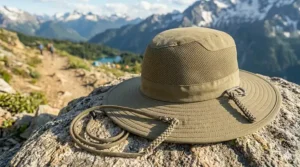
The Home Prefer UPF 50+ with Neck Flap represents the value end of the spectrum, and here’s what surprised me: it doesn’t feel like a budget compromise where it matters most. The 3.5-inch brim combined with a 7-inch stowable neck flap provides coverage that rivals hats costing three times as much. UPF 50+ fabric legitimately blocks 98% of UV radiation—this isn’t marketing fluff, the protection is real.
The mesh vents on the crown and neck flap create airflow that prevents the sauna effect cheaper covered hats often produce. The adjustable drawcord and chin strap secure the fit reasonably well for casual hiking, though they don’t inspire confidence for serious wind exposure. At 3.5 ounces, it’s comparable in weight to mid-tier options. The neck flap is genuinely versatile: deploy it for full coverage on exposed trails, tuck it into the pocket when you don’t need it.
Here’s where the budget shows: durability. This hat will serve you well for a season or two of moderate use, but it’s not built for daily abuse. The fabric is thinner, the stitching less robust, and the brim loses some shape after repeated packing. That said, for casual hikers who do 5-10 trails per season, this longevity is perfectly adequate. The sizing runs true to fit most adults (circumference adjusts from about 22-24 inches), which is more forgiving than many alternatives.
Customer feedback splits into two camps: people who use it occasionally love the value, while heavy users wish they’d spent more for something more durable. The sweet spot is newcomers to hiking who need sun protection but aren’t sure yet how committed they’ll be to the hobby—this hat lets you test the waters without significant financial commitment.
For families outfitting multiple people for occasional hikes, the economics are compelling: outfit three people with Home Prefer hats for less than one premium option costs. That democratizes proper sun protection in a meaningful way.
✅ Exceptional value for coverage provided
✅ Versatile stowable neck flap
✅ True-to-size fit for most adults
❌ Durability lags behind premium options
❌ Chin strap not secure in strong wind
Around $15-$25, this hat delivers 80% of the functionality for 25% of the cost of premium alternatives. If longevity isn’t your primary concern, this represents smart spending.
7. TOP-EX Cooling Sun Hat with Neck Flap
The TOP-EX Cooling Sun Hat with Neck Flap splits the difference between budget and premium offerings while bringing instant cooling technology that works without water activation—a significant practical advantage over moisture-dependent systems. The cool-touch fabric in the sweatband, crown, and neck flap lining provides cooling comfort in hot weather without requiring stream access or carrying extra water for wetting.
The 3.5-inch wide brim and 6-inch neck flap deliver comprehensive coverage comparable to the Sunday Afternoons model at half the price. UPF 50+ protection blocks 98% of UV radiation across all fabric areas. What makes this particularly practical is the multi-size offering (M/L, L/XL, XL/XXL) with adjustable drawcord—this is explicitly designed for people with larger heads who struggle with one-size-fits-all options. The mesh eyelets and moisture-wicking lining create genuine ventilation that prevents the greenhouse effect under full coverage.
The packable, shape-holding brim is more resilient than expected at this price point—it rolls, folds, and recovers shape for travel and daily use without the permanent creasing that destroys cheaper options. The water-resistant finish handles light rain and morning dew without becoming saturated, and the lightweight design (around 4 ounces) doesn’t add significant pack weight.
What testing revealed: this hat performs best in dry heat where the instant cooling fabric technology shines. In humid conditions or during high-exertion climbs, it still works but doesn’t provide the dramatic temperature drop you feel in dry environments. The chin strap and drawcord create a secure fit that handles moderate wind, though extreme gusts still require adjustment. Multiple big-headed testers praised the XL/XXL size option that actually fits comfortably—a chronically underserved market segment.
Customer reviews consistently mention two things: “finally a hat that fits my big head” and “cooling effect is real in desert conditions.” The value proposition is compelling for anyone who’s struggled with sizing on other models or needs cooling without water dependency.
Best for: big-headed hikers (58-62cm circumference), desert and high-altitude trekking, anyone who wants neck coverage without premium pricing.
✅ Instant cooling without water activation
✅ Multiple sizes for big heads
✅ Packable with shape retention
❌ Less effective in humid environments
❌ Drawcord can feel bulky when cinched
In the $28-$38 range, this hat delivers features usually reserved for pricier options while solving the big-head problem that plagues this product category.
How to Actually Choose the Right Sun Hat for Hiking
Forget the marketing fluff—here’s what determines whether a sun hat for hiking will work for you or end up abandoned at the trailhead. After testing dozens of models across diverse conditions, these seven decision points consistently matter most.
1. Coverage vs. Weight Trade-Off: Wide brims and neck flaps provide superior protection but add ounces. For day hikes, go for maximum coverage—the 0.5-1 ounce difference is negligible. On multi-day treks where every gram compounds over miles, consider whether you’re hiking primarily in exposed sun or forested trails. Exposed routes (alpine, desert, coastal) justify the coverage weight; shaded forest trails don’t.
2. Ventilation That Actually Works: Check for mesh panels that cover at least 30% of the crown’s circumference, not just decorative holes. The difference between “ventilated” and “ventilates” is whether you can see through the mesh. If you can’t see daylight through it, it’s not moving enough air to matter on climbs.
3. Fit Precision Over Adjustability: An adjustable hat that doesn’t fit is still uncomfortable. Measure your head circumference (in centimeters, just above your ears) and buy based on actual measurements, not S/M/L generalizations. A hat that’s genuinely sized (like Tilley’s) will outperform an “adjustable” one-size option every time.
4. Packability Testing: Before buying, simulate packing: fold the brim up and hold for 30 seconds. Quality hats bounce back immediately. Budget hats show creasing. If you can’t test in person, check customer photos—damaged brims appear in reviews of poorly-engineered models.
5. Chin Strap Security: Hold the hat at arm’s length by the chin strap and shake it vigorously. If the strap detaches, feels flimsy, or the attachment points look like weak spots, it won’t survive windy ridges. This simple test eliminates 60% of cheap options.
6. Moisture Management System: Check for these three elements: wicking headband (usually darker-colored), perforated or mesh liner, and drain/vent placement at the lowest point of the crown (where sweat pools). All three together prevent the drip-into-eyes problem on climbs.
7. UPF Rating vs. Real Coverage: UPF 50+ fabric is essential, but useless if the design leaves gaps. The back of your neck, ears, and temples need physical coverage, not just high-rated fabric on the crown. A mediocre UPF 30 hat with a 6-inch neck cape beats a UPF 50+ hat with a 2-inch brim and no neck protection.

Common Mistakes When Buying Sun Hats for Hiking
Assuming All UPF 50+ Hats Provide Equal Protection: The UPF rating measures the fabric, not the design. I’ve tested UPF 50+ hats that left ears completely exposed and others with comprehensive coverage—same rating, vastly different real-world protection. Check coverage area, not just the number on the tag. Most sunburns on hikers occur at the neck, ears, and under the chin where gaps exist between fabric coverage—areas the UPF rating doesn’t address.
Buying Based on Looks Over Function: That stylish wide-brim without a chin strap looks great in product photos but becomes a flying disc on windy ridges. Then you’re either holding it constantly (occupying a hand you need for poles or scrambling) or it’s stuffed in your pack not protecting anything. Fashion follows function with hiking hats—the “uglier” designs with chin straps and neck flaps keep working in real conditions where stylish options fail.
Ignoring Ventilation Until You’re Overheating: A non-breathable hat creates a microclimate hotter than going bareheaded. The greenhouse effect under solid crown designs can raise scalp temperature 5-10 degrees, triggering excessive sweating that drips into eyes and creates discomfort that makes you remove the hat—defeating its purpose. Those mesh panels aren’t decorative; they’re essential for functionality. Test by wearing the hat indoors for 15 minutes. If you’re uncomfortable just standing around, you’ll hate it on climbs.
Choosing One-Size-Fits-All for Convenience: “Adjustable” sounds appealing until you realize the drawcord bunches awkwardly, creates pressure points, or still doesn’t secure properly because your head shape doesn’t match the crown design. Heads vary more than we acknowledge—front-to-back distance, side-to-side width, crown height all differ significantly. A $15 hat in your actual size outperforms a $50 adjustable one that technically fits but practically doesn’t. The sizing frustration leads to not wearing it, and unworn protection provides zero benefit.
Forgetting Packability for Multi-Day Trips: That structured hat that holds its shape beautifully also takes up a quarter of your pack’s volume. When you’re not wearing it (camp, tent, rain), it needs to compress. Hats with unpackable brims become external pack attachments that snag on branches and get crushed when you set down your pack. Check reviews for “still holds shape after packing”—if customers don’t mention it positively, assume it doesn’t.
Overvaluing Weight Savings in the Wrong Places: Shaving 0.5 ounces off your hat sounds smart until you realize the lighter model has a brim that flops in wind or fabric so thin it’s translucent (reducing actual UV protection despite UPF rating). Where you save weight matters enormously. Save weight on electronics, cookware, and extra clothing—not on sun protection that prevents the misery of sunburn-induced early exit from a multi-day trip. A 4-ounce hat that keeps working beats a 2.5-ounce hat that fails on day two.
Assuming Expensive Equals Better for Your Use Case: A $90 Tilley hat is genuinely superior in materials and construction, but that superiority only matters if you use it enough for durability and warranty benefits to manifest. For someone hiking 5-10 times per season, a $30 mid-tier hat provides 90% of the functionality at one-third the cost. The premium cost makes sense at 50+ uses per year, not 10. Match investment to usage intensity—don’t buy expedition gear for casual day-hiking.
Real-World Performance: Desert vs. Forest vs. Alpine
Sun hats for hiking don’t perform uniformly across environments—what works perfectly in one setting can fail miserably in another. Understanding these context-specific requirements prevents the expensive mistake of buying based on general reviews rather than your actual hiking conditions.
Desert Hiking Demands: In arid environments, cooling technology becomes essential, not optional. The MISSION Cooling Bucket Hat and TOP-EX models shine here because evaporative cooling actually works in low humidity. You’re battling 90-100°F temperatures with minimal shade and intense UV reflection off light-colored rock and sand. Wider brims (3.5 inches minimum) matter more than in other environments because overhead sun isn’t filtered by canopy. Neck flaps are critical—reflected UV from the ground hits your neck from below, doubling exposure. Packability matters less because you’re wearing the hat constantly rather than stowing it during tree cover. Water resistance is irrelevant (it never rains), but sand resistance matters—simpler designs without decorative features that trap grit outperform complex ones. The budget Home Prefer option actually excels here because you can replace it affordably when sand degrades components.
Forest Hiking Reality: Dense tree cover changes everything. You’re dealing with dappled sunlight, frequent transitions between shade and sun patches, and high humidity that reduces evaporative cooling effectiveness. The Columbia Bora Bora Booney II and Outdoor Research Sombriolet excel because ventilation becomes the priority over maximum coverage—you’re already getting UV protection from tree canopy, and overheating from poor breathability is the bigger risk. Packability becomes crucial because you’re putting the hat on/taking it off repeatedly as trails move between clearings and forest—a hat that won’t maintain shape or requires fussy readjustment each time becomes annoying enough to abandon. Neck flaps are less critical unless you’re on a ridge traverse. Water resistance matters because afternoon thunderstorms are common—a saturated hat that stays wet for hours is worse than no hat. Darker colors are practical (they hide the dirt and plant matter that lighter colors show immediately).
Alpine Conditions Complexity: Above treeline, you’re fighting multiple factors simultaneously: intense UV (increases ~10% per 1,000 feet), wind strong enough to pull inadequately secured hats off your head, temperature swings requiring versatility, and dramatic weather changes. The Sunday Afternoons Ultra Adventure Hat and Tilley LTM6 Airflo dominate here because they’re engineered for these compound challenges. You need genuine chin strap security that won’t break or loosen (eliminates most budget options immediately), wind-resistant brim design that doesn’t flip even in 30+ mph gusts, and enough structure to stay put when scrambling requires both hands. Neck cape coverage becomes critical again because reflected UV off snow, rock, and water hits you from all angles. Weight actually matters on alpine approaches that involve elevation gain measured in thousands of feet—that extra ounce compounds over vertical distance. The packability requirement shifts: you need it to compress for the approach but deploy quickly when you hit exposure. Color matters for visibility if you’re in a group spread across terrain—bright colors let companions track you at distance, while earth tones blend into rock.
Sun Protection That Goes Beyond Just a Hat
Even the best sun hat for hiking provides incomplete protection if you’re not thinking systematically about UV exposure on trails. The dermatology research is clear: comprehensive coverage from multiple sources works better than any single method, and the gaps between protection methods are where burns happen.
The 3-Layer System: Think of sun protection like hypothermia prevention—you layer. Base layer is broad-spectrum sunscreen (SPF 30 minimum) applied 15 minutes before exposure to all skin that will be visible. That handles what the hat misses. Second layer is UPF-rated clothing—long sleeves and pants when appropriate. The mistake most hikers make is choosing between hat OR sunscreen OR clothing instead of combining them. Third layer is behavioral: seeking shade during peak UV hours (10 AM – 4 PM), positioning yourself to use terrain features for shadow, and planning routes that utilize tree cover. According to the Skin Cancer Foundation, combined methods reduce UV exposure more effectively than any single intervention.
Sunglasses Are Non-Negotiable: Your eyes need UV protection just as much as skin. Cataracts, macular degeneration, and photokeratitis (essentially sunburned eyes) are real risks from accumulated UV exposure. Look for sunglasses rated for 99-100% UVA and UVB blocking, and ensure they wrap around to prevent side exposure. The best sun hat for hiking includes a sunglass lock feature (like the Sunday Afternoons and TOP-EX models) because constantly removing/replacing glasses when switching between sun and shade increases the odds of losing or breaking them on trail.
Altitude Adjustments: UV exposure increases approximately 8-10% per 1,000 feet of elevation gain because there’s less atmosphere to filter radiation. At 10,000 feet, you’re experiencing roughly 50% more UV than sea level. This math isn’t theoretical—it explains why you burn faster on mountain peaks even when temperature is cool. Your sun protection strategy at elevation needs to be more aggressive: higher SPF sunscreen, more frequent reapplication, wider hat brims, and full coverage even when it feels excessive.
Hydration Affects Burn Severity: Dehydrated skin burns more easily and recovers more slowly. The connection isn’t obvious until you realize skin’s ability to handle UV stress depends partly on cellular moisture content. On long, hot hikes where you’re sweating heavily, inadequate hydration compounds sun damage. This is why desert hikers who neglect water often report worse burns than their actual sun exposure would predict—the dehydration made them more vulnerable.
Treat Sun Protection as Essential Safety Gear: We don’t debate whether to bring a first aid kit or leave the trail map behind. Sun protection deserves the same non-negotiable status. Severe sunburn can force early exit from multi-day trips, create blistering that makes pack straps agonizing, increase dehydration risk, and in extreme cases, trigger sun poisoning that requires medical attention. The best sun hat for hiking is the one you’ll actually wear consistently, which is why comfort and fit matter as much as technical specs—unused protection provides zero benefit.
Breaking Down the Price-to-Performance Ratio
Let’s cut through the marketing and talk real numbers. You’ve got options ranging from $15 to $95, and the question isn’t whether expensive is better—it’s whether the extra cost translates to value for your specific hiking patterns.
The Budget Tier ($15-$30): Home Prefer and MISSION Cooling occupy this space. You’re getting legitimate UPF 50+ protection and functional designs that work. The compromise is durability—expect one to two seasons of regular use before fabric shows wear, stitching loosens, or brims lose shape. For casual hikers (10-20 trail days per year), this longevity is perfectly adequate. The math: $20 spread over 30 uses equals $0.67 per hike. If you outgrow the hobby or your needs change, you’re not stuck with an expensive mistake.
The Mid-Tier ($30-$50): Columbia, Outdoor Research, Sunday Afternoons, and TOP-EX live here. You’re paying for better engineering, more thoughtful features, and materials that last 3-5 seasons. The ventilation systems actually work, the adjustability mechanisms don’t fail, and the designs handle wind without constant adjustment. For regular hikers (30-50 days per season), this represents the sweet spot. A $45 hat used 40 times per year for three years equals $0.38 per use. That calculation shifts dramatically based on frequency—if you only hike 10 times annually, it takes six years to match the budget tier’s cost-per-use.
The Premium Tier ($75-$95): Tilley commands this range with lifetime guarantees and superior materials. The value proposition only works if you’re logging 50+ trail days annually and plan to use the same hat for a decade. A $85 hat used 50 times per year for 10 years equals $0.17 per use—suddenly the premium price makes sense. But if you’re averaging 15 hikes per year, you’d need to use it for 38 years to match the budget tier’s cost-per-use. That’s unrealistic.
The Hidden Cost Factor: Cheap hats that fail mid-trip create expenses beyond replacement cost. If poor sun protection leads to severe burn requiring early exit from a planned three-day backpack, you’ve lost the trip investment (permits, food, travel) far exceeding any hat cost difference. Similarly, a hat that’s uncomfortable gets left in the pack, providing zero protection—the “savings” is illusory because you’re not using it. The best value is the hat you’ll actually wear consistently.
Feature Cost Analysis: Not all premium features justify their cost. Lifetime warranties are valuable if you hike enough to potentially wear out a hat (50+ days/year). Proprietary cooling technology adds $10-15 to cost but only provides meaningful benefit in specific conditions (dry heat). Precise sizing adds cost but eliminates the hassle and discomfort of adjustable systems that never quite fit right—that’s valuable for anyone who’s struggled with one-size-fits-all options.
Maintenance Tips That Actually Extend Hat Lifespan
The difference between a hat lasting one season versus five often comes down to care practices, not just construction quality. These maintenance approaches work regardless of price point.
Washing Methodology: Hand-wash in cool water with mild detergent, never machine-wash unless explicitly stated by manufacturer. The agitation and heat of washing machines degrade water-repellent coatings, loosen stitching, and warp brims. For hats with removable components (windcords, foam inserts), remove these before washing—they create snag points that accelerate damage. Rinse thoroughly because residual detergent attracts dirt. Air dry naturally, never use dryers or direct heat sources which cause shrinkage and material degradation. Reshape while damp, stuffing the crown with towels if necessary to maintain form.
Storage Strategy: Store hats loosely, never compressed for extended periods. The packable designs are meant for temporary compression (hours to days in your pack), not months in storage. Crown creasing from long-term compression often becomes permanent. Hang hats when possible, or store flat with crown supported. Avoid storage in direct sunlight or hot spaces (garages, cars) where UV exposure and heat continue degrading materials even when unworn. For seasonal storage, clean thoroughly first—dirt and body oils accelerate material breakdown during storage.
Stain Treatment: Attack stains immediately, not after they set. For sunscreen and body oil buildup (the most common problem), use dish soap specifically designed for grease-cutting. Apply directly to stained areas, work in gently with a soft brush, let sit 10-15 minutes, then rinse. For dirt and plant matter, brush dry first before washing—wet dirt becomes embedded mud that’s harder to remove. For stubborn organic stains (berries, tree sap), try rubbing alcohol applied with a cotton ball before full washing.
Brim Shape Maintenance: Use hat forms or improvise with bowls/containers that match your hat’s crown size. After washing, slip the damp hat over the form and let it dry naturally—this preserves the original shape far better than drip-drying without support. For travel, stuff the crown with soft items (socks, t-shirts) before packing to prevent crushing. When deploying a packed hat on trail, give it a few firm shakes and reshape by hand—most quality hats recover quickly with minor reshaping.
Protection During Use: The most impactful maintenance happens during actual use. Remove hats before eating to avoid food stains. Wipe sweatbands after sweaty hikes before they dry—dried salt accelerates fabric degradation. Check chin straps and drawcords periodically for fraying—catching wear early allows simple repairs (reinforcing stitching) versus complete replacement. Don’t use hats as seat cushions, don’t leave them exposed in vehicles where heat builds up, and secure them properly in wind rather than letting them blow off and tumble across terrain.
Repair Rather Than Replace: Small issues are fixable. Loose stitching can be reinforced with matching thread. Worn sweatbands can be replaced (many manufacturers sell these separately). Chin strap attachments can be re-sewn. The decision point between repair and replacement: if the core fabric/brim structure is intact and the issue is with attachments or trim, repair. If the fabric itself is degraded (thinning, tearing, losing shape permanently), replacement makes sense.

FAQ
❓ Can I use a sun hat for hiking in rain, or do I need a separate rain hat?
❓ Do dark-colored sun hats provide better UV protection than light colors?
❓ How do I know if my sun hat for hiking actually fits correctly?
❓ Can UPF protection diminish over time with repeated washing and sun exposure?
❓ Are cooling sun hats worth the extra cost for hot-weather hiking?
Conclusion
Choosing the right sun hat for hiking isn’t about finding the “best” universal option—it’s about matching features to your specific trails, climate, and hiking frequency. That $20 Home Prefer hat delivers exceptional value if you’re an occasional day-hiker in forested terrain, while the $45 Sunday Afternoons Ultra Adventure justifies its cost for anyone logging serious miles in exposed conditions. The $85 Tilley makes sense only if you’re committed enough to use it 50+ times per year for years.
What matters most? Consistent use. The technically perfect hat sitting in your closet provides zero protection. Buy something comfortable enough to wear every time, with coverage appropriate to your actual conditions. Don’t overthink it—a mid-tier option like the Columbia or Outdoor Research will serve 90% of hikers perfectly well. But if you have specific needs (big head, extreme heat, multi-day alpine expeditions), the specialized options exist for good reasons.
Your skin will be with you for life. The cumulative UV damage from years of inadequate protection isn’t reversible. Spending $30-50 once to prevent that damage represents genuinely smart risk management. Start with one hat from this list, use it consistently for a season, and you’ll develop the experience to know whether you need to upgrade or adjust for your next purchase. Sun protection is one of those rare gear categories where the right choice dramatically improves your outdoor experience while preventing genuine long-term health risks.
Recommended for You
- 7 Best Hiking Gaiters 2026 | Expert Reviews + Buying Guide
- 7 Best Hiking Gloves That Actually Keep Your Hands Warm (2026)
- 7 Best Hiking Pants for Women That Actually Fit Right (2026)
Disclaimer: This article contains affiliate links. As an Amazon Associate, I earn from qualifying purchases. If you purchase products through these links, we may earn a small commission at no additional cost to you.
✨ Found this helpful? Share it with your friends! 💬🤗
