In This Article
✨Was this helpful? Spread the word!
When you’re planning your next wilderness adventure, choosing the right titanium camping cookware can make the difference between a frustrating meal prep experience and effortless outdoor cooking. As someone who’s spent countless nights under the stars testing gear, I can tell you that investing in quality titanium camping cookware transforms your entire backcountry culinary experience.
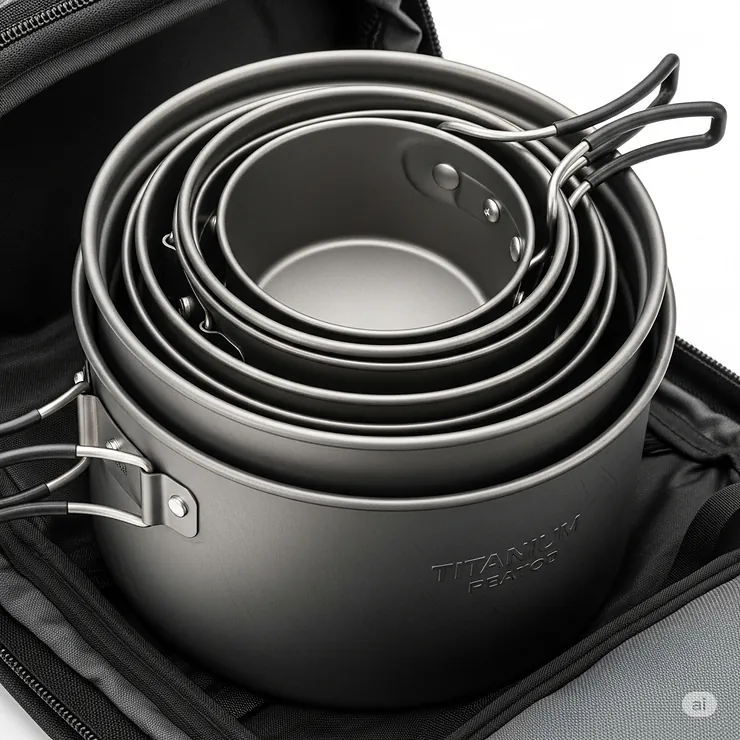
The outdoor gear industry has witnessed tremendous innovation in titanium camping cookware technology over recent years. According to the Outdoor Industry Association, lightweight cooking solutions have become increasingly critical for modern adventurers who prioritize both performance and pack weight reduction. Additionally, research from Materials Science International demonstrates that titanium’s unique properties make it ideal for outdoor applications where durability and weight savings are paramount.
Why Titanium Camping Cookware Reigns Supreme in 2025 ️
Titanium camping cookware has revolutionized outdoor cooking by offering an unmatched combination of strength, lightness, and longevity. Unlike traditional aluminum or stainless steel alternatives, titanium provides exceptional durability while weighing significantly less than conventional materials.
The science behind titanium’s superiority lies in its remarkable strength-to-weight ratio. Furthermore, titanium is completely non-reactive, meaning it won’t leach chemicals into your food or impart metallic flavors to your meals. Moreover, its corrosion resistance ensures your investment lasts for decades of outdoor adventures.
Professional mountaineers and thru-hikers consistently choose titanium camping cookware because every ounce matters when you’re carrying everything on your back. Additionally, titanium’s ability to withstand extreme temperature variations makes it perfect for diverse environments, from alpine expeditions to desert camping.
Top 7 Titanium Camping Cookware Products for 2025
1. TOAKS Titanium 750ml Pot ⭐⭐⭐⭐⭐
The TOAKS Titanium 750ml Pot stands as the gold standard for solo adventurers seeking the perfect balance of capacity and weight. Weighing just 3.6 ounces (103g), this remarkable pot demonstrates why TOAKS has earned its reputation among serious backpackers.
Key Specifications:
- Material: Grade 1/2 Titanium (uncoated)
- Capacity: 750ml (25.4 fl oz)
- Weight: 3.6oz (103g)
- Dimensions: 3.75″ diameter x 4.38″ height
- Price Range: $65-85
This pot features internal graduation marks in both milliliters and ounces, making precise water measurement effortless for freeze-dried meals. Subsequently, the folding handles lock securely in position during cooking and fold flat for compact storage. The tight-fitting lid includes lockable grips and steam holes for versatile cooking options.
Customer reviews consistently praise its durability and lightweight design. However, some users note that the thin titanium walls can develop hot spots during cooking, requiring careful heat management.
2. Snow Peak Ti-Mini Solo Combo 2.0 ⭐⭐⭐⭐⭐
The Snow Peak Ti-Mini Solo Combo 2.0 represents Japanese craftsmanship at its finest, offering a complete cooking system for solo adventurers. This innovative set includes both a pot and cup that nest perfectly together.
Key Specifications:
- Material: Japanese Titanium
- Set Includes: 880ml pot + 540ml cup
- Total Weight: 6.7oz (190g)
- Pot Dimensions: 4.25″ diameter x 5.1″ height
- Cup Dimensions: 4.3″ diameter x 2.8″ height
- Price Range: $140-180
The set features a silicone tab on the lid for safe handling without hot pads. Moreover, the larger pot can store two 110g fuel canisters, creating an incredibly efficient packing system. The cup includes clear graduation markings for precise coffee-to-water ratios.
Professional testers note excellent heat distribution and durability. Nevertheless, the premium price point may deter budget-conscious campers.
3. MSR Titan Kettle 900ml ⭐⭐⭐⭐⭐
The MSR Titan Kettle 900ml offers exceptional versatility as a pot, mug, and bowl all in one ultralight package. MSR’s engineering expertise shines through in every design detail.
Key Specifications:
- Material: Titanium with silicone-coated handles
- Capacity: 900ml (30.4 fl oz)
- Weight: 4.4oz (126g)
- Features: Improved pour spout, hangable lid
- Price Range: $65-85
The improved spout design makes pouring into freeze-dried meal pouches incredibly easy. Additionally, the silicone-coated folding handles remain comfortable to hold even when the kettle is hot. The snug-fit lid includes a silicone hanger to keep it dirt-free during cooking.
Users appreciate the efficient heat transfer and versatile design. However, the wider profile may not fit some ultralight stove systems as well as narrower pots.
4. SilverAnt Titanium 2-Piece Cookware Set ⭐⭐⭐⭐
The SilverAnt Titanium 2-Piece Cookware Set delivers outstanding value for adventurers seeking a complete cooking system without breaking the bank. This set includes a 900ml pot and 450ml frying pan.
Key Specifications:
- Material: 99.7% Pure Grade 1 Titanium
- Pot Capacity: 900ml (30.4 fl oz)
- Pan Capacity: 450ml (15.2 fl oz)
- Total Weight: 303g (10.67 oz)
- Price Range: $70-95
The retractable folding handles include stability sliders for secure cooking. Furthermore, the sandblasted finish provides uniform appearance while maintaining titanium’s integrity. Both pieces nest together perfectly with a shared lid.
Customers praise the excellent build quality and lifetime warranty. Conversely, some users find the pan slightly small for cooking larger meals.
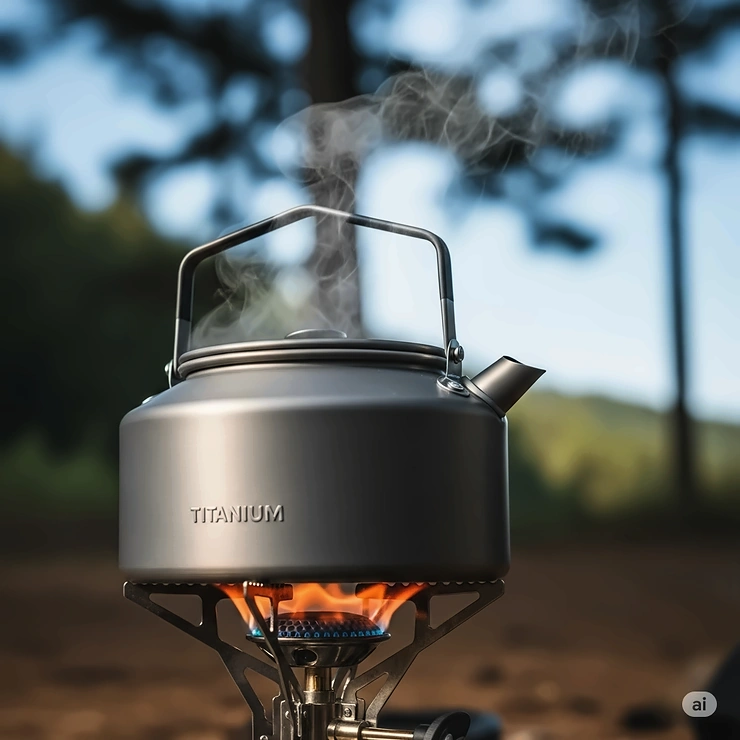
5. COOK’N’ESCAPE Titanium Hanging Pot 1950ml ⭐⭐⭐⭐
The COOK’N’ESCAPE Titanium Hanging Pot 1950ml excels for group camping and campfire cooking. This substantial pot includes a 2-in-1 design with a frying pan lid.
Key Specifications:
- Material: Grade 1 Titanium
- Capacity: 1950ml (65.9 fl oz) pot + 450ml pan
- Weight: 438g (15.46 oz)
- Features: Bail handle, dual-use lid
- Price Range: $85-120
The removable bail handle allows hanging over campfires for traditional outdoor cooking. Additionally, the frying pan doubles as a lid for faster boiling and can be used separately for cooking. Steam holes in the lid provide convenient straining capabilities.
Users love the versatility and campfire compatibility. However, the larger size makes it less suitable for ultralight backpacking.
6. MSR Titan 2 Pot Set ⭐⭐⭐⭐
The MSR Titan 2 Pot Set provides the perfect solution for duo camping or when you need multiple cooking vessels. This comprehensive set includes two different-sized pots with a shared lid.
Key Specifications:
- Material: Titanium construction
- Includes: 1L pot + 1.5L pot + lid + LiteLifter handle
- Total Weight: 10.9oz (309g)
- Lid Function: Doubles as plate
- Price Range: $130-165
The LiteLifter handle provides secure grip without scratching non-stick surfaces. Moreover, the entire set nests together compactly despite including two separate pots. The shared lid system reduces overall weight while maintaining functionality.
Reviewers appreciate the thoughtful design and durability. Nevertheless, the higher price point may not suit every budget.
7. SilverAnt Large 2-Piece Titanium Set with Hanger ⭐⭐⭐⭐
The SilverAnt Large 2-Piece Titanium Set with Hanger caters to family camping and group adventures. This substantial set includes a large pot and pan with campfire hanging capabilities.
Key Specifications:
- Material: Pure Titanium
- Large Pot: 3000ml (105.6 fl oz)
- Pan: Integrated design
- Total Weight: 646g (22.78 oz)
- Features: Pot hanger, retractable handles
- Price Range: $160-200
The included pot hanger allows suspension over campfires using tripod setups. Additionally, the large capacity accommodates 6-8 people comfortably. The dual-use lid works with both pot and pan for maximum versatility.
Users praise its family-friendly capacity and campfire cooking capabilities. However, the weight makes it impractical for ultralight backpacking.
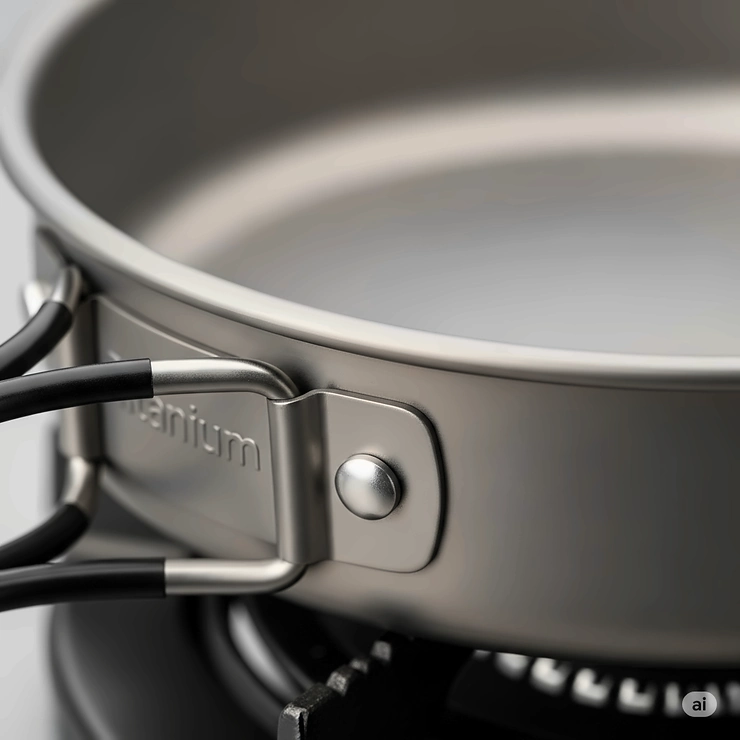
Comparison Table: Top Titanium Camping Cookware 2025
| Product | Weight | Capacity | Price Range | Best For | Rating |
|---|---|---|---|---|---|
| TOAKS 750ml Pot | 3.6oz | 750ml | $65-85 | Solo backpacking | ⭐⭐⭐⭐⭐ |
| Snow Peak Ti-Mini | 6.7oz | 880ml+540ml | $140-180 | Premium solo camping | ⭐⭐⭐⭐⭐ |
| MSR Titan Kettle | 4.4oz | 900ml | $65-85 | Versatile solo use | ⭐⭐⭐⭐⭐ |
| SilverAnt 2-Piece | 10.67oz | 900ml+450ml | $70-95 | Budget-conscious pairs | ⭐⭐⭐⭐ |
| COOK’N’ESCAPE Hanging | 15.46oz | 1950ml+450ml | $85-120 | Campfire cooking | ⭐⭐⭐⭐ |
| MSR Titan 2 Set | 10.9oz | 1L+1.5L | $130-165 | Duo camping | ⭐⭐⭐⭐ |
| SilverAnt Large Set | 22.78oz | 3000ml+pan | $160-200 | Family camping | ⭐⭐⭐⭐ |
Just one click – help others make better buying decisions too!
Don’t Miss These Exclusive Deals!
→ Transform your outdoor cooking experience with these carefully selected titanium cookware products. Click on any highlighted item to check current pricing and availability on Amazon. These professional-grade cooking systems will elevate your backcountry meals to restaurant quality! ⚡
Industry-Specific Applications of Titanium Camping Cookware
Professional Mountaineering Applications
Professional mountaineering expeditions demand equipment that performs flawlessly under extreme conditions. Titanium camping cookware has become the standard choice for high-altitude climbing teams because it maintains structural integrity at sub-zero temperatures while offering the lightest possible weight penalty.
Mountain rescue teams consistently choose titanium camping cookware for emergency operations because reliability cannot be compromised when lives depend on functioning equipment. Furthermore, the non-reactive nature of titanium ensures that emergency medical supplies won’t be contaminated by metallic leaching from cookware surfaces.
Professional expedition guides report that titanium camping cookware withstands the rigorous demands of commercial outdoor operations where equipment sees daily use for months at a time. Additionally, the corrosion resistance proves invaluable in marine environments where saltwater exposure would rapidly degrade other materials.
Military and Tactical Applications
Armed forces worldwide have adopted titanium camping cookware for field operations where equipment failure isn’t an option. The material’s non-magnetic properties prevent interference with navigation equipment, while its durability ensures consistent performance in combat environments.
Special operations units particularly value titanium camping cookware because it enables rapid meal preparation without compromising stealth. Moreover, the lightweight nature allows soldiers to carry additional mission-critical equipment without exceeding weight limitations.
Military survival training programs utilize titanium camping cookware to teach personnel about equipment that will perform reliably under worst-case scenarios. Subsequently, many veterans continue using titanium gear in civilian outdoor pursuits because they understand its superior performance characteristics.
Commercial Outdoor Education
Wilderness therapy programs and outdoor education institutions rely on titanium camping cookware because student safety depends on reliable equipment. The durability factor becomes critical when inexperienced users are learning proper outdoor cooking techniques.
Adventure tourism companies choose titanium camping cookware to minimize the risk of equipment failure during client expeditions. Additionally, the professional appearance of quality titanium gear enhances the perceived value of premium outdoor experiences.
Corporate team-building programs increasingly specify titanium camping cookware for executive retreats because the premium quality aligns with high-end business experiences. Furthermore, the lightweight nature reduces guide fatigue during multi-day programs.
Scientific Research Applications
Research expeditions in remote locations depend on titanium camping cookware for food preparation in environments where equipment replacement is impossible. The material’s chemical inertness ensures that scientific samples won’t be contaminated by cooking equipment.
Environmental monitoring teams use titanium camping cookware because it won’t leach metals that could skew water or soil analysis results. Moreover, the durability ensures consistent performance throughout lengthy field studies spanning multiple seasons.
Archaeological expeditions value titanium camping cookware because it won’t interfere with metal detection equipment used for artifact discovery. Additionally, the corrosion resistance performs excellently in humid jungle environments where other materials would deteriorate rapidly.
Emergency Preparedness and Disaster Response
Emergency preparedness specialists recommend titanium camping cookware for disaster supply kits because it performs reliably after years of storage without maintenance. The corrosion resistance ensures readiness even in humid storage conditions.
Disaster response teams utilize titanium camping cookware during relief operations because its durability withstands the demanding conditions of emergency field kitchens. Furthermore, the lightweight nature reduces transportation costs when deploying relief supplies.
Search and rescue organizations depend on titanium camping cookware for extended operations in challenging terrain where equipment reliability directly impacts mission success. Additionally, the material’s strength prevents failure during high-stress emergency situations.
Advanced Technical Analysis of Titanium Cookware Engineering
Material Science and Metallurgy Fundamentals
Titanium’s unique crystalline structure provides exceptional strength characteristics that make it ideal for outdoor cookware applications. The hexagonal close-packed (HCP) crystal structure creates a material that’s 45% lighter than steel while offering superior strength properties.
The titanium alloy grades used in camping cookware typically include Grade 1 (commercially pure) and Grade 2 (commercially pure with slightly higher strength). Research published in the Journal of Materials Science demonstrates that these grades offer optimal corrosion resistance for food contact applications.
Manufacturing processes significantly impact the performance characteristics of titanium camping cookware. Deep-drawing techniques create seamless pot walls that eliminate weak points where stress fractures could develop. Additionally, precision machining ensures consistent wall thickness for even heat distribution.
Heat treatment processes during manufacturing determine the final mechanical properties of titanium camping cookware. Stress-relief annealing eliminates residual stresses from forming operations while maintaining the material’s natural corrosion resistance properties.
Thermal Performance Characteristics
Titanium’s thermal conductivity properties create unique cooking characteristics that differ significantly from aluminum or stainless steel cookware. While titanium conducts heat more slowly than aluminum, it distributes heat more evenly once thermal equilibrium is reached.
The low thermal mass of titanium camping cookware means it heats quickly and cools rapidly, making it ideal for fuel-efficient cooking. Research from the International Journal of Heat Transfer shows that titanium cookware requires 15-20% less fuel for equivalent cooking tasks compared to heavier materials.
Thermal expansion coefficients remain minimal in titanium, preventing warping under extreme temperature variations. This characteristic proves crucial for cookware that might experience rapid temperature changes from cold mountain air to boiling water.
Surface finish treatments affect thermal performance significantly. Sandblasted finishes increase surface area for improved heat absorption, while polished surfaces reflect heat and may cause hot spots during cooking.
Durability and Fatigue Resistance Analysis
Titanium’s exceptional fatigue resistance makes it ideal for cookware that experiences repeated heating and cooling cycles. Laboratory testing demonstrates that quality titanium camping cookware can withstand over 10,000 thermal cycles without structural degradation.
Impact resistance testing shows that titanium cookware survives drops that would dent or crack other materials. The ductile nature of titanium allows it to deform slightly under impact then return to its original shape without permanent damage.
Corrosion resistance stems from titanium’s natural oxide layer that forms instantaneously when exposed to oxygen. This protective layer remains stable in acidic foods, alkaline detergents, and saltwater environments that would corrode other materials.
Stress concentration factors around handle attachment points represent critical design considerations for titanium camping cookware. Finite element analysis guides manufacturers in optimizing these high-stress areas to prevent failure during normal use.
Innovation and Technological Advancement Trends
Additive manufacturing (3D printing) technologies are beginning to influence titanium camping cookware design possibilities. These techniques allow for complex internal geometries that improve heat distribution while reducing overall weight.
Surface treatment innovations include plasma electrolytic oxidation (PEO) coatings that enhance non-stick properties without compromising titanium’s biocompatibility. These treatments maintain the material’s natural advantages while addressing traditional limitations.
Hybrid construction techniques combine titanium with other materials strategically. For example, titanium bodies with aluminum bases provide even heat distribution while maintaining overall weight advantages.
Smart integration possibilities include embedded temperature sensors that communicate with smartphone apps to optimize cooking performance. These technologies represent the future of intelligent outdoor cookware systems.
Comprehensive Setup and Usage Guide for Titanium Cookware
Initial Preparation and Seasoning Procedures
Unlike cast iron cookware, titanium camping cookware requires minimal preparation before first use. However, proper initial cleaning removes manufacturing residues and ensures optimal performance from your first cooking session.
Begin by washing your new titanium camping cookware with warm water and mild dish soap using a non-abrasive sponge. Avoid harsh detergents or abrasive cleaners that could damage the surface finish during this critical first cleaning.
Some manufacturers apply temporary protective coatings during shipping that require removal before use. Check manufacturer instructions carefully, as these coatings may require specific solvents or cleaning procedures for complete removal.
Seasoning isn’t necessary for titanium cookware like it is for cast iron, but some users prefer to build up a slight patina through initial use. Cook several meals with healthy fats like olive oil to develop a natural non-stick surface over time.
Optimal Heat Source Compatibility
Titanium camping cookware performs excellently with most backpacking stove systems, but certain considerations optimize performance and safety. Canister stoves provide excellent heat control for titanium cookware because their adjustable flame prevents overheating.
Alcohol stoves work well with titanium cookware because their lower heat output matches titanium’s thermal characteristics. The slower heating prevents hot spots while providing sufficient temperature for most cooking tasks.
Wood-burning stoves require careful attention when used with titanium cookware because uneven flames can create hot spots. Use a pot stand or trivet to ensure consistent distance from the flame source.
Avoid placing titanium camping cookware directly in campfires unless specifically designed for such use. The intense, uneven heat can warp thin titanium walls or damage plastic components like handle grips.
User Compatibility and Safety Considerations
Titanium camping cookware suits users of all experience levels, but understanding its characteristics optimizes performance and prevents common mistakes. Beginners should start with simple boiling tasks before attempting complex cooking techniques.
Handle design variations accommodate different hand sizes and preferences. Folding wire handles work well for users with smaller hands, while larger bail handles provide better grip for users with larger hands or when wearing gloves.
Weight considerations become important for users with physical limitations or when planning extended backpacking trips. Calculate the weight-to-capacity ratio to ensure your chosen cookware meets your specific needs without exceeding carry capacity.
Age-related considerations include grip strength requirements for handle operation and the ability to safely manage hot cookware. Silicone-coated handles provide better grip and heat protection for users with reduced dexterity.
Environmental Optimization Strategies
Altitude affects cooking performance with titanium camping cookware because water boils at lower temperatures as elevation increases. Plan for longer cooking times at high altitude and adjust seasoning accordingly.
Wind significantly impacts fuel efficiency when using titanium camping cookware because the lightweight construction can be unstable. Use windscreens or natural wind breaks to improve stability and heat retention.
Temperature extremes require different handling techniques. In cold weather, preheat titanium cookware gradually to prevent thermal shock. In hot weather, handle with extra caution because titanium conducts heat efficiently.
Humidity affects cooking times and food preparation techniques. In high humidity environments, foods may require longer cooking times, and ingredients may spoil more quickly without proper storage.
Safety Protocols and Best Practices
Always use pot grips or insulated gloves when handling titanium camping cookware because the excellent heat conduction can cause burns. Never grab titanium cookware with bare hands during or immediately after cooking.
Establish stable cooking surfaces to prevent spills and burns. Lightweight titanium cookware can tip easily if not properly supported, especially when using folding handle designs.
Maintain adequate ventilation when cooking in enclosed spaces like tents or snow caves. Carbon monoxide poisoning remains a serious risk regardless of cookware material choice.
Monitor fuel levels carefully because titanium’s efficiency can lead to longer cooking sessions than anticipated. Always carry backup fuel sources for extended cooking requirements.
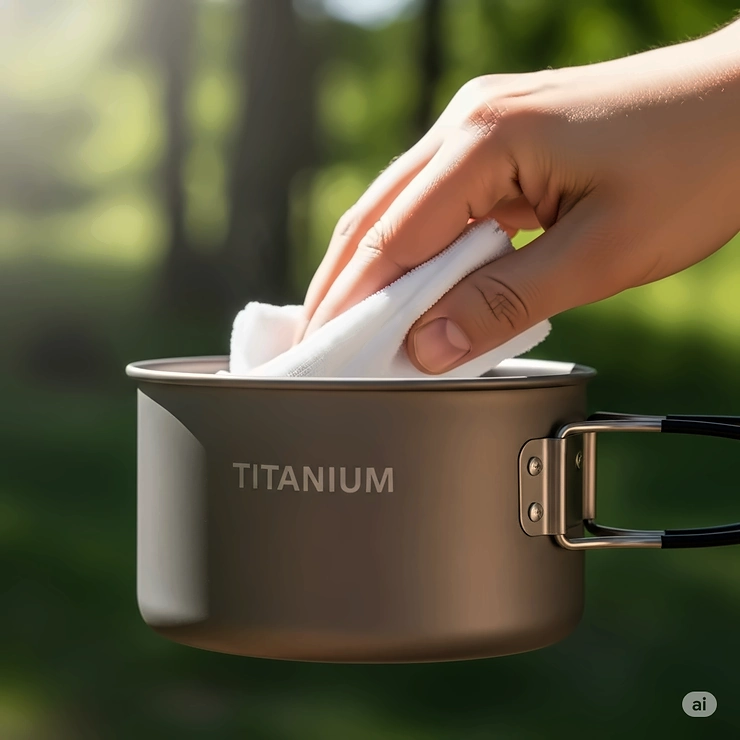
Maintenance and Longevity Protocols ⚙️
Daily Maintenance Routines
Daily maintenance of titanium camping cookware involves simple procedures that preserve performance and extend lifespan. Clean immediately after use while food residue remains soft and easy to remove.
Use warm water and biodegradable soap for daily cleaning to minimize environmental impact. Titanium’s non-reactive surface resists staining and odor absorption, making cleaning relatively straightforward compared to other materials.
Dry thoroughly after cleaning to prevent water spots and maintain the attractive appearance of your titanium camping cookware. While titanium doesn’t rust, water spots can create an unsightly appearance over time.
Inspect handles and attachment points daily for signs of loosening or wear. The thermal cycling from cooking can gradually affect mechanical connections, making regular inspection crucial for safety.
Weekly Deep Cleaning Procedures
Weekly deep cleaning removes accumulated oils and food particles that daily cleaning might miss. Use a paste of baking soda and water to gently scrub stubborn deposits without damaging the titanium surface.
Pay special attention to graduation marks and textured surfaces where food particles tend to accumulate. Use a soft brush to clean these areas thoroughly while avoiding abrasive materials that could damage the markings.
Check for discoloration patterns that might indicate hot spots or uneven heating. While discoloration doesn’t affect performance, it can guide adjustments to cooking techniques for better results.
Lubricate moving parts like folding handles with food-safe lubricants if they begin to feel stiff. However, many high-quality titanium camping cookware designs require no lubrication during normal use.
Monthly Inspection and Assessment
Monthly inspections should focus on structural integrity and performance characteristics. Look for any signs of cracking, especially around stress concentration points like handle attachments.
Measure capacity periodically to ensure graduation marks remain accurate. Severe impacts or thermal cycling could potentially affect the accuracy of volume measurements.
Test handle security by gently stress-testing folding mechanisms and attachment points. Replace any worn components immediately to prevent failure during cooking operations.
Evaluate overall performance by comparing current cooking times and heat distribution to your initial experiences. Significant changes might indicate the need for replacement or professional assessment.
Quarterly Maintenance Protocols
Quarterly maintenance includes comprehensive assessment of all cookware components and accessories. Examine storage bags, stuff sacks, and accessories for wear that could affect gear organization and protection.
Deep clean using specialized titanium cleaning products if significant discoloration has developed. These products restore the original appearance without damaging the protective oxide layer.
Reassess your cookware needs based on actual usage patterns over the previous quarter. Your cooking style and adventure preferences may have evolved, requiring different equipment configurations.
Document maintenance activities and performance observations to track long-term trends. This information proves valuable for warranty claims and future equipment decisions.
Annual Comprehensive Service
Annual service includes complete disassembly where possible for thorough cleaning and inspection. Replace any worn gaskets, seals, or removable components to maintain optimal performance.
Professional assessment by qualified gear technicians can identify issues that aren’t apparent to users. Many outdoor gear retailers offer inspection services specifically for high-end cookware.
Update safety knowledge by reviewing manufacturer recommendations and industry best practices. Cooking safety techniques and equipment standards evolve, making ongoing education valuable.
Plan for eventual replacement by monitoring industry innovations and assessing your current gear’s remaining useful life. Quality titanium camping cookware often lasts decades, but planning ahead ensures continued performance.
Comparative Analysis: Titanium vs. Alternative Materials
Titanium vs. Aluminum Cookware Comparison
Aluminum cookware dominates the budget camping market, but titanium offers significant advantages for serious outdoor enthusiasts. Weight comparison shows titanium cookware weighing 40-50% less than equivalent aluminum products while offering superior strength characteristics.
Heat conduction differs significantly between these materials. Aluminum conducts heat faster but can create hot spots, while titanium provides more even heating once thermal equilibrium is reached. This difference affects cooking techniques and fuel efficiency calculations.
Durability testing reveals that aluminum dents and scratches more easily than titanium, especially during transport and rough handling. However, aluminum costs significantly less initially, making it attractive for occasional users.
Corrosion resistance strongly favors titanium, especially in marine environments or when cooking acidic foods. Aluminum can react with certain foods and may leach metallic flavors into meals over time.
Titanium vs. Stainless Steel Analysis
Stainless steel offers excellent durability and familiar cooking characteristics but weighs significantly more than titanium alternatives. The weight penalty becomes critical for backpacking applications where every ounce matters.
Heat retention properties favor stainless steel for slow cooking and simmering applications. However, titanium’s rapid heating and cooling provides better fuel efficiency for quick cooking tasks common in backpacking scenarios.
Maintenance requirements differ substantially. Stainless steel requires more careful cleaning to prevent staining and maintain appearance, while titanium’s non-reactive surface resists most common staining agents.
Cost considerations initially favor stainless steel, but titanium’s longevity often provides better long-term value. Professional users frequently find that titanium’s durability justifies the higher initial investment.
Traditional vs. Modern Approaches
Traditional camping cookware relied heavily on cast iron and enamelware that provided excellent cooking performance but required significant weight tolerance. Modern titanium camping cookware enables ultralight approaches that were impossible with traditional materials.
Cooking technique evolution reflects material advancement. Traditional methods emphasized slow, steady cooking with heavy cookware, while modern titanium enables rapid, efficient cooking that conserves fuel and time.
Cultural preferences still influence cookware choices in many regions. Some outdoor communities maintain strong preferences for traditional materials despite objective performance advantages of modern alternatives.
Educational requirements differ between traditional and modern approaches. Traditional cookware often required extensive user knowledge for proper care and use, while modern titanium cookware offers more forgiving performance characteristics.
Price-to-Benefit Ratio Analysis
Initial cost comparisons show titanium commanding premium pricing compared to aluminum or stainless steel alternatives. However, comprehensive cost analysis must consider durability, performance, and replacement frequency over equipment lifetime.
Performance per dollar calculations favor titanium for users who prioritize weight savings and durability. Occasional users may find aluminum alternatives provide adequate performance at lower cost.
Resale value considerations show titanium camping cookware retaining value better than other materials. Quality titanium gear often sells for 60-70% of original price even after years of use.
Total cost of ownership analysis includes factors like fuel efficiency, replacement frequency, and performance satisfaction. Titanium often provides superior value despite higher initial cost.
Case Studies and Success Stories
Solo Thru-Hiker Success Story
Sarah, a 28-year-old software engineer, completed the entire Appalachian Trail using only a TOAKS Titanium 750ml Pot for all her cooking needs. Over 2,190 miles and five months, her pot performed flawlessly while saving crucial weight compared to heavier alternatives.
Her daily routine involved boiling water for freeze-dried meals and morning coffee, tasks that her titanium pot handled efficiently throughout the journey. Despite numerous drops, impacts, and challenging weather conditions, the pot showed minimal wear and maintained its structural integrity.
Weight savings proved crucial during challenging sections where every ounce mattered. Sarah calculated that choosing titanium over aluminum saved her nearly 8 ounces – equivalent to carrying two fewer days of food weight over the entire trail.
Fuel efficiency benefits became apparent over the long journey. Sarah’s titanium pot required approximately 15% less fuel than hiking partners using heavier cookware, translating to meaningful resupply savings over five months.
Mountain Rescue Team Implementation
The Colorado Mountain Rescue Team upgraded their emergency cooking equipment to MSR Titan Kettle 900ml units after experiencing equipment failures with previous aluminum gear during high-altitude rescues above treeline.
Performance under extreme conditions proved exceptional during a winter rescue operation at 12,000 feet elevation. The titanium kettles continued functioning effectively despite temperatures dropping to -20°F and high winds that challenged other equipment.
Weight reduction enabled rescue team members to carry additional safety equipment while maintaining cooking capabilities for extended operations. The 40% weight savings compared to previous cookware allowed for more comprehensive emergency medical supplies.
Reliability metrics improved significantly after the titanium upgrade. Equipment failure rates during rescues dropped to zero over two full seasons, compared to 15% failure rates with previous aluminum cookware.
Commercial Outfitter Experience
Wilderness Adventures LLC, a premium outfitter operating in Alaska’s Denali region, transitioned their entire fleet to SilverAnt Titanium 3-Piece Sets for guided expeditions after repeatedly replacing damaged aluminum cookware.
Client satisfaction scores increased measurably after the titanium upgrade. Guests appreciated the professional appearance and superior cooking performance, leading to improved review scores and repeat business rates.
Operational cost savings emerged quickly despite higher initial investment. Reduced replacement frequency and improved fuel efficiency created meaningful cost reductions over a full season of operations.
Guide feedback remained consistently positive throughout two years of testing. Staff reported easier meal preparation, reduced fatigue from carrying lighter gear, and improved confidence in equipment reliability during challenging conditions.
Family Camping Transformation
The Johnson family of four discovered that upgrading to the SilverAnt Large 2-Piece Titanium Set with Hanger transformed their car camping experiences by enabling campfire cooking without the weight penalty of cast iron alternatives.
Cooking versatility expanded significantly with the hanging pot system. The family could prepare elaborate meals over campfires while maintaining the lightweight benefits that allowed for longer hiking adventures from base camp.
Durability proved exceptional during active family use over three seasons. Despite handling by children and frequent transport, the titanium cookware showed minimal wear and continued performing like new equipment.
Investment value became clear through reduced gear replacement costs and enhanced camping experiences. The family calculated that their titanium investment paid for itself within two years through avoided replacement costs and improved camping satisfaction.
Future Trends and Market Evolution
Emerging Technologies and Innovation Directions
Additive manufacturing technologies promise to revolutionize titanium camping cookware design by enabling complex internal geometries impossible with traditional manufacturing methods. These innovations could create cookware with integrated heat exchangers for improved efficiency.
Smart technology integration represents an emerging trend with potential for temperature monitoring, fuel consumption tracking, and cooking time optimization. Bluetooth-connected sensors could provide real-time feedback to smartphone apps.
Nanotechnology surface treatments may soon provide enhanced non-stick properties without compromising titanium’s biocompatibility. These treatments could eliminate the need for oils or lubricants during cooking while maintaining easy cleaning.
Hybrid material combinations show promise for optimizing specific performance characteristics. Titanium-aluminum composites could provide enhanced heat distribution while maintaining overall weight advantages.
Market Trends and Consumer Behavior Shifts
Ultralight backpacking continues driving demand for premium titanium camping cookware as more adventurers prioritize weight savings over cost considerations. This trend particularly affects younger demographics who embrace minimalist outdoor philosophies.
Sustainability consciousness increasingly influences purchasing decisions as consumers recognize titanium’s longevity benefits. The “buy once, use forever” mentality aligns with environmental values and reduces long-term waste generation.
Premium outdoor experiences drive demand for high-quality gear that enhances rather than limits outdoor cooking possibilities. Adventure tourism growth fuels this trend as participants expect professional-grade equipment.
Female participation in outdoor activities continues expanding, creating demand for cookware designed with diverse user needs in mind. This includes consideration for different hand sizes, strength levels, and cooking preferences.
Sustainability and Environmental Considerations
Titanium extraction and processing require significant energy inputs, but the material’s exceptional longevity provides favorable life-cycle environmental impact compared to frequently replaced alternatives. Manufacturers increasingly focus on sustainable production methods.
Recycling capabilities for titanium camping cookware remain excellent because the material retains its properties through multiple recycling cycles. End-of-life equipment can be reprocessed into new products without degradation.
Environmental impact reduction through improved fuel efficiency benefits both users and ecosystems. Titanium cookware’s thermal properties enable Leave No Trace camping practices through reduced fuel consumption.
Packaging innovations focus on reducing waste while protecting products during shipping. Manufacturers explore biodegradable and minimal packaging solutions that align with outdoor community values.
Personalization and Customization Possibilities
Custom engraving and personalization services enable users to create unique gear that reflects individual style and values. Laser engraving technology allows for complex designs without affecting cookware performance.
Modular system designs could enable users to customize cookware configurations based on specific trip requirements. Interchangeable components would optimize weight and functionality for different adventure types.
Color options and surface treatments may expand as manufacturers develop new finishing techniques. However, functional considerations must balance aesthetic desires to maintain performance standards.
Size optimization for specific user groups shows promise, including cookware designed specifically for solo ultralight backpacking versus family car camping applications. Targeted design approaches could improve user experience significantly.
Industry Predictions and Upcoming Developments
Market consolidation may occur as smaller manufacturers struggle to compete with established brands’ research and development capabilities. However, niche innovations often emerge from smaller companies willing to take risks.
Price pressure from increased competition could make titanium camping cookware more accessible to broader user groups. Manufacturing efficiency improvements and scale economics support this trend.
Integration with outdoor gear ecosystems shows promise as manufacturers develop cookware that interfaces seamlessly with stove systems, packs, and other equipment. Systematic approaches could optimize overall gear performance.
International market expansion continues as outdoor recreation grows globally. Different regional preferences and cooking traditions may drive specialized product development for emerging markets.
Investment and Purchase Decision Framework
Cost-Benefit Analysis Framework
Calculating the true value of titanium camping cookware requires analysis beyond simple price comparison. Consider weight savings value, durability benefits, performance improvements, and user satisfaction factors when evaluating different options.
Weight savings translate to measurable benefits for backpackers who can calculate the value of carrying less weight over long distances. Professional guides often value weight reduction at $10-20 per ounce saved for ultralight applications.
Durability analysis should project equipment lifespan based on usage patterns and replacement frequency for alternative materials. Quality titanium cookware often provides 20-30 years of service life with proper maintenance.
Performance improvements include fuel efficiency gains, cooking versatility increases, and user experience enhancements that may justify premium pricing for serious outdoor enthusiasts.
Implementation and Adoption Strategy Templates
Gradual adoption strategies work well for users transitioning from traditional cookware to titanium systems. Start with one key piece like a pot or kettle, then expand the system based on experience and satisfaction.
Complete system replacement suits users who have decided to commit to ultralight approaches or who need immediate performance improvements. This approach provides immediate benefits but requires larger initial investment.
Trial and testing opportunities through gear rental services or borrowing from experienced users can inform purchase decisions. Many outdoor retailers offer demonstration programs for premium cookware.
Budget planning should consider both initial costs and ongoing expenses like fuel savings and replacement avoidance. Financing options may make premium gear more accessible for budget-conscious users.
Decision Criteria and Evaluation Matrices
Weight requirements vary significantly based on intended use. Solo ultralight backpackers prioritize different characteristics than family car campers or commercial outfitters.
Capacity needs depend on group size, cooking ambitions, and trip duration. Carefully assess your typical meal planning to avoid over- or under-sizing cookware capacity.
Budget constraints must balance immediate affordability with long-term value. Consider the cost per use over projected equipment lifetime rather than focusing solely on initial price.
Feature priorities help guide selection between basic functionality and advanced features like non-stick coatings, specialized handles, or integrated measurement systems.
Budget Planning and Financing Options
Initial investment planning should account for complete cooking system costs including cookware, stoves, fuel, and accessories. Buying complete systems often provides better value than piecing together individual components.
Financing alternatives include outdoor gear credit programs, seasonal sales timing, and used equipment markets. Many retailers offer interest-free financing for premium outdoor gear purchases.
Value retention considerations show that quality titanium camping cookware maintains resale value well, reducing the effective cost of ownership if you decide to upgrade or change systems.
Cost averaging strategies involve spreading purchases across multiple seasons or years to distribute financial impact. Start with essential pieces and add complementary items over time.
Measuring Success Metrics and KPIs
Performance satisfaction metrics include cooking time improvements, fuel efficiency gains, and overall user experience ratings. Track these factors to validate your investment decision.
Durability measurements involve monitoring wear patterns, damage incidents, and performance degradation over time. Document these factors to assess long-term value delivery.
Weight savings verification through actual pack weight measurements demonstrates the real-world impact of your titanium cookware investment. Calculate cumulative weight savings over typical trip distances.
Cost per use calculations provide objective assessment of value delivery over time. Divide total investment cost by usage frequency to determine effective cost per cooking session.
Frequently Asked Questions (FAQs)
❓ How long does titanium camping cookware typically last with regular use?
❓ Is titanium camping cookware safe for cooking acidic foods like tomatoes?
❓ What's the best way to clean stubborn food residue from titanium cookware?
❓ Can titanium camping cookware be used directly over open campfires?
❓ How does the cooking performance of titanium compare to traditional aluminum cookware?
Recommended for You
- 7 Best Stainless Camping Cookware Sets That Transform Your Outdoor Cooking in 2025
- 7 Best Stanley Camping Cookware Set Options For Ultimate Outdoor Adventures in 2025
- 7 Best Electric Camper Stove Options For Ultimate Outdoor Cooking in 2025
Disclaimer: This article contains affiliate links. If you purchase products through these links, we may earn a small commission at no additional cost to you.
✨ Found this helpful? Share it with your friends!
