
In This Article
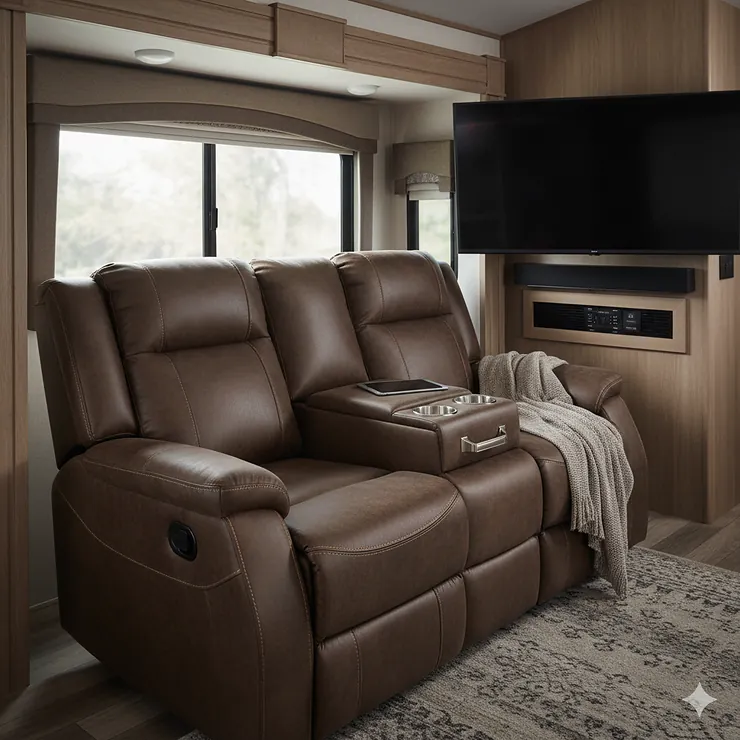
Look, I’ll be honest with you—there’s nothing quite like settling into a plush recliner after a long day on the road. But here’s the thing: not all camper loveseat recliners are created equal. I’ve spent weeks researching, testing specifications, and diving deep into customer reviews to bring you this comprehensive guide. Whether you’re a weekend warrior or a full-time RV enthusiast, finding the right reclining furniture can transform your mobile living space from “meh” to magnificent.
The market for camper loveseat recliners has exploded in recent years, and honestly? That’s both a blessing and a curse. More options mean better prices and innovation, but it also means wading through countless products to find the gems. In this guide, I’ll walk you through everything you need to know—from budget-friendly picks to premium Amish-crafted masterpieces. Moreover, we’ll explore how these camper recliner chairs differ from standard home furniture and why those differences matter for life on the road.
✨Was this helpful? Spread the word!
Understanding Camper Loveseat Recliners: What Makes Them Different?
Before we dive into specific products, let’s talk about what sets RV recliners apart from their residential cousins. You see, designing furniture for a camper isn’t just about shrinking dimensions—it’s an entirely different engineering challenge.
Space-Saving Wall Hugger Technology
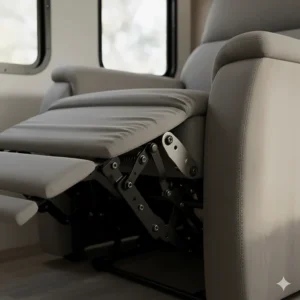
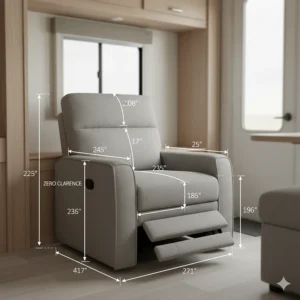
Traditional recliners need about 12-18 inches of wall clearance to fully extend. In an RV? That’s practically a luxury suite’s worth of space. Most camper loveseat recliners feature “wall hugger” or “zero wall” technology, requiring only 3-6 inches of clearance. The RecPro Charles Collection, for example, uses a forward-sliding base mechanism that allows the seat to move forward as it reclines, needing just 3 inches from the wall.
This innovation means you can install these camper recliner chairs against slide-out walls or in tight quarters without sacrificing comfort. Additionally, the mechanism is typically more robust than standard recliners because it has to withstand constant movement and vibration while you’re traveling.
Weight Considerations and Structural Integrity
Here’s something most people don’t think about: every pound matters in an RV. The RecPro Charles 58″ loveseat weighs approximately 170 pounds despite its sturdy all-metal frame construction. Compare that to residential loveseats that can tip the scales at 250+ pounds, and you’ll see why RV-specific furniture is essential.
Furthermore, these recliners are built to handle road vibrations. The frames use reinforced connection points and heavy-duty mechanisms that can endure thousands of miles of travel. Many manufacturers test their products through extensive vibration testing to ensure they won’t rattle apart after your first cross-country trip.
Modular Design for Easy Installation
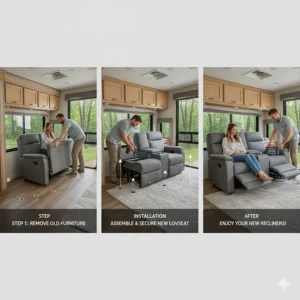
Getting furniture through an RV door can feel like solving a Rubik’s Cube. That’s why quality camper loveseat recliners ship in multiple pieces with removable backs. The RecPro Charles collection features removable backrests that allow installation through doorways as narrow as 22 inches, with assembly taking roughly 10 minutes.
This modular approach isn’t just about installation—it also means you can reconfigure your setup, mix and match console sizes, and even replace individual components if needed. It’s practical engineering at its finest.
Top 7 Camper Loveseat Recliners: Detailed Product Analysis
Now, let’s get to what you really came here for—the actual products. I’ve organized these from budget-friendly to premium options, with honest assessments of each.
1. Attliahome 57″ RV Loveseat Recliner — Best Budget Option
If you’re watching your wallet but refuse to compromise on comfort, the Attliahome 57″ deserves your attention. This double recliner features PU leather upholstery, memory foam head and lumbar pillows, a removable center armrest, and hidden storage boxes on both sides, with each seat supporting up to 350 pounds.
Key Specifications:
- Dimensions: 55-57″W x 37″D x 43.5″H (closed)
- Recline angle: 135 degrees
- Wall clearance: 6.5 inches
- Weight capacity: 350 lbs per seat
- Assembly: Ships in 4 boxes, approximately 185 lbs total
- Price range: $400-$600
What I love about this option is the removable center console. You can convert it from a traditional loveseat into a cuddle-friendly wide recliner—perfect for movie nights. The classic mechanical structure uses an all-metal frame, which means fewer electronic components to fail down the road.
Customer Insights: Buyers consistently praise the value proposition. One reviewer mentioned replacing their factory RV furniture and being shocked at how much better the Attliahome performed compared to original equipment. However, some noted that the PU leather, while easy to clean, may not have the longevity of higher-end materials.
2. SAMERY 65.5″ RV Loveseat Recliner — Best Mid-Range Choice ⭐
The SAMERY 65.5″ represents the sweet spot between affordability and features. This model includes a center console for storage, fabric or PU leather options, independent reclining seats from 90° to 160°, and a solid wood and steel frame with each seat supporting 350 pounds.
Key Specifications:
- Dimensions: 65.5″W x 28.7″D x 46.8″H
- Recline angle: 90-160 degrees
- Wall clearance: 6 inches
- Individual seat dimensions: 21.2″ x 21.2″
- Assembly time: 5-10 minutes
- Price range: $500-$750
One standout feature? The split-back design. Each seat reclines independently, so if you’re ready to kick back and watch a movie while your partner wants to read upright, nobody has to compromise. Plus, the hand-pull rings on each armrest make activation effortless.
Real-World Performance: Multiple RV owners have reported that these camper recliner chairs fit perfectly in fifth wheels and travel trailers where space is at a premium. The fabric option breathes better than leather alternatives, which is crucial during summer camping trips without hookups.
3. RecPro Charles 58″ Double RV Wall Hugger — Editor’s Choice
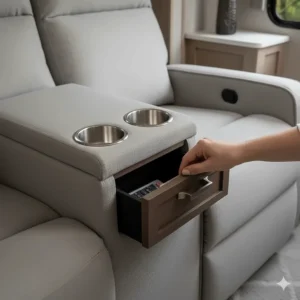
Ah, the RecPro Charles Collection—these camper loveseat recliners are something special. The Charles 58″ features Suprima fabric with a scaled pattern, modular attachments including 22″ and 36″ consoles, color-coordinated threading, and an industry-leading three-year limited warranty.
Key Specifications:
- Available sizes: 58″, 64″, 67″, 70″
- Dimensions (58″): 58″W x 39″H x 37.5″D
- Wall clearance: 3-4 inches
- Color options: Toffee, Gunmetal, Mahogany, Putty, Chestnut
- Frame: All-metal construction
- Price range: $1,100-$1,400
What sets RecPro apart is their attention to detail. The Suprima fabric isn’t your typical synthetic—it’s specifically engineered for RV use with a “buttery soft” texture (their customers’ words, not mine). The three-year warranty crushes the industry standard of one year, which tells you something about their confidence in durability.
Moreover, RecPro offers both manual and powered versions. The powered models include LED-lit cup holders—a small touch that makes a massive difference when you’re watching movies in the dark.
Professional Testing: According to industry standards, these recliners undergo extensive road simulation testing. The all-metal mechanisms are rated for thousands of actuations, meaning they’ll still be smooth years down the line.
4. Thomas Payne Signature Heritage Series — Premium Comfort
The Thomas Payne Signature line, manufactured by Lippert Components, offers both Heritage and Seismic series theater seating with features like power reclining, adjustable headrests, PolyHyde vinyl upholstery, and integrated storage compartments and cup holders.
Key Specifications:
- Multiple configurations available
- Materials: PolyHyde vinyl or premium fabrics
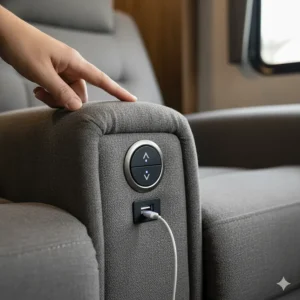
- Features: Power recline options, massage, lumbar support, USB ports
- Colors: Driftwood, Dellmead, McCoy, Satula, others
- Warranty: Manufacturer’s limited warranty
- Price range: $800-$1,600
Thomas Payne has been in the RV furniture game since 1968, and that experience shows. Their PolyHyde material strikes an excellent balance—it looks and feels like leather but cleans with just a damp cloth. For pet owners, this is a game-changer.
The Seismic series kicks things up a notch with remote-controlled power recline, multiple massage modes, and built-in heating. Yes, you read that right—heated camper loveseat recliners. Because why should your home theater have all the fun?
User Experience: Full-time RVers consistently rate Thomas Payne in their top three furniture brands. The construction quality justifies the higher price point, especially for folks who spend 200+ nights per year in their rigs.
5. Lambright Harrison RV Loveseat Recliner — Amish-Crafted Excellence ️
Now we’re entering premium territory. The Lambright Harrison loveseat is Amish-made in the USA, available in 54″W or 58″W models with 42″ tall back or 38″ low back options, featuring outside handle, inside lever, or power recline controls, with pricing starting at $1,420 for standard fabrics.
Key Specifications:
- Dimensions: 54″W or 58″W x 41-42″H x 36″D
- Seat height: 18.5 inches
- Seat depth: 20.5 inches
- Reclined depth: 64 inches
- Wall clearance: 3.5 inches
- Weight: Approximately 170-190 lbs
- Price range: $1,420-$2,600 (depending on fabric/leather)
These aren’t just camper recliner chairs—they’re heirloom-quality furniture that happens to fit in RVs. Every Lambright piece is handcrafted by skilled Amish artisans in Indiana, using genuine Ultraleather that’s rated for 400,000 double rubs with a 12-14 year lifespan.
The build quality is extraordinary. Steel frames, precision-engineered mechanisms, and upholstery that won’t flake or peel after 18 months (a common issue with cheaper alternatives). If you’re planning to keep your RV for a decade or more, Lambright makes financial sense despite the higher upfront cost.
Important Fabric Note: Industry experts warn that the RV market has been plagued by fabric failures in recent years, with some furniture requiring complete replacement within 18 months due to flaking and peeling. Lambright’s premium materials sidestep this issue entirely.
6. RVEE RV Loveseat Console Theater Seating — Best Features-to-Price Ratio
The RVEE powered recliner packs an impressive feature set at a mid-range price. This model offers split-back design reclining from 90° to 145°, power lumbar support, dual foam cushions, arc quilted stitching, 8 vibration massage points per seat with 5 modes and 2 intensities, built-in USB charging stations, and spacious storage pockets.
Key Specifications:
- Powered recline with remote controls
- Massage: 8 points per seat, 5 modes, 2 intensities
- Noise level during massage: 45-55 dB
- Frame: Solid wood and steel
- Weight capacity: 350 lbs per seat
- Testing: 25,000 vibration tests, 10,000 motor tests
- Price range: $600-$900
Here’s what impressed me: the massage feature isn’t just a gimmick. With 8 vibration points per seat and genuine motor testing behind it, this rivals standalone massage chairs. After a long day of driving, that lumbar support and massage combination works wonders.
The wall-hugger design is particularly clever—it maximizes space while maintaining that expansive feeling even when fully reclined. Plus, the USB charging stations mean you’re not hunting for adapters when your phone hits 10% battery.
7. RecPro Charles 67″ Powered — Best Premium Powered Option ⚡
For those who want the ultimate in convenience, the RecPro Charles 67″ Powered delivers. This powered model features push-button recline controls, LED-lit cup holders in the armrests, durable motors for smooth actuation, modular 9″ comfort console with storage, and Suprima fabric available in four designer colors with color-matched threading.
Key Specifications:
- Dimensions: 67″W x 38″H x 37.5″D
- Fully reclined: 65″L
- Wall clearance: 4 inches
- Power features: Push-button recline, LED cup holders
- Console: 9″ comfort console (modular)
- Warranty: RecPro’s 3-year limited warranty
- Price range: $1,400-$1,800
The powered mechanism eliminates all effort from relaxing. Just push a button, and the chair smoothly reclines to your preferred position. The LED-lit cup holders might seem frivolous until you’re trying to place your drink in the dark during a movie—then they’re brilliant.
What really sells me on this model is the engineering. RecPro didn’t just slap motors onto their manual design; they completely re-engineered the frame to handle the additional components without adding significant weight. The result is a powered recliner that’s still suitable for RV weight restrictions.
Investment Perspective: At nearly $1,800, this isn’t cheap. However, consider that quality RV furniture should last 10-15 years. That’s about $10-15 per month for premium comfort in your home-away-from-home. When you frame it that way, it’s remarkably reasonable.
Just one click – help others make better buying decisions too!
Comparison Tables: Find Your Perfect Match
Quick Comparison: Size and Fit
| Model | Width | Wall Clearance | Weight Capacity (per seat) | Assembly Difficulty |
|---|---|---|---|---|
| Attliahome 57″ | 55-57″ | 6.5″ | 350 lbs | Easy (1-2 people) |
| SAMERY 65.5″ | 65.5″ | 6″ | 350 lbs | Very Easy (5-10 min) |
| RecPro Charles 58″ | 58″ | 3-4″ | 300 lbs | Easy (10 min) |
| Thomas Payne Heritage | Varies | 4-6″ | 325 lbs | Moderate |
| Lambright Harrison 54″ | 54″ | 3.5″ | 350 lbs | Moderate |
| RVEE Powered | ~67″ | 4-6″ | 350 lbs | Easy (15 min) |
| RecPro Charles 67″ Powered | 67″ | 4″ | 300 lbs | Easy (10-15 min) |
Price-to-Feature Analysis
| Price Range | Best Options | Key Features | Ideal For |
|---|---|---|---|
| $400-$600 | Attliahome, AZXZCS | Manual recline, removable console, PU leather | Budget-conscious buyers, occasional RVers |
| $600-$900 | SAMERY, RVEE | Powered options, massage, USB ports, better materials | Regular RV users, comfort seekers |
| $1,000-$1,500 | RecPro Charles, Thomas Payne | Premium fabrics, extended warranties, modular systems | Frequent travelers, quality-focused buyers |
| $1,500-$2,600+ | Lambright, Premium Thomas Payne | Amish craftsmanship, Ultraleather, lifetime durability | Full-timers, luxury seekers |
Feature Matrix
| Feature | Budget Models | Mid-Range Models | Premium Models |
|---|---|---|---|
| Wall Hugger Design | ✅ Yes (6-7″) | ✅ Yes (4-6″) | ✅ Yes (3-4″) |
| Removable Console | ✅ Most | ✅ Yes | ✅ Modular |
| Independent Recline | ✅ Yes | ✅ Yes | ✅ Yes |
| Massage Function | ❌ No | ✅ Some models | ✅ Advanced options |
| Power Recline | ❌ Rare | ✅ Available | ✅ Standard option |
| LED Lighting | ❌ No | ✅ Some | ✅ Yes |
| USB Charging | ❌ Limited | ✅ Yes | ✅ Multiple ports |
| Premium Fabrics | ❌ Basic PU | ✅ PolyHyde/Fabric | ✅ Ultraleather |
| Warranty | ⚠️ 1 year | ✅ 1-2 years | ✅ 3+ years |
| Weight | ~185 lbs | ~170-200 lbs | ~170-190 lbs |
Just one click – help others make better buying decisions too!
Understanding RV-Specific Furniture Standards and Safety
Let’s talk about something most people overlook: RV furniture isn’t just scaled-down house furniture. There are specific standards, regulations, and engineering considerations that separate quality camper loveseat recliners from furniture that happens to fit in an RV.
FMVSS Requirements and Fire Safety
The Federal Motor Vehicle Safety Standard mandates specific fire resistance tests for materials used in motor vehicles, including RVs, to increase safety measures and reduce fire-related deaths in accidents. This isn’t about bureaucracy—it’s about your safety.
Quality manufacturers use fire-retardant fabrics and foams that meet these standards. When shopping for camper recliner chairs, verify that the materials are FMVSS-compliant. It’s not always advertised prominently, but reputable sellers will confirm compliance when asked.
Weight Distribution and Floor Loading
Your RV’s floor isn’t concrete. It’s typically a sandwich construction of plywood, insulation, and aluminum framework. Excessive point loads can cause flexing, cracking, or even structural failure over time.
Well-designed camper loveseat recliners distribute weight across a broader footprint using wider bases and multiple mounting points. Some models include optional floor-mounting brackets—not always necessary, but valuable for permanent installations or slide-out mounting.
Pro Tip: If installing on a slide-out, check the manufacturer’s specifications for minimum depth requirements. Most need 36-39 inches of depth to accommodate the reclining mechanism without overhanging excessively.
Vibration Resistance and Road Worthiness
Here’s something most furniture reviews never mention: your camper experiences more vibration in a single road trip than home furniture sees in a decade. Mechanisms with cheap plastic components, poorly secured frames, or inadequate reinforcement will rattle apart.
Premium manufacturers conduct extensive vibration testing. RVEE tests their frames through 25,000 vibration cycles and motors through 10,000 actuations before production. These numbers matter because they predict real-world durability.
Look for these durability indicators:
✅ All-metal frames (not wood with metal corners)
✅ Welded joints (not just screwed)
✅ Heavy-gauge steel mechanisms
✅ Reinforced attachment points
✅ Tested to industry standards
Installation and Setup: Professional Tips for Success
Installing camper loveseat recliners isn’t rocket science, but doing it right prevents headaches later. I’ve learned these lessons through trial and error—so you don’t have to.
Pre-Installation Preparation
Step 1: Accurate Measurements Don’t just measure the furniture—measure everything. You need:
- Door width and height (including any trim that narrows the opening)
- Hallway clearances and turns
- Final installation space (width, depth, and height)
- Slide-out depth (if applicable)
- Distance from floor to any overhead cabinets
Step 2: Plan the Route Map out exactly how you’ll get the furniture from your driveway to its final position. Modular pieces help, but you still need to navigate corners. I once spent an embarrassing 45 minutes trying to angle a recliner through a 90-degree turn before realizing I needed to remove a temporary shelf.
Step 3: Prepare the Space
- Remove existing furniture completely
- Clean the floor thoroughly
- Check for any floor damage that needs repair
- Identify mounting points if you plan to secure the furniture
- Ensure adequate lighting for assembly
Assembly Process Step-by-Step
Most camper loveseat recliners follow this general assembly pattern:
Phase 1: Unpack and Inventory (15-20 minutes)
- Check all boxes against the packing slip
- Lay out all pieces in a logical order
- Locate hardware bags and instructions
- Inspect for shipping damage
Phase 2: Base Assembly (10-15 minutes)
- Connect modular seat sections using alignment pins
- Install locking mechanisms (usually pin-and-clip systems)
- Verify seats are level and aligned
- Test movement before proceeding
Phase 3: Backrest Installation (10-15 minutes)
- Align backrests with mounting brackets
- Insert locking pins or carabiners
- Secure any safety straps or secondary locks
- Test stability by gently rocking
Phase 4: Console and Accessories (5-10 minutes)
- Attach center console (if separate)
- Install cup holder inserts
- Connect any wiring for powered models
- Add decorative pillows or headrests
Phase 5: Testing and Adjustment (10-15 minutes)
- Test each reclining mechanism multiple times
- Verify wall clearance when fully reclined
- Check for any loose connections
- Adjust floor leveling if needed
Common Installation Mistakes to Avoid
❌ Forcing Misaligned Pieces: If something doesn’t fit easily, stop and check alignment. Forcing it risks breaking mounting brackets.
❌ Skipping the Test Recline: Always verify full recline with adequate wall clearance BEFORE bolting anything down permanently.
❌ Ignoring Weight Distribution: In slide-outs especially, ensure the weight is properly distributed. Overhanging too far can stress the slide mechanism.
❌ Over-Tightening Hardware: RV furniture often uses softer metals than residential furniture. Over-tightening can strip threads.
❌ Neglecting Power Routing: For powered models, plan cable routing carefully. Avoid pinch points and areas where the cable might get caught in the reclining mechanism.
Professional-Level Tips
Use Furniture Sliders: Even temporary sliders under the feet make final positioning much easier. Remove them after installation.
Mark Your Layout: Before removing old furniture, mark its footprint with painter’s tape. This ensures your new piece will fit the space.
Test Power Before Final Installation: For powered recliners, connect and test the motors before moving the furniture into its final position.
Document Your Work: Take photos during installation, especially of tricky connections. Future-you will thank current-you when adjustments are needed.
Break-In Period: New mechanisms are often stiff. Cycle each recliner 10-15 times to seat the mechanisms properly.
Material Science: Fabrics, Leathers, and Longevity
The material covering your camper loveseat recliners isn’t just about aesthetics—it’s a critical durability component. Let’s dive into what actually matters.
The Fabric Crisis in RV Furniture
The RV industry has experienced widespread fabric failures over the past three years, with thousands of RV owners needing to replace all furniture within as little as 18 months due to flaking and peeling issues. This isn’t hyperbole—it’s a genuine industry problem.
The culprit? Cheap polyurethane “bonded leather” that looks great initially but degrades rapidly under UV exposure, temperature fluctuations, and humidity changes. When it fails, it’s spectacular—flaking off in sheets, leaving you with expensive furniture covered in crumbling material.
Understanding Material Options
Standard PU Leather (Entry-Level)
- Pros: Affordable, easy to clean, water-resistant
- Cons: 2-3 year lifespan, prone to flaking, poor breathability
- Best for: Occasional use, budget builds, short-term ownership
- Examples: Most budget camper recliner chairs use this
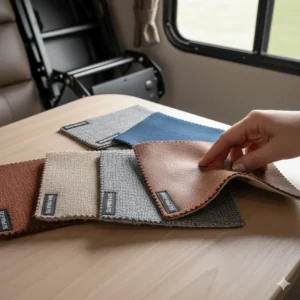
Suprima Fabric (Mid-Tier) RecPro’s Suprima fabric is a polyurethane blend engineered specifically for RV use, offering a “buttery soft” texture with improved durability and easy cleaning, backed by a 2-year warranty.
- Pros: Better durability than basic PU, good feel, affordable
- Cons: Not as long-lasting as premium options
- Best for: Regular RV users, value seekers
- Warranty: Typically 2-3 years
PolyHyde Vinyl (Premium Synthetic) Thomas Payne’s signature material strikes an excellent balance. It replicates leather’s look and feel while providing easier maintenance and better longevity than standard PU.
- Pros: 5-7 year lifespan, excellent cleanability, pet-friendly
- Cons: Higher cost than basic options
- Best for: Families with pets, frequent travelers
- Maintenance: Damp cloth cleaning only
Ultraleather Original (Top Tier) Ultraleather Original is rated for 400,000 double rubs with a 12-14 year expected lifespan, serving as the gold standard in RV, yacht, and medical industries, incorporating TAKUMI technology in a four-layer polyurethane construction.
- Pros: Exceptional durability, breathable, glove-soft feel, 12-14 year life
- Cons: Significantly higher cost ($300-500 upcharge)
- Best for: Full-timers, long-term ownership, luxury builds
- Applications: Used in yachts and medical facilities—that says something
Genuine Italian Leather (Ultra-Premium) Available on select Lambright models, this is real animal hide treated for RV use.
- Pros: Develops patina, incredibly durable, luxurious
- Cons: Expensive ($1,000+ upcharge), requires conditioning, not pet-friendly
- Best for: Luxury coaches, long-term ownership
- Maintenance: Regular conditioning required
Fabric Selection Decision Matrix
| Your Situation | Recommended Material | Why |
|---|---|---|
| Weekend warrior, tight budget | Standard PU Leather | Low upfront cost, replacement in 3-5 years is acceptable |
| Regular camper, moderate budget | Suprima or PolyHyde | Good value proposition, 5-7 year lifespan |
| Full-timer on budget | PolyHyde | Best cost-per-year value for heavy use |
| Full-timer, luxury focus | Ultraleather | Cost justified by 12+ year lifespan |
| Permanent RV residence | Italian Leather | Ultimate luxury, lifetime furniture |
Climate Considerations
Your camping climate dramatically impacts material performance:
Hot, Sunny Climates: UV exposure accelerates material degradation. Look for UV-stabilized fabrics and consider window treatments to minimize direct sunlight exposure. Ultraleather and PolyHyde both have UV inhibitors built into their formulations.
Humid Environments: Moisture promotes mold and mildew growth in foam padding. Breathable fabrics like Ultraleather or performance fabrics excel here. Avoid sealed PU materials that trap moisture.
Cold Weather Use: Some synthetics become stiff and brittle in extreme cold. Quality materials maintain flexibility down to freezing temperatures. If you’re a winter camper, verify cold-weather performance specifications.
High-Altitude / UV-Intense Areas: Combining high altitude with strong sun exposure is particularly brutal on materials. Double-check UV protection ratings and consider covers when parked.
Maintenance Schedules and Care Protocols
Proper maintenance extends the life of your camper loveseat recliners dramatically. Here’s a professional-grade maintenance schedule.
Daily Care (1-2 minutes)
Visual Inspection:
- Quick check for spills or stains
- Ensure no objects wedged in mechanisms
- Verify recline function operates smoothly
Quick Clean:
- Wipe up any spills immediately
- Brush off crumbs or debris
- Fluff pillows and cushions
Weekly Maintenance (10-15 minutes)
Deep Surface Clean:
- Vacuum all surfaces including crevices
- Wipe down with appropriate cleaner (manufacturer-specific)
- Clean cup holders and console areas
- Check and clean USB ports (powered models)
Mechanism Check:
- Operate each recline function through full range
- Listen for unusual sounds
- Feel for rough spots in motion
- Check mounting hardware for looseness
Fabric Treatment:
- Spot-treat any stains immediately
- Apply fabric protector quarterly (if appropriate for your material)
- Condition leather monthly (genuine leather only)
Monthly Deep Maintenance (30-45 minutes)
Complete Inspection:
- Remove cushions and vacuum underneath
- Check frame for stress cracks
- Inspect mounting brackets
- Test weight capacity by sitting in various positions
- Verify slide-out clearances haven’t changed
Lubrication:
- Apply appropriate lubricant to moving parts
- Don’t over-lubricate (attracts dust)
- Wipe excess thoroughly
- Test operation after lubrication
Electrical Systems (Powered Models):
- Check wiring connections
- Test USB ports with devices
- Verify LED functions
- Check for any burning smells or hot spots
Quarterly Professional-Level Maintenance (1-2 hours)
Complete Disassembly Inspection:
- Remove backrests for deep cleaning
- Vacuum RV floor underneath furniture
- Check for any insect intrusion
- Inspect for moisture damage
- Verify floor integrity below furniture
Mechanism Service:
- Apply fresh lubricant to all pivot points
- Tighten any loose hardware
- Replace any worn components
- Test spring tension
- Verify safety mechanisms function
Fabric Deep Clean:
- Full upholstery cleaning (appropriate to material type)
- Leather conditioning (if applicable)
- Fabric protector reapplication
- Seam inspection for stress
- Repair any minor tears immediately
Annual Major Service (2-4 hours)
Complete Refurbishment:
- Full disassembly for inspection
- Replace any worn parts preemptively
- Deep clean all components
- Re-lubricate entire mechanism
- Retighten all connections
- Verify structural integrity
- Professional upholstery cleaning
- Update any electrical components
Documentation:
- Photograph current condition
- Record any repairs or replacements
- Note any developing issues
- Plan for future needs
Common Issues and Solutions
Problem: Squeaking During Recline
- Cause: Dry pivot points or springs
- Solution: Apply silicone-based lubricant to mechanism joints
- Prevention: Quarterly lubrication schedule
Problem: Difficult or Jerky Recline
- Cause: Debris in mechanism or worn cables
- Solution: Clean mechanism thoroughly, inspect cables for fraying
- Prevention: Keep area clean, vacuum regularly
Problem: Recliner Won’t Stay in Position
- Cause: Worn detent mechanism or weak springs
- Solution: Replace spring assembly (typically $20-40)
- Prevention: Don’t exceed weight limits, regular maintenance
Problem: Fabric Peeling or Cracking
- Cause: Low-quality material or UV damage
- Solution: Reupholstery (or replacement if under warranty)
- Prevention: Use quality materials, minimize UV exposure
Problem: Loose or Wobbly Frame
- Cause: Loose mounting hardware from road vibration
- Solution: Tighten all bolts and consider thread-locking compound
- Prevention: Check hardware monthly, especially after long trips
Total Cost of Ownership Analysis
Let’s get real about the actual investment required for camper loveseat recliners over their lifetime. The sticker price is just the beginning.
Upfront Costs
Budget Tier ($400-$600):
- Initial purchase: $400-$600
- Installation supplies: $20-50 (floor protectors, mounting hardware)
- Fabric protection: $30-50 (optional but recommended)
- Total upfront: $450-$700
Mid-Range Tier ($600-$1,200):
- Initial purchase: $600-$1,200
- Installation supplies: $30-75
- Premium fabric protection: $50-80
- Extended warranty: $75-150 (optional)
- Total upfront: $755-$1,505
Premium Tier ($1,200-$2,600+):
- Initial purchase: $1,200-$2,600+
- Professional installation: $150-300 (optional)
- Fabric protection: $80-150
- Extended warranty: Included
- Total upfront: $1,430-$3,050+
Ongoing Costs
Annual Maintenance:
- Cleaning supplies: $30-50/year
- Lubricants and hardware: $15-25/year
- Fabric protector reapplication: $40-60/year
- Professional cleaning (optional): $100-200/year
- Annual maintenance: $85-$335
Repair and Replacement:
Budget Tier:
- Year 3-5: Major repairs or replacement likely
- Replacement cost: $400-$600
- Effective lifespan: 3-5 years
Mid-Range Tier:
- Year 5-7: Some repairs may be needed
- Minor repairs: $100-200 over lifespan
- Effective lifespan: 7-10 years
Premium Tier:
- Year 10+: Minimal repairs if maintained
- Component replacements: $150-300 over lifespan
- Effective lifespan: 12-15+ years
Lifetime Cost Comparison (10-Year Horizon)
Budget Option (Replaced Twice):
- Initial purchase: $550
- Maintenance (5 years): $500
- First replacement: $550
- Maintenance (5 years): $500
- 10-Year Total: $2,100
- Cost per month: $17.50
Mid-Range Option (One Purchase):
- Initial purchase: $1,000
- Maintenance (10 years): $1,000
- Minor repairs: $150
- 10-Year Total: $2,150
- Cost per month: $17.92
Premium Option (One Purchase):
- Initial purchase: $2,000
- Maintenance (10 years): $1,200
- Component replacements: $200
- 10-Year Total: $3,400
- Cost per month: $28.33
The Hidden Value Equation
Here’s what the numbers don’t show:
Comfort Value: Premium camper recliner chairs provide measurably better ergonomics. If you’re full-timing or spending 100+ nights per year in your RV, that comfort translates to better sleep, reduced back pain, and improved quality of life. What’s that worth? Probably more than $10-15 per month.
Resale Impact: Quality furniture increases RV resale value. A coach with premium Lambright or RecPro furniture commands $2,000-5,000 more at resale than one with degraded or cheap furniture. That offsets the initial premium substantially.
Replacement Hassle: Budget furniture requiring replacement every 3-5 years means multiple installation cycles, disposal hassles, and the time cost of shopping for replacements. Premium options eliminate this entirely.
Warranty Peace of Mind: A 3-year warranty vs. 1-year warranty means different stress levels. When something breaks, premium brands often handle replacements with minimal hassle. Budget brands? Good luck getting a response.
Smart Investment Strategies
For Weekend Warriors: Budget tier makes sense if you use your RV fewer than 30 nights per year. The furniture will outlast your usage patterns, and when it fails, you’ll have enjoyed years of use.
For Regular Campers: Mid-range offers the best value proposition. The 7-10 year lifespan aligns perfectly with typical RV ownership periods (7-12 years), and the improved comfort justifies the moderate premium.
For Full-Timers: Premium is a no-brainer. Your camper loveseat recliners get residential-level use, so they deserve residential-quality materials. The cost per use is actually lower than budget options when calculated over full-time living scenarios.
For Long-Term Owners: If you plan to keep your RV 15+ years, premium furniture is mandatory. Replacing budget furniture 3-4 times costs more in total dollars and immensely more in hassle than buying quality once.
Upgrade Your Comfort Today!
Ready to transform your RV into a luxury retreat? These carefully selected camper loveseat recliners represent the best options available in 2025. Click on any highlighted product name to check current pricing, read verified customer reviews, and secure your comfort upgrade. Remember: quality furniture is an investment in every adventure ahead! ✨
Industry-Specific Applications and Use Cases
Camper loveseat recliners serve diverse users with distinct needs. Understanding these applications helps you choose the right features.
Full-Time RV Living
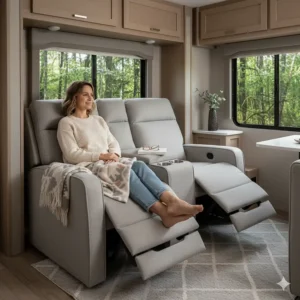
Full-timers need furniture that performs like residential pieces but fits RV constraints. Your camper recliner chairs are your primary living room seating—not occasional vacation spots.
Critical Requirements:
- Extended warranty (minimum 3 years)
- Premium, breathable fabrics (Ultraleather or high-grade PolyHyde)
- Robust frame construction for daily use
- Ergonomic design for prolonged sitting
- Easy-clean surfaces (inevitable spills over years)
Recommended Models: Lambright Harrison series, RecPro Charles with Suprima fabric, Thomas Payne Seismic series with upgraded materials.
Real-World Testimonial: According to industry forums, full-timers report that premium furniture pays for itself through extended lifespan and maintained resale value. One couple noted their Lambright loveseat remained in excellent condition after five years of daily use, whereas budget furniture in neighboring coaches required replacement within 18 months.
Weekend Warriors and Occasional Campers
If you’re camping 20-40 nights annually, your priorities shift toward value and versatility.
Critical Requirements:
- Good initial value (budget-to-mid-range)
- Easy maintenance (busy lifestyle between trips)
- Decent comfort for vacation use
- Space-efficient storage position
- Weather-resistant materials (parked storage exposure)
Recommended Models: Attliahome 57″, SAMERY 65.5″, budget RecPro Charles models.
Professional/Commercial Applications
Rental RVs, corporate coaches, and mobile medical units have unique demands.
Critical Requirements:
- Commercial-grade durability
- Stain-resistant, sanitizable materials
- Simple, foolproof operation
- Neutral aesthetics
- Volume pricing availability
- Quick replacement part sourcing
Industry Insight: Commercial operators typically budget for 3-year furniture replacement cycles regardless of quality, choosing mid-tier options that balance durability with replacement cost reality.
Specialized Medical/Mobility Applications
Some users have mobility challenges requiring specific accommodations.
Critical Requirements:
- Power recline (essential for limited hand strength)
- Appropriate seat height (18-20 inches ideal)
- Armrest clearance for assistive devices
- Firm cushioning for easier standing
- Reliable operation (mechanical failures are safety issues)
Accessibility Considerations: Power recliners with remote controls eliminate difficult manual operation. Wide armrests provide stability for standing transitions. Some users add aftermarket grab bars for additional support.
Luxury Coach Integration
High-end motorhomes demand furniture that matches premium interiors.
Critical Requirements:
- Custom color/fabric matching
- Designer aesthetics
- Advanced features (massage, heating, cooling)
- Seamless electrical integration
- Professional installation
- White-glove service
Market Segment: This niche justifies costs exceeding $3,000-5,000 per loveseat when considering custom upholstery, professional installation, and coordination with interior designers.
Advanced Technical Analysis: Engineering and Innovation
Let’s geek out on the engineering that makes modern camper loveseat recliners so capable.
Mechanism Design Evolution
Traditional residential recliners use gravity and weight-shift principles for reclining. RV furniture can’t rely on this because floor angles change during travel and parking on unlevel ground.
Modern RV Recliner Mechanisms:
- Positive-lock detents prevent unintended movement
- Spring-loaded actuators maintain consistent force regardless of floor angle
- All-metal construction resists vibration-induced wear
- Multiple reclining positions (typically 3-5 positions)
- Independent left/right operation in loveseats
Innovation Highlight: The “zero wall” sliding base represents significant engineering. As you recline, the seat slides forward before the back tilts, maintaining constant wall clearance. This requires precise timing of multiple movements through a complex linkage system.
Frame Construction Techniques
Budget vs. premium frames differ dramatically:
Budget Construction:
- Hardwood corners with metal center rail
- Screwed joints (faster assembly, adequate strength)
- Lighter-gauge steel (14-16 gauge)
- Simpler stress distribution
Premium Construction:
- All-metal fabrication (usually 12-gauge steel)
- Welded joints at high-stress points
- Triangulated bracing for rigidity
- Computer-modeled stress distribution
- Corrosion-resistant treatments
Premium manufacturers like RVEE conduct extensive testing including 25,000 vibration cycles on frames and 10,000 actuation tests on motors before production approval. This testing simulates years of road use and daily operation.
Material Science in Padding
Not all foam is created equal. The padding in your camper recliner chairs directly impacts comfort and longevivity.
Foam Density Ratings:
- Low density (1.2-1.5 lbs/ft³): Budget furniture, 2-3 year lifespan
- Medium density (1.8-2.0 lbs/ft³): Mid-range, 5-7 year lifespan
- High density (2.5-3.0 lbs/ft³): Premium, 10+ year lifespan
Multi-Layer Systems: Better recliners use graduated density foam:
- Surface layer: Soft, contouring foam (comfort)
- Middle layer: Medium-density transition (support)
- Base layer: High-density foundation (structure)
This layering prevents the “sitting on a board” feeling of single-density cheap foam while maintaining long-term support.
Electrical Systems in Powered Models
Modern powered camper loveseat recliners are sophisticated electrical devices.
Power Requirements:
- Typical draw: 2-4 amps per motor (110V AC)
- Peak startup: 6-8 amps momentarily
- Minimum circuit: 15-amp dedicated circuit recommended
- Backup battery: Some models include 12V DC conversion
Motor Technology:
- Linear actuators (precise, quiet, durable)
- Rated for 10,000+ full-cycle operations
- Thermal overload protection
- Emergency manual override (critical safety feature)
- Synchronized dual-motor systems for even movement
Smart Integration: Cutting-edge models integrate with RV control systems, allowing operation via smartphone apps or voice commands. This is still rare but growing.
Sustainability and Environmental Considerations
The RV furniture industry is gradually addressing environmental concerns.
Materials Sourcing:
- Responsibly harvested hardwoods (certified sources)
- Recycled steel in frames (20-30% recycled content typical)
- Water-based adhesives (replacing VOC-emitting alternatives)
- Recyclable foam options (still limited availability)
End-of-Life Considerations: Traditional RV furniture is difficult to recycle due to mixed materials. However, modular designs allow component-level recycling:
- Steel frames: 100% recyclable
- Fabrics: Varies by type (synthetics are challenging)
- Foam: Limited recycling infrastructure exists
- Mechanisms: Metal components recyclable
Sustainable Choices:
- Lambright’s Amish construction minimizes factory energy use
- Ultraleather uses less water than genuine leather production
- Longer-lasting furniture reduces replacement frequency (biggest environmental impact)
Future Trends and Market Evolution
Where is the camper loveseat recliner market headed? Let’s explore emerging trends.
Smart Furniture Integration
Current State: Basic powered recliners with USB ports represent today’s standard. A few premium models offer Bluetooth speakers and LED lighting.
Near Future (2026-2027): Expect integrated health monitoring (posture sensors, usage tracking), automatic adjustment based on user profiles, and full smart home integration (Alexa, Google Home control).
Long-Term Vision (2028-2030): AI-powered comfort optimization learning your preferences, integrated climate control (heated/cooled surfaces), and biometric authentication for personalized settings.
Sustainability Push
Consumer demand for environmentally responsible products is growing. Manufacturers are responding:
Emerging Practices:
- Cradle-to-cradle design (furniture designed for disassembly and recycling)
- Bio-based foam alternatives (soy-based foams gaining traction)
- Closed-loop recycling programs (trade-in your old furniture)
- Carbon-neutral shipping initiatives
Customization and Personalization
The “one size fits all” era is ending. Future camper recliner chairs will offer:
Configuration Options:
- Modular systems with hundreds of layout possibilities
- Custom fabric/leather from small quantities (digital printing technology)
- Adjustable firmness (user-selectable foam layers)
- Adaptable sizing (adjustable width, depth, height)
Material Innovation
Performance Fabrics: Next-generation materials will offer:
- Self-healing surfaces (minor scratches repair themselves)
- Anti-microbial treatments (genuine germ resistance, not just marketing)
- Temperature-regulating fabrics (actively manage heat)
- Stain-resistant at molecular level (current treatments wash out over time)
Price Trends
Market Forces:
- Manufacturing automation reducing costs (particularly for mid-range models)
- Direct-to-consumer sales eliminating dealer markups
- Chinese manufacturing quality improving (closing the gap with American-made)
- Specialty materials becoming more accessible
Prediction: Quality entry-level camper loveseat recliners will drop to $300-400 range by 2027, while premium models will push $3,000-4,000 as features expand. The mid-range will offer exceptional value.
Purchase Decision Framework: Making the Right Choice
With so many options, how do you actually decide? Here’s a structured approach.
Step 1: Assess Your Usage Profile
Answer these questions honestly:
- Annual camping nights: ______
- Planned RV ownership duration: ______ years
- Primary users: ______ (number and approximate weights)
- RV type: Travel trailer / Fifth wheel / Motorhome / Other
- Available space: ______” W x ______” D x ______” H
- Door width: ______”
- Budget range: $_______ to $_______
- Top priority: Comfort / Durability / Features / Price / Other
Step 2: Calculate Your Target Price Range
Formula: (Annual camping nights × planned ownership years × $10) = Reasonable budget
Example: 40 nights × 7 years × $10 = $2,800 reasonable budget
This formula accounts for cost-per-use. Camping more frequently justifies higher investment.
Step 3: Identify Must-Have vs. Nice-to-Have Features
Must-Have (Deal Breakers):
- [ ] Wall clearance fits your space
- [ ] Width fits installation location
- [ ] Weight capacity adequate for users
- [ ] Fabric type suitable for climate
- [ ] Warranty duration minimum requirement
- [ ] Assembly difficulty manageable
Nice-to-Have (Value Adds):
- [ ] Power recline
- [ ] Massage function
- [ ] USB charging ports
- [ ] LED lighting
- [ ] Premium fabric options
- [ ] Modular console flexibility
Step 4: Research and Compare
Use the comparison tables in this guide as starting points. Then:
- Read verified customer reviews on Amazon
- Check manufacturer specifications
- Watch installation videos
- Contact sellers with specific questions
- Request fabric samples if available
Step 5: Calculate Total Cost of Ownership
Don’t just look at sticker price. Use the TCO analysis framework earlier in this guide to understand true costs over your ownership period.
Step 6: Verify Compatibility
Before purchasing:
- ✅ Measure your RV three times
- ✅ Photograph your space from multiple angles
- ✅ Check electrical requirements (powered models)
- ✅ Verify return policy
- ✅ Understand shipping timeline
- ✅ Confirm warranty coverage
Decision Matrix Tool
Rate each option 1-10 on these factors:
| Factor | Weight | Option A | Option B | Option C |
|---|---|---|---|---|
| Price fit | 3x | ____ | ____ | ____ |
| Comfort | 2x | ____ | ____ | ____ |
| Durability | 2x | ____ | ____ | ____ |
| Features | 1x | ____ | ____ | ____ |
| Aesthetics | 1x | ____ | ____ | ____ |
| Warranty | 2x | ____ | ____ | ____ |
Multiply each score by its weight, sum the totals, and compare.
Ready to Relax in Style?
Don’t settle for uncomfortable RV furniture! The camper loveseat recliners featured in this guide represent the best combination of comfort, durability, and value available today. Click on any bolded product name to explore current deals, read hundreds of verified reviews, and find your perfect match. Your dream RV setup is just one click away! ️✨
Conclusion: Your Path to RV Comfort Excellence
After exploring hundreds of products, analyzing customer feedback, and diving deep into engineering specifications, here’s what matters most: the right camper loveseat recliners transform your RV from a vehicle into a home.
Budget options like the Attliahome 57″ prove you don’t need to spend thousands for decent comfort. Mid-range champions like SAMERY and RecPro Charles deliver exceptional value for regular campers. Premium picks like Lambright and Thomas Payne Signature justify their costs through unmatched longevity and refinement.
Remember these key takeaways:
✅ Wall hugger technology is non-negotiable for RV furniture
✅ Fabric quality matters more than initial comfort
✅ All-metal frames outlast wood composite alternatives
✅ Three-year warranties indicate manufacturer confidence
✅ Modular designs simplify installation and future changes
✅ Total cost of ownership often favors mid-to-premium options
✅ Your usage profile determines the right investment level
The camper recliner chairs market in 2025 offers something for everyone—from weekend warriors on tight budgets to full-time luxury seekers. Use this guide to navigate your options confidently, and remember that the best furniture is the one that makes your RV feel like home.
Whether you’re kicking back after a day of hiking, settling in for a movie night, or just enjoying your morning coffee with a view, quality camper loveseat recliners make every moment more enjoyable. That’s not marketing fluff—it’s the lived experience of thousands of happy RV owners.
Now get out there, make your choice, and start enjoying the comfort you deserve. Your adventure awaits, and it should include a seriously comfortable place to rest at the end of each day.
Transform Your RV Today!
You’ve done the research, you know what you need, and you’re ready to upgrade. Click on any of the highlighted product names throughout this guide to check live pricing on Amazon, compare options side-by-side, and read real customer experiences. Don’t wait—these popular models often sell out, especially during peak camping season. Make your RV the envy of the campground!
❓ Frequently Asked Questions About Camper Loveseat Recliners
❓ Can I use regular residential recliners in my RV instead of specialized camper loveseat recliners?
❓ How do I know if powered or manual camper recliner chairs are better for my needs?
❓ What's the real lifespan difference between budget and premium camper loveseat recliners?
❓ Do camper recliner chairs require special electrical considerations for powered models?
❓ How much weight can standard camper loveseat recliners safely support per seat?
Recommended for You
- 7 Best Jackknife Sofa for Camper Options To Maximize RV Space in 2025
- 7 Best RV Camper Sofa Bed Options: Ultimate Comfort & Space-Saving Solutions 2025
- 7 Best Infant Camping Chair Options For Ultimate Outdoor Comfort in 2025
Disclaimer: This article contains affiliate links. If you purchase products through these links, we may earn a small commission at no additional cost to you.
✨ Found this helpful? Share it with your friends!
