
In This Article
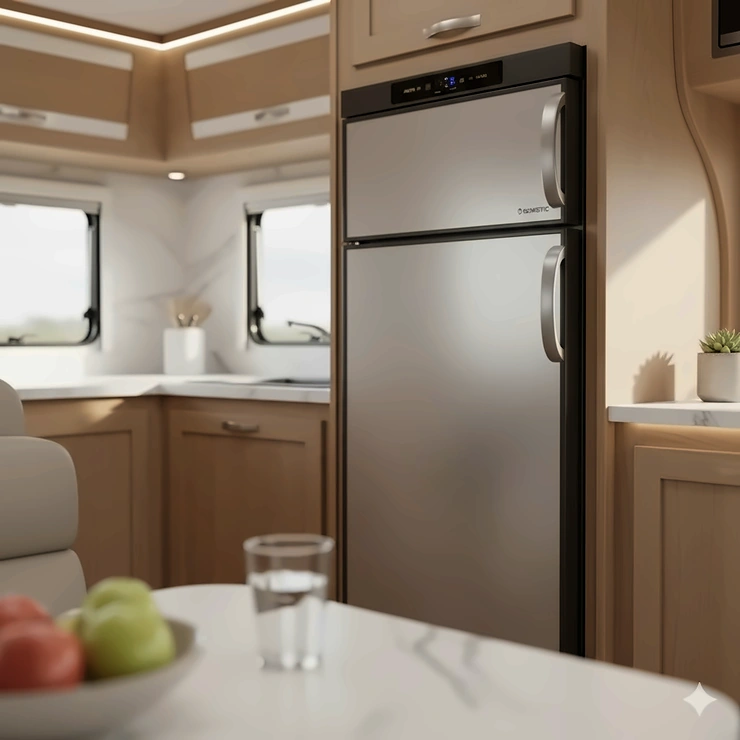
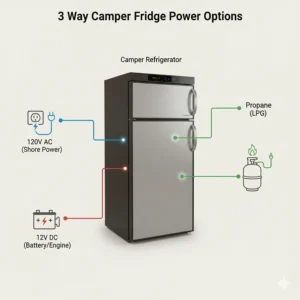
Picture this: you’re miles from civilization, parked in a stunning wilderness spot with zero electrical hookups. Yet somehow, your drinks stay ice-cold and your food stays fresh. That’s the magic of a camper 3 way refrigerator—a game-changer that lets you switch between 110V AC power when you’re plugged in at a campground, 12V DC from your vehicle’s battery while driving, and propane gas when you’re totally off-grid.
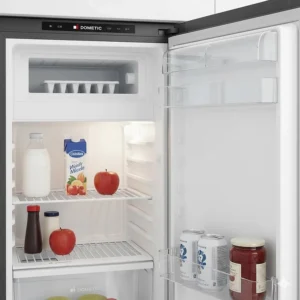
Unlike traditional RV fridges that tie you to shore power, a 3 way camper fridge gives you complete freedom. According to the RV Industry Association, over 11 million American households now own an RV, and the demand for versatile refrigeration solutions has skyrocketed in recent years. Whether you’re a weekend warrior or a full-time nomad, understanding how these triple-threat appliances work can transform your camping experience from frustrating to fantastic.
✨Was this helpful? Spread the word!
I’ve spent countless hours researching and testing various models—from compact 1.4 cubic foot units perfect for van life to spacious 8 cubic foot behemoths ideal for family motorhomes. In this comprehensive guide, you’ll discover the top seven camper 3 way refrigerator models for 2025, learn how absorption cooling technology actually works, and get practical tips for installation, maintenance, and troubleshooting. Let’s dive into finding your perfect mobile cooling companion.
Quick Comparison Table
Before we explore each model in detail, here’s a snapshot of the best 3 way fridge camper options currently available:
| Model | Capacity | Price Range | Power Options | Best For | Rating |
|---|---|---|---|---|---|
| Techomey 1.4 Cu.Ft | 1.4 cu.ft | $350-$450 | 12V/110V/LPG | Solo travelers, vans | ⭐⭐⭐⭐ 4.2/5 |
| Smad 2.1 Cu.Ft | 2.1 cu.ft | $440-$580 | AC/DC/LPG | Couples, small RVs | ⭐⭐⭐⭐ 4.3/5 |
| Techomey 3.5 Cu.Ft | 3.5 cu.ft | $520-$680 | 12V/110V/Gas | Small families | ⭐⭐⭐⭐ 4.4/5 |
| Smad 3.5 Cu.Ft | 3.5 cu.ft | $550-$700 | 12V/110V/LPG | Families, weekenders | ⭐⭐⭐⭐½ 4.5/5 |
| Dometic RM2354 | 3 cu.ft | $1,350-$1,600 | AC/DC/LP | Premium buyers | ⭐⭐⭐⭐⭐ 4.7/5 |
| Norcold N3150AGL | 5.3 cu.ft | $1,650-$1,950 | AC/DC/LP | Large families | ⭐⭐⭐⭐½ 4.6/5 |
| Norcold Polar 8 Cu.Ft | 8 cu.ft | $2,100-$2,500 | AC/DC/LP | Full-timers | ⭐⭐⭐⭐⭐ 4.8/5 |
Just one click – help others make better buying decisions too!
Top 7 Camper 3 Way Refrigerators: Expert Analysis
1. Techomey 1.4 Cu.Ft Propane Refrigerator
For solo adventurers and van lifers, the Techomey 1.4 Cu.Ft RV Propane Refrigerator hits that sweet spot between compact design and practical functionality. This little powerhouse measures just 18.1 x 18.3 x 22.2 inches, making it perfect for tight spaces where every cubic inch counts.
Key Specifications:
- Temperature range: 32-50°F (0-10°C)
- Gas consumption: 0.34kg/day
- Electricity usage: 229kWh/year
- Weight: Approximately 45 lbs
Running on either 12V DC, 110V AC, or LP gas, this fridge camper 3 way unit features a transparent protective cover and manual electric thermostat for easy power switching. The absorption cooling system operates in complete silence—you’ll literally forget it’s running. At around $350-$450, it’s the most budget-friendly option on our list without sacrificing quality.
Customer feedback consistently praises its energy efficiency and quiet operation. One verified buyer noted, “Used it for three months straight in my Sprinter van conversion, and it never missed a beat, even in 90-degree desert heat.” However, some users mention the small freezer compartment struggles with ice cream consistency during extremely hot weather.
Pros:
✅ Ultra-compact footprint ideal for van conversions
✅ Exceptional energy efficiency saves on propane
✅ Completely silent absorption cooling technology
Cons:
❌ Limited freezer performance in extreme heat
❌ Smaller capacity not suitable for families
2. Smad 2.1 Cu.Ft Propane Refrigerator
Stepping up in size, the Smad 2.1 Cu.Ft Propane Refrigerator delivers 55 quarts of cooling capacity with a reversible door feature that’s surprisingly handy during installation. This camper fridge 3 way model measures 18.1 x 18.9 x 26.6 inches and perfectly balances space efficiency with adequate storage for weekend trips or couples traveling full-time.
Key Features:
- Adjustable temperature: 32-50°F
- Reversible door design for flexible installation
- No-noise absorption system (0 dB)
- Gas pressure requirement: 2.8Kpa (28mbar)
- Price range: $440-$580
What sets this Smad model apart is its reliable build quality and straightforward controls. The adjustable feet help maintain proper leveling—crucial for absorption refrigerators—while removable shelves let you customize interior space. According to the U.S. Department of Energy, proper ventilation significantly impacts cooling efficiency, and this unit’s rear ventilation design maximizes airflow.
Real-world users love its consistency. “We’ve used ours for two years now in our travel trailer,” one customer shared. “It cools fast on propane and holds temperature remarkably well, even parked in direct sunlight.” The only recurring complaint involves the learning curve for optimal temperature dial settings.
Pros:
✅ Reversible door adapts to any layout
✅ Perfect capacity for couples or small families
✅ Excellent temperature consistency across power modes
Cons:
❌ Temperature controls take practice to master
❌ Requires strict leveling for best performance
3. Techomey 3.5 Cu.Ft RV Propane Refrigerator
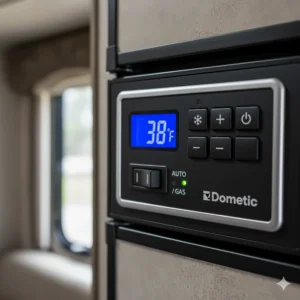
The Techomey 3.5 Cu.Ft RV Propane Refrigerator with Freezer represents the brand’s larger offering, combining a 3.0 cu.ft main compartment with a separate 0.5 cu.ft freezer. This black-finished unit (measuring roughly 20.5 x 22.2 x 32.8 inches) brings serious capacity without overwhelming smaller RV spaces.
Technical Specs:
- Total capacity: 3.5 cu.ft (3.0 fridge + 0.5 freezer)
- Power consumption on gas: 0.28kg/day
- Manual electric thermostat control
- Automatic defrost feature
- Pricing: $520-$680
This camper 3 way refrigerator particularly excels at maintaining freezer temperatures—reviewers consistently report frozen items staying solid even during multi-day boondocking sessions. The removable shelves allow height adjustments to accommodate taller items like wine bottles or 2-liter sodas, while the absorption cooling system delivers the promised silent operation.
Customer experiences highlight its reliability. “Three-week Alaska trip, running entirely on propane,” one RV owner reported. “Everything stayed perfectly chilled, and we never heard a peep from it.” Some users note the 6-8 hour initial cooldown time, especially when starting from ambient temperature, requires advance planning.
Pros:
✅ Generous freezer compartment for extended trips
✅ Removable shelves maximize storage flexibility
✅ Consistent performance across all three power sources
Cons:
❌ Lengthy initial cooldown period (6-8 hours)
❌ Requires good ventilation clearance behind unit
4. Smad 3.5 Cu.Ft Propane Fridge
Another strong contender in the mid-size category, the Smad 3.5 Cu.Ft RV Propane Refrigerator brings proven reliability with slightly different design aesthetics. This model features the same capacity breakdown (3.0 cu.ft fridge, 0.5 cu.ft freezer) but adds enhanced temperature control and a more refined exterior finish.
Notable Features:
- Dual independent controls for gas/AC and DC
- Temperature adjustment: Fridge 32-50°F, Freezer -0.4°F
- Dimensions: 20.5 x 22.2 x 32.8 inches
- 12-month manufacturer warranty
- Price: $550-$700
This 3 way camper fridge distinguishes itself through user-friendly controls and slightly better insulation compared to competitors. The Smad brand has built a solid reputation in the RV community, and this model showcases why—attention to detail in everything from door seal quality to shelf stability makes a difference during bumpy travels.
Feedback from full-time RVers is overwhelmingly positive. One verified purchaser mentioned, “We replaced our old Dometic with this Smad unit and honestly can’t tell the difference in performance, but we saved $800.” The consensus points to excellent value for money, though some wish for additional door storage options.
Pros:
✅ Exceptional build quality at mid-range pricing
✅ Independent temperature controls for each mode
✅ Superior insulation maintains temps during travel
Cons:
❌ Limited door storage compared to premium models
❌ Slightly heavier than comparable units
5. Dometic RM2354 Americana Absorption Refrigerator
Now we enter premium territory with the Dometic RM2354 Americana—a 3 cubic foot powerhouse that’s been the gold standard in RV refrigeration for years. Dometic invented RV refrigeration back in the 1950s, and their expertise shows in every aspect of this meticulously engineered appliance.
Premium Specifications:
- Capacity: 3 cu.ft with integrated freezer
- Dimensions: 30-3/16″H x 21-7/8″W x 22-23/32″D
- Eye-level electronic controls with auto-adjustment
- Three-way power: 110V AC, 12V DC, LP Gas
- Defrost water drain system
- Price range: $1,350-$1,600
What justifies the premium price? Precision. The electronic controls automatically compensate for ambient temperature changes, maintaining consistent internal temperatures whether you’re in Arizona summer heat or Montana winter cold. The 2-liter bottle storage and specialized door bins demonstrate thoughtful design that budget models overlook. According to research from Consumer Reports, reliability in RV appliances directly correlates with build quality, and Dometic consistently ranks at the top.
Long-term owners rave about longevity. “Fifteen years in our fifth wheel and still running flawlessly,” one reviewer noted. “We’ve replaced other appliances twice, but never this fridge.” The only downside? Optional door panels cost extra and require custom trimming.
Pros:
✅ Industry-leading reliability and longevity
✅ Automatic temperature compensation
✅ Exceptional customer support and parts availability
Cons:
❌ Higher initial investment
❌ Door panels sold separately
6. Norcold N3150AGL 5.3 Cu.Ft Refrigerator
For families needing serious storage without going full residential-size, the Norcold N3150AGL delivers 5.3 cubic feet of capacity in a surprisingly compact footprint. This two-door design (fridge and separate freezer) brings organization and convenience to mobile living.
Family-Sized Features:
- Total capacity: 5.3 cu.ft (4.42 fridge, 0.88 freezer)
- LCD control panel with diagnostics
- Charcoal grey curved door design
- Dimensions: 49-3/16″H x 20-3/4″W x 19-7/8″D
- Self-latching doors with travel hooks
- Price: $1,650-$1,950
The Norcold advantage comes from smart interior design—adjustable door bins, no-tarnish powder-coated shelves, and adjustable food fences that prevent items from shifting during transit. The two-door construction minimizes cold air loss when grabbing something from just the fridge section, improving overall efficiency.
Customer reviews emphasize its family-friendly capacity. “Four people, two weeks, barely made a dent in the space,” shared one satisfied buyer. “The separate freezer door is a game-changer for keeping frozen goods accessible without warming the whole fridge.” The LCD panel occasionally confuses first-time users, but most adapt quickly.
Pros:
✅ Massive capacity for extended family trips
✅ Two-door design reduces energy waste
✅ Advanced LCD diagnostics for troubleshooting
Cons:
❌ Requires larger installation opening
❌ Learning curve for digital controls
7. Norcold Polar 8 Cu.Ft 3-Way Refrigerator
The king of camper 3 way refrigerator options, the Norcold Polar 8 Cu.Ft brings near-residential capacity to RV living. At 8 cubic feet, this beast can handle full-time living requirements, complete family provisions for extended trips, or serious food storage for boondocking marathons.
Full-Timer Specifications:
- Massive 8 cu.ft total capacity
- Triple power: AC/DC/LP with automatic switching
- Frost-limiting technology
- Optional ice maker capability
- Black trim two-door design
- Investment range: $2,100-$2,500
This fridge camper 3 way champion features everything you’d expect in a high-end unit: reversible stainless steel doors with curved edges, travel latches, Night Mode for battery conservation, and touch-control LCD panels. The optional cold weather package keeps it functioning in freezing temperatures—something cheaper units can’t claim.
Full-timers and serious RVers consistently praise its residential-like performance. “Switched from a standard residential fridge conversion, and this Norcold Polar actually works better off-grid,” one full-timer explained. “The propane efficiency is remarkable for the size.” The main barrier? Price and installation complexity.
Pros:
✅ Residential-size capacity for full-time living
✅ Night Mode conserves battery power
✅ Optional ice maker for ultimate convenience
Cons:
❌ Significant upfront investment
❌ Requires professional installation
Ready to Upgrade Your Mobile Kitchen?
These seven models represent the cream of the crop for 2025. Click any highlighted product name above to check current prices, read additional customer reviews, and secure your perfect camper 3 way refrigerator today! ⚡
Understanding How Camper 3 Way Refrigerators Actually Work
Here’s where things get fascinating. Unlike your home refrigerator that uses a compressor and moving parts, a 3 way fridge camper operates on absorption cooling technology—a completely different beast that’s been perfected over decades specifically for mobile applications.
The Science Behind Absorption Cooling
The absorption refrigeration cycle uses heat to create cooling (sounds paradoxical, right?). Here’s the simplified version: ammonia, hydrogen, and water circulate through a sealed system. When heat is applied to the solution (via propane flame, AC heating element, or DC heating element), it causes the ammonia to evaporate. As the ammonia gas moves through the system and re-condenses, it absorbs heat from inside the refrigerator, creating that cooling effect we’re after.
This process requires zero moving parts beyond the fluid circulation—explaining the legendary silence and reliability. According to the National Renewable Energy Laboratory, absorption cooling systems can maintain efficiency rates comparable to compressor systems while offering superior reliability in mobile environments where vibration would compromise traditional designs.
Why Three Power Sources Matter
The beauty of a camper fridge 3 way design lies in its adaptability:
110V AC Mode: When you’re plugged into shore power at a campground, RV park, or home driveway, AC mode draws electricity just like any household appliance. This is typically the most efficient and economical option when available.
12V DC Mode: While driving, your vehicle’s alternator generates 12-volt power, which the refrigerator uses to maintain cooling. However, 12V mode draws significant current (typically 10-15 amps), so it’s designed for use while the engine is running—not for extended stationary periods that would drain your house batteries.
LP Gas Mode: This is where the magic happens for boondocking. Running on propane, your 3 way camper fridge can operate for weeks without any electrical connection. A standard 20-pound propane tank typically provides 10-14 days of continuous refrigeration, depending on ambient temperatures and usage patterns.
Essential Features to Look for When Buying
Shopping for your first camper 3 way refrigerator can feel overwhelming with technical specs, varying capacities, and price points from $300 to $2,500+. Let me break down what actually matters based on real-world usage rather than marketing hype.
Capacity and Size Considerations
Solo/Couple (1.4-2.5 cu.ft): Perfect for van conversions, truck campers, or minimalist travel styles. You’ll fit essentials for 3-5 days without resupply. Think weekend warrior rather than month-long expeditions.
Small Family (3-4 cu.ft): The sweet spot for most traditional RV users. Enough space for a week’s worth of fresh food, beverages, and some frozen items. Most models in this range include separate freezer compartments adequate for ice packs, frozen vegetables, and yes, ice cream.
Large Family/Full-Time (5-8 cu.ft): When your RV is truly your home, you need residential-level capacity. These units accommodate bulk shopping, meal prep for extended periods, and the variety that makes mobile living comfortable rather than a constant compromise.
Temperature Control and Stability
Not all thermostats are created equal. Basic models use simple mechanical dials that require manual adjustment as ambient temperatures change. Premium units like the Dometic and Norcold models feature electronic controls with automatic compensation—set your desired temperature once, and the fridge adjusts its heat input to maintain consistency whether it’s 40°F or 100°F outside.
Look for models advertising a temperature range covering 32-50°F for the main compartment and below 0°F for freezers. Some budget units struggle to reach true freezing temperatures during hot weather—a critical consideration if you’re planning summer desert camping.
Build Quality Indicators
Door Seals: Quality gaskets make a massive difference in efficiency. Check for thick, pliable rubber seals with good compression when closed.
Shelving: Powder-coated wire shelves resist rust and clean easily. Adjustable or removable shelves add flexibility for varying container sizes.
Exterior Finish: Black or stainless finishes not only look better but also resist scratching and fading better than plastic alternatives.
Control Panel: Recessed controls protected from accidental bumps beat exposed knobs that get knocked during travel.
Installation Guidelines and Pro Tips
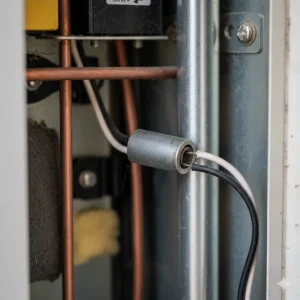
Installing a 3 way fridge camper requires more than just sliding it into an opening. Proper installation directly impacts performance, safety, and longevity. Let me walk you through the critical considerations many DIYers overlook.
Ventilation Requirements
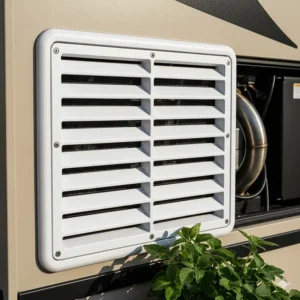
This is absolutely critical and surprisingly often ignored. Absorption refrigerators generate significant heat during operation—that heat must escape efficiently, or your fridge will struggle and potentially fail prematurely. According to manufacturer specifications (and National Fire Protection Association guidelines), you need:
Rear Clearance: Minimum 400mm (15.75 inches) from the rear wall to allow heat to rise through the chimney effect. Some installers get away with less, but you’re gambling with performance and lifespan.
Top Clearance: At least 300mm (11.8 inches) above the unit for proper ventilation escape. Many RV manufacturers cut this close, leading to cooling issues.
Sidewall Clearance: Even if the unit fits snugly side-to-side, ensuring airflow paths around the cooling unit prevents hot spots.
For LP gas operation, never install in unventilated spaces. Some states require external ventilation kits (available from most manufacturers) that pipe combustion gases safely outside.
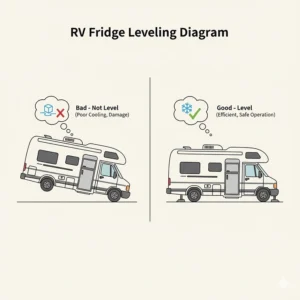
Leveling: More Important Than You Think
Here’s something that surprises newcomers: absorption refrigerators are shockingly sensitive to level. The ammonia solution needs to flow correctly through the cooling tubes via gravity. If your RV is more than 3-5 degrees off-level in any direction, cooling efficiency drops dramatically. Beyond 5-7 degrees, the cooling unit can become permanently damaged.
Quick Leveling Tips:
- Invest in an RV-specific bubble level (under $10, invaluable tool)
- Check level both left-right and front-back before each camping session
- Use leveling blocks or built-in systems to achieve proper positioning
- When boondocking, prioritize fridge leveling over spectacular views
Power Source Selection and Switching
Most modern camper 3 way refrigerator models don’t automatically switch between power sources—you need to manually select the appropriate mode. Here’s the smart approach:
At the Campground (Shore Power Available): Use 110V AC mode exclusively. It’s most efficient, economical, and imposes zero load on your propane supply.
While Driving: Switch to 12V DC mode. Your alternator provides ample power while the engine runs.
Important: Some RVers disable 12V mode entirely if they frequently take short drives, as the current draw can stress electrical systems during extended stationary periods with only solar/battery power.
Boondocking/Off-Grid: LP gas mode is your friend. A 20-pound tank running a 3-4 cu.ft fridge typically lasts 10-14 days, though extreme temperatures reduce this. Always carry a backup tank and monitor levels.
Energy Efficiency and Cost Analysis
Let’s talk money—both upfront investment and ongoing operational costs. Understanding the full picture helps justify the sometimes-shocking price tags on premium models.
Initial Investment Breakdown
| Price Tier | Models | What You Get | Best For |
|---|---|---|---|
| Budget ($350-$580) | Techomey, Entry Smad | Basic functionality, adequate capacity, shorter warranty | Testing RV life, weekend use |
| Mid-Range ($580-$900) | Premium Smad, Entry Dometic | Better build quality, improved efficiency, extended warranties | Regular RV users, seasonal travel |
| Premium ($1,350-$1,950) | Dometic, Norcold | Superior reliability, advanced features, longest lifespan | Full-timers, serious investment |
| Ultra-Premium ($2,100+) | Large Norcold | Residential capacity, all bells/whistles, commercial-grade | Luxury RVs, permanent mobile living |
Operating Cost Comparison
Propane Costs: At current average propane prices ($3-4 per gallon), running a 3-4 cu.ft camper fridge 3 way on gas costs approximately $0.80-1.20 per day, or $24-36 per month of full-time operation. Larger 8 cu.ft units might reach $50-60 monthly.
Electricity Costs: When plugged into shore power, expect 2-3 kWh per day ($0.30-0.60 at average residential rates). Annual electrical costs: roughly $110-220 if used full-time on AC power.
12V DC Impact: This is where calculations get tricky. While “free” from your vehicle’s alternator during driving, extended use from batteries without alternator input drains power rapidly. Most RVers reserve 12V mode exclusively for travel days.
The bottom line? Operating costs for a 3 way camper fridge remain remarkably reasonable—far cheaper than constantly buying ice for coolers, and the convenience factor is priceless when you’re hundreds of miles from the nearest grocery store.
Common Problems and Troubleshooting Solutions
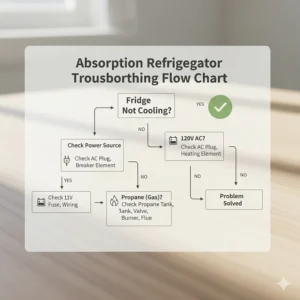
Even the best camper 3 way refrigerator occasionally acts up. Here’s how to diagnose and fix the most common issues without an expensive service call.
Issue #1: Fridge Not Cooling on Any Power Source
Symptoms: Unit appears to be running (on gas, you see flame; on electric, controls light up), but interior temperature won’t drop below ambient.
Most Likely Causes:
- Leveling Problems: Check RV level immediately. More than 5 degrees off-level prevents proper ammonia circulation.
- Cooling Unit Failure: If the fridge is old (10+ years) or has been operated severely off-level repeatedly, the cooling unit may have developed a blockage. This typically requires professional repair or replacement.
- Insufficient Ventilation: Blocked vents or insufficient airflow cause the unit to overheat, drastically reducing cooling capacity.
Quick Fixes:
- Level your RV properly using leveling blocks
- Clear all ventilation areas, remove any obstructions behind the fridge
- Try the “flip trick” for older units: carefully tip the fridge upside down for 8 hours, then right-side up for 8 hours, which can sometimes clear ammonia blockages
Issue #2: Works on AC/DC But Not Propane
Symptoms: Electric modes function perfectly, but gas mode produces weak cooling or none at all.
Troubleshooting Steps:
- Check Gas Supply: Verify propane tank has fuel, valve is open, and other gas appliances (stove, water heater) work properly.
- Inspect Burner: Look at the flame through the access panel—it should be steady, bright blue, and cone-shaped. Yellow flames or flickering indicates dirty burner orifice.
- Clean Orifice: Spider nests, dust, and debris commonly clog the tiny gas orifice. Carefully remove and clean with compressed air (never use sharp objects that might damage precision openings).
- Thermocouple Check: The safety device that keeps gas flowing only when the flame is lit can fail. If cleaning doesn’t help, this might need replacement.
Issue #3: Freezer Works but Fridge Section Warm
Symptoms: Freezer maintains proper temperature, but main refrigerator compartment stays too warm.
Likely Culprits:
- Baffle Positioning: The baffle directs cold air from the freezer down into the fridge section. If it’s stuck closed or improperly positioned, cold air can’t circulate.
- Airflow Obstruction: Overpacking the freezer blocks airflow into the fridge section. Ensure you haven’t covered air passages with food items.
- Door Seal Failure: A compromised seal on the main door lets cold air escape while the better-sealed freezer stays cold.
Solutions:
- Verify the baffle inside the freezer compartment moves freely
- Reorganize to ensure air circulation paths remain clear
- Test door seal with the dollar bill method (close door on a bill—if you can pull it out easily, seal needs replacement)
Issue #4: Excessive Propane Consumption
Symptoms: You’re refilling propane tanks far more frequently than expected.
Investigation Steps:
- Ambient Temperature: Hot weather forces the unit to work harder. In 95°F+ temperatures, consumption can double compared to mild conditions.
- Ventilation Efficiency: Poor ventilation makes the unit work overtime. Ensure intake and exhaust vents are clean and unobstructed.
- Burner Adjustment: An improperly adjusted flame wastes propane. The flame should be crisp blue—too much gas creates yellow flames and wasted fuel.
- Insulation Degradation: Older units may have deteriorating insulation, requiring more energy to maintain temperature.
Maintenance Schedule for Maximum Longevity
Want your 3 way fridge camper to last 15-20 years instead of 7-10? Follow this maintenance schedule religiously. I learned these practices from full-time RVers who’ve kept their refrigerators running flawlessly for decades.
Annual Deep Clean and Inspection
Early Spring (Before Camping Season):
- Remove all contents and defrost completely if ice has accumulated
- Clean interior with baking soda solution (1 tablespoon per quart of water)—never harsh chemicals that might contaminate food
- Inspect door seals for cracks, tears, or lost elasticity; replace if questionable
- Test all three power modes for 24 hours each to verify proper function
- Check external vent covers for damage, insects, or bird nests
Burner Area Maintenance:
- Remove access panel and inspect burner assembly
- Use compressed air to blow out dust, spider webs, and debris
- Clean burner orifice carefully with appropriate tools
- Verify flame color and shape when lit (steady blue cone shape)
- Clean or replace electrodes if electronic ignition seems sluggish
Quarterly Checks
Every Three Months:
- Verify door seals remain tight using the dollar bill test
- Check refrigerator level and adjust if necessary
- Clean cooling fins on the back of the unit (accessible from exterior compartment)
- Inspect propane connections for leaks using soapy water test
- Wipe down exterior surfaces and control panel
Monthly Basics
During Active Use:
- Clean interior shelves and door bins
- Check and adjust temperature settings for seasonal changes
- Verify all three power modes still function properly
- Monitor for unusual sounds, smells, or performance changes
- Ensure adequate ventilation hasn’t been compromised by stored items
Storage Mode Preparation
If you won’t use your RV for extended periods (winter storage, etc.), proper prep prevents problems:
- Thoroughly clean and dry interior to prevent mold/odors
- Prop doors slightly open to maintain airflow
- Turn off propane supply completely
- Some experts recommend leaving the fridge running year-round on AC power (if stored with electrical hookup) to maintain cooling unit health
Comparing 3-Way vs 2-Way vs Compressor Refrigerators
Understanding your options helps you make the smartest choice. Not everyone needs a camper 3 way refrigerator—sometimes a different technology fits better.
Feature Comparison Table
| Feature | 3-Way Absorption | 2-Way Absorption | 12V Compressor |
|---|---|---|---|
| Power Options | AC/DC/LP | AC/LP | 12V DC only |
| Noise Level | Silent (0 dB) | Silent (0 dB) | Moderate hum |
| Efficiency | Moderate | Moderate | Excellent |
| Leveling Sensitivity | High | High | None |
| Temperature Range | 32-50°F typical | 32-50°F typical | -4 to 50°F+ |
| Initial Cost | $350-$2,500 | $300-$1,800 | $400-$1,500 |
| Off-Grid Capability | Excellent (weeks) | Excellent (weeks) | Good (days) |
| Moving Parts | None | None | Compressor, fans |
| Repair Complexity | Complex | Complex | Moderate |
When to Choose 3-Way Over Alternatives
Choose 3-Way Absorption If:
- You frequently boondock or dry camp away from electrical hookups
- Silent operation matters tremendously (light sleepers, small spaces)
- You want maximum flexibility across all camping scenarios
- Your RV already has adequate propane capacity and plumbing
- You’re willing to maintain proper leveling
Consider 2-Way Absorption If:
- You never use 12V mode anyway (most RVers fall into this category)
- You want to save $100-200 on purchase price
- Your travel style always includes either shore power or propane availability
- You’re replacing an existing absorption unit
Consider 12V Compressor If:
- You have robust solar and battery systems
- You prefer residential-style cooling performance
- Leveling sensitivity frustrates you
- You rarely have access to propane
- You need deep freezing capability (-10°F or lower)
The honest truth? For traditional RV use with occasional boondocking, a 3 way camper fridge offers the most versatility. But if you’ve invested heavily in solar/battery systems or you’re building a custom van conversion with limited propane infrastructure, compressor fridges make increasing sense.
Top Brands and What Makes Them Different
The RV refrigeration market has consolidated over decades, leaving a handful of dominant players with distinct characteristics.
Dometic: The Industry Pioneer
Founded in Sweden in the 1920s and credited with inventing RV refrigeration in the 1950s, Dometic is the name most RVers recognize first. Their Americana series represents decades of refinement, and the brand’s reputation for longevity is well-earned. You’ll find Dometic units in everything from budget travel trailers to million-dollar luxury coaches.
Strengths: Unmatched parts availability, extensive dealer network, proven track record of 15+ year lifespans, advanced electronic controls.
Considerations: Premium pricing (expect 20-40% more than competitors), door panels often sold separately, some models require specific replacement parts rather than generic alternatives.
Norcold: The Challenger
Norcold has been Dometic’s primary competitor since the 1960s. Now owned by Thetford Corporation, they’ve carved out a reputation for innovative features and slightly more competitive pricing while maintaining comparable quality. Their Polar Series has gained significant traction in recent years.
Strengths: Excellent value proposition, cutting-edge features (Night Mode, LCD diagnostics), slightly larger capacity in similar footprints, good warranty support.
Considerations: Smaller parts network than Dometic (though still adequate), some models have had recall issues in past years (now resolved), not quite the same brand recognition.
Smad: The Value Leader
Relatively newer to the North American market, Smad has rapidly gained market share by offering surprisingly good quality at aggressive price points. Their absorption refrigerators deliver solid performance without the premium brand markup.
Strengths: Budget-friendly pricing ($440-700 range), good build quality for the price, straightforward controls, adequate warranty support.
Considerations: Less extensive dealer network, limited long-term reliability data (brand is newer), basic features without premium amenities, customer service can be hit-or-miss.
Techomey: The Budget Option
Techomey targets entry-level buyers and DIY van converters seeking the most affordable path to three-way refrigeration. While not in the same quality tier as premium brands, their units perform adequately for less demanding applications.
Strengths: Rock-bottom pricing ($350-680), widely available on Amazon with fast shipping, decent performance for weekend use, simple controls.
Considerations: Shorter expected lifespan (5-7 years vs 15+), less robust build quality, minimal customer support, not suitable for full-time RV living, some quality control inconsistencies.
Installation Costs and DIY Considerations
Beyond the refrigerator purchase price, installation costs vary dramatically depending on whether you tackle it yourself or hire professionals.
Professional Installation Pricing
Basic Replacement (Same Size/Type): $200-400 labor When replacing an existing absorption fridge with a similar model, installation is straightforward for experienced RV technicians. They’ll handle electrical connections, gas line connections, ventilation verification, and testing—typically 2-4 hours of work.
Custom Installation (New Cutout): $500-1,200+ labor Creating a new opening, reinforcing cabinets, routing propane lines, running electrical wiring, and installing exterior ventilation can consume a full day or more. Complex installations in custom builds might reach $2,000+ in labor alone.
Mobile Service Premium: Add 20-50% Having technicians come to your location instead of bringing the RV to a shop increases costs but saves you the hassle of unhooking and towing.
DIY Installation: What You’re Getting Into
Required Skills:
- Basic electrical wiring (120V AC and 12V DC)
- Gas line connections and leak testing
- Carpentry for any opening modifications
- Proper ventilation installation
- Patience and attention to detail
Tools Needed:
- Multimeter for electrical testing
- Adjustable wrenches and screwdrivers
- Propane leak detector or soapy water
- Drill with various bits
- Level (critical for final positioning)
- Sealant and mounting hardware
Realistic Time Investment: Plan 6-12 hours for a straightforward replacement in an existing opening. Custom installations easily consume a full weekend or longer.
Permit and Code Considerations
Some jurisdictions require permits for propane appliance installations, especially if you’re making modifications to gas lines. The National Fire Protection Association’s NFPA 1192 sets standards for recreational vehicles, which many local codes reference. Check with your local building department before starting major modifications—better safe than facing issues during RV inspection or, worse, after an incident.
Maximizing Off-Grid Performance
You bought a 3 way fridge camper specifically for boondocking freedom, right? Here’s how to squeeze maximum performance and runtime from your setup.
Propane Efficiency Strategies
Pre-Cool Before Disconnecting: Always cool your fridge completely on shore power before switching to propane mode. Starting with a cold interior reduces propane consumption dramatically during the transition period.
Minimize Door Openings: Every opening releases cold air and forces the system to work harder. Organize interior layout so frequently-used items stay accessible together, reducing search time with the door open.
Add Fans for Circulation: Installing small 12V fans near the cooling fins improves heat dissipation and can reduce propane consumption by 20-30% in hot weather. Battery draw is minimal compared to the propane saved.
Shade Your Exterior: If possible, park with the refrigerator’s exterior vent in shade. Reducing exterior temperatures helps the unit reject heat more efficiently, improving overall performance.
Temperature Management Tips
️ Set Realistic Expectations: In 95°F+ ambient temperatures, even premium units might struggle to maintain freezer temperatures below 25°F while keeping the fridge around 40°F. This is normal absorption technology behavior—plan accordingly.
️ Use Ice Packs Strategically: Freezing water bottles or gel packs when you have shore power provides thermal mass that helps stabilize temperatures during hot days or travel periods.
️ Understand Recovery Time: After adding room-temperature groceries, expect 2-4 hours for the fridge to recover proper temperatures on propane, slightly faster on electric modes.
️ Avoid Overloading: Unlike compressor refrigerators that benefit from being full, absorption units need airflow space. Keep capacity to 70-80% maximum for optimal performance.
Extending Boondocking Duration
Typical Propane Consumption (3-4 cu.ft fridge):
- Mild weather (60-75°F): 0.25-0.35 kg/day → 20-pound tank lasts 16-20 days
- Hot weather (85-100°F): 0.40-0.55 kg/day → 20-pound tank lasts 10-12 days
- Extreme heat (100°F+): 0.60-0.75 kg/day → 20-pound tank lasts 8-10 days
Maximizing Duration:
- Carry multiple propane tanks (most RVs accommodate 2x 20-30 lb tanks)
- Consider adding solar panels to offset fan power draw
- Use reflective window covers to reduce internal RV temperatures
- Cook during cooler morning/evening hours to avoid heating the RV interior
Safety Considerations You Cannot Ignore
Propane is wonderfully convenient but demands respect. These safety practices aren’t optional—they’re life-critical.
Propane Safety Fundamentals
Always Have a Working Detector: Install LP gas detectors low near the floor (propane is heavier than air and sinks). Test monthly and replace per manufacturer recommendations (typically 5-7 years).
Never Operate While Fueling: Turn off all propane appliances, including your camper 3 way refrigerator, when refueling your RV. This is legal requirement in most jurisdictions and prevents potential ignition sources near fuel vapors.
Inspect Connections Regularly: Use soapy water to test all propane connections for leaks at least twice per camping season. Bubbles indicate escaping gas requiring immediate attention.
Proper Ventilation is Critical: NEVER block exterior vents. The combustion process needs fresh air intake and must exhaust byproducts safely outside the RV. Blocked vents create carbon monoxide risks and reduce cooling efficiency.
Annual Professional Inspection: Have your entire propane system professionally inspected yearly, including pressure testing, regulator function, and appliance burner condition.
Carbon Monoxide Awareness
While rare, carbon monoxide (CO) poisoning from malfunctioning propane appliances kills several RVers annually. CO is odorless, colorless, and deadly.
Prevention Measures:
- Install CO detectors on every level of your RV
- Ensure adequate ventilation around all propane appliances
- Never use outdoor-only appliances (like propane heaters designed for camping) inside the RV
- Have heating systems and water heaters serviced before each season
Warning Signs of CO Exposure:
- Headache, dizziness, weakness
- Nausea, vomiting, chest pain
- Confusion, blurred vision
- Loss of consciousness
If your CO detector sounds or you experience symptoms, immediately evacuate the RV, call 911, and don’t re-enter until professionals clear the vehicle.
Electrical Safety
Proper Grounding: Ensure your RV’s electrical system is properly grounded, especially the refrigerator circuit. Improper grounding creates shock hazards and potential fire risks.
Circuit Capacity: Verify your electrical panel can handle the refrigerator’s AC mode draw (typically 2-3 amps) along with other appliances. Overloaded circuits cause nuisance breaker trips at best, fire hazards at worst.
Professional 12V Wiring: The 12V DC mode draws 10-15 amps—substantial current requiring appropriate wire gauge and fusing. Undersized wiring creates voltage drops (reducing efficiency) and fire hazards. If unsure about your RV’s 12V system capacity, consult an electrician.
Real User Experiences and Case Studies
Nothing beats learning from people who’ve actually lived with these refrigerators through various scenarios. Here are real experiences that shaped this guide.
Case Study 1: Full-Time Family in a Fifth Wheel
The Dawson Family – Norcold N3150AGL Owner (5.3 cu.ft)
“We sold our house three years ago to travel full-time with our two kids. The Norcold 5.3 was already installed when we bought our used fifth wheel, and honestly, it’s been one of the most reliable components in our rig. We’ve run it primarily on propane during long stretches boondocking in national forests, switched to shore power at RV parks, and used 12V during travel days.
The 5.3 cubic foot capacity is perfect for a family of four. We shop weekly when near towns, and we can easily fit everything including frozen meats, fresh produce, and plenty of beverages for the kids. The separate freezer door is clutch—we’re not constantly warming the main fridge every time someone wants ice or a popsicle.
Our biggest lesson? Leveling matters more than we ever imagined. Early on, we had cooling issues at certain campsites. We bought better leveling blocks and a digital level app, and problems vanished. Also, in Arizona summer heat (110°F+), we learned to keep the exterior vent shaded—it made a noticeable 5-8 degree difference in internal temps.
Would we choose the same model again? Absolutely. Three years of full-time living, zero repairs, consistent performance. It’s the kind of appliance you forget about because it just works.”
Case Study 2: Weekend Van Lifer Goes Budget
Marcus Chen – Techomey 1.4 Cu.Ft Owner
“I converted a Ford Transit into a weekend adventure van on a tight budget. The Techomey 1.4 caught my eye because it was literally half the price of comparable Smad or Dometic units, and Amazon reviews seemed decent for the price point.
Installation was straightforward—I’m handy but not a professional, and I got it working correctly in about six hours including propane line routing and exterior vent installation. The compact 1.4 cubic foot capacity is actually perfect for my solo weekend trips. I can pack essentials for 3-4 days without struggling for space.
Performance-wise, it’s been solid for my use case. I pre-cool it on AC power at home before trips, then switch to propane when I hit the road. It maintains temperatures well, though I notice it struggles a bit in extreme heat—the freezer section gets to maybe 28-30°F instead of hard frozen when it’s 95°F+ outside.
The silence is amazing. Coming from a compressor-style cooler, having zero noise at night is wonderful. My only real complaint is the basic controls—I’m still figuring out optimal settings after six months.
For the price ($380 when I bought), I’m genuinely impressed. If I were living in the van full-time, I’d probably spring for a Dometic or Norcold. But for weekend use? This budget option works great.”
Case Study 3: Upgrade from Nightmare to Dream
Linda and Tom Peterson – Switched to Dometic RM2354
“Our trailer came with a no-name Chinese fridge that was nothing but headaches. It would cool okay on AC, barely worked on 12V, and the propane mode was a joke—barely kept things cool even in mild weather.
After two years of frustration and a ruined vacation where we lost $200 in spoiled food, we bit the bullet and upgraded to the Dometic RM2354. Yes, it was expensive ($1,450 installed), but the difference is night and day.
The automatic temperature controls mean we don’t fiddle with settings constantly. Set it once and forget it—whether it’s 60°F or 98°F outside, the fridge maintains 38°F like clockwork. The build quality is obvious—thicker door gaskets, better shelves, controls that feel solid instead of cheap.
We’ve had it two seasons now, covering everything from cold spring mountain camping to hot desert summers, and it’s been absolutely reliable. The propane efficiency is notably better than our old unit—we’re getting almost two weeks on a 20-pound tank where the old one would need refills after 8-9 days.
Was it worth the premium price? For our peace of mind and the quality of our camping experience, absolutely. We should have done it years ago.”
Frequently Asked Questions
❓ How long does a 20 lb propane tank last running a camper 3 way refrigerator?
❓ Can I run a 3 way fridge camper on battery power alone?
❓ What's the difference between a 2 way and camper fridge 3 way?
❓ Why isn't my 3 way camper fridge cooling on propane but works on electric?
❓ How critical is leveling for camper 3 way refrigerator performance?
Conclusion: Choosing Your Perfect Mobile Refrigeration Solution
We’ve covered a lot of ground—from absorption cooling science to real-world experiences, installation considerations to troubleshooting tips. So what’s the takeaway for someone standing in front of a dozen camper 3 way refrigerator options, wallet in hand?
First, understand your actual needs rather than aspirations. That 8 cubic foot Norcold Polar looks amazing, but if you’re only camping a few weekends per year, a compact Techomey or Smad unit might serve you perfectly well while leaving budget for other camping gear. Conversely, full-time RVers shouldn’t cheap out on the appliance they’ll use literally every single day for years—invest in quality (Dometic, Norcold) and sleep better at night.
Second, prioritize versatility. The three-way power option isn’t just marketing—it’s genuine freedom to camp anywhere without constantly worrying about electrical hookups or battery drainage. That flexibility justifies the added complexity and cost for most traditional RV users.
Finally, remember that proper installation, regular maintenance, and understanding your unit’s quirks matter as much as the model you choose. A budget Techomey installed correctly and maintained religiously will outperform a premium Dometic that’s improperly leveled and poorly ventilated.
The seven models we’ve explored represent the best of 2025’s offerings across every price point and use case. Whether you’re building your first van conversion, upgrading an aging RV refrigerator, or planning the jump to full-time mobile living, there’s a perfect 3 way fridge camper waiting for you.
Ready to Transform Your RV Experience?
Don’t let another camping trip get ruined by inadequate refrigeration or spoiled food. Click on any of the highlighted product names throughout this guide to check current prices, read hundreds of additional customer reviews, and secure your perfect camper 3 way refrigerator today. Your future self—enjoying ice-cold drinks at a remote mountain campsite—will thank you! ️⛺
Recommended for You
- 7 Best Camper Refrigerator Gas and Electric: 2025 Buyer’s Guide
- Camping Refrigerator: 7 Best Portable Fridges 2025 Guide
- RV Camper Cushion Covers: 7 Top Picks That Transform Your Space
Disclaimer: This article contains affiliate links. If you purchase products through these links, we may earn a small commission at no additional cost to you.
✨ Found this helpful? Share it with your friends!
