

In This Article
Every ounce in your pack gets argued over twice. First in the living room, with a kitchen scale and a guilty conscience. Then again at mile 14, when the climb refuses to end. Sleep gear is where that argument gets loudest. Air pads promise cloud-like comfort, then grow a pinhole leak at 2 a.m. and leave you hugging cold dirt.
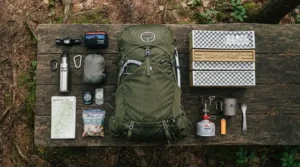
That’s why a foam sleeping pad for ultralight backpacking keeps turning up strapped to the outside of serious hikers’ packs. It has no valve, no seams, and nothing to inflate, so there’s almost nothing to break.
This guide compares seven real, currently sold pads using published specs and the aggregated sentiment from owner and expert reviews. There are no invented test stories here, just honest analysis. By the end you’ll know which pad suits your body, your trail, and your budget. You’ll also know what R-value really buys you, and how foam behaves on thru-hikes and in hammocks.
What Is a Foam Sleeping Pad for Ultralight Backpacking?
A foam sleeping pad for ultralight backpacking is a sleeping pad made from dense, sealed-cell foam that insulates you from cold ground without any inflation. It typically weighs roughly 10 to 17 ounces and can’t be punctured like an air pad. In exchange for plush comfort, you get reliability, low cost, and instant setup.
Quick Comparison: Foam Sleeping Pad for Ultralight Backpacking at a Glance
| Pad | Regular Weight | Listed R-Value | Thickness | Price Range | Best For |
|---|---|---|---|---|---|
| Therm-a-Rest Z Lite Sol | ~14 oz | 2.0 | 0.75 in | $50-$60 range | Thru-hikers wanting the proven default |
| NEMO Switchback | ~14.5 oz | 2.0 | 0.9 in | $50-$60 range | Hikers who want a bit more cushion |
| Therm-a-Rest RidgeRest SOLite | ~14 oz | 2.1-2.8 (listings vary) | 0.625 in | roughly $25-$55 | Warmth-per-dollar shoppers who tolerate bulk |
| Exped FlexMat Plus | ~15-17.6 oz (claims vary) | 2.2 | 1.5 in | around $60 | Comfort-first minimalists |
| Therm-a-Rest RidgeRest Classic | ~14 oz | 2.0 | 0.625 in | $35-$45 range | Budget buyers |
| Therm-a-Rest Z Lite Original | ~14 oz (Small ~10 oz) | 1.7 | 0.75 in | roughly $40-$55 | Warm-weather, weight-obsessed hikers |
| Gossamer Gear Thinlight Foam Pad | ~3 oz | ~0.5 (estimated) | 1/8 in | roughly $20-$50 | Add-on layer, sit pad, hammock legs |
Looking at the table, four pads cluster tightly around 14 ounces and an R-value near 2.0, so your decision comes down to cushion, packed shape, and price rather than raw warmth. The Exped FlexMat Plus is the outlier, buying thickness with a little extra weight. The Gossamer Gear Thinlight Foam Pad isn’t really a standalone bed at all, which is exactly why it earns a spot here. Prices are ranges and shift often, so check current price before buying.
💬 Just one click — help others make better buying decisions too!😊
Top 7 Foam Sleeping Pad for Ultralight Backpacking Picks: Expert Analysis
1. Therm-a-Rest Z Lite Sol — the thru-hiker’s default
That accordion fold is the whole personality. The pad flips open in seconds, and just as quickly becomes a camp seat, a pack stand, or a very flat table.
The Regular measures 20 x 72 inches, runs about 0.75 inches thick, and weighs roughly 14 ounces (a Small trims that to about 10). A reflective ThermaCapture layer lifts the listed R-value to 2.0, a step above the 1.7 of the plain Therm-a-Rest Z Lite Original. In practice, that means comfortable warm-season sleeping, and a respectable floor under a decent quilt when nights hover around 40°F.
Based on the spec comparison, this is the lowest-regret buy in the category. There’s no valve to fail and no pinhole to chase when you’re wrecked at dusk. What the spec sheet won’t tell you is that the foam is firm and the folded bundle is roughly loaf-sized, so it rides outside your pack. One gear-testing site also warns that the reflective coating wears off after heavy use, slowly eroding the warmth edge over a months-long trip.
Reviewers who carried it on the Pacific Crest Trail rate its durability near the top of the scale. The recurring complaints are firmness and packed size, and one reviewer suggests side sleepers try it before committing.
Pros:
- ✅ Near-indestructible, no repair kit needed
- ✅ Unfolds in seconds, doubles as sit pad
- ✅ Reflective layer adds warmth without added weight
Cons:
- ❌ Firm feel, tough for side sleepers
- ❌ Bulky packed shape rides outside the pack
Expect the $50-$60 range at the time of research. For durability per dollar, that’s strong value.
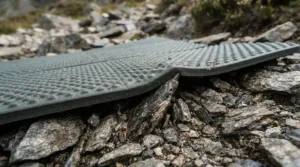
2. NEMO Switchback — more cushion from a corrugated surface
The Switchback’s raised, hexagonal bumps are its pitch. They add a little give where flat foam gives none.
It’s about 0.9 inches thick, 20 x 72 inches, and weighs around 14.5 ounces. A metalized film inside gives it a listed R-value of 2.0. Packed, it’s a similar loaf shape to its accordion rivals. A shorter size exists if you want to shave weight, and some reviewers simply trim the corners.
Here’s where analysis beats marketing. One reviewer notes that NEMO’s own listing suggests a 20-35°F comfort range, which sounds optimistic for R-2 foam. Another site’s rule of thumb is closer to 40°F, and that’s the number I’d plan around. Reviewers disagree on comfort too. Some call it plusher than a Therm-a-Rest Z Lite Sol, while others say it still isn’t great for side sleepers and flattens with repeated use.
On retail pages, the NEMO Switchback averages about 4.4 out of 5 across roughly 480 reviews. Owners praise its puncture resistance and value. They grumble about bulk and the lack of a long or wide size.
Pros:
- ✅ Thicker, slightly softer feel than flat foam
- ✅ Truly puncture-proof, no repairs ever
- ✅ Solid review record from hundreds of owners
Cons:
- ❌ About half an ounce heavier than rivals
- ❌ No long or wide version available
Plan on the $50-$60 range. It’s a fair price for a bit more padding.
3. Therm-a-Rest RidgeRest SOLite — ridged foam built for warmth per ounce
Peaks and valleys trap warm air, while an aluminized surface bounces radiant heat back toward you. It’s the original RidgeRest with a heat-reflecting upgrade.
The Regular weighs about 14 ounces and is only 0.625 inches thick. Sizes include a roughly 9-ounce Small and a 19-ounce Large. Honesty note: published R-values vary wildly, from 2.1 on some listings to 2.8 on others. That likely reflects different test eras, so treat it as roughly 2 to 2.8 and prefer the ASTM-tested figure when you see it.
The catch is shape. It rolls into a round tube about 20 x 8 inches, which is awkward inside a pack. If you’re strapping it outside anyway, that matters little. On paper it’s a strong choice for hikers who sleep cold and refuse to carry air.
One owner review praises it as a puncture-insurance layer under an air pad, with the single “dislike” being bulk. Availability has also been spotty, with several retailers showing it out of stock, so confirm before you plan around it.
Pros:
- ✅ Heat-reflective surface boosts warmth
- ✅ Great as an underlayer beneath air pads
- ✅ Available in Small, Regular, and Large
Cons:
- ❌ Round roll is bulky in a pack
- ❌ Inconsistent R-value claims across listings
Expect roughly $25-$55 depending on stock. Good value when found at the low end.
4. Exped FlexMat Plus — the thickest closed-cell cushion here
At 1.5 inches thick, it’s a different animal. Larger dimples and nearly double the loft change how the ground feels.
The Medium measures about 71.5 x 20.5 inches and packs to roughly 20.5 x 6 x 7 inches. Its ASTM-rated R-value is 2.2, the highest listed number among the standard-length pads here. Weights vary by source. One buyer measured about 418 grams against a 500-gram box claim, so figure roughly 15 to 17.6 ounces. It’s also made of IXPE foam, a tougher cousin of standard polyethylene.
Analytically, this is the pick for people who’d happily carry an extra ounce or two to sleep better. It’s the most plausible foam candidate for side sleepers, though no foam pad will match an air mattress. A 5-year warranty appears on retailer pages.
Retail pages show ratings around 4.6 out of 5 on one store’s page. Several outlets list it as discontinued or sold out, so check availability first.
Pros:
- ✅ Thickest cushion among foam pads here
- ✅ Highest listed R-value, ASTM-tested at 2.2
- ✅ Accordion fold deploys quickly
Cons:
- ❌ Heavier and bulkier than the Z Lite family
- ❌ Spotty availability at some retailers
Look for around $60. It’s a reasonable premium for real comfort.
5. Therm-a-Rest RidgeRest Classic — the no-frills budget workhorse
Simple, ridged, and almost aggressively unfancy. This is the pad your scout leader probably carried.
The Regular is 20 x 72 inches, 0.625 inches thick, and about 14 ounces, with a Large at roughly 19 ounces. The listed R-value is 2.0, though one retailer shows 2.6, so lean on the conservative number. It rolls to about 20 x 8 inches, which is bulky inside a pack but easy to strap outside.
Based on the specs, it matches the Therm-a-Rest Z Lite Sol on weight and warmth for noticeably less money. You give up the accordion’s instant deployment and the reflective layer. For hikers who want R-2 foam without spending much, that’s a fair trade.
On REI, it averages about 4.5 out of 5 from two dozen reviewers. One owner uses it under a Therm-a-Rest X-Therm for extra warmth and puncture insurance, which is a smart stacking move.
Pros:
- ✅ Lowest cost among full-length foam pads
- ✅ Same listed R-value as pricier options
- ✅ Rugged cross-linked polyethylene foam
Cons:
- ❌ Bulky roll, no accordion convenience
- ❌ Thin 0.625-inch profile feels firm
Plan on the $35-$45 range. It’s a standout value pick.

6. Therm-a-Rest Z Lite Original — lightest accordion in the Small size
Before the reflective coating arrived, this was the pad. It’s the same eggbox dimple pattern, minus the heat-reflecting layer.
Most listings put the R-value at 1.7, with some outliers at 1.9. The Regular weighs about 14 ounces and the Small about 10. That Small is the lightest standalone sleeping surface in this lineup short of cutting up a Gossamer Gear Thinlight Foam Pad. One reviewer site calls it the pad that never needs a repair kit.
Analytically, it’s for warm-weather hikers who prioritize grams and pack space. The Therm-a-Rest Z Lite Sol adds roughly 0.3 R-value for no weight penalty, so unless you’re chasing the lowest price, the Sol usually wins on warmth. One Appalachian Trail reviewer on Trailspace noted the foam lost loft over time, a reminder that cushion fades even if the pad never fails.
Pros:
- ✅ Small size drops to roughly 10 ounces
- ✅ Can’t puncture or leak
- ✅ Familiar accordion fold, fast setup
Cons:
- ❌ Lower R-value than the Sol
- ❌ Foam may flatten with long use
Look at roughly $40-$55, and check current price. It makes sense mainly for summer-only hikers.
7. Gossamer Gear Thinlight Foam Pad — three ounces of pure versatility
It’s barely a pad. It’s a sheet of 1/8-inch foam that folds, cuts, and does about a dozen jobs.
Folded, it weighs about 3.3 ounces, or about 2.7 rolled. Gossamer Gear estimates an R-value near 0.5, which is honestly low. Treat it as a supplement: a sit pad, a pack frame sheet, a slip-stopper between an air pad and a slick tent floor, and a legs-and-feet layer in a hammock. Thicker versions exist, and one 3/8-inch variant carries an estimated R-value of 1.4.
It wins on sheer flexibility. Reviewers praise its multi-use value, including a couple who carried the 3/8-inch version on a five-month PCT hike. Reviews are mixed on durability, though. Some owners report tearing at edges, so think of it as a replaceable layer, not a lifetime pad.
Pros:
- ✅ Ultralight, roughly three ounces folded
- ✅ Doubles as sit pad and slip-stopper
- ✅ Easy to cut to custom shapes
Cons:
- ❌ Far too thin to sleep on alone
- ❌ Edges can tear with rough handling
Plan on roughly $20-$50 depending on version. It’s strong value as an accessory.
Spec-Sheet Showdown: The Top 7 Compared
| Pad | Packed Size | Price Range | Review Snapshot | Best For |
|---|---|---|---|---|
| Therm-a-Rest Z Lite Sol | ~20 x 5.5 x 5 in | $50-$60 range | Expert ratings 4.3/5 to 7.5/10 | Thru-hikers |
| NEMO Switchback | ~20 x 5.5 x 5 in | $50-$60 range | ~4.4/5 on a major retailer | Cushion seekers |
| Therm-a-Rest RidgeRest SOLite | ~20 x 8 in roll | roughly $25-$55 | Few recent reviews, spotty stock | Warmth on a budget |
| Exped FlexMat Plus | ~20.5 x 6 x 7 in | around $60 | ~4.6/5 on one retailer | Comfort-first minimalists |
| Therm-a-Rest RidgeRest Classic | ~20 x 8 in roll | $35-$45 range | ~4.5/5 on a major retailer | Budget buyers |
| Therm-a-Rest Z Lite Original | ~20 x 5.5 x 5 in | roughly $40-$55 | 4/5 on Trailspace | Summer-only hikers |
| Gossamer Gear Thinlight Foam Pad | rolls or folds small | roughly $20-$50 | ~4.4/5 on one retailer | Add-on layer |
Reading across the rows, the accordion pads pack into a neat block, while the RidgeRest rolls stay tubular. If your pack has a sleeping pad sleeve, shape matters as much as weight. The Exped FlexMat Plus is the comfort outlier, and the Therm-a-Rest RidgeRest Classic is the value outlier. Ratings come from different sources and scales, so treat them as directional rather than head-to-head scores.
✨ Don’t Miss These Picks!
🔍 Take your sleep system to the next level with these carefully selected foam pads. Click on any highlighted item to check current pricing and availability. A reliable pad means better rest on the trail!
How to Choose a Foam Sleeping Pad for Ultralight Backpacking
Choosing well comes down to a handful of decisions. Here’s the order I’d tackle them in:
- Match R-value to your coldest night. R-values are additive, and a pad around R-2 to R-3 suits three-season use. Look for ASTM F3340-rated numbers, since the ASTM standard allows like-for-like comparisons across brands.
- Pick your weight budget. Most full-length foam pads land near 14 ounces, so don’t expect big savings between them. Real weight savings come from Small sizes or torso-length trims.
- Decide on thickness. Thin pads pack and weigh less. Thicker ones, like 1.5 inches, trade a little weight for noticeably better support.
- Consider how you sleep. Side sleepers feel hip pressure on thin foam, so favor thicker or corrugated designs.
- Choose your packing shape. Accordion folds become a neat block, while rolled pads form a tube. Pick whichever fits your pack or straps.
- Check length and width. Full length covers your legs, while torso-length saves ounces if you can rest your calves on your pack.
- Budget for durability. Foam rarely fails outright, but coatings and cushion wear over time, so a mid-priced pad may outlast a cheap one.
Closed-Cell Foam Explained: Why Puncture Resistance Is the Real Superpower
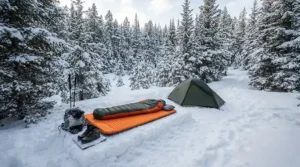
Closed-cell foam is a material full of sealed gas pockets. Because those cells don’t connect, the foam doesn’t absorb water, and it can’t deflate. Wikipedia notes that closed-cell pads are lighter and more durable than self-inflating counterparts, partly because they aren’t vulnerable to accidental punctures.
That puncture resistance is the headline benefit. A thorn, a sharp rock edge, or a stray gear corner can end an air pad’s night. Foam shrugs those things off. Its failure modes are different and gentler: edge tears on thin sheets, surface coatings wearing off, and gradual loss of loft.
The smartest use of that toughness is stacking. A foam layer under an air pad acts as a sacrificial shield, and R-values add up. Think of it as armor plus a thermostat, both in one cheap sheet.
Lightweight Foam Pad for Thru-Hiking: What the Miles Demand
A lightweight foam pad for thru-hiking has a different job than a weekend pad. Over months, durability and simplicity matter more than any single night’s comfort. Foam can’t fail in a way that strands you, and it asks nothing of you at camp.
Several things matter on long trails. Quick deployment helps when you’re hiking until dark. Strapping outside the pack saves interior space for food. And a Small or trimmed pad can cut real weight. A Therm-a-Rest Z Lite Sol or Therm-a-Rest Z Lite Original fits that profile well.
The trade-off is cumulative fatigue. If you’re a poor sleeper, months of firm ground can wear you down. That’s why some thru-hikers pick a thicker foam like the Exped FlexMat Plus, or accept an air pad for comfort and carry foam only as backup. A lightweight foam pad for thru-hiking is a reliability decision first and a comfort decision second.
Foam Sleeping Pad for Hammock Camping: Making Foam Work Off the Ground
A foam sleeping pad for hammock camping is possible, but it behaves differently than on the ground. In a hammock you’re lying in a curve, and foam resists bending. A stiff pad can fold around you or shoot out sideways when you roll. One commenter on SectionHiker even jokes about foam “porpoising” out of single-layer hammocks.
There are fixes. REI’s guide to hammock insulation suggests buying and trimming a closed-cell pad for a custom fit, and even doubling pads for extra warmth. A tapered cut helps the pad conform to your body. Hammock gear makers also offer thickness guidance. Warbonnet suggests roughly 1/8 inch for summer nights, 1/4 inch for mild weather, and 3/8 inch for cooler nights.
For legs and feet, a Gossamer Gear Thinlight Foam Pad is a popular lightweight trick. A Therm-a-Rest RidgeRest Classic is cheap to cut up. Still, many hammock specialists recommend an underquilt for end-gathered hammocks, especially in cold weather. Use a foam sleeping pad for hammock camping when budget or versatility matters most.
Foam Sleeping Pad for Backpacking: Matching Pad to Trip Type
Choosing a foam sleeping pad for backpacking depends on the season you hike most. For summer and early fall, one R-2 pad can work alone. For shoulder seasons, stack it under or over another layer. For winter, foam becomes an add-on rather than a main bed.
Terrain matters too. Rocky bivouacs punish thin pads, while forest duff is forgiving. One review site tested the NEMO Switchback on solid rock slabs and found it firm but durable, with a comfort score middling compared with air pads. If you’re sleeping on rough surfaces often, thicker foam like the Exped FlexMat Plus gains value.
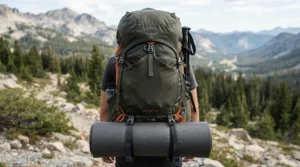
Finally, think about how you pack. A foam sleeping pad for backpacking lives outside the pack. That means exposure to branches and rain, and foam handles both gracefully. That’s a quiet advantage over delicate air pads.
Foam vs Air Pads: A Practical Comparison
| Factor | Foam Pad | Air Pad | Best For |
|---|---|---|---|
| Weight | Often ~10-17 oz | Often lighter per R-value | Air for warmth-per-ounce |
| Warmth | Typically R-2 range | Many options above R-4 | Air in cold weather |
| Puncture risk | None | Real risk | Foam for reliability |
| Comfort | Firm | Plush | Air for side sleepers |
| Setup | Seconds, no inflation | A minute or two | Foam for speed |
| Cost | Roughly $20-$60 | Often much higher | Foam for budget |
| Packability | Bulky, rides outside | Compact | Air for small packs |
Looking at the table, foam wins on risk and cost, while air wins on comfort and compactness. One review site notes that a 13-ounce NeoAir XLite NXT weighs less than the NEMO Switchback while delivering more than double the R-value. That’s a legitimate point for air. But for hikers who are rough on gear or who want zero failure points, foam is a defensible choice. Many hikers combine both, which is why a Therm-a-Rest RidgeRest SOLite under an air pad is so popular.
Practical Usage Guide: Setup, Care, and First-30-Days Tips
Foam is simple, but a few habits stretch its life.
- Setup: Clear sharp sticks first, then unfold the pad dimple side up for the best cushion. Accordion pads like the Therm-a-Rest Z Lite Sol lie flat quickly.
- Packing: Strap it outside, away from snags. Cinch tightly so it doesn’t flap or catch.
- Cleaning: Rinse with water and let it dry. Closed-cell foam doesn’t hold dirt, water, or mud, per one reviewer.
- Maintenance schedule: After each trip, check seams, edges, and coating wear. Store it loose or flat rather than tightly compressed for months.
- Optimization tricks: Trim corners or cut to torso length if you accept the comfort trade. Stack a Gossamer Gear Thinlight Foam Pad under or over your pad for extra grip and R-value.
- First-30-days mistakes: Don’t rely on foam alone below the temperatures your R-value can handle. And don’t drag a thin sheet across rough rock.

Real-World Scenarios: Which Pad for Which Hiker?
These are illustrative profiles, not testimonials.
Scenario 1: The weekend section hiker. Imagine someone hiking twelve weekends a year, mostly three-season trails, on a modest budget. A Therm-a-Rest RidgeRest Classic covers the basics for the $35-$45 range. The saved money goes toward a better quilt.
Scenario 2: The thru-hiker. Picture a hiker starting in spring and finishing in fall, with long days and no tolerance for repairs. A Therm-a-Rest Z Lite Sol is the sensible default. The Small size, or a trimmed pad, cuts weight further.
Scenario 3: The hammock camper on a budget. Someone with a double-layer hammock and no underquilt could use a thin trimmed pad plus a Gossamer Gear Thinlight Foam Pad for legs. It’s cheap, and they can upgrade later.
Scenario 4: The comfort-first minimalist. A person who sleeps on their side and still wants foam may find the Exped FlexMat Plus worth its extra bulk.
Problem-Solution Guide: Fixing the Common Foam Pad Complaints
Foam has well-known weak spots. Here’s how to deal with each.
- “It’s too firm.” Choose thicker foam like the Exped FlexMat Plus, or add a thin layer such as the Gossamer Gear Thinlight Foam Pad. Padding your hips with a spare jacket under your bag can also help.
- “I’m cold below 40°F.” Stack another pad. R-values add together, so an R-2 foam pad beneath an air pad creates a much warmer system.
- “My pad slides around.” A thin foam sheet between your pad and a slick tent floor can stop that slipping.
- “It won’t fit in my pack.” Strap it outside. Foam is waterproof, so exposure isn’t a problem.
- “It’s flattening.” Cushion loss is natural over time. Rotate wear points and replace the pad when it stops insulating.
Long-Term Cost and Maintenance: What Foam Really Costs Per Night
Foam’s maintenance cost is nearly zero, with no repair kits or patches. Its real cost is replacement when cushion fades. Here’s an illustrative cost-per-night over 100 nights, based on the price ranges above.
| Pad | Price Range | Approx. Cost per Night (100 Nights) | Best For |
|---|---|---|---|
| Therm-a-Rest Z Lite Sol | $50-$60 range | $0.50-$0.60 | Long-haul reliability |
| NEMO Switchback | $50-$60 range | $0.50-$0.60 | Added cushion |
| Therm-a-Rest RidgeRest SOLite | roughly $25-$55 | $0.25-$0.55 | Warmth on a budget |
| Exped FlexMat Plus | around $60 | around $0.60 | Comfort |
| Therm-a-Rest RidgeRest Classic | $35-$45 range | $0.35-$0.45 | Lowest cost |
| Therm-a-Rest Z Lite Original | roughly $40-$55 | $0.40-$0.55 | Summer use |
| Gossamer Gear Thinlight Foam Pad | roughly $20-$50 | $0.20-$0.50 | Add-on layer |
Every option lands under about a dollar per night even if the pad only lasts 100 nights, which is remarkably cheap. The Therm-a-Rest RidgeRest Classic wins on pure cost, while the Therm-a-Rest Z Lite Sol offers the best-established durability record. Since total cost of ownership is so low, the better question is which pad you’ll actually sleep on comfortably.
Features That Actually Matter (And Those That Don’t)
What matters: R-value, weight, thickness, and packed shape. These shape your night. ASTM-rated R-values matter too, since some brands haven’t adopted the standard and their numbers may not compare cleanly. One gear-testing site also notes that sleeping bag temperature ratings assume a pad rated R-5 or higher. If your bag feels colder than rated, a low-R pad may be why.
What barely matters: Color, embossed logos, and vague “four-season” claims without ASTM numbers. Even the reflective coating is a modest boost, not a miracle. Reviewers note it can wear off, so don’t pay a big premium for it alone. Ignore marketing language and focus on specs you can verify.
Safety and Leave No Trace: Using Foam Responsibly
Foam pads support safe, low-impact camping. The U.S. Forest Service notes that sleeping pads provide comfort without modifying the site. The National Park Service’s Leave No Trace guidance on camping and traveling on durable surfaces reinforces why that matters: protecting fragile soils and vegetation.
Practical rules follow. Camp on established sites, rock, gravel, dry grass, or snow where possible. Stay about 200 feet from water. Avoid repeatedly trampling the edges of a campsite, which causes site creep. And remember lichens on rock are vulnerable.
On the safety side, an R-2 pad has limits. In cold conditions, ground heat loss is real, so stack insulation rather than gamble. Carry foam as a backup even when you pack an air pad. If a slow leak ever happens, the foam beneath you prevents a genuinely cold night.
FAQ
❓ Is a foam sleeping pad warm enough for fall ultralight backpacking?
❓ How much should I spend on the best foam sleeping pad for backpacking?
❓ Can I use a foam pad in a hammock all year?
❓ Do closed-cell foam pads lose R-value over time?
❓ Should I buy the Z Lite Sol or the Switchback?
Conclusion
A foam sleeping pad for ultralight backpacking isn’t glamorous, and that’s the point. It’s the one piece of sleep gear that won’t betray you at midnight. For most hikers, the Therm-a-Rest Z Lite Sol is the safest starting point. The NEMO Switchback adds cushion, and the Therm-a-Rest RidgeRest Classic wins on price. The Exped FlexMat Plus is for people who prioritize comfort, and the Gossamer Gear Thinlight Foam Pad is a cheap, clever add-on.
Match R-value to your coldest night, pick a shape that fits your pack, and remember that stacking layers is free insurance. Whether you’re planning a thru-hike or a summer weekend, a well-chosen foam sleeping pad for ultralight backpacking earns its spot on your pack every time.
Recommended for You
- Sleeping Bag For Teens Backpacking: 7 Best Picks (2026)
- Sleeping Bag For Scout Camping Kids: 7 Best Picks Compared (2026)
- Sleeping Bag For Toddlers Camping: 7 Safe, Cozy Picks (2026)
Disclaimer: This article contains affiliate links. As an Amazon Associate, I earn from qualifying purchases. If you purchase products through these links, we may earn a small commission at no additional cost to you.
✨ Found this helpful? Share it with your friends! 💬🤗
