
In This Article
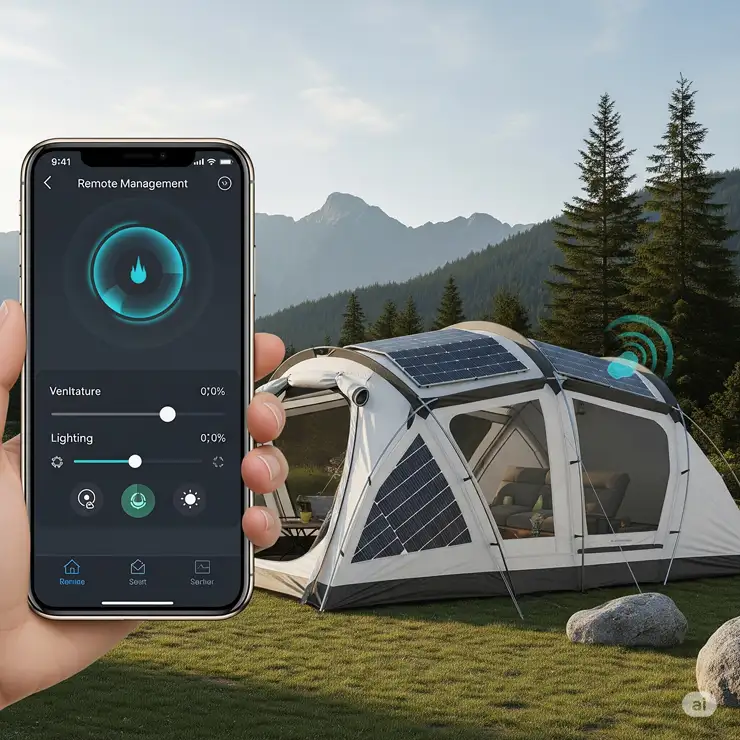
A smart tent is a camping shelter that goes beyond poles and fabric by building in convenience: instant or air-beam setup, integrated LED lighting, electrical access ports, blackout fabric, and sometimes solar or phone control. The idea is straightforward. Less pitching, more living, and fewer separate gadgets to juggle once the sun drops.
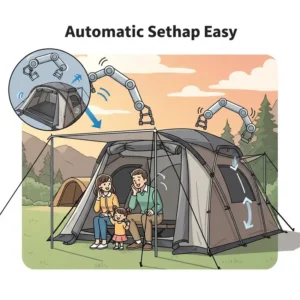
You know the scene. Dusk, headlamp clenched in your teeth, a pole sleeve that refuses to cooperate, and a kid asking when the lights come on. The smart tent category exists to retire that scene.
The concept isn’t brand new. The crowdfunded Cinch pop-up tent paired solar charging with smartphone-controlled LED lighting, and GearJunkie’s coverage of the smart tent concept describes lanterns dialed up to thousands of lumens from an app. The future arrived unevenly, though. In 2026, fully app-driven, solar-powered shelters are still niche. The practical flavor of the smart tent is what actually sits on retailer shelves at everyday prices: built-in LEDs, E-ports for extension cords, hub-style instant frames, blackout fabric, and electric-pump air beams.
One honest note before we dive in. This guide is built from manufacturer specs, retailer listings, and published expert tests, not from nights I’ve personally spent in these tents. Where the review pool for a model was thin, I say so rather than inventing a consensus. Prices are ranges from autumn 2026 research, so always check current pricing before you buy.
Below you’ll find seven smart camping tent picks across budget, mid-range, and premium, plus practical guides for setup, storms, and long-term care.
Smart Tent Quick Comparison: 7 Picks at a Glance
| Tent | Smart Feature | Claimed Setup | Price Range | Best For |
|---|---|---|---|---|
| Coleman Camp Burst 4-Person Pop-Up Tent | Instant pop-up frame | About 10 seconds | $100-$150 | Festivals, first tents |
| Coleman Skydome XL 8-Person Tent with LED Lighting | Overhead LED + E-port | Under 5 minutes | $180-$290 | Big groups on a budget |
| Coleman Skylodge 6-Person Instant Camping Tent | Telescoping instant poles + E-port | About 1 minute | $275-$345 | Beginners who want speed |
| Coleman Skydome 6-Person Screen Room Tent with Dark Room Technology | Blackout fabric + E-port | Under 5 minutes | $290-$390 | Sleep-in families |
| VEVOR 6-Person Inflatable Cabin Tent | Built-in rechargeable pump | About 7 minutes to inflate | $200-$260 | Campers who hate poles |
| Gazelle T4 Hub Tent | Hub-style instant frame | About 90 seconds | $380-$420 | Couples, overlanders |
| CORE 9-Person Lighted Instant Cabin Tent with Full Rainfly | Wall-switch LED + pre-attached poles | About 2 minutes | $380-$550 | Groups wanting real livability |
Looking at the table, the Skydome XL is the value play for large groups, while the Gazelle T4 buys the fastest setup in the field at a premium. The CORE Lighted is the only tent here that bundles lighting and a full rainfly in one package, which explains its upper price range. If you’re new to camping, the Skylodge and Camp Burst cut setup stress the most for the least money.
💬 Just one click — help others make better buying decisions too!😊
Top 7 Smart Tent Picks: Expert Analysis
Each pick below follows the same logic: what the smart feature does in practice, who it suits, what aggregated reviews say, and whether the price range makes sense.
1. Coleman Camp Burst 4-Person Pop-Up Tent — pitches in seconds on a tiny budget
Speed is the headline. Coleman rates the Camp Burst at roughly ten seconds from bag to standing shelter, and some listings quote under a minute. The pre-assembled frame springs open like an umbrella and folds flat afterward.
At about 7.5 pounds, it’s the lightest tent on this list by a wide margin, so it rides in a trunk beside a cooler without a second thought. The trade-off is profile. Listing data puts the height near three feet, so think sit-and-sleep shelter, not stand-up cabin. That suits festivals and beach days, but it’s a poor match for rainy-weekend living.
Based on the spec sheet, this is a first-tent or backyard-sleepover pick for people who value simplicity over livability. If you want built-in lighting or power, look elsewhere. The Dark Room variant adds sunlight blocking and a cable port, but it costs more.
Aggregated retailer ratings hover around 3.5 out of 5 across roughly fifty reviews. The most verifiable praise centers on how effortless setup feels. The middling average hints that some buyers hit durability or weather limits, so don’t treat it as a storm shelter.
Pros:
- ✅ Pops open in seconds, folds flat
- ✅ Lightest tent in this lineup
- ✅ Very low entry price
Cons:
- ❌ Low roof, no real standing room
- ❌ Middling review average (about 3.5/5)
Price check: around $100-$150 for the standard version; verdict: strong value if you accept the low roof.
2. Coleman Skydome XL 8-Person Tent with LED Lighting — overhead LEDs for budget group camping
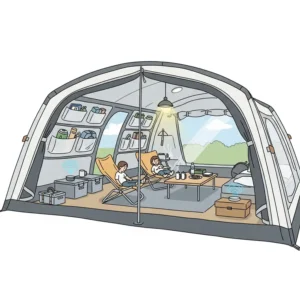
The Skydome XL gives you the “smart” basics without a premium tag: warm, diffused LED lighting across the ceiling plus an E-port for running an extension cord inside.
The floor measures roughly 16 by 7 feet, and Coleman says it fits three queen airbeds. In plain terms, you can lay them side by side along that long span and still have a gear strip left over. Nearly vertical walls add headroom, with a center height around six feet. The lights run on three AA batteries (not included), which is convenient until you forget spares. Pre-attached poles get you standing in about five minutes, and the frame is tested to 35 mph winds.
My read: this is the pick for a large family or friend group that wants a lit, roomy base camp without CORE-level spending. The LEDs handle reading and midnight bathroom runs, not party lighting.
I couldn’t verify a deep review pool for this exact model, so treat its durability as unproven; the WeatherTec welded corners and inverted seams are encouraging on paper.
Pros:
- ✅ Huge floor for the price
- ✅ Built-in LEDs plus E-port
- ✅ Pre-attached poles, quick setup
Cons:
- ❌ LEDs eat AA batteries you must supply
- ❌ Thin verifiable review history
Price check: roughly $180-$290 depending on retailer and sales; verdict: excellent space per dollar.
3. Coleman Skylodge 6-Person Instant Camping Tent — telescoping poles, roughly one-minute setup
The Skylodge attacks the pole problem directly. Telescoping poles come pre-attached to the tent body, so you extend them, clip, and stake out.
The floor runs about 10 by 9 feet, and the tent weighs around 24 pounds, a reasonable carry from car to site. Four windows and an E-port round out the features. There’s no vestibule or room divider, so gear storage means sharing the sleeping floor.
Based on the spec comparison, this tent suits beginners and weekenders who want “tent up, chairs out” in minutes. Reviewers of the Skylodge line consistently praise the intuitive setup. Common complaints include sticky pole sections and weak airflow once the rainfly is on. A few buyers also noted it handles light rain well but may need extra waterproofing in heavy storms.
Coleman’s own four-person listing shows a 4.7 out of 5 average from nearly eighty reviews. That’s encouraging but not a guarantee for the six-person size.
Pros:
- ✅ Roughly one-minute pitch
- ✅ E-port for electrical access
- ✅ Compact packed bag for its size
Cons:
- ❌ Airflow suffers with rainfly on
- ❌ No vestibule for muddy gear
Price check: around $275-$345; verdict: fair value, better in fair weather than foul.
4. Coleman Skydome 6-Person Screen Room Tent with Dark Room Technology — blackout sleep with a bug-free porch
This is the sleep-quality pick. Dark Room fabric blocks about 90 percent of sunlight, so dawn stops being an alarm clock.
The Skydome Screen Room measures about 10 by 12.5 feet including a 10 by 4 foot screen room, with a center height near six feet. It weighs roughly 19 to 21 pounds. That screen room turns into a bug-free lounge or an overflow sleeping zone, and the E-port lets you run a fan or a charger cable inside. Dark fabric also reduces heat gain, though it can trap warmth without good ventilation.
Honestly, this fits families with early-rising kids and anyone who naps. Pair it with a battery fan and you’ve got a surprisingly civilized summer setup.
Retailer ratings sit around 4.3 out of 5 from roughly fifty buyers, and the most-repeated praise involves sleeping later. One independent review criticizes the partial rainfly, which leaves some wall exposed in stormy weather.
Pros:
- ✅ Blocks about 90% of sunlight
- ✅ Screen room doubles as lounge
- ✅ E-port for fans and chargers
Cons:
- ❌ Partial rainfly limits storm protection
- ❌ Dark fabric can trap heat
Price check: roughly $290-$390 with frequent sales swings; verdict: worth it if sleep matters more than storm-proofing.
5. VEVOR 6-Person Inflatable Cabin Tent with Rechargeable Pump — poles replaced by air beams
The VEVOR Inflatable swaps rigid poles for TPU air tubes inflated by a built-in rechargeable electric pump. Per the retailer listing, inflation takes about seven minutes and requires no pole threading.
It weighs around 23 pounds and uses 210D Oxford fabric with polyester mesh, two doors, and four windows. The listing says the interior fits a large inflatable mattress, which hints at generous floor space. Air beams flex rather than snap in wind, but you’re trusting a pump and valves, so charge the pump before you leave home.
Honestly, this is a lesser-known alternative for people who dread pole sleeves. It’s a car-camping tent through and through, not something to haul far from the trunk.
Here’s the catch: review depth is thin. The listing shows only a few dozen ratings, and some retailer pages still read “reviews coming soon.” Treat long-term durability as unknown, and keep a manual pump in the car as insurance.
Pros:
- ✅ No poles; built-in rechargeable pump
- ✅ Two doors and four mesh windows
- ✅ Very competitive price per sleeper
Cons:
- ❌ Limited verifiable review history
- ❌ Pump and valves are extra failure points
Price check: low-to-mid $200s at retailers I checked; verdict: promising value with a research caveat.

6. Gazelle T4 Hub Tent — hub frame that deploys in about 90 seconds
The Gazelle T4 earns its reputation on speed. Its hub design unfolds, extends, and stands in roughly 90 seconds, and Outdoor Life’s instant tent test named it the best overall in its roundup.
The footprint is about 94 by 94 inches with a 78-inch peak, so adults stand without ducking. It weighs around 30 pounds, has a removable floor, two doors, and several windows. Marketed as a four-person tent, it sleeps two adults comfortably and four cozily. The packed bag is long and awkward, which matters more in a compact car than in an SUV.
Looking at the numbers, this tent suits couples, overlanders, and anyone who sets up and tears down every day. Rainfall protection is solid but not extreme, and fiberglass poles mean handling with care.
Retail reviewers lean positive, with a 4.7 out of 5 average from about twenty buyers on one major retailer. Owners consistently praise setup speed and standing room. Common complaints include the bulky packed size and corner doors that can trip you.
Pros:
- ✅ Roughly 90-second hub setup
- ✅ Real standing room at 78 inches
- ✅ Removable floor adds flexibility
Cons:
- ❌ Long, bulky packed size
- ❌ Corner doors are a trip hazard
Price check: around $400; verdict: premium for speed, fair for two-person comfort.
7. CORE 9-Person Lighted Instant Cabin Tent with Full Rainfly — the closest thing to a lit cabin
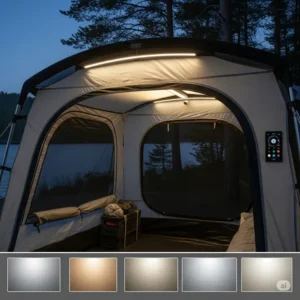
The CORE Lighted bundles the two things smart tent shoppers crave: instant pre-attached poles and built-in LED lights with a wall switch.
The LEDs sit in the ceiling poles with a diffusion panel and offer three levels: high, low, and night light. They’re battery-operated, so no cords are required. Height is about 76 inches, there’s a 12 square foot vestibule, a room divider, and mesh pockets, all wrapped in H2O Block weather treatment. Weight is roughly 41 pounds, which means you’ll feel it hauling from the car.
My take: the “9-person” label is optimistic. Independent testers suggest it sleeps about five comfortably, which is plenty for a family. Setup takes about two minutes, though several reviewers flag flimsy stakes worth replacing and a very long packed bag.
Independent scoring places it near the top of instant cabin tents, and the lighted version carries a noticeable premium over the non-lighted model.
Pros:
- ✅ Wall-switch LEDs with three levels
- ✅ Full rainfly plus vestibule
- ✅ Roughly two-minute setup
Cons:
- ❌ Stock stakes feel flimsy
- ❌ Heavy and very long when packed
Price check: about $380-$550 depending on the rainfly version; verdict: you’re paying a clear “LED tax,” justified only if you’d otherwise buy lanterns.
✨ Ready to Compare Your Options?
🔍 Take your smart tent camping to the next level with these carefully selected picks. Click any highlighted product name to check current pricing and availability.
Practical Usage Guide: Your First 30 Days With a Smart Tent
Buying the right tent is half the job. The other half is not discovering its quirks at 9 p.m. in a drizzle.
Pitch it at home first. Even a 90-second hub tent has a learning curve. A backyard run reveals which corner is which, whether the rainfly orientation is color-coded, and how stubborn the poles are.
Test every smart feature. Switch on the LEDs, plug an extension cord through the E-port, and run the pump. Replace weak batteries now, and pack spares labeled “tent only.”
Upgrade the stakes. Multiple reviewers flag stock stakes on instant cabin models as flimsy. Spend a few dollars on sturdier ones before the first windy trip.
Seam-check and seal. Look at floor and fly seams in daylight, and treat any suspicious stitching before it rains.
Dry before storing. Mildew is the silent killer of every tent. Air it out fully, then store it loosely, not compressed.
Avoid first-month mistakes: forcing telescoping poles that stick, using tape or sealant on fabric that isn’t compatible, and plugging in space heaters. That last one gets its own safety section below.
Real-World Scenarios: Matching Smart Tent Picks to Real Campers
The weekend family of five. Two adults, three kids, a car, and two nights a month from May to September. The CORE Lighted is the comfort choice if budget allows, with LEDs that work without cords and a vestibule for muddy boots. On a tighter budget, the Skydome XL offers similar room.
The couple chasing sunsets. They move camp often, so setup time is the deciding factor. The Gazelle T4 fits this well: 90-second pitch, removable floor, and enough headroom to change clothes standing. Budget around $400 and expect a long packed bag.
The festival-goer and early riser. Weekend use, small footprint, hot climate. The Camp Burst wins on weight and price, but if sleeping past sunrise matters more than carrying ease, step up to the Skydome Screen Room.
The pole-averse beginner. A first-time camper who doesn’t want to learn pole geometry should look at the VEVOR Inflatable, with the caveat that its review pool is still thin. Pair it with a backup hand pump and camp close to the car for the first few trips.
Problem → Solution Guide: Fixing Common Smart Tent Headaches
Problem: dead LEDs at midnight. Solution: AA-powered lights (like the Skydome XL) need fresh batteries each trip, and the CORE Lighted needs its own cells too. Keep spares in a ziplock inside the tent pocket.
Problem: stuffy, humid mornings. Solution: dark fabric and sealed rainflys trap moisture. Crack the vents, use the E-port to run a small battery fan, and avoid cooking inside. On the Skylodge, remember reviewers flag airflow issues with the rainfly on.
Problem: stuck pole sections. Solution: clean sand and grit from telescoping parts, and don’t force anything. Gentle wiggling beats brute strength.
Problem: a storm rolling in. Solution: here’s the uncomfortable truth. The National Weather Service states plainly that no place outside is safe from lightning, and a tent offers no lightning protection. Smart features don’t change that. Check forecasts, pitch in a low area away from isolated trees, and retreat to a hard-topped vehicle or building when thunder is audible.
Problem: wind. Solution: upgrade stakes, use every guy-out point, and orient the door away from gusts. The Gazelle T4 and CORE Lighted both have large, sail-like walls that reward good staking.
How to Choose a Smart Tent
Choosing a smart tent comes down to six decisions. Work through them in order.
- Decide which “smart” matters most. Speed (Gazelle T4), lighting (CORE Lighted), sleep (Skydome Screen Room), or power access (any E-port model). You rarely get everything at one price.
- Size up honestly. Capacity ratings are optimistic. Independent testers suggest the CORE Lighted sleeps around five despite its “9-person” label.
- Check the setup system. Hub frames, telescoping poles, pop-up frames, and air beams each trade speed against durability.
- Match power to your habits. AA-battery LEDs, wall-switch lighting, or an E-port that needs an extension cord all demand different prep.
- Inspect weather coverage. Full rainfly versus partial matters most in wet climates.
- Verify the review pool. If a model has few verifiable reviews, like the VEVOR Inflatable, factor that uncertainty into your decision.
Features That Actually Matter (And Those That Don’t)
What matters:
- E-ports. A simple sleeve for a cord beats most “smart” gimmicks, and nearly every Coleman model here has one.
- Ventilation. Roof vents, mesh windows, and a ground vent determine whether you sleep well.
- Rainfly coverage. A partial fly, as on the Skydome Screen Room, saves weight but costs storm protection.
- A genuinely instant frame. The Gazelle T4 and Skylodge deliver real time savings; check that packed size fits your vehicle.
What matters less:
- Raw lumen counts. A ceiling LED needs to be comfortable, not blinding.
- Capacity claims. Nine-person labels often mean five comfortable sleepers.
- App control. Fun in theory, but a switch on the wall (as in the CORE Lighted) is more reliable than Bluetooth at 11 p.m.
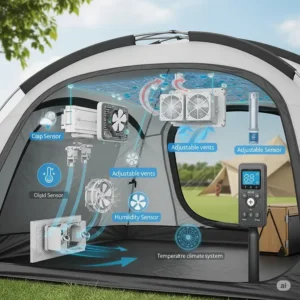
Smart Tent vs Traditional Tent: Is the Upgrade Worth It?
| Factor | Smart Tent | Traditional Tent |
|---|---|---|
| Setup | Seconds to minutes | 10-30 minutes |
| Lighting | Often built-in | Separate lanterns |
| Power access | E-port common | Rare |
| Packed size | Often larger | Often smaller |
| Best for | Car camping | All styles |
Looking at the comparison, the real trade is convenience for bulk. Smart tents shine for car campers who set up on arrival and break down on departure. Traditional tents still win for backpacking and for campers who want the smallest packed size. For most families, though, saving fifteen minutes of frustrated setup is worth a heavier bag.
A smart tent also changes how you pack. Without separate lanterns and a poles-and-sleeves sorting session, trunk space shifts from accessories to the tent itself.
Smart Tent Safety Guide: Power, Heat, and Weather
Smart features add comfort, and they add risks that people underestimate.
Never burn fuel inside. The Consumer Product Safety Commission warns that portable camping heaters, lanterns, and stoves used inside tents can cause carbon monoxide poisoning. CPSC’s guidance also says not to keep fuel-burning heaters or lanterns running while you sleep, and that charcoal never belongs inside a tent. An E-port invites electric options instead, but check your heater’s rating and never leave it unattended.
Respect your cord. Use outdoor-rated extension cords, keep connections off wet ground, and don’t pinch cables in zippers.
Know your limits. A tent that’s tested to 35 mph winds, like the Skydome XL, is not a storm shelter.
Fire awareness. Keep stoves and campfires well away from nylon and polyester walls.
Common Mistakes When Buying a Smart Tent
Mistake 1: trusting capacity labels. If a tent claims nine people, plan for five. The CORE Lighted is a perfect example.
Mistake 2: ignoring packed size. The Gazelle T4 and CORE Lighted both ship in long bags. Measure your trunk before you click buy.
Mistake 3: paying for lights you won’t use. One independent review pegs the CORE Lighted premium at roughly a hundred dollars over the non-lighted model, and a pair of good lanterns may serve you better.
Mistake 4: skipping the review check. A promising spec sheet with few verified reviews, like the VEVOR Inflatable, deserves a trial run and a return window.
Mistake 5: forgetting seasons. All the tents here are three-season designs. Cold-weather camping needs a different class of shelter entirely.
Long-Term Cost & Maintenance: What a Smart Tent Really Costs
| Tent | Price Range | Rough Cost per Rated Sleeper | Best For |
|---|---|---|---|
| Camp Burst | $100-$150 | $25-$38 | Short trips |
| Skydome XL | $180-$290 | $23-$36 | Large groups |
| Skylodge | $275-$345 | $46-$58 | Beginners |
| Skydome Screen Room | $290-$390 | $48-$65 | Sleep-in families |
| VEVOR Inflatable | $200-$260 | $33-$43 | Pole-averse campers |
| Gazelle T4 | $380-$420 | $95-$105 | Frequent movers |
| CORE Lighted | $380-$550 | $42-$61 | Comfort seekers |
Cost per rated sleeper flatters big-label tents, so apply the earlier rule: shrink the capacity first. By that measure, the Gazelle T4 looks pricey, but for two people who value time over everything, it’s competitive.
Maintenance is simple. Replace stakes early, dry the tent fully, re-seal seams as needed, and charge or swap batteries between trips. Budget a small yearly amount for replacement parts, and a smart tent can reasonably last several seasons of weekend use.
FAQ
❓ Are smart tents worth it for casual campers?
❓ Do smart tents need electricity to work?
❓ Can you use a heater inside a smart tent?
❓ How long does setup really take on a smart tent?
❓ What's the best smart tent for families?
Conclusion
A smart tent won’t make rain stop or kids sleep, but the right one removes the tiny frictions that sour camping: tangled poles, dark interiors, and dawn arriving at 5 a.m.
If you want the cheapest, fastest shelter, the Camp Burst wins. For large groups on a budget, the Skydome XL gives you space and LEDs. Beginners will love the Skylodge, sleep-in fans should look at the Skydome Screen Room, and the pole-averse can consider the VEVOR Inflatable with eyes open about its thin review history. The Gazelle T4 is for people who pitch constantly, and the CORE Lighted is the comfort play for family basecamps.
Whatever you pick, practice the setup at home, replace weak stakes, and remember that safety beats gadgets: no fuel burning inside, and no relying on a tent when lightning is near.
Recommended for You
- Best Tent 8 Person: 12 Top-Rated Family Camping Shelters That Actually Work
- 10 Best Personal Pop Up Tent Options For Quick Outdoor Adventures in 2025
- 10 Amazing Core 6-Person Cabin Tent with Screenhouse Options for Ultimate Camping Bliss
Disclaimer: This article contains affiliate links. As an Amazon Associate, I earn from qualifying purchases. If you purchase products through these links, we may earn a small commission at no additional cost to you.
✨ Found this helpful? Share it with your friends! 💬🤗
